
REVIEW · AMSTERDAM
Amsterdam: Cultural Highlights in English/German/Italian
Amsterdam comes alive when you walk.
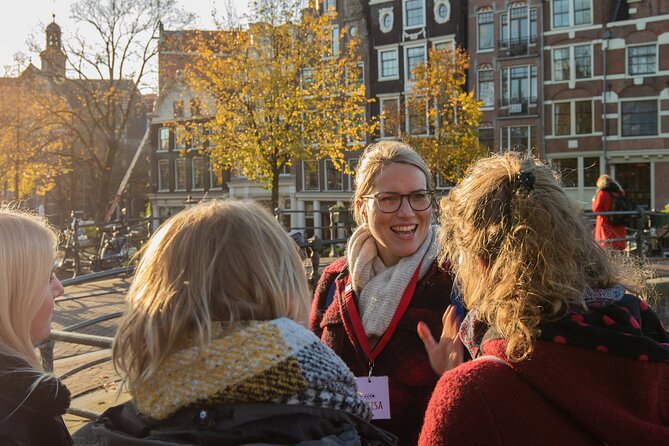
This 2-hour cultural highlights tour is a smart way to get your bearings fast, with a German-speaking guide leading a small group through classic Amsterdam landmarks and explaining what you are actually looking at. You also get free admission at every stop, so your time goes into stories and not ticket lines.
What I like most is the guide time. Names I noticed in the feedback include Deborah, Justin, Josh, Stephanie, Marina, Justus, and Noeme, and the common thread is how clearly they connect each location to how Amsterdam became Amsterdam. I also like that the tour is designed as a warm-up for the rest of your trip, with tailored recommendations you can use immediately, including practical tips for food and places to check after the walk.
One thing to consider: you are doing a steady loop on foot, about 3 to 4 kilometers total. Bring comfortable shoes and be ready for a pace that works best for the slowest walker in the group. And if you are hoping for a specific Anne Frank stop, keep expectations flexible, since one departure had a House visit fall through without replacement or refund.
In This Review
- Key things to notice before you go
- The real value: a guide-led loop that saves you time
- Meeting point at Dam: when you start matters
- Stop-by-stop: what you actually get out of each highlight
- National Monument: the opening frame for Amsterdam
- Dam Square: origins, establishment, and the Old Town’s power center
- Beurs van Berlage: why the Golden Era happened where it did
- Nieuwe Kerk: a quick history stop with real city impact
- Statue of Multatuli: a colonial-era thread through literature
- Magna Plaza: the former post office and why it mattered
- Westerkerk: biggest church, plus a connection to the Jordaan
- Statue of Anne Frank: Jewish history and the family’s time in Amsterdam
- Gay Monument: LGBTQ+ history you can see
- 9 Little Streets (Negen Straatjes): shopping tips, with less aimless wandering
- Spui and the Begijnhof: reformation, plus a hidden church inside
- Guide style is the secret sauce
- Who this tour suits best
- Price and logistics, explained like you actually care
- Should you book this Amsterdam cultural highlights walk?
- FAQ
- How long is the Amsterdam cultural highlights walking tour?
- Where does the tour start?
- What languages is the tour offered in?
- Do we pay admission fees during the tour?
- Does the tour include the red-light district?
- Is a coffee shop visit included?
- Is the tour suitable for children?
- How much walking is involved, and what should I bring?
Key things to notice before you go
- A small group, up to 15 people, with a guide who answers questions as you walk
- All stops are free to enter, so you pay for interpretation, not attractions
- A route built for history and everyday Amsterdam, from Dam Square to Jordaan-area connections
- Anne Frank, LGBTQ+ history, and Amsterdam’s colonial-era links are part of the walk
- You do not enter the red-light district, only a pass along the southern side
- About 3 to 4 kilometers on foot in roughly 2 hours, so wear shoes that can handle city sidewalks
Still weighing this one up? Here is what else we have reviewed around Amsterdam.
- Amsterdam Classic Saloon Boat Cruise with Drinks and Cheese★ 5.0 · 31,825 reviews
- Amsterdam Luxury Canal Cruise + Unlimited Drinks & Bites option★ 5.0 · 30,518 reviews
- Amsterdam: Heineken Experience Ticket★ 4.6 · 30,055 reviews
- Amsterdam: Rijksmuseum Entry Ticket★ 4.7 · 25,535 reviews
The real value: a guide-led loop that saves you time
Amsterdam is easy to wander in, but hard to understand without context. This tour helps you connect the dots quickly. You start at the National Monument on Dam, then work your way through a sequence of landmarks that explain how the city grew, how wealth and power shaped the Old Town, and how different communities contributed to what Amsterdam is now.
At $33.88 per person for about 2 hours, the value is mostly in the guide. You are not buying museum access. You are buying someone’s ability to point at the details and tell you what they mean, while you keep moving through the center on foot. The mobile ticket and small-group format also keep things simple once you arrive.
The tour is child-friendly and does not feel like a stiff lecture. Because it is on foot, you skip the pain points of traffic and parking. You also get the fun bonus of seeing how Amsterdam looks from street level, not just from inside a building.
Meeting point at Dam: when you start matters

Your starting point is the National Monument at Dam (1012 JS Amsterdam). It is a strong choice. Dam Square is where people naturally gather, and it is the easiest anchor point for orientation in the center.
The tour ends back at the same meeting point. That matters because you do not end up stranded across town after 2 hours. When the tour wraps, you are already close to the next thing you might want to do, whether that is lunch, a canal stroll, or shopping in the nearby streets.
Also note a couple of comfort points that affect your day more than you might think. You will walk around 3 to 4 kilometers total. Amsterdam sidewalks can feel better than you expect, but they still add up. Wear comfortable shoes, and if it is hot outside, bring water and a hat.
Stop-by-stop: what you actually get out of each highlight
Below is what you can expect from the route, in the order you will see things, and why each stop fits the “cultural highlights” theme.
National Monument: the opening frame for Amsterdam
You begin with a short stop at the National Monument at Dam. Even with only about five minutes here, it sets the mood. It is a good first reference point, because it helps you understand the central “stage” where Amsterdam’s civic identity shows up in public space.
Practical tip: use these first minutes to glance around and spot what is around you. That way, later stops feel like they are building a map in your head instead of being separate photos.


Dam Square: origins, establishment, and the Old Town’s power center
Next is Dam Square. You spend about 15 minutes here, and the focus is the origin of Amsterdam, how the city was established, plus history connected to the old town house and royal palace.
This is where the tour does its job as an introduction. You are not just seeing architecture. You are learning why this area mattered. If you have heard Amsterdam described as a trading and wealth powerhouse, this is the place where the guide ties that idea to a physical location.
Beurs van Berlage: why the Golden Era happened where it did
Then you head to Beurs van Berlage, also about 15 minutes. The key theme is how Amsterdam became one of the world’s wealthiest cities during the Golden Era.
This stop is especially useful if you like understanding money and infrastructure, not just art and churches. The guide’s framing turns a landmark into a story about prosperity and the systems that supported it. You get a clearer idea of how wealth could concentrate in the same streets where people now stroll for coffee and shopping.
Nieuwe Kerk: a quick history stop with real city impact
At the Nieuwe Kerk, you will pause for about five minutes. The guide explains its history and why it mattered for Amsterdam’s development.
Short stops can still be meaningful if you know what to listen for. Use this time to catch any “why it mattered” explanation. Those are the bits that make the building more than a photo background.
Statue of Multatuli: a colonial-era thread through literature
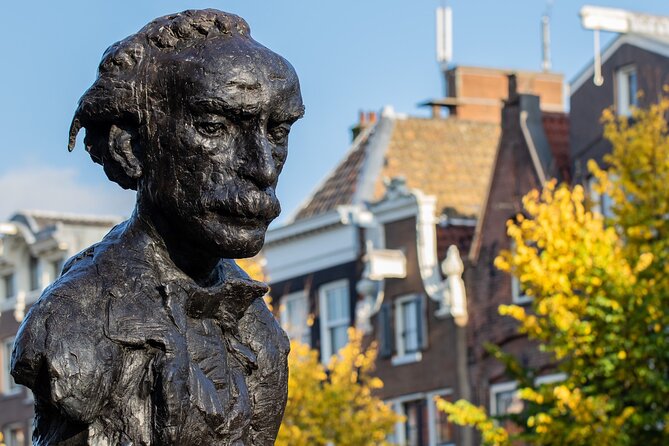
Next is the Statue of Multatuli, about ten minutes. This is one of the more intriguing stops on the walk because it connects Amsterdam’s colonial era to one of the most important books of the country.
If colonial history is a subject you want to face directly but not in a heavy lecture format, this stop is a good middle ground. You will hear the connection explained in guide-friendly terms, then you move on before the topic overwhelms the rest of the tour.
Magna Plaza: the former post office and why it mattered
At Magna Plaza, plan around five minutes. The guide highlights the importance of the former post office and links it to the flow of city life.
This is the kind of stop that makes you look at everyday architecture differently. Even if you are not planning to shop inside, you still walk away knowing that certain “ordinary” buildings played roles in communications and daily movement. That is a classic Amsterdam theme.
Westerkerk: biggest church, plus a connection to the Jordaan
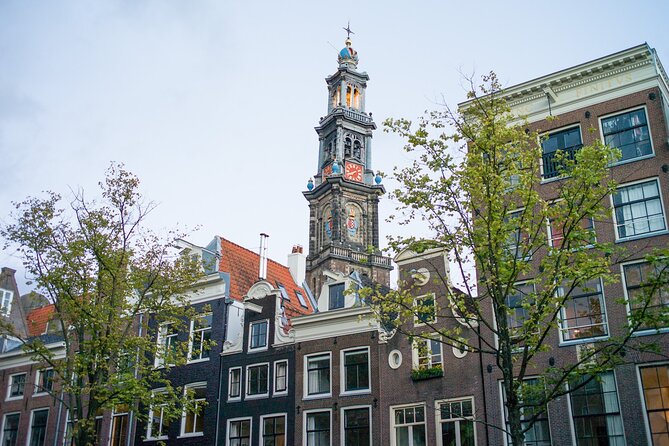
Then you visit Westerkerk, about ten minutes. The guide frames it as the biggest church of Amsterdam and explains its historic connection with the Jordaan area.
This stop works because it bridges neighborhoods. You learn how religious and community spaces relate to where people lived and how districts developed. If you plan to spend time in the Jordaan later, this makes your wandering more purposeful.
Statue of Anne Frank: Jewish history and the family’s time in Amsterdam
Next is the Statue of Anne Frank for about ten minutes. The guide focuses on Jewish history in Amsterdam and how Anne Frank and her family experienced their time here.
This is a respectful, direct stop, and it gives the tour emotional weight in a way that does not feel exploitative. Do keep your expectations flexible though. In at least one case mentioned in feedback, an Anne Frank House portion did not run as planned and there was no replacement or reimbursement. If this is the main reason you booked, consider building in buffer time so you can try again later on your own schedule if needed.
Gay Monument: LGBTQ+ history you can see
At the Gay Monument, you spend around ten minutes. The guide explains the history of Amsterdam’s LGBTQ+ scene.
This stop is valuable because it makes LGBTQ+ history visible in public space, not stuck in a separate sidebar. The guide ties it back to the wider story of Amsterdam as a city of many communities.
9 Little Streets (Negen Straatjes): shopping tips, with less aimless wandering
Then comes 9 Little Streets, also called Negen Straatjes, about five minutes. The guide provides shopping tips so you can explore the area after the tour.
This is a great transition point. You go from history and architecture to streets where you can actually spend an hour doing something fun. If shopping is not your thing, you can still use the route to guide your food choices and pick a nicer side street to walk than the busiest main routes.
A small caution: if you hate shopping crowd energy, decide in advance how long you want to spend there. The guide gives tips, but you still control how deep you go.
Spui and the Begijnhof: reformation, plus a hidden church inside
Finally, you arrive at Spui and the Begijnhof for about 15 minutes. The tour focus here is reformation in Amsterdam, and the guide helps you spot the hidden church inside. You will also get tips about hidden gems you can explore after the walk.
This is one of the best “pause and reset” sections of the route. It breaks up the big-squares feel with a quieter, more tucked-in Amsterdam moment, and it rewards you for paying attention. The Begijnhof also gives you a chance to slow down slightly because there is less traffic and fewer wide-open sight lines.
Guide style is the secret sauce
The reviews repeatedly point to one thing that you feel in a live tour: the guide’s personality and delivery. I saw strong praise for guides like Deborah, Justin, Josh, Stephanie, Marina, Justus, and Noeme, and the consistent notes were that they took time with explanations, kept things engaging, and answered questions patiently.
One practical detail I think matters for your enjoyment: in a small group, your questions are not a nuisance. They can change where the guide emphasizes details or what recommendations you get afterward. A great example from the feedback is that off-the-beaten-path suggestions came up due to questions, which is exactly what you want from a walking orientation tour.
If you are traveling with a dog, that also came up in the feedback, with the tour described as not a problem. That suggests the guide and group dynamics are flexible, as long as everyone can move comfortably.
Who this tour suits best
This is a strong fit if you want:
- A short, structured walk that helps you understand Amsterdam quickly
- A mix of major landmarks and “why this spot matters” context
- A guide who provides recommendations for the rest of your trip, not just a checklist
It is also a good match if you dislike long museum days. You get plenty to look at, and you cover multiple themes: civic identity, Golden Era wealth, reformation, Jewish history, LGBTQ+ history, and colonial-era literature connections.
You might want a different option if:
- You have limited mobility and cannot comfortably do 3 to 4 kilometers on foot
- You are hoping for a guaranteed Anne Frank House visit as part of this same experience, since one departure issue was noted
Price and logistics, explained like you actually care
At $33.88 for about 2 hours, you are paying for a small group walking guide with free-entry stops. That is a simple setup. You do not need to budget for attractions during the tour, and you are not tied to a single long indoor time block.
Logistics are also straightforward. You get a mobile ticket, confirmation comes when you book, and the meeting point is easy to reach using public transportation. Just remember this tour does not cover the red-light district beyond passing along the southern side, and the coffee shop is not visited. If those are major priorities for you, you will need another plan.
Weather matters too. The experience requires good weather, and if it is canceled because of poor conditions, you will get offered another date or a full refund.
Should you book this Amsterdam cultural highlights walk?
I would book it if you want a well-paced introduction that mixes big-name places with meaningful context, all without museum fees. The small group size, the guide-driven storytelling, and the after-tour recommendations are the main reasons this works.
Skip it or look for something else if you want a deep dive into one museum theme, or if you cannot handle steady walking for about 2 hours.
If you are visiting Amsterdam for the first time, this tour is the kind of start that makes the city feel friendlier for the rest of your trip. You will leave with a map in your head and a few smart ideas for what to do next.
FAQ

How long is the Amsterdam cultural highlights walking tour?
It lasts about 2 hours.
Where does the tour start?
The tour starts at the National Monument on Dam, 1012 JS Amsterdam, Netherlands.
What languages is the tour offered in?
This tour is in German.
Do we pay admission fees during the tour?
No. The stops on the route are free to visit, and you will not have to pay admission fees during the tour.
Does the tour include the red-light district?
No. It does not include the red-light district. The route only passes by the southern side.
Is a coffee shop visit included?
No. The coffee shop will not be visited.
Is the tour suitable for children?
Yes, it is suitable for children.
How much walking is involved, and what should I bring?
It is a walking tour of about 3 to 4 kilometers total. Wear comfortable shoes, and if it is hot outside, bring water and a hat.
Also Reviewed Around Amsterdam




Fresh off the review pile in Amsterdam
- Full-Day Trip From Amsterdam to Keukenhof, Zaanse Schans + Cruise
★ 5.0 · 3 reviews - Boutique Dutch Food & History Tour with up to 8 guests only
★ 5.0 · 3 reviews - Private Tour to Windmills Zaanse Schans +Keukenhof – 7 Hours
★ 5.0 · 3 reviews - Full-Day Private Guided Countryside Tour from Amsterdam by Bike
★ 5.0 · 3 reviews - Amsterdam Red Light District and Old Town Walking Tour
★ 5.0 · 3 reviews