
REVIEW · AMSTERDAM
Amsterdam: Historic City Sightseeing Canal Cruise
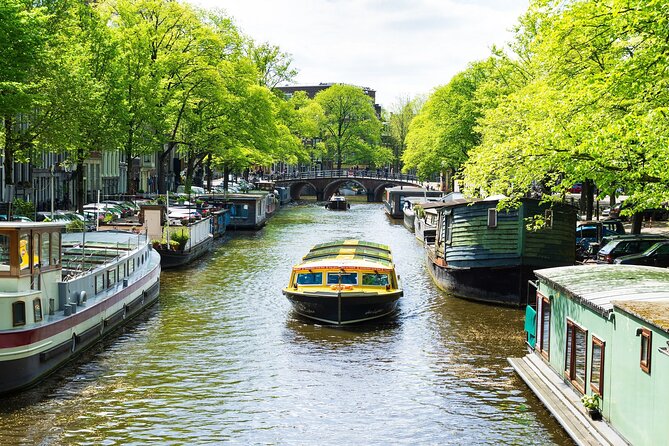
Amsterdam’s canals can feel like a whole lesson plan. This short historic city sightseeing canal cruise gives you a tight, water-level look at the UNESCO-listed Canal Ring, with the added bonus that the meeting point is easy to find right in front of the Anne Frank House.
I especially like the smart use of time. In about an hour, you pass big-name sights plus the quieter canal details that make Amsterdam feel lived-in, not staged. And because it runs close to central attractions, it is a handy fit if you have limited hours and still want the water views that define the city.
One thing to keep in mind is the audio can be hit or miss. Several people note that the commentary is delivered through a voice system and can be hard to hear in some spots, particularly from the back of the boat.
In This Review
- Key things to know before you board
- Where you start: Anne Frank House area and the quick “orientation tour”
- Getting the “Canal Ring” perspective you cannot get from the street
- A practical note on comfort
- Museum of the Canals first: a 400-year setup before the sights
- Prinsengracht and the Anne Frank House: the cruise stays close to the story
- Westerkerk: church architecture you feel from the waterline
- Houseboat Museum: the “how people actually live” moment
- Leidsegracht, De Beulingsloot, and the canal “threading”
- Herengracht and the Bartolotti House: old wealth, old walls
- Melkmeisjesbrug: a bridge with a milk market backstory
- Brouwersgracht and the Jordaan edge
- A church with a long makeover life, from worship to concerts
- Amsterdam Centraal by water: Pierre Cuypers’ station drama
- The IJ waterfront and EYE Filmmuseum: modern Amsterdam hits the same channel
- Posthoornkerk: a neo-Gothic church with a hidden-church origin
- Over to the Amstel: the river that feeds major events
- Hermitage Amsterdam: a satellite museum on the Amstel banks
- Stopera: city hall plus opera and ballet under one roof
- Audio quality and seating: the one factor that can change your score
- Price and value: how $18.71 can still feel like a win
- Who this cruise fits best
- Should you book Amsterdam Historic City Sightseeing Canal Cruise?
- FAQ
- How long is the Amsterdam canal cruise?
- How much does it cost per person?
- Where is the meeting point?
- Is the ticket mobile?
- Is the tour offered in English?
- How big are the groups?
- Can I stay inside or outside on the boat?
- What if I am hard of hearing or want clearer audio?
- Is the commentary live on board?
- What is the cancellation window?
Key things to know before you board
- Meeting point by Anne Frank House keeps your first-time navigation simple
- You get UNESCO Canal Ring views without booking a full day
- Route covers a mix of historic canal houses, churches, and major landmarks
- Commentary is English, but audio clarity and where you sit can matter
- You can choose inside or outside depending on weather and comfort
- Max group size is 68, so it is not a tiny private boat, but it should stay manageable
More time on the water? Other Amsterdam canal cruises we have been on
- Amsterdam Luxury Canal Cruise + Unlimited Drinks & Bites option★ 5.0 · 30,518 reviews
- Amsterdam: 75 Minute City Canal Cruise with Audio Guide★ 4.4 · 17,501 reviews
- Amsterdam: City Centre Canal Cruise★ 4.2 · 12,827 reviews
- Amsterdam: Covered Canal Booze Cruise with Unlimited Drinks★ 4.7 · 5,435 reviews
Where you start: Anne Frank House area and the quick “orientation tour”
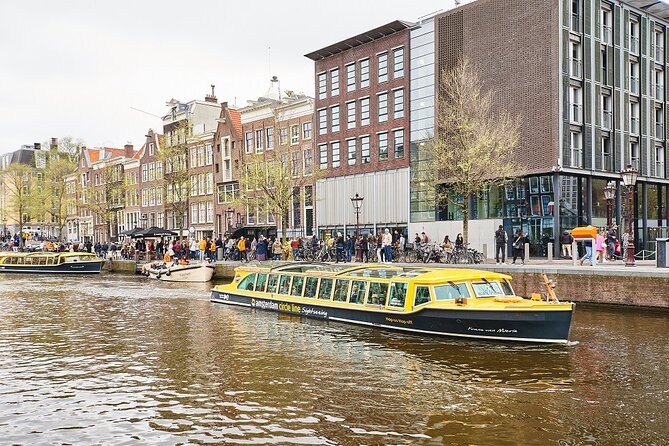
The cruise kicks off right near the Anne Frank House on the canal called the Prinsengracht. That matters more than it sounds. Amsterdam can be confusing on foot, and this start location helps you get your bearings fast. Even if you do not plan to tour the museum that day, the area is a clear landmark you can navigate by.
The timing is also built for people who do not want a whole half-day of planning. With a duration of about 1 hour, this is the kind of activity that works on arrival day, between museum visits, or as a reset after biking around. It also tends to be booked a bit ahead on average, so you will have an easier time picking a departure time if you plan early.
Getting the “Canal Ring” perspective you cannot get from the street
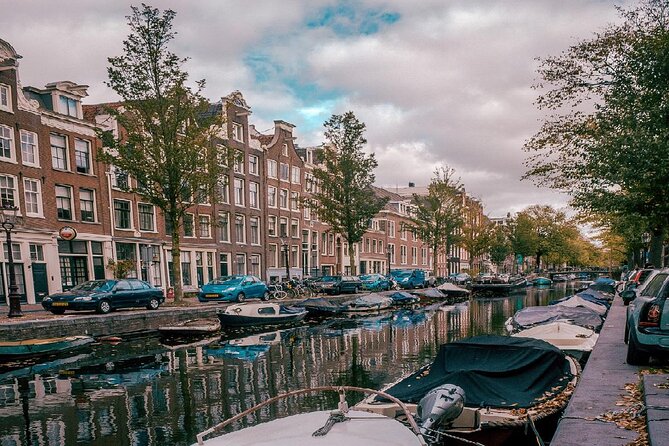
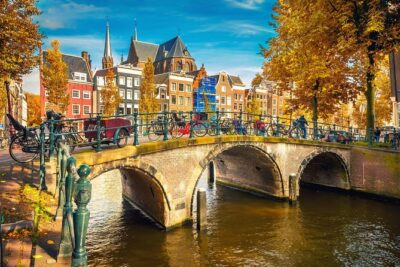
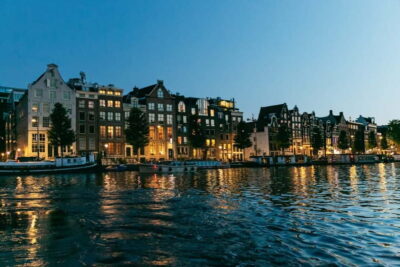
Amsterdam’s canal belt is a UNESCO site for a reason. Most of us see it from sidewalks, bridges, and café patios. From a boat, you get the canal scale and the facades in one sweep. In an hour, you get a concentrated look at the city’s canal architecture, water traffic history, and how the neighborhoods are stitched together.
This cruise is designed to float you past about 400 years of city history, with landmarks ranging from churches to opera-related buildings. If you like spotting details, this is a good segment for that. You tend to notice the shapes of canal houses, the rhythm of windows, and the way bridges mark routes through the center.
A practical note on comfort
You can typically stay inside or outside, which is a big deal in Amsterdam weather. Cold wind off the water is real, so if you hate numb fingers, prioritize warmth early in the season.
Museum of the Canals first: a 400-year setup before the sights
The cruise starts by pointing you back in time at the Museum of the Canals. This is a smart opening move because it helps you read what you are seeing while you glide forward. Canal towns have a logic, and if you understand the “why” behind the canals, the “what” becomes more interesting.
Even if you skip museums during your trip, this sort of short historical framing can make the rest of the ride feel less like random passing scenery and more like a guided route through a living city system.
Other Amsterdam sailings we have written up

Prinsengracht and the Anne Frank House: the cruise stays close to the story
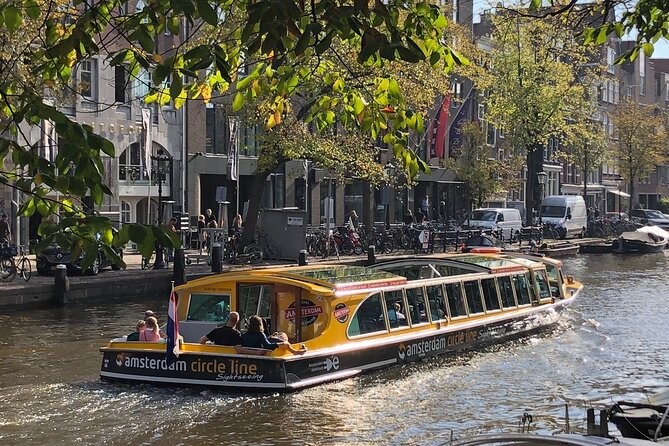
When the boat moves past the Anne Frank House, you are in the exact canal context that is central to the site. The Anne Frank House is a writer’s home turned biographical museum dedicated to Anne Frank, and during World War II, Anne Frank and her family hid from Nazi persecution in the Secret Annex located at the rear of the 17th-century canal house.
You do not need to know every detail ahead of time. What helps is understanding that the building is tied to the canal, specifically on Prinsengracht. That adds an extra layer when you see the building from the water. It is one more way the city ties memory to place.
Westerkerk: church architecture you feel from the waterline
Next up in the cruise flow is the Westerkerk (Wester Church). It sits in the Grachtengordel canal belt area near the Jordaan, between the Prinsengracht and Keizersgracht. If you have walked around the center before, you know church silhouettes are key Amsterdam landmarks, but from the canal you also get the scale and position relative to nearby waterways.
This stop is a good example of how the cruise mixes major historical sites with the broader city map. You are not only focused on one museum. You are seeing how churches, canals, and neighborhoods line up in space.
Houseboat Museum: the “how people actually live” moment
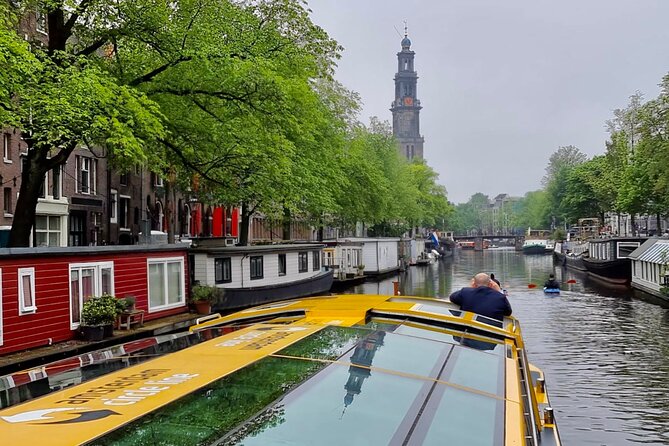
One of the most memorable segments is the pass by the Houseboat Museum, located at the former cargo ship Hendrika Maria, built in 1914. The ship’s hold was turned into a comfortable living space, and that setup is a fun contrast to the classic canal-house look.
This is the cruise’s human-scale bridge. You get a sense of Amsterdam’s relationship with water as something functional, not just scenic. And even if you never plan to live on a boat, it is an eye-opener to picture daily life in a space created out of shipping infrastructure.
If you like architecture and lifestyle combined, this is one of the moments where the cruise feels most “Amsterdam,” not just postcard Amsterdam.
Leidsegracht, De Beulingsloot, and the canal “threading”
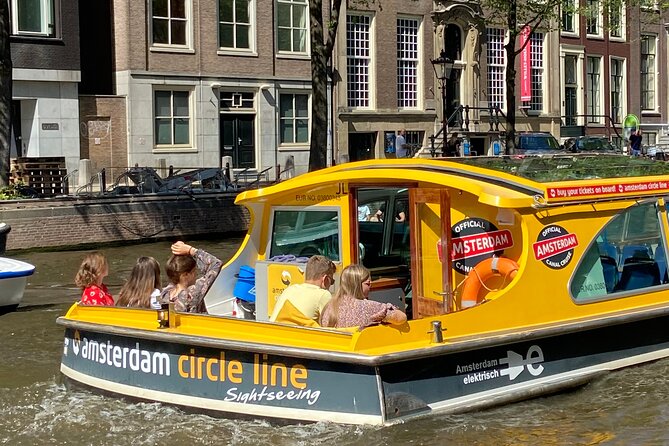
After the big landmarks, the route shifts into tighter canal connections. The cruise goes through Leidsegracht, a cross-canal that links Herengracht, Keizersgracht, Prinsengracht, and Lijnbaansgracht, and flows toward the Singelgracht.
Then you pass De Beulingsloot, one of the oldest and shortest canals in central Amsterdam. The point of these smaller canals is not that they are famous by name to everyone, but that they show how the canal system knits the center together. When you glide past, you see how the water routes help define neighborhood boundaries and how buildings face the canal like they belong to it.
These are the stretches where you can start spotting the subtle differences in canal house styles and bridge shapes.
Herengracht and the Bartolotti House: old wealth, old walls
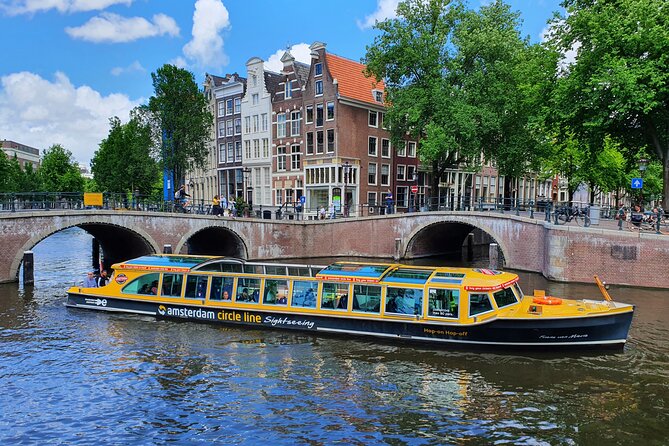
On Herengracht 170 to 172, the cruise passes the Bartolotti House, built around 1617 for Willem van den Heuvel tot Beichlingen, who inherited money through family connections (including from Giovanni Battista Bartolotti, a Bologna merchant). That’s the kind of detail that makes canal houses feel less anonymous.
From a boat, these grand canal houses read differently than from a bridge. You get the full vertical presence, and you can better appreciate the craftsmanship and the scale that once supported high-status city life.
Melkmeisjesbrug: a bridge with a milk market backstory
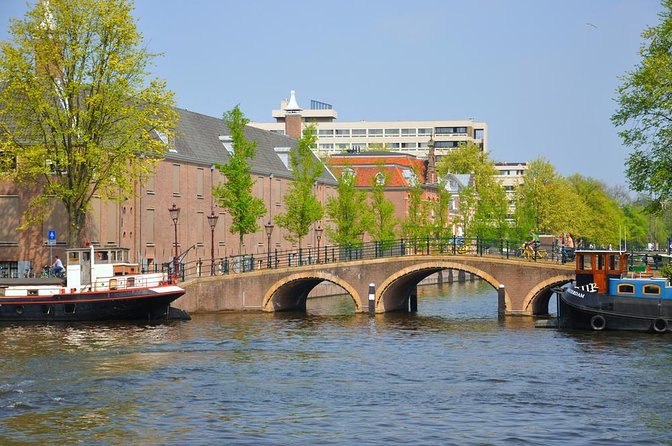
The Melkmeisjesbrug is a fixed bridge in Amsterdam-Center, with centuries of history in that location. The modern history starts in 1883, when a pedestrian drawbridge was replaced by a permanent bridge because shipping had largely ended. Later, in 1903, it was renewed with a bridge design described as a paraboolligger bridge and iron sickle girders, and then again with a steel version in 1966.
It is also named after a milk market that once happened there, with a milkmaid image used as a sign. Even more fun, the bridge is possibly associated with the placement of the first type of an Amsterdammertje.
This is the kind of stop where the cruise audio (if audible in your seat) can make a quick bridge feel like a whole mini story.
Brouwersgracht and the Jordaan edge
As you glide toward Brouwersgracht, you get the sense of neighborhood boundaries. Brouwersgracht connects the Singel with the Singelgracht and forms the northwestern border of the Grachtengordel (canal belt). Between Prinsengracht and Singelgracht, it also acts as the northern border of the Jordaan neighborhood.
There is also a concrete fun fact tied to place: in 2007, Brouwersgracht was voted the most beautiful street in Amsterdam by readers of Het Parool. On a cruise, that kind of detail helps you slow down mentally and notice the architectural continuity along the canal line.
A church with a long makeover life, from worship to concerts
The route includes a church designed by Adriaan Dortsman, opened in 1671. The building’s timeline is a roller coaster: it was nearly destroyed in 1822 and rebuilt by 1826. An organ built by J Batz in 1830 was restored in 1983 by Flentrop Orgelbouw.
Later, in 1935, Lutherans left, and it became a concert hall. In 1975, a tunnel was built by a neighboring hotel (today the Renaissance Amsterdam Hotel) for hotel access, with the hotel renting the church from the Lutheran church owner. Then in 1993, the dome caught fire, and it was restored again.
This part of the cruise is why canals feel like city time capsules. Buildings change purposes, but the canal context keeps them anchored in the same visual corridor.
Amsterdam Centraal by water: Pierre Cuypers’ station drama
When the boat reaches Amsterdam Centraal, you get one of the city’s biggest architectural moments. The station was designed by Pierre Cuypers, also known for the Rijksmuseum. The structural design is believed to have been handled by railway engineers, while Cuypers focused largely on the station building decoration.
Even if you have not toured the station, you will recognize the scale instantly from the water. It is a sharp contrast to the older canal houses and a reminder that this is a living city, not a museum piece.
The IJ waterfront and EYE Filmmuseum: modern Amsterdam hits the same channel
The cruise also moves through the IJ, Amsterdam’s waterfront area that was formerly a bay. This is where the vibe shifts from classic canal belt to big-city views.
One standout pass is EYE Filmmuseum, designed by Delugan Meissl Associated Architects (also connected to other large projects). The building includes two gallery exhibition spaces and multiple cinemas, including a 300-seat cinema, two 127-seat cinemas, and a smaller intimate cinema around 67 seats.
If you like seeing how Amsterdam keeps evolving, the IJ stretch is a good reality check. You get old walls, then suddenly modern culture architecture, still facing the water.
Posthoornkerk: a neo-Gothic church with a hidden-church origin
Another architectural highlight is the Posthoornkerk. It was designed by P.J.H. Cuypers and built in 1860, replacing a hidden church called De Posthoorn, with the name carried forward. Construction happened in phases: choir, transept, crossing tower, and nave between 1860 and 1863, then the two-tower front completed from 1887 to 1889.
Because the church could not be built free-standing, it was built extra high to make optimal use of limited space. The interior is linked to the late Romanesque Munsterkerk in Roermond, even though the outside is in neo-Gothic style. That “old interior model” plus a taller, space-efficient build is an interesting combo you only really clock when you see the building in context of nearby structures and canals.
Over to the Amstel: the river that feeds major events
From there, you head toward the Amstel, a river flowing north to the IJ. It is part of Amsterdam’s identity beyond the canal ring. The Amstel hosts events like Liberation Day concerts, the Head of the River Amstel rowing match, and a boat parade for Amsterdam Gay Pride.
From the cruise, this helps explain why Amsterdam has two distinct water personalities: the tight canal belt for historic texture, and the broader river space for movement and big-city gatherings.
Hermitage Amsterdam: a satellite museum on the Amstel banks
The cruise passes Hermitage Amsterdam, a branch of the Hermitage Museum of Saint Petersburg. It is on the banks of the Amstel river in the former Amstelhof building from 1681.
The data also notes this museum’s scale as a satellite operation with a total area of 12,846 m2, including 2,172 m2 dedicated to exhibition space across two large halls plus smaller rooms, with lecture halls, offices, staff areas, and a restaurant included. That is a lot for a city museum footprint, and it helps you understand why Hermitage is worth a day trip even when you also do the Anne Frank House.
Stopera: city hall plus opera and ballet under one roof
One of the final big landmarks in the cruise sequence is the Stopera, a building complex that houses both Amsterdam’s city hall and the Dutch National Opera and Ballet. The building was designed by Wilhelm Holzbauer and Cees Dam.
The name matters because it is not just a nickname. Stopera comes from the protest slogan Stop the Opera, used during protests against the building. The opera and theater have never used the name in their communication, so it is one of those Amsterdam facts that sounds like gossip until you learn it is official history.
From the canal or river perspective, this is a good capstone. You pass through places of memory, places of faith, and places of performance, all stitched together by water.
Audio quality and seating: the one factor that can change your score
Most cruises are judged on views and timing. This one also gets judged on whether you can follow the narration. Several experiences highlight that the commentary is delivered via a voice-over system, and in some seats it can be hard to hear. The rear seats, while great for views through windows and glass ceiling, were specifically called out as not giving you the best audio.
So, if audio matters to you, treat seating as part of the experience. Arrive on time, pick a spot where you can hear clearly, and do not expect every minute to be crystal clear.
Also, be mindful that not every sailing is perfectly paced. A couple of accounts describe narration feeling off or too focused on prices or logistics rather than the history in front of you. That does not invalidate the experience, but it is a good reason to go in with the right mindset: enjoy the architecture first, and let the commentary add color.
Price and value: how $18.71 can still feel like a win
At $18.71 per person for about 1 hour, this cruise is priced like a quick hit of sightseeing. You do not come out of it with a full “museum day,” but you do get something that takes time to replicate on foot: a water-level tour of multiple neighborhoods and landmarks.
The value is in the mix. In one sitting, you can cover the canal ring perspective, the Prinsengracht area, plus major sights that can take hours to piece together correctly. If you are time-pressured or you want your first day to run smoothly, this price makes sense as an orientation tool.
If you already know Amsterdam deeply and you only care about one or two sites, you might feel it is “too broad.” But for most people, the blend of historic canal details and big-city landmark passes is exactly what you want.
Who this cruise fits best
This is a strong match for:
- First-time Amsterdam visitors who want fast orientation
- People who prefer seeing from the water without renting bikes or doing long walking loops
- Travelers pairing the cruise with major stops nearby, especially the Anne Frank House area
- Anyone who likes architecture and bridge details more than checking off only one museum
If you are very sensitive to audio quality or you hate anything narrated through speakers, you will want to plan your seat choice carefully.
Should you book Amsterdam Historic City Sightseeing Canal Cruise?
I think you should book it if your goal is simple and smart: get a one-hour canal-belt and landmark overview that saves you time and gives you the water perspective Amsterdam is famous for.
Skip it or reconsider if your main priority is deep, perfectly timed historical explanation that you can hear clearly from anywhere on board. In that case, audio and seat position can be the deciding factor.
For the right traveler, though, this is an easy add-on that turns Amsterdam’s canals into your personal route map, one bridge and facade at a time.
FAQ
How long is the Amsterdam canal cruise?
It lasts about 1 hour.
How much does it cost per person?
The price is $18.71 per person.
Where is the meeting point?
The meeting point is in front of the Anne Frank House and is described as easy to find.
Is the ticket mobile?
Yes, you receive a mobile ticket.
Is the tour offered in English?
Yes, it is offered in English.
How big are the groups?
The tour has a maximum of 68 travelers.
Can I stay inside or outside on the boat?
You can choose to stay inside or outside, based on comfort and weather.
What if I am hard of hearing or want clearer audio?
Some reviews note the commentary can be difficult to hear from certain seating areas, and language switching through a voice system can be hard to follow. Picking a seat where you can hear clearly will help.
Is the commentary live on board?
The audio is described as a voice-over system, not a fully live guide for every comment.
What is the cancellation window?
There is free cancellation up to 24 hours in advance for a full refund.
More Amsterdam Sailings


Also Reviewed Around Amsterdam

More Hours Along the Amsterdam Canals
Fresh off the review pile in Amsterdam
- Full-Day Trip From Amsterdam to Keukenhof, Zaanse Schans + Cruise
★ 5.0 · 3 reviews - Boutique Dutch Food & History Tour with up to 8 guests only
★ 5.0 · 3 reviews - Private Tour to Windmills Zaanse Schans +Keukenhof – 7 Hours
★ 5.0 · 3 reviews - Full-Day Private Guided Countryside Tour from Amsterdam by Bike
★ 5.0 · 3 reviews - Amsterdam Red Light District and Old Town Walking Tour
★ 5.0 · 3 reviews
Dutch Canal Cruises, compared.
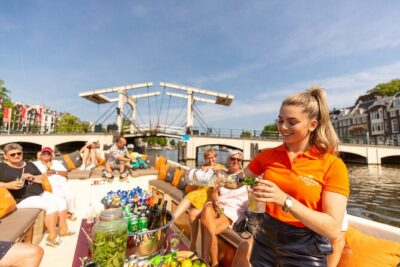 ★ 5.0Amsterdam Luxury Canal Cruise + Unlimited Drinks & Bites optionFrom $1830,518 reviews
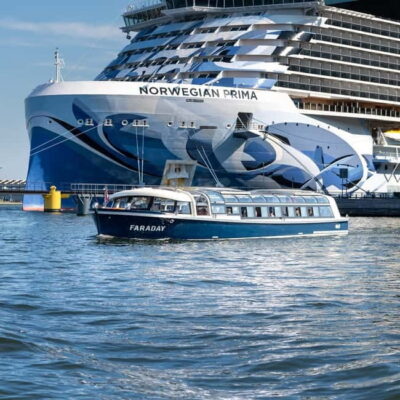 ★ 4.4Amsterdam: 75 Minute City Canal Cruise with Audio GuideFrom $1717,501 reviews
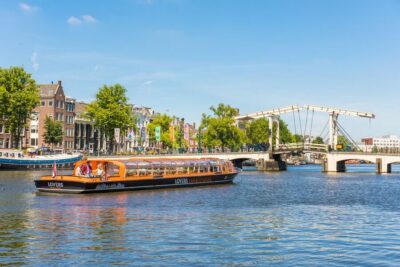 ★ 4.2Amsterdam: City Centre Canal CruiseFrom $1812,827 reviews
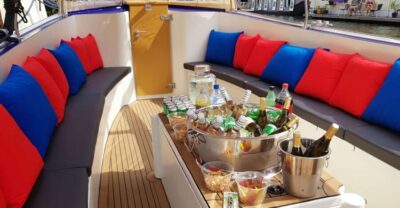 ★ 4.7Amsterdam: Covered Canal Booze Cruise with Unlimited DrinksFrom $185,435 reviews
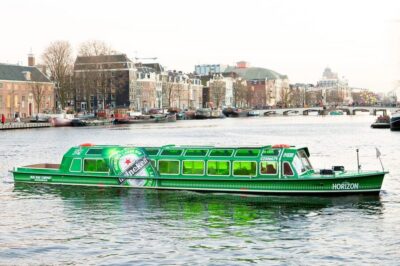 ★ 4.5Amsterdam: City Canal Cruise and Heineken Experience TicketFrom $475,367 reviews
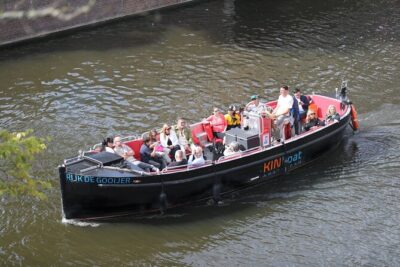 ★ 5.0Amsterdam Canal Cruise in Open Boat with Unlimited Drinks OptionFrom $214,976 reviews
 ★ 4.6Amsterdam: Van Gogh Museum Ticket and City Canal CruiseFrom $473,899 reviews
 ★ 4.5Amsterdam Evening Canal Cruise with Live Guide and Onboard BarFrom $243,619 reviews
Browse the lists this tour appears in