
REVIEW · AMSTERDAM
Amsterdam: National Maritime Museum Skip-the-Line Ticket
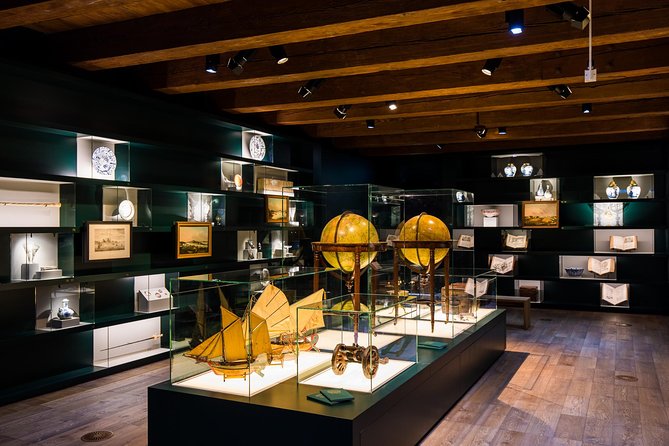
Ships, maps, and VR in one day. I love that the National Maritime Museum pairs skip-the-line entry with the chance to walk the VOC ship Amsterdam replica, then connects it all to navigation tools, sea charts, and hands-on displays. It is one of those museums where the building, the artifacts, and the stories all work together, so you do not feel like you are just staring at glass cases.
I also like the way the museum uses space well, especially the Arsenal building and its covered inner courtyard, which makes the visit feel historic even before you reach the galleries. One caution: this is a lot of content for a single day, so if you start late you might feel rushed and miss some of the interactive parts.
In This Review
- Quick hits: what you will remember
- Entering the Arsenal building (1656) and the covered courtyard
- Skip-the-line value: what you gain with a fast-track ticket
- The audio tour in 11 languages, and how to use it effectively
- Boarding the 1749 VOC ship Amsterdam replica
- VR over Amsterdam canals: making the Golden Age feel close
- Nautical maps, sea charts, and navigation tools
- A hard history, told with balance, and then brought to today
- Interactive exhibits for families, from touch screens to shipboard play
- Planning a one-day visit around the museum’s main “anchors”
- Who should book this ticket
- Is it worth $24? A value check for a full-day museum experience
- Should you book this skip-the-line National Maritime Museum ticket?
- FAQ
- Where is the meeting point for this ticket?
- How long does the visit last?
- What does the skip-the-line ticket include?
- Which languages are available for the audio tour?
- Is a guided tour included?
- Is the museum wheelchair accessible?
- Can I visit any part of the site for free?
- What if my plans change?
Quick hits: what you will remember
- Board the replica East Indiaman Amsterdam (1749) and climb through decks and cabins
- Fast-track entry helps you get to the good stuff without wasting time in line
- VR over central Amsterdam and canals turns the Golden Age harbor into something you can picture
- Maps, sea charts, and navigation instruments connect art and practical seafaring
- Family-focused interactive exhibits keep kids busy while adults learn
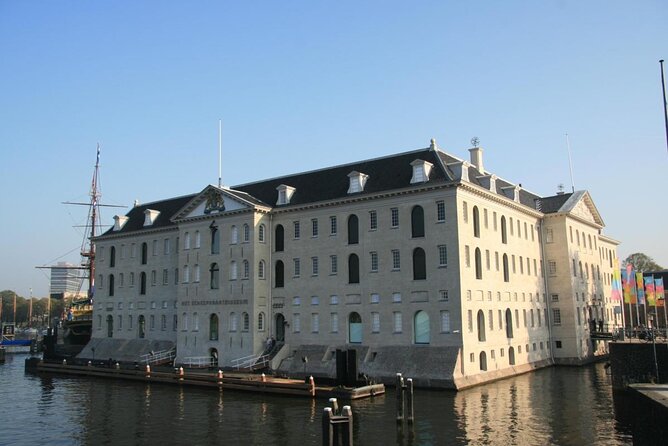
- A covered glass-roof inner courtyard inside a 1656 Admiralty storehouse sets the mood
Entering the Arsenal building (1656) and the covered courtyard
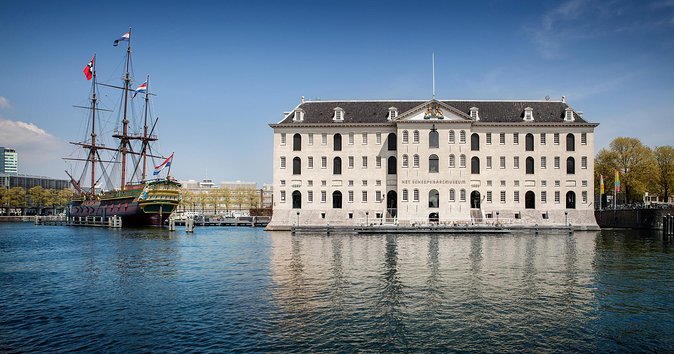
Your ticket starts you inside the museum complex in the Arsenal, a building from 1656 that originally served as a storehouse for the Admiralty. The setting matters here. You are not just visiting a collection of maritime objects, you are stepping into the kind of practical, working harbor world the exhibits explain.
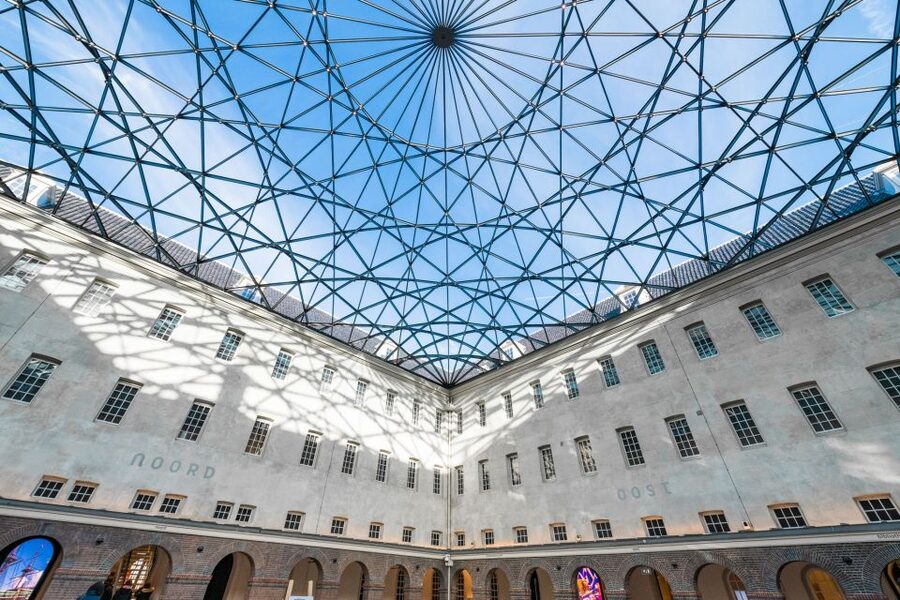
A standout is the covered inner courtyard, topped with a glass roof. Even if you only spend a few minutes there, it gives you that classic Amsterdam feeling of old stone, light filtering down, and a space designed for movement and activity. The architecture also repeats a nautical map pattern in the lining of the interior, made up of 1200 pieces, so the building itself feels like an extension of the museum’s theme.
One practical tip: plan to arrive for your time slot and give yourself a little buffer to get oriented. Skip-the-line helps with queuing, but you still want a moment to settle in, especially if you are pairing the museum with a morning or afternoon stroll elsewhere in Amsterdam.
Skip-the-line value: what you gain with a fast-track ticket
For museums, the real cost is not just money, it is time. With a skip-the-line option, you reduce the main friction point: waiting. That matters most in Amsterdam, when you may be sharing the day with canals, bike lanes, and other attractions all competing for your limited hours.
This ticket also sets you up to use the day well because it is built around the museum’s biggest draws: the replica ship, the audio tour, and the VR experience. When those are the anchors of your visit, getting in quickly helps you actually reach them while you still have energy.
If you are the type who likes to read labels and take your time with exhibits, you will still want the full day. If you are a fast walker, you can squeeze a lot in, but the museum is designed to reward slowing down.
The audio tour in 11 languages, and how to use it effectively
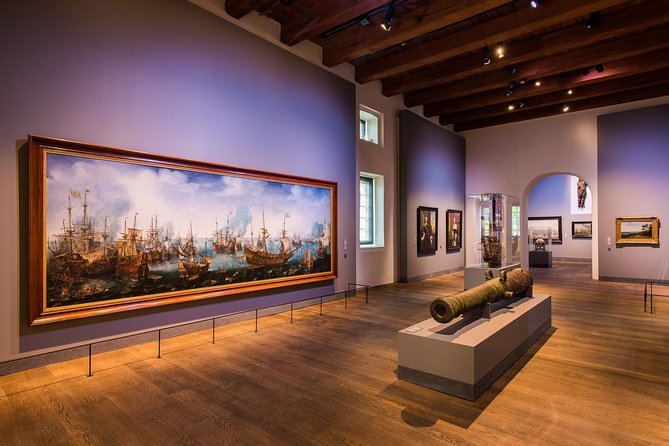
Your ticket includes an audio tour in 11 languages: Spanish, Chinese, Dutch, English, French, German, Italian, Japanese, Korean, Portuguese, and Russian. That is a big deal for value and pacing. It means you can move at your own speed and still get the context you need for paintings, models, navigation instruments, and sea charts.
You also get a strong story framework: the museum explains how Amsterdam grew into the greatest harbor in mainland Europe. Audio helps you connect the dots between different galleries, instead of treating each room like a separate history chapter.
A smart way to use it: start with the big narrative, then let it pull you toward the objects. When you hit the map-making and navigation items, the audio makes clear why these were not just technical tools, they were the way empires and merchants planned risk, time, and routes.
If you prefer human conversation, a guided tour is not included with this ticket. That is not a dealbreaker, but it does mean you will rely on audio and your own exploration.
Boarding the 1749 VOC ship Amsterdam replica

The museum’s star move is simple: you can step aboard the replica East Indiaman Amsterdam, built as it would have been in 1749. This is one of the rare maritime museums where you are not just viewing a boat, you are walking it like a shipboard world.
I love how the replica is set up for exploring, not hovering. You can see life-like displays and get a feel for how space worked on a ship during the Dutch Golden Age. One of the most memorable moments is getting into the captain’s quarters, where the proportions and details make the hierarchy of life at sea feel more real.
There are also interactive bits that lean into the fun side. Some areas let you try experiences like squeezing into tight spaces, firing a cannon, or hanging in a sailor’s hammock. Even if you only do one or two of these, the hands-on interaction makes the history stick.
Look closely for carved detail too. Reviews highlight figure heads and carvings, which makes sense in a museum that treats ship design as both engineering and art. If you are traveling with kids, this ship section is often the moment they remember later, because it is physical and game-like without being loud or chaotic.
VR over Amsterdam canals: making the Golden Age feel close
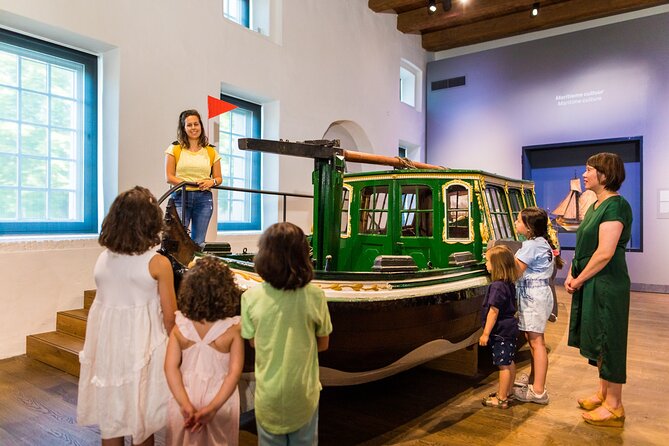
The virtual reality experience is another key reason to book this museum ticket rather than just walking around the historic building. You board a VR journey that takes you through Amsterdam as it was during the Golden Age, focused on the harbor and central city area.
What I like about VR here is the way it supports the rest of the museum. When you have already seen maps, charts, and navigation tools, VR gives you a visual scale for what those documents were trying to describe. The Golden Age is easy to treat like a name in a textbook. VR helps it become a place.
Plan for this part mid-visit. If you save it for the end, you may be tired and miss the chance to connect it to what you just learned. If you do it early, you will be ready to notice details as you tour the galleries. Either way, treat it as a highlight, not an afterthought.
Nautical maps, sea charts, and navigation tools

One of the most satisfying areas is the museum’s focus on maritime information: paintings and ship models on one side, then sea charts and navigation instruments on the other. It turns seafaring into something you can understand, not just something you admire.
Map making is a repeated theme in this collection, and you will see why Amsterdam became such a powerhouse. Merchants and navies needed more than ships. They needed ways to plan, measure, and survive.
If you love cartography or technical history, this is where you can slow down. Reviews mention the history of map making as especially interesting, and the navigation elements help make that fascination feel practical. The museum also uses storytelling around objects, so you are not stuck with raw facts, you get reasons.
There is also enough art here to keep non-experts engaged. Paintings and ship design details show how aesthetics and function traveled together, especially when ships were national pride and commercial power all at once.
A hard history, told with balance, and then brought to today
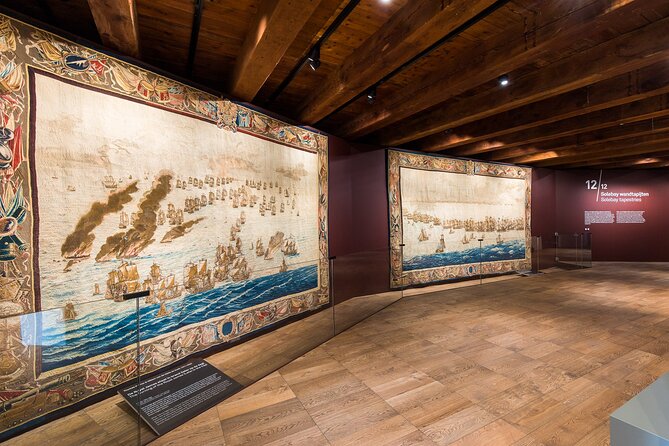
The museum covers a wide range, including Dutch maritime activities tied to colonization and the slave trade, plus sea battles. It also works to include modern perspective alongside the Dutch Golden Age story, including a highlight of a solo around the world sailing trip.
This matters because maritime history is not only voyages and victories. It is trade networks, human lives, violence, and long-term consequences. In this museum, the audio tour and exhibit structure help you face those topics without pretending they are separate from the technology and exploration the Dutch were famous for.
You might also spot exhibitions that connect older seafaring to bigger global stories, including a review that referenced Shadows of the Atlantic. If that theme interests you, plan a little extra time for the galleries, not just the ship.
If your group includes kids, there are exhibits designed for (young) children. In a museum that can cover serious topics, the presence of family-focused sections is a relief. It lets you keep the day moving while kids have things to do.
Interactive exhibits for families, from touch screens to shipboard play
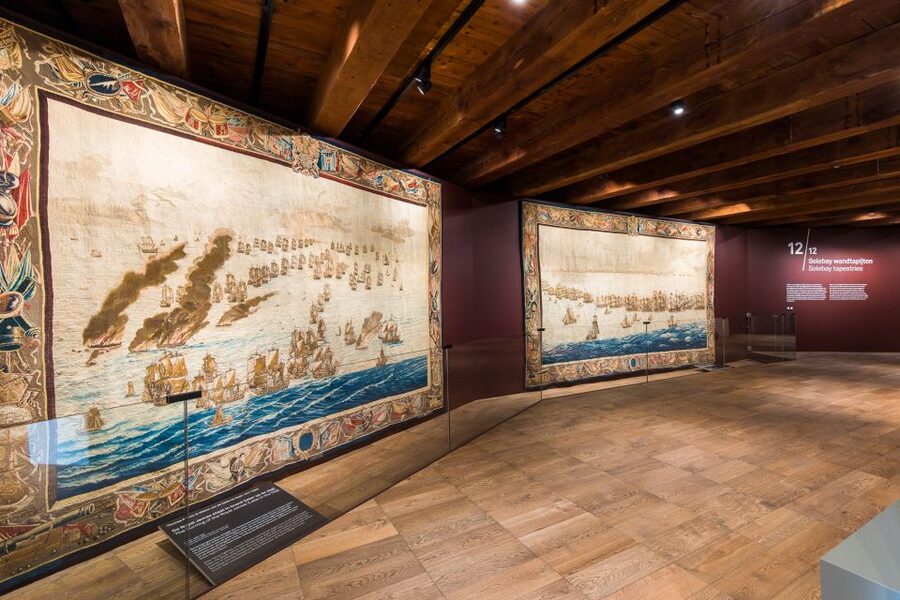
This museum leans into interactive learning in a way that feels built for families. You will find activities and hands-on areas where you can watch videos, touch screens, and interact with displays. Reviews also mention interactive elements on docked sailing ship areas, including activities for children in ship holds.
What I find useful about this is that it gives you a plan when you have different ages in the group. While some people can focus on detailed charts and models, kids can focus on sound, motion, and physical ship spaces.
If you want a smooth visit, treat interactivity like your break schedule. Do one interactive area, then head back to a quieter section for a bit. That rhythm prevents fatigue, which helps you actually enjoy the heavier exhibits later.
Planning a one-day visit around the museum’s main “anchors”
This experience is meant to be a 1-day visit. In practice, that means you should plan like you have one full “museum block,” not a quick stop between tram rides.
Here is a simple way to organize your time:
- Start in the Arsenal building and get your bearings in the courtyard setting.
- Go straight to the ship replica while you are fresh.
- Use the audio tour to connect rooms, especially where exhibits discuss maps and navigation.
- Fit in the VR journey when you are ready to translate what you saw into a visual scene.
- Finish with galleries that interest you most, such as model-heavy or map-heavy sections, plus interactive family exhibits.
A practical note: the museum includes a covered courtyard that you can visit for free from 10:00 AM to 05:00 PM daily. That is great if you are curious and want to stretch your day. Just remember that the ticketed entry is what gets you the full maritime museum experience with the ship replica and the audio tour.
One more timing reality from experience reports: at least one visitor noted the site closed around 17:00, so if you are arriving late, check the day-of hours.
Who should book this ticket
You will be happiest here if maritime history, ship design, or map-making is your kind of subject. It is also a great option if you like hands-on museums and visual learning.
This ticket is especially suited for:
- Families, because there are interactive exhibitions and ship spaces built for kids
- History and art lovers, since you get artifacts, paintings, and navigation tools together
- People who want practical context, because the story connects harbor power to routes, charts, and trade
- Wheelchair users, since the experience is listed as wheelchair accessible
- Solo travelers and couples, because the ship replica and VR create built-in highlights without needing a guide
If you are traveling with someone who is not into maritime details, the ship replica and VR usually win them over. It becomes a “walk-on-world” kind of museum, not a lecture museum.
Is it worth $24? A value check for a full-day museum experience
At about $24 per person, the value depends on whether you can use the ticket for the museum’s major anchors. For this one, the ticket is doing more than getting you inside a building.
You are paying for:
- Skip-the-line entry, which saves your most limited resource
- Access to the 18th-century ship replica and the ship-focused experiences
- An audio tour in 11 languages, which helps you understand the collection without a live guide
- A VR journey, which is often the thing you cannot recreate on your own in Amsterdam
Add all that up and the ticket price starts to make sense as a “one-day experience package,” not just a museum admission. If you were only interested in browsing the courtyard for free, you could do that without the ticket, but you would miss the ship replica, audio-led object stories, and VR.
Should you book this skip-the-line National Maritime Museum ticket?
I think you should book it if you want a full, high-impact museum day. The combination of boarding the ship replica, using an audio tour in your preferred language, and stepping into VR is what turns this into more than a standard gallery walk.
Skip it if you hate interactive spaces or you prefer very small museums with minimal crowds and minimal structure. It is also a long enough experience that starting late can feel stressful.
If you are deciding between “maritime history museum” and something more casual, choose this one when you want stories you can see, touch, and then visualize again. It is one of those Amsterdam stops that rewards curiosity, and it gives you plenty to talk about after you leave the Arsenal.
FAQ
Where is the meeting point for this ticket?
The meeting point is Hetscheepvaartmuseum, Kattenburgerplein 1, 1018 KK Amsterdam.
How long does the visit last?
The ticket is valid for 1 day. You can check availability to see starting times.
What does the skip-the-line ticket include?
It includes entrance to the National Maritime Museum, a visit to the replica ship Amsterdam, and an audio tour in 11 languages.
Which languages are available for the audio tour?
The audio tour languages are Spanish, Chinese, Dutch, English, French, German, Italian, Japanese, Korean, Portuguese, and Russian.
Is a guided tour included?
No. A guided tour is not included with this ticket.
Is the museum wheelchair accessible?
Yes, the experience is listed as wheelchair accessible.
Can I visit any part of the site for free?
The open courtyard can be visited for free daily from 10:00 AM to 05:00 PM.
What if my plans change?
Free cancellation is available up to 24 hours in advance for a full refund.
Amsterdam Museums & Attractions, compared.
 ★ 4.6Amsterdam: Heineken Experience TicketFrom $2830,055 reviews
 ★ 4.2Amsterdam: Icebar Entry Ticket with 3 DrinksFrom $2614,562 reviews
 ★ 4.4Moco Museum Amsterdam Entrance Tickets with Banksy & MoreFrom $1810,088 reviews
 ★ 4.4Amsterdam: The Upside Down Museum Entrance TicketFrom $249,506 reviews
 ★ 4.6Amsterdam: Johan Cruijff ArenA Tour with Optional GuideFrom $328,954 reviews
 ★ 4.7Amsterdam: Fabrique des Lumières Entry TicketFrom $208,666 reviews
 ★ 4.6Amsterdam: Royal Palace Entry Ticket and Audio GuideFrom $156,475 reviews
 ★ 4.5Amsterdam: City Canal Cruise and Heineken Experience TicketFrom $475,367 reviews
Browse the lists this tour appears in