

REVIEW · AMSTERDAM
Amsterdam: Red Light District guided tour (TOP RATED)
A guided walk through De Wallen changes everything. I like the small-group size that keeps the pace relaxed, and I like that your guide shares the local rules with respect. The one drawback: it is not a great fit if you have limited mobility, because it’s mostly time on foot along narrow streets.
You start and finish at Damrak, in central Amsterdam, and spend about two hours getting your bearings. You’ll see the area’s major landmarks and hear why this neighborhood exists the way it does, plus how Amsterdam’s laws and attitudes shaped what you see today.
In This Review
- Key reasons this tour works so well
- De Wallen, explained like a neighbor, not like a museum
- Where you meet, how long it takes, and what the pace feels like
- What you actually see in the De Wallen walk
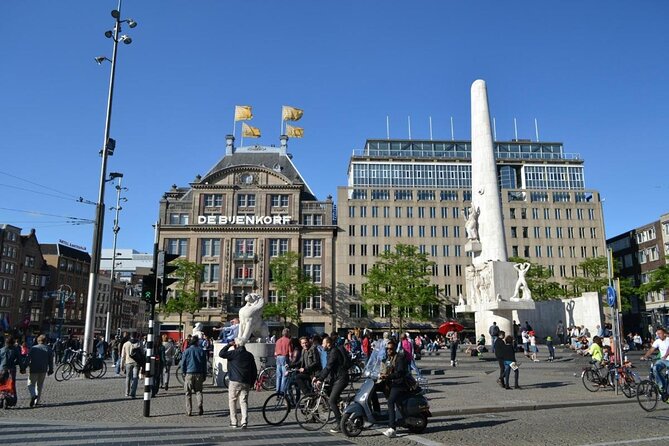
- Landmark stop: Dam, and Amsterdam’s “built on poles” truth
- Pub The Ape, a wooden survivor from the 1500s
- The Waag: a former city gate turned guild center
- The smallest house, and VOC storage to long-term living
- The condom shop detail that makes the point about modern rules
- Coffee-shop culture and the “ask questions” style of guides
- Price and value: why 34 euros-ish can be worth it
- Logistics and comfort: what to plan for before you go
- Who should book this tour
- Quick fairness note: how the tone matters here
- Should you book the Amsterdam Red Light District guided tour?
Key reasons this tour works so well
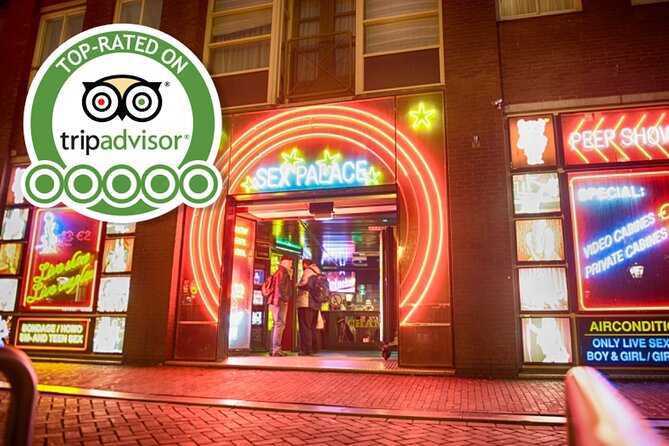
- Small group (max 15) keeps it comfortable and easier to hear, even when streets get busy.
- A local guide perspective connects the Red Light District to wider Amsterdam history and culture.
- History stops you will miss on your own, like the Waag and the wooden heritage buildings.
- Clear talk about laws and regulations, so it feels less shocking and more understandable.
- Night-friendly atmosphere if you want the nightlife energy and more going on after dark.
Other guided walks through this part of Amsterdam, for adults
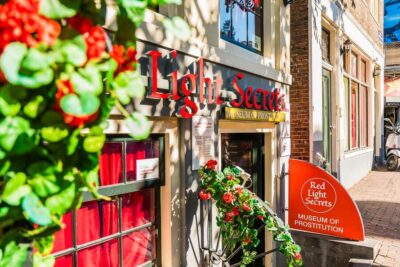
- Amsterdam: Red Light Secrets Museum Entry Ticket★ 4.2 · 5,722 reviews
- Amsterdam: Red Light District Tour in German/English/Italian★ 4.9 · 5,623 reviews
- Amsterdam Red Light District & Coffee Shop Tour★ 4.6 · 4,134 reviews
- Amsterdam: Red Light District Pub Crawl with Unlimited Shots★ 4.1 · 2,130 reviews
De Wallen, explained like a neighbor, not like a museum
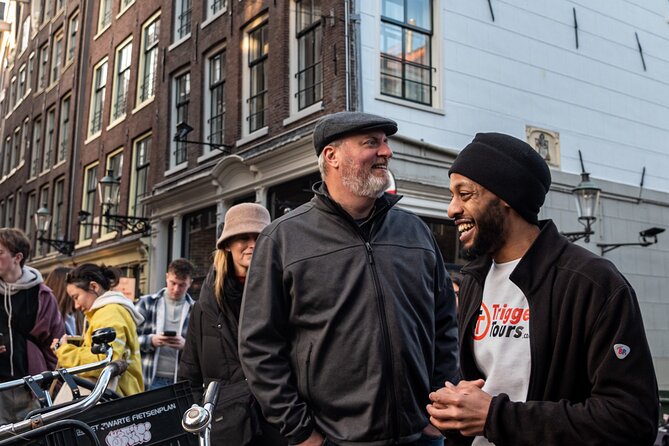
If you only wander the Red Light District on your own, you can end up with lots of questions and almost no context. This is the kind of guided walk that helps you read the neighborhood instead of just staring at it.
What you get is a mix of present-day reality and backstory. You’ll walk narrow streets in the De Wallen area, see the main sights, and learn how the neighborhood works within the city’s rules. Guides also bring in the broader Amsterdam angle, including coffee-house culture, which helps the area feel like part of the city rather than a tourist bubble.
It also helps that the tone stays human and practical. In the group, I’ve seen guides make a point to stay respectful toward the workers who live and work there, and to remind everyone about real street conditions, including the fast bicycle traffic. That matters more than people expect.
Where you meet, how long it takes, and what the pace feels like
This tour is about two hours and runs with a maximum of 15 people. You’ll meet at Damrak, 1012 Amsterdam, and you also finish back at Damrak. The whole thing is offered in English, and you get a mobile ticket.
The meeting point is convenient because Damrak sits right in the center of the action. You can get there on foot or by public transport without building a whole transit plan around it. And because it’s a walking tour, the group size helps keep the pace from turning into a shuffle.
Bring layers. Even if Amsterdam is mild that day, you’ll be outside for a chunk of time. And if you’re going at night, expect it to feel colder and darker than the daylight version, simply because Amsterdam evenings can be damp.
What you actually see in the De Wallen walk
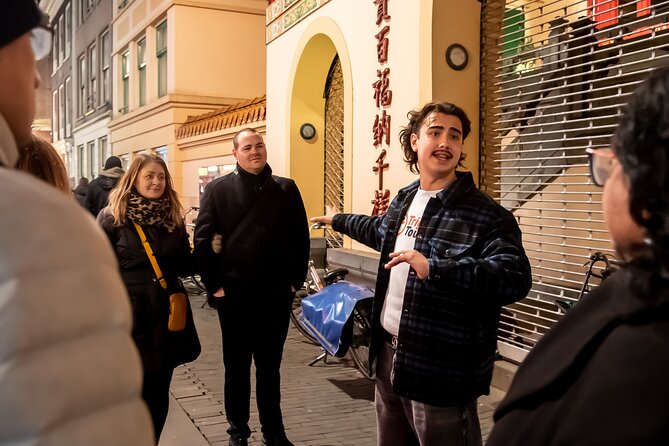
The heart of the tour is a guided walk through De Wallen, Amsterdam’s best-known Red Light District area. Instead of just pointing out windows and passing on, the guide explains what you are looking at and why the city handles it the way it does.
Along the way, the route connects De Wallen to older, deeper roots in the city. That is a big part of why this works for first-timers. You’re not just collecting shock value, you’re learning how Amsterdam’s geography, trade, and laws shaped what became normal here.
You’ll also get moments that feel surprising in a good way, like stumbling into street-level history, not just adult-entertainment landmarks. Guides often keep the mood light too, with humor that helps you stay comfortable while still getting straight answers.
Landmark stop: Dam, and Amsterdam’s “built on poles” truth
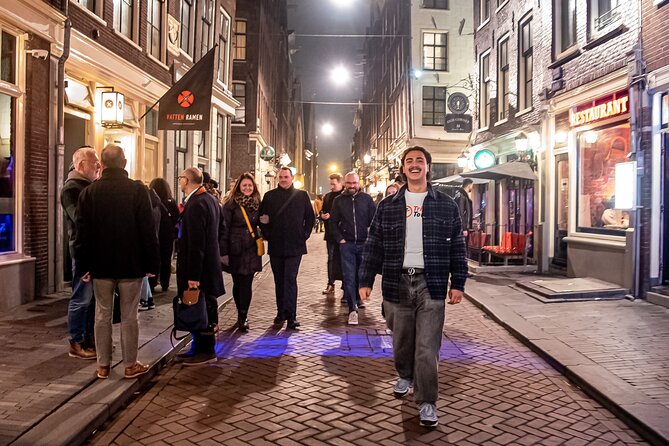
One of the most interesting parts of this walk is how it pulls you into the city’s engineering story. Amsterdam’s old center sits on tricky soil, with fen and clay, so buildings needed foundations that reach down farther than you might assume.
You’ll hear the explanation that houses in the city were built on wooden piles driven deep, through layers of clay, peat, and water, until they hit the first solid sand layer. The depth gets mentioned as about 11 meters. It’s one of those details that makes Amsterdam feel less like a pretty postcard and more like a clever feat of planning.
This stop also helps you connect the neighborhood to the bigger city. When you know Amsterdam had to solve “can we even build here” early on, it makes sense that the city also built its institutions and laws carefully around how people live, trade, and gather.
More trips where somebody else does the explaining

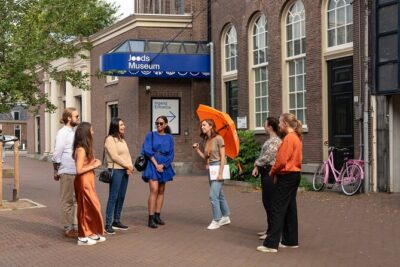


Pub The Ape, a wooden survivor from the 1500s
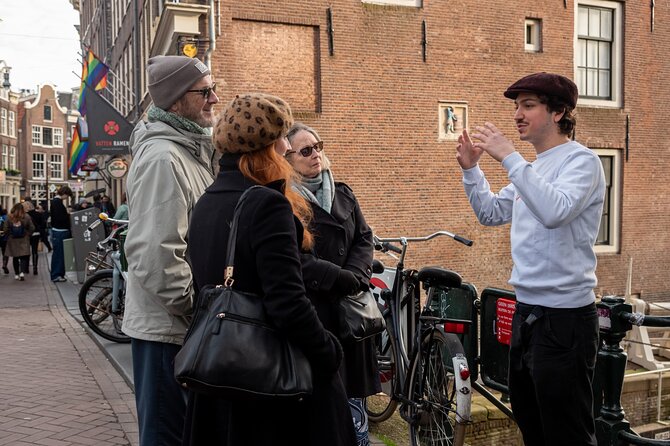
Another standout moment is Pub The Ape, also known by its Dutch name Int Aepjen. It’s described as being built around 1540, and it’s known for being one of the last remaining wooden buildings in Amsterdam.
This is more than a cool fact. When your guide places it in context, it highlights a pattern: Amsterdam was constantly changing, responding to disasters and new building rules. For example, there was a big fire in 1452, and after that point, the city pushed toward brick facades. So when you see a surviving wooden structure, it feels like a real time capsule.
If you like history that shows up in everyday places, not just museums, you’ll enjoy this kind of stop. It also keeps the walk moving through different textures of the city, not stuck in one narrow topic.
The Waag: a former city gate turned guild center
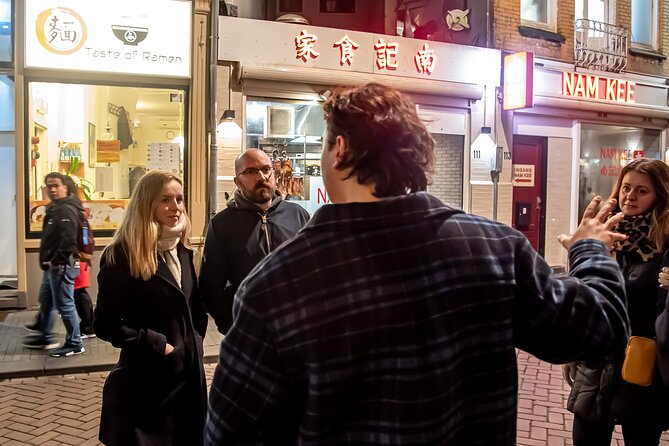
Next up, you’ll pass by the Waag, a landmark that used to be one of Amsterdam’s city gates. It was built around the 1400s and is described as the second oldest building in Amsterdam.
Later, the Waag wasn’t just a defensive structure. It became a working space tied to the city’s crafts, with guilds and craftsman organizations using it and forming around the square.
That is a key theme on this tour: how power and economy shaped the city. Amsterdam grew rich through trade, and neighborhoods developed around that reality. When the guide ties the Waag to that bigger story, De Wallen stops feeling random and starts feeling like it belongs to the same city that built walls, markets, and rules.
The smallest house, and VOC storage to long-term living
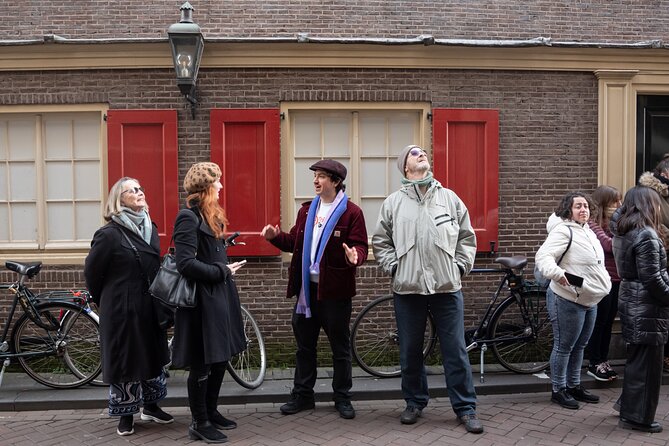
You’ll also learn about the smallest house of Amsterdam, built around the 1700s. The story here is that it was first used as storage for the VOC trading company, before people lived there for a long time.
This stop is a reminder that Amsterdam’s history is compact. People, money, and commerce all lived close together, sometimes literally in small spaces. When the guide connects that to how the city developed, it gives you a clearer sense of why certain areas became focal points for visitors and locals alike.
The condom shop detail that makes the point about modern rules
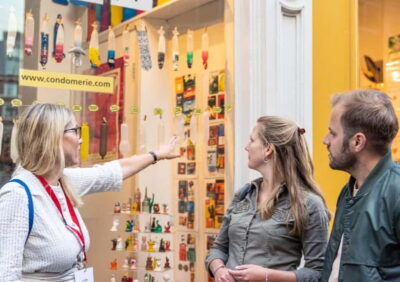
Yes, you will hear about the world’s first condom shop that has been in place since 1987. You may also learn it offers custom sizing and different types of condoms.
This isn’t included to shock you. It’s included because it shows a practical Amsterdam approach: regulations, public health, and how the city tries to manage adult realities without ignoring them. When your guide frames it this way, the shop stop becomes a symbol for what Amsterdam’s tolerance looks like in real life.
It also sets up the bigger point of the tour: the Red Light District exists within a legal and civic system, not outside of it. Understanding that helps you move through the area with less confusion and fewer stereotypes.
Coffee-shop culture and the “ask questions” style of guides
A lot of the best feedback centers on the guides. Names you may hear include Ben, Robin, Andrea, Aarre, and Catherine. Across different guides, the common thread is an engaging style with enough humor to keep things comfortable.
Guides also tend to open the floor for questions. That is a smart move in this neighborhood, because people usually want to know how rules actually work, what is allowed, and what is just rumor. You’ll get answers without the tour feeling like a lecture.
One small but memorable tip that comes up in guide talk is asking about the banana bar. It’s the kind of local nudge that feels more useful than another photo stop.
Price and value: why 34 euros-ish can be worth it
The price is listed at $34.17 per person for about two hours, with a local guide included. Also, an admission ticket is free for the main stop, so you are not paying extra just to look at things from street level.
Here’s how I think about value for this specific type of tour. If you self-walk De Wallen, you might spend time trying to piece together facts from signage, online posts, and guesswork. With a guide, you pay for context, translation of what you see, and a respectful explanation of laws and regulations.
And because it’s small group, you are not just buying generic narration. You get the chance to ask questions, and the guide can react to the energy of your group. That matters a lot in a sensitive topic area.
Logistics and comfort: what to plan for before you go
This is a walking tour, and the area’s streets are narrow. It is listed as not recommended for travelers with limited mobility. If mobility is a concern, this is the part where you should be honest with yourself, because you likely won’t want to stop and start constantly.
The tour is also marked as requiring good weather. If it gets canceled due to poor weather, you should expect the operator to offer another date or a full refund.
One more thing: Amsterdam bicycles are real. Your guide may remind you to watch for bike traffic, and you should take that seriously. It’s not about being scared, it’s about being alert.
Who should book this tour
This tour is a good match if you want:
- A first-time orientation for Amsterdam’s city center and De Wallen area
- Straight answers about how laws and regulations shape what you see
- A guide who keeps the topic respectful and grounded in real city context
- A two-hour plan that fits easily into a day
It may be less ideal if you want long museum-style stops, or if mobility limitations would make uneven sidewalks and busy crossings difficult.
If you’re heading out at night, you might also find the evening tour feels more alive, with more going on around the neighborhood.
Quick fairness note: how the tone matters here
This kind of neighborhood is sensitive, and the difference between a respectful guide and a rude one can change the whole experience. The better guides focus on dignified explanations and practical rules, while keeping the group comfortable.
That tone shows up in guide styles, with guides making it clear they are not turning workers into a spectacle. If you care about how a tour handles dignity, this is one of those times where you should pay attention to that part of the presentation.
Should you book the Amsterdam Red Light District guided tour?
Yes, if you’re the kind of traveler who likes to understand what you’re seeing before you judge it. The local rules, the walk through older Amsterdam landmarks like the Waag, the story behind Amsterdam’s foundation piles, and the practical mention of the condom shop since 1987 all combine to make the neighborhood more understandable.
Book it especially if:
- You want a relaxed small-group experience.
- You want a first-timer-friendly plan that does not just rely on guesswork.
- You like guides who answer questions and keep the atmosphere comfortable.
Skip it or think twice if:
- You have limited mobility and walking for about two hours would be a problem.
- You’re only in Amsterdam for a short time and would rather spend your hours elsewhere.
If you do book, go in with curiosity and a calm mindset. You’ll walk out with a clearer picture of De Wallen as part of Amsterdam, not just as a headline.
Everything Else From Our Amsterdam Notebook




Also Reviewed Around Amsterdam





The Adult Side of Amsterdam, Explained




Fresh off the review pile in Amsterdam
- Full-Day Trip From Amsterdam to Keukenhof, Zaanse Schans + Cruise
★ 5.0 · 3 reviews - Boutique Dutch Food & History Tour with up to 8 guests only
★ 5.0 · 3 reviews - Private Tour to Windmills Zaanse Schans +Keukenhof – 7 Hours
★ 5.0 · 3 reviews - Full-Day Private Guided Countryside Tour from Amsterdam by Bike
★ 5.0 · 3 reviews - Amsterdam Red Light District and Old Town Walking Tour
★ 5.0 · 3 reviews
Red Light District & Coffeeshops, compared.
 ★ 4.2Amsterdam: Red Light Secrets Museum Entry TicketFrom $175,722 reviews
 ★ 4.9Amsterdam: Red Light District Tour in German/English/ItalianFrom $285,623 reviews
 ★ 4.6Amsterdam Red Light District & Coffee Shop TourFrom $294,134 reviews
 ★ 4.1Amsterdam: Red Light District Pub Crawl with Unlimited ShotsFrom $242,130 reviews
 ★ 4.5Amsterdam Red Light District Pub CrawlFrom $241,497 reviews
 ★ 4.2Amsterdam: Cannabis Museum Entry TicketFrom $141,244 reviews
 ★ 4.5Amsterdam: Red Light District TourFrom $331,135 reviews
 ★ 4.1Amsterdam: After Dark Red Light District TourFrom $571,030 reviews
Browse the lists this tour appears in