
REVIEW · AMSTERDAM
Amsterdam: Spanish Tour Unmasking the Redlight District
Stories walk beside you here. This 2-hour Spanish tour traces the Amsterdam Red Light District from medieval port life to today’s reputation for progressive thinking, and you’ll hit standout historic anchors like Oude Kerk and De Waag. I like that the story is tied to real streets and buildings, not vague claims, and I also like the guide’s knack for keeping the pace moving with stories and mysteries. One consideration: the area’s adult content is part of the context, so it’s not the right fit for everyone.
You meet your Spanish-speaking guide outside the Barbizon Palace Hotel on Prins Hendrikkade street, then you walk outdoors through Central Amsterdam. You’ll move from the early development around the waterfront and sailor culture toward the canals and side streets that made this neighborhood famous, and you’ll end near the Royal Palace area in Dam Square.
In This Review
- Key highlights to look for
- Starting at Barbizon Palace Hotel, then straight into the port story
- Zeedijk and the sailor streets that set the stage
- Nieuwmarkt Square and De Waag, where the city measured its people
- Oude Kerk and the canal network that made everything feel close
- Warmoesstraat, quick photo moments, and side streets with meaning
- A finish near Beursplein, then the Royal Palace perspective
- How the Red Light District became tied to progressive thought
- Is $31 a smart value for a 2-hour walk?
- Practical tips before you go: comfort, cameras, and adult themes
- Should you book this Amsterdam Spanish Red Light District tour?
- FAQ
- How long is the Amsterdam Spanish tour about the Red Light District?
- Where do I meet the guide?
- Is the tour guided in Spanish?
- Is food or drinks included?
- Does the tour include entry into venues?
- Are photos allowed?
- Is alcohol allowed on the tour?
- What is the cancellation policy?
Key highlights to look for
- A clear route through major landmarks like St. Nicholas Basilica, Nieuwmarkt Square, and Oude Kerk
- De Waag at Nieuwmarkt (a former city gate and weighing house) as a sharp “how the city worked” stop
- Photo-time moments at a couple of visually interesting spots, including He Hua Tempel
- Canals and church leftovers that help explain why the neighborhood grew the way it did
- A big-picture finish at Dam Square with the Royal Palace and the district’s relationship discussed
- A Spanish guide who keeps it easy to follow, with fast, fluid explanations
Other guided walks through this part of Amsterdam, for adults
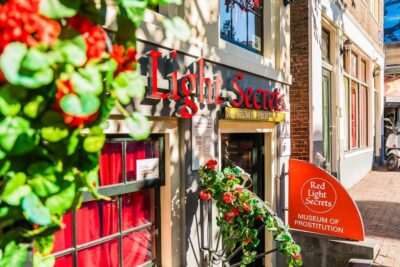
- Amsterdam: Red Light Secrets Museum Entry Ticket★ 4.2 · 5,722 reviews
- Amsterdam: Red Light District Tour in German/English/Italian★ 4.9 · 5,623 reviews
- Amsterdam Red Light District & Coffee Shop Tour★ 4.6 · 4,134 reviews
- Amsterdam: Red Light District Pub Crawl with Unlimited Shots★ 4.1 · 2,130 reviews
Starting at Barbizon Palace Hotel, then straight into the port story
I like walking tours that start with orientation, not confusion. Here, you begin outside the Barbizon Palace Hotel on Prins Hendrikkade street, a practical launch point that puts you on the right side of Central Amsterdam before the Red Light District gets under your skin.
Right away, the tour frames the neighborhood as something Amsterdam created through trade and movement, not something that popped out of nowhere. You get a brief intro to Amsterdam’s maritime heritage at St. Nicholas Basilica, which sits opposite Central Station. Even if you do not know the city yet, that opening matters because it explains why this pocket of town was ready for constant change.
Then the walking portion shifts to Zeedijk. This is where you start hearing how the city’s port connected cultures. The street has links to sailors and historic bars that served people passing through by sea, which helps you understand why the area became a social magnet long before it became a headline.
If you are hoping for a purely visual stroll, you will still enjoy it. The guide’s job is to make the streets legible. That means you’ll walk more like you are reading the city than just passing it.
Zeedijk and the sailor streets that set the stage
Zeedijk is one of those Amsterdam streets where history feels layered instead of “one moment in time.” On this walk, it’s treated as a starting line for the neighborhood’s social mix. You hear how Amsterdam’s harbor function turned the area into a meeting point for people with different backgrounds, different languages, and different reasons for being in town.
This matters because the Red Light District did not develop in a vacuum. It grew from demand. Prosperity pulled more residents and visitors into the area, and entertainment and vice followed demand, not the other way around.
You also get a sense of how small streets and canal-adjacent spaces can concentrate activity. This is where the walk becomes more useful than a museum visit. Museums give you dates. Streets show you scale. Narrow passages make it obvious why “going out” was easier here, and why legends grew from repeat visits.
One small note for your comfort: this is a respectful history-focused tour, but the topic is still adult. If you feel uneasy with that theme, wear your calm shoes and treat this as an urban history lesson, not a nightlife plan.
Nieuwmarkt Square and De Waag, where the city measured its people
Next, you reach Nieuwmarkt Square and De Waag. The tour highlights De Waag specifically, calling out its past role as a city gate turned weighing house. That kind of detail is exactly why I find this stop valuable.
Why does a weighing house belong in a Red Light District story? Because Amsterdam’s identity was built on trade systems. When a city measures goods, controls entry, and processes commerce, it also creates routines for arrivals and departures. That rhythm brings in strangers and keeps the area in motion.
Nieuwmarkt Square adds a “big space” moment after the narrower streets. It gives you a quick reset, and it helps you see how the Red Light District connects to the wider city grid. You’re not just learning scandal. You’re learning how Amsterdam’s growth created both opportunity and friction.
And once you grasp that, the later canal-network discussion lands better. The guide’s through-line keeps circling back to one core idea: prosperity increased population and demand, and entertainment and vice took advantage.
Oude Kerk and the canal network that made everything feel close
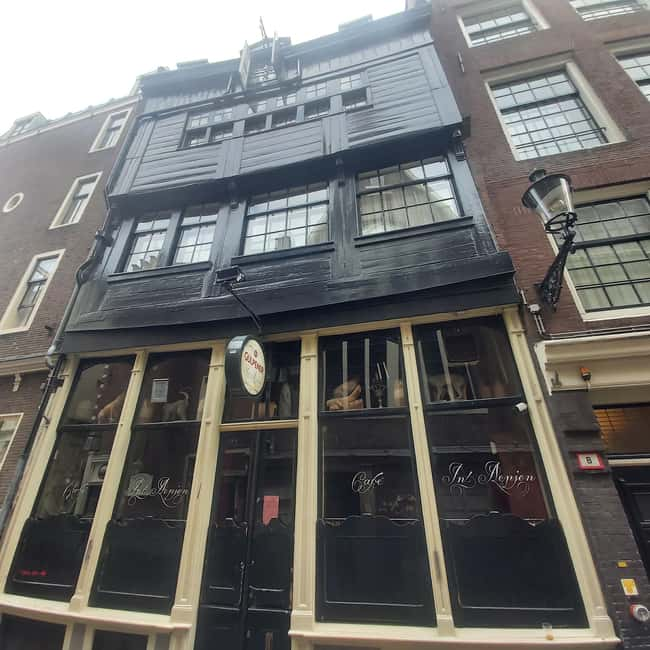
One of the most satisfying parts of the route is how it brings you to Oude Kerk, the city’s oldest building. You visit for about 15 minutes, and the time is long enough to get the atmosphere without feeling rushed.
I like that the walk does not treat Oude Kerk like a random photo stop. It’s used as a marker for Amsterdam’s medieval past, which makes the later discussion of the Red Light District more believable. This is one of the clues that the neighborhood grew on top of earlier city patterns, not beside them.
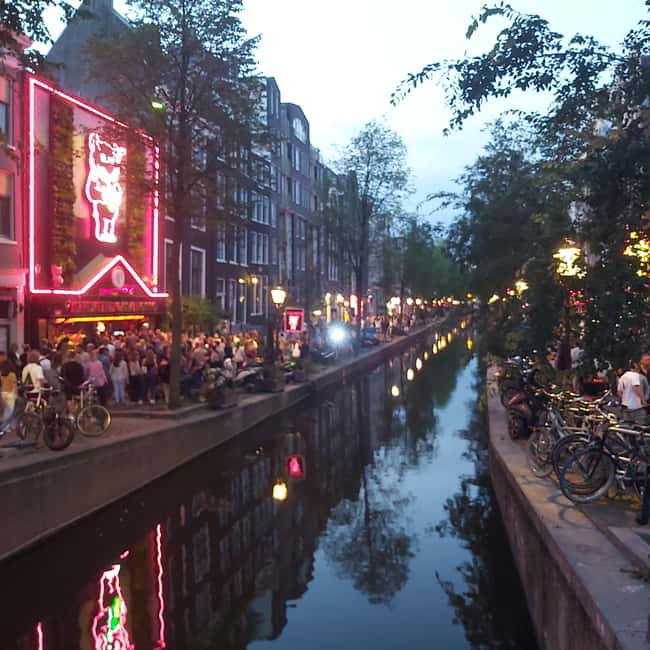
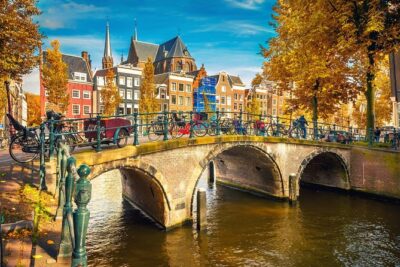
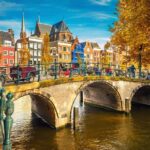
After that, the tour continues along Oudezijds Voorburgwal, described as the heart of the canal network in the Red Light District. This is where you start understanding “why here” in a practical way. Canals are not just pretty. They shape movement, create back routes, and make the city feel like a set of corridors rather than one main road.
The guide also mentions historic canals and hidden chapels, which helps explain how religious and civic life coexisted with street-level life. Chapels and small structures tucked into the urban fabric are a reminder that people were always living in this neighborhood, not only visiting it.

Warmoesstraat, quick photo moments, and side streets with meaning
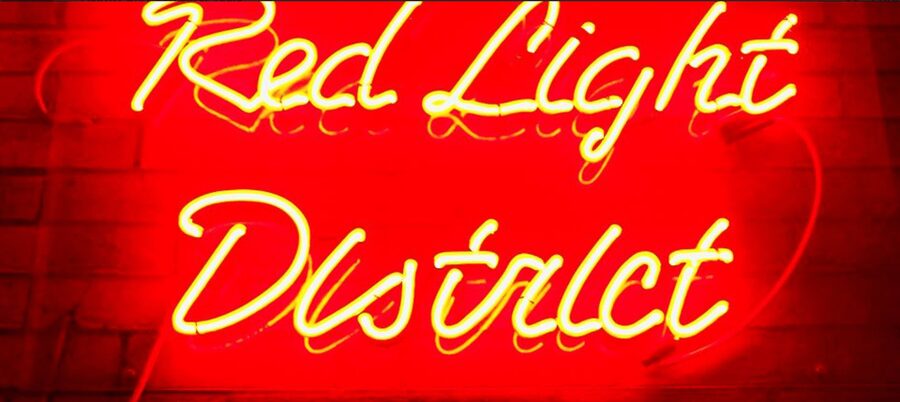
The walk continues to Warmoesstraat, a street associated with the district’s energy and nightlife atmosphere. You only spend about 10 minutes there, but it serves a purpose. It’s a bridge between the major focal points, and it helps you connect the story to the kind of street you might recognize instantly once you’ve been there.
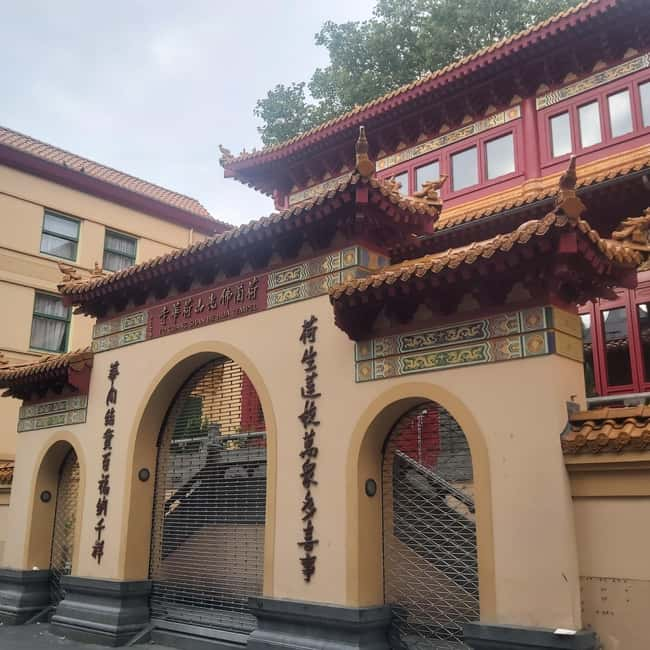
Along the way, you also get short photo stops that break up the walking. One is a secret stop photo stop, and another is at He Hua Tempel, also listed as a photo stop. These moments give you a chance to record what you are seeing while the guide keeps the flow moving.
What I enjoy about these photo stops is the way they widen the story beyond one single theme. The Red Light District is famous for one thing, but you can miss the surrounding neighborhood character if you only focus on that. The tour uses these stops to show how multiple communities and landmarks exist in close proximity.
If you plan to take photos, note that photography inside is not allowed. The guide will advise when you can use your camera, which is a helpful rule. It keeps you from getting awkwardly stuck at a doorstep while everyone else moves on.
A finish near Beursplein, then the Royal Palace perspective
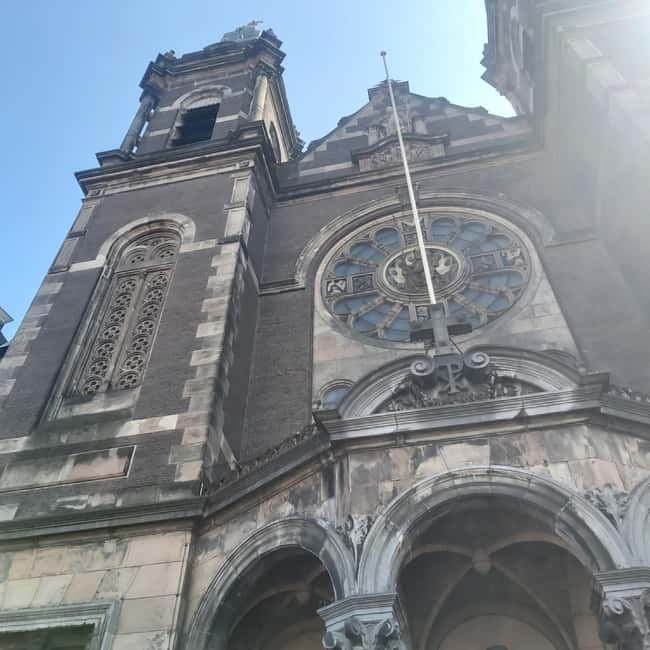
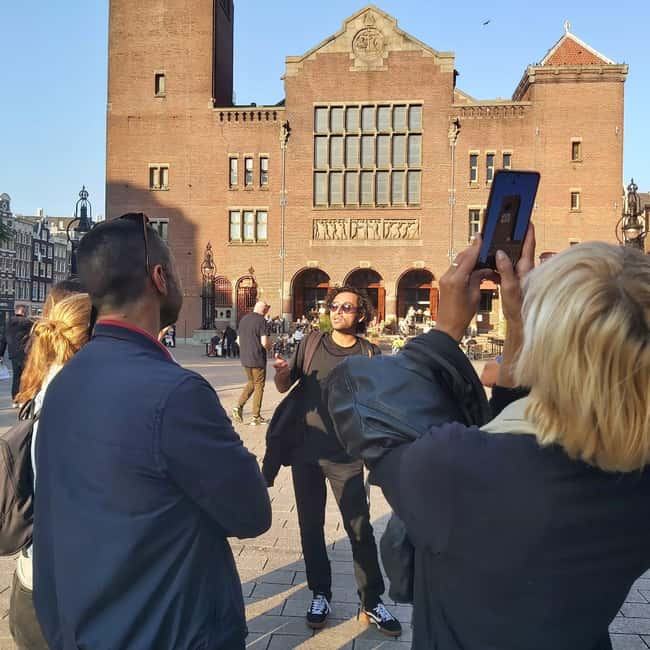
The tour’s endpoint shifts toward the Royal Palace in Dam Square, and it ties the Red Light District story to the city’s official image. You finish at Beursplein, and the guide includes a discussion of how the Royal Palace relates to the neighborhood.
I like this kind of closing, because it stops you from seeing the district as isolated. Dam Square is where Amsterdam performs itself. Placing the Red Light District conversation in the orbit of a major royal setting forces you to think about how the city manages contradictions.
It also reframes the word progressive, which you hear in the tour narrative. The idea here is not that everything is perfect, but that Amsterdam’s attitudes evolved alongside economic and social change. By the end, you have enough context to understand how a place known for vice can still become a talking point for modern thinking.
And finishing near major central landmarks is practical. You’re not left wandering back through unfamiliar streets in the last minutes with sore feet.
How the Red Light District became tied to progressive thought
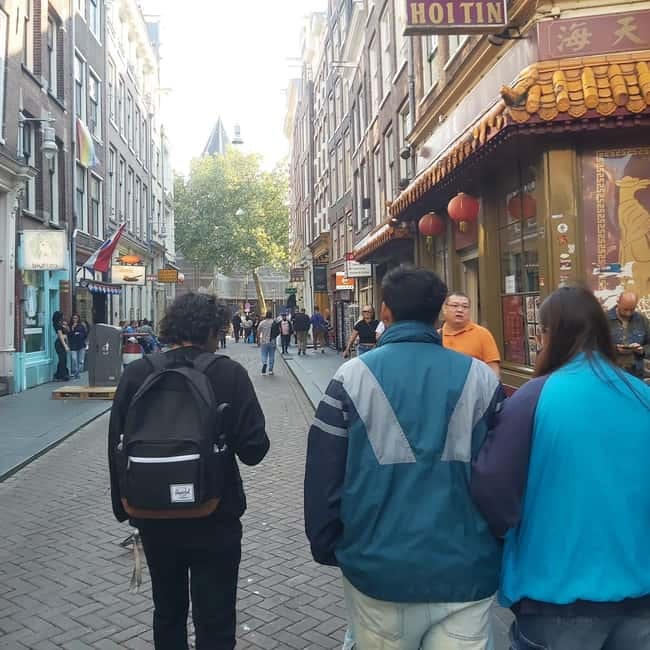
The heart of this experience is the “why” behind the Red Light District. The tour walks you through a sequence: medieval beginnings, growth during the Golden Age, then transformation into a neighborhood associated with progressive attitudes.
This is the part I’d pay attention to, because it’s easy to treat the topic like tabloid facts. Instead, the guide ties it to city growth. Prosperity leads to population and demand. Demand increases nightlife and entertainment. Over time, the area becomes a hub.
That progression matters because it changes how you interpret what you see in the street. You can look at the neighborhood and instead of thinking only about today, you ask questions about what Amsterdam built and what people needed.
Also, the tour description emphasizes that the district became known as a symbol of progressive attitudes. In practice, that means the guide keeps steering you toward how social norms and public behavior evolved in Amsterdam, rather than just listing scandal.
If you are the type who likes to learn “the real story” behind a place name, this angle is a strong fit. You’ll leave with a framework you can use when you pass through the area on your own afterward.
Is $31 a smart value for a 2-hour walk?
At $31 per person for about 2 hours, this is priced like a true walking tour, not a museum add-on. There are no venue entries included, and there is no food or drinks. That is a good thing if what you want is guidance and context, not a package.
You are paying for:
- a Spanish-speaking guide
- a guided route through key locations
- explanations built around streets, canals, and historic structures
The trade-off is that you should expect history talks, walking time, and outdoor atmosphere, not ticketed access. If you want to go inside churches or special exhibits, this tour likely will not cover that.
Still, for many visitors, paying for orientation in a complicated area is the best value. You avoid wandering with half-formed questions. You also learn how the city’s port, architecture, and social change connect, which is exactly what a newcomer often struggles to piece together alone.
Practical tips before you go: comfort, cameras, and adult themes
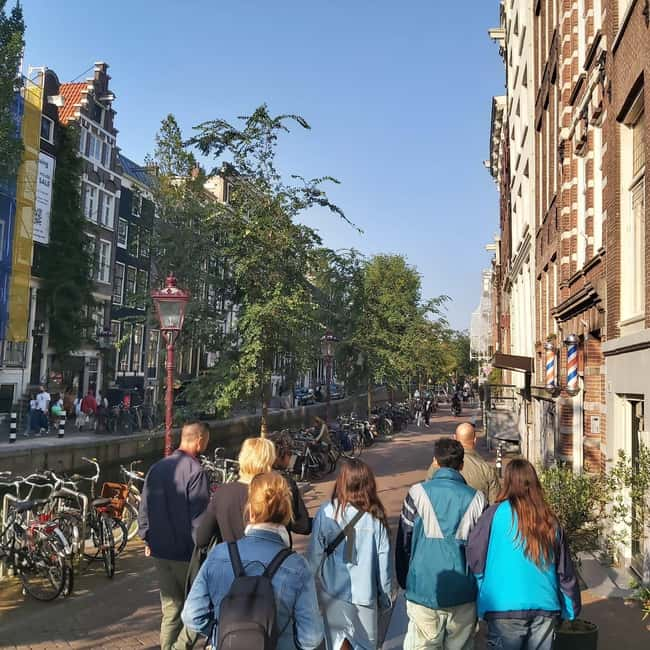
This is an outdoors walking tour, so wear comfortable shoes. The route includes multiple street segments, and you’ll be on your feet for the full duration.
Dress for the weather. Amsterdam can change fast, and the tour does not promise indoor stops beyond the time you spend near major landmarks.
Bring clothing you can move in. Also, keep in mind:
- you cannot bring alcohol or drugs
- photography inside is not allowed
- non-alcoholic drinks are allowed
- you can bring your camera, and the guide will advise when to use it
If you are traveling with a strict schedule, this is manageable. It’s only 2 hours, and the route hits recognizable stops like Oude Kerk and Nieuwmarkt Square.
Who it suits best:
- adults and older teens who want context, not a party plan
- people who enjoy urban history told through walking routes
- Spanish speakers who prefer explanations in Spanish
Who should think twice:
- children under 14 years
- wheelchair users, since it is not suitable for that accessibility category
- anyone over 95 years, because pace and walking demands can be hard to manage
Should you book this Amsterdam Spanish Red Light District tour?
Book it if you want a guided, history-first way to understand Amsterdam’s Red Light District. The route connects real anchors like St. Nicholas Basilica, Nieuwmarkt Square, De Waag, Oude Kerk, and the canal network, and the guide’s Spanish explanations are clearly a strong part of the experience.
Skip it if you are looking for a “see everything” tour with inside access or if adult subject matter will seriously upset your comfort level. This is not built as a venue-hopping visit, and it keeps the focus on origins, evolution, and social change.
If you do book it, go in with one mindset: you are learning how a city works, not chasing shock value. That’s when the whole walk makes sense.
FAQ
How long is the Amsterdam Spanish tour about the Red Light District?
The tour lasts about 2 hours.
Where do I meet the guide?
You meet your guide outside the Barbizon Palace Hotel on Prins Hendrikkade street in Amsterdam.
Is the tour guided in Spanish?
Yes. The guide speaks Spanish.
Is food or drinks included?
No. The tour does not include food or drinks.
Does the tour include entry into venues?
No. There are no entries to any venues.
Are photos allowed?
You may bring your camera. Photography inside is not allowed, and your guide will advise when you can use your camera.
Is alcohol allowed on the tour?
No. Alcohol and drugs are not allowed, though non-alcoholic drinks are allowed.
What is the cancellation policy?
You can cancel up to 24 hours in advance for a full refund.
Everything Else From Our Amsterdam Notebook


Also Reviewed Around Amsterdam



The Adult Side of Amsterdam, Explained



Fresh off the review pile in Amsterdam
- Full-Day Trip From Amsterdam to Keukenhof, Zaanse Schans + Cruise
★ 5.0 · 3 reviews - Boutique Dutch Food & History Tour with up to 8 guests only
★ 5.0 · 3 reviews - Private Tour to Windmills Zaanse Schans +Keukenhof – 7 Hours
★ 5.0 · 3 reviews - Full-Day Private Guided Countryside Tour from Amsterdam by Bike
★ 5.0 · 3 reviews - Amsterdam Red Light District and Old Town Walking Tour
★ 5.0 · 3 reviews
Red Light District & Coffeeshops, compared.
 ★ 4.2Amsterdam: Red Light Secrets Museum Entry TicketFrom $175,722 reviews
 ★ 4.9Amsterdam: Red Light District Tour in German/English/ItalianFrom $285,623 reviews
 ★ 4.6Amsterdam Red Light District & Coffee Shop TourFrom $294,134 reviews
 ★ 4.1Amsterdam: Red Light District Pub Crawl with Unlimited ShotsFrom $242,130 reviews
 ★ 4.5Amsterdam Red Light District Pub CrawlFrom $241,497 reviews
 ★ 4.2Amsterdam: Cannabis Museum Entry TicketFrom $141,244 reviews
 ★ 4.5Amsterdam: Red Light District TourFrom $331,135 reviews
 ★ 4.1Amsterdam: After Dark Red Light District TourFrom $571,030 reviews
Browse the lists this tour appears in