
REVIEW · AMSTERDAM
Amsterdam’s Hidden Facts: 750 Years of Secrets ⭐
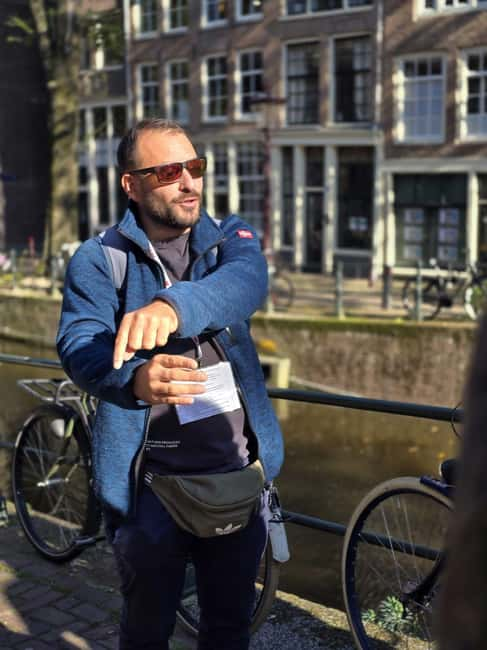
Amsterdam has a knack for hiding stories in plain sight. This 2-hour walk connects 750 years of secrets to real places you pass every day, and it does it with Antonis at the mic, mixing humor with facts you can actually picture.
I especially like two things about this tour. First, it turns big moments into a walkable timeline, from the first dam and dikes through the Golden Age and World War II, with the kind of “wait, what?” detail that sticks. Second, you leave with a handwritten postcard from historic A’Dam, complete with a Dutch stamp, so the experience has a physical keepsake, not just photos.
One consideration: you’ll be on your feet for the full 2 hours, and the rules include no video recording, so come ready to look, listen, and take notes on your phone or camera if allowed.
In This Review
- Key things you’ll notice right away
- 750 years of Amsterdam, connected in one walk
- Why dams, mud, and leaning houses matter more than you think
- Off the beaten track facts you can see in your normal routes
- The Golden Age story, framed around trade and turning points
- Old religions to liberal revolutions, plus the human side
- World War II in the middle of the timeline
- The Antonis effect: how the guide keeps you engaged
- What the A’Dam handwritten postcard adds to the experience
- Price and value: is $28 for 2 hours fair?
- Where you meet and how to prep so it goes smoothly
- Who this tour is for
- Should you book Amsterdam’s Hidden Facts, 750 Years of Secrets?
- FAQ
- How long is the tour?
- What does it cost?
- Where do I meet for the tour?
- Where does the tour end?
- Is the group size small?
- What is included in the ticket?
- What languages are the tours offered in?
- What should I bring?
- Is video recording allowed?
- Does the tour include hotel pickup?
- Can I cancel if my plans change?
Key things you’ll notice right away

- A 2-hour timeline of 750 years, told like a story, not a lecture
- Antonis as your guide, warm, funny, and a little obsessed with the details
- Small group size, max 12 people, so questions actually land
- The “how and why” facts, from why houses lean to why the city is built on mud
- Defined eras, connected by themes, trade, flooding, freedom, and social change
- A’Dam postcard moment, handwritten with a Dutch stamp as your send-off
Still weighing this one up? Here is what else we have reviewed around Amsterdam.
- Amsterdam Classic Saloon Boat Cruise with Drinks and Cheese★ 5.0 · 31,825 reviews
- Amsterdam Luxury Canal Cruise + Unlimited Drinks & Bites option★ 5.0 · 30,518 reviews
- Amsterdam: Heineken Experience Ticket★ 4.6 · 30,055 reviews
- Amsterdam: Rijksmuseum Entry Ticket★ 4.7 · 25,535 reviews
750 years of Amsterdam, connected in one walk
If you like history, you probably already know Amsterdam has layers. The twist here is how quickly those layers become understandable. You move through the city with a guide who frames each era as a cause and effect chain: what people built, what went wrong, what they learned, and what they refused to forget.
The city’s origin story is not treated like a dusty intro. You start with the earliest settlers and the practical beginnings of a place that needed dams and dikes to survive. From there, the tour keeps building, jumping across defining moments so you see Amsterdam not as a museum, but as an ongoing argument between ambition and reality.
And you’ll notice the guiding style. Antonis is described as having deep knowledge plus warmth, humor, and a touch of obsession. That matters because Amsterdam can be vague in your mind if you only skim headlines. Here, the facts come with a point of view, so they feel personal to the city instead of like trivia you’ll lose by tomorrow.
Why dams, mud, and leaning houses matter more than you think
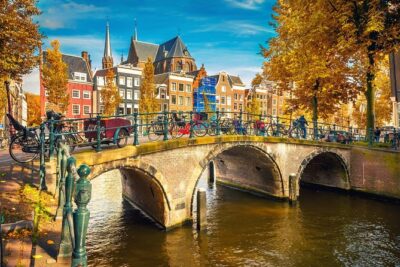
Amsterdam is famous for canals, bikes, and compact streets. But the tour keeps pulling the focus back to foundations, literally. You’ll hear why the city is built on mud, and you’ll get answers to questions like why houses lean.
That theme is the heart of the walk. Amsterdam’s identity is not just aesthetic, it is technical and social. Dams and dikes are not background. They are the reason the city grew in the first place, and the reason it kept reinventing itself when water and risk pushed back.
You also get a smart reminder that the city’s “charm” has always come with engineering headaches. Flooding is part of the story, not an aside. The tour touches on devastating floods and the systems that helped save the city. Even if you don’t remember every detail, you’ll walk away with the sense that resilience is a local habit, not a slogan.
Off the beaten track facts you can see in your normal routes
One of the best uses of a walking tour is simple: it helps your eyes work. This one is designed around hidden stories hiding in plain sight, with stops that are described as off the beaten track.
That means you can expect to look at familiar Amsterdam and suddenly notice what you missed. You’ll connect physical clues you pass during the walk to broader events. The goal is not to memorize dates. It’s to understand why Amsterdam looks the way it does, and why people behaved the way they did.
A practical upside of this approach is that the tour supports you whether you’re street-smart or new to the city. You do not need to already know the names of every square or canal to get value from the walk. The guide explains what matters and why it matters as you go, so you keep up without feeling lost.
The Golden Age story, framed around trade and turning points
Amsterdam’s Golden Age can feel like a poster in your mind. Wealth, art, prosperity. But this tour treats the era as a set of decisions and momentum. You’ll hear about trade and the city’s expansion, and you’ll get defining moments tied to how people built their society.
The way it’s presented helps you avoid a common trap. If you only focus on the glamour, you miss the friction. Here, the tour keeps nudging you toward the bigger pattern: Amsterdam grows, Amsterdam wins, then Amsterdam has to adapt when pressure shows up again, whether that pressure is political conflict or the threat of water.
This is also where the tour’s “facts you won’t forget” approach pays off. You’re not just told that things changed. You’re guided through the logic of change, with short explanations that make the timeline feel like one story rather than separate chapters.



Old religions to liberal revolutions, plus the human side
History gets more interesting when it includes arguments people had inside their own communities. This walk covers everything from old religions to liberal revolutions, and it links those shifts to how Amsterdam’s citizens shaped the place they lived in.
Even if you usually skip the political stuff, you might find yourself paying attention here. The tour is designed to show how trust, resilience, and radical ideas interact. That phrase matters because it explains a lot about the city. Amsterdam isn’t only about tolerance as an idea. It is about systems, bargaining, and daily choices that allowed different ways of thinking to coexist.
And because the guide mixes warmth and humor into the delivery, the heavy themes stay human. Instead of feeling like a lecture about institutions, you get a sense of real stakes, real consequences, and the kind of social momentum that can change a city’s direction.
World War II in the middle of the timeline
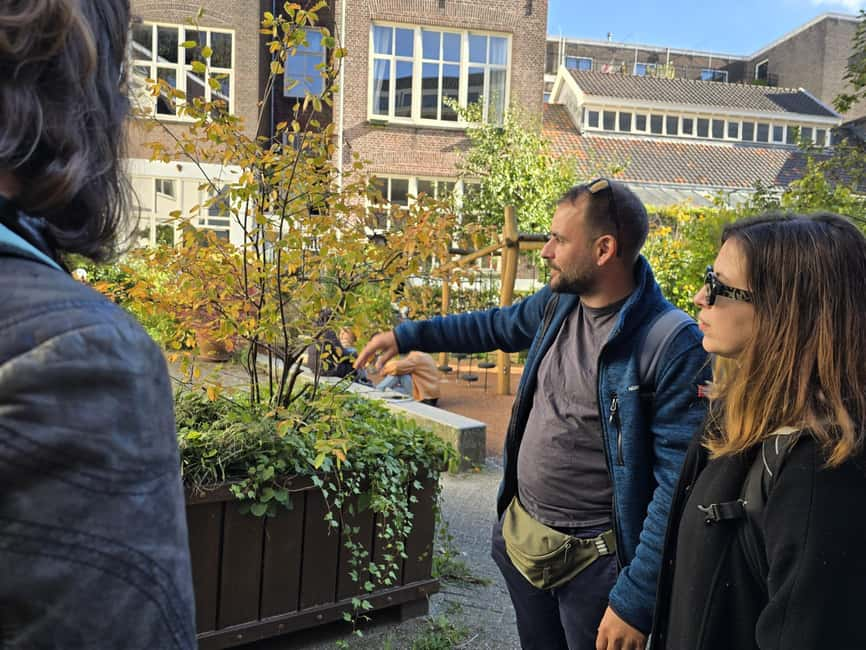
World War II can feel like its own universe when you learn about it from afar. This tour places it in the larger arc of Amsterdam’s 750-year story, so you see it as one more turning point in an ongoing history of survival and reinvention.
The walk’s structure matters here. You’re not dropped into WWII as a final stop with a dramatic ending. You’re brought into it as part of a long pattern, including the city’s defining moments and hidden secrets. That framing can help you understand why Amsterdam remembers what it remembers, and how the city’s identity continues after hard years.
The drawback of including WWII is also practical. It can be emotionally heavy, depending on your preferences. If you want a light, pure sightseeing walk, this might feel more intense than you expect. If you’re okay with serious context, it becomes a strong anchor that makes earlier centuries feel more meaningful.
The Antonis effect: how the guide keeps you engaged
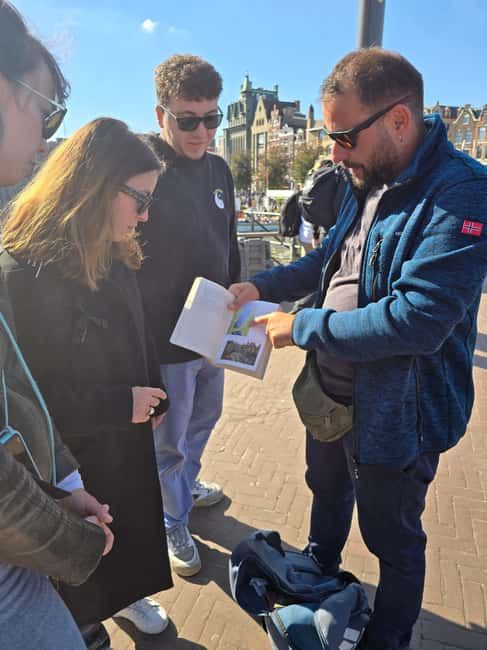
A great guide turns history into something you can hold. Antonis, according to the tour description, mixes deep knowledge with warmth, humor, and a touch of obsession. That combo is powerful because it balances facts with a friendly pace.
The tour also runs in a small group, max 12 people. That size helps in a very real way. You’re less likely to feel pushed to the back of the group, and you can ask questions without hearing the guide repeat the same point three times.
There’s also support for solo visitors. Feedback indicates the guide stays attentive even when someone books alone, and the tour does not feel like it exists only for couples and groups. If you travel solo, you can be more comfortable that you’ll still get a personal experience.
One more practical point: the tour is English and Greek. If you speak either of those, you’ll have an easier time tracking the story beats without relying on translation apps.
What the A’Dam handwritten postcard adds to the experience
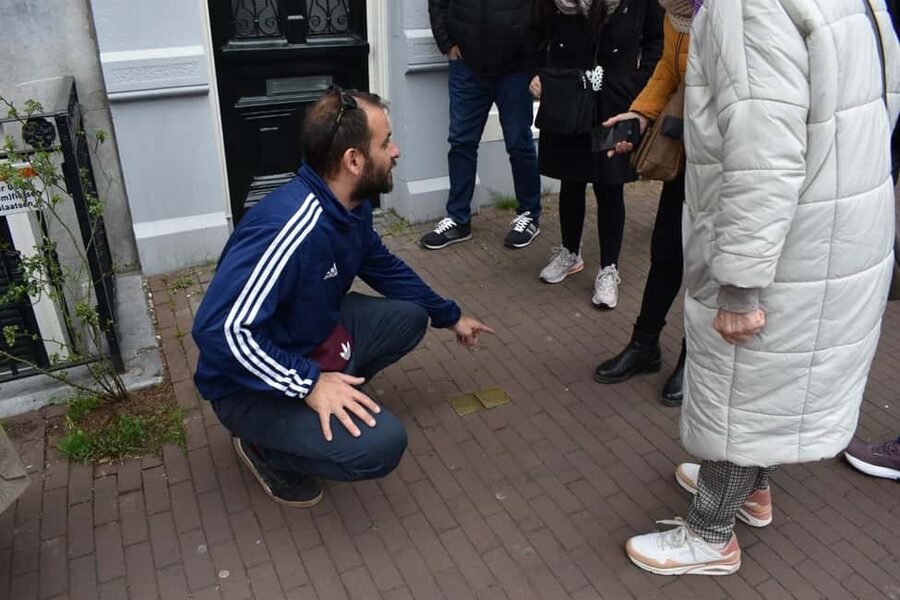
At the end, you get a handwritten postcard from historic A’Dam, plus a Dutch stamp. This is not just an accessory. It’s a built-in prompt to remember what you learned while it’s still fresh.
I like tours that give you a reason to pause and reflect. A postcard does that. You can mail it later, or you can keep it as a note to yourself about what you found surprising. Either way, it turns the walk into something you can reference back at home, not just something you scroll past in your photo library.
It also anchors the timeline. Since the tour is about 750 years of secrets, ending with something tangible and local feels like a good match for the theme. You finish with a small artifact that says you experienced the city, not just passed through it.
Price and value: is $28 for 2 hours fair?
For $28 per person, you’re paying for a guided walking experience that runs about 2 hours, in a small group of up to 12, and includes a professional guide plus the handwritten postcard and Dutch stamp. That pricing is also tied to effort. Two hours of story requires more than a quick stop and a few facts, it requires pacing, routing, and constant explanation.
Value here comes from four places. You get a tight timeline across centuries. You get the guide’s storytelling style, not just a list of sites. You get a keepsake. And you avoid the trap of a crowded group where you can’t hear what matters.
If you’re on a schedule, 2 hours is manageable. If you’re someone who likes to learn without losing the joy of walking, this is a good price point. If you want a long, museum-style deep course, you might want something longer. But for a focused orientation to Amsterdam’s “how we got here” story, $28 makes sense.
Where you meet and how to prep so it goes smoothly
You meet in front of the Bull !! and the tour ends back at the meeting point. No hotel pickup, so plan to arrive on foot or by local transport and be ready to start.
Bring comfortable shoes and water. The walk is weather-dependent in the usual way, so wear clothing suited to the forecast. Also bring a camera if you like taking pictures, but remember the rule: video recording is not allowed.
One small mindset tip: arrive ready to listen. This is a storytelling tour full of facts, strange-but-true questions, and historical connections. If you spend the walk mostly filming, you lose the payoff. You don’t need to take every note, but you’ll get more if you stay present.
Who this tour is for
This is a strong fit if you:
- Love quick, memorable facts and want your brain fed without drowning in details
- Want a small-group experience where you can actually connect with the guide
- Are curious about how Amsterdam was physically made, not only how it looks today
- Are interested in big historical themes, from trade to flooding to freedom
It’s also a great choice for solo travelers who want to feel included. And it works for couples and friends who like learning together, since the guide’s tone is meant to be friendly and accessible, not stuffy.
If you only want photo stops and no context, you may find it less satisfying. But if you enjoy turning streets into stories, you’ll likely get a lot of value.
Should you book Amsterdam’s Hidden Facts, 750 Years of Secrets?
Yes, if you want a compact, high-energy way to understand Amsterdam’s evolution, this tour is a very practical choice. You’re paying for a small-group guide, a well-paced story that spans centuries, and a handwritten postcard from A’Dam that gives the experience a real ending.
Book it now especially if you like guides who explain why things are the way they are, from dams and dikes to floods and social change, and you want answers to the questions Amsterdam keeps asking, why houses lean, why the city is built on mud, and what those “secrets” actually look like in the city.
Skip it only if you dislike walking for 2 hours, or if you specifically need video recording. Otherwise, it’s one of those rare tours where you leave with your head full of facts and your feet still ready to explore the rest of Amsterdam.
FAQ
How long is the tour?
The tour lasts about 2 hours.
What does it cost?
The price is listed as $28 per person.
Where do I meet for the tour?
You start in front of the Bull !!.
Where does the tour end?
The tour ends back at the meeting point.
Is the group size small?
Yes, it’s a small group experience with a maximum of 12 guests.
What is included in the ticket?
You get a 2-hour storytelling tour with a local guide, plus a handwritten postcard and a Dutch stamp.
What languages are the tours offered in?
The tour is offered in English and Greek.
What should I bring?
Bring comfortable shoes, a camera, water, and weather-appropriate clothing.
Is video recording allowed?
No, video recording is not allowed.
Does the tour include hotel pickup?
No, hotel pickup and drop-off are not included.
Can I cancel if my plans change?
Free cancellation is available up to 24 hours in advance for a full refund.
Also Reviewed Around Amsterdam





Fresh off the review pile in Amsterdam
- Full-Day Trip From Amsterdam to Keukenhof, Zaanse Schans + Cruise
★ 5.0 · 3 reviews - Boutique Dutch Food & History Tour with up to 8 guests only
★ 5.0 · 3 reviews - Private Tour to Windmills Zaanse Schans +Keukenhof – 7 Hours
★ 5.0 · 3 reviews - Full-Day Private Guided Countryside Tour from Amsterdam by Bike
★ 5.0 · 3 reviews - Amsterdam Red Light District and Old Town Walking Tour
★ 5.0 · 3 reviews