
REVIEW · AMSTERDAM
Diamond Museum Amsterdam Admission Ticket
Diamonds meet Amsterdam museum culture. I like the Royal Coster Diamonds craft focus, and I love the chance to watch polishers and goldsmiths at work. My main caution is that some audio-visual bits can feel dated, and a few listening devices may not be reliable.
You’ll find the museum on Museumplein, right between the Rijksmuseum and the Van Gogh Museum, so it slots neatly into a classic Amsterdam day. After a short film style intro, the visit is mostly self-guided through sparkling displays that cover how diamonds form, how they’re valued, and how they end up in crowns and wearable art.
Plan for roughly 1 to 2 hours. At $72, it’s not the cheapest ticket in the area, so I’d book it when you actually want the diamond story, the gemstones, and the hands-on making process, not just a quick glance.
In This Review
- Key things to know before you go
- Finding the Diamond Museum Amsterdam on Museumplein
- The “from underground to jewelry” story you’ll see up close
- Royal crowns and wearable art, plus the Van Gogh diamond display
- Watching polishing and goldsmith work makes the museum click
- The diamond heist game and an extra polishing stop
- Price and timing: does $72 feel worth it?
- Who should book, and who might want a different stop
- Should you book the Diamond Museum Amsterdam admission ticket?
- FAQ
- Where is the Diamond Museum Amsterdam located?
- How long does the visit take?
- What is the admission ticket price?
- What time is the museum open?
- What’s included with the ticket?
- What is not included?
- Who is the experience provider?
- Is there free cancellation?
Key things to know before you go
- Museumplein location: easy to pair with Rijksmuseum and Van Gogh without wasting transit time.
- Covers the whole diamond pipeline: formation, valuation, and what makes stones valuable.
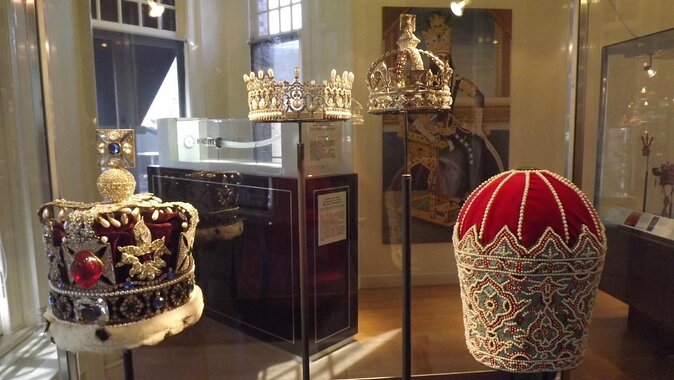
- Royal crown displays: the crown and jewel rooms are repeatedly the standout kind of wow.
- You can watch professionals at work: polishing and goldsmithing demonstrations add real-life texture.
- A diamond game is part of the fun: there’s a diamond heist style game experience on-site.
- Some exhibits rely on audio-visual tech: if headsets or stations are glitchy, your enjoyment may drop a notch.
Other tickets we think are worth the queue
- Amsterdam: Heineken Experience Ticket★ 4.6 · 30,055 reviews
- Amsterdam: Icebar Entry Ticket with 3 Drinks★ 4.2 · 14,562 reviews
- Amsterdam: The Upside Down Museum Entrance Ticket★ 4.4 · 9,506 reviews
- Amsterdam: Johan Cruijff ArenA Tour with Optional Guide★ 4.6 · 8,954 reviews
Finding the Diamond Museum Amsterdam on Museumplein
Diamond Museum Amsterdam is in a prime spot, on Museumplein, between the Rijksmuseum and the Van Gogh Museum. That matters more than it sounds. When a museum is tucked into the city maze, you spend time “getting there.” Here, you can keep your day tight and efficient, especially if you’re already planning two big Museumplein stops.
The ticket gets you into the museum, and once you’re inside, the experience feels designed for an easy walk. You’ll move from room to room at your own pace, with a short film style intro before the main galleries. The overall time is usually about 1 to 2 hours, which is a sweet spot for Amsterdam, where you often have only limited time for smaller ticketed stops.
One value tip: because the setting is Museumplein, you can structure your day around this museum instead of squeezing it in. Go early for calmer viewing, then swing to the Rijksmuseum or Van Gogh afterward. If you’re going in late afternoon, still fine, just know you might see more school groups.
The “from underground to jewelry” story you’ll see up close
The museum’s big promise is that diamond history is not just about sparkle. It’s a whole chain: how diamonds are formed underground, how they’re cut, how their characteristics connect to value, and how they end up in the kind of jewelry people write legends about.
You’ll start with the science-and-origin part, including the idea that diamonds form deep below the surface, described as being around 200 kilometers down. The presentation frames the timeline as billions of years, then connects that geological reality to what you can actually see in a finished stone. If you like explanations that are visual and straightforward, this section works.
Next comes the “what makes diamonds valuable” angle. The museum covers topics like types of diamonds and the attributes that make them special and valuable. Even if you’re not trying to buy a gem, this is useful knowledge. It changes how you look. You start asking different questions, like what you’re actually seeing when a stone looks bright, what characteristics photographers and jewelers focus on, and why two diamonds can look similar but be priced very differently.
Royal crowns and wearable art, plus the Van Gogh diamond display
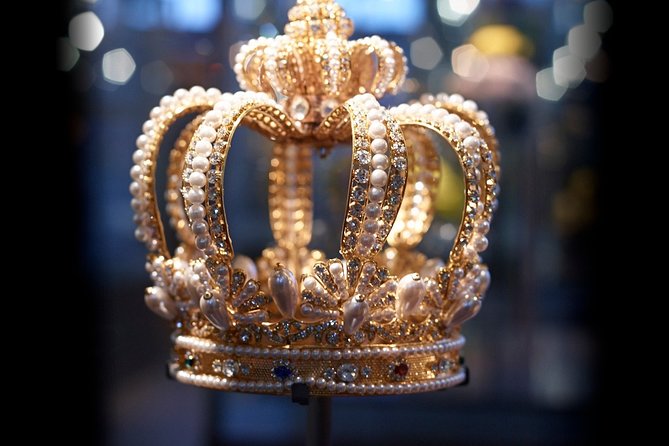
This is where the visit becomes more than educational. The museum leans hard into wow-factor, and it does so with royal jewels and crown collections. Crowns are the kind of display that instantly communicates scale, detail, and craftsmanship, even for people who usually skip “jewelry museums.” You get to see how diamonds behave in settings, not just as isolated gems.
One highlight described in the museum concept is a diamond-encrusted version of Van Gogh’s Starry Starry Night. That kind of cross-over matters because it reframes the idea of gems as decoration with a story, not just luxury goods. It also helps the museum reach beyond traditional diamond lovers into art-focused visitors.
The museum also includes references to major historically famous stones that were cut in Amsterdam, like the Cullinan (described as the largest diamond ever found) and the Koh-i-Noor (the mountain of light). Hearing those names while you stand in a room of craft and display makes the Amsterdam connection feel real, not just like trivia.
One practical note: some parts of the experience are designed as reproductions or replicas. If your goal is to see only the largest, original, mind-blowing real stones at every turn, you might find the mix less satisfying than you hoped. Still, the way the museum uses those pieces to explain cutting, setting, and visual impact can be worth it.
Watching polishing and goldsmith work makes the museum click
If there’s one reason the museum feels more alive than a typical gallery, it’s the chance to observe stone polishers and goldsmiths working. Instead of only reading how jewelry gets made, you can watch professionals create the modern results from skilled processes.
This is the part that helps your brain link the “diamond facts” to the end product. Seeing polish and shaping happen makes you understand why certain diamond qualities matter. You start to recognize that brilliance is not magic. It’s technique, time, tools, and precision.
A useful way to approach this section: slow down and focus on movement and method. Even if you don’t know gem terms, watching how polishers handle stones and how goldsmiths manage metal helps you see the craftsmanship behind what ends up on crowns, rings, and earrings. It also gives your visit variety, which is nice when a museum is otherwise very display-heavy.
Based on the way the museum is set up, this makes an even bigger difference if you’re visiting with kids or anyone who prefers real-world action over reading panels. It turns the museum from a “look only” experience into a “watch and learn” one.
Other Amsterdam entries you can hold on your phone

The diamond heist game and an extra polishing stop
The museum experience includes a game element on-site, described as a diamond heist style game. That’s a clever way to break up what can otherwise be a very “inside story” visit. If you like light challenges while you walk, this adds energy and a fun reason to pay attention to what you see.
Some visitors also mention an additional nearby stop for diamond polishing demonstrations, described as a diamond factory experience in a neighboring building. You might find it as part of the wider on-the-day experience, and it fits perfectly with what the museum teaches. You walk in learning how diamonds are shaped, then you can see polishing work that matches that message.
If you’re short on time, keep your schedule flexible. Games and nearby demos can be the difference between feeling like you rushed through the museum and feeling like you got the full value. If you’re going with family, the game can be a great “bridge” between different rooms, especially when everyone’s energy level changes.
Price and timing: does $72 feel worth it?
Let’s talk value honestly. A $72 admission ticket is steep compared to most museums you can find in Amsterdam. So you should buy it with a clear purpose.
Here’s the practical value case in your favor:
- You’re getting a specialized museum focused on diamonds, not a general decorative-arts show.
- You have time to see royal crowns and diamond-themed wearable art displays, including a Van Gogh diamond-encrusted reference.
- The museum doesn’t stay theoretical. You can watch professionals with polishing and goldsmithing demonstrations.
- The overall duration, 1 to 2 hours, means it can fit into a busy day without dragging.
Here’s the caution case against your wallet:
- Some parts are presentation-heavy, including audio-visual elements that can be tech-dependent.
- The building is described as smaller and can feel cramped for some people.
- The amount of truly original diamonds on display may feel limited if you’re expecting a straight-up gemstone showpiece at every stop.
So I’d treat this ticket like a targeted experience. If you want the diamond story plus real craft observation, it can feel like good value. If you’re in Amsterdam for broad culture and you only mildly care about diamonds, consider whether you’d rather spend that money on another Museumplein attraction.
Who should book, and who might want a different stop
This ticket is a strong match for:
- People who like jewelry, gems, and craft processes
- Anyone curious about how diamonds go from deep earth to polished sparkle
- Art lovers who enjoy the overlap between gemstones and famous works, like the Van Gogh diamond concept
- Families, since there’s a game element and a live-making component that helps keep attention
It may be less satisfying if you:
- Want only original, huge, museum-grade diamonds on every wall
- Prefer minimal reading and zero technology-based exhibits (audio-visual stations can be a weak point)
- Need a lot of space for mobility, since the museum is described as small and cramped by some visitors
My best advice: book if you’re genuinely interested in how diamonds are made and how valuation and cutting shape what you see. If your interest is lukewarm, you can still have a decent time, but you won’t get the full “worth it” feeling.
Should you book the Diamond Museum Amsterdam admission ticket?
I’d book this if you’re on Museumplein already and you want a focused, gemstone-centered stop that includes royal crown displays and the chance to watch polishing and goldsmithing. The combination of education, craft observation, and the on-site diamond heist style game makes it more engaging than a standard gallery visit.
I would pause before booking if you’re hoping for a big, spacious, purely original diamond collection, or if you’re strongly sensitive to audio-visual equipment and headphone-style stations. In those cases, set expectations carefully, or pick a different Museumplein ticket that fits your style better.
If you do go, give yourself the full 1 to 2 hours and don’t rush the craft areas. That’s where the museum starts to feel like more than glass cases and labels.
FAQ
Where is the Diamond Museum Amsterdam located?
It’s located in Amsterdam on Museum Square, between the Rijksmuseum and the Van Gogh Museum.
How long does the visit take?
The experience is listed as about 1 to 2 hours.
What is the admission ticket price?
The price is $72.
What time is the museum open?
The museum is open daily from 9am to 5pm, including weekends and holidays.
What’s included with the ticket?
The entrance ticket is included.
What is not included?
Food and drinks are not included, and hotel pickup and drop-off are not included.
Who is the experience provider?
The provider is Royal Coster Diamonds.
Is there free cancellation?
Yes. You can cancel for a full refund up to 24 hours in advance.
Entries for Your Phone





Also Reviewed Around Amsterdam



More Amsterdam Doors Worth Opening


Fresh off the review pile in Amsterdam
- Full-Day Trip From Amsterdam to Keukenhof, Zaanse Schans + Cruise
★ 5.0 · 3 reviews - Boutique Dutch Food & History Tour with up to 8 guests only
★ 5.0 · 3 reviews - Private Tour to Windmills Zaanse Schans +Keukenhof – 7 Hours
★ 5.0 · 3 reviews - Full-Day Private Guided Countryside Tour from Amsterdam by Bike
★ 5.0 · 3 reviews - Amsterdam Red Light District and Old Town Walking Tour
★ 5.0 · 3 reviews
Amsterdam Museums & Attractions, compared.
 ★ 4.6Amsterdam: Heineken Experience TicketFrom $2830,055 reviews
 ★ 4.2Amsterdam: Icebar Entry Ticket with 3 DrinksFrom $2614,562 reviews
 ★ 4.4Moco Museum Amsterdam Entrance Tickets with Banksy & MoreFrom $1810,088 reviews
 ★ 4.4Amsterdam: The Upside Down Museum Entrance TicketFrom $249,506 reviews
 ★ 4.6Amsterdam: Johan Cruijff ArenA Tour with Optional GuideFrom $328,954 reviews
 ★ 4.7Amsterdam: Fabrique des Lumières Entry TicketFrom $208,666 reviews
 ★ 4.6Amsterdam: Royal Palace Entry Ticket and Audio GuideFrom $156,475 reviews
 ★ 4.5Amsterdam: City Canal Cruise and Heineken Experience TicketFrom $475,367 reviews
Browse the lists this tour appears in