
REVIEW · CITY TOURS
e-Scavenger hunt Hoorn: Explore the city at your own pace
Hoorn is small enough to explore fast, yet full of details. This e-Scavenger hunt makes you slow down with GPS prompts and smart questions, and I like how it stays family-friendly without feeling childish. One thing to consider: you’ll need your own smartphone plus data to play, and a few spot-and-answer moments can take time.
You control the pace, so if you want a longer coffee break or a second look at a monument, you can. The route loops through major landmarks, ending back where you started, which keeps logistics easy in a compact city.
If you prefer tours that only talk and point, this may feel different. It is an active, puzzle-style walk where you do the thinking on your phone.
In This Review
- Key highlights before you go
- Why a city game beats a standard walk in Hoorn
- Price and Logistics: what $36.93 per group really means
- What you actually do on the e-Scavenger hunt
- Your route through Hoorn: 15 stops with built-in reasons to look closer
- Stop 1: Museum van de Twintigste Eeuw
- Stop 2: Museum Stoomtram Hoorn-Medemblik
- Stop 3: Westfries Museum
- Stop 4: Halve Maen
- Stop 5: Hoofdtoren Hoorn uit 1532-1534
- Stop 6: Koepelkerk
- Stop 7: Julianapark
- Stop 8: Museumhuis Bonck
- Stop 9: Oosterkerk
- Stop 10: Rijksmonument Oosterpoort Hoorn uit 1578
- Stop 11: Kaasmarkt Hoorn
- Stop 12: Varend Erfgoed Hoorn
- Stop 13: NS Station Hoorn
- Stop 14: Noorderkerk
- Stop 15: Maria of Kruittoren
- How to make the 3-hour game feel smooth (not stressful)
- Who this works best for (and who might want something else)
- The value of doing Hoorn this way
- Should you book the e-Scavenger hunt Hoorn?
- FAQ
- How long is the e-Scavenger hunt in Hoorn?
- How much does it cost and how many people can join?
- Do I get a mobile ticket?
- Where do I start and where do I end?
- What do I need to bring?
- What time can I do the tour?
- Is this tour private?
- Is it suitable for hearing-impaired travelers?
Key highlights before you go
- Play on your own schedule with a self-guided mobile ticket you can use any time
- GPS helps you find the squares, streets, and monuments instead of just following a line
- 15 distinct Hoorn stops, from museum doors to church names and older structures with dates in them
- Affordable group pricing for up to 6 people, which works out to about $6 per person if you fill the group
- Clear, app-first format designed for easy log in and question answering
- Works well for groups since it is private, and the game setup can be used in teams
Why a city game beats a standard walk in Hoorn

Hoorn has a laid-back feel. You can get around quickly, but you can also miss the small stuff if you only rush from one famous building to the next. This experience flips that. Instead of walking with a guide talking at you, you walk as the game asks, which naturally makes you look harder at what is around you.
Two things stand out right away. First, the format is question and search based, so you are not just taking in views. You are actively scanning street corners and reading what the city gives you. Second, it stays family-friendly, which matters if you are traveling with mixed ages. You get a structured route, but no one is required to sit still through a lecture.
The only real drawback is practical. You bring the device and the connection. The activity is smartphone-led, and the materials are not included. If your battery is low or your data is spotty, you will feel it.
Price and Logistics: what $36.93 per group really means
The price is $36.93 per group, for up to 6 people. If you can fill the group, that is roughly $6 per person, and that is where the value becomes obvious. You are paying for the game experience, not for a person standing next to you the whole time.
A couple of logistics points matter in real life:
- Duration is about 3 hours, so it fits well between museum visits, meals, or a longer day in the region.
- You start and end at the same place, Roode Steen. That reduces stress if you need to pause or you want to regroup.
- Mobile ticket means you are not collecting a paper voucher. You use your phone.
- You’ll get instructions after booking, so plan to read them when you are ready to start.
Also, because the game can be done at any time (it runs all day, every day), you can choose the time that matches your energy level and the light you want for photos.
What you actually do on the e-Scavenger hunt
This is a self-guided city trail delivered through an online app. You log into the free city game app, then follow prompts that use GPS to get you to each location. The game asks you to answer questions about the stops and complete search assignments you do right there on your walk.
That design is why it works so well for both first-time visitors and people who know Hoorn. If you live there or you have visited before, it still pushes you to notice details you would probably ignore during a normal stroll. If it is your first time, it acts like a guided overview, but you are the one controlling the timing.
A smart approach is to treat each stop like a mini mission:
- Get to the location.
- Take a quick look around, not just at the object in front of you.
- Answer the prompt, then only look up more if you truly get stuck.
Even when you do not get everything immediately, the hunt turns the walk into something you keep returning to, instead of drifting from stop to stop.
Your route through Hoorn: 15 stops with built-in reasons to look closer

The itinerary is designed as a loop. It starts at Roode Steen and ends back at Roode Steen, so you can treat the whole thing as a structured wandering route. Below is the stop-by-stop logic of what you will experience, and where you might want to slow down.
Stop 1: Museum van de Twintigste Eeuw
This is a solid first checkpoint because a museum stop sets the tone. You are primed to read, search, and think, which helps when you are still figuring out the app flow. If you want to kick off with momentum, start here and solve the first questions without overthinking it.
Stop 2: Museum Stoomtram Hoorn-Medemblik
This stop leans into Hoorn’s industrial and transportation storytelling. Practically, it also gives you a break from open-air walking, if the weather turns. Use this as your moment to recalibrate, then continue with confidence toward the next landmarks.
Stop 3: Westfries Museum
Another museum stop keeps the route varied. Even if you do not plan to enter every museum deeply, the app questions can guide your attention to what matters at street level. This one is good for learning the city’s broader themes while you stay in motion.
Stop 4: Halve Maen
Halve Maen is a turning point in the feel of the route. The name alone signals something distinctive, and the game will push you to pay attention to context you would normally skip. Plan a slightly longer glance here, especially if you like taking photos.
Stop 5: Hoofdtoren Hoorn uit 1532-1534
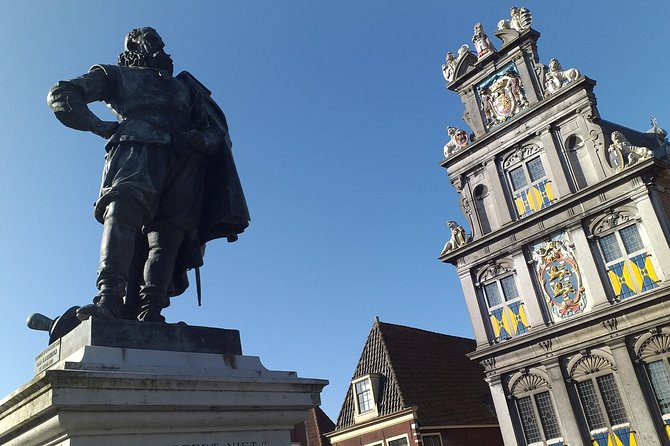
This is a big one, and the date range makes it easy to feel the weight of older Hoorn. The game-style questions here are likely to reward close observation, not speed. If you enjoy history that you can literally see in the city fabric, this stop is a highlight.
Stop 6: Koepelkerk
Church architecture often works well for scavenger hunts because there is a lot to notice. With Koepelkerk, you can expect the app to ask you something that pushes you to look at details in the building or surroundings. If you are traveling with kids, this is usually a good spot for them to practice reading and searching.
Stop 7: Julianapark
A park stop is your natural breather. After dense landmark viewing, greenery helps everyone reset, and it also gives you a smoother walking rhythm. If your group splits up in short bursts, Julianapark is the place where it is easiest to regroup without feeling rushed.
Stop 8: Museumhuis Bonck
This is another museum-house style checkpoint, which tends to make the hunt feel more personal and local. The value here is in connecting the clue prompts to a specific place, so you get a clearer sense of Hoorn as a lived-in city, not a list of monuments.
Stop 9: Oosterkerk
A church stop like Oosterkerk is often where the game becomes most satisfying, because it encourages you to notice the structure from multiple angles. If you like the visual rhythm of towers and facades, slow down slightly. This is the kind of place you can pass quickly, but the app makes it worth lingering.
Stop 10: Rijksmonument Oosterpoort Hoorn uit 1578
A Rijksmonument checkpoint adds an instant layer of meaning. The date in the name, 1578, is a built-in clue that you are dealing with something old and protected. Expect the questions here to make you focus, which is great when you want the walk to feel intellectually satisfying, not just busy.
Stop 11: Kaasmarkt Hoorn
A market-themed stop adds everyday energy to the route. Even if you are there outside market hours, this is a strong place to connect Hoorn to food culture. For many people, this is where the scavenger hunt feels the most like a city visit and less like an event.
Stop 12: Varend Erfgoed Hoorn
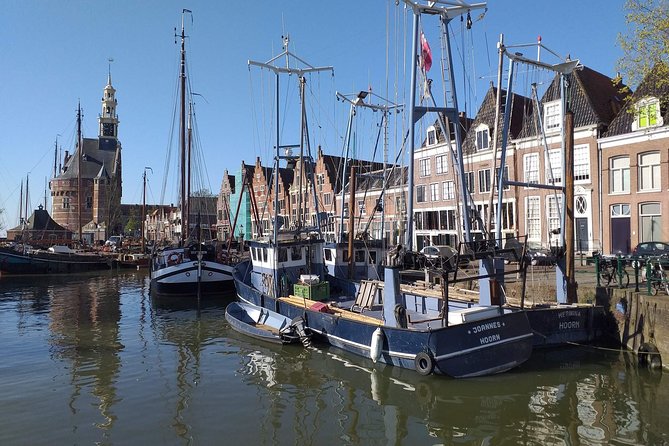
This stop points toward water heritage, and Hoorn’s waterfront atmosphere is one of its best features. The app’s search tasks make this feel like more than a view stop. You’ll likely enjoy it more if you like maritime details or if you simply like being near boats and activity.
Stop 13: NS Station Hoorn
Ending the mid-route phase at a major transport hub is smart. It keeps you grounded, and it is easy to take breaks here if your group needs a breather. Because the station area is practical and recognizable, it helps you stay oriented as the final stretch begins.
Stop 14: Noorderkerk
Another church stop closes the loop toward the last landmarks. This is a good checkpoint for groups because it usually offers clear sightlines for finding the right spot. If your team is competitive, this is a fun moment to see who solves questions fastest.
Stop 15: Maria of Kruittoren
The final monument in the route is a fitting closer. A tower stop gives you a strong end image, and the app’s last missions tend to feel like a finish line. Take a moment before you conclude, because it is easy to rush the last stop when everyone is ready to be done.
How to make the 3-hour game feel smooth (not stressful)
A self-guided hunt can either feel relaxed or chaotic, depending on your setup. Here is how to keep it on the relaxed side.
First, bring a fully charged phone. You will likely spend the whole time using GPS and reading questions. Second, set a simple group rule. For example: one person reads prompts while others do the nearby scanning, then you switch roles. That keeps the group from all staring at the screen at once.
Third, do not panic if you miss something. The hunt is about moving through the city and solving in small steps, not achieving perfection. One of the most common frustrations with games like this is time loss at a single tricky assignment, but if you treat it like a puzzle rather than a test, it stays fun.
And if you are traveling with hearing-impaired guests, this format is described as user-friendly. The key point is that the game is built for on-phone interaction, which can work well if you prefer reading and visual prompts over spoken explanations.
Who this works best for (and who might want something else)

This is a great fit when:
- you want a structured walk that still lets you pause for photos or snacks
- you are traveling with family and want something game-like instead of formal sightseeing
- you have a group of up to 6 people and want a private experience without coordinating schedules with strangers
- you like learning through tasks, not just listening to a narration
It might not be your favorite choice if you dislike smartphone-based navigation or if you want a classic guided tour where everything is explained out loud. Also, if you hate puzzles and prefer straight routes, the question segments could feel slow.
That said, the route includes a mix of museums, churches, towers, and market and water heritage stops. It is hard to make that many different places feel coherent without a game structure. Here, the game is the glue.
The value of doing Hoorn this way
Hoorn can look simple on a map. In person, it rewards attention. This hunt turns attention into an activity, and it does it without the cost and timing pressures of a traditional guided walk.
I also like that it is not just a single long straight line. You get variety. You start with museums, move through older landmark structures with date cues, shift into churches, then come back toward markets and water. Even if you only half-solve a few tasks, the route still functions like a solid introduction to the city.
The best part is flexibility. You can do it when the city feels right to you, not when a tour company decides. And because it is private for your group, it can feel like a shared quest instead of a spectator sport.
Should you book the e-Scavenger hunt Hoorn?
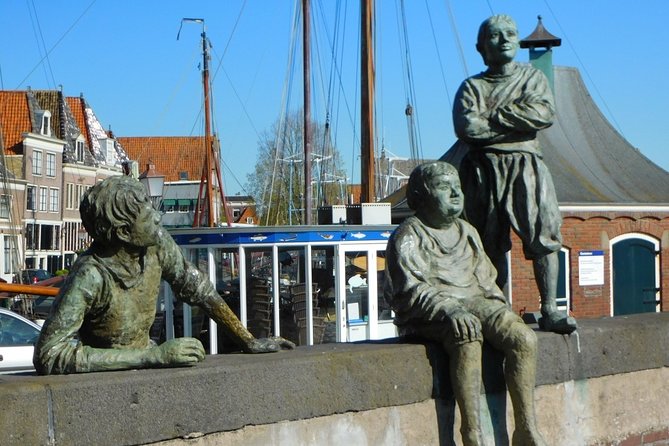
Book it if you want an affordable, self-paced way to see Hoorn, and you are happy to let a phone guide your walking. It is especially worth it when you have a group of up to 6, because the per-person cost stays low and you can turn the hunt into friendly teamwork.
Skip it if you do not want to rely on a smartphone for navigation or if you are expecting a talk-first guided experience. Also, if your group gets easily frustrated by tricky prompts, plan for a slower pace and some patience.
If you like cities where you can look up, look down, and still find surprises, this is a fun bet. Hoorn rewards that habit. The game just gives you a reason to use it.
FAQ
How long is the e-Scavenger hunt in Hoorn?
It takes about 3 hours.
How much does it cost and how many people can join?
It costs $36.93 per group for up to 6 people.
Do I get a mobile ticket?
Yes, the experience includes a mobile ticket.
Where do I start and where do I end?
You start at Roode Steen, 1621 CV Hoorn, Netherlands, and it ends back at the same meeting point.
What do I need to bring?
You need your own smartphone and data. They are not included.
What time can I do the tour?
You can do it anytime you choose, and it runs every day from 12:00 AM to 11:59 PM.
Is this tour private?
Yes, it is private, so only your group participates.
Is it suitable for hearing-impaired travelers?
It is described as user-friendly for hearing impaired travelers.
City Tours, compared.
 ★ 4.4Amsterdam: 75 Minute City Canal Cruise with Audio GuideFrom $1717,501 reviews
 ★ 4.2Amsterdam: City Centre Canal CruiseFrom $1812,827 reviews
 ★ 4.7Amsterdam: Smoke and Lounge City Boat CruiseFrom $278,572 reviews
 ★ 4.5Amsterdam: City Canal Cruise and Heineken Experience TicketFrom $475,367 reviews
 ★ 4.7Amsterdam: Guided Bike Tour City Centre in EN/DE/FR/ESFrom $414,187 reviews
 ★ 4.6Amsterdam: Van Gogh Museum Ticket and City Canal CruiseFrom $473,899 reviews
 ★ 4.4Amsterdam: City Canal Cruise and Heineken ExperienceFrom $443,133 reviews
 ★ 4.3Utrecht: City Canal CruiseFrom $222,895 reviews
Browse the lists this tour appears in