
REVIEW · AMSTERDAM
Exclusive small-group Amsterdam Red Light District tour
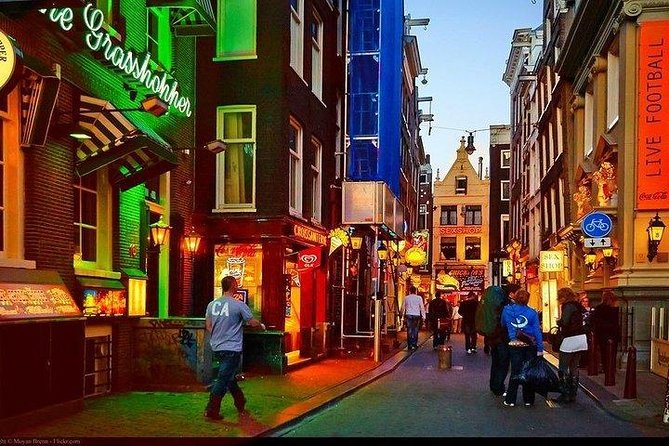
A few turns in De Wallen change everything you think. This two-hour small-group walking tour takes you through Amsterdam’s Red Light District with a local lens, mixing street detail with real context instead of rumors. I like that it’s on foot, so you can slow down and actually notice the city around the stories.
My favorite part is the guide-led focus on how this area became what it is, including the coffee shop culture and the sex work industry in plain, respectful terms. I also appreciate that you get time for questions, and the guides we heard about by name, Adam and Aarre, were both described as fun with strong facts.
One thing to consider, if you’re sensitive to adult themes or you hate seeing signage and storefronts up close, plan your mindset first. And if you have limited mobility, this one is not recommended, since it’s a walk through narrow streets.
In This Review
- Key highlights you will actually feel on the ground
- A short De Wallen walk that helps you see the city, not just the headlines
- Value check: what you get for $63.67 and a 32-person max
- Getting to Geldersekade 2HS and making this fit your day
- De Wallen from a local perspective: what your guide is actually doing
- Stop at the Dam square: Amsterdam’s wooden-pile foundation story
- De Wallen within Old Town: understanding the oldest streets you’re walking
- Pub The Ape (Int Aepjen): why one surviving wooden building matters
- The Waag: from city gate to guild and crafts square
- The smallest house: VOC storage to long-term living
- A condom shop since 1987: how commerce and adult life sit in the open
- Group energy and guide style: why Adam and Aarre keep getting praised
- Who should book this De Wallen tour with Trigger Tours
- Should you book? My practical take
- FAQ
- How long is the Amsterdam Red Light District tour?
- How much does the tour cost?
- Where is the meeting point?
- Is there a mobile ticket?
- How big is the group?
- Are there multiple start times?
- Can I cancel for free?
- Is the tour suitable for limited mobility?
- Are service animals allowed?
Key highlights you will actually feel on the ground
- Small-group pacing over about two hours, with time to stop and ask questions
- Local perspective on De Wallen, including coffee shop culture and how the industry fits the city
- Historic Old Town stops that explain why Amsterdam looks the way it does
- Wooden building survival stories, including Pub The Ape (Int Aepjen) from around 1540
- A stop at Waag, once a city gate and later a craft and guild hub
- Adult life and commerce context, including a condom shop operating since 1987
Other guided walks through this part of Amsterdam, for adults
- Amsterdam: Red Light Secrets Museum Entry Ticket★ 4.2 · 5,722 reviews
- Amsterdam: Red Light District Tour in German/English/Italian★ 4.9 · 5,623 reviews
- Amsterdam Red Light District & Coffee Shop Tour★ 4.6 · 4,134 reviews
- Amsterdam: Red Light District Pub Crawl with Unlimited Shots★ 4.1 · 2,130 reviews
A short De Wallen walk that helps you see the city, not just the headlines
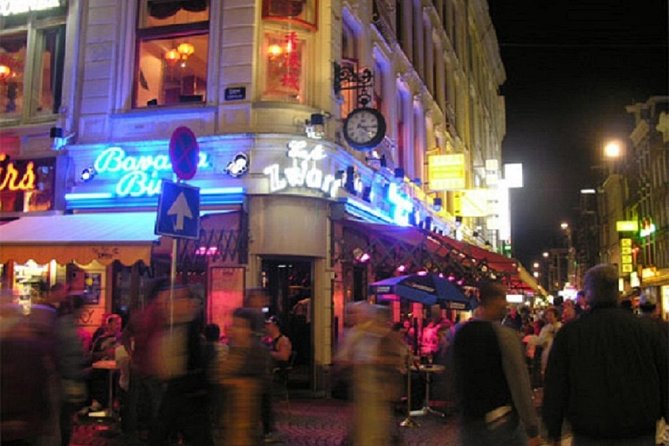
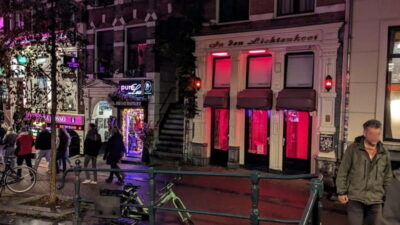
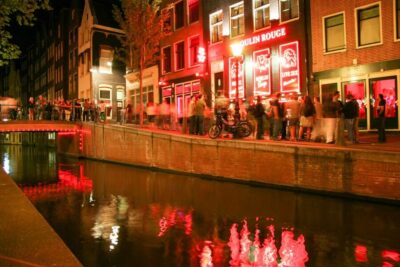
Amsterdam’s Red Light District, De Wallen, has a reputation that can feel like a theme park. This tour tries to reset that. You walk the narrow lanes while your guide explains how the neighborhood grew into its present-day shape.
Because the tour is only about two hours, you can fit it into a busy day without overcommitting. It also means you focus on the most meaningful beats instead of wandering for hours with no structure.
I like that the tour’s goal is practical understanding. You will learn what the area is, where it sits in the Old Town, and why certain buildings are there, not just what people assume from a distance.
Value check: what you get for $63.67 and a 32-person max
At $63.67 per person, this is not the cheapest thing on your day plan. But you are paying for a guide, a tight route, and group management that keeps it moving in the right places.
The tour is capped at a maximum of 32 travelers. That’s not tiny like a private tour, but it’s still small enough that you are not swallowed by a huge crowd. Reviews also highlight that guides made space for questions, which is often where the real value shows up.
You also get a mobile ticket, so you can keep things simple on the go. If you are trying to travel light and avoid paper logistics, that’s a real convenience.
Getting to Geldersekade 2HS and making this fit your day
The meeting point is Geldersekade 2HS, 1012 BH Amsterdam. The tour ends back at the meeting point, so you do not have to solve a second “where do I end up” puzzle.
This matters because De Wallen’s streets can be easy to misread on your own. Starting and ending in the same place helps you stay oriented, especially if you are pairing the tour with other Old Town sights.
You’ll also want to watch your shoes. Even though the tour is short, the area is full of tight corners and uneven-feeling walkways. If you want a smoother experience, wear comfortable walking shoes you can trust for city sidewalks.
De Wallen from a local perspective: what your guide is actually doing
The tour’s core promise is a local perspective on one of Amsterdam’s most famous neighborhoods. That sounds like marketing until you’re walking it and realizing the guide is connecting dots.
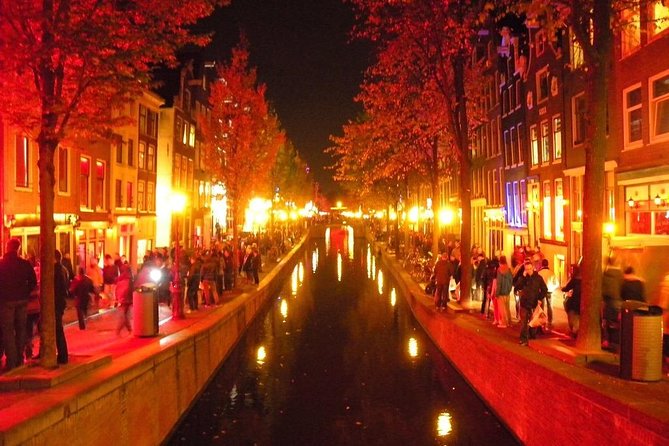
You’ll see the narrow streets of De Wallen and hear how Amsterdam’s coffee shop culture and sex work industry function as part of the city. The tone is important. Instead of sensationalizing, the goal is to explain what you are looking at and why it exists where it exists.
This is also where the guide’s personality matters. In reviews, Adam was called entertaining while still very informative, and Aarre was described as accommodating and very helpful when people wanted the route adjusted to their needs. That means you should expect a conversation, not just a lecture.
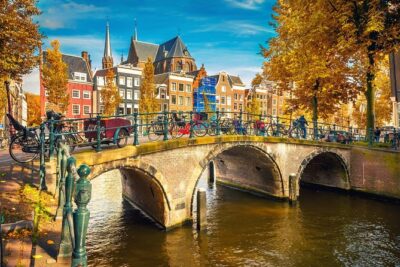



Stop at the Dam square: Amsterdam’s wooden-pile foundation story
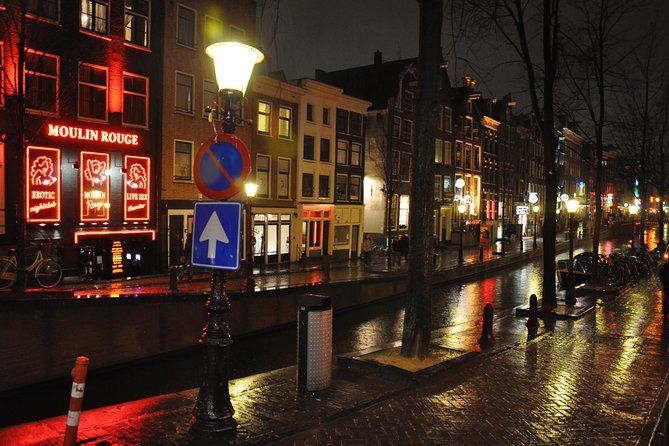
One of the most surprising parts of the tour is how it uses De Wallen territory to teach you about Amsterdam itself. You’ll stop at the Dam area and get the explanation Amsterdam is built on.
Amsterdam’s soil includes a thick layer of fen and clay. Since the days when the city was growing, houses were built on wooden foundation piles driven deep into clay, peat, and water until they reached a first layer of solid sand. The text you’ll hear includes that the foundation piles can reach about 11 meters deep.
Why this matters on a walking tour: you start to understand why old buildings survived and why the city developed the way it did. It also helps you “read” Amsterdam. You are not just admiring architecture, you’re learning the engineering logic underneath it.
A possible consideration: the Dam-focused explanation is more conceptual than visual. If you’re the type who wants constant photo stops, you may need to lean into the storytelling for this segment.
De Wallen within Old Town: understanding the oldest streets you’re walking
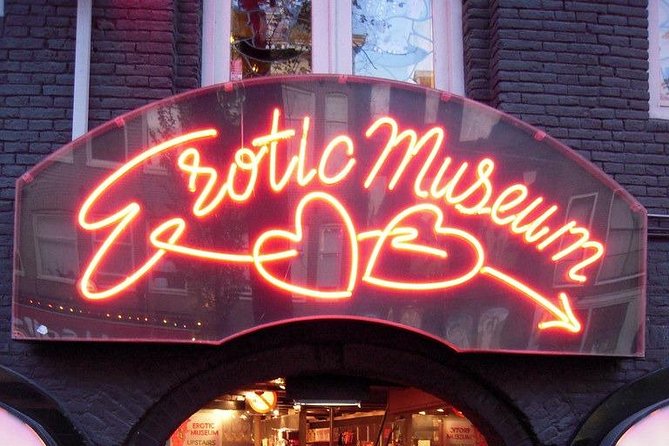
Another stop frames the location as part of the Old Town, which is the oldest part of the city. When you hear that, the streets stop feeling like a movie set and start feeling like an actual historic layer.
Old neighborhoods change slowly and unevenly. De Wallen sits in the middle of that timeline, which is why you’ll see older building types beside newer functions. Your guide uses that contrast to explain how today’s neighborhood became normal over time.
This is also where you can calibrate your own expectations. If you come with only modern stereotypes, you’ll miss what’s happening historically. If you come ready to learn how functions overlap in the same streets, this stop clicks quickly.
Pub The Ape (Int Aepjen): why one surviving wooden building matters
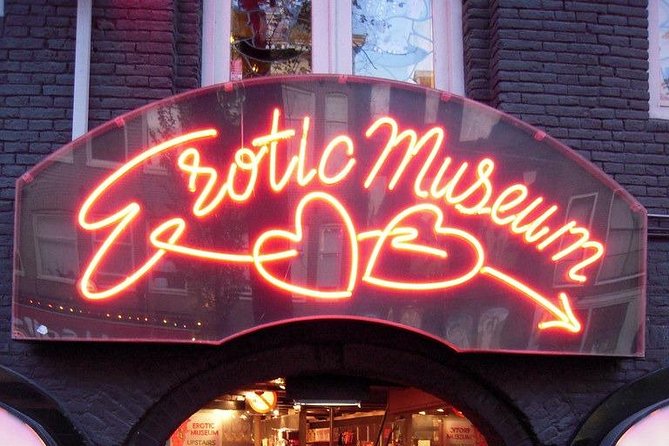
At Pub The Ape, also known as Int Aepjen, you’ll hear a great Amsterdam survival story. The building dates to around 1540, and it is listed as one of only two remaining wooden buildings in Amsterdam.
The reason that detail matters is the fire history. After a major fire in 1452, government decisions pushed construction toward brick facades. So when you stand near Int Aepjen, you are looking at a rare exception.
You’ll also learn how the loss of buildings shaped what you see today. Amsterdam did not just swap materials once. It reacted to disasters, policy changes, and the practical needs of a growing city.
Practical tip: use this stop to notice the building’s shape and materials while your guide is explaining it. Even if you mostly care about the Red Light District story, this is one of the best links to Amsterdam’s broader historical logic.
The Waag: from city gate to guild and crafts square
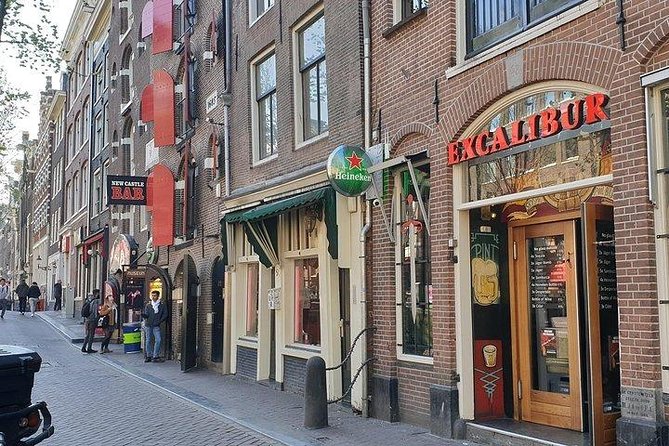
Next you’ll hit the Waag, used to be one of Amsterdam’s city gates. It was built around the 1400s and is described as the second oldest building of Amsterdam.
Later, the Waag was used by guilds and craft organizations. Instead of functioning purely as a barrier, it became a meeting point for groups with shared work and standards, set in and around the square.
This stop gives you a different angle on the neighborhood. De Wallen is often treated like its own world, but here you see it connected to the city’s trading and craft systems. Old gate architecture and craft history are part of the same story arc as the district’s later social economy.
If you like architecture with context, this is a strong segment. If you are less interested in medieval civic buildings, you might want to focus on why guild spaces were valuable, then move on to the next story beat.
The smallest house: VOC storage to long-term living
The tour also includes the smallest house of Amsterdam, built around the 1700s. The story starts with storage for the VOC trading company.
Then the use shifts. Over time, people began living there for a very long period. This stop is a reminder that Amsterdam’s housing story is not just about beauty. It’s about survival, trade, and how space gets used when money and needs change.
Why it works on your feet: you can mentally place the house into the surrounding district. The smallest building becomes a clue to how flexible and sometimes cramped life could be in a working city.
One drawback to keep in mind: because it is a small, specific sight, you may feel less “wow” if you expected larger monuments. But the story is the point, and it adds texture to everything else you will see on this walk.
A condom shop since 1987: how commerce and adult life sit in the open
This tour doesn’t shy away from the modern reality of the district. It includes a stop at a condom shop described as the world’s first condom shop special for condoms, in place since 1987.
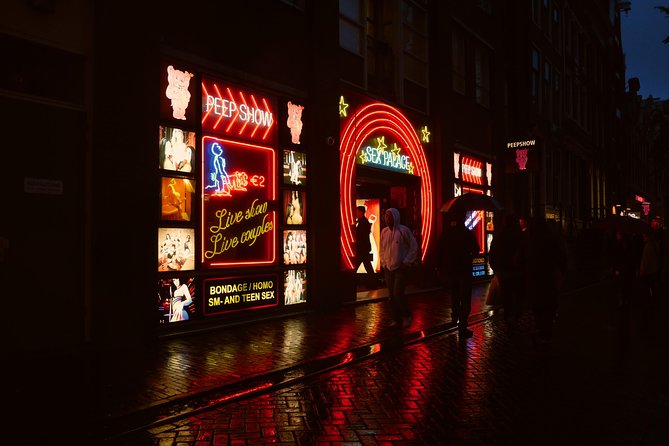
You’ll hear about customized condom sizing and special condom options. That may sound like a random detail, but it is included because it points to one of De Wallen’s defining features: adult life and services are openly part of the street ecosystem.
It also helps you understand the difference between fantasy and daily logistics. When you look at businesses like this, you realize the neighborhood has always had to provide practical services, not only performative nightlife.
Tone matters here too. A guided walk keeps the focus on context and everyday function rather than shock value. If you’re concerned about discomfort, you can mentally frame this segment as information, not spectacle.
Group energy and guide style: why Adam and Aarre keep getting praised
The strongest, most consistent praise across what you’ll hear about this tour centers on the guides. Adam is described as entertaining and very good at keeping facts clear, with plenty of chances to ask questions. Aarre is described as awesome, accommodating, and very informative, including tailoring the tour to meet visitors’ needs.
That matters for your experience because De Wallen can be emotionally loaded. A good guide does two jobs at once. They explain what you see, and they help you feel comfortable enough to ask.
For you, that means you are less likely to leave with only surface impressions. You’ll likely walk away with a better framework for what you saw, how Amsterdam thinks about this corner of life, and why the area has layers of history.
Who should book this De Wallen tour with Trigger Tours
This tour is best for you if:
- You want a short, structured walk rather than hours of wandering
- You care about Amsterdam’s Old Town context, including foundations and historic buildings
- You want a local-style explanation of De Wallen, including coffee shop culture and sex work industry context
It might not be the best fit if:
- You are very sensitive to adult themes and signage
- You have limited mobility, since it is a walk through the district
- You want a “photo only” experience, because multiple stops are about explanation and history
Also, this is a small-group setup with up to 32 people. If you thrive on quieter, more private tours, you might still feel a crowd. But if you like a lively walking pace and group discussion, it should work well.
Should you book? My practical take
If you’re visiting Amsterdam for a few days and you want one activity that makes De Wallen make sense, I’d say this is worth your time. The two-hour length is smart, the route includes real historic building context beyond the adult storefront reputation, and the guides you’ll hear named in feedback are strong at mixing humor with facts.
The price is reasonable for a guided walk in a high-demand area, especially since you get a mobile ticket and multiple start times to match your schedule. Just go in with the right expectations. You’re not buying shock value. You’re buying context, street-level orientation, and a better grasp of how Amsterdam’s oldest parts relate to what people see today.
If you want to understand the city and not just collect headlines, book it.
FAQ
How long is the Amsterdam Red Light District tour?
It lasts about 2 hours.
How much does the tour cost?
The price is $63.67 per person.
Where is the meeting point?
The tour starts at Geldersekade 2HS, 1012 BH Amsterdam, Netherlands, and ends back at the same meeting point.
Is there a mobile ticket?
Yes, the tour includes a mobile ticket.
How big is the group?
The maximum group size is 32 travelers.
Are there multiple start times?
Yes, you can choose from multiple start times.
Can I cancel for free?
Yes. You can cancel for a full refund if you cancel at least 24 hours before the experience’s start time.
Is the tour suitable for limited mobility?
It is not recommended for travelers with limited mobility.
Are service animals allowed?
Yes, service animals are allowed.
Everything Else From Our Amsterdam Notebook





Also Reviewed Around Amsterdam





The Adult Side of Amsterdam, Explained




Fresh off the review pile in Amsterdam
- Full-Day Trip From Amsterdam to Keukenhof, Zaanse Schans + Cruise
★ 5.0 · 3 reviews - Boutique Dutch Food & History Tour with up to 8 guests only
★ 5.0 · 3 reviews - Private Tour to Windmills Zaanse Schans +Keukenhof – 7 Hours
★ 5.0 · 3 reviews - Full-Day Private Guided Countryside Tour from Amsterdam by Bike
★ 5.0 · 3 reviews - Amsterdam Red Light District and Old Town Walking Tour
★ 5.0 · 3 reviews
Red Light District & Coffeeshops, compared.
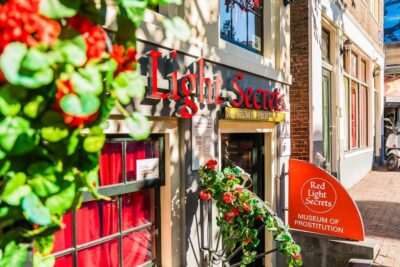 ★ 4.2Amsterdam: Red Light Secrets Museum Entry TicketFrom $175,722 reviews
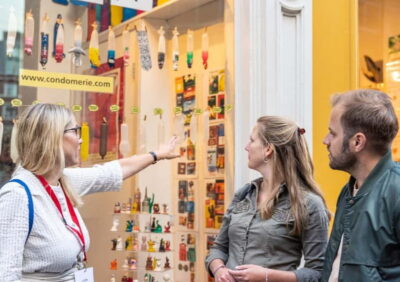 ★ 4.9Amsterdam: Red Light District Tour in German/English/ItalianFrom $285,623 reviews
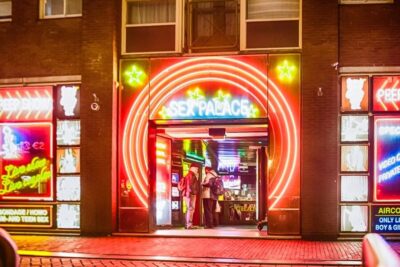 ★ 4.6Amsterdam Red Light District & Coffee Shop TourFrom $294,134 reviews
 ★ 4.1Amsterdam: Red Light District Pub Crawl with Unlimited ShotsFrom $242,130 reviews
 ★ 4.5Amsterdam Red Light District Pub CrawlFrom $241,497 reviews
 ★ 4.2Amsterdam: Cannabis Museum Entry TicketFrom $141,244 reviews
 ★ 4.5Amsterdam: Red Light District TourFrom $331,135 reviews
 ★ 4.1Amsterdam: After Dark Red Light District TourFrom $571,030 reviews
Browse the lists this tour appears in