
REVIEW · AMSTERDAM
MUST DO: Amsterdam’s Red Light District tour with a local
After dark, Amsterdam tells a different story. This Red Light District tour with a local is built for your first night out in town, with a guide who connects the street atmosphere to what the buildings and street patterns have meant for centuries.
I love that the route is walkable and foot-focused, so you can feel the neighborhood vibe up close without hopping around on transport. I also like how the story goes beyond headlines, starting with the city’s older roots and then moving to the district’s modern reality.
One heads-up: this is an adult-themed area and an evening walk, so it may not feel comfortable for everyone, and it’s not ideal if you have limited mobility or tricky walking conditions.
In This Review
- Key things to know before you go
- Entering the Red Light District after dark, the practical way
- Meeting at Geldersekade 2 and planning a smooth 2-hour walk
- Stop by stop: the Dam area and Amsterdam’s wooden-pole foundations
- Pub The Ape and Amsterdam’s surviving wooden buildings
- Waag: the old city gate story in the heart of the walk
- The smallest house and the VOC storage-to-living idea
- The condom shop stop since 1987, and why it’s part of the story
- Guides make or break it: Ben, Robin, Sander, Max, and what to watch for
- What the $31.32 price buys, and how to judge value
- Who this tour suits best, and who should rethink it
- Should you book this Red Light District walk?
- FAQ
- How long is the Red Light District tour?
- How much does the tour cost?
- What language is the tour offered in?
- Where is the meeting point?
- Is admission included?
- Will I get a mobile ticket?
- Is the tour suitable for people with limited mobility?
- How big is the group?
- What is the cancellation policy?
Key things to know before you go
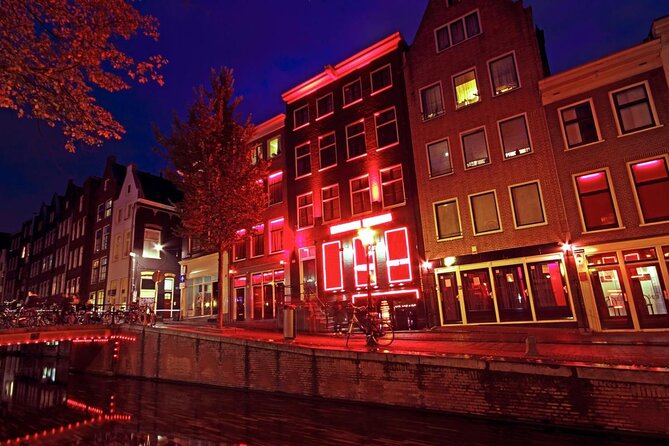
- After-dark atmosphere with on-foot pacing, built for seeing the neighborhood in real light
- Old Amsterdam landmarks show up along the way, not just Red Light District sights
- Small group size up to 20, which usually makes it easier to ask questions
- Guide names you might get, including Ben, Robin, Sander, or Max, who are praised for history plus personality
- Key stops span centuries, from wooden houses to the Waag gate area and a famous condom shop
- No food included, so you’ll want a plan for snacks or dinner before or after
Other guided walks through this part of Amsterdam, for adults
- Amsterdam: Red Light Secrets Museum Entry Ticket★ 4.2 · 5,722 reviews
- Amsterdam: Red Light District Tour in German/English/Italian★ 4.9 · 5,623 reviews
- Amsterdam Red Light District & Coffee Shop Tour★ 4.6 · 4,134 reviews
- Amsterdam: Red Light District Pub Crawl with Unlimited Shots★ 4.1 · 2,130 reviews
Entering the Red Light District after dark, the practical way
I get why people come to Amsterdam for the canals and the museums. But the city also has nights that feel completely different, and the Red Light District is one of them. This tour is scheduled for the evening, so you see the streets when they feel most alive, not when they look like a daytime photo backdrop.
What makes it more interesting than a quick drive-by is the angle. You’re not just walking past windows and storefronts. You’re hearing how the neighborhood has changed, what the old parts of the city were built on, and why specific buildings survived when cities elsewhere rebuilt again.
You’ll also walk through narrow lanes where you can actually notice details, like old building materials and the way the street geometry works. That’s the kind of stuff you miss when you rush. The tour stays on foot for this reason, because the vibe and the history show up in the small spaces.
Meeting at Geldersekade 2 and planning a smooth 2-hour walk
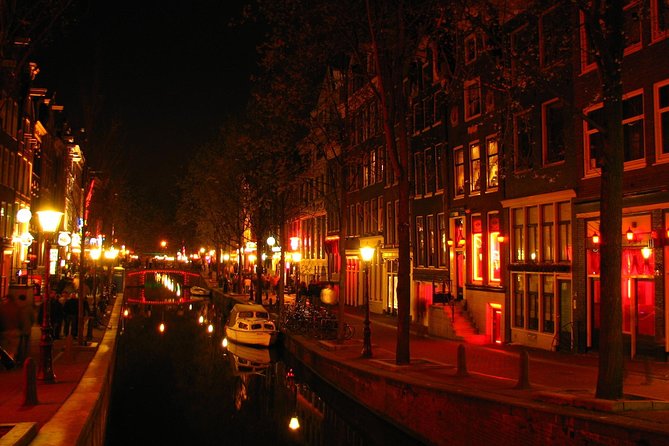
The meeting point is Geldersekade 2, 1012 BH Amsterdam. The tour ends back at the same place, so you do not have to worry about a strange pickup point or a long trek to finish.
The time on the ticket is about 2 hours. In real life, timing can vary a bit. One account I saw ran about 1 hour 35 minutes, which tells me you should expect a tight, focused walk rather than a long sit-down experience.
Because it’s an evening stroll, wear shoes you can trust. One rough story involved icy streets and people having trouble walking. Even if your night is dry, Amsterdam weather can turn fast, so bring a warm layer and something grippy. And do not aim to be late. Tours can depart on time, and there is limited time to wait around once the group is assembled.
This is an English tour, and you get a mobile ticket, which is handy if you do not want to juggle printouts. The group size is capped at 20, so it stays small enough to feel personal.
Stop by stop: the Dam area and Amsterdam’s wooden-pole foundations
The route starts with a tour of the Red Light District area, but the stories reach deeper than you might expect. A key early stop is the Dam area, often described through the idea of the city built on trees.
Here’s the practical meaning of that for you: Amsterdam’s ground is not the easiest base for heavy buildings. It’s described as having a thick layer of fen and clay. Historically, houses were built on wooden foundation piles that were driven deep through clay, peat, and water until they reached a first layer of solid sand. The depth is given as about 11 meters.
That detail matters because it explains why the city feels the way it does. The buildings you see are not just old, they are engineered to survive on a watery, soft foundation. When you hear that while standing in the old-town core, the architecture stops being random and starts feeling intentional.
This section also frames why this part of town is so old. You’re told the area is part of the Old Town, which helps you understand why the neighborhood has so much layering: street life now, but roots stretching back through earlier eras.
Pub The Ape and Amsterdam’s surviving wooden buildings
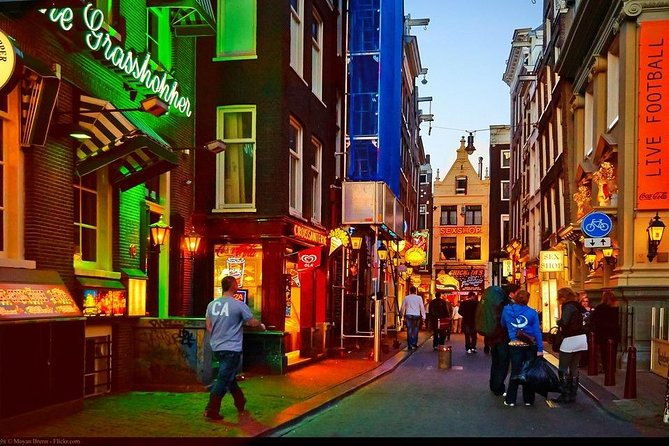
One of the most specific stops is Pub The Ape, known in Dutch as Int Aepjen. This is a big deal on a walking tour because it’s described as built around 1540, and also as one of only two remaining wooden buildings left in Amsterdam.
That kind of survival story changes how you look at the street. Instead of treating the pub as just a pub, you see it as a rare remainder from a time when wooden facades were part of daily life. The tour also mentions that after a major fire in 1452, government decisions pushed toward brick facades. So when you stand near The Ape, you’re seeing what the city was before the shift.
If you like history you can touch, this stop is a strong one. It also breaks up the evening pace. You get a moment where the story lands on a concrete landmark, not just a general timeline.
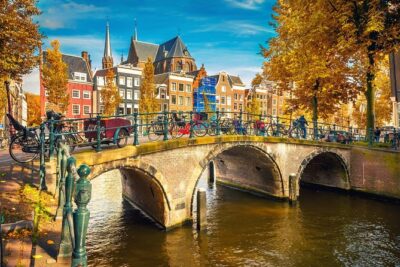



Waag: the old city gate story in the heart of the walk
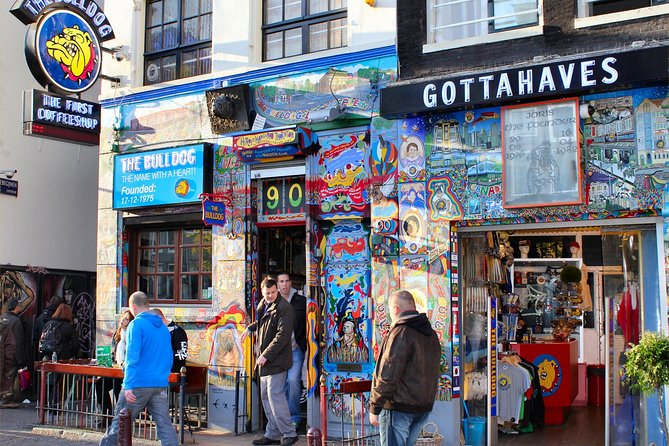
The Waag is another anchor point. The tour describes it as an old city gate area connected to Amsterdam’s defensive wall, built around the 1400s. You’re also told it’s the second oldest building of Amsterdam.
Later, the Waag is explained as being used by guilds, with craftsman organizations working within the Waag and around the square. That matters because it gives you context for how Amsterdam functioned economically, not just how it looked.
Why I like this part for a first-time visitor: the Red Light District can feel like a single topic when you arrive. Stops like the Waag widen the frame. You start to notice the broader old-town structure, the way gates, squares, and specialized buildings shaped life.
And it helps you walk with less mental whiplash. You’re not only thinking about modern street commerce or adult entertainment. You’re also learning why this area was important long before the district became what it is today.
The smallest house and the VOC storage-to-living idea
You’ll also hear about the smallest house of Amsterdam, described as built around the 1700s. The tour explains that it was first used as storage for the VOC trading company and later became a lived-in home for a very long time.
That’s a memorable contrast. You go from major city infrastructure like gates and walls to something tiny enough that it feels almost personal. It’s the kind of story that makes the city’s past feel human. And it quietly adds depth to the whole night, because it links commerce and daily life to the same streets you associate with entertainment now.
If you enjoy facts with real atmosphere, this stop is useful. It gives your brain a hook besides the visual intensity of the Red Light District itself.
The condom shop stop since 1987, and why it’s part of the story
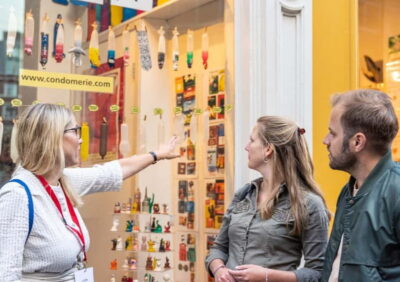
The walk includes a landmark described as the world’s first condom shop, in place since 1987. You can get size-customized condoms and all kinds of special condoms, according to the tour details.
I like that this is handled as a cultural and social marker rather than just shock value. The point is to show that the district is not only about windows and legends. It has businesses, services, and modern adaptations that reflect changing social realities.
One practical note: this is the kind of stop that can feel awkward if you’re easily uncomfortable. The best approach is to treat it like any other shop story in a neighborhood. You’re there to understand how a city segment functions. If your comfort level is low, you may want to keep your expectations flexible and be ready for adult themes.
Also, if you have questions about what you’re seeing, this is exactly where a good guide earns their tip. The accounts I read praised multiple guides for making the history clear and adding humor without turning it into a messy lecture.
Guides make or break it: Ben, Robin, Sander, Max, and what to watch for
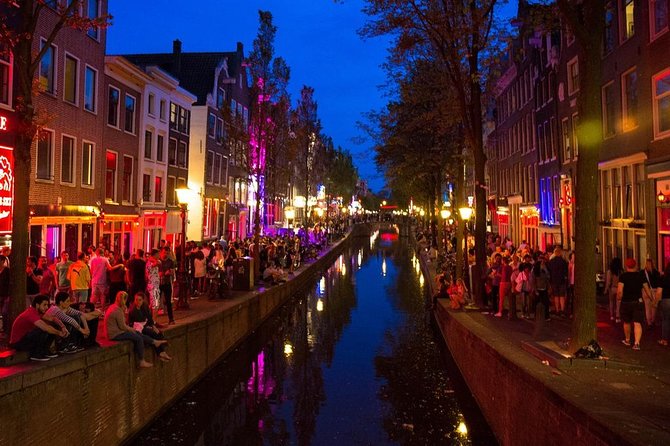
The big praise is consistent across names: Ben is described as articulate and able to connect history well. Robin is praised for giving a ton of history and keeping the tour fun, plus local tips. Sander gets points for sharing Amsterdam’s history well and doing it in an entertaining way. Max is mentioned as knowledgeable and humorous, with many saying the tour balanced Red Light District content with other nearby sights.
That balance is important. Some parts of the walk can feel like they belong to a different tour category than people expect. Yet the overall effect is that you leave with a more complete mental map of old Amsterdam, not only one slice of adult street life.
One caution from a less ideal experience: hearing can be an issue if you end up at the wrong spot in a small group. If you can, position yourself where the guide’s voice will travel. If you struggle to hear, that is your cue to step closer.
And if you are sensitive to tone, pick a time that feels right for you. One negative account mentioned feeling uncomfortable due to rude or inappropriate comments. You cannot control every human factor in a live tour, but you can choose how you respond. If something feels off, it’s okay to disengage from the conversation and focus on the landmarks.
What the $31.32 price buys, and how to judge value
At $31.32 per person for about 2 hours, you are paying for a guided, on-foot experience in one of Amsterdam’s most talked-about neighborhoods. The value is in the explanation, not in entry fees, because the tour lists admission ticket free.
This matters because Amsterdam can be expensive. Here, you get a structured walk and interpretation without needing to pay extra at each stop. You also get a small group cap, which typically means less time standing around and more time getting answers.
The one cost you should plan for is food and drinks. They are not included. So if you’re doing this after a day of museums, eat beforehand or plan dinner right after. Don’t show up hungry, because even a great guide cannot entertain you through an empty stomach.
Also note that this tour is often booked about 47 days in advance on average. That’s a sign of steady demand. If your dates are fixed, book sooner rather than assuming you’ll be able to grab a spot last minute.
Who this tour suits best, and who should rethink it
This tour fits best if you want your Amsterdam first-night impressions to feel real and local. It also works well if you like walking tours where the guide ties buildings, ground, and street history into one story.
It is also not just a Red Light District-only route. Some guides and groups keep the focus partly on older landmarks, which makes the walk more appealing if you want history plus context, not only adult street imagery.
On the other hand, it’s not recommended for travelers with limited mobility. That’s not surprising, since it’s a walking route through narrow streets. If you have walking limits, you’ll likely be happier choosing a less physical option or a route designed for easier movement.
And if you’re easily uncomfortable with adult themes, consider whether you want an evening walk through this specific district at all. You can still enjoy Amsterdam without stepping into this kind of scene.
Should you book this Red Light District walk?
Book it if you’re visiting Amsterdam for the first time, you want an after-dark local guide, and you care about understanding how the city’s old foundation stories connect to what you see in this neighborhood today. The stop list is strong, with landmarks like Pub The Ape, the Waag, and the smallest house, plus the condom shop stop since 1987.
Skip it or choose a different style if adult content makes you tense, or if mobility is a concern. And if you book, wear good shoes and show up on time, because night streets can be slippery and tours tend to move when they’re scheduled.
FAQ
How long is the Red Light District tour?
It’s listed as about 2 hours.
How much does the tour cost?
The price is $31.32 per person.
What language is the tour offered in?
The tour is offered in English.
Where is the meeting point?
You meet at Geldersekade 2, 1012 BH Amsterdam, Netherlands.
Is admission included?
Yes. The tour notes admission ticket free.
Will I get a mobile ticket?
Yes. The tour includes a mobile ticket.
Is the tour suitable for people with limited mobility?
It is not recommended for travelers with limited mobility.
How big is the group?
There is a maximum of 20 travelers.
What is the cancellation policy?
Free cancellation is available if you cancel up to 24 hours in advance for a full refund.
If you’d like, tell me your travel dates and whether you prefer a more history-heavy or more street-scene focused night, and I’ll help you pick the best departure time style.
Everything Else From Our Amsterdam Notebook





Also Reviewed Around Amsterdam





The Adult Side of Amsterdam, Explained




Fresh off the review pile in Amsterdam
- Full-Day Trip From Amsterdam to Keukenhof, Zaanse Schans + Cruise
★ 5.0 · 3 reviews - Boutique Dutch Food & History Tour with up to 8 guests only
★ 5.0 · 3 reviews - Private Tour to Windmills Zaanse Schans +Keukenhof – 7 Hours
★ 5.0 · 3 reviews - Full-Day Private Guided Countryside Tour from Amsterdam by Bike
★ 5.0 · 3 reviews - Amsterdam Red Light District and Old Town Walking Tour
★ 5.0 · 3 reviews
Red Light District & Coffeeshops, compared.
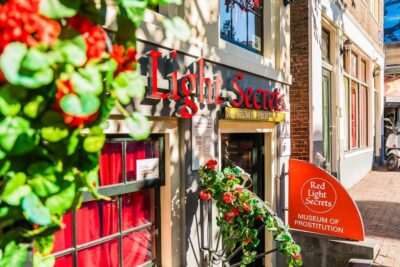 ★ 4.2Amsterdam: Red Light Secrets Museum Entry TicketFrom $175,722 reviews
 ★ 4.9Amsterdam: Red Light District Tour in German/English/ItalianFrom $285,623 reviews
 ★ 4.6Amsterdam Red Light District & Coffee Shop TourFrom $294,134 reviews
 ★ 4.1Amsterdam: Red Light District Pub Crawl with Unlimited ShotsFrom $242,130 reviews
 ★ 4.5Amsterdam Red Light District Pub CrawlFrom $241,497 reviews
 ★ 4.2Amsterdam: Cannabis Museum Entry TicketFrom $141,244 reviews
 ★ 4.5Amsterdam: Red Light District TourFrom $331,135 reviews
 ★ 4.1Amsterdam: After Dark Red Light District TourFrom $571,030 reviews
Browse the lists this tour appears in