
REVIEW · HAARLEM & THE NORTH SEA COAST
Noordwijk: Space Expo Entry Ticket
Meteorites, missions, and a Soyuz capsule. Space Expo turns space travel into a hands-on family day behind the sea and dunes in Noordwijk.
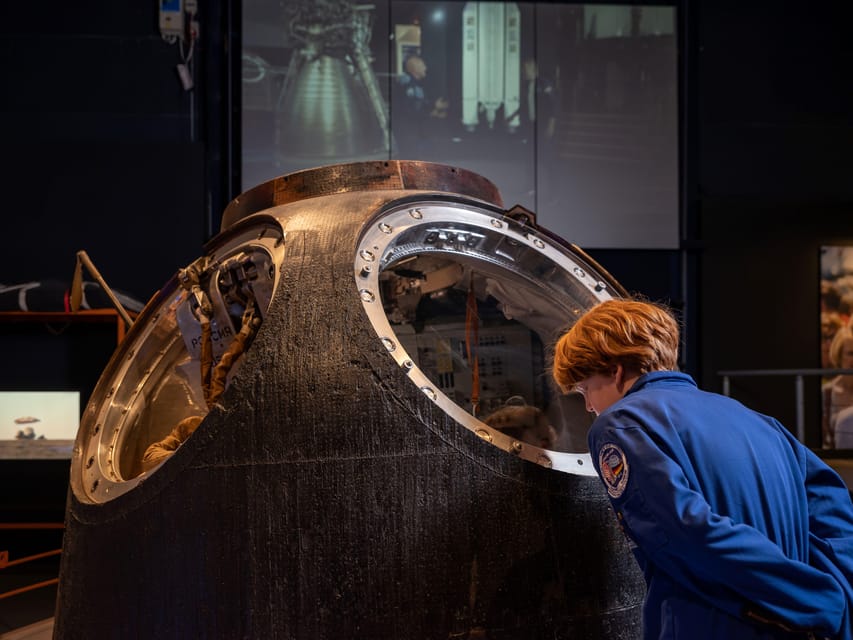
I love the chance to see the Soyuz capsule used by André Kuipers up close, and you will also appreciate the big, life-size way the museum explains life in orbit with a full ISS model. It is the kind of museum that makes the topic feel reachable, not just impressive on paper.
One possible drawback: the expo is not huge, so if you like to read every sign slowly, you may still feel like you want more after your 1 day ticket. Plan for extra time with the interactive stations so the day does not feel rushed.
In This Review
- Key things to know before you go
- Space Expo in Noordwijk, right by sea and dunes
- The main exhibits: Soyuz, ISS, and a real meteorite
- Designing missions on Earth, then launching them into space
- The ISS life and work experience, made for real humans
- Expedition Space Expo for kids 5-12: quiz, decode, and diploma
- The Space Train to ESA ESTEC on weekends and school vacations
- What you can do in 1 day, without feeling rushed
- Price and value: what $20 buys you in a family day
- Included, not included: plan your day like a local
- Rules before you enter: bags, pets, drones, and safety
- Matching the museum to your group
- Should you book Space Expo entry tickets?
Key things to know before you go
- Touch a real meteorite and feel the story of space in your hands
- See André Kuipers Soyuz capsule and a life-size ISS experience
- Kids ages 5-12 can follow Expedition Space Expo with tasks, quizzes, and an official astronaut diploma
- On weekends and school vacations, a Space Train tour can connect you to ESA ESTEC
- ESA ESTEC riders must be at least 9, and guests 14 and up need valid ID at security
- Your entry ticket is valid for 1 day, so you can pace yourself
Space Expo in Noordwijk, right by sea and dunes
Space Expo sits in Noordwijk, in South Holland, with the beach setting close enough that the area feels like a proper day-trip, not a bolt-on stop. When you arrive, you enter the museum and the reception desk is on your left, which makes it easy to orient quickly before you start scanning the halls.
This is the kind of place that works even if your group has mixed ages. Kids get missions, quizzes, and a structured trail. Adults get real tech context, not just cartoons. And because it is a space museum, the pacing naturally helps you move from big ideas (how missions are designed) to physical objects (capsules, space materials, scale models) without needing a guide in order to understand what you are seeing.
The main exhibits: Soyuz, ISS, and a real meteorite
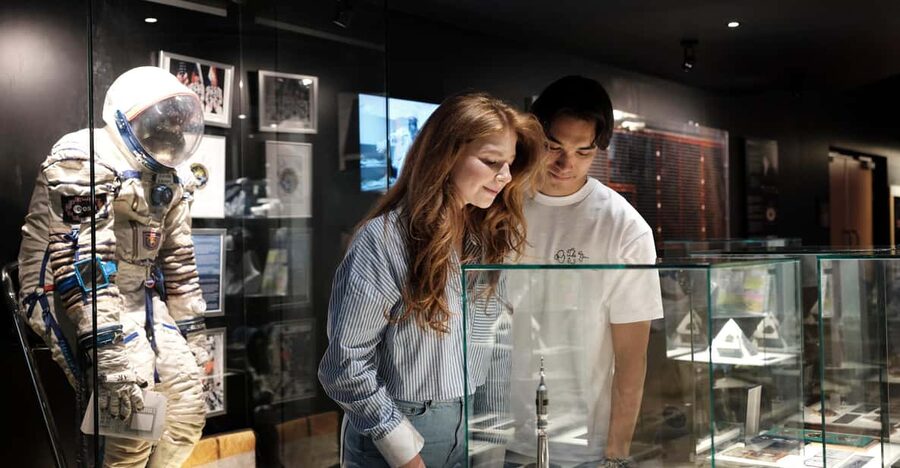
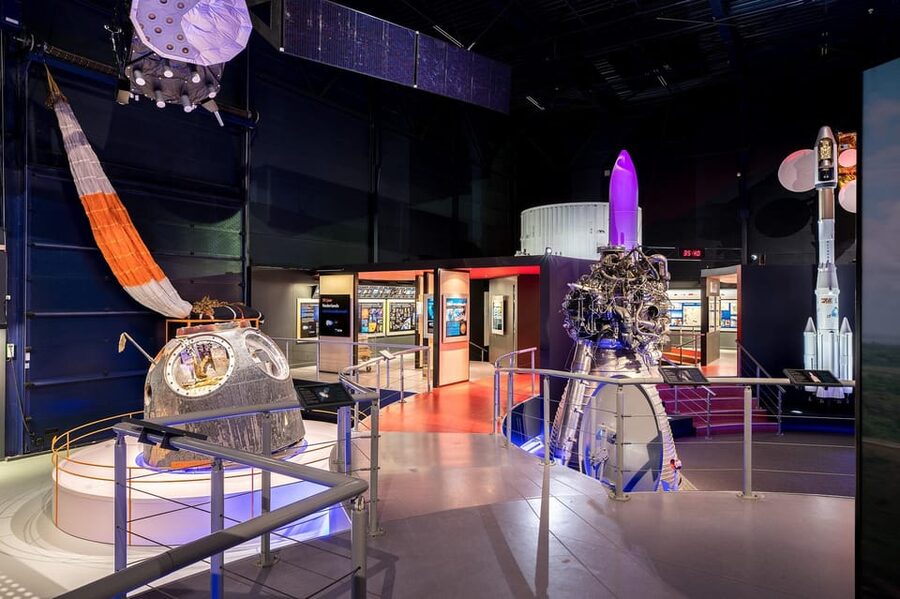
The headline pull for many visitors is the Soyuz capsule used by astronaut André Kuipers. Seeing the capsule in person gives you a reality check. Instead of space sounding distant, it looks like hardware, built for specific jobs, tested for specific risks, and used by specific humans.
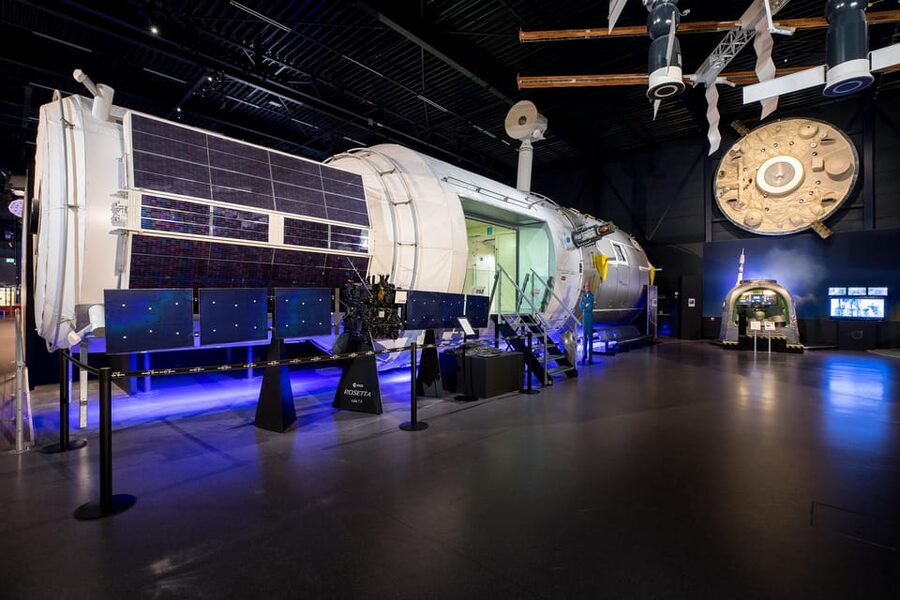
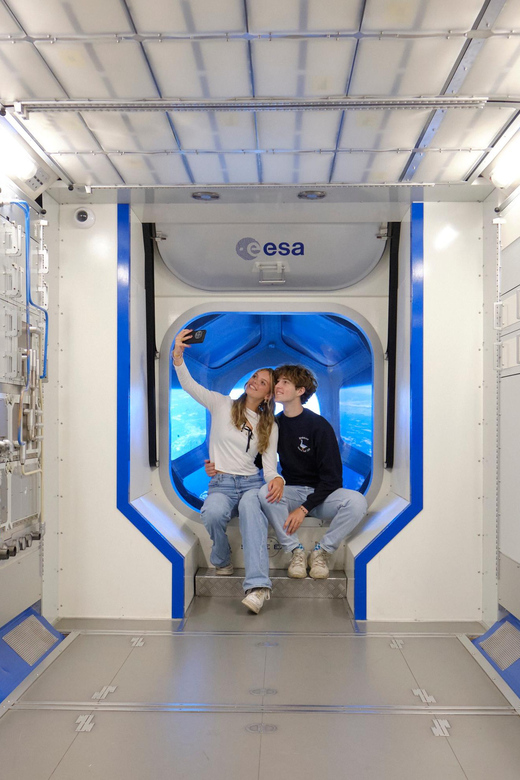
From there, the museum keeps the focus on how astronauts live and work in orbit. You can explore what it’s like to live and work in space, including a life-size model of the International Space Station (ISS). A big full-scale model helps because your brain stops thinking in proportions that belong only in photos. You can walk around a physical version of the layout and get a better sense of how cramped daily routines can feel, and how much planning matters.
One of the most memorable moments is the meteorite interaction. The museum lets you touch a real meteorite, which is a rare thing in science museums. Even if you are not a geology person, it turns the word space into something tactile. It also helps keep the day from becoming only screen time and reading panels.
Designing missions on Earth, then launching them into space
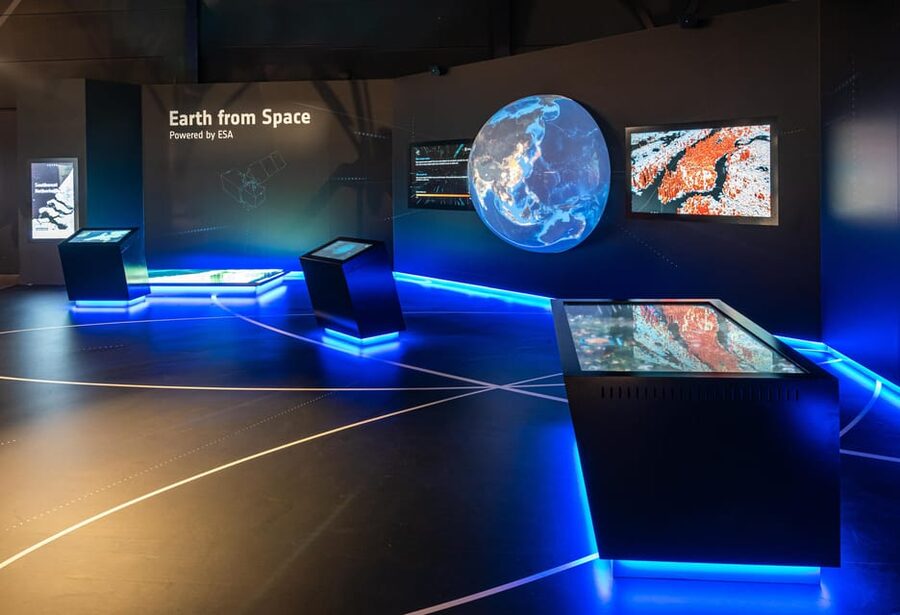
What I like about Space Expo is that it follows the real workflow of space travel, from planning to execution. You start with the idea of designing and building space missions on Earth. You see how missions are broken into tasks and systems, not just a rocket lifting off in a dramatic sequence.
Then you move toward launch and mission outcomes. Even when the exhibits are simplified for families, the structure is right. Space travel is full of constraints: timing, engineering limits, communication, and safety. The museum’s approach makes those constraints feel normal, which is a smart way to keep the subject from becoming too abstract.
You will also notice plenty of hands-on elements. The expo is not only about looking. Stations encourage you to try, test, and figure things out yourself. That is especially helpful if you have a child who learns better by doing rather than listening.
The ISS life and work experience, made for real humans
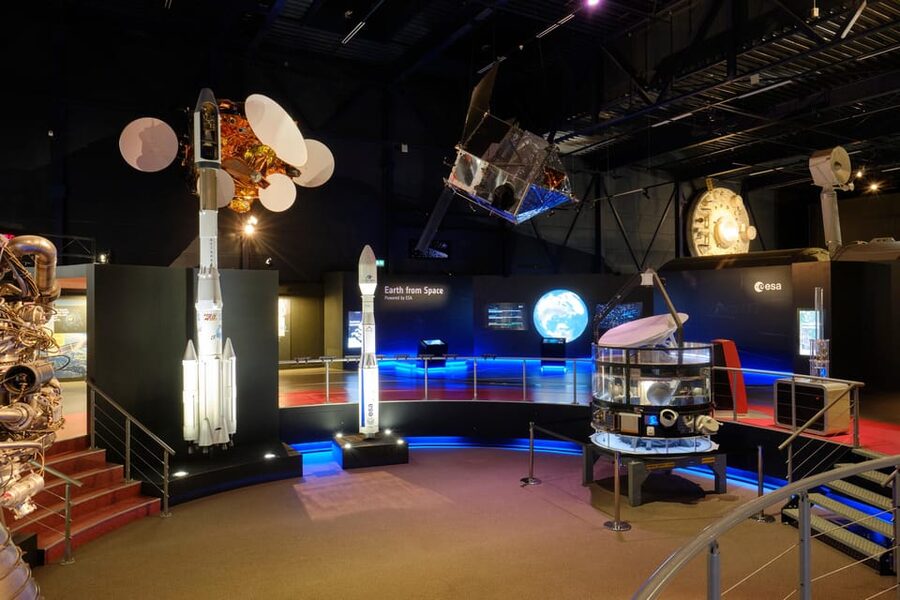
The ISS part of the museum is not only there to say, Here it is. It tries to teach you how living in orbit changes everyday life. The life-and-work theme is what makes the ISS model more than a scale replica.
You will get a clearer sense of why routines, equipment layout, and procedures matter. When you understand that, the rest of space exploration starts to make more sense too. It is not just about reaching space. It’s about staying safe and functioning while you are there.
Expedition Space Expo for kids 5-12: quiz, decode, and diploma
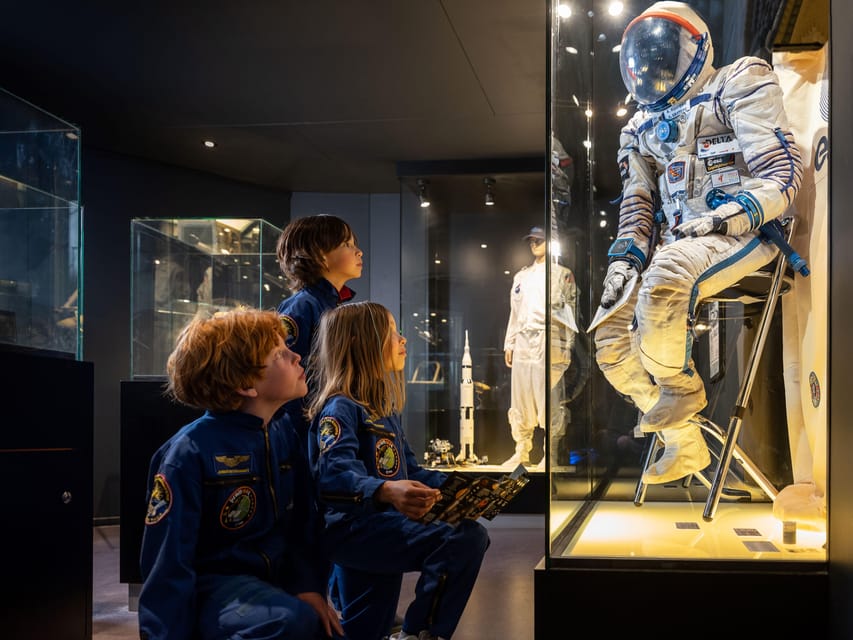
This is where the museum shines for families. If you have children ages 5 to 12, you can do Expedition Space Expo, a kid-friendly activity built around facts, assignments, and quiz questions. The format is designed to keep kids moving through the museum and noticing details that adults might miss if they only skim.
The experience includes a secret message style activity, where kids decode information and complete challenges as they go. It is a simple idea, but it works because it gives a goal to every room. Instead of, Just look around, the kids have a mission.
And at the end, kids can earn an official astronaut diploma. That is a small thing in adult terms, but for children it adds meaning to the day. They leave with proof they completed something, not just memories.
If you are traveling with multiple children, it also helps to reduce the usual museum conflict of where to go next. The expedition trail gives you a built-in rhythm.
The Space Train to ESA ESTEC on weekends and school vacations
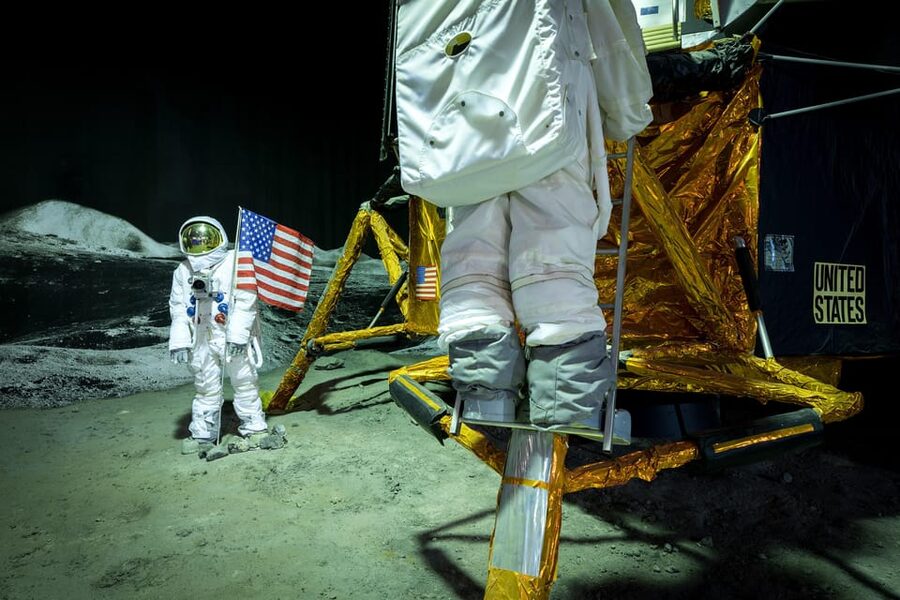
Here is the extra ingredient that turns a space museum visit into something more connected to the real space sector. On weekends and during school vacations, Space Expo offers exclusive tours aboard the Space Train to visit the next-door European Space Agency (ESA).
This part is not always available, so it’s worth checking timing before you build your day. It is also important to read the ride restrictions before you assume everyone can go. Riders must be at least 9 years old. Also, all guests aged 14 and above must present a valid ID at security.
Because security rules apply, I suggest you plan for a little extra patience. Even if you are just going next door, the ESA stop means you should expect checks. You should also book the Space Train ride through the museum website, following the restrictions listed there.
If your family has older kids, this is the segment that can give you the most “real-world” feeling from the day. It connects the exhibits to the space agency side of the story.
What you can do in 1 day, without feeling rushed
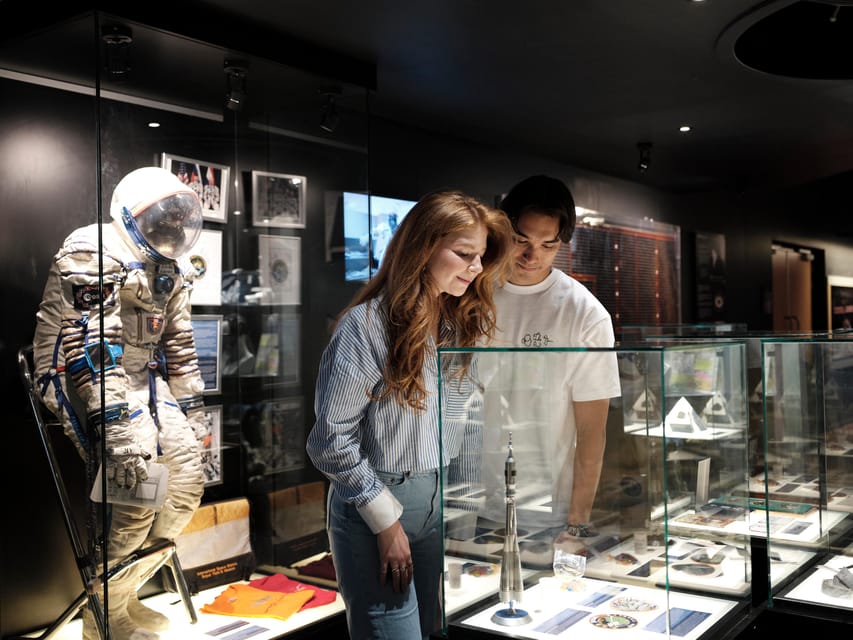
Your ticket is valid for 1 day, and that matters because the museum gives you options in how you pace it.
A practical flow that works for many families is:
- Start with the big anchor exhibits first, like the Soyuz capsule and the ISS model. That gets your attention and gives context.
- Then work through the hands-on mission stations, where you can spend time testing and solving rather than only reading.
- Finish with the kid expedition trail. Let the kids run the logic puzzles and quiz moments at the pace they need.
If you do the kid program, you will likely want at least a bit of breathing room for breaks, bathroom stops, and changing attention between stations. Space Expo is interactive, which is fun, but it also means your day can fill up faster than a quiet museum.
Also, keep in mind the museum can feel smaller than some people expect. That does not make it bad. It just changes the strategy. Go with curiosity and do fewer exhibits better, especially the hands-on ones.
Price and value: what $20 buys you in a family day
The entry ticket is listed at about $20 per person. That sounds straightforward, but value is really about what you actually do with the time.
For adults, you get access to major space objects and explanations, including the André Kuipers Soyuz capsule and the ISS focus, plus the meteorite touch. For kids, you also get an organized learning path with tasks, quizzes, and the astronaut diploma. That extra structure makes a big difference, because you spend less time negotiating and more time learning.
There is one consideration: if you expect a huge museum with hours and hours of galleries, the expo may feel compact. Some visitors may want more text-heavy explanations. The experience tends to shift from initial guidance into action as you go, and that can be great for active learners, but less ideal if you love long wall panels.
Still, at this price point, it can be good value as a family activity, especially when your kids are in the 5 to 12 range and can use the expedition program.
Included, not included: plan your day like a local
Your ticket includes entry to Space Expo, and for kids ages 5 to 12 it includes the Expedition Space Expo program with challenges, decode activities, and the astronaut diploma.
Food and drinks are not included. The museum does have a café, and at least some visitors find it reasonably priced. I would still plan on grabbing snacks or a drink on site, but you should not build your budget assuming meals are included.
Merchandise is also not included. The shop can be a fun last stop, but it is optional. If you want to avoid impulsive spending, decide before you enter.
Rules before you enter: bags, pets, drones, and safety
Space Expo is pretty clear about what is not allowed. You should plan to travel light because luggage or large bags are not allowed. Drones are also not allowed, and pets are not allowed either, except assistance dogs.
Smoking indoors is not allowed. The museum also lists other restrictions like no alcohol and no drugs, and no feeding animals. Skateboards, fireworks, explosives, skates, party groups, making fire, nudity, bare feet, and speakers are also listed as not allowed.
If anyone in your group is sensitive to light or has epilepsy, the experience is not suitable for people with epilepsy, so plan an alternative.
If you are traveling with mobility needs, the museum is wheelchair accessible. If you use a walking aid or mobility scooter, it is worth checking the museum website for details on accessibility for your exact setup.
Matching the museum to your group
Space Expo is a great fit when:
- You want a family activity that stays fun while teaching real concepts
- Your kids like quests, puzzles, and hands-on stations
- Your group has mixed ages, and you need something that works for adults and children at the same time
It’s less ideal if:
- You need long, quiet gallery time with minimal interaction
- Your group expects a very large museum with nonstop deep technical detail for hours on end
- Anyone in your group has epilepsy
That said, the museum’s structure is generally friendly for first-time space explorers. It does not assume you already know the vocabulary of rockets and orbital mechanics.
Should you book Space Expo entry tickets?
Book it if you want a space-themed day that feels practical and engaging, especially with children ages 5 to 12. The hands-on exhibits, the André Kuipers Soyuz capsule, the ISS model, the meteorite touch, and the Expedition Space Expo diploma make it more than a quick walk-through.
Skip or rethink it if you are expecting a giant museum that will fill a half-week of time, or if your group includes someone for whom epilepsy is an issue.
If you’re in Noordwijk for the beach, I’d treat Space Expo as a smart, weather-proof add-on that still feels authentic to the space story. And if your visit lines up with weekends or school vacations, check the Space Train option to ESA ESTEC, because that extra step can make the whole trip feel more connected to the real world.
Haarlem & the North Sea Coast, compared.
 ★ 4.3Haarlem: Sightseeing Canal Cruise through the City CenterFrom $19762 reviews
 ★ 4.5Haarlem: Sightseeing Boat Tour with Snacks and DrinksFrom $34398 reviews
 ★ 4.7Haarlem: Guided Highlights Canal Cruise on Open BoatFrom $20363 reviews
 ★ 4.5Haarlem: 50 minutes Boat CruiseFrom $22272 reviews
 ★ 5.0Haarlem Open-Boat Canal Cruise with Live Guide (Electric Boat)From $22233 reviews
 ★ 4.7Haarlem: Windmill ‘De Adriaan’ Guided TourFrom $9197 reviews
 ★ 5.0Private Electric Boat Rental in Haarlem (No License Required)From $145186 reviews
 ★ 4.1Haarlem: Dutch Windmill & Spaarne River Sightseeing CruiseFrom $20152 reviews
Browse the lists this tour appears in