
REVIEW · AMSTERDAM
2 hours Amsterdam City Tour in Pedicab
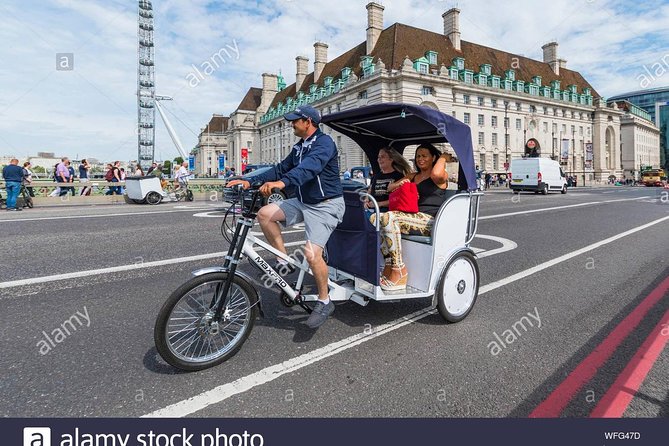
Pedicabs make Amsterdam feel close. In just 2 hours, you get a private, car-free look at the bridges, canals, gabled houses, and church spires that define the city, with a driver acting like your on-the-ground guide. I especially like two things: the access to streets cars cannot reach and the way guides make it easy to stop for photos anytime. The main drawback is simple, Amsterdam is weather-driven, so if conditions are poor the tour can be rescheduled or refunded.
This is also a smart “first visit” style tour. You are not trying to see everything. You are getting your bearings fast, and learning which neighborhoods feel right for your next day of wandering on foot. One more consideration: at this price point, it is usually best value when you have a second person sharing the group cost.
In This Review
- Key things to know before you pedal through Amsterdam
- Why a pedicab tour is the right tool for Amsterdam
- Nieuwmarkt meeting point, then a smart orientation flow
- Museumplein: the culture block with an instant sense of scale
- Vondelpark: a break from the city lines
- Anne Frank House area: history right on the canal
- The Jordaan: canals, galleries, and street-level texture
- Dam Square finish: the center’s pulse in one place
- The private guide effect: stories, safety, and flexibility
- Price and value: $239.65 for up to two people
- Who should book this pedicab tour (and who might not)
- Should you book this Amsterdam City Tour by pedicab?
- FAQ
- How long is the Amsterdam city tour by pedicab?
- Is this tour private, and how many people can be in a group?
- Where do we meet, and does pickup happen?
- What language is the tour available in?
- What happens if the weather is bad?
- Is there free cancellation?
Key things to know before you pedal through Amsterdam
- Private pedicab access: You reach parts of town that are awkward or impossible by car.
- Photo-friendly pacing: Your driver can stop on request for pictures and quick looks.
- Car-free canal atmosphere: Bridges, canal views, and historic street scenes feel like a mini guided walk, minus the walking.
- Winter and rain comfort: Many rides come with weather covers and added warmth, including clear plastic panels and blankets.
- A strong route mix: Museumplein, Vondelpark, the Anne Frank area, the Jordaan, then Dam Square.
- Small-group planning flexibility: Departure slots help you fit the tour into a tight schedule.
Two wheels, no pedalling. More rides around Amsterdam
- Segway City Tours Amsterdam★ 5.0 · 280 reviews
- Amsterdam: Private Guided City Tour by Pedicab★ 4.9 · 130 reviews
- Zaanse Schans: Windmills, Clogs & Cheese by Electric Scooter★ 4.9 · 102 reviews
- Amsterdam: 2-Hour Sightseeing Tour by Rickshaw★ 4.7 · 81 reviews
Why a pedicab tour is the right tool for Amsterdam
Amsterdam is built for bikes and feet, not for cars. That is why I like the pedicab format so much. You get the city’s visual rhythm without fighting traffic noise or dealing with long stretches on foot. A pedicab also changes the way you see things: you glide slowly enough to notice details like canal-house fronts, the angles of gabled buildings, and the way bridges frame the waterways.
This tour is private, so the pace is yours. In real-world Amsterdam terms, that means your driver can slow down when something catches your eye, or park for a few minutes while you take photos. Several guides are praised for being patient about pictures, which matters because Amsterdam is genuinely photo-heavy. If you have trouble with long walks, or you just want to see more with less stress, the pedicab approach clicks.
One practical note: Amsterdam is also bike-heavy. Guides get kudos for safe driving while handling bicycle traffic. In other words, you get that car-free feeling without turning it into a white-knuckle experience.
Nieuwmarkt meeting point, then a smart orientation flow
You start at Nieuwmarkt and the tour ends back at the same point. Even if your goal is “highlights,” the order of the ride helps you understand the city. The tour begins with a general introductory section, then from the Prinsengracht area it heads toward the stops that cover a good slice of Amsterdam’s different moods.
That sequencing is useful. The first part is about orientation, the kind of loop that tells you where major canals and districts sit in relation to each other. Then you shift into neighborhoods and landmarks that are distinctive enough that you can go back later with more confidence.
Timing matters here. This tour runs about 2 hours, so it is not the place for an ultra-deep dive into any one museum or church. Instead, think of it as an overview with quick, meaningful context. You come away with mental maps: where the park breathes, where the historic streets narrow, and where the city’s center energy spikes.
Museumplein: the culture block with an instant sense of scale
The ride starts pulling you toward Museumplein, Museum Square. This area is known for three big names: the Rijksmuseum, the Van Gogh Museum, and the Stedelijk Museum. Even when you are not going inside, the square works because it shows you Amsterdam’s “grand museum district” side, with wide open space compared to the tighter canal lanes.
You get a free 10 minutes here. That is short, but it is enough time to do something practical: orient your future museum day. If you are choosing between Rijksmuseum and Van Gogh, for example, standing in Museumplein helps you picture how the area feels when you are actually walking it.
A small drawback: with only about ten minutes, you will not linger for detailed viewing of museum facades and sculptures. If you want long museum moments, you will still need a separate visit. The value here is the location awareness.
Vondelpark: a break from the city lines
Next comes Vondelpark, Amsterdam’s major urban park. The scale is real: 47 hectares, with millions of visitors each year. The park opened in 1865 and carries a name tied to a 17th-century playwright and poet, which gives you a bit of history without demanding your time.
What you get on a pedicab tour is the contrast. Amsterdam’s canal neighborhoods can feel dense and visually busy. In Vondelpark, things spread out. The tour also gives you a chance to slow down and reset your eyes before moving back into more historic, tighter streets.
Depending on the day and light, you might notice playground areas, open-air theatre spaces, and places to grab food. The park is not a silent museum stop. It is a lived-in city lung. If you are visiting in cold or gray weather, a short park pause can still feel good because it is open air without the pressure of a long walk.
Other ways to get the shape of Amsterdam in a morning
Anne Frank House area: history right on the canal
The next major stop area is the Anne Frank House, on the Prinsengracht canal. Even though this is a biographical museum focused on Anne Frank, the bigger travel win from a pedicab tour is the setting. You see the canals that shape the neighborhood and the way the area sits near nearby landmarks.
This location sits near the Westerkerk, and the canal setting helps you understand why Amsterdam’s waterways are not just pretty. They define the geography of the city, the routes people took, and the feel of daily life here.
One consideration: this is one of the most emotionally powerful sights in Amsterdam. A short pedicab stop can feel different than planning a full museum visit. If you want the deep, timed-entry museum experience, you will still want a separate booking. If you want to understand where it sits and how it connects to the surrounding neighborhoods, this stop is a useful primer.
The Jordaan: canals, galleries, and street-level texture
After the Anne Frank House area, the route moves into the Jordaan. This neighborhood story is part of what makes it compelling. It began as a working-class area, and it has evolved into one of Amsterdam’s more upscale districts. That change shows in the mix you see today: modern art spaces, specialty shops, and restaurants, layered over older canal-city structure.
The Jordaan is framed by canals and streets, bordered by the Singelgracht and Prinsengracht, with Brouwersgracht and Leidsegracht marking the other edges. There is also a historic note worth holding onto: Rozengracht was the main traffic artery through the neighborhood, and the area includes regular markets like Noordermarkt, the Westerstraat textile market (Lapjesmarkt), and Lindengracht.
The tour ties the Jordaan to some serious cultural history too. Rembrandt spent his last years here on Rozengracht and was buried at the Westerkerk corner of Rozengracht and Prinsengracht. If your guide shares this kind of context on the ride, the neighborhood stops feeling like a postcard and starts feeling like a lived stage for people and art.
Drawback to be aware of: the Jordaan is best appreciated at street level, but you are on a pedicab. That means you might not get long, slow browsing time. Use the pedicab moment to decide where you want to return on foot.
Dam Square finish: the center’s pulse in one place
Your tour ends with Dam Square (Dam). This is Amsterdam’s iconic town square and one of the city’s most important meeting points. It is famous for a reason: it concentrates landmark energy in a compact area, which makes it easy to understand how the city’s center functions.
A pedicab tour is excellent for building a big-picture sense of Amsterdam. Dam Square is the final piece of that puzzle because it anchors everything you have been seeing in a central location. From here, it is easier to plan what comes next: shopping streets, canal walks, or a next museum visit depending on your interests.
Time-wise, you get the benefits of a guided intro without committing to a full day of exploring only this area. If you only have one day, ending near Dam Square is practical, because it keeps your options open.
The private guide effect: stories, safety, and flexibility
This tour’s real secret sauce is the driver as guide. Your driver is not just pedaling. They are actively describing sights, connecting what you see to the city’s past, and steering you through a bike-focused street system.
That matters for two reasons. First, you learn what to look for. You start noticing how bridges align with canals and how churches sit relative to the streets. Second, you get practical “what to do next” insight. Many people mention guides gave them suggestions for later plans.
Weather is the other big factor, and here the feedback is strong. Multiple rides in cold and wet conditions come with plastic covers and extra warmth, including zip-up coverings and clear plastic panels. Guides adjust the rain coverings during the ride when conditions change. One driver is praised for having a clear windshield setup that kept riders warm, which tells me this is not a bare-bones, fully exposed experience.
Safety also shows up repeatedly. Guides are recognized for careful driving in a city where bikes are everywhere. That confidence lets you enjoy the scenery instead of watching the road constantly.
Price and value: $239.65 for up to two people
The price is $239.65 per group, up to 2 people, for about 2 hours. On a per-person basis, it can feel steep if you are solo. But if you are traveling as a pair, the math improves fast: you effectively split the cost.
Where it earns its keep is time and comfort. You get:
- a guided orientation across multiple major areas
- car-free access to spaces you would struggle to reach with only walking
- the ability to stop for photos without disrupting a schedule
If your goal is to maximize your Amsterdam highlights in a short window, this can be a strong value tool. Think of it as buying back energy and reducing decision fatigue on your first day.
It can also be a great “rain insurance” plan compared with long walking plans, because the pedicab setup is designed for covered comfort. Still, the operator notes the experience requires good weather, so if conditions are truly poor, you might be offered another date or a refund.
Who should book this pedicab tour (and who might not)
This is a great fit if you:
- are visiting for a short time and want a guided overview fast
- want canal and neighborhood scenes without long walks
- are traveling with kids and want a calmer sightseeing rhythm
- have limited mobility or simply hate the logistics of nonstop walking
- want a private experience rather than a crowded group format
You might think twice if you:
- plan to spend most of your time doing timed museum entry visits, since this tour is not designed to replace museum tickets
- prefer deep, slow neighborhood exploration on foot, because pedicab stops are quick and meant for orientation
Should you book this Amsterdam City Tour by pedicab?
If you want an efficient, intimate way to understand Amsterdam’s layout, I would book it. The route hits the big contrasts you need: museum district energy at Museumplein, a breath of air at Vondelpark, history by the canal at the Anne Frank House area, a textured walkable-feeling neighborhood like the Jordaan, then the city center pulse at Dam Square.
Go for it especially if you are traveling in cooler months or you do not want to gamble your whole day on walking comfort. The covered pedicab experience, the ability to stop for photos, and the strong guide storytelling are exactly what make this tour feel worth the cost.
FAQ
How long is the Amsterdam city tour by pedicab?
It lasts about 2 hours.
Is this tour private, and how many people can be in a group?
Yes, it is private. The price is per group up to 2 people.
Where do we meet, and does pickup happen?
The meeting point is Nieuwmarkt, Amsterdam, and the activity ends back at the meeting point. Pickup is offered.
What language is the tour available in?
The tour is offered in English.
What happens if the weather is bad?
The experience requires good weather. If it is canceled due to poor weather, you will be offered a different date or a full refund.
Is there free cancellation?
Yes, you can cancel for free up to 24 hours in advance for a full refund.
Everything Else From Our Amsterdam Notebook




Also Reviewed Around Amsterdam





Rolling Through Amsterdam Without Pedalling





Fresh off the review pile in Amsterdam
- Full-Day Trip From Amsterdam to Keukenhof, Zaanse Schans + Cruise
★ 5.0 · 3 reviews - Boutique Dutch Food & History Tour with up to 8 guests only
★ 5.0 · 3 reviews - Private Tour to Windmills Zaanse Schans +Keukenhof – 7 Hours
★ 5.0 · 3 reviews - Full-Day Private Guided Countryside Tour from Amsterdam by Bike
★ 5.0 · 3 reviews - Amsterdam Red Light District and Old Town Walking Tour
★ 5.0 · 3 reviews
City Tours, compared.
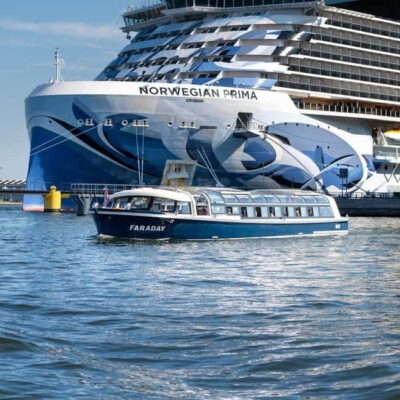 ★ 4.4Amsterdam: 75 Minute City Canal Cruise with Audio GuideFrom $1717,501 reviews
 ★ 4.2Amsterdam: City Centre Canal CruiseFrom $1812,827 reviews
 ★ 4.7Amsterdam: Smoke and Lounge City Boat CruiseFrom $278,572 reviews
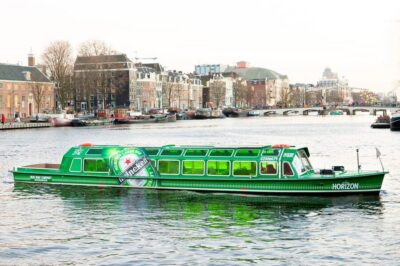 ★ 4.5Amsterdam: City Canal Cruise and Heineken Experience TicketFrom $475,367 reviews
 ★ 4.7Amsterdam: Guided Bike Tour City Centre in EN/DE/FR/ESFrom $414,187 reviews
 ★ 4.6Amsterdam: Van Gogh Museum Ticket and City Canal CruiseFrom $473,899 reviews
 ★ 4.4Amsterdam: City Canal Cruise and Heineken ExperienceFrom $443,133 reviews
 ★ 4.3Utrecht: City Canal CruiseFrom $222,895 reviews
Browse the lists this tour appears in