

REVIEW · AMSTERDAM
Amsterdam: Private Pedicab Historical Sightseeing Tour
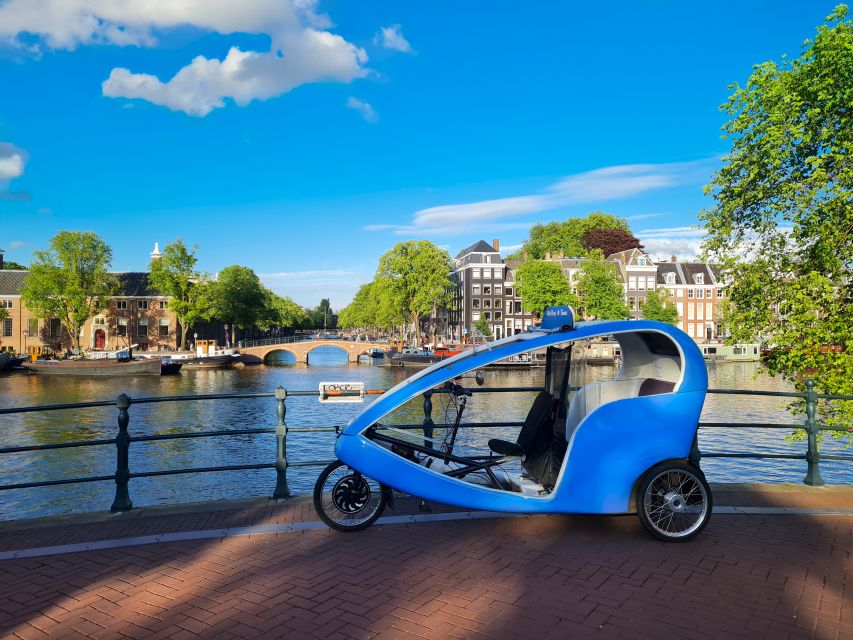
Amsterdam clicks into place from the seat. A private pedicab ride strings together Dam Square, the canal district, the Jewish quarter, Chinatown area glimpses, and the Museum Quarter with local street-level context.
I love the hotel pickup and drop-off, because it keeps the first and last parts of the day stress-free. I also like the stop-by-stop historical explanations, shared by a local guide, so you are not just seeing landmarks, you understand why they matter.
One thing to consider is the weight limit (maximum combined passenger weight 200 kg, and not suitable over 220 lbs/100 kg), and that cold weather may still need warm layers even with a blanket.
In This Review
- Key highlights at a glance
- How a private pedicab tour gives Amsterdam its “why”
- Dam Square, Royal Palace area, and the start of the story
- Zeedijk and Nieuwmarkt, where streets used to be defenses
- Montelbaanstoren, the Oude Waal, and a classic Amsterdam viewpoint
- Jewish Quarter stops: synagogues, memory, and merchant life
- Hermitage, the Skinny Bridge, and Amstel river panoramas
- The 17th century canal district: seeing the “canal ring” pattern
- Museumsquare and the Rijksmuseum tunnel stop
- What you get for $230, and why it can be good value
- Who should book this pedicab tour
- Practical tips for a smooth, comfortable ride
- Should you book this Amsterdam pedicab tour?
- FAQ
- Where does the tour start?
- Can I choose where the tour ends?
- Is hotel pickup and drop-off included?
- How long is the Amsterdam pedicab tour?
- What’s included in the price?
- Are food and drinks included?
- What languages are available for the live guide?
- Is this a private tour, and how big is the group?
- Are there any weight or body suitability limits?
Key highlights at a glance
- Dam Square start at Amsterdam’s original city heart, with the Royal Palace, New Church, and National Monument in view
- 17th century canal district drives with the canal ring layout you can actually see
- Jewish Quarter essentials, including the Big Synagogue area and the Holocaust name monument with 102,000 bricks
- Montelbaanstoren viewpoints and a strong photo moment over the Oude Waal
- Local guidance by Bram de Haan with explanations supported by photos and maps
- Museum Quarter finale at Museumsquare, including a stop on the green square and a Rijksmuseum tunnel pass
Two wheels, no pedalling. More rides around Amsterdam
- Segway City Tours Amsterdam★ 5.0 · 280 reviews
- Amsterdam: Private Guided City Tour by Pedicab★ 4.9 · 130 reviews
- Zaanse Schans: Windmills, Clogs & Cheese by Electric Scooter★ 4.9 · 102 reviews
- Amsterdam: 2-Hour Sightseeing Tour by Rickshaw★ 4.7 · 81 reviews
How a private pedicab tour gives Amsterdam its “why”
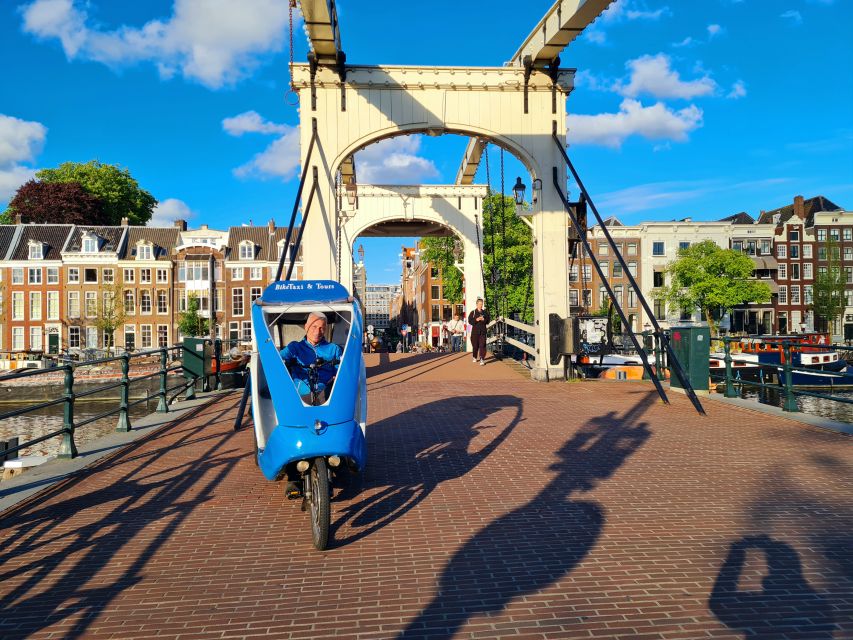
Amsterdam is easy to photograph and hard to fully understand on a self-guided walk. This tour solves that with a simple trick: you move through tight streets on a pedicab while a local guide turns each stop into a timeline.
You get to cover a lot of ground in just 2 hours, but it does not feel like a checklist. The stops are chosen to explain how the city expanded, how neighborhoods were shaped by trade and religion, and how later history changed what you see on the street today. It is the difference between seeing a bridge and knowing what story the bridge sits in.
And because it is private (up to 2 people per group), you can ask questions, slow down for photos, and get answers tailored to what you care about most, whether that is canals, architecture, or Amsterdam’s Jewish history.
Price-wise, at $230 per group up to 2, you are paying for guide time plus door-to-door pickup, not for museum tickets or a long day of public transit. For a first visit, when you want the “big picture” fast, that trade often feels fair. If you plan to see multiple neighborhoods in one afternoon, this can be better value than paying separately for transportation, multiple walking tours, and extra taxi rides.
Dam Square, Royal Palace area, and the start of the story
You begin at Dam Square, the birthplace of the city and the old center’s main stage. This is where Amsterdam’s identity becomes visible in one glance: the square itself as the civic center, plus major landmarks clustered nearby.
From here, the tour frames Dam Square as more than a postcard. You get context about why it mattered early on, and you also see key buildings that anchor the area, including the Royal Palace, the New Church, and the National Monument.
Why this is a smart first stop: Dam Square is a reset point. Once you get your bearings here, the rest of the route makes more sense, especially when you later see how the canal district forms an almost “ring” pattern around the old core.
Potential drawback: Dam Square is busy at almost any time of day. If you are hoping for quiet photos, you will likely need to time it for small openings and accept that you are starting in Amsterdam’s busiest public square.
Zeedijk and Nieuwmarkt, where streets used to be defenses
Next you head to Zeedijk. Today it is a street, but the guide explains its older role: back when Amsterdam needed protection, dikes helped shield the city. That one detail changes how you look at a normal street. You start noticing how infrastructure shaped the city’s survival.
Along Zeedijk, you also get a look toward Chinatown nearby. This is not presented as a long food stop, more like a contextual glimpse, useful for understanding Amsterdam’s changing neighborhood mix over time.
Then comes Nieuwmarkt, another key piece in the historical puzzle. The centerpiece here is the 15th century city gate standing right in the square. The guide’s narration helps you see why a gate in the middle of town is such a big deal. It is a reminder that medieval cities were not open systems. Access points mattered.
What you should like about this segment: it is where the tour turns “old town” from a vague label into a map you can understand. Dikes, gates, and defense lines explain why streets are where they are.
What to watch for: this part includes short stretches where you may want to move your pedicab position for photos. If you are motion-sensitive, tell the guide early so they can position you safely and comfortably.
Montelbaanstoren, the Oude Waal, and a classic Amsterdam viewpoint
After Nieuwmarkt, you visit Montelbaanstoren, an old watch and defense tower. The guide connects it to Amsterdam’s early 16th century expanded defense line, so the tower is not just a pretty structure, it is part of the city’s protective system.
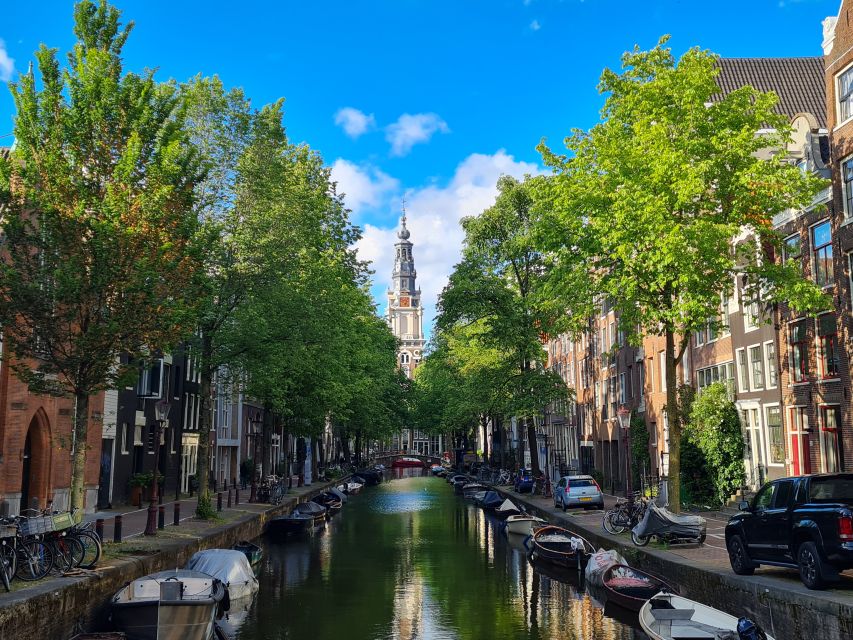
Then you get a strong lookout over the Oude Waal, where you can spot houseboats lined up with 17th century canal houses in the background. This is one of those moments where the city’s layers show at once, old waterfront living patterns paired with architecture that still frames the water today.
Why this stop works: the viewpoint gives you spatial understanding. You can see how canals and waterways structured where people lived and how the city grew. It also helps you appreciate the later canal ring segment, because you start noticing the half-circle pattern that you will recognize on any map.
Photo note: bring your camera ready. This is a natural “pause and frame” moment.
More Amsterdam trips with just your group


Jewish Quarter stops: synagogues, memory, and merchant life
The Jewish Quarter segment is the emotional and educational center of the ride. You see the Big Synagogue, described as one of the first synagogues Jewish people were allowed to build in Western Europe over 350 years ago. Across the street, you also catch sight of the Portuguese synagogue.
Next comes the Holocaust name monument, described with 102,000 bricks carrying the names of Dutch Jewish victims of World War II. This is one of the rare street-level memorials that forces you to slow down, even if you are riding.
The tour then links memory to everyday history by pointing out canal houses nearby. On the other side, you learn about old 17th century canal homes that were inhabited by Sephardic Jewish immigrants who found success in the diamond business.
That detail matters, because it avoids a “sadness only” framing. You are learning that these neighborhoods carried community life, trade, and culture, and that history did not just happen to them, it was built by them.
What to consider: this area can feel heavy. If you prefer lighter pacing, tell the guide so they can adjust the tone of narration. A good guide will know how to match your comfort level while still covering the key facts.
Hermitage, the Skinny Bridge, and Amstel river panoramas
You then head toward the Hermitage, described as a large old 17th century “widow house” that now houses the Hermitage museum. Even if you do not go inside, the narration gives you a sense of how buildings were repurposed over time, and why that matters in a city where old structures keep finding new uses.
The tour also includes the Skinny Bridge, one of the most iconic bridges in Amsterdam, especially at night when light bulbs highlight its design. Here, the focus is on the look and the symbolism of Amsterdam’s bridges as visual threads across the city.
The ride continues with a panoramic view of the Amstel river, called the main and widest canal in Amsterdam. This is a straightforward but satisfying photo moment, and it helps you connect today’s waterways with the older canal patterns you learned earlier.
Practical tip: if you care about photos, position yourself and ask the guide to pause briefly when the river view opens up. Reviews highlight that stopping for pictures is generally not a problem, and a private ride makes that easier than in group tours.
The 17th century canal district: seeing the “canal ring” pattern
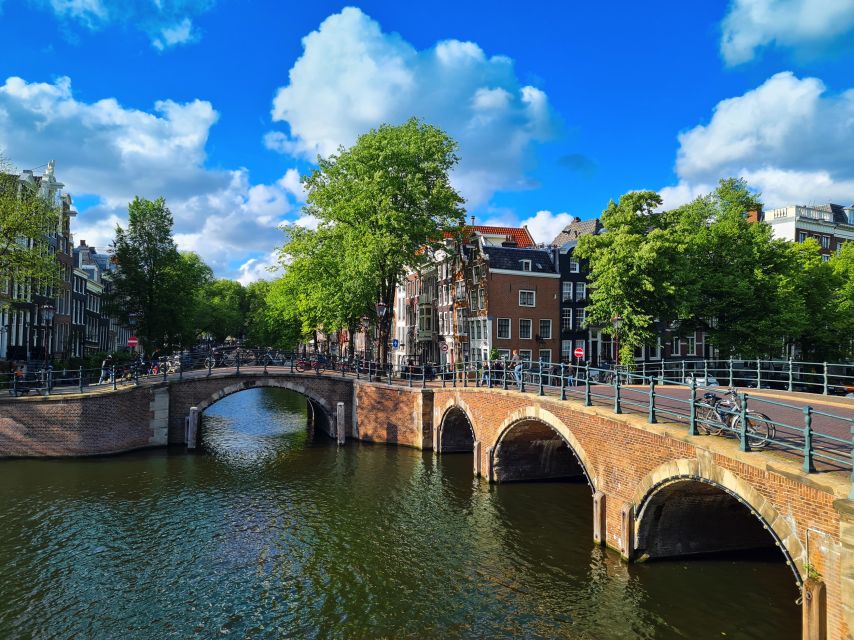
Now you move through the canal district that forms the 17th century neighborhoods around the old center. On a map, it shows up as half circles wrapping around the core, and you finally see that layout in real space.
This is where the tour becomes more than sightseeing because it explains what you are seeing on building facades. The guide points out typical similarities among canal houses while emphasizing that the houses are not identical. You get the sense of a shared design language shaped by the economics of merchant life.
The value here is mental clarity. Amsterdam’s canal houses can look similar if you do not have context. With the guide’s explanation, you start noticing differences tied to eras and status, and you understand why merchants wanted to display wealth along the waterways.
Potential drawback: if you are expecting frequent stops to get out and explore on foot, this segment is more about passing through and learning from the street-level context. The tour includes explanation stops, but it is still a ride first.
Museumsquare and the Rijksmuseum tunnel stop
Your finale is Museumsquare, a large green open square from the 19th century and home to major museums including the Rijksmuseum and Van Gogh Museum.
You drive through the Rijksmuseum tunnel and make a stop in the middle of the square. This is a nice payoff because it contrasts the medieval and 17th century scenes earlier with an open, modern-feeling public space.
Museumsquare also matters for planning. If you are the type who wants a museum later, this drop-off-and-view moment helps you understand where everything sits so your next day feels easier.
A helpful flexibility detail: you can set a desired location to finish the tour beforehand, so you are not stuck returning to the exact same spot at the end.
What you get for $230, and why it can be good value
At $230 per group up to 2, this is not a cheap “tour bus” option. You are paying for a private pedicab ride plus guide time plus hotel pickup and drop-off, and for the fact that the pedicab can go through streets that cars cannot.
In practice, that can save money and time compared with a patchwork plan:
- You avoid multiple taxis or transit connections between far-apart neighborhoods
- You get guided context for each district, not just photos
- You cover Dam Square, the canal ring area, the Jewish Quarter, and Museumsquare in one sequence
One detail that stands out from the guide style: explanations are supported with photos and maps, which helps you follow the city’s changes over time. That is especially helpful if you are trying to understand Amsterdam’s geography quickly.
If you are staying only a short time or you do not want to do long walking loops, the 2-hour format is a good fit. And if you want a bit more, some groups have been able to extend to about 3 hours by request, which can make the price feel even more stretched in your favor.
Who should book this pedicab tour
This tour suits you best if:
- You want a first-timer orientation across key neighborhoods without spending a full day
- You have limited walking ability and still want to see a lot
- You care about how Amsterdam evolved, not just what it looks like
- You like asking questions and getting answers in real time from a local guide
It can be a great match for seniors, too. Several experiences highlight how the pedicab format reduces strain while still providing a strong narrative of the city’s past.
It may not fit you if you:
- Need a tour with lots of long on-foot stops, since it is primarily a ride with designated points of interest
- Are over the posted weight limits, since suitability depends on those maximums
Practical tips for a smooth, comfortable ride
A few small things make a big difference with a pedicab tour in Amsterdam.
- Dress for cool weather. The tour provides a blanket, but you still want warm layers so you are comfortable for the full 2 hours.
- Bring warm clothing even if the day seems mild, because canal-adjacent areas can feel colder as you move through the city.
- If you want photos, tell the guide what you are after. In a private setting, picture pauses tend to be easier to manage.
- Confirm your weight requirements ahead of time. The combined passenger weight limit is 200 kg, and the tour is not suitable for people over 220 lbs (100 kg).
Language is practical too. The guide offers English, Dutch, and German, so choose the language you are most comfortable using for questions and context.
Should you book this Amsterdam pedicab tour?
Book it if you want a high-value overview that connects Amsterdam’s big landmarks to the stories behind them, especially if you care about the canal district layout and want the Jewish Quarter explained with care. For a first visit, it is one of the more efficient ways to get orientated without rushing through everything on foot.
Skip it if you want a long museum-focused day, or if you need lots of extended walking time and frequent get-out-and-explore stops. Also double-check the weight requirements if that is a factor for your group.
If your priority is seeing the city in a way that feels both scenic and understandable, this private pedicab route is a strong pick.
FAQ
Where does the tour start?
The tour starts at Dam Square, described as the birthplace of the city and the heart of the old center of Amsterdam.
Can I choose where the tour ends?
Yes. You can set a desired location to finish the tour beforehand.
Is hotel pickup and drop-off included?
Yes. Pickup from your hotel and drop-off are included.
How long is the Amsterdam pedicab tour?
The duration is 2 hours.
What’s included in the price?
Included items are hotel pickup and drop-off, a blanket for cold weather, and an in-depth explanation about the sights.
Are food and drinks included?
No. Food and drinks are not included.
What languages are available for the live guide?
The guide is available in English, Dutch, and German.
Is this a private tour, and how big is the group?
Yes, it is a private group, priced per group up to 2.
Are there any weight or body suitability limits?
The tour lists a maximum combined passenger weight of 200 kg. It is also not suitable for people over 220 lbs (100 kg).
Everything Else From Our Amsterdam Notebook




Also Reviewed Around Amsterdam





Rolling Through Amsterdam Without Pedalling





Fresh off the review pile in Amsterdam
- Full-Day Trip From Amsterdam to Keukenhof, Zaanse Schans + Cruise
★ 5.0 · 3 reviews - Boutique Dutch Food & History Tour with up to 8 guests only
★ 5.0 · 3 reviews - Private Tour to Windmills Zaanse Schans +Keukenhof – 7 Hours
★ 5.0 · 3 reviews - Full-Day Private Guided Countryside Tour from Amsterdam by Bike
★ 5.0 · 3 reviews - Amsterdam Red Light District and Old Town Walking Tour
★ 5.0 · 3 reviews
Historical Tours, compared.
 ★ 4.6Rotterdam: Kinderdijk UNESCO World Heritage Entry TicketFrom $251,477 reviews
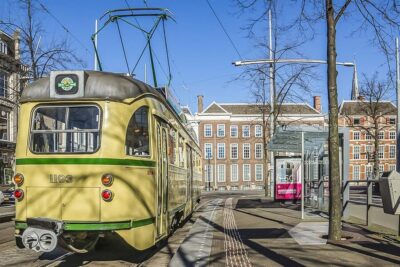 ★ 4.4The Hague: Hop-on Hop-off Old-Fashioned Heritage Tram TourFrom $181,083 reviews
 ★ 4.2Rotterdam: Harbor Cruise on a Historic ShipFrom $20812 reviews
 ★ 4.5Amsterdam: Haunted History and Ghost Walking TourFrom $30488 reviews
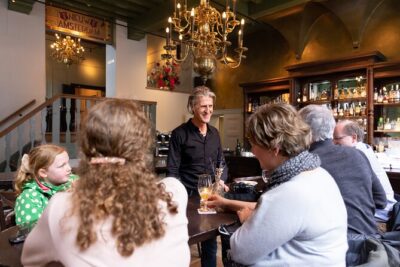 ★ 5.0Amsterdam High-End Dutch Food & History Tour – Up to 8 guestsFrom $157482 reviews
 ★ 4.6Leiden: Cruise through the Historic City Center with GuideFrom $15445 reviews
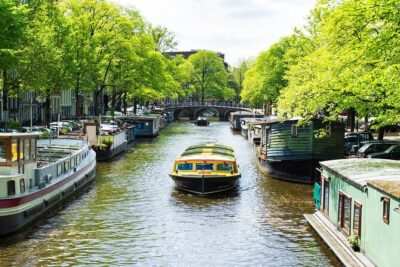 ★ 4.5Amsterdam: Historic City Sightseeing Canal CruiseFrom $18444 reviews
 ★ 4.6Amsterdam: Historical Highlights Walking Tour with TastingFrom $34381 reviews
Browse the lists this tour appears in