
REVIEW · AMSTERDAM
Amsterdam: Historical Highlights Walking Tour with Tasting
Can a two-hour walk tell Amsterdam’s whole story? It can, and this tour keeps you moving through the heart of the city, starting at Dam Square and threading into the UNESCO Canal District with Golden Age stories you can follow in your chosen language. I especially like the guide-led, story-first approach, and I like that the route mixes the big-name sights with street-level details that help everything click fast.
One thing to plan around: the Dutch tasting is short, and beverages are not included, so bring water if you’re the kind of person who gets thirsty on walks.
In This Review
- Key Highlights You’ll Notice on This Walk
- Dam Square to the UNESCO Canal District: Fast Orientation With Real Meaning
- Golden Age Stories, Royal Palace, and the City’s Trading Engine
- New Church, Begijnhof, and Mint Tower: When Amsterdam Gets Quiet
- Flower Market and the LGBT Street: Amsterdam’s Color, Trade, and Change
- Amstel River Views and What the Two Hours Feel Like
- The Dutch Food Tasting: Fun Bites, Not a Full Meal
- Guides Make the Difference: Lively, Clear, and Sometimes Funny
- Price and Value: Is $34 Worth It?
- Practical Tips So This Walk Feels Easy
- Should You Book This Amsterdam Historical Highlights Walking Tour?
Key Highlights You’ll Notice on This Walk
- Dam Square to the UNESCO Canal District in a tight 2-hour loop that helps you orient fast
- Golden Age context tied to canals, bridges, locks, and commerce, not just dates on a timeline
- Royal Palace and New Church moments that explain why these places mattered
- Begijnhof, Mint Tower, and the Amstel River add quieter stops beyond the main crowds
- Flower Market and the LGBT street show how Amsterdam stays modern while keeping layers of history
- A small Dutch tasting at the end that is fun, but not a full meal
Dam Square to the UNESCO Canal District: Fast Orientation With Real Meaning
Amsterdam can feel like a postcard that refuses to explain itself. This tour helps you make sense of the city quickly by building a mental map as you walk. You start at Dam Square, then you move into the area many people think of as the historical engine room, the UNESCO Canal District, where Amsterdam’s rise becomes easy to understand.
I like routes that do more than point. This one ties key sights together with stories about how the city worked, traded, and grew. Instead of treating canals like scenery, you learn why they mattered, how bridges and locks shaped movement, and why people built wealth here. That’s the difference between seeing Amsterdam and really getting it.
You’ll also benefit from the guide format. You pick your language from English, Dutch, German, Italian, French, Spanish, or Portuguese. That matters because the best history lessons are the ones you can actually follow without strain, especially when you’re walking and looking around.
Golden Age Stories, Royal Palace, and the City’s Trading Engine
The center of this experience is the way it frames Amsterdam’s Golden Age. You’ll hear how commerce and trade turned this place into a power that attracted attention across Europe. And you’ll see the physical clues as you go, from grand facades to bridges and the network of canals that made the city function.
Two stops I’d flag: the Royal Palace and the surrounding ceremonial streets. Even if you’re not an architecture nerd, you’ll leave knowing why this building sits where it does and how power shows up in city design. The tour also passes by the New Church, another reminder that Amsterdam’s major public spaces weren’t just for decoration. They were part of the city’s identity.
You’ll also spend time on the water side of Amsterdam’s story. The route includes important canals, bridges, and locks. On your own, it’s easy to treat these as background. On this walk, you get the why behind them, so you start spotting patterns, like where crossings make sense and how canal layout connects neighborhoods.
New Church, Begijnhof, and Mint Tower: When Amsterdam Gets Quiet
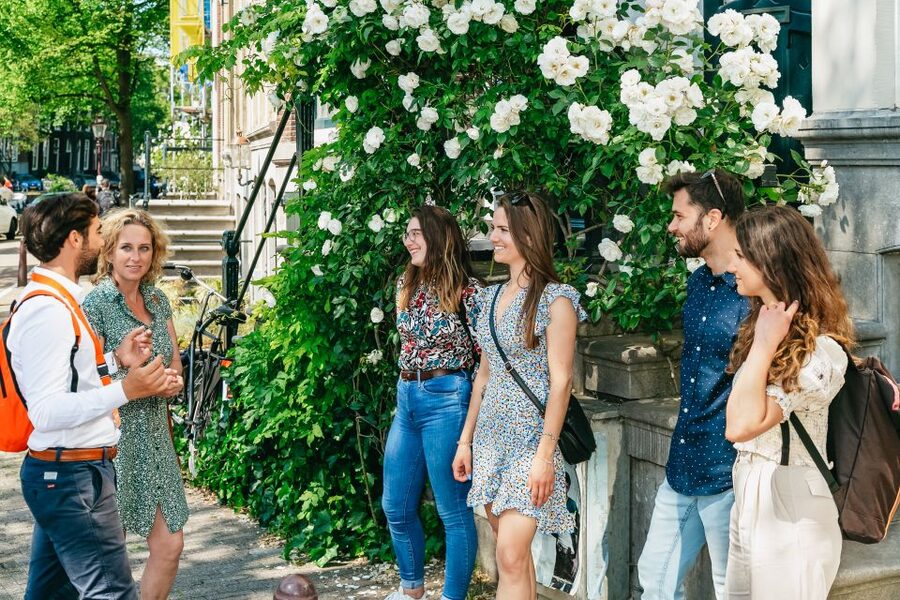
A lot of Amsterdam tours stay locked on the loudest streets. This one makes room for the quieter, more intimate pockets, which is where the city starts to feel human-scale. You’ll pass by Begijnhof, a calm inner courtyard area that acts like a pause button in the middle of the city’s motion.
What makes stops like Begijnhof valuable is contrast. The walk doesn’t only tell you Amsterdam was impressive. It also shows you that people lived ordinary lives inside that grand structure of wealth and trade. That’s what helps the Golden Age story feel less like a lecture and more like something you can picture.
Another stop on the route is the Mint Tower area. This is the kind of place you can walk past a hundred times without understanding its purpose. Here, you get context tied to business and industry, which helps you see the city as an operating system, not just an art museum made of buildings.
And since the pace is built for a two-hour experience, these quieter moments do not eat the whole schedule. They add depth without turning your day into an endurance event.
Flower Market and the LGBT Street: Amsterdam’s Color, Trade, and Change
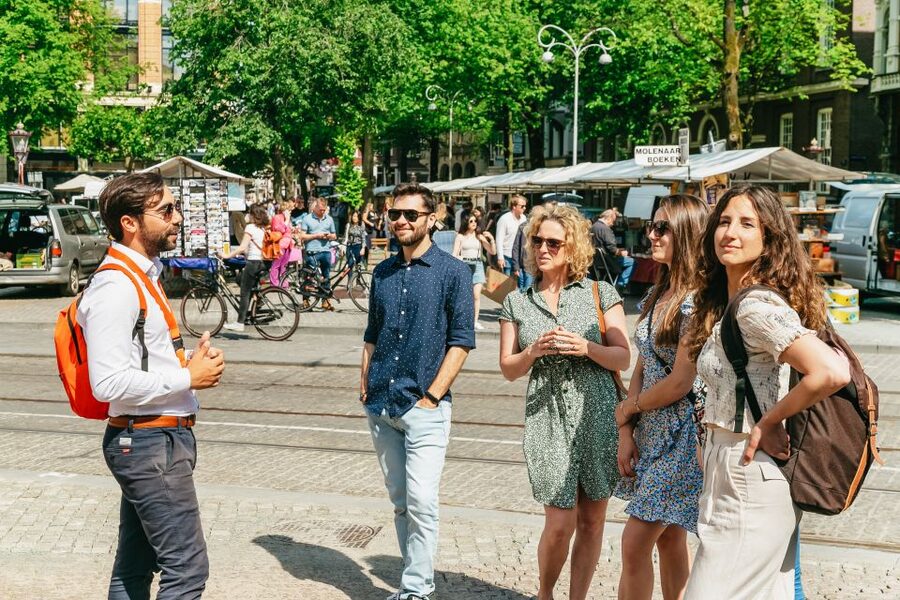
The Flower Market is one of the best places to see Amsterdam’s mix of commerce and culture. It’s visual, energetic, and easy to enjoy. But the tour helps you read it beyond the flowers, tying the market feel back to the city’s long tradition of trade.
You’ll also pass by the LGBT street, which adds a modern layer to the route. The point here is balance. You’re not only walking through the past. You’re also seeing how Amsterdam uses the same streets and spaces to reflect today’s identity. That combination keeps the tour from feeling stuck in history-only mode.
This section is also a good reality check for your expectations. If you want museums and tickets, this isn’t that kind of day. If you want stories, street-level perspective, and a few big iconic stops along with color and change, this part of the walk delivers.
Amstel River Views and What the Two Hours Feel Like
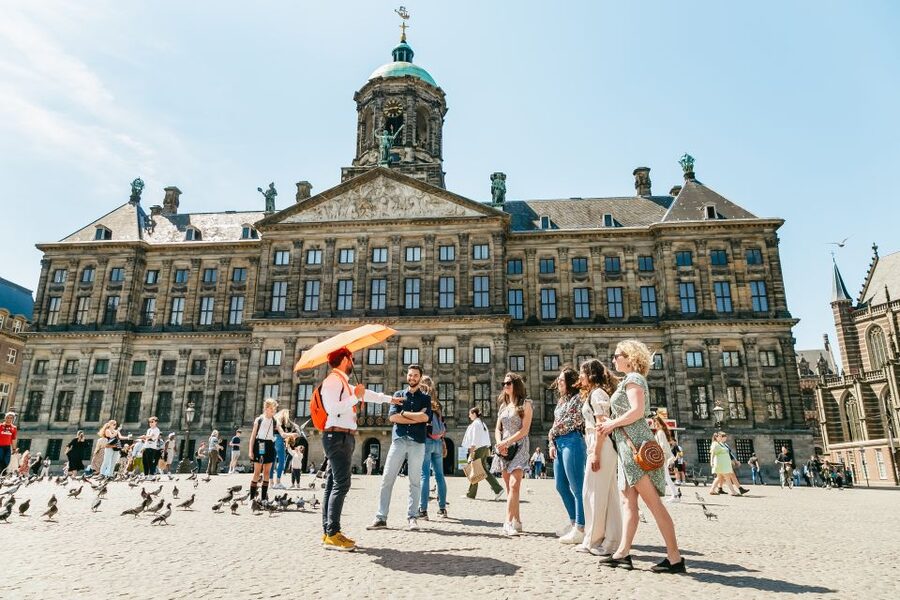
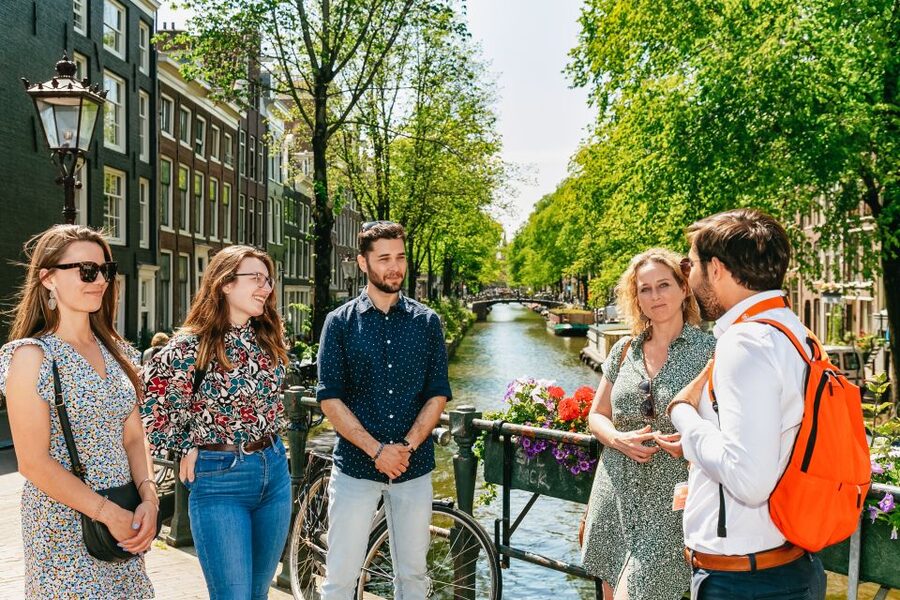
The walk ends with a strong city backdrop: the Amstel River. Even when you are not standing in front of a single famous viewpoint, the river acts like a compass. It reminds you how Amsterdam’s geography shaped where people built, where they traveled, and how the city moved.
The tour’s 2-hour timing is a big deal for planning. It’s long enough to cover the main anchors like Dam Square, the Royal Palace area, canal district highlights, and the Flower Market, but short enough that you still have energy afterward to explore on your own. I find this format works especially well on arrival days. You get orientation and context, then you know where to return.
The pacing also tends to be relaxed. In practice, you’ll have time to look up at buildings, pause for photos, and keep up with commentary. Some guides are especially calm about pace, which helps if your walking speed is not super fast.
One practical note: this tour runs rain or shine. That means you should dress for wet weather if forecasts look uncertain. Comfortable shoes matter here. Amsterdam streets can be slick, and you don’t want to spend the day thinking about your feet.
The Dutch Food Tasting: Fun Bites, Not a Full Meal
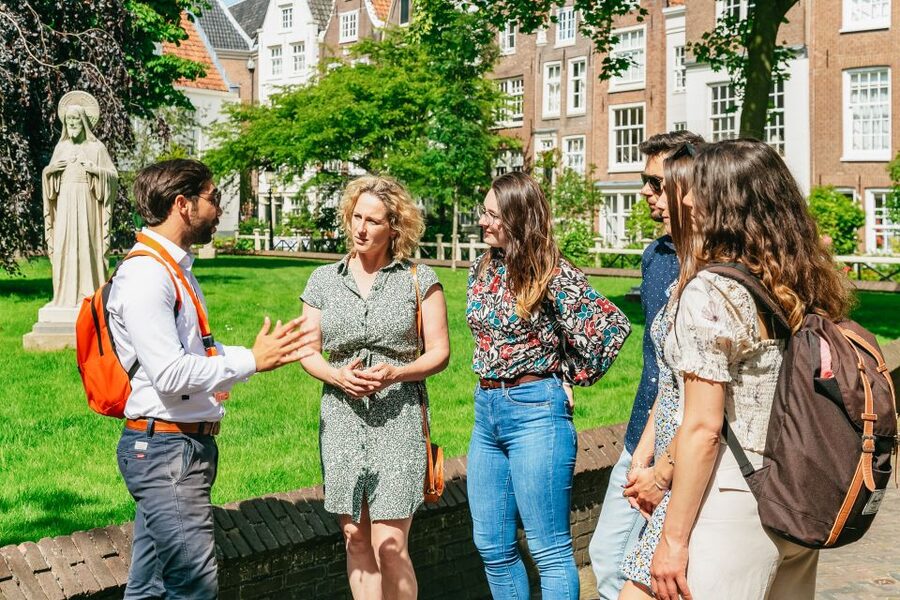
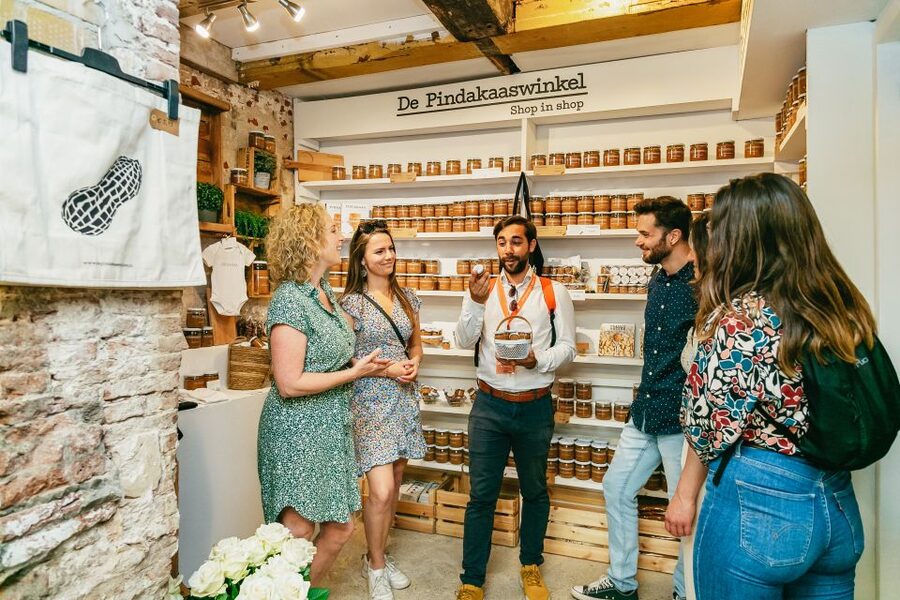
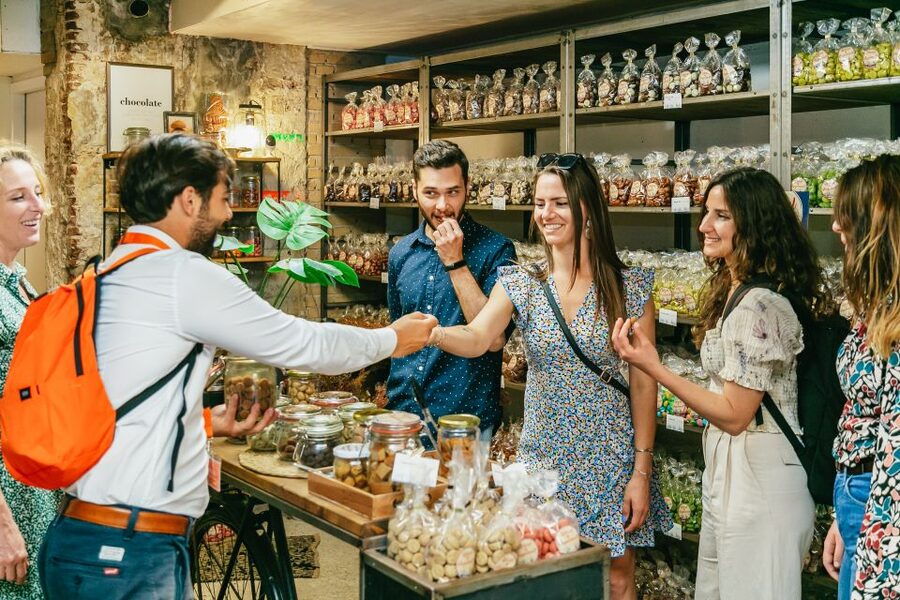
This is the part that can make or break your expectations. The tour includes a local Dutch food tasting at the end. People generally seem happy with the treats, and it gives the walk a satisfying close.
But here’s the honest angle for planning your appetite: a two-hour walking tour can only fit in a tasting, not a restaurant-style meal. Also, a few guests felt the tour name created confusion about the amount of food. So if you’re craving a full food experience, you might want to treat this as snack-sized.
Beverages are not included, so you’ll likely need water or another drink to stay comfortable. If you’re sensitive to dry-mouth weather or you simply like having a drink during walking tours, plan to buy something nearby before or after.
If you do manage expectations, the tasting is a nice bonus. It’s a chance to taste something local without spending extra time lining up at shops, and it rounds out the story by bringing food into the picture, even if only briefly.
Guides Make the Difference: Lively, Clear, and Sometimes Funny
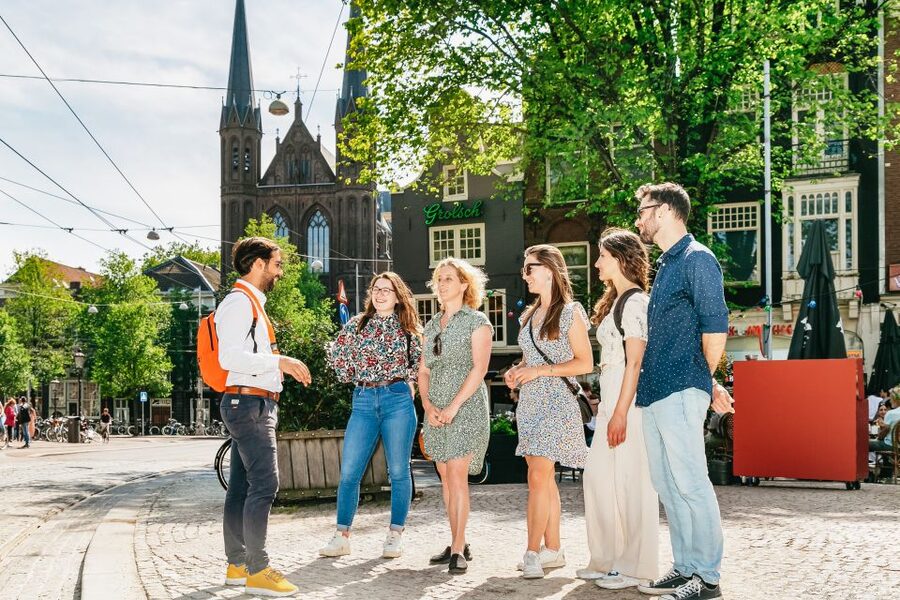
On a tour like this, the guide is the engine. The guides associated with this experience tend to be engaging and good at explaining the city in ways that feel like conversation, not a speech. I’ve seen this show up with guides like Mike, who was described as friendly and very engaging, and Edwin, who was praised for being knowledgeable and even helping people figure out how to get back to the city center.
You might also get a guide who adds humor to keep energy up. Alfred is one name that came up in that way, and Xavier also received notes for being funny while still informative. Sebastian shows up in comments about a slow and steady pace with strong information.
That guide style matters because this is a walking tour with multiple stops. If the commentary is clear, you start seeing connections right away. If it’s too dry, you can end up walking through landmarks without really sticking the story in your brain.
Group size can also change the feel. When you end up in a small group, the experience often feels more personal, and the guide can adjust pace and answers. In at least some departures, when turnout is low, it can become almost private. That’s a real perk if you like asking follow-up questions.
Price and Value: Is $34 Worth It?
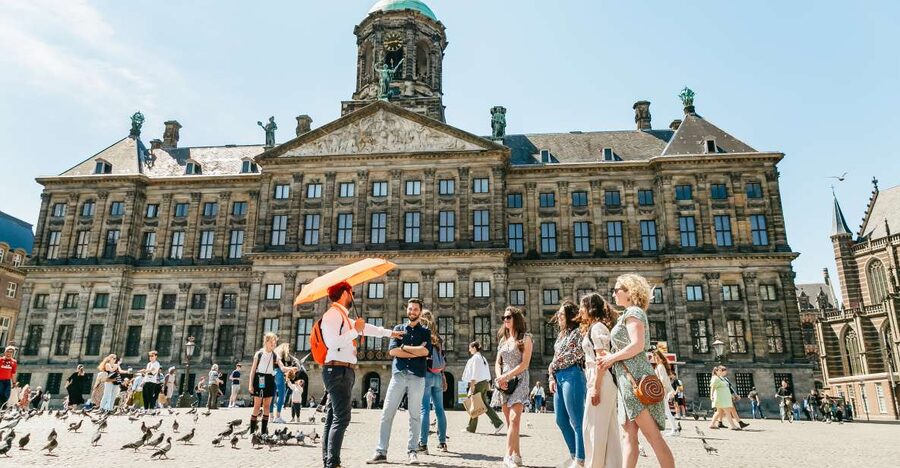
At $34 per person for a 2-hour guided walking tour with a food tasting, the value comes from three places.
First, you’re paying for someone local to connect landmarks into a single story, especially around Amsterdam’s Golden Age and the role of canals and trade. That kind of interpretation can be hard to replicate if you’re just wandering with a phone.
Second, the route is optimized. You hit Dam Square, pass major sites like the Royal Palace and New Church, and walk through parts tied to the UNESCO Canal District, plus the Flower Market and areas around the Amstel River. It’s a lot of “important walking” without spending your whole day.
Third, you get a tangible end point: the Dutch tasting. Even if it’s small, it makes the experience feel complete. You’re not just walking and looking, you’re also trying something local.
Where the math might not work for you is if you want a bigger food focus or long indoor stops. This is not a multi-course meal tour. It’s a history-and-streets tour that includes a small culinary finish.
Practical Tips So This Walk Feels Easy
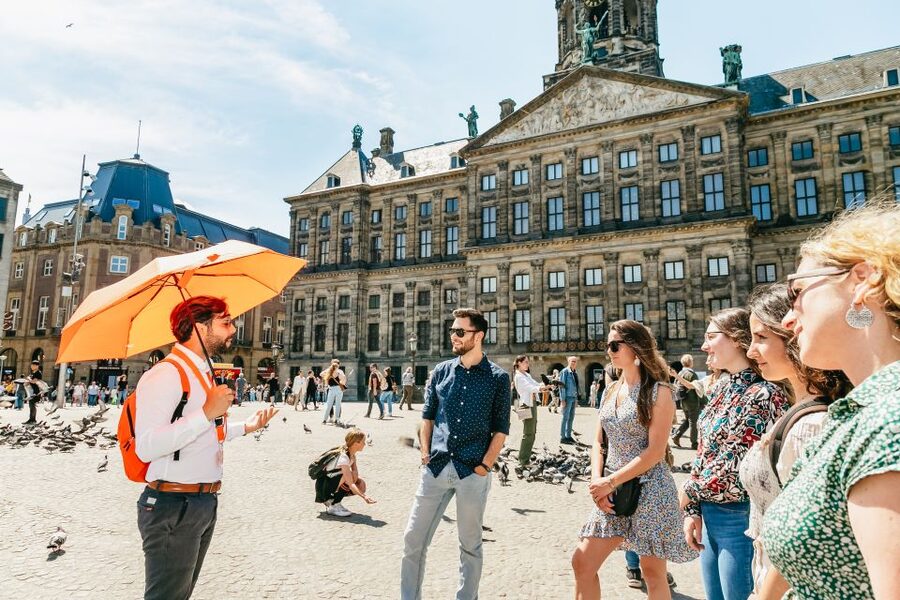
Bring comfortable shoes. It sounds obvious, but it’s the single best way to make this tour enjoyable instead of stressful.
Check the weather report. The tour operates rain or shine, so plan on damp streets. A light waterproof layer beats heavy guessing. If you expect drizzle, bring a small umbrella or rain jacket that won’t become a hassle while you’re walking.
Also, meeting point can vary depending on the option booked. When you arrive, confirm the exact spot listed with your confirmation details, so you’re not wasting time searching nearby streets.
Finally, since beverages are not included, decide ahead of time if you want to carry water. During warmer weather, that simple decision can make the whole 2-hour experience feel smoother.
Should You Book This Amsterdam Historical Highlights Walking Tour?
If you want a smart, guided way to get your bearings in Amsterdam quickly, this is a strong pick. I’d especially recommend it if:
- You like history that explains how a city works, not just facts on a sign
- You want a route that covers major center highlights in a 2-hour window
- You appreciate a guide who keeps the tone clear and often entertaining, sometimes even with humor
- You’re happy with a small food tasting as a bonus, not a full meal
I would think twice if you’re hoping for a big, slow food-focused experience or a schedule with lots of indoor time. The walk and stories come first, and the tasting stays brief. If you’re the type who needs frequent sit-down breaks, this might feel a little too active.
Overall, this is an efficient way to see the core of Amsterdam’s past and understand why the city looks the way it does today, with a practical finish that adds flavor to the day.
Dutch Food & Drink Tours, compared.
 ★ 5.010 Tastes of Amsterdam: Food Tour by UNESCO Canals and JordaanFrom $1023,020 reviews
 ★ 4.7Amsterdam: Premium Henri Willig Cheese Tasting ExperienceFrom $211,106 reviews
 ★ 4.5Amsterdam: Cheese & Wine Cruise Tasting ExperienceFrom $391,090 reviews
 ★ 4.9Amsterdam: Food and Culture Walking Tour with TastingsFrom $93838 reviews
 ★ 4.0Zaanse Schans and Cheese Tasting Guided Tour from AmsterdamFrom $45661 reviews
 ★ 4.7Amsterdam: Dutch Cheese Tasting Experience with WineFrom $23658 reviews
 ★ 5.0Eating Amsterdam: Food Tour & Canals CruiseFrom $163496 reviews
 ★ 5.0Amsterdam High-End Dutch Food & History Tour – Up to 8 guestsFrom $157482 reviews
Browse the lists this tour appears in