
REVIEW · AMSTERDAM
Private Amsterdam Red Light District and Coffee Shop Tour
Amsterdam’s most debated streets are surprisingly explainable. This private walking tour puts Amsterdam tolerance and coffee shop culture into plain language, then backs it up with real Old Town history right on the route. You get a local guide, a relaxed pace, and time to ask questions without feeling rushed.
I love how the guide explains the legal reality of the Red Light District, including what Dutch law says about prostitution and how marijuana is tolerated. I also love the mix of topics, where adult-themed streets are paired with landmarks like Pub The Ape and the Waag so you see the neighborhood as part of Amsterdam, not just a rumor.
One possible drawback: this area is still the real Red Light District. If you’re easily uncomfortable with adult storefront windows and sex-industry topics, even a respectful guide-led walk may feel like too much.
In This Review
- Key takeaways before you go
- Why this Red Light District walk feels different from the usual Amsterdam tours
- Getting oriented at Damrak, and why the route matters
- The Red Light District portion: laws, tolerance, and learning without the awkwardness
- Dam Square and Amsterdam’s wooden-pile foundation
- Old Town context: seeing why the oldest streets still matter
- Pub The Ape: 1540 wooden buildings and the lesson from the 1452 fire
- The Waag: a city gate turned guild center
- The smallest house and the VOC storage-to-living story
- Condomerie: modern commerce in a classic city setting
- Optional upgrades: Erotic Museum and coffeeshop time with your guide
- Price and value, based on what you actually get
- What to expect on the ground: walking pace, photos, and staying comfortable
- Who this tour is for, and who should think twice
- Should you book it
- FAQ
- How much does the Amsterdam Red Light District and coffeeshop tour cost?
- How long is the tour?
- Is this tour private?
- Where do I meet for the tour?
- What is included in the tour price?
- Are there any admission fees included?
- What upgrades are available?
- Are food and drinks included?
- What language is the tour offered in?
- Can I cancel for a full refund?
Key takeaways before you go
- Private group, relaxed pace so you can move at a comfortable speed and ask questions in the moment
- Law-first explanations to understand why Amsterdam treats prostitution legally and how coffeeshop rules work
- Old Town history on the same walk with places like the Waag and Amsterdam’s oldest wooden-bulding stories
- Optional upgrade choices including the Erotic Museum or a coffeeshop visit with your guide
- Memorable guides like Robin, Ben, Luis, and Saskia are repeatedly praised for making tough topics feel respectful and clear
Other guided walks through this part of Amsterdam, for adults
- Amsterdam: Red Light Secrets Museum Entry Ticket★ 4.2 · 5,722 reviews
- Amsterdam: Red Light District Tour in German/English/Italian★ 4.9 · 5,623 reviews
- Amsterdam Red Light District & Coffee Shop Tour★ 4.6 · 4,134 reviews
- Amsterdam: Red Light District Pub Crawl with Unlimited Shots★ 4.1 · 2,130 reviews
Why this Red Light District walk feels different from the usual Amsterdam tours
The Red Light District can feel like a blur if you just wander. This tour slows it down and gives you a framework. You’re not just looking at storefronts, you’re learning how Amsterdam’s approach to sex work and drugs developed, and how the city has built laws around it.
The private format is a big part of why this works. With only your group, you’re not stuck waiting for strangers to catch up or trying to hear over background chatter. Guides who have led groups like Robin’s or Ben’s style tend to mix light humor with straight answers, which helps the mood stay human instead of tense.
Also, the timing is practical. You’re out for about 2 hours, and it feels like a complete orientation for first-time visitors. You’ll leave with better bearings, plus a clearer sense of where the district ends and the older city begins.
Getting oriented at Damrak, and why the route matters
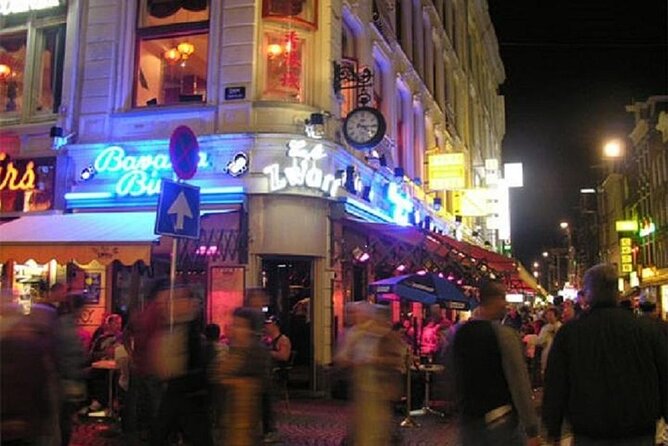
You meet at Damrak 1012 in Amsterdam and finish back at Damrak. Starting here keeps things easy, because you’re near major public transport links and you’re not hunting for a backstreet meeting point.
From Damrak, the walk naturally connects key parts of the center. That matters because the Red Light District is not a bubble. It sits beside older Amsterdam, including structures tied to the city’s defenses, trade, and early building techniques.
If you’re the type who likes to understand how a city “thinks,” this route gives you cause-and-effect. You start at a central point, then move into the district, then keep stepping through landmarks that explain why Amsterdam looks the way it does.
The Red Light District portion: laws, tolerance, and learning without the awkwardness
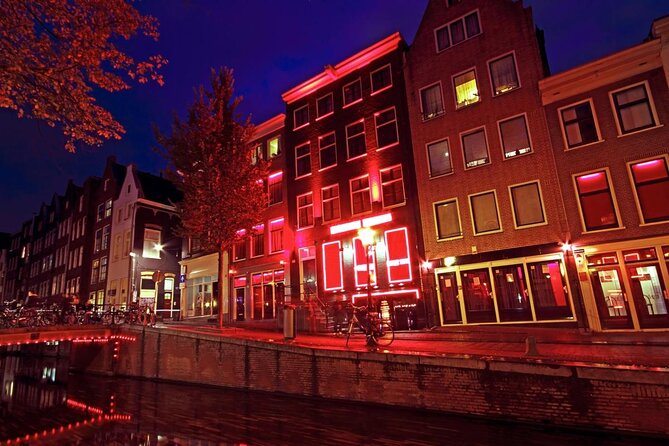
The tour’s core experience is a guided walk through the Red Light District, focused on history and the coffee shop culture that shapes how visitors experience the area today. The guide is there to translate the headlines into local context, especially around Dutch law.
You’ll get the key big ideas in practical language:
- Prostitution is legal under Dutch frameworks, and the city regulates how it works.
- Marijuana is tolerated in the coffeeshop context, so rules and expectations are different from many other countries.
This is valuable because it changes how you interpret what you see. Instead of treating the district as a taboo “show,” you learn it as a regulated part of the city. That makes your observations more grounded, and it helps you avoid the common trap of using rumors as your facts.
One more detail that makes this segment work well: the guide keeps it respectful. People often say they felt it was safe and tasteful, even when groups included teenagers or mixed ages. That doesn’t erase the adult subject matter, but it does mean you’re not getting shock-value storytelling.
Dam Square and Amsterdam’s wooden-pile foundation
After the district orientation, the tour turns toward Amsterdam’s physical roots: why the city can even stand the way it does. You’ll connect this to the Dam area, sometimes described as the city built on trees.
Here’s the practical, “wait, that’s how it works” lesson. Amsterdam’s soil includes a thick layer of fen and clay. Many buildings are set on wooden poles driven down until they reach a layer of solid sand, which is about 11 meters deep. The idea is simple: you can build on waterlogged ground if you anchor the structure firmly enough.
Why it belongs on this tour: the Red Light District can feel like it grew in isolation. But it didn’t. The same engineering that shaped canal-side streets and dense neighborhoods also made it possible for Amsterdam’s oldest urban fabric to expand where it did.
So this stop does more than satisfy curiosity. It helps you understand that the district is part of the same long-term city machine.
More Amsterdam trips with just your group

Old Town context: seeing why the oldest streets still matter
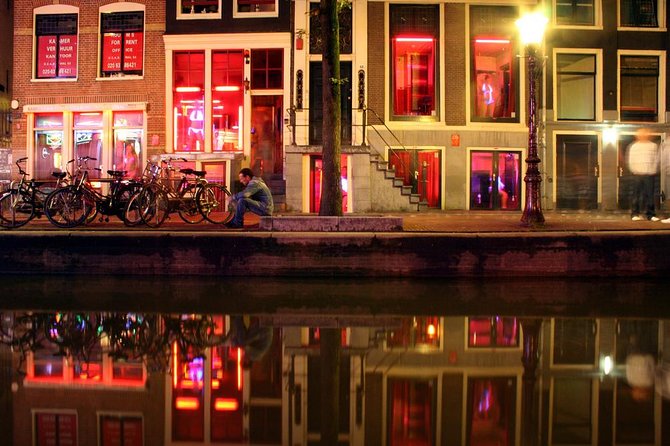
The tour also frames the Red Light District as part of the Old Town area, which is why you’ll find so much history packed into a relatively tight space. This is one reason the neighborhood can feel layered: you’re walking through modern regulations while standing near spaces that have existed for centuries.
That Old Town context is more than trivia. It affects how the streets feel. You’ll notice the mix of building styles, irregular layouts, and older street corners that don’t match the clean geometry of planned European capitals. It also sets you up to understand why some landmarks are still standing, while others didn’t survive earlier fires and rebuilding.
If you like “why this place looks like this,” pay attention during this section. The guide links the physical environment to the human one.
Pub The Ape: 1540 wooden buildings and the lesson from the 1452 fire
One stop that tends to stick is Pub The Ape, known as Int Aepjen in Dutch. The guide points out that it was built around 1540 and is one of only two remaining wooden buildings in Amsterdam.
That detail hits harder because of what happened earlier. In 1452, there was a major fire, and afterward the government pushed a building approach with brick facades. So when you see surviving wooden structures, you’re literally looking at evidence of an older rule set and an earlier city risk level.
This is a good stop for two reasons. First, it gives you a tangible visual of how Amsterdam has changed. Second, it provides a calm pause in the adult-themed area, letting you reset your brain while still staying on the same story.
The Waag: a city gate turned guild center
You’ll also see the Waag. It used to be one of Amsterdam’s city gates, part of the defensive wall, built around the 1400s. The tour notes it is the second oldest building in Amsterdam.
Later, the Waag shifted roles. It became a space where guilds and craft organizations gathered, not just a defensive checkpoint. That transition from defense to work hub tells you something important about Amsterdam’s evolution, from protecting trade routes to building identity through crafts and commerce.
As you stand in the area, it’s easy to forget that the Red Light District is not only an entertainment zone. It’s also connected to older commercial patterns. Seeing the Waag helps you connect those dots.
Practical note: this stop is more about understanding and context than a “must-see photo from every angle” moment. Still, it’s a strong anchor because it gives you a time scale.
The smallest house and the VOC storage-to-living story
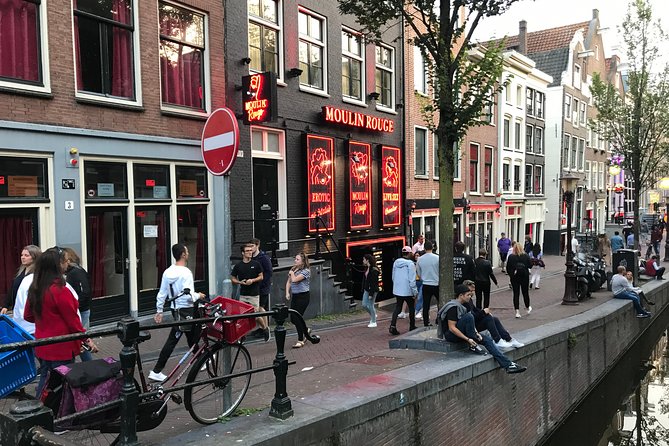
Next comes a curious sight: Amsterdam’s smallest house, built around the 1700s. The guide explains how it first functioned as storage for the VOC trading company. VOC is the Dutch East India Company, and it was a giant engine of commerce.
Over time, the smallest house became a place where people lived for a very long time. That shift from trade utility to residence is one of those quiet Amsterdam lessons. Space was not always abundant, and the city adapted.
This stop is a great reminder that Amsterdam’s famous canals and grand facades did not erase small-scale realities. It also pairs well with the Red Light District learning because both are about how regulation and daily life shape space.
If you like human-scale history, you’ll probably enjoy this one.
Condomerie: modern commerce in a classic city setting
The tour ends with a very Amsterdam contradiction: the Condomerie, described as the world’s first condom shop specializing in condoms since 1987.
The guide highlights that you can get customized sizes and all kinds of special condom options. It’s a commercial stop, but it also works as a cultural marker. Instead of treating sexuality as something hidden, the city has normalized it in visible, regulated commerce.
This is also a good place to ask questions if you’re wondering how Amsterdam keeps adult topics within a legal and everyday framework. The guide’s explanations here tend to connect back to the earlier law talk.
If you’re visiting with someone who’s sensitive about adult subjects, you can use this stop as a boundary-setting moment. It’s a controlled, informational view, not a chaotic nightlife environment.
Optional upgrades: Erotic Museum and coffeeshop time with your guide
A major reason people book this specific tour is the flexibility. You can upgrade to visit the Erotic Museum, or you can choose a coffeeshop visit with your guide.
That matters because a coffeeshop is not the same experience as walking past one. Having a guide who can explain the culture and expectations helps you avoid common misunderstandings.
The Erotic Museum option is also a clear fit if you want something more structured than street-level observation. You’re shifting from walking and context to an indoor setting where the topic is framed intentionally.
One tip for making this decision: choose based on what you actually want to learn. If you want legal and social context tied to everyday city rules, coffeeshop time fits. If you want curated museum-style explanation, the Erotic Museum upgrade makes more sense.
Price and value, based on what you actually get
At $41.60 per person for a private walking tour, this isn’t a “grab and go” add-on. You’re paying for a guide who can handle sensitive content in plain language, plus a route that blends the Red Light District with Old Town landmarks.
Here’s what you’re really buying:
- time with a local guide instead of trying to read everything yourself
- context for Dutch law and tolerated marijuana culture
- a route that includes recognizable anchor points like the Waag and Pub The Ape
- optional upgrades (Erotic Museum or coffeeshop visit) that can make the experience feel more complete
If you’re traveling with a small group, the private format often feels like good value because everyone gets more direct attention. If you’re traveling solo, it can still be worth it if you want a single, coherent story rather than piecing together multiple uncertain explanations.
What to expect on the ground: walking pace, photos, and staying comfortable
This is a walking-focused experience, and the district can feel intense even when it’s explained well. Wear shoes that can handle city streets for a couple of hours.
You may also find that photography is possible in places where the guide stops you to explain what you’re seeing. Some guests mention good picture opportunities, especially when the guide points out specific angles or historical facades.
Most importantly, expect the tour to be respectful and structured. Guides are repeatedly praised for making the information clear without turning it into awkward theater. Still, you’re in an adult neighborhood, so keep that reality in mind.
If you’re coming straight from dinner plans, plan on light snacking before or after, since food and drinks are not included.
Who this tour is for, and who should think twice
This tour is a strong fit if you:
- want a first-time orientation that explains the laws, not just the visuals
- prefer a private pace over a crowded group tour
- care about history, including how Old Town Amsterdam connects to the district
- want optional add-ons like the Erotic Museum or coffeeshop visit
It’s also a decent option for families with teenagers, based on the way guides handle the tone and pacing. You can’t force comfort, but the approach is described as respectful and not sensational.
Think twice if you:
- dislike adult subject matter and are easily unsettled
- expected a pure nightlife tour vibe rather than a law-and-culture walk
- want a long list of attractions without the deeper context
Should you book it
Yes, if you want your Amsterdam to make sense. This tour is best when you treat it like an orientation lesson for the city’s unusual tolerance and the way regulation shapes daily life. The private setup also makes it easier to ask direct questions, and the mix of landmarks keeps you from feeling like you’re stuck in one narrow zone.
No, if you’re expecting a purely scenic, low-content walk. The Red Light District is still a real adult neighborhood, and even a careful guide can’t turn that into something neutral. If you know you’ll feel uncomfortable, you may want a different Amsterdam theme for your day.
If you’re on the fence, book with the mindset of learning. Choose the upgrade that matches your curiosity, and you’ll likely come away with a clearer, more grounded view than you could get by wandering alone.
FAQ
How much does the Amsterdam Red Light District and coffeeshop tour cost?
The tour price is $41.60 per person.
How long is the tour?
The duration is about 2 hours (approximately).
Is this tour private?
Yes. It is a private tour or activity, with only your group participating.
Where do I meet for the tour?
The meeting point is Damrak, 1012 Amsterdam, Netherlands, and the tour ends back at Damrak.
What is included in the tour price?
It includes a local guide and a guided walking tour.
Are there any admission fees included?
The main Red Light District walking portion is listed with admission ticket free.
What upgrades are available?
You can upgrade to visit the Erotic Museum, or visit a coffeeshop with your guide.
Are food and drinks included?
No. Food and drinks are not included.
What language is the tour offered in?
The tour is offered in English.
Can I cancel for a full refund?
Yes. Free cancellation is available, and you can cancel up to 24 hours in advance for a full refund.
Everything Else From Our Amsterdam Notebook



Also Reviewed Around Amsterdam




The Adult Side of Amsterdam, Explained


Fresh off the review pile in Amsterdam
- Full-Day Trip From Amsterdam to Keukenhof, Zaanse Schans + Cruise
★ 5.0 · 3 reviews - Boutique Dutch Food & History Tour with up to 8 guests only
★ 5.0 · 3 reviews - Private Tour to Windmills Zaanse Schans +Keukenhof – 7 Hours
★ 5.0 · 3 reviews - Full-Day Private Guided Countryside Tour from Amsterdam by Bike
★ 5.0 · 3 reviews - Amsterdam Red Light District and Old Town Walking Tour
★ 5.0 · 3 reviews
Red Light District & Coffeeshops, compared.
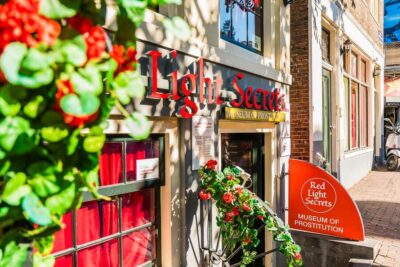 ★ 4.2Amsterdam: Red Light Secrets Museum Entry TicketFrom $175,722 reviews
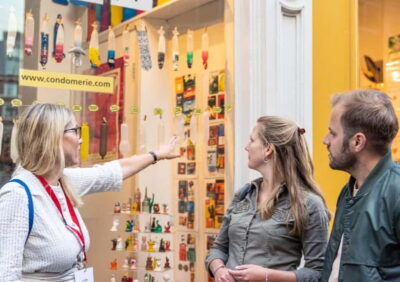 ★ 4.9Amsterdam: Red Light District Tour in German/English/ItalianFrom $285,623 reviews
 ★ 4.6Amsterdam Red Light District & Coffee Shop TourFrom $294,134 reviews
 ★ 4.1Amsterdam: Red Light District Pub Crawl with Unlimited ShotsFrom $242,130 reviews
 ★ 4.5Amsterdam Red Light District Pub CrawlFrom $241,497 reviews
 ★ 4.2Amsterdam: Cannabis Museum Entry TicketFrom $141,244 reviews
 ★ 4.5Amsterdam: Red Light District TourFrom $331,135 reviews
 ★ 4.1Amsterdam: After Dark Red Light District TourFrom $571,030 reviews
Browse the lists this tour appears in