
REVIEW · AMSTERDAM
Amsterdam: Countryside Bike Tour
Windmills and polders beat Amsterdam noise. This Amsterdam countryside bike tour trades traffic for quiet roads and gives you windmills, farms, and polder views without feeling rushed. The main catch is simple: you need to be comfortable riding a bike for the full ride, because it is not set up for beginners or people who struggle to stay steady.
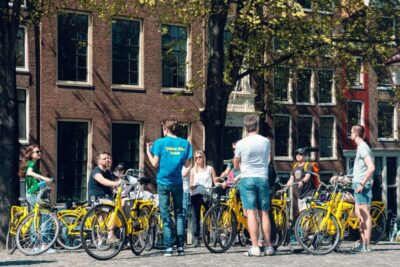
What I like most is the small-group feel, capped at 10 people, plus a guide who keeps you moving at a relaxed pace on safe, independent bike paths. You also get a bike rental for the tour, so you are not stuck figuring out gear before you even get going.
You also learn why this region looks the way it does, with practical explanations about Dutch water management and flood control, including the fact that nearly a third of the Netherlands lies below sea level. Expect stops built around real landmarks like D’Admiraal windmill and traditional rural areas, plus time for photos of canals, farmland, grazing animals, and cultivated fields.
In This Review
- Key highlights worth planning around
- Reset Your Amsterdam Day With Polders, Windmills, and Room to Breathe
- Meeting at Bikes is Ready, Then Getting Out of Central Amsterdam Fast
- Amsterdam Centraal to the IJ River: A Quick Orientation That Pays Off Later
- Amsterdam-Noord and Noordhollandsch Kanaal: Quiet Roads, Water Views, Better Riding
- D’Admiraal Windmill Stop: Tall Wooden Power and Its Real Purpose
- Schellingwoude and the Rural Turn: Villages, Farms, and Polder Logic
- Buiksloterweg and the Final Glides Back Into Amsterdam Life
- What You Learn, Beyond Facts: The Dutch Mastery of Water
- Cheese, Farms, and Photo Stops: How to Make the Most of 2.5 Hours
- Price and Value: Why $41 Feels Fair for What You Get
- Who Should Book This Tour, and Who Should Skip It
- Should You Book the Amsterdam Countryside Bike Tour?
- FAQ
- How long is the Amsterdam countryside bike tour?
- Where do we meet for the tour?
- Is bike rental included?
- What languages are the guides available in?
- How many people are in the group?
- Is the tour suitable for children or people with back problems?
- What are the cancellation and payment options?
Key highlights worth planning around
- Small-group ride, max 10 participants, for a calmer experience and more time with the guide
- Windmills and polders, with clear explanations of how the Dutch control water
- D’Admiraal windmill, including a stop at a tall wooden landmark
- Village and farm atmosphere, with grazing animals and field views on the way
- Short guided stops throughout, so you spend more time riding and less time standing still
- Bike rental included, so you can focus on the ride, not logistics
This is cycling country. More Amsterdam rides
- Amsterdam: Guided Bike Tour City Centre in EN/DE/FR/ES★ 4.7 · 4,187 reviews
- Countryside Bike Tour from Amsterdam: Cheese, Clogs & a Windmill★ 5.0 · 1,485 reviews
- Amsterdam: Hidden Gems & Highlights Guided Bike Tour★ 4.8 · 1,404 reviews
- Amsterdam: Off the Beaten Path Bike Tour in French★ 4.9 · 1,193 reviews
Reset Your Amsterdam Day With Polders, Windmills, and Room to Breathe
Amsterdam is fun, but after a few hours you can feel boxed in. This tour’s whole idea is to take the best part of the Netherlands, the working countryside, and drop it into your day with almost no fuss. You are swapping canal crowds for greener air and wider views, and you do it on a proper Dutch bike setup, not a “sit and listen” experience.
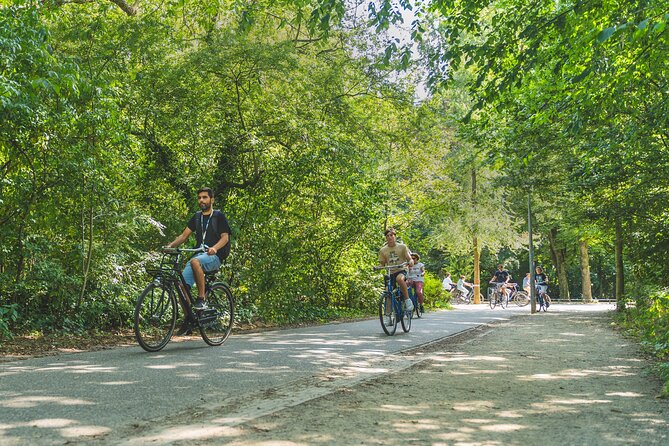
I also like that the tour is short enough to feel doable, about 2.5 hours, while still long enough to get out of the city’s orbit and actually see the North Holland countryside. The pace is leisurely, and the guide keeps the route on bike paths that are meant for people on two wheels, which is exactly what you want when you are trying to relax.
One more value point: the tour is built around real rural themes, water management and land use, not just sightseeing. You will see polders, farms, and windmills, then connect the dots on what they have to do with each other.
Meeting at Bikes is Ready, Then Getting Out of Central Amsterdam Fast
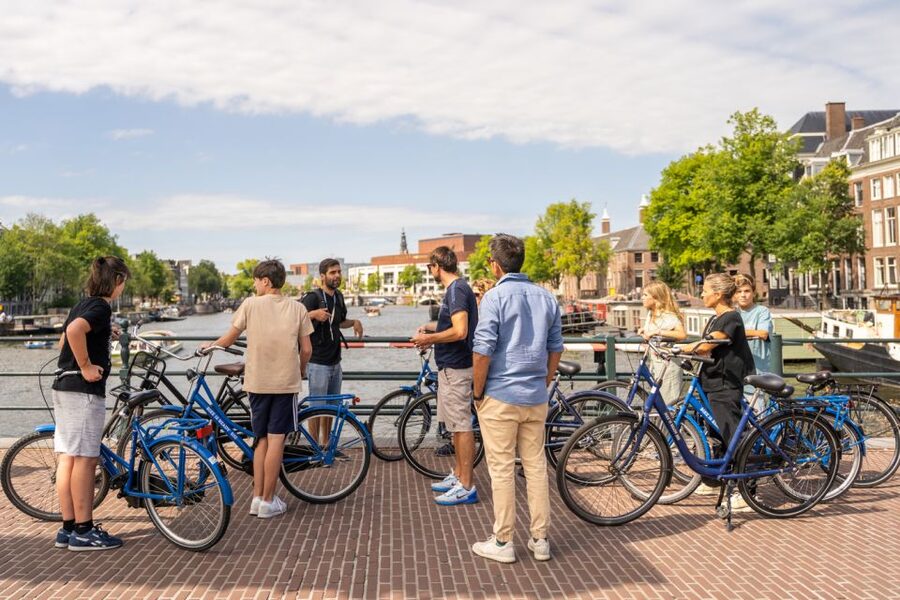
You meet at the bike rental shop Bikes is Ready at Nieuwezijds Voorburgwal 114. That matters because you start in a straightforward way, with the rental and the guide handled together. Once you are set, the ride starts moving quickly toward the city’s edge.
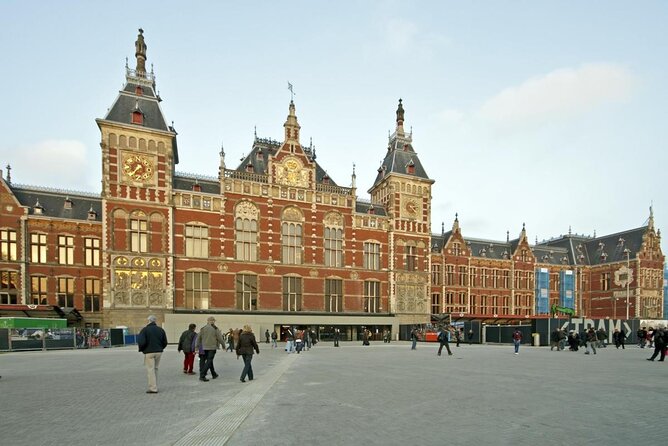
Early on, you get a guided orientation that helps you read what you are seeing. There is a short stop at Amsterdam Centraal Station (about 10 minutes), then you move toward the IJ River for a quick explanation (about 5 minutes). This is not meant to overwhelm you. It is more like setting the stage so when you hit the canals and waterworks later, you already know what to look for.
In a city like Amsterdam, the biggest stress is often mixing bikes, pedestrians, and traffic patterns. The tour route avoids the busiest crowd zones and keeps you on safe, independent bike paths, which is why it feels calmer than you might expect.
Amsterdam Centraal to the IJ River: A Quick Orientation That Pays Off Later
The short time near Amsterdam Centraal is there to help you start with the right mindset. You are not just “going places,” you are switching from city mode to water-and-land mode. Even in a brief stop, your guide’s explanations help you understand how Amsterdam relates to the surrounding water system.
When you reach the IJ River area, you get a chance to look at how the water frames the city. The Dutch are famous for canals, but the larger lesson here is that water is not a backdrop. It is the reason the land is shaped the way it is. That connection comes up again later when you talk about flood control and managed land, so those early minutes matter.
Practical note: Amsterdam can be breezy, especially near water. If you run cold easily, bring a light layer, even if it looks warm at the start.
Amsterdam-Noord and Noordhollandsch Kanaal: Quiet Roads, Water Views, Better Riding
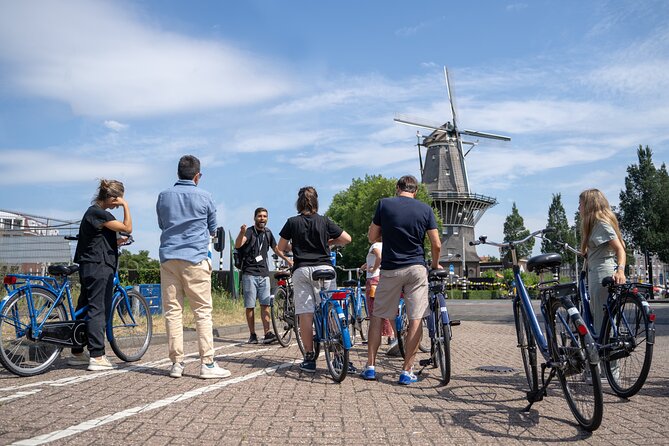
Next comes Amsterdam-Noord (about 30 minutes), followed by a longer stretch along the Noordhollandsch Kanaal (another 30 minutes). This is where the ride starts to feel like a true countryside outing rather than a city tour with a bike.
You get sustained views and time to settle into the rhythm of cycling. The guide’s job here is to keep the explanations connected to what you are physically passing. So instead of abstract history, you are learning in context, with canals and waterways you can actually see and follow.
This part also makes a big difference for your comfort. You have time to adjust your pace, handle any wind, and get used to the bike route before the more iconic stops. If you have been cooped up in the center, this feels like a reset.

D’Admiraal Windmill Stop: Tall Wooden Power and Its Real Purpose
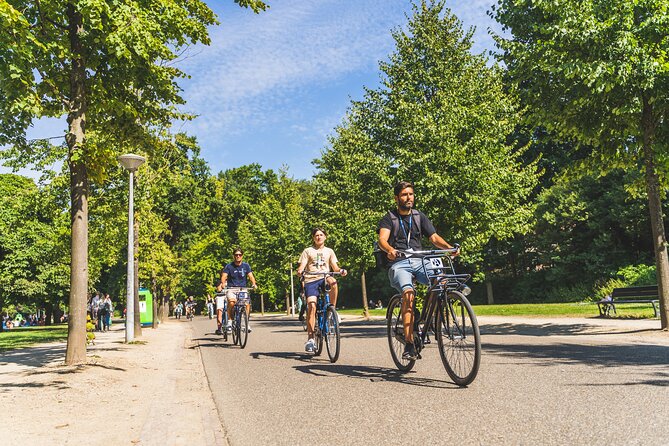
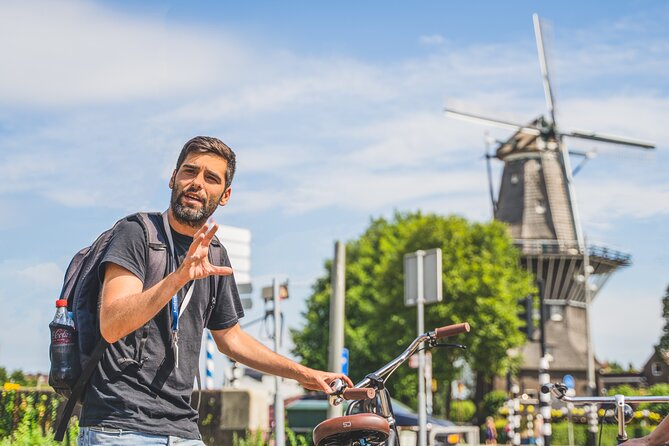
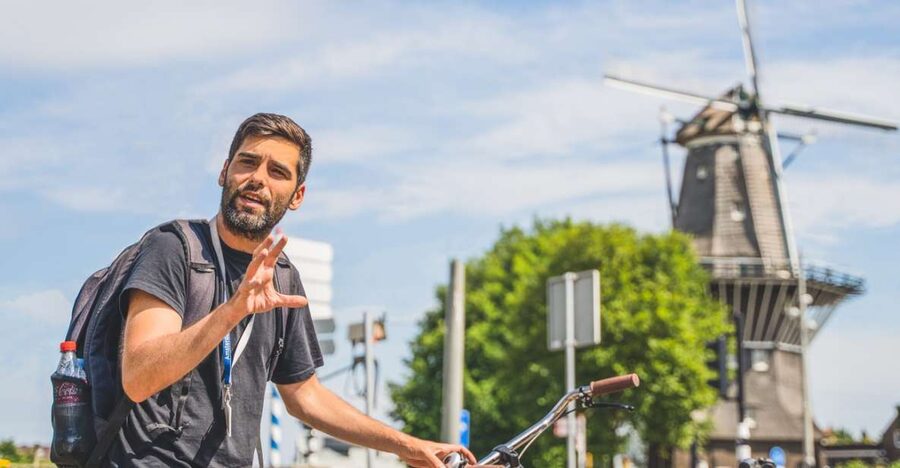
Then you reach D’Admiraal Windmill (about 15 minutes). This is not just a photo stop. The windmill connects directly to the theme of water management and the Dutch need to control where water goes.
Your guide explains how Dutch water control works in a practical, ground-level way, and you get to see a windmill that fits into that system. The windmill is also noted as the tallest wooden windmill in the country, so it is a visual landmark even if you do not know the technical details yet.
Why this stop works: the countryside around Amsterdam can look calm and green, but the calm is engineered. Windmills like this are part of the machinery behind that calm. You start seeing the countryside as infrastructure, not just scenery.
If you like photos, plan to pause without rushing. The moment you notice the windmill’s height and materials, your brain locks into it as the centerpiece, and the time you spend here makes the rest of the ride easier to understand.
Schellingwoude and the Rural Turn: Villages, Farms, and Polder Logic
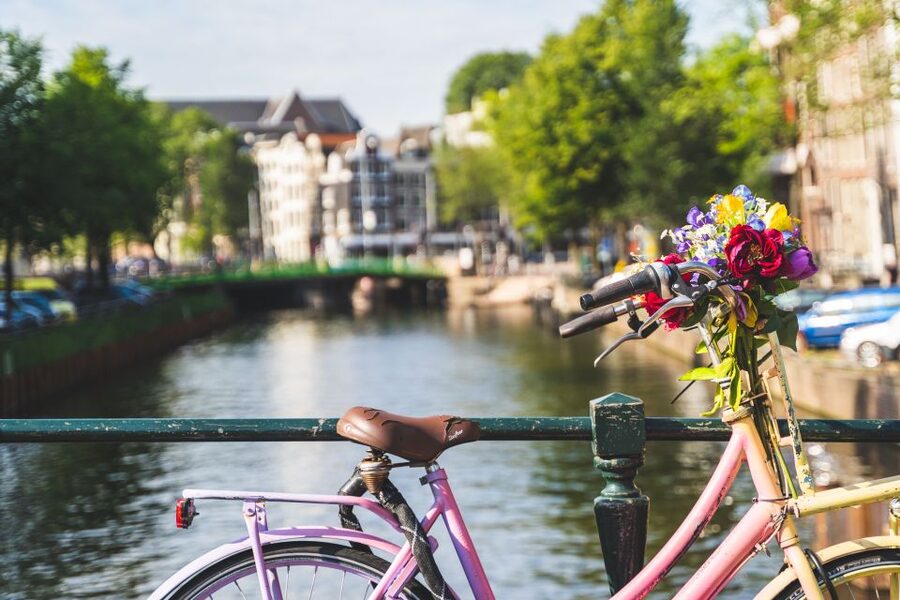
After the windmill, you ride into Schellingwoude for about 30 minutes. This is where traditional village life meets open countryside. Instead of only water edges and canals, you get more of the farming feel, including views of fields and grazing animals.
The guide brings the bigger story into focus again: why polders exist, how flood control shaped settlement patterns, and how Dutch life adapted to living with water rather than trying to ignore it. Nearly a third of the Netherlands is below sea level, so this is not a niche topic. It is the foundation for daily life.
This is also one of the most enjoyable segments if you like slow, watchable scenery. You can look at cultivated fields, watch how the land is divided, and compare what you see now with what you learned about water management earlier.
A small, useful tip for this segment: if you want the best photos, keep an eye out for open angles where canals and fields align. The tour gives multiple chances for photos of canals and farmland, but some spots are much better when you are not surrounded by bikes and guide chatter.
Buiksloterweg and the Final Glides Back Into Amsterdam Life
The tour closes with Buiksloterweg for a short guided segment (about 5 minutes) before returning to Nieuwezijds Voorburgwal 114. This last bit is like the gentle landing. You go from countryside cues back to city rhythms, and you can feel how close this whole world is to central Amsterdam.
What I like about this wrap-up is that it does not feel like the guide is saving all the fun for the end. Instead, you have a steady mix: water and canals first, windmill and rural areas next, then you glide back.
If you are tempted to extend your day, this is a good time to do it because you are already oriented. You now understand the direction your route points and what parts of the city connect to the countryside.
What You Learn, Beyond Facts: The Dutch Mastery of Water
The strongest reason to book this tour is the way it turns Dutch water management into something you can picture. You will hear that nearly a third of the Netherlands lies below sea level, and you will get the practical meaning behind that number: land can flood, but it can also be controlled.
Your guide connects lessons like flood control, land reclamation, and wind-powered pumping to what you see outside your bike window. Even if you only remember a few key points, you walk away with a new way of reading the country.
You also get touched by culture through rural production stories, including authentic Dutch cheese. That part adds variety. You go from waterworks logic to farm life, which keeps the ride from turning into one long lecture. It is still tied together by the same theme: the countryside is shaped by how people live and work with water.
Cheese, Farms, and Photo Stops: How to Make the Most of 2.5 Hours
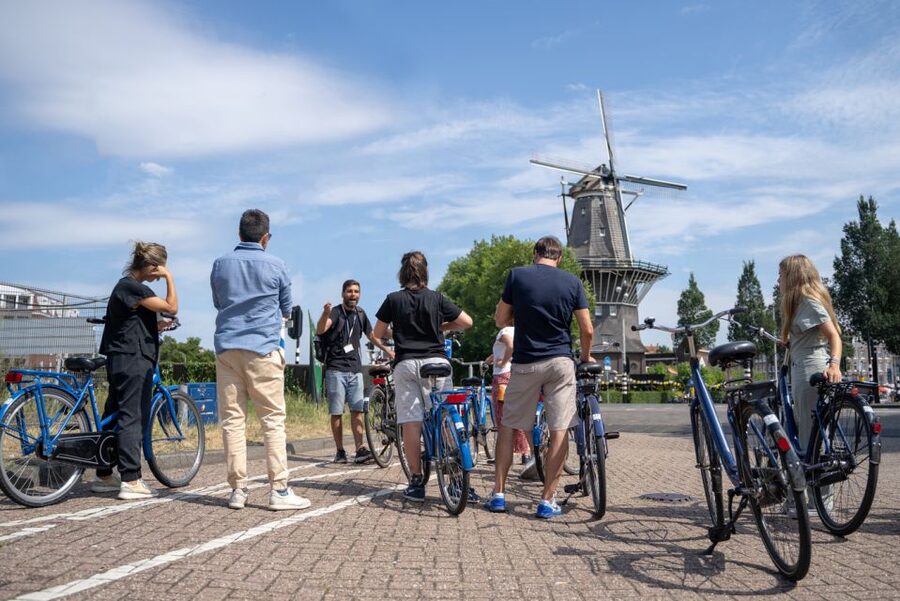
Because the ride is 2.5 hours, every pause needs to count. This tour does that with short stops at important points, like the windmill and village segments, and then rides that keep scenery flowing.
You can expect photo chances with:
- Canals and waterways along the route
- Farmland views and cultivated fields
- Grazing animals in rural areas
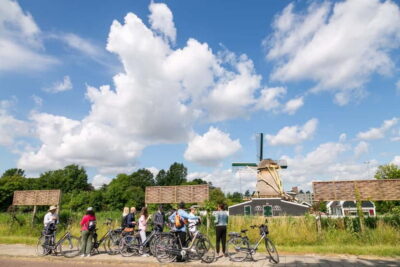
- The windmill as a landmark for scale and structure
You also learn about cheese production at some point during the countryside portion. Even if cheese is already on your to-do list in Amsterdam, this gives you context for where it comes from and why dairy matters so much in rural Dutch life.
Food is not included, so I suggest you plan around that. If you are biking right after a museum visit or long walking day, carry water and a small snack so you are not hungry during the ride. It is easier to enjoy the countryside when you are not thinking about your next meal.
Price and Value: Why $41 Feels Fair for What You Get
At $41 per person for about 2.5 hours, this is priced like a focused, guided activity rather than a long-day excursion. The value is in three places.
First, you get a small group capped at 10, which makes it easier to ask questions and get help if you need it. Second, the route includes both cycling and guided explanations on safe paths, so you are paying for time plus local interpretation. Third, bike rental is included, so you are not adding extra costs just to participate.
Is it expensive compared to renting a bike on your own? Sure, but the point here is not just transportation. It is learning the countryside’s logic, how water management shapes what you see, and getting to the right rural spots without guessing your way through bike routes.
Who Should Book This Tour, and Who Should Skip It
This is a great fit if you want:
- A calm countryside break from busy Amsterdam streets
- Scenic cycling plus guided explanations
- Photo opportunities like windmills, canals, and farms
- A small-group experience that feels personal
It is not a fit if:
- You cannot ride a bike
- You have back problems (this ride is not listed as suitable)
- You are traveling with children under 12
You also need to be confident cycling and have cycled recently. That matters because while the ride is described as leisurely, you still spend real time on a bike.
If you are the type of traveler who likes to understand how places work, this tour will land well. If you just want a scenic ride with no talk, you might find some segments of guidance more useful than entertaining, since the entire experience is guided.
Should You Book the Amsterdam Countryside Bike Tour?
Yes, if you want a practical, low-stress way to see beyond Amsterdam’s center and understand why this region looks the way it does. The combination of small-group pacing, safe bike routing, and real rural themes like windmills, polders, and water control makes the hours feel purposeful.
If you are unsure about riding, or if your bike confidence is shaky, skip it and choose a different kind of tour. But if you can comfortably pedal for a little over two hours, this is one of the best ways to get a true sense of North Holland without turning your day into a complicated logistics puzzle.
FAQ
How long is the Amsterdam countryside bike tour?
The tour runs for 2.5 hours.
Where do we meet for the tour?
You meet at the bike rental shop Bikes is Ready, at Nieuwezijds Voorburgwal 114.
Is bike rental included?
Yes. Bike rental is included during the tour.
What languages are the guides available in?
The professional guide is available in Spanish or English, and a Dutch guide is available upon request. The live tour guide is Spanish.
How many people are in the group?
It is a small group, limited to 10 participants.
Is the tour suitable for children or people with back problems?
No. The tour is not suitable for children under 12, and it is also not suitable for people with back problems or for people who cannot ride a bike.
What are the cancellation and payment options?
You can cancel up to 24 hours in advance for a full refund. You can also reserve now and pay later.
This Is Cycling Country
Everything Else From Our Amsterdam Notebook



Also Reviewed Around Amsterdam



Fresh off the review pile in Amsterdam
- Full-Day Trip From Amsterdam to Keukenhof, Zaanse Schans + Cruise
★ 5.0 · 3 reviews - Boutique Dutch Food & History Tour with up to 8 guests only
★ 5.0 · 3 reviews - Private Tour to Windmills Zaanse Schans +Keukenhof – 7 Hours
★ 5.0 · 3 reviews - Full-Day Private Guided Countryside Tour from Amsterdam by Bike
★ 5.0 · 3 reviews - Amsterdam Red Light District and Old Town Walking Tour
★ 5.0 · 3 reviews
Cycling Tours, compared.
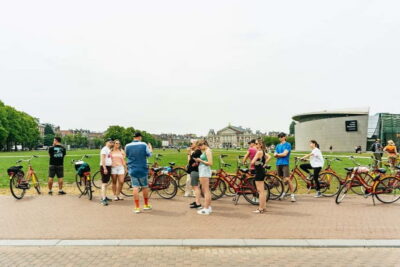 ★ 4.7Amsterdam: Guided Bike Tour City Centre in EN/DE/FR/ESFrom $414,187 reviews
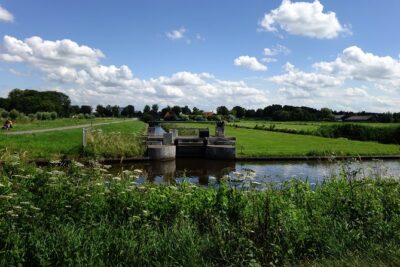 ★ 5.0Countryside Bike Tour from Amsterdam: Cheese, Clogs & a WindmillFrom $591,485 reviews
 ★ 4.8Amsterdam: Hidden Gems & Highlights Guided Bike TourFrom $441,404 reviews
 ★ 4.9Amsterdam: Off the Beaten Path Bike Tour in FrenchFrom $411,193 reviews
 ★ 5.0Amsterdam Highlights Bike or E-Bike TourFrom $451,171 reviews
 ★ 4.5Amsterdam: Windmill, Cheese, and Countryside E-Bike TourFrom $431,166 reviews
 ★ 4.7Amsterdam: Relaxed City Highlights Guided Bike TourFrom $341,069 reviews
 ★ 4.5Amsterdam: Guided City Bike Tour in FrenchFrom $41806 reviews
Browse the lists this tour appears in