
REVIEW · AMSTERDAM
Amsterdam: Guided Anne Frank Small-Group Walking Tour
The sidewalks tell Anne Frank’s Amsterdam story. This 2-hour small-group walk threads together the Jewish Quarter, Holocaust memorials, and the places tied to Anne Frank’s life, with an expert historian leading the way. You get context without getting lost in names or dates.
I especially like two things. First, the route uses real locations to explain how memory works, from the Daniel Libeskind Holocaust Memorial to the broken-mirror symbolism at the Auschwitz Memorial in Wertheimpark. Second, the guides bring the story to life with a calm, sensitive tone, often adding humor and answering questions at a comfortable pace, like Sunil, Stefan, Duncan, and Lola Stamboulian did in recent tours I’m drawing from.
One important consideration before you book: this tour does not include entry to the Anne Frank House. You’ll see the Anne Frank Statue near it, but you must plan your House tickets separately on the official site.
In This Review
- Key highlights at a glance
- Starting at Esnoga: the Portuguese Synagogue as your opening chapter
- Daniel Libeskind’s memorial: when a city honors victims through design
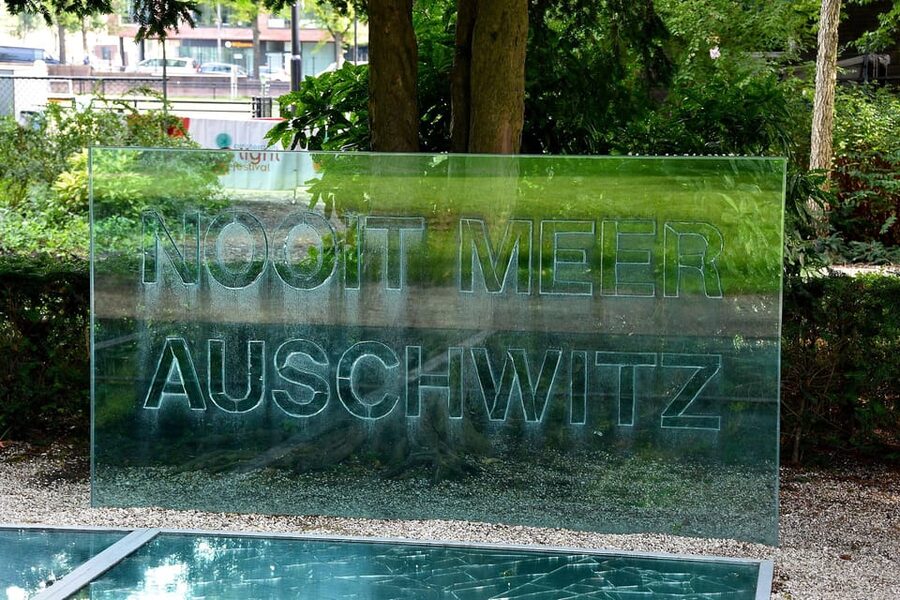
- The Auschwitz Memorial in Wertheimpark: broken mirrors that make you look up
- Rembrandt House Museum stop: Amsterdam’s culture, interrupted
- Zuiderkerk context and city views: seeing Amsterdam’s shape again
- Closing near the Anne Frank House: statue, legacy, and what you must book
- How the 2 hours really plays out: pace, questions, and weather
- Price and value: what you get for $30
- Who this tour suits best
- Should you book this Anne Frank small-group walking tour?
- FAQ
- How long is the Amsterdam Anne Frank walking tour?
- What is the price per person?
- Where do I meet the guide?
- Does the tour include entry to the Anne Frank House?
- What major stops are included on the route?
- What languages is the guide available in?
- What should I bring for the tour?
- Is the tour wheelchair accessible, and can I cancel?
Key highlights at a glance
- Portuguese Synagogue meeting point in Jonas Daniël Meijerplein, right by Esnoga and its dockworker statue
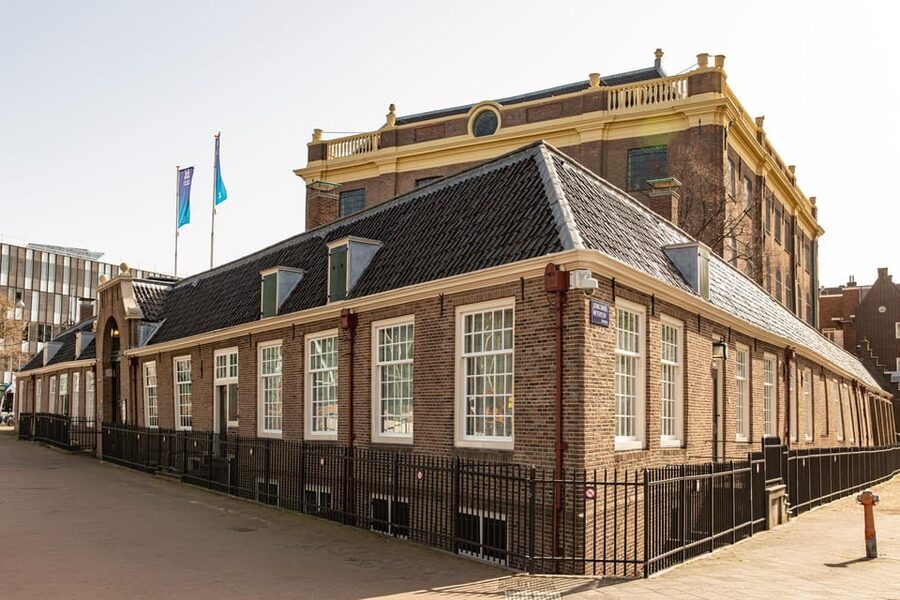
- Portuguese Synagogue exteriors focused on the 17th-century Sephardic story and architectural design
- Daniel Libeskind’s Holocaust Memorial stop for Dutch victims’ remembrance through design
- Auschwitz Memorial in Wertheimpark by Jan Wolkers, using broken mirrors that reflect the sky in fragments
- Rembrandt House Museum and Zuiderkerk area context, tying Amsterdam’s culture to what came next
- Anne Frank Statue near Anne Frank House, a final stop for legacy and reflection
Other walks through Amsterdam Jewish history
- Anne Frank’s Story – Guided Walking Tour through Amsterdam★ 5.0 · 11,619 reviews
- Amsterdam: Life of Anne Frank and World War II Walking Tour★ 4.8 · 10,467 reviews
- Amsterdam: Anne Frank Guided Small Group Walking Tour★ 4.8 · 2,722 reviews
- Amsterdam: Anne Frank Walking Tour – Guided in EN/DE/IT/ES★ 4.9 · 2,676 reviews
Starting at Esnoga: the Portuguese Synagogue as your opening chapter

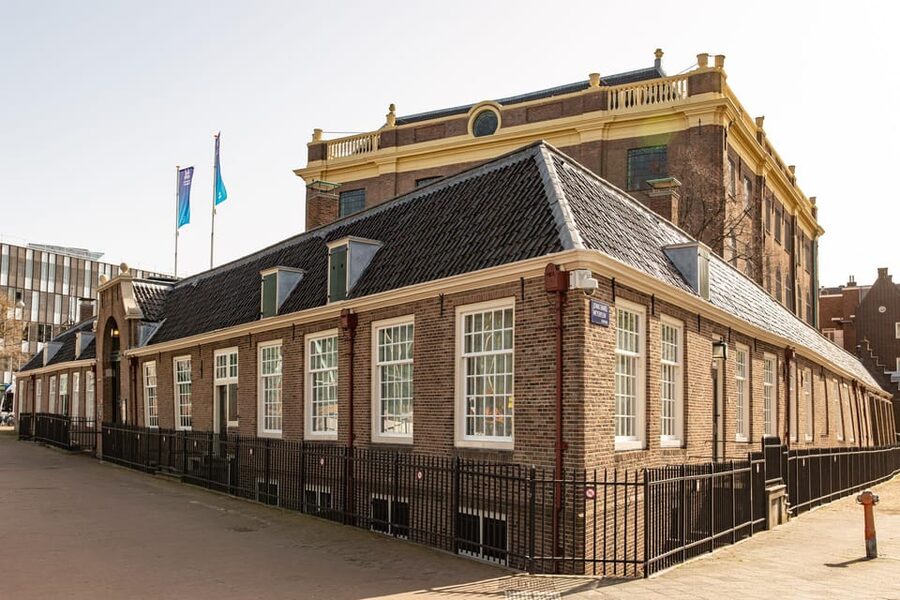
Most Anne Frank tours rush you straight toward the House. This one starts with something older and more architectural: the Portuguese Synagogue, known as Esnoga. Even from the outside, it’s a strong way to frame the story, because it reminds you this was a community with deep roots long before the war.
The meeting point is also clear, if you pay attention. Look for the large dockworker statue in Jonas Daniël Meijerplein square, right in front of the synagogue. The exact address is Jonas Daniël Meijerplein 21, 1011 RG Amsterdam. On a busy day, that dockworker statue is the fastest way to confirm you’re in the right place.
From here, the tour keeps the focus where it belongs. The synagogue is described as a 17th-century Sephardic synagogue with wooden vaulted ceilings, preserved in a way that avoids modern lights and heating so the space stays authentic. That matters for your mindset. You’re not just visiting a memorial loop, you’re entering a piece of Jewish Amsterdam that the war tried to erase.
My practical take: wear shoes you can stand in for two hours. This start point sits in a neighborhood where it’s easy to drift if you’re relying on general landmark guessing. Use the dockworker statue, not your memory.
Daniel Libeskind’s memorial: when a city honors victims through design
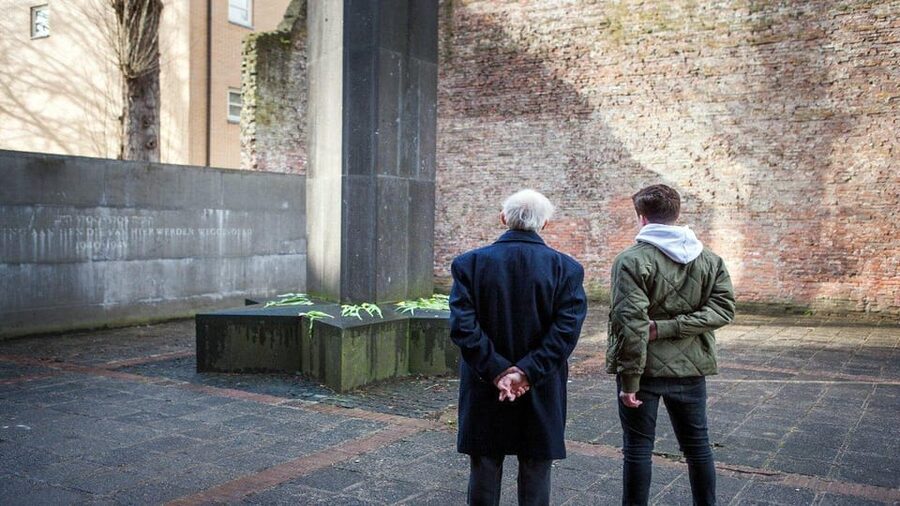
After the synagogue start, you move into the part of the story that most people come to Amsterdam for: the Holocaust and the Dutch experience. One stop is the Holocaust Memorial designed by Daniel Libeskind. It’s a powerful moment because it doesn’t feel like a history lesson clipped into stone. The design is meant to carry meaning, and your guide helps you read that meaning.
This memorial is tied to Dutch victims, and the tour frames it as a significant architectural response to that remembrance. The point for you, as a visitor, is that this is not only about tragedy. It’s about how Amsterdam planned to face the past in public space.
And the guide’s job is to keep the stop from becoming vague. A good historian tour guide will translate what you’re seeing into plain language: what the memorial is trying to express, how it relates to the broader wartime story, and why the location matters.
A big plus here is pace. Even when the topic turns heavy, the walking rhythm helps you process. You’re not stuck in one place staring at grief for too long. You get small bursts of context, then you move, which makes it easier to stay present.
The Auschwitz Memorial in Wertheimpark: broken mirrors that make you look up
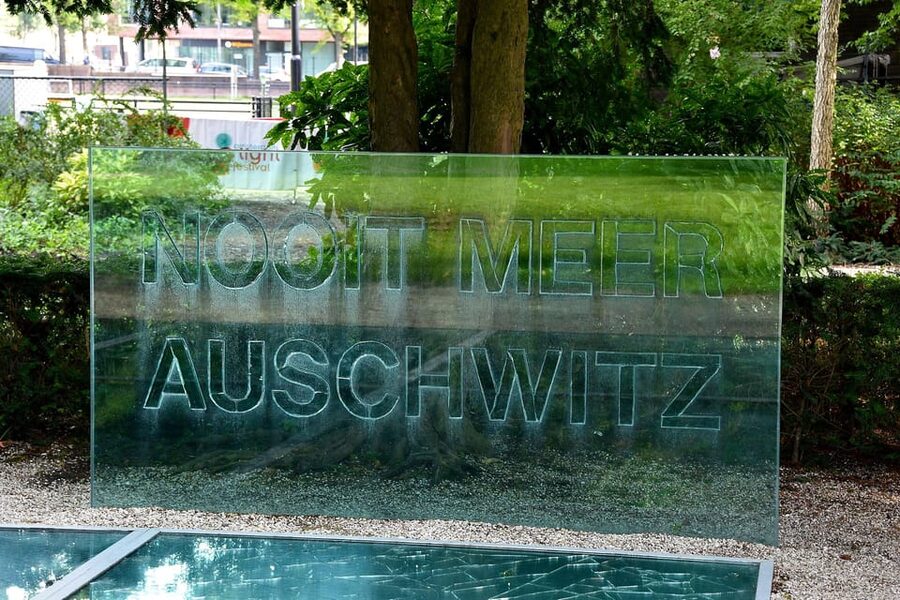
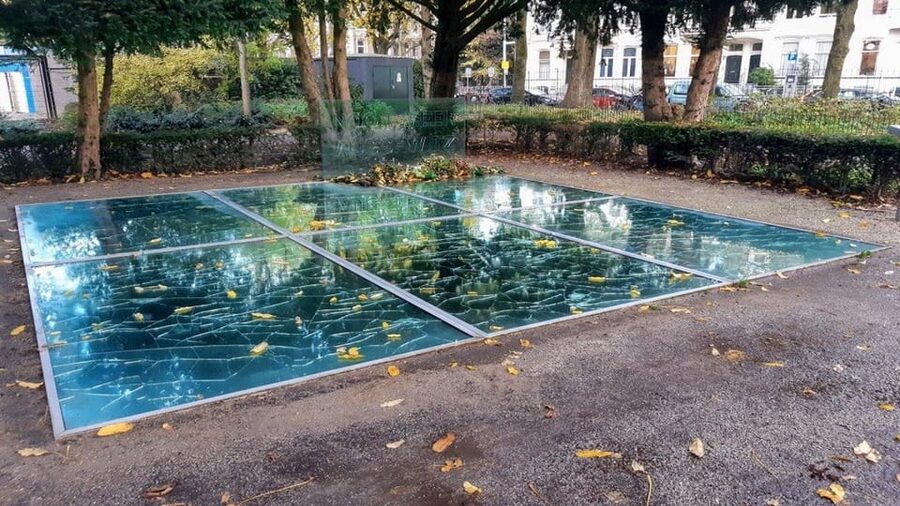
One of the most striking stops is the Auschwitz Memorial in Wertheimpark. This one is described as an installation by Jan Wolkers using broken mirrors. The mirrors reflect the sky in fragments, which is a simple concept that lands hard in your body.
Here’s why this stop works so well on foot: you physically experience the symbolism. It’s not just a panel you read. You’re likely to look around it, and the fractured reflections bring your attention back to the idea of lives broken apart. Your guide’s narration helps you hold the meaning without turning it into something performative.
This also connects back to Anne Frank in a grounded way. Anne Frank’s story is famous, but the Holocaust was not one single event. It was a system, a timeline, and a chain of consequences. Seeing a memorial designed around shattered reflection makes it easier to understand why Jewish people and their communities could not simply go back to normal after the occupation.
Practical note: this stop can feel cold and exposed if the weather turns. Bring weather-appropriate clothing. Many tours run rain or shine, and your best protection is layers you can tolerate while you stand still for a few minutes.
Rembrandt House Museum stop: Amsterdam’s culture, interrupted
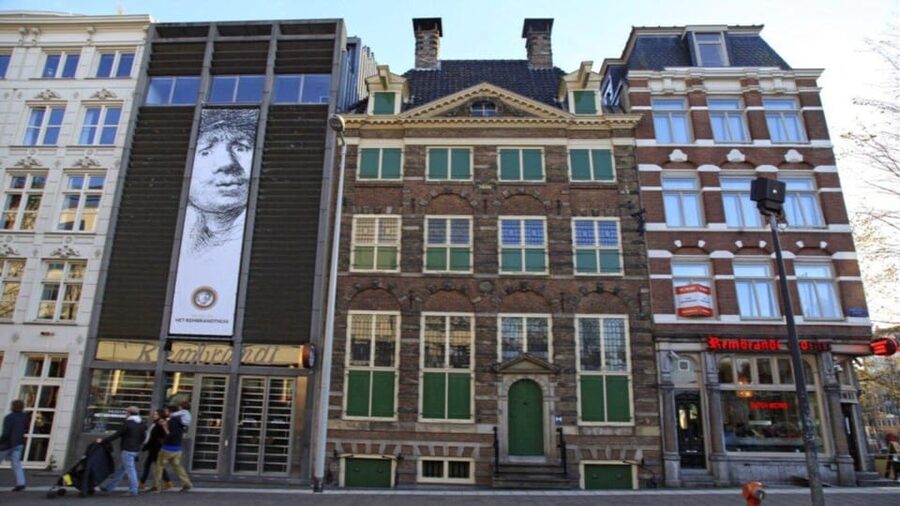
Next you pass the Rembrandt House Museum area. Rembrandt is not the headline of a Holocaust tour, but that’s exactly why he’s included. You’re being shown Amsterdam’s human scale before the war’s full weight takes over your frame of reference.
The tour connects Rembrandt’s life to his preserved home museum, described as carefully restored to its original state and showcasing things like his etchings, personal items, and painting techniques. Even if you do not go inside during the walking tour, the stop helps you picture how art, work, and daily life existed in the city alongside the tragedy that followed.
What I like about this kind of stop is that it prevents the tour from becoming one-note. Yes, you’ll face genocide and oppression, but you’ll also remember that the city was not only memorials. It was people building culture, training apprentices, drawing clients, and living their ordinary routines.
Some guides also handle this transition with care, using short story beats so you don’t feel jarred. In recent tours reflected in the guide style, people appreciated how the guide kept a steady pace and used storytelling to keep heavy topics understandable.
If you want extra value, do this: after the tour, if you’re curious, return on your own to the Rembrandt House Museum when you can choose your time. The tour gives you a guided “why it matters,” and you can decide how deep you want to go.
Prefer to see it on foot? More Amsterdam walks
Zuiderkerk context and city views: seeing Amsterdam’s shape again
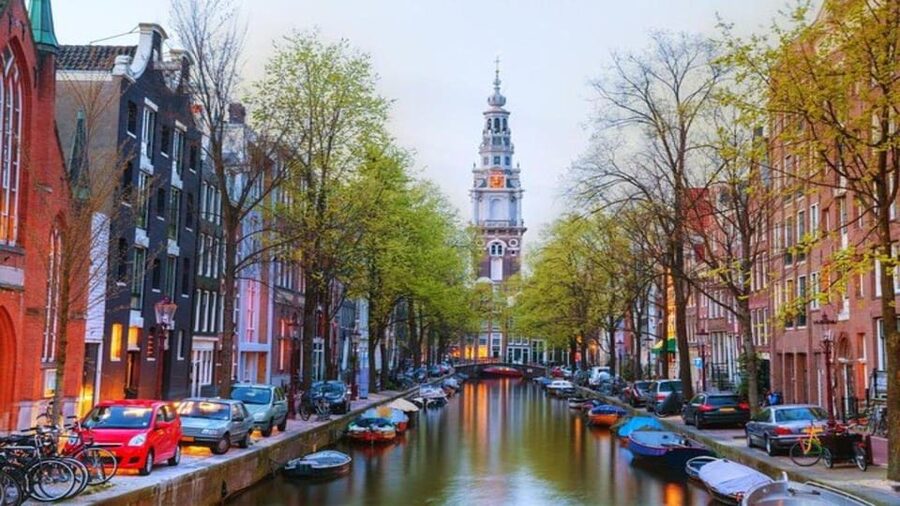
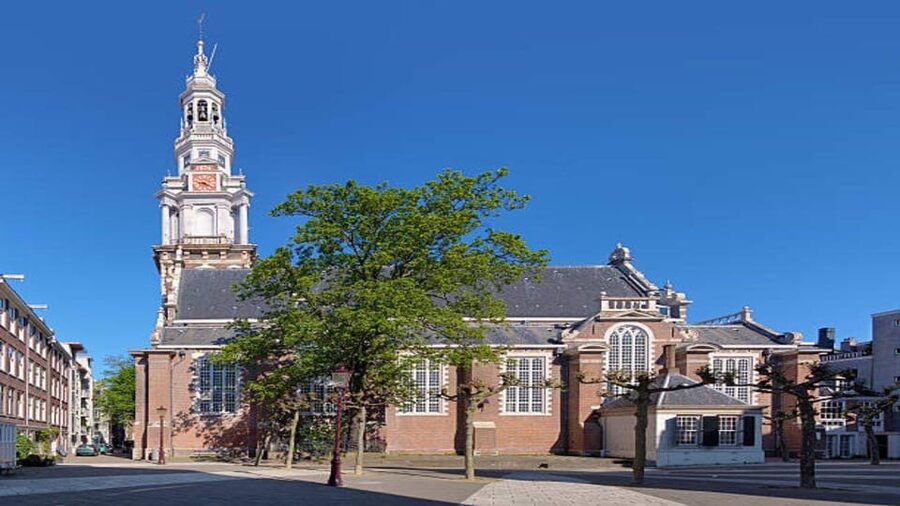
Then the tour includes a stop near the Zuiderkerk, Amsterdam’s first Protestant church. You’ll hear how it represents an architectural evolution in the city, plus why its tower is associated with city views.
Even if you only get a quick look from the street, this is a useful intermission. After two memorial stops that demand your attention, the Zuiderkerk context is a chance to re-orient. You get to see Amsterdam as a layered city, not only as a set of wartime locations.
This stop is also a reminder that the same streets where people lived and worshiped later became routes connected to persecution, deportation, and survival stories. When you can picture the city’s shape and architecture, the historical narrative feels more physical.
If you’re walking in good weather, this is a great moment to ask your guide about where to get a better look at the tower. If weather is bad, your best move is simply to keep moving and keep your attention on the explanation rather than chasing viewpoints.
Closing near the Anne Frank House: statue, legacy, and what you must book
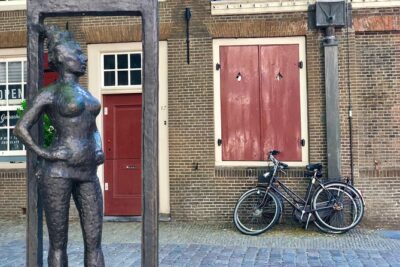
The tour ends with the Anne Frank Statue near the Anne Frank House. That final placement matters. You’re not ending in a museum doorway or a ticket line. You’re ending in the public space where Anne’s name carries forward as a reminder of what intolerance can lead to.
But here’s the key practical point: the Anne Frank House entry is not included. You’ll stand near the House, but you must purchase tickets separately on the official website. That catches some people off guard, so plan it in advance if you care about a specific time slot.
Also, the tour does not start at the Anne Frank House. So if you’re planning a full day, don’t assume you can walk to the House first and then join. You start at the Portuguese Synagogue area, and the walking route brings you back toward Anne Frank’s legacy near the end.
My advice: if the Anne Frank House is your must-see, treat this walking tour as your context builder, then book the House visit for another time. That order tends to make the House visit feel less overwhelming and more meaningful.
How the 2 hours really plays out: pace, questions, and weather
This is a 2-hour walking tour, and length matters because it limits how much you can do. That’s a good thing for this topic. You’re not trying to cover everything in one afternoon. You’re covering the high-impact places and the connective tissue between them.
Most guides running this route lean into storytelling, and the reviews I’m drawing from show a consistent theme: guides who handle heavy material with a gentle tone. People also appreciated humor as a light touch, not as a distraction. That balance helps you stay attentive, especially when you’re thinking about difficult topics.
You’ll want to be ready for rain. One guide started strong even when conditions were terrible, and others kept going even when it rained. So bring a small umbrella or a hooded rain layer if the forecast looks shaky. Comfortable shoes matter more than you think in Amsterdam, where you can hit cobbles and uneven sidewalks.
One more practical angle: meeting points can be tricky in a crowded neighborhood. The route depends on you finding that dockworker statue in the square in front of Esnoga. If you arrive early, pause, check your phone map once, and orient yourself to the statue before you wait.
If you’re the type who likes to ask questions, this tour usually supports that. Recent experiences with guides like Sunil and Stefan highlight how they were happy to answer questions and tailor the story to what the group wanted to focus on. That flexibility is one reason small-group tours can feel more personal than larger ones.
Price and value: what you get for $30
At $30 per person for a 2-hour guided walk, the value comes from two places: an expert historian and a tight route through multiple major sites. You’re not paying for a full museum pass. You’re paying for context, interpretation, and the ability to move through key locations without turning the day into a self-guided puzzle.
The tour includes an expert historian guide, and that’s the real product. The stops are meaningful on their own, but without narration the memorials can feel abstract. With a guide, you get the thread that connects synagogue life, wartime rupture, memorial symbolism, and Anne Frank’s legacy.
What is not included is important for your budget planning: food and drinks, and entry to the Anne Frank House. If you go in expecting a House ticket, you’ll feel shorted. If you treat the House as an add-on you book separately, this tour feels like a smart prelude.
Also, the tour passes by or stops near major locations. That means you can keep your day flexible. You can pair it with other Jewish Quarter sights or add museum time later depending on energy.
Who this tour suits best
- You want a guided way to understand Anne Frank and the wartime context without committing to a full-day museum schedule.
- You like walking and you want a route with logical stop-to-stop meaning.
- You prefer small-group pacing and the chance to ask questions.
- You need something wheelchair accessible, since the tour is listed as wheelchair accessible.
It may be less ideal if you want a guaranteed Anne Frank House entry as part of the price. In that case, you’ll need separate tickets anyway.
Should you book this Anne Frank small-group walking tour?
I’d book it if you want an organized, sensitive way to connect Amsterdam’s Jewish Quarter landmarks to Holocaust memory and Anne Frank’s legacy. The route is tight, the stops are high impact, and the historical narration is clearly the reason people rate it highly.
Skip it or modify your plan if your top priority is walking straight into the Anne Frank House during the same tour. This one is designed as a lead-in near the end, with the House as a separate booking decision.
If you’re deciding between doing this walk and going straight to the House ticket, I lean toward doing this first. You’ll arrive with a clearer sense of why each memorial and landmark matters, and the final statue stop will land with more weight.
FAQ
How long is the Amsterdam Anne Frank walking tour?
The tour lasts 2 hours.
What is the price per person?
The price is $30 per person.
Where do I meet the guide?
Meet in Jonas Daniël Meijerplein square, right in front of the Portuguese Synagogue (Esnoga). Look for the large dockworker statue. The meeting location address is Jonas Daniël Meijerplein 21, 1011 RG Amsterdam.
Does the tour include entry to the Anne Frank House?
No. The Anne Frank House entry is not included, and House tickets must be purchased on the official website.
What major stops are included on the route?
You’ll explore the Portuguese Synagogue from the outside, see the Daniel Libeskind Holocaust Memorial, visit the Auschwitz Memorial in Wertheimpark with broken mirrors, pass by Rembrandt’s home area (Rembrandt House Museum), and see the Zuiderkerk and the Anne Frank Statue near the Anne Frank House.
What languages is the guide available in?
The tour is listed as available in English and Spanish, and the overview also notes French.
What should I bring for the tour?
Bring comfortable shoes and weather-appropriate clothing.
Is the tour wheelchair accessible, and can I cancel?
The tour is listed as wheelchair accessible. Free cancellation is available up to 24 hours in advance for a full refund.
Everything Else From Our Amsterdam Notebook




Also Reviewed Around Amsterdam




Jewish Amsterdam: Sites and Memory



Fresh off the review pile in Amsterdam
- Full-Day Trip From Amsterdam to Keukenhof, Zaanse Schans + Cruise
★ 5.0 · 3 reviews - Boutique Dutch Food & History Tour with up to 8 guests only
★ 5.0 · 3 reviews - Private Tour to Windmills Zaanse Schans +Keukenhof – 7 Hours
★ 5.0 · 3 reviews - Full-Day Private Guided Countryside Tour from Amsterdam by Bike
★ 5.0 · 3 reviews - Amsterdam Red Light District and Old Town Walking Tour
★ 5.0 · 3 reviews
Anne Frank & Jewish Heritage, compared.
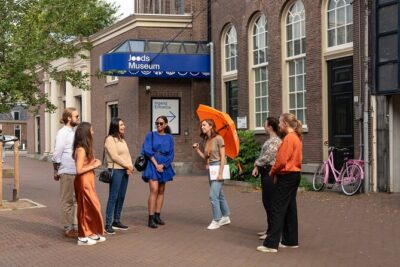 ★ 5.0Anne Frank’s Story – Guided Walking Tour through AmsterdamFrom $3911,619 reviews
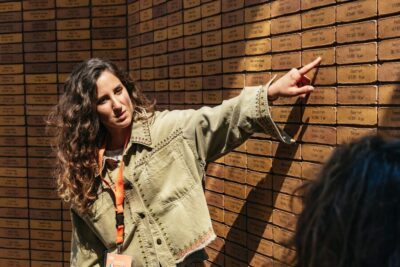 ★ 4.8Amsterdam: Life of Anne Frank and World War II Walking TourFrom $3710,467 reviews
 ★ 4.8Amsterdam: Anne Frank Guided Small Group Walking TourFrom $282,722 reviews
 ★ 4.9Amsterdam: Anne Frank Walking Tour – Guided in EN/DE/IT/ESFrom $282,676 reviews
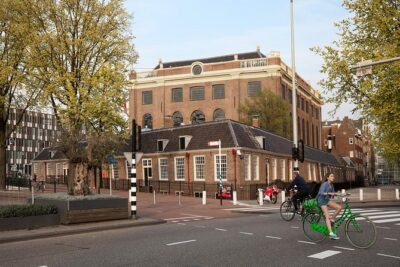 ★ 5.0Anne Frank Walking Tour Amsterdam Including Jewish Cultural QuarterFrom $751,879 reviews
 ★ 5.0Anne Frank’s Last Walk & See Anne Frank House in Virtual RealityFrom $42957 reviews
 ★ 5.0Anne Frank and Jewish Quarter Amsterdam Private Walking TourFrom $157684 reviews
 ★ 4.3Amsterdam: Canal Cruise from Anne Frank MuseumFrom $18563 reviews
Browse the lists this tour appears in