
REVIEW · AMSTERDAM
Absolutely Amsterdam – the Essential Introductory Walking Tour
Amsterdam can feel like a puzzle box. This walking tour connects the dots fast, from water and trade to tolerance and today’s tricky neighborhoods. You’ll spend about 2 hours 30 minutes on foot, hitting the UNESCO-listed core with a small group and an English guide who uses visuals and stories to make the city stick.
I like that the tour is a true first-timer primer. You get a clear storyline for why Amsterdam looks the way it does, with stops that explain canals, houses, money, religion, and policy in plain language.
One thing to keep in mind: a couple of major sights on the route are marked as not included for admission. So you’ll be best off if you treat those stops as information-rich viewpoints, not a museum binge day.
In This Review
- Key Highlights to Look For
- A 2.5 Hour Walk That Tells Amsterdam’s Story
- Where This Tour Starts by Beursplein (and Why Location Matters)
- Beurs van Berlage: The Water and Finance Origin Story
- Damrak and the Red Light District: Church, Profit, and Policy
- Ons’ Lieve Heer op Solder: Tolerance in Practice, Seen From Outside
- Chinatown Stop: Dutch Drug Policy and the Coffee Shop Effect
- The Waag: Where Rembrandt’s Early Big Work Connected Art and Power
- Oostindisch Huis: The Golden Age Trade Machine, Court Yard to Consequences
- Waterlooplein Market: WWII Survival and the Hunger Winter
- The Amstel and Canal Houses: Skinny Faces, Leaning Walls, and Open Curtains
- Oudemanhuispoort: Bikes, Bikes, and More Bikes
- Royal Palace Amsterdam: Republic to Monarchy, With a Dash of Gossip
- Tips to Make the Most of Your Guide and Your Time
- Price and Value: Why $5.93 Can Be a Smart First Day
- Should You Book This Intro Walk?
- FAQ
- How long is the Absolutely Amsterdam introductory walking tour?
- What is the meeting point for the tour?
- Where does the tour end?
- Is the tour offered in English?
- How many people are in the group?
- Are admission tickets included for the stops?
- Is tipping part of the plan?
- Is the tour wheelchair-friendly or suitable for most people?
- Can service animals join the tour?
- Can I cancel and get a refund?
Key Highlights to Look For
- A tight, 2.5 hour route that helps you get your bearings fast in the old center
- Small group size (max 15), which makes it easier to hear the guide and move at a comfortable pace
- Budget price ($5.93) with the option to tip what you feel is fair
- Big themes in small moments, like water and finance, tolerance rules in history, and how policy shapes neighborhoods
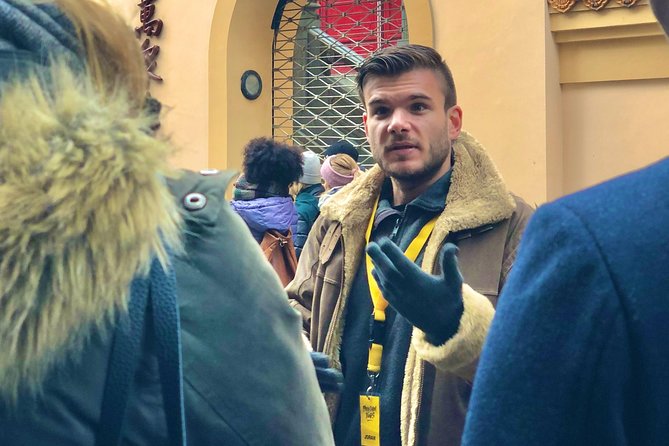
- Local-guide energy, with guides such as Gianni, Jaap, Sergio, and Raymond often praised for humor and clear explanations
- Hands-on learning tools, including maps and visual aids, plus a Rembrandt painting copy mentioned for detail
Prefer to see it on foot? More Amsterdam walks
- Anne Frank’s Story – Guided Walking Tour through Amsterdam★ 5.0 · 11,619 reviews
- Amsterdam: Life of Anne Frank and World War II Walking Tour★ 4.8 · 10,467 reviews
- Absolutely Amsterdam – the Essential Introductory Walking Tour★ 5.0 · 3,629 reviews
- Amsterdam: Anne Frank Guided Small Group Walking Tour★ 4.8 · 2,722 reviews
A 2.5 Hour Walk That Tells Amsterdam’s Story
This is the kind of tour that helps you stop sightseeing randomly and start understanding the city. In a short time, you’ll connect why Amsterdam became a trading powerhouse, why certain areas evolved the way they did, and why modern debates still echo older decisions.
The pacing is usually manageable for most people. Reviews you’ll find around this tour often point out the walk feels like a morning stroll, not a march, and that matters in a city full of bicycles.
You’ll also get a lot of context without needing to buy expensive add-ons. It’s a great format for a first day, especially if you want to return later to whatever grabs you.
Where This Tour Starts by Beursplein (and Why Location Matters)
The meeting point is Freedam Tours at Beursplein 5, in central Amsterdam. That location is smart because you’re dropped right into the thick of the city’s old power network, where the stories quickly move from geography to economics.
You’ll end back at the meeting point, so you aren’t stuck figuring out a second pickup or wandering afterward. That makes planning dinner and other activities easier, especially if you’re only in town for a few days.
Because it’s near public transportation, you can also reach the start without turning the day into a logistics puzzle. I like tours that begin and end in the same area. It keeps your energy for the sights.
Beurs van Berlage: The Water and Finance Origin Story
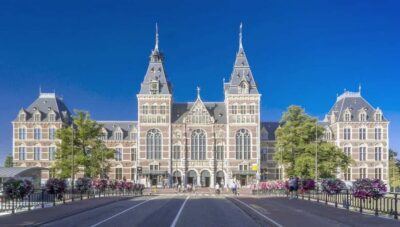
Your first stop is Beurs van Berlage, right in front of the stock and commodities exchange buildings. This is where the tour sets up a key idea: Amsterdam’s location and waterways helped shape how people traded, taxed, and invested.
A detail I like here is the mention of the Amtel river’s old path. It’s a reminder that the city you see today is the result of constant change, including how waterways were managed for commerce.
This stop is usually quick, about 20 minutes, and it works as a warm-up. You start to understand the city’s logic before you reach places that feel more chaotic or complicated.
Damrak and the Red Light District: Church, Profit, and Policy
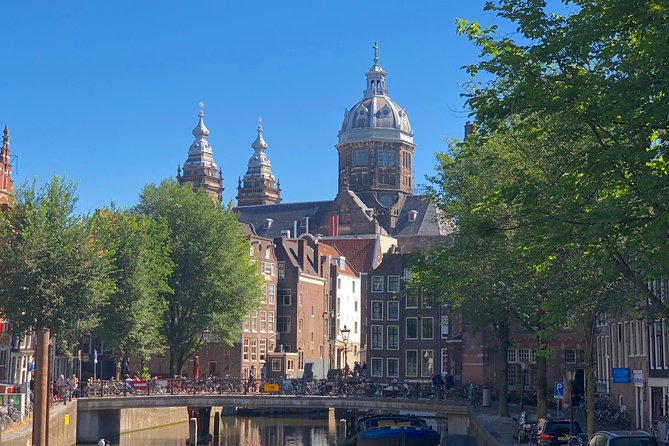
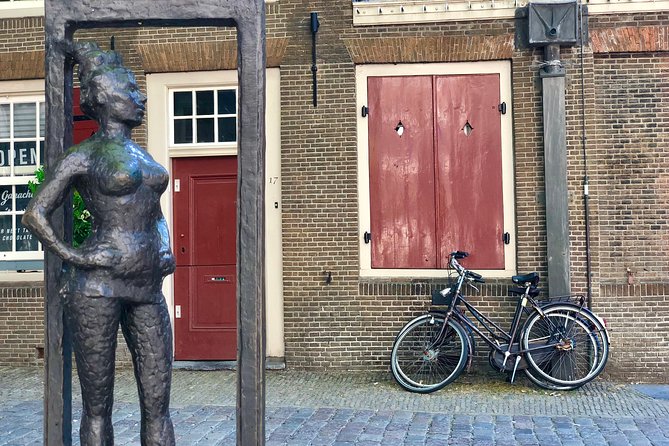
Next comes Damrak, the old harbor area where the tour tackles the origin story of the Red Light District. You’ll hear how religion played a role alongside commerce, and how the city managed the uncomfortable parts of human behavior over time.
This tour does not stay abstract. It specifically discusses the state of prostitution in the 20th and 21st centuries, including how it became treated as a legal profession and how the neighborhood has changed.
I appreciate that the guide frames the topic with context rather than shock value. That makes it easier to listen, even if you’d rather keep things light for your first day.
One consideration: this is one of the more sensitive stops on the route. If you want a purely family-friendly, all-sunshine tour, you might want to mentally prep for that.


Ons’ Lieve Heer op Solder: Tolerance in Practice, Seen From Outside
Your third stop is Our Lord in the Attic Museum, known as Ons’ Lieve Heer op Solder. The key point you’ll learn is how tolerance worked in practice after Catholicism became illegal in the 17th century, but somehow still continued under strict, peculiar conditions.
You won’t actually enter the hidden church. Instead, you’ll see the church from the outside and view pictures of the interior, and that keeps the stop from dragging or turning into a ticket line day.
I like this approach for an intro tour. You get the meaning without turning it into a full museum block, and you can decide later if you want deeper access.
Chinatown Stop: Dutch Drug Policy and the Coffee Shop Effect
Then you head to Chinatown for the tour’s conversation about Dutch drug policies. You’ll learn how the area became a “no go” in the 1970s and how that sparked the beginning of the famous coffeeshops dedicated to selling marijuana.
This is one of those topics where the city feels very modern, but the story still has historical roots. It’s also a useful reality check if you’ve heard simplified versions of Dutch policy online.
One practical thing: this stop is about 15 minutes, so it stays focused. You’ll leave with the big picture, not a rulebook.
If you’re looking for only scenic canals and tidy facades, you might find this stop more thought-provoking than picturesque. But it’s exactly the kind of Amsterdam context that makes the rest of your trip make sense.
The Waag: Where Rembrandt’s Early Big Work Connected Art and Power
At The Waag, you’ll get an art story tied to the city’s identity. The tour explains where Rembrandt painted his first major work and how that changed portrait making.
A neat detail mentioned in the tour experience is that there’s a copy of the painting used so you can see details. That kind of visual aid helps a lot when you’re standing outside an old building and trying to connect it to something you cannot physically touch.
This stop is short, around 10 minutes, and admission is marked as not included. So treat it as a story stop where you absorb context, not as an art museum visit.
Oostindisch Huis: The Golden Age Trade Machine, Court Yard to Consequences
Next is Oostindisch Huis, a 17th century courtyard and a major chapter in Amsterdam’s rise. The tour explains how Amsterdam became a center of global trading, making the city one of the richest places on the planet in the Golden Age.
The stop also hits modern economics with a direct connection: it describes this building as the headquarters of the first and biggest corporation in human history, and how that helped kickstart modern-day capitalism.
Important tone note: the tour explicitly does not ignore the darker legacy. That matters because Amsterdam’s prosperity stories can feel too neat if nobody mentions the cost.
You should also know the courtyard access note. It’s described as a stunning courtyard only accessible during week-days. If you’re there on a weekend, you might get a different viewing situation depending on access that day.
Waterlooplein Market: WWII Survival and the Hunger Winter
At Waterlooplein Market, the tour returns to a local place with global consequence. It’s described as the oldest market in Amsterdam, located in what used to be the Jewish quarter, and it was almost completely destroyed at the end of the Second World War.
The story focuses on the Nazi occupation and the disastrous consequences for Jewish populations who had once found safety here. You’ll also hear about what Amsterdammers had to do to survive the last hunger winter of the war.
This stop tends to hit with emotional weight. It’s still delivered in a tour format, but it’s a reminder that the “charming streets” layer of Amsterdam sits on top of real suffering.
If you prefer to keep the day light and funny all the way through, this is the stop that shifts the mood. For me, it’s also one of the most valuable, because it turns a place name into a human timeline.
The Amstel and Canal Houses: Skinny Faces, Leaning Walls, and Open Curtains
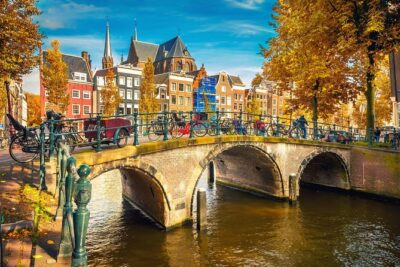
Now you reach the Amstel and the canal story that everyone thinks they know, but this tour explains details you might miss on your own. You’ll learn why Amsterdam has canals, then move to how canal houses are shaped.
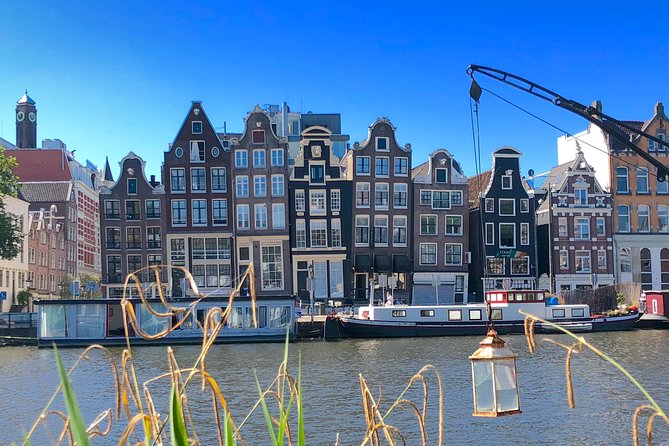
Expect talk about why the houses look skinny, why some facades lean, and what the famous hook on houses relates to. There’s also a fun cultural observation: why Dutch people keep their curtains open at all times.
This is where you start seeing the city’s design choices as practical solutions. It’s not just aesthetics. It’s climate, space, storage, and how people lived and worked.
Weather can affect this segment, since the guide may shift you to another canal depending on conditions. If it’s windy or rainy, you’ll still get the core explanation.
Oudemanhuispoort: Bikes, Bikes, and More Bikes
At Oudemanhuispoort, you’ll stand in a former monastery that became a hospital and is now part of the University of Amsterdam. The tour connects this place to a bigger theme you’ll notice everywhere: Dutch bike culture.
The key bike lesson is simple but fun. You’ll hear why there are more bikes than people, and you’ll be invited to notice how many bikes look, in the tour’s playful wording, a bit ugly.
I like this stop because it’s practical. Once you learn the logic behind Amsterdam’s cycling culture, you stop treating bike traffic as random danger and start reading it as routine city behavior.
Admission is not listed here, so you’ll focus on the outside setting and the story being told around it. It keeps your day flowing.
Royal Palace Amsterdam: Republic to Monarchy, With a Dash of Gossip
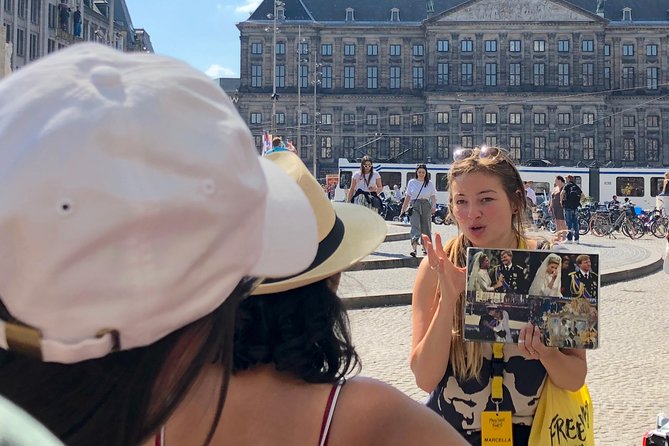
The last major stop is the Royal Palace Amsterdam, where the tour explains the peculiar history of the building and the transition from a republic to a monarchy. You’ll also learn about the current royal family, using pictures, and the guide shares some light royal gossip style commentary.
This is about getting up to speed quickly on what the monarchy means in the current Dutch setup. It’s short, around 15 minutes, and admission is not included.
You’ll also end on Dam Square, which is a convenient place to continue your day. It’s a hub for walking onward, grabbing food, and planning your next museum or canal cruise.
Tips to Make the Most of Your Guide and Your Time
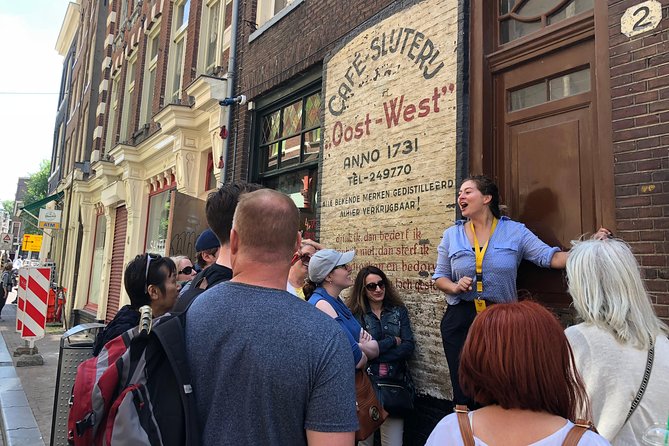
A small group, maximum 15 travelers, is a big deal here. It keeps the walk from feeling like a moving crowd, and it also makes Q and A easier when you’re curious about something the guide mentions.
Comfy shoes matter. Multiple guides, including names like Jaap, Sergio, Raymond, and David (as examples of commonly praised leaders), are noted for making the tour engaging while still keeping the pace comfortable. You’ll still cover enough ground that good footwear is not optional.
This tour also uses visual aids. That can include maps and at least one painting reference, and those tools help you anchor the stories to what you’re seeing.
If you catch a guide who adds a small local food moment, you might even get a treat like the waffle someone specifically called out. Don’t assume it will happen every time, but it’s a sign that guides sometimes add small welcome touches.
Price and Value: Why $5.93 Can Be a Smart First Day
At $5.93 per person, this is one of the lowest-priced ways to cover a wide slice of central Amsterdam. The real value is not the cost alone. It’s what you get for that money: a connected framework for the city.
This is also described as a tip-friendly format. That means you control how much you value the guide’s work, which is fair. I like tours that give you that flexibility rather than forcing a fixed add-on fee.
About tickets: several stops are flagged as admission not included. That doesn’t ruin the tour, because the guide still gives you the meaning at each site, using outside viewing and visuals where needed. It does mean you should plan to come back later if you want formal museum entry.
So think of this as an orientation tour. You’ll learn where to focus your next day, not replace your future museum tickets with one inexpensive afternoon.
Should You Book This Intro Walk?
Yes, I’d book this if you want Amsterdam context without overpaying. It’s especially good as a first day or first half-day option because it gives you themes you can reuse while you wander on your own.
You should also book it if you prefer guided stories delivered in a relaxed walking pace. The guide quality seems to vary, but many leaders on this route are praised for humor, clarity, and strong local perspective, with names like Gianni, Jaap, Sergio, and Raymond appearing again and again.
Skip it only if you want a totally museum-only program. Admission is not included for key spots like the attic church interior, The Waag, and the Royal Palace, so this won’t satisfy you if you expected ticketed entry everywhere.
FAQ
How long is the Absolutely Amsterdam introductory walking tour?
It’s about 2 hours 30 minutes.
What is the meeting point for the tour?
The tour meets at Freedam Tours, Beursplein 5, 1012 GZ Amsterdam, Netherlands.
Where does the tour end?
The tour ends back at the meeting point.
Is the tour offered in English?
Yes, it is offered in English.
How many people are in the group?
The tour has a maximum of 15 travelers.
Are admission tickets included for the stops?
Some stops include free entry, while others are marked as admission ticket not included. The tour also notes that it does not enter the hidden church at Ons’ Lieve Heer op Solder.
Is tipping part of the plan?
The tour is described as tip-friendly, letting you tip as much as you’d like.
Is the tour wheelchair-friendly or suitable for most people?
Most travelers can participate.
Can service animals join the tour?
Yes, service animals are allowed.
Can I cancel and get a refund?
Yes. Cancellation is free if you cancel up to 24 hours in advance for a full refund. If you cancel less than 24 hours before the start time, the amount paid will not be refunded.
Amsterdam at Walking Speed




Everything Else From Our Amsterdam Notebook


Also Reviewed Around Amsterdam
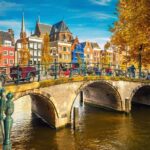




Fresh off the review pile in Amsterdam
- Full-Day Trip From Amsterdam to Keukenhof, Zaanse Schans + Cruise
★ 5.0 · 3 reviews - Boutique Dutch Food & History Tour with up to 8 guests only
★ 5.0 · 3 reviews - Private Tour to Windmills Zaanse Schans +Keukenhof – 7 Hours
★ 5.0 · 3 reviews - Full-Day Private Guided Countryside Tour from Amsterdam by Bike
★ 5.0 · 3 reviews - Amsterdam Red Light District and Old Town Walking Tour
★ 5.0 · 3 reviews
Walking Tours, compared.
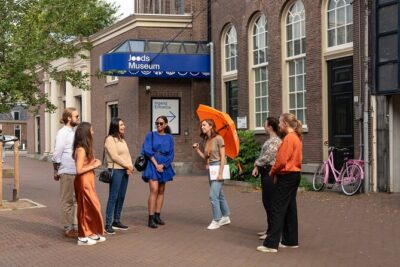 ★ 5.0Anne Frank’s Story – Guided Walking Tour through AmsterdamFrom $3911,619 reviews
 ★ 4.8Amsterdam: Life of Anne Frank and World War II Walking TourFrom $3710,467 reviews
 ★ 4.8Amsterdam: Anne Frank Guided Small Group Walking TourFrom $282,722 reviews
 ★ 4.9Amsterdam: Anne Frank Walking Tour – Guided in EN/DE/IT/ESFrom $282,676 reviews
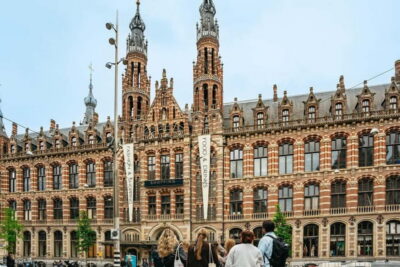 ★ 4.9Amsterdam: Guided Cultural Walking TourFrom $292,384 reviews
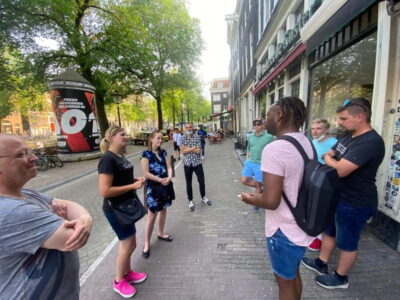 ★ 4.2Amsterdam: Guided Ganja Walking Tour of Coffee ShopsFrom $272,092 reviews
 ★ 5.0Anne Frank Walking Tour Amsterdam Including Jewish Cultural QuarterFrom $751,879 reviews
 ★ 5.0Amsterdam Highlights Walking Tour: Small Group ExperienceFrom $361,132 reviews
Browse the lists this tour appears in