
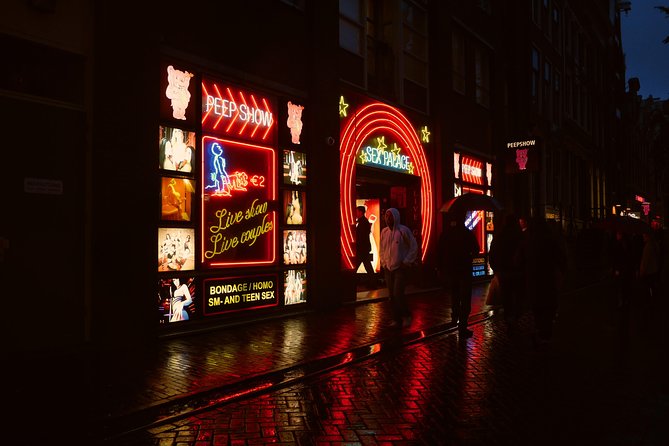
REVIEW · AMSTERDAM
Amsterdam: Guided Red Light District and City Walking Tour
Street lamps and history in one walk. This Amsterdam experience pairs a Red Light District guided stroll with city details most people miss, from the Dam area’s old wooden-pole building story to older streets in the Old Town zone. I like that it stays focused on culture and the area’s current reality, not just street sights.
Two things I especially like are the mix of landmarks on foot and the human scale. You’re looking at recognizable spots like the Waag, plus smaller standouts like Pub The Ape (Int Aepjen) and the smallest house, all in one compact loop. The small group size also helps you ask questions without feeling like you’re being rushed.
One consideration: the subject matter can feel edgy for some people, and it’s not recommended for limited mobility. Also, as with any group tour, the guide matters, and one unhappy account mentioned rude behavior, so I’d keep an eye on how things feel from the start and speak up if something is off.
In This Review
- Quick take: what makes this tour worth your time
- Getting Oriented Fast in the Amsterdam Red Light District
- Meeting at Geldersekade 2, and Why the Timing Matters
- The Dam Stop, Amsterdam’s Wooden-Pole Foundation Story
- Pub The Ape (Int Aepjen): Surviving Wooden Buildings After the 1452 Fire
- The Waag: A 1400s City Gate Turned Guild Hub
- The Smallest House: VOC Storage to Long-Term Living
- Condomerie Since 1987: A Modern Detour With a Straight Story
- Why the Stops Matter: Culture, Rules, and Street-Level Context
- Group Size, Guides, and What the Reviews Suggest About Quality
- What You Should Wear and Bring for a 2-Hour Night-or-Day Walk
- Price and Value: Is $35.44 Worth It?
- Who This Tour Fits Best
- Should You Book This Amsterdam Red Light District Walking Tour?
- FAQ
- How long is the Amsterdam Red Light District and city walking tour?
- What is the price per person?
- What language is the tour offered in?
- Where is the meeting point?
- How many people are in the group?
- Is the tour wheelchair or mobility friendly?
- Are service animals allowed?
- What is included in the tour price?
- Is food or drinks included?
- What is the cancellation policy?
Quick take: what makes this tour worth your time
- Small group (max 15) so you can actually ask questions as you walk.
- English-speaking guide with local perspective.
- Old Town stops tied to Amsterdam’s building history and the area’s development.
- Very specific landmarks like Pub The Ape (built around 1540) and the Waag (from the 1400s).
- A modern detour at Condomerie, in business since 1987.
- Ends where you start near Geldersekade 2 for an easy finish.
Other guided walks through this part of Amsterdam, for adults
- Amsterdam: Red Light Secrets Museum Entry Ticket★ 4.2 · 5,722 reviews
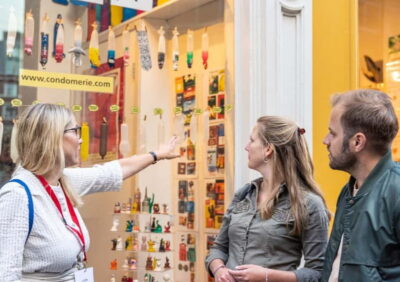
- Amsterdam: Red Light District Tour in German/English/Italian★ 4.9 · 5,623 reviews
- Amsterdam Red Light District & Coffee Shop Tour★ 4.6 · 4,134 reviews
- Amsterdam: Red Light District Pub Crawl with Unlimited Shots★ 4.1 · 2,130 reviews
Getting Oriented Fast in the Amsterdam Red Light District
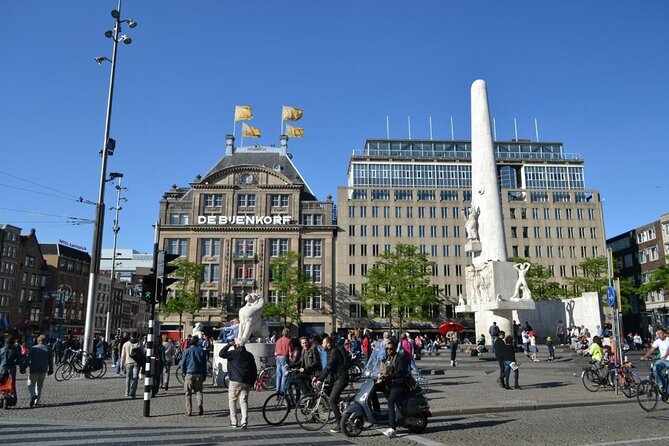
If you only walk the Red Light District on your own, it can feel like a blur of signage, bars, and flashing windows. This tour gives you structure, so you know what you’re looking at and why it exists where it does. It’s also designed as a city-walking experience, so you’re moving through narrow streets, not stuck at one photo spot.
I like that the guide doesn’t treat the area like a movie set. Instead, you get context about the history and the current situation, which helps you read the street like a local rather than just a spectator. That shift changes everything about how you feel in the neighborhood.
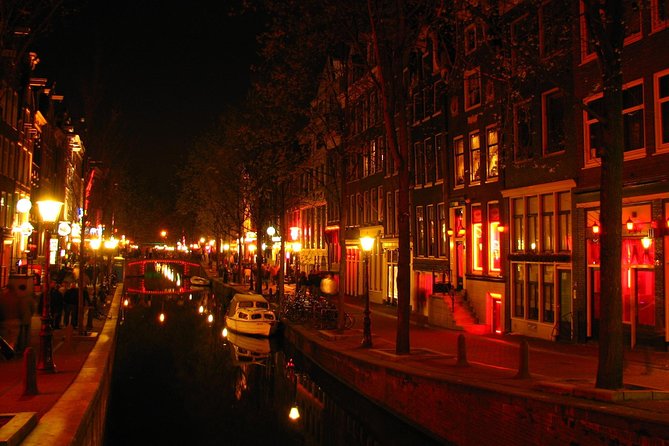
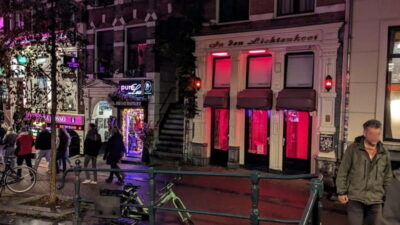
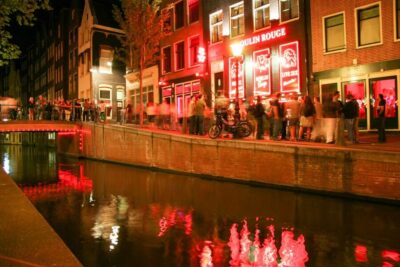
You also have multiple start times to match your day. If you time it for later in the evening, the walk can come with a noticeably different mood as lights reflect off the canals and bridges.
Meeting at Geldersekade 2, and Why the Timing Matters
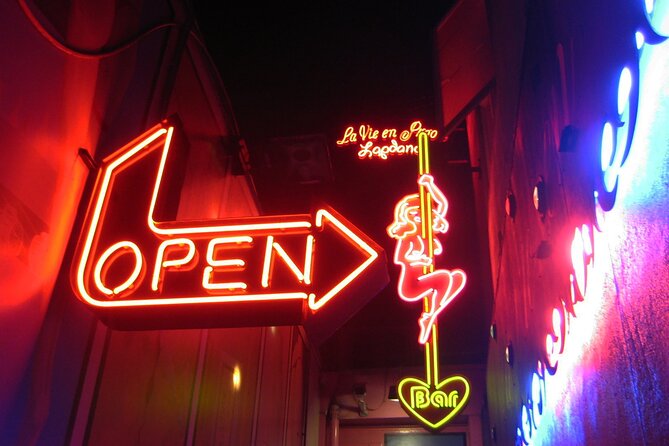
You meet at Geldersekade 2, 1012 BH Amsterdam. It’s a practical starting point because it sits close to public transport, so you’re not forced into a long pre-walk just to begin.
This is about two hours on foot, and it’s capped at 15 people. That matters because the Red Light District is easiest when the group can stay tight and you’re not waiting around at every corner.
A small but useful point: the tour uses a mobile ticket, which makes check-in simpler if you like to travel light. You’ll finish back at the meeting point too, which is handy if you’re lining up dinner or a canal cruise afterward.
The Dam Stop, Amsterdam’s Wooden-Pole Foundation Story
One of the first things you learn is why Amsterdam looks the way it does. The Dam area ties into the city’s famous building method, because Amsterdam’s soil sits on thick layers of fen and clay. Many buildings were constructed on wooden poles driven deep until they reached a more solid sand layer, roughly 11 meters down.
That sounds technical, but it becomes a real street-level lesson. When you walk through older neighborhoods, you start to notice how engineering shaped everyday life, not just museums or canal postcards. It’s a quick way to get your bearings in Amsterdam’s older core.
There’s also a “why this area matters” angle early on. The tour places you in the Old Town zone connected to the Red Light District area, which helps explain why the streets feel layered with time.
Pub The Ape (Int Aepjen): Surviving Wooden Buildings After the 1452 Fire
Next up is Pub The Ape, known in Dutch as Int Aepjen. The tour frames it as a rare survivor: built around 1540 and one of only two remaining wooden buildings in Amsterdam.
That already makes the stop interesting, but what made me think longer was the context around the 1452 fire. After that big fire, the government pushed for brick facades, and wooden building became far less common. So when you stand in front of Pub The Ape, you’re not just seeing a pub, you’re seeing how a city changed its building rules after disaster.
Even if you’re not planning to drink, this stop works because it shows how history sticks to the street. It also gives the walking tour a “pause and look” moment that’s different from the windows and signs you may expect.
Prefer to see it on foot? More Amsterdam walks


The Waag: A 1400s City Gate Turned Guild Hub
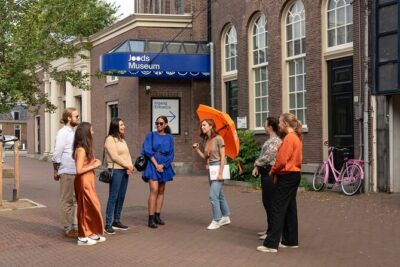
The Waag is one of those buildings you can spot and feel like you should understand. Built around the 1400s, it originally served as a city gate and part of Amsterdam’s defensive wall. Later, it became a space for guilds and craftspeople’s organizations, with craftsman groups situated inside and around the square.
This stop is valuable because it connects architecture with how the city worked. You’re learning that Amsterdam wasn’t only trading ships and canals, it also had regulated professional life, with craft communities centered in specific places.
The tour also positions the Waag as the second oldest building of Amsterdam. You don’t need to memorize dates, but knowing it’s that old helps you look at the building details with more respect.
The Smallest House: VOC Storage to Long-Term Living
Another memorable detour is the smallest house of Amsterdam, built around the 1700s. The story you get is that it first functioned as storage for the VOC trading company. Over time, people started living in it for a long time.
This is the kind of stop that keeps the tour from feeling like a single-theme walk. The Red Light District conversation can dominate your expectations, but this “small house” story reminds you that Amsterdam life historically included tight spaces, reused buildings, and long, practical relationships with what existed already.
It also gives you a human scale to balance the bigger city planning stories. After hearing about 11 meters of foundation poles and a 1400s gate, you end up thinking about how ordinary people lived in whatever space they could get.
Condomerie Since 1987: A Modern Detour With a Straight Story
Yes, you’ll make a stop at Condomerie, described as the world’s first condom shop. It has been in this location since 1987, and the tour notes that you can even get size customized condoms and special options.
I appreciate how this stop grounds the neighborhood in the present. The Red Light District is often treated like a relic, but places like this show how Amsterdam’s commerce and services evolved right inside the same streets.
This is also a moment where you can keep your comfort level in mind. If you want to keep things strictly cultural and historical, you can treat it as a quick landmark read. If you’re curious about how modern businesses operate in the district, it gives you a clear, matter-of-fact example.
Why the Stops Matter: Culture, Rules, and Street-Level Context
What you’re really paying for is not just walking through a famous neighborhood. You’re getting the “how this place works” thread running through multiple stops: older buildings, older city functions, and then the district’s current reality.
That context is especially useful if you’ve heard mixed opinions about the Red Light District. With the tour, you’re not forced to guess. You get the sense of why the area developed, how it’s situated inside Amsterdam’s older city fabric, and how laws and culture shape what you see on the street.
The best guided tours do one more thing: they teach you how to look without staring. You’ll spend less time trying to understand what’s happening and more time understanding how Amsterdam has organized, regulated, and repurposed parts of the city over centuries.
Group Size, Guides, and What the Reviews Suggest About Quality
This experience runs with a maximum of 15 people, which is a sweet spot for a sensitive, fast-moving area. It’s not too big for the guide to manage, and it’s not so small that you feel like you’re on display in a private setting.
The guide quality shows up in the praise you’ll see attached to names like Ben, Ari, Pedro, Angel, Max, David, Aaron, and Capt Dan. The common thread is clear storytelling, lots of Q and A, and humor that keeps the tone from becoming heavy.
One downside is that, even with licensed guidance, personalities vary. One low rating described a guide as rude and uncomfortable, so I’d treat this like any group activity: if the tone feels wrong to you, address it right away with the operator so they can help.
If you’re booking for the history and the city context, choose a time when you can arrive relaxed. That helps you get the most from the guide’s explanations instead of rushing your own emotional comfort.
What You Should Wear and Bring for a 2-Hour Night-or-Day Walk
The tour is a walking format, so wear shoes you trust. Expect narrow streets and frequent turns, plus the kind of Amsterdam weather where rain can shift your plans fast.
If you can, bring a light rain layer. One guide experience was praised specifically for staying engaging even in rain, so the tour style is built to keep moving even when conditions aren’t perfect.
Also, keep your phone charged. You may want to check maps later, since the tour ends back at the meeting point.
Price and Value: Is $35.44 Worth It?
At $35.44 per person for about two hours, the value comes from the structure. You’re paying for a licensed guide and a local guide, which is more than just someone reading directions while you walk.
You’re also not paying for food or drinks during the tour, and the stops are described with admission not required for those listed segments. That means you can control what you spend while still getting guided access to multiple points of interest in a tight time window.
For people who want to see Amsterdam properly, a guided walk here is a useful shortcut. You reduce guesswork, you learn the street logic, and you leave with a clearer map of what that district is and isn’t.
Who This Tour Fits Best
This is a strong choice if you want:
- A Red Light District walking tour that includes city history and architecture, not just the most obvious street sights.
- An English guide and small-group pace.
- A short plan you can fit around dinner or other Amsterdam highlights.
It’s less ideal if:
- You have limited mobility, since it’s explicitly not recommended for that.
- You prefer a totally hands-off, low-sensitivity tour. The district can trigger strong feelings, and the guide will be discussing the area’s current reality and history.
Should You Book This Amsterdam Red Light District Walking Tour?
I’d book it if you want context, architecture, and street-level history in one compact walk. The mix of Dam-area building logic, Pub The Ape’s surviving wooden structure, the Waag’s older city-gate story, and the Condomerie modern angle gives you a fuller picture of Amsterdam than a single-theme stroll.
I would not book it if you need high accessibility, or if you know the topic will stress you out. And if you’re someone who gets bothered by sharp group dynamics, arrive early, watch how the guide sets the tone, and flag issues quickly.
If you choose the right start time and show up ready to listen, this is one of the more practical ways to understand the Red Light District as part of Amsterdam’s real streets, not just its reputation.
FAQ
How long is the Amsterdam Red Light District and city walking tour?
The tour is about 2 hours.
What is the price per person?
The price is $35.44 per person.
What language is the tour offered in?
The tour is offered in English.
Where is the meeting point?
The meeting point is Geldersekade 2, 1012 BH Amsterdam, Netherlands.
How many people are in the group?
The tour has a maximum of 15 travelers.
Is the tour wheelchair or mobility friendly?
It is not recommended for travelers with limited mobility.
Are service animals allowed?
Yes, service animals are allowed.
What is included in the tour price?
It includes a licensed guide and a local guide.
Is food or drinks included?
No, food and drinks are not included.
What is the cancellation policy?
Free cancellation is available up to 24 hours in advance for a full refund.
Everything Else From Our Amsterdam Notebook




Also Reviewed Around Amsterdam





The Adult Side of Amsterdam, Explained




Fresh off the review pile in Amsterdam
- Full-Day Trip From Amsterdam to Keukenhof, Zaanse Schans + Cruise
★ 5.0 · 3 reviews - Boutique Dutch Food & History Tour with up to 8 guests only
★ 5.0 · 3 reviews - Private Tour to Windmills Zaanse Schans +Keukenhof – 7 Hours
★ 5.0 · 3 reviews - Full-Day Private Guided Countryside Tour from Amsterdam by Bike
★ 5.0 · 3 reviews - Amsterdam Red Light District and Old Town Walking Tour
★ 5.0 · 3 reviews
Red Light District & Coffeeshops, compared.
 ★ 4.2Amsterdam: Red Light Secrets Museum Entry TicketFrom $175,722 reviews
 ★ 4.9Amsterdam: Red Light District Tour in German/English/ItalianFrom $285,623 reviews
 ★ 4.6Amsterdam Red Light District & Coffee Shop TourFrom $294,134 reviews
 ★ 4.1Amsterdam: Red Light District Pub Crawl with Unlimited ShotsFrom $242,130 reviews
 ★ 4.5Amsterdam Red Light District Pub CrawlFrom $241,497 reviews
 ★ 4.2Amsterdam: Cannabis Museum Entry TicketFrom $141,244 reviews
 ★ 4.5Amsterdam: Red Light District TourFrom $331,135 reviews
 ★ 4.1Amsterdam: After Dark Red Light District TourFrom $571,030 reviews
Browse the lists this tour appears in