
REVIEW · AMSTERDAM
Amsterdam: Houseboat Museum Entry Ticket
Step aboard a museum boat in Amsterdam. You get to tour the Hendrika Maria, a 1914 cargo ship turned houseboat in 1967, and see how that “working” life turned into “home.”
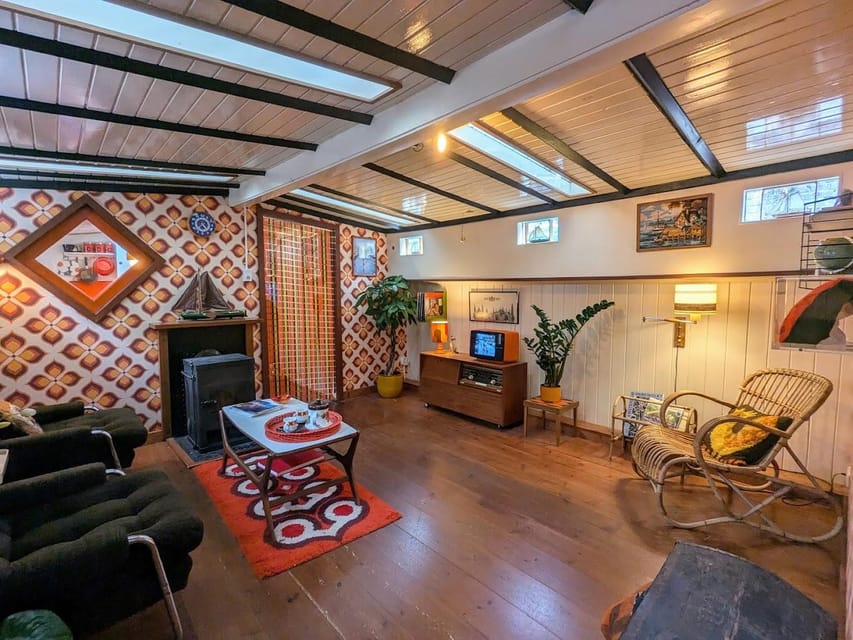
I love the 1970s-style interior that stays true to how it started being used as a real residence, including the unmistakable orange, yellow, and brown look. I also like the interactive storytelling, with explanations about how a family of four lived on board when it was still a freight barge.
One drawback to plan for: this is a real houseboat, so limited space and steep stairs may make the visit feel tight or slow, and it can seem short if you expect a big museum experience.
In This Review
- Key points before you board the Hendrika Maria
- Meet the Hendrika Maria, a 1914 freight ship turned home
- The 1970s interior look you can’t ignore once you’re inside
- How life for a family of four comes through on a compact boat
- Sailing details, mast basics, and why the leeboard matters
- Space, stairs, and the rules that affect your comfort
- Ticket value around $12: when this feels like a win
- How long does it take, and how to plan your timing
- Languages and how the host experience shapes the visit
- Who should book this Amsterdam houseboat museum ticket
- Should you book the Amsterdam Houseboat Museum entry ticket?
- FAQ
- What is included with the Houseboat Museum entry ticket?
- Where is the museum located?
- How long does the experience take?
- Is food or drinks included?
- Is hotel pickup or drop-off included?
- What boat do you visit?
- Is flash photography allowed inside the museum?
- Is the houseboat suitable for everyone?
- What languages are available?
- How much does the ticket cost?
- Is free cancellation available?
Key points before you board the Hendrika Maria
- A real ship turned houseboat in 1967: You’re walking through a converted cargo vessel, not a recreated set.
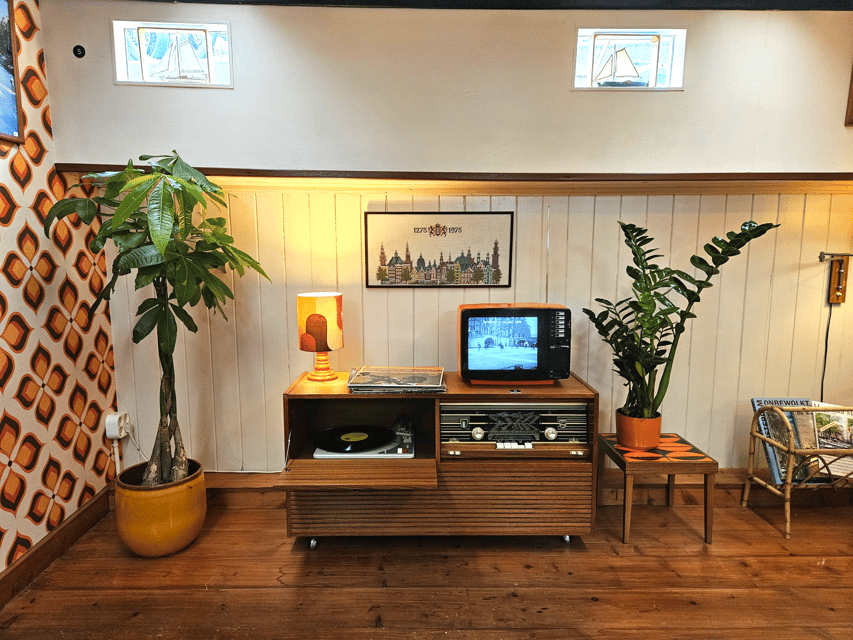
- Original 1970s interior feel: The decor and layout reflect the time when it became a regular home.
- Look for sailing details: An original mast and leeboard help you understand how it once moved on work trips, including routes to Scandinavia.
- Family-of-four living setup: You learn how daily life worked for a small household on a compact boat.
- Short visit, depending on your pace: You can move fast, but if you follow the audio-style guidance, you’ll likely spend closer to 15 to 20 minutes.
Other Amsterdam entries you can hold on your phone
- Amsterdam: Heineken Experience Ticket★ 4.6 · 30,055 reviews
- Amsterdam: Rijksmuseum Entry Ticket★ 4.7 · 25,535 reviews
- Amsterdam: Icebar Entry Ticket with 3 Drinks★ 4.2 · 14,562 reviews
- Amsterdam: Keukenhof Ticket and Roundtrip Shuttle Transfer★ 4.7 · 11,799 reviews
Meet the Hendrika Maria, a 1914 freight ship turned home
Amsterdam is full of canal stories, but this one is hands-on in a rare way. The Houseboat Museum lets you step into the Hendrika Maria, originally built as a 1914 cargo ship. At some point, it shifted roles, and in 1967 it was converted into a residential houseboat.
That change is the heart of the visit. You’re not just looking at photos and reading plaques. You’re moving through the spaces and getting a sense of scale, weight, and practicality. Old boats were built to do work, carry goods, and survive the realities of weather. When you see the interior right after climbing aboard, you understand why turning a cargo vessel into a home would require compromises, clever storage, and a willingness to live “small.”
The museum also leans into the idea that this type of living can stretch far beyond one decade. The experience highlights that houseboat residents have lived on historical boats for more than 100 years, which makes the whole thing feel less like a curiosity and more like a real lifestyle thread tied to the canals.
The 1970s interior look you can’t ignore once you’re inside
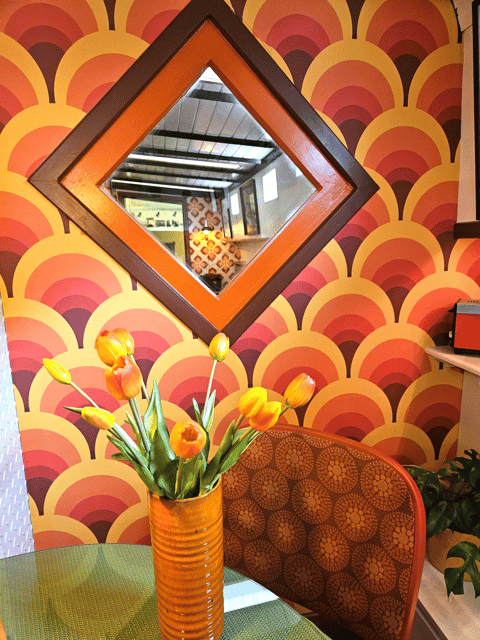
What surprises most people is how specific the design feels. The boat’s interior reflects the period when it started being used as a regular house, described as original from the 1970s. That means the color palette is part of the story: expect lots of orange, yellow, and brown.
I like this approach because it avoids museum perfection. A lot of “heritage” places try to look timeless. Here, you get a period snapshot. You see what people considered comfortable, practical, and normal at the time. Even if you’re not a design person, you’ll likely notice how the layout supports everyday life on a boat, where space is limited and everything has to earn its keep.
And yes, the size matters. One way people describe the visit is as a tour through about 80 square meters. That gives you a good mental model: you’re not getting lost in endless galleries. Instead, you’re getting a focused, tactile walkthrough where every corner feels connected to the boat’s working past.
Tip: if you’re the type who likes to read every label slowly, plan a little extra time. If you skim, you’ll still get the story quickly. Either way, you’ll walk out feeling like you actually toured a home.
How life for a family of four comes through on a compact boat
The museum makes the past concrete by centering on the human scale of daily life. You’ll learn about how a family of four used the ship, not as a floating showroom, but as a real place to live.
At the same time, the museum connects that home life to the boat’s earlier role. The ship was once used as a freight barge, so the idea is: living routines adapted to a working vessel. That includes the physical reality of what a cargo ship is like, and what it means to live with the boat’s structure around you.
One of the most valuable parts of this kind of museum is the comparison it invites. Houseboats today are often marketed as lifestyle upgrades. Here, you get more of the “constraints and choices” angle. The museum helps you see how people made it work long-term, with practical solutions shaped by the boat itself.
In a small space, routines become visible. You start to understand why storage, navigation needs, and movement patterns would matter. Even without technical detail, the boat’s layout tells you the story: you’re living on a working machine that was later repurposed.
Sailing details, mast basics, and why the leeboard matters
This isn’t just a look-inside experience. The museum points out functional features that connect you back to how the vessel likely moved when it was doing transportation work, including trips to Scandinavia.
Two items get special attention: an original sailing mast and a leeboard. These aren’t decorative. A mast and leeboard are practical sailing equipment, and the presence of the original gear makes the boat’s past feel real rather than abstract.
Here’s why you might care. When you learn what these parts did, you understand that a freight ship was built to be usable, not just pretty. The leeboard especially signals how crews handled sail control and stability under real conditions. So when you’re inside, it’s useful to glance outward and imagine how the boat worked as it moved from point to point.
If you’re the kind of person who likes “how things function,” this is the part you’ll probably enjoy most. Even if you don’t know sailing terms, you’ll leave with a better sense of the everyday engineering behind old travel routes.
Other collections in Amsterdam worth an afternoon

Space, stairs, and the rules that affect your comfort
This is a museum inside a real houseboat, so you should go in with the right expectations. The biggest comfort factor is simple: space may be limited, and the boat has steep stairs.
That affects more than just mobility. Steep stairs and narrow passages change your pace. You’ll likely be moving slowly, turning carefully, and pausing to take in the interior. If you’re traveling with someone who has trouble with stairs, this is the one part you should take seriously.
Photography is allowed, but flash photography is not permitted inside. So plan on normal light shooting, and avoid bringing a flash unit that you’ll forget you can’t use.
Practical tip: wear shoes you’re comfortable wearing on stairs and hard floors. Also consider bringing your phone battery charger if you’re the type who takes lots of photos. This is a compact tour, so your photos will take up a larger share of your time.
Ticket value around $12: when this feels like a win
At about $12 per person, you’re buying a ticket to a very focused experience. That price works best when you want something different from the big, hours-long museum format.
Here’s how to judge the value for yourself. If you expect a long, multi-room museum with lots of changing exhibits, you might feel disappointed. The space is small by design, and people can complete the visit quickly depending on how they tour.
But if you want something authentic and you’re interested in homes-in-motion, this ticket is a bargain. You’re paying for access to a historic vessel that you can physically enter, plus an interactive explanation of how the boat changed and how people lived on it. For many visitors, the value is about direct experience, not duration.
I also think the price is fair because the museum’s “content density” is high. In a short time, you learn about:
- the ship’s cargo-life origins,
- the 1967 conversion into a home,
- the 1970s interior you can still see,
- and the sailing features like the mast and leeboard.
If you’re pairing this with other canal area stops, it becomes an easy add-on. You get a different angle on Amsterdam life without burning half a day.
How long does it take, and how to plan your timing
The activity is listed as 1 day, and you’ll have a starting time based on availability. In real life, this kind of houseboat museum usually doesn’t turn into a long wandering session.
In practice, the visit tends to fall into a short window. Some visitors describe it as very quick if they scan and move briskly. Others describe a more relaxed pace around 15 to 20 minutes, especially if you follow the guidance style they provide while you tour.
So how should you plan? I’d treat it like a focused stop:
- If you’re doing a tight itinerary, schedule it as a connector between other canal sights.
- If you like to slow down and take photos, build in a little breathing room so you can handle stairs comfortably.
Since the museum is on a boat and the interior is compact, crowd timing can matter. A quieter period makes the experience smoother because you can move at your own pace through tight sections.
Languages and how the host experience shapes the visit
The entry experience is offered with English, French, Traditional Chinese, German, Spanish, Portuguese, Italian, and Dutch. That matters because the museum is interactive, and you’ll want to catch details about how the boat was used.
If you don’t speak Dutch, don’t worry. The range of available languages makes it easy to follow the explanation.
The host or greeter role is also important. Even in a short museum visit, guidance helps you notice details you would otherwise miss, like the sailing gear and the connections between the freight past and the home life.
Who should book this Amsterdam houseboat museum ticket
This is a strong fit for:
- people who like practical, real-world history over big written displays,
- visitors interested in how everyday life works in small spaces,
- anyone who wants a hands-on Amsterdam canal story without a half-day commitment.
It’s not as good for:
- travelers who strongly dislike stairs or tight interiors,
- people who need lots of space to linger for long photo sessions,
- anyone hoping for a huge variety of rooms and exhibits.
If you’re traveling with kids, it can still be fun, but be ready for the physical reality of the boat. The museum’s focus is on life aboard, so curiosity helps more than patience for long stops.
Should you book the Amsterdam Houseboat Museum entry ticket?
I’d book this ticket if you want a compact, authentic “enter and understand” experience. For the money, you get access to a real historic vessel, plus an explanation that connects boat design, sailing practicality, and family life on board.
Skip it if you’re chasing a long museum outing with lots of rooms and time-killing exhibits. This place is intentionally small and focused, and the stairs and limited space are part of what makes it authentic.
If you’re in Amsterdam and you like canal stories with a physical, human angle, this ticket is an easy yes.
FAQ
What is included with the Houseboat Museum entry ticket?
The ticket includes entrance to the Houseboat Museum.
Where is the museum located?
It is in Amsterdam, North Holland, Netherlands.
How long does the experience take?
The experience is listed as lasting 1 day, with specific starting times depending on availability. The actual visit through the houseboat is typically short.
Is food or drinks included?
No, food and drinks are not included.
Is hotel pickup or drop-off included?
No, hotel pickup and drop-off are not included.
What boat do you visit?
You visit the Hendrika Maria, a cargo ship built in 1914 and converted into a residential houseboat in 1967.
Is flash photography allowed inside the museum?
Photography is allowed, but flash photography is not permitted inside.
Is the houseboat suitable for everyone?
The museum is inside a real houseboat, so space may be limited, and there are steep stairs that may not be suitable for everyone.
What languages are available?
English, French, Traditional Chinese, German, Spanish, Portuguese, Italian, and Dutch.
How much does the ticket cost?
The price is listed as $12 per person.
Is free cancellation available?
Yes, free cancellation is offered up to 24 hours in advance for a full refund.
Dutch Collections Worth a Slow Afternoon





Entries for Your Phone




Also Reviewed Around Amsterdam



Fresh off the review pile in Amsterdam
- Full-Day Trip From Amsterdam to Keukenhof, Zaanse Schans + Cruise
★ 5.0 · 3 reviews - Boutique Dutch Food & History Tour with up to 8 guests only
★ 5.0 · 3 reviews - Private Tour to Windmills Zaanse Schans +Keukenhof – 7 Hours
★ 5.0 · 3 reviews - Full-Day Private Guided Countryside Tour from Amsterdam by Bike
★ 5.0 · 3 reviews - Amsterdam Red Light District and Old Town Walking Tour
★ 5.0 · 3 reviews
Museums, compared.
 ★ 4.7Amsterdam: Van Gogh Museum TicketFrom $3252,054 reviews
 ★ 4.4Moco Museum Amsterdam Entrance Tickets with Banksy & MoreFrom $1810,088 reviews
 ★ 4.4Amsterdam: The Upside Down Museum Entrance TicketFrom $249,506 reviews
 ★ 4.2Amsterdam: Red Light Secrets Museum Entry TicketFrom $175,722 reviews
 ★ 4.5Amsterdam’s Weirdest Museum: Believe It or Not!From $264,086 reviews
 ★ 4.6Amsterdam: Van Gogh Museum Ticket and City Canal CruiseFrom $473,899 reviews
 ★ 4.7Amsterdam: Rembrandt House Museum Entrance TicketFrom $233,385 reviews
 ★ 4.5Amsterdam: Van Gogh Museum Ticket & Canal CruiseFrom $473,304 reviews
Browse the lists this tour appears in