
REVIEW · AMSTERDAM
Amsterdam Red Light District and City Center Walking Tour
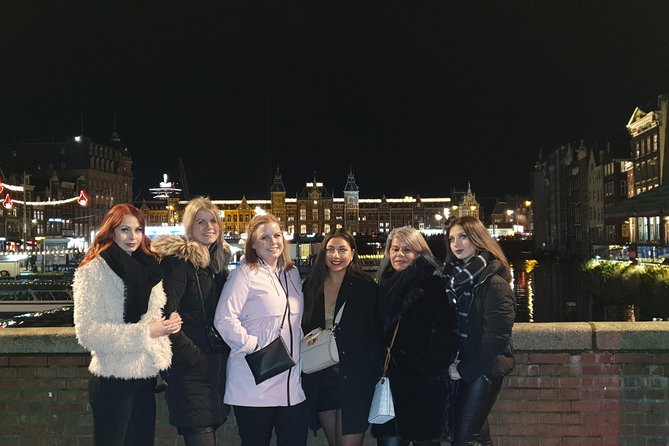
Red light history is not what you think. This 2-hour Amsterdam walking tour blends De Wallen at night with tight, walkable stops in the Old Town, so you get a sense of how the city actually works. I like how the guide explains the basic rules around the district, including how the windows and coffeeshop culture fit into local life. I also like the pace for sightseeing, it stays focused, and you are not stuck listening to one lecture the whole time. One heads-up, the topic is adult and the route is not recommended if you have limited mobility.
The group stays small, up to 16 people, and the tour is offered in English with a mobile ticket. If you want a practical, no-drama way to understand the neighborhood instead of just taking photos, this format makes sense. Just keep your expectations realistic: you will be walking through an area that is still in use, so you should bring patience and a respectful attitude.
In This Review
- Key highlights
- Red Light District and city center: why this tour makes sense
- Where you meet, how the timing feels, and what to expect
- De Wallen at night: what the guide will help you understand
- Dam and the story of Amsterdam built on wooden poles
- Pub The Ape (Int Aepjen): why one wooden building matters
- Waag: from city gate defenses to guild headquarters
- The smallest house and VOC storage that became a home
- The condom shop since 1987: why it shows up on a tour like this
- How the guide changes everything, from Robin to Gio to Aaron
- Price and value for a 2-hour Red Light District walk
- Who this tour suits best, and who should reconsider
- Should you book this Amsterdam Red Light District and city center tour?
- FAQ
- How long is the Amsterdam Red Light District and city center walking tour?
- Where do you meet for the tour?
- Is the tour offered in English?
- What is the maximum group size?
- Is this tour recommended for travelers with limited mobility?
- Can I cancel for a full refund?
Key highlights
- De Wallen at night, with context instead of shock value
- Local rules explained for the district, including window and coffeeshop topics
- Wooden buildings story, including Pub The Ape (Int Aepjen) from around 1540
- Old Town landmarks in one loop, like the Waag and Amsterdam’s oldest-leaning core
- Unexpected stops such as the condom shop that has been operating since 1987
- Small group size (max 16) for questions and a calmer experience
Other guided walks through this part of Amsterdam, for adults
- Amsterdam: Red Light Secrets Museum Entry Ticket★ 4.2 · 5,722 reviews
- Amsterdam: Red Light District Tour in German/English/Italian★ 4.9 · 5,623 reviews
- Amsterdam Red Light District & Coffee Shop Tour★ 4.6 · 4,134 reviews
- Amsterdam: Red Light District Pub Crawl with Unlimited Shots★ 4.1 · 2,130 reviews
Red Light District and city center: why this tour makes sense

If Amsterdam is on your list, you will probably hear lots of conflicting stories about the Red Light District. A walking tour like this works because it treats the area as part of a real city, not just a headline. You get the nighttime feel of De Wallen, then you are pulled into the older streets where Amsterdam’s physical shape still tells the story.
I also like that it is designed as a city-orientation experience. In two hours, you are not trying to cover everything Amsterdam has to offer. Instead, the guide points you at a handful of places that explain why the city grew the way it did, including the practical engineering under your feet and the buildings that survived fires and rebuilding.
The adults-only theme is the obvious thing to weigh. But the tour is not just about the neighborhood label. It links people, laws, and street life, which is what helps you understand what you are seeing rather than just reacting to it.
Where you meet, how the timing feels, and what to expect
You meet at Geldersekade 2, 1012 BH Amsterdam, and the tour ends back there. That round-trip setup is useful because you are not left walking alone back through dark streets wondering where you are. It also helps you plan dinner after, since you know your route ends where it begins.
The tour runs about 2 hours and you can pick from multiple start times. Most of your Red Light District time is at night, so dress for real evening conditions, not just daytime layers. Wear shoes you trust, because even a short city walk can still mean long stretches on uneven pavement.
If you are traveling with a smartphone, this is also a small plus. You get a mobile ticket, so you are not juggling paper or trying to find Wi-Fi at the last second. And if you need it, service animals are allowed.
One more practical note: the max group size is 16, which is big enough to keep energy up but small enough that you can actually ask questions without shouting.
De Wallen at night: what the guide will help you understand
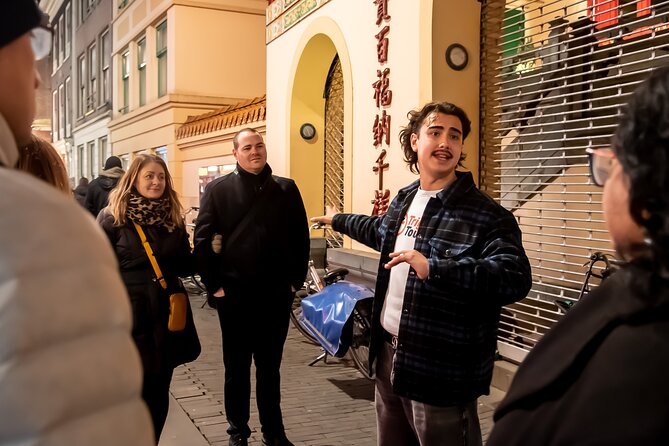
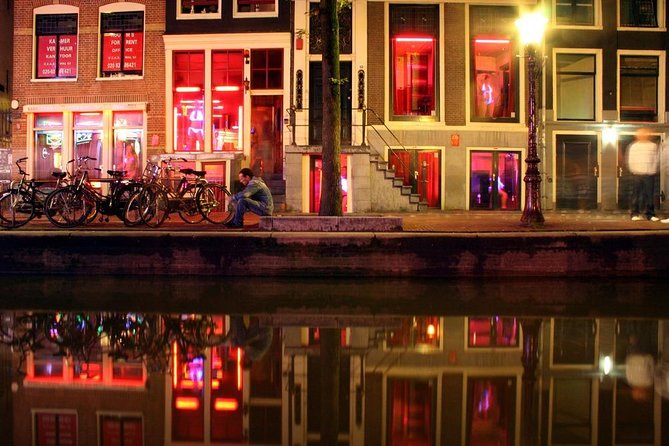
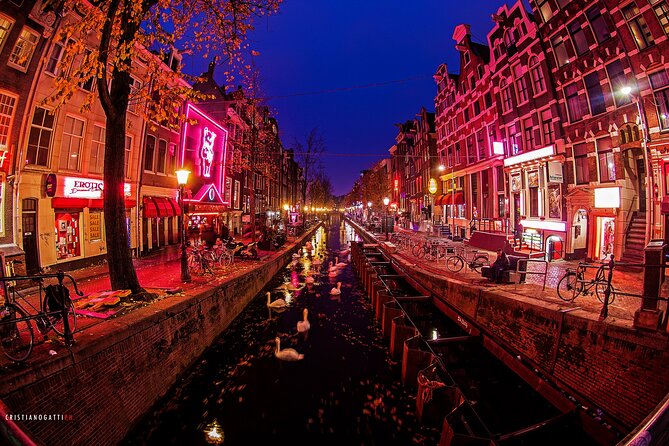
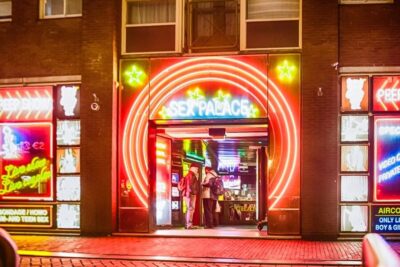
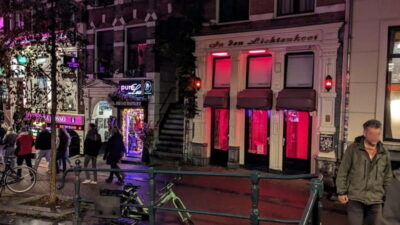
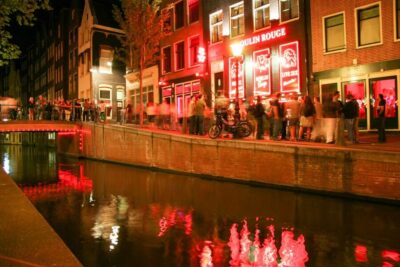
This is where the tour earns its name. You spend time in the Red Light District (De Wallen) and your guide sets the scene on the narrow streets at night. The big value here is not the street layout, it is the explanation behind what you are seeing.
From what is highlighted in the tour experience, you should expect the guide to talk about the sex work industry in Amsterdam and also the nearby coffeeshop culture. More importantly, the guide focuses on how things work under local law, including how the district and its windows are treated, plus how coffeeshops fit into the bigger picture.
That matters because a lot of first-time visitors only arrive with myths. If your only input is TV and rumors, you miss how the neighborhood is regulated and how day-to-day life continues around it. A good guide helps you replace guessing with basic context, so you can look without being confused.
I would also tell you to keep your phone put away for part of the walk. It is tempting, but this is an active street area, and the guide can help you understand what is respectful to do and when it is better to just watch and listen.
Dam and the story of Amsterdam built on wooden poles
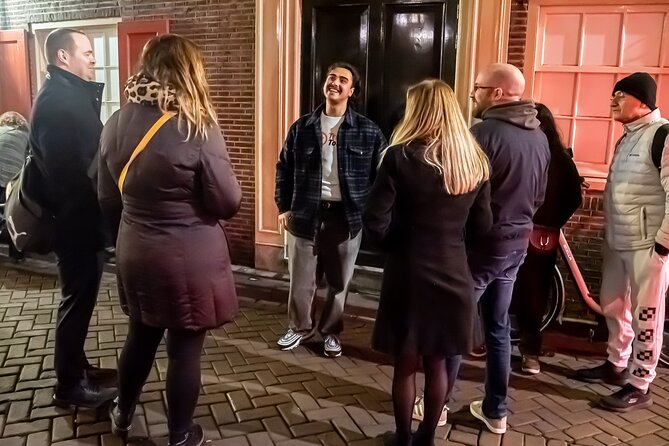
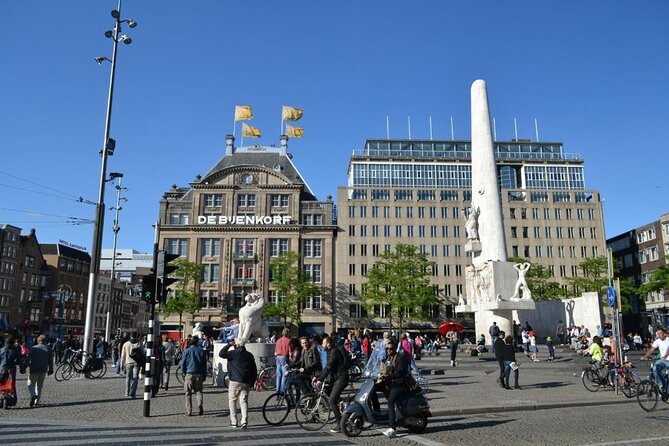
After De Wallen, the tour turns to Amsterdam’s older core. One of the stops centers on the Dam area and uses it to explain the engineering behind the city.
Amsterdam’s soil is described as a thick layer of fen and clay, with buildings supported by wooden poles driven down to a sandy layer about 11 meters deep. The tour also explains that older houses were built on wooden foundation piles pushed deep through clay, peat, and water until they reached firmer ground.
This is not random trivia. It is the kind of detail that helps you understand why Amsterdam’s buildings can look so fragile and yet last for centuries. You start to see the city as a set of practical solutions, not just pretty canals and gabled houses.
The tour then frames this area as part of Old Town, with the implication that it is among the oldest parts of the city. That is useful, because it gives you a reason to care about history beyond romantic stories. You see why the city’s earliest layout and survival techniques still influence what you walk past today.
Prefer to see it on foot? More Amsterdam walks


Pub The Ape (Int Aepjen): why one wooden building matters
At some point, you will appreciate that Amsterdam has a limited number of surviving older wooden structures. The tour stops at Pub The Ape, also called Int Aepjen in Dutch, built around 1540. This pub is described as one of only two remaining wooden buildings in Amsterdam.
That survival story is a big deal because Amsterdam had a major fire in 1452. After that, the government decision is said to have pushed for brick facades instead of wood. So when you see a wooden building that survived the shift, it is basically a living reminder of how fire risk shaped city rules.
Even if you are not a pub person, the stop is worth it. You get a tangible link between policy and architecture. And you also get a sense of how old Amsterdam can still be present even in areas that people think of as purely modern or adult-oriented.
If you are planning photos, keep it respectful. You are in front of a real business building, not a museum set.
Waag: from city gate defenses to guild headquarters
Next, the tour includes a stop at the Waag. The Waag is described as one of Amsterdam’s older landmarks, built around the 1400s, and noted as the city’s second oldest building.
What I like about this stop is the way it connects function over time. The Waag used to be one of Amsterdam’s city gates and part of the defensive wall. Later, guilds and craftsman organizations moved in, and the area around the square became a place where trades clustered.
This matters for how you understand Amsterdam. It explains why the city had strong defensive planning early on, then transitioned into commerce and craft systems as it grew. For you, it is a quick, walkable lesson in how cities evolve from protection to production.
If you enjoy architecture, spend a moment looking at the scale and shape. Even without going inside, it helps to realize you are standing near a building with multiple lives, defense first, then work and organization.
The smallest house and VOC storage that became a home
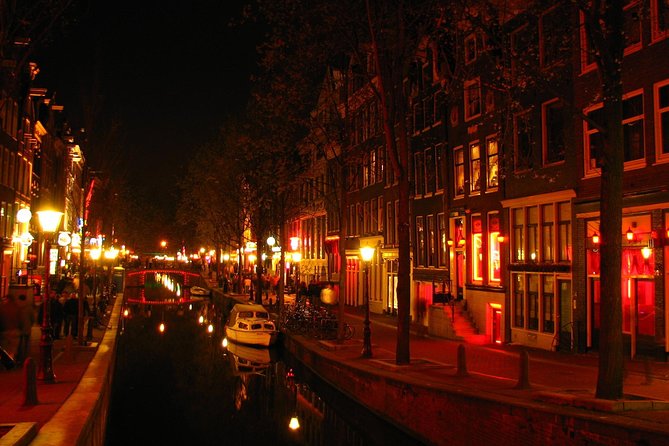
Another stop on the walk focuses on the smallest house of Amsterdam, built around the 1700s. The tour notes that it began as storage space for the VOC trading company, then later became a place where people lived for a long time.
That pairing, trading company storage turned into housing, tells you something real about Amsterdam. The city ran on trade, and the physical space of that trade did not always stay separated from daily life forever. A small house used over time also gives you a sense of how cramped or practical living could be in earlier centuries.
For readers, this stop is a good reminder not to judge the city only by its famous canals and big facades. Amsterdam also has tiny corners that reflect how people adapted to limited space and economic shifts.
The practical takeaway is that you start spotting scale differences more easily after this point. It makes the rest of the walk click.
The condom shop since 1987: why it shows up on a tour like this
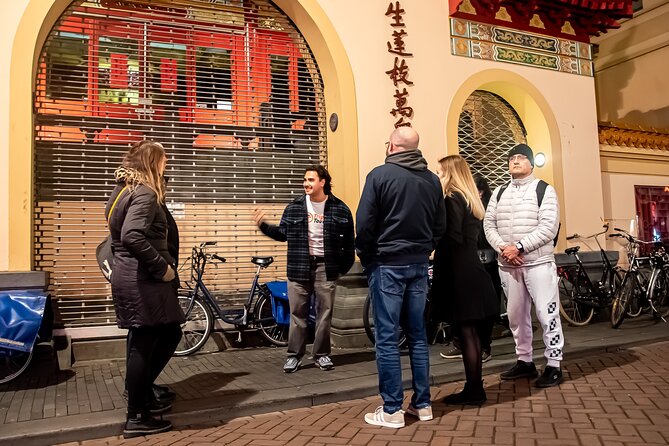
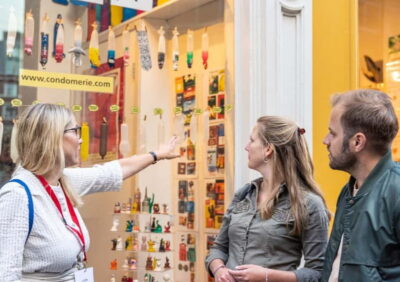
Yes, this part is surprising, and it is included for a reason. The tour stops at a condom shop described as the world’s first specialized condom shop, in operation since 1987.
The note you should keep in mind is that it is a specialty shop, including options like custom sizing. That is not just a quirky fact. It fits the tour’s overall theme: Amsterdam is a city that handles sensitive subjects in visible, sometimes commercial ways.
This stop also supports the tour’s broader focus on rules and real life. The neighborhood is adult in function, and the guide uses that context to help you understand how commercial and legal frameworks intersect.
To make this section comfortable for yourself, keep your tone respectful, and treat it as part of the adult-history education, not as a joke you have to amplify.
How the guide changes everything, from Robin to Gio to Aaron
On a tour that includes adult content and legal explanations, the guide’s delivery matters. In the experience, you can see that different guides bring different strengths.
For example, Robin is highlighted for being friendly and ready with answers, and the tour emphasizes making space for questions. Gio is noted for keeping things engaging and making sure the experience feels memorable, not just informational. Aaron is called out for organization, including keeping track of the group and using eye contact so people do not feel like they are being talked past.
That is what you want from a guide here: clear pacing, comfort handling the subject matter, and the ability to adjust if you look hesitant or curious. If you tend to feel awkward in adult neighborhoods, a calm, respectful guide can turn that into understanding fast.
One mixed comment did mention an issue with guide professionalism, described like the guide seemed skewed or full. I cannot treat that as a pattern, but it is worth considering. If you are sensitive to that kind of thing, choose your start time carefully and go into it expecting a guide who leads with respect.
Price and value for a 2-hour Red Light District walk
The price is listed at $31.24 per person for about 2 hours. That is not a budget street-market rate, so you should ask what you are really paying for.
You are paying for two things that are hard to replicate on your own. First, you are paying for an organized walk through De Wallen with context on sex work and coffeeshops, plus the basic legal framework about windows and the district. Second, you are paying for the guide’s ability to connect that neighborhood to city-center heritage stops, like the Dam area engineering story, the Waag, and surviving wooden buildings like Pub The Ape.
There is also a structural value in the group size cap of 16. A smaller group usually means you can ask follow-up questions, not just listen. And it is offered in English with group discounts, which can make it more reasonable if you are traveling with a friend or small group.
So for you, the best way to think about value is this. If you want the neighborhood explained, and you also want a short city-history thread that ties it together, this price can feel fair. If you already know the stories and just want photos, you might not get your money’s worth.
Who this tour suits best, and who should reconsider
This tour is a solid match if you are a first-timer trying to understand Amsterdam without relying on rumors. The combination of nighttime De Wallen, legal context, and quick hits of Old Town landmarks is ideal for people who want orientation and a clear narrative.
It also suits travelers who like compact sightseeing. In a short window, you cover multiple eras and building types, including defensive architecture via the Waag and Amsterdam’s engineering via wooden poles.
It may be less suitable if you have limited mobility, since it is not recommended for that situation. It also may not suit anyone uncomfortable with adult themes and the reality of an active sex-work neighborhood. If you fall in that category, you will still learn things, but the experience may feel stressful instead of educational.
Finally, consider your pacing style. This is guided and structured, so if you want to wander alone at your own tempo, you might prefer a self-guided route. But if you want someone to keep the story coherent, the group format helps.
Should you book this Amsterdam Red Light District and city center tour?
I think you should book if you want a respectful, structured way to understand De Wallen at night, and you also want a practical Amsterdam city-center context that goes beyond one neighborhood. The best part is the way the guide connects what you see to how the district is treated under local rules, including the windows and the coffeeshop side of the story.
Book it if you like small groups and you care about landmarks with real backstories, like Pub The Ape, the Waag, and the tiny house tied to VOC storage. And if you are someone who gets anxious in adult areas, a guide who manages the group and invites questions, like the examples of Robin, Gio, and Aaron, can make a big difference.
Skip or reconsider if limited mobility is an issue, or if adult themes will likely put you on edge. One mixed note flags possible professionalism concerns, so trust your own comfort level, choose your time slot, and pick a tour moment when you feel ready to listen.
FAQ
How long is the Amsterdam Red Light District and city center walking tour?
It is listed as about 2 hours.
Where do you meet for the tour?
The start point is Geldersekade 2, 1012 BH Amsterdam, Netherlands, and the tour ends back at the meeting point.
Is the tour offered in English?
Yes, it is offered in English.
What is the maximum group size?
The tour has a maximum of 16 travelers.
Is this tour recommended for travelers with limited mobility?
No, it is not recommended for travelers with limited mobility.
Can I cancel for a full refund?
Yes. You can cancel up to 24 hours in advance for a full refund. If you cancel less than 24 hours before the start time, the amount paid is not refunded.
Everything Else From Our Amsterdam Notebook





Also Reviewed Around Amsterdam





The Adult Side of Amsterdam, Explained




Fresh off the review pile in Amsterdam
- Full-Day Trip From Amsterdam to Keukenhof, Zaanse Schans + Cruise
★ 5.0 · 3 reviews - Boutique Dutch Food & History Tour with up to 8 guests only
★ 5.0 · 3 reviews - Private Tour to Windmills Zaanse Schans +Keukenhof – 7 Hours
★ 5.0 · 3 reviews - Full-Day Private Guided Countryside Tour from Amsterdam by Bike
★ 5.0 · 3 reviews - Amsterdam Red Light District and Old Town Walking Tour
★ 5.0 · 3 reviews
Red Light District & Coffeeshops, compared.
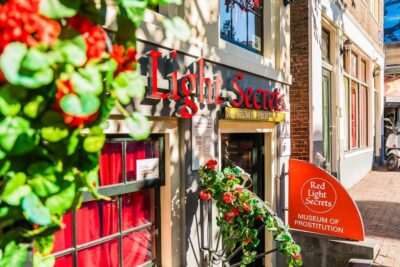 ★ 4.2Amsterdam: Red Light Secrets Museum Entry TicketFrom $175,722 reviews
 ★ 4.9Amsterdam: Red Light District Tour in German/English/ItalianFrom $285,623 reviews
 ★ 4.6Amsterdam Red Light District & Coffee Shop TourFrom $294,134 reviews
 ★ 4.1Amsterdam: Red Light District Pub Crawl with Unlimited ShotsFrom $242,130 reviews
 ★ 4.5Amsterdam Red Light District Pub CrawlFrom $241,497 reviews
 ★ 4.2Amsterdam: Cannabis Museum Entry TicketFrom $141,244 reviews
 ★ 4.5Amsterdam: Red Light District TourFrom $331,135 reviews
 ★ 4.1Amsterdam: After Dark Red Light District TourFrom $571,030 reviews
Browse the lists this tour appears in