
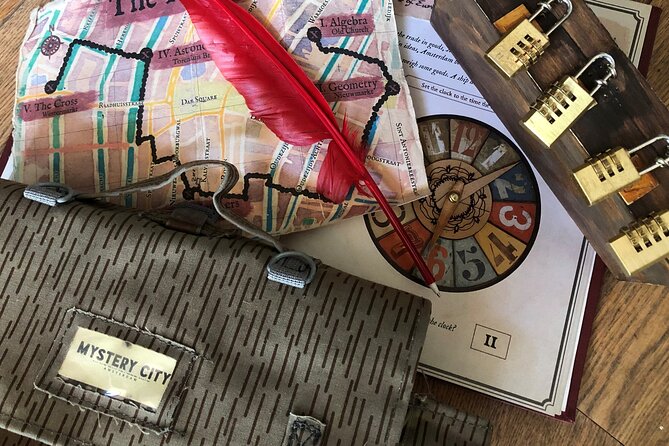
REVIEW · AMSTERDAM
Amsterdam Treasure Hunt: The Mystery of a Secret Sender
Mystery games turn Amsterdam into a puzzle.
This interactive hunt sends you looking for clues tied to the Order of the Rosy Cross, as you walk a compact route through central Amsterdam. You solve cryptic challenges using history and architecture details, guided by a story about a historic member known only as A Secret Sender.
I especially like two things about it. First, it is truly self-guided, so you control the pace, stop for photos, and take a breather without feeling behind. Second, the city stops hit the right mix of big landmarks and walkable in-between streets, which makes the whole afternoon feel like an adventure instead of a checklist.
One consideration is simple: you do walk. The route is about 3 km in roughly 2 hours, so if your group moves slowly or has anyone who tires quickly, plan for a calmer start and smarter pacing.
In This Review
- Key Points You Should Know Before You Go
- How the Secret Sender Hunt Works in Plain English
- Starting at Zwanenburgwal 178 and Picking the Right Time
- Stop 1, Oude Kerk: Getting Your Bearings and First Clue Energy
- Stop 2, Nieuwmarkt: The Puzzle-Friendly Switch from Landmark to Street
- Stop 3, Westerkerk: Turning Architecture Details into Real Answers
- Stop 4, Torensluis: Where the Route Tightens and Time Matters
- Stop 5, Amsterdam Museum: Finishing Strong with Local Stories
- Price and Value for a $30.25, 2-Hour City Game
- Best Fit, Based on How This Game Plays
- Practical Tips to Keep the Mystery Fun (Not Frustrating)
- Should You Book Amsterdam Treasure Hunt, The Mystery of a Secret Sender?
- FAQ
- How long does the Amsterdam Treasure Hunt take?
- Where does the hunt start and end?
- Is this tour guided by a person?
- What languages are available?
- Can I get a full refund if I cancel?
- Are service animals allowed, and is it near public transportation?
Key Points You Should Know Before You Go
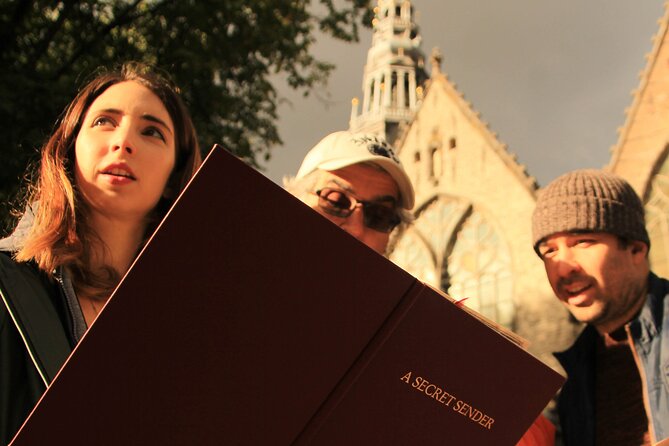
- Secret Sender story: solve puzzles for a specific identity tied to the Order of the Rosy Cross
- 2 hours, about 3 km: a focused walking game through central Amsterdam
- Landmark route: Oude Kerk, Nieuwmarkt, Westerkerk, Torensluis, and Amsterdam Museum
- Mobile ticket + self-paced play: easy to follow while you explore on your own time
- Built for teens and families: designed to keep younger players engaged, even for a first visit
- Private group experience: only your group participates, so it feels personal
More puzzle walks you can start whenever you feel like it
- Amsterdam Treasure Hunt: The Mystery of a Secret Sender★ 5.0 · 149 reviews
- Amsterdam: Treasure Hunt Walking Tour “A Secret Sender”★ 4.7 · 71 reviews
- Amsterdam Red Light District Treasure: Self-Guided Tour & Quest★ 5.0 · 39 reviews
- Discover Amsterdam’s city center in this Outside Escape game tour★ 4.5 · 18 reviews
How the Secret Sender Hunt Works in Plain English
The concept is straightforward and fun. You are trying to prove you belong, by solving an ancient mystery and uncovering the identity of a historic member who is known to you only as A Secret Sender. The clues are tied to the city itself, so you are not stuck inside reading a book the whole time.
What makes it work well is the format. You get puzzles while you walk, so your brain stays busy and your feet stay moving. The story framework also keeps it from feeling random, even when you are stopping in front of ordinary street corners. And because it is self-guided, you can spend extra minutes where you’re curious and skim past when you’re not.
This is also the kind of activity where teamwork matters. The game is meant to be solved with friends, so even if one person reads the clue faster, someone else will spot a detail you missed. That back-and-forth is a big reason it tends to work for both teens and adults.
One more practical note: you’ll be using a mobile ticket. That means you want a phone that can stay available for the game start and any prompts it sends you. If you rely heavily on one device for everything, charge up ahead of time.
Starting at Zwanenburgwal 178 and Picking the Right Time
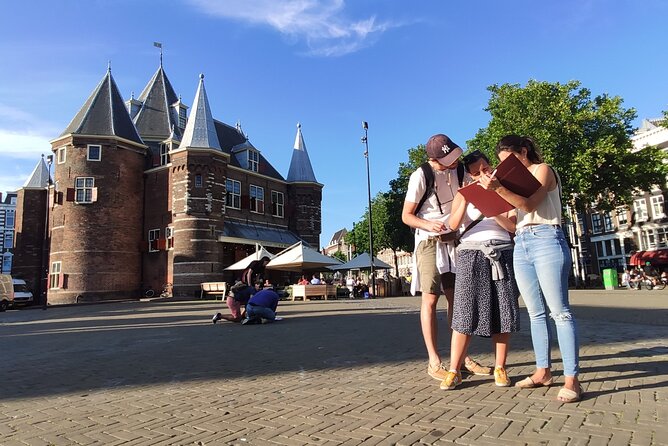
You meet at Zwanenburgwal 178, 1011 JH Amsterdam, and the game ends back at the same meeting point. That round-trip setup is underrated. It helps you feel anchored during the walk, and it makes it easier to plan a dinner or a tram ride right after.
The tour also gives you a choice of start time that fits your day. That matters in Amsterdam, because you may want to do this early while your energy is high, or later when the light is better for photos. Either can work, but if walking is a concern, I’d lean earlier.
It is offered in English and also available in multiple languages including Dutch, French, German, Spanish, and Italian. That’s useful if you have a mixed group or if you want the story in the language that lets everyone participate comfortably.
Because it’s a private tour/activity, only your group plays the game. That removes the awkwardness of trying to coordinate with strangers mid-puzzle. It also tends to make the experience feel more tailored to your pace.
Stop 1, Oude Kerk: Getting Your Bearings and First Clue Energy
You begin at Oude Kerk, and the early moments are where the game hooks you. This is typically when you figure out how to read the clues and how your group will work together. If you go into it like a normal sightseeing walk, it can feel slow. If you treat it like a game from the first stop, it becomes a rhythm.
A good move here is to pause instead of rushing through. Early in the hunt, your group is still learning what the puzzles want from you. Take a moment to look around at building details and street layout, then compare what you see to what the clue asks. That small habit will save time later, because you’ll start noticing patterns faster.
The main drawback at this start point is that it can be tempting to linger for photos without actually moving the game forward. If you’re the kind of person who likes to stop for every camera-worthy angle, set a gentle personal rule: photo breaks are fine, just don’t let them swallow clue time.
Stop 2, Nieuwmarkt: The Puzzle-Friendly Switch from Landmark to Street
Next you head to Nieuwmarkt, which is a smart middle-point stop. This is where the hunt often shifts from big architectural moments into more city-life clues, the kind you might miss on a normal walk.
I like this stop because it helps you practice looking at Amsterdam in a different way. Instead of only appreciating the obvious landmark, you’re paying attention to alignment, signage, and what the street is doing around you. That makes the experience feel more “Amsterdam” and less like you are simply moving from one attraction to another.
Nieuwmarkt is also a practical win for groups. It’s a good place for a quick reset, regroup, and refocus if your team is stuck on a clue. If your group includes both puzzle-solvers and casual explorers, this stop helps everyone return to the story without feeling left behind.




Stop 3, Westerkerk: Turning Architecture Details into Real Answers
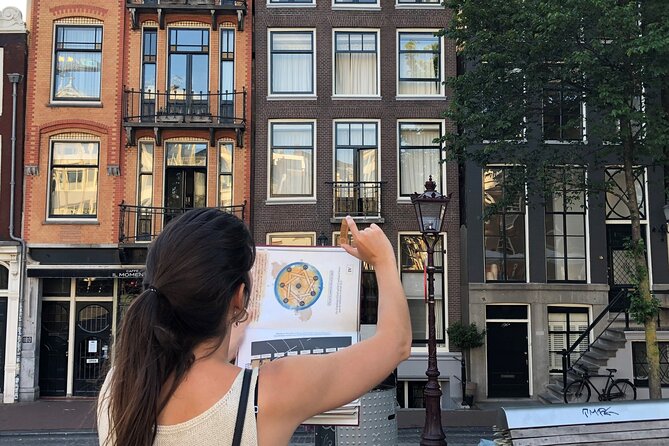
At Westerkerk, the game leans harder into architecture and history cues. This is usually where puzzle difficulty starts to feel more engaging, because you have enough context to actually use what you’re seeing.
The key here is to slow down your scanning. Don’t just glance at the building and hope the answer pops out. Instead, look for the specific type of detail the clue seems to point toward, and then work through your logic as a team. When people solve puzzles this way, it feels like you’re doing something, not just consuming content.
This is also a strong moment for teenagers. The combination of walking, looking, and solving gives them something to do with their attention. One set of family feedback rated the experience very highly for teens aged 13 and 16, and the reason is clear: it gives them agency, and it does not talk down.
If your group has a slower walker, Westerkerk is also a place to make pacing decisions early. You do not want someone getting anxious while the rest of you are stuck. Agree on a “team lead” who helps keep progress moving, and allow for short regroup pauses.
Stop 4, Torensluis: Where the Route Tightens and Time Matters
Then comes Torensluis, which keeps the pace moving. At this stage, you’re far enough into the hunt that you should feel the momentum. The puzzles still need attention, but you should also know what “good clue behavior” looks like by now.
I like this stop because it can bring the experience back to the basics: location awareness. When you’re walking a city center route, it helps to notice how streets connect and how you’re oriented, especially if you plan to keep exploring after the game ends.
If your team tends to work well together, Torensluis is likely where things start clicking. If your team gets stuck, use a practical technique: take one minute to talk through what each person thinks the clue is asking for, then compare to what you all can see. Most puzzle dead ends are just misread assumptions.
Also, remember the clock. You have about 2 hours total play time on a roughly 3 km route. That doesn’t mean you must rush, but it does mean long detours for shopping or extra photos can shrink your puzzle time.
Stop 5, Amsterdam Museum: Finishing Strong with Local Stories
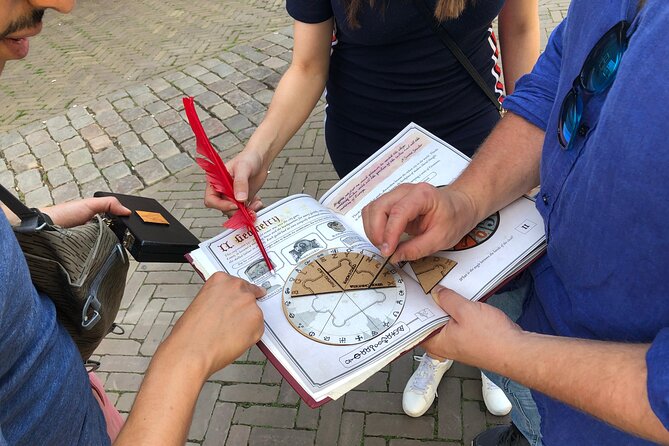
The final landmark stop is Amsterdam Museum, and the end of a good hunt should feel satisfying. You arrive with a better sense of what the game has been training you to notice, and you are ready to put the story together.
This last stretch matters because it’s not only about finishing the last puzzle. The game includes true stories tied to the city’s history, so the closure is meant to land. You get that “aha” feeling when the clues point toward the mystery’s identity.
If you still have energy after you finish, the area around the final stop is often a good place to keep wandering. The game itself is a walking route with clear endpoints, which makes it easier to turn into a longer afternoon plan without getting lost.
Price and Value for a $30.25, 2-Hour City Game
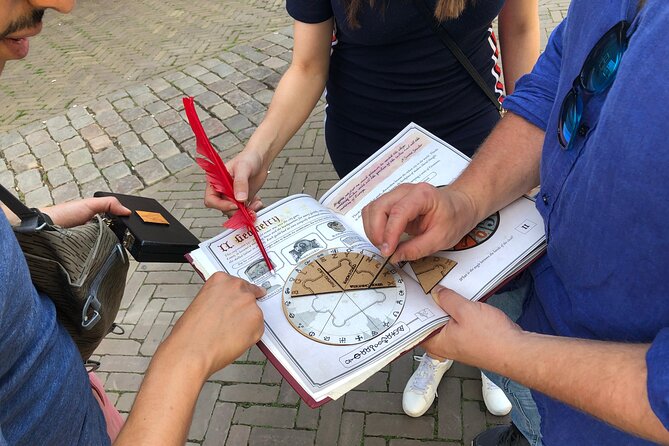
At $30.25 per person, this is not trying to be a bargain basement activity. It’s priced like a real interactive experience, and the value is in what you get for that time.
Here’s what you are actually buying:
- a 2-hour puzzle experience that makes you walk a set route
- a structured city game through several major points in central Amsterdam
- puzzles that keep everyone busy while you learn city history through context
- a mobile ticket format, with multiple language options
- a private setup where only your group participates
For families or couples, the big value is “content that moves.” You are not just sitting through something. You are actively looking, reading, thinking, and walking. That makes it easier to justify compared to a standard paid attraction where the main activity is standing and viewing.
The booking timing is also a clue about demand. It is commonly booked about 21 days in advance, so if you’re traveling in high season or have a tight schedule, I would secure your start time earlier rather than later.
Best Fit, Based on How This Game Plays
This is the kind of activity I’d recommend when you want a hands-on Amsterdam experience instead of another lecture-style tour. The game is designed to keep kids entertained, and it can work well for a teenager plus one or two adults because it blends walking with problem-solving.
Two-person groups often find the pace very comfortable, because communication stays efficient. For larger groups, I’d be realistic. Puzzle-solving can get slower when too many people are chiming in at once, so if you have a big party, consider splitting into smaller teams and agreeing on who solves and who checks the details.
It also works nicely for the first couple of days in town. If you do it early, the route helps you learn where things are, and the walking rhythm gives you confidence for the rest of your itinerary. If you do it later, it can still be fun because you see familiar places through the lens of clues and stories.
Practical Tips to Keep the Mystery Fun (Not Frustrating)
A few small things can make this a much smoother game.
Start early if you can. The route is about 3 km and the play time is about 2 hours, so you’ll enjoy it more if you’re not rushing from another activity. Wear comfortable shoes, because this is a walking game, not a sit-down attraction.
Bring a phone that works for the mobile ticket. Since the game uses a mobile ticket format, you do not want to be dealing with a low battery at the start.
Be ready to talk and look. This hunt is more about noticing than speed. If your group tends to sprint between stops, slow down for the clue moments.
If your game kit includes a backpack or carry item, treat the buckles with care. One bit of feedback mentioned the backpack was fine but not the easiest to buckle and unbuckle, so go easy at the start so you’re not wasting time with hardware.
Finally, plan your post-game. The activity ends back where it starts, which is great, but decide in advance what you’ll do next. You’ll finish with energy and curiosity, and having a nearby plan keeps it from turning into a random wander.
Should You Book Amsterdam Treasure Hunt, The Mystery of a Secret Sender?
If you want an Amsterdam afternoon that feels like an adventure, not a passive tour, this is a strong pick. The overall satisfaction is very high, with a 4.9 rating and 97% recommending it. The best part is that it fits multiple ages, including teens who can be picky about what they enjoy.
Book it if:
- you like puzzles and teamwork
- you want a self-guided way to see central Amsterdam
- you’re traveling with a teen, or you want something more active than standard sightseeing
- you want a structured route that helps you explore without getting lost
Skip it if:
- your group hates walking or cannot handle about 3 km in roughly 2 hours
- you’d rather have a traditional guide explain everything instead of solving challenges yourself
- you have a very time-tight schedule where you cannot afford a game pace
If your goal is to mix architecture spotting with a mystery you can actually influence, this hunt hits that sweet spot. It’s a fun way to turn a familiar city into something you’re actively figuring out.
FAQ
How long does the Amsterdam Treasure Hunt take?
It’s about 2 hours of play time (with a route of about 3 km through the city center).
Where does the hunt start and end?
The activity starts at Zwanenburgwal 178, 1011 JH Amsterdam, Netherlands, and it ends back at the same meeting point.
Is this tour guided by a person?
This is self-guided, so you can explore at your own pace while you complete the puzzles.
What languages are available?
The experience is available in English, Dutch, French, German, Spanish, and Italian.
Can I get a full refund if I cancel?
Yes, free cancellation is available. You can cancel up to 24 hours in advance for a full refund.
Are service animals allowed, and is it near public transportation?
Service animals are allowed, and the meeting area is near public transportation.
Also Reviewed Around Amsterdam





Puzzle Your Way Around Amsterdam



Fresh off the review pile in Amsterdam
- Full-Day Trip From Amsterdam to Keukenhof, Zaanse Schans + Cruise
★ 5.0 · 3 reviews - Boutique Dutch Food & History Tour with up to 8 guests only
★ 5.0 · 3 reviews - Private Tour to Windmills Zaanse Schans +Keukenhof – 7 Hours
★ 5.0 · 3 reviews - Full-Day Private Guided Countryside Tour from Amsterdam by Bike
★ 5.0 · 3 reviews - Amsterdam Red Light District and Old Town Walking Tour
★ 5.0 · 3 reviews
Self-Guided City Games & Scavenger Hunts, compared.
 ★ 4.5e-Scavenger hunt Maastricht: Explore the city at your own paceFrom $37110 reviews
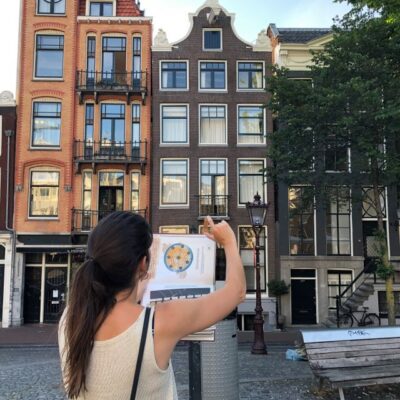 ★ 4.7Amsterdam: Treasure Hunt Walking Tour “A Secret Sender”From $2971 reviews
 ★ 4.0Utrecht Old Town: Medieval Monster Hunt & Walking TourFrom $762 reviews
 ★ 4.5e-Scavenger hunt Middelburg: Explore the city at your own paceFrom $3755 reviews
 ★ 4.0Rotterdam Highlights & Spies: Interactive City GameFrom $751 reviews
 ★ 4.5Discover Utrecht with a self-guided Outside Escape city game tourFrom $3051 reviews
 ★ 4.5Discover the best spots in Eindhoven with Outside EscapeFrom $2940 reviews
 ★ 5.0Amsterdam Red Light District Treasure: Self-Guided Tour & QuestFrom $1139 reviews
Browse the lists this tour appears in