

REVIEW · HAARLEM
Cultural and Historical Audio guided walking tour Tour of Haarlem
Haarlem sounds different when you let your phone talk. This GPS audio walk helps you roam the city at your own speed, with your eyes staying on street scenes instead of a screen. I love how it gives context to major landmarks like the Grote Markt and the Frans Hals Museum. I also like that you can start, pause, and continue without keeping up with a group. The possible drawback is that it depends on you reaching the right spot, since the audio kicks in when your phone detects you, and there is no live guide to rescue you if you miss a cue.
I also appreciate the specific themes it follows, from hofjes (quiet almshouse courtyards) to WWII stories tied to the Corrie ten Boom House. One consideration: you may feel like you are doing more walking than listening if you keep a brisk pace or stop for photos too long. The route is built for wandering, not for a tight, packed schedule.
At $15.05 per person for about 1 hour 45 minutes, it can be a strong value choice when you want direction without paying for a live guide. You do need to plan for basics, like bringing your own headphones, since they are not included. If you like self-guided history that still points you to the right corners, this is a practical fit.
In This Review
- Key highlights to know before you go
- Haarlem at audio-only pace, with your eyes doing the sightseeing
- Price and time: when $15.05 feels worth it
- Logistics you should plan for, especially the GPS part
- Where the story begins: Hofje van Oorschot and Haarlem’s quiet courtyards
- WWII courage at the Corrie ten Boom House, a stop you might want to extend
- Grote Markt: where the city feels most public (and most photo-friendly)
- Bakenessergracht and Spaarne: canals that turn a walk into a story
- Teylers Museum and the Waag: science, trade, and brickwork you can read
- Vleeshal and Haarlem’s city government: meat market past and 14th-century power
- Vijfhoek lanes and a beer-brewery pause: side streets and modern Haarlem
- Frans Hals Museum: Golden Age art context right where you can see it
- What I’d do differently if you want more from the audio
- Who this Haarlem GPS audio walk suits best, and who should skip it
- Should you book this Haarlem GPS audio walk?
- FAQ
- Do I need to download an app and use GPS?
- How long is the walk?
- Where does the tour start and where does it end?
- Are entrance tickets included for museums and attractions?
- Do I need to bring headphones?
- Is this a private tour?
- Can I get a refund if I cancel?
Key highlights to know before you go
- GPS triggers at each stop, so the audio starts when you are close, not when you wish it would
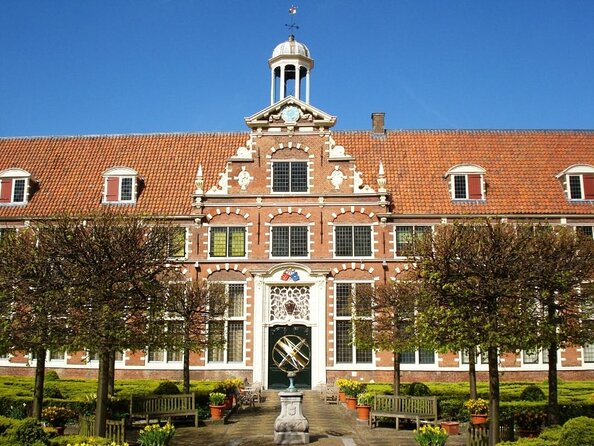
- Hofjes in the middle of the city, including a courtyard you can only admire from outside the gate
- WWII-linked Corrie ten Boom House, with a story-focused stop you can treat like a true visit
- Grote Markt and historic market buildings, plus city government landmarks along the way
- Canal time with Bakenessergracht and Spaarne, ideal for photos and slow strolling
- Frans Hals Museum area, giving you Golden Age context where it matters
Haarlem and the dunes, a few more
- Haarlem: Sightseeing Canal Cruise through the City Center★ 4.3 · 762 reviews
- Haarlem: Sightseeing Boat Tour with Snacks and Drinks★ 4.5 · 398 reviews
- Haarlem: Guided Highlights Canal Cruise on Open Boat★ 4.7 · 363 reviews
- Haarlem: 50 minutes Boat Cruise★ 4.5 · 272 reviews
Haarlem at audio-only pace, with your eyes doing the sightseeing
This is a cultural and historical walking tour designed for you to move like a local, not like a school group. You download the app before you go, turn on GPS, put on headphones, and then walk. The guide starts once you are close to the beginning point, which means there is no waiting for a person to arrive.
What makes this style appealing is the tradeoff. You are not staring at your phone every step, and you are not trying to read tiny plaques while walking. Instead, you get story beats through headphones while the big stuff around you stays in view, like canal bends, old brick facades, and the open square feeling of the Grote Markt.
If you like tours that are part navigation, part storytelling, this works well. You can also pause whenever you want, which matters in a city like Haarlem where stopping for one extra photo can easily turn into 10 minutes. The “audio first” approach is especially handy in older city centers where turns and streets can look similar.
Price and time: when $15.05 feels worth it
You are paying about $15.05 per person for roughly 1 hour 45 minutes of guided content. That price is usually only “worth it” if the tour saves you time deciding where to go next, or if the stories are the main draw. In this case, it is built around recognizable Haarlem highlights, so even if you stop more than planned, you are still getting value from the route structure.
Because it is audio-only, your time flexibility is real. You can start late, continue later, or linger near a canal if that is where your mood is taking you. The flipside is that you need to manage your attention. If you walk fast, you might reach POIs before the audio has fully played its portion, and you may end up waiting a bit for the trigger to catch up.
A good rule for this kind of walk is to treat it like a curated stroll, not a timed race. If you do that, the length feels right, and the price makes sense.
Logistics you should plan for, especially the GPS part
This experience is private for your group, but the real “guide” is your phone and GPS. You start at Kruisweg 70BR, 2011 LG Haarlem and end on Grote Houtstraat 1312, 2011 SJ Haarlem, which is a big shopping street. That end point is helpful because it is easy to regroup, head back toward central transport, or keep exploring without feeling stuck.
The tour also relies on you having a working setup. Confirmation comes at booking time, and the experience runs daily within the listed opening window. Service animals are allowed, and it is near public transportation, which is a practical advantage if you are building a longer day with trains and other stops.
One important item: headphones are not included. If you show up without them, you lose the whole concept. Bring a comfortable pair, ideally with a good seal, since Haarlem streets can get noisy near squares and cafés.
If you have ever tried GPS audio in a city where buildings look similar, you know the trick. You may need to step a little closer when the audio is supposed to start. Also, some POIs can have a lot of audio packed into one place, so it can feel like the guide is quiet until you arrive at the right spot and then it begins.
Where the story begins: Hofje van Oorschot and Haarlem’s quiet courtyards
Your first stop is Hofje van Oorschot. Haarlem is famous for hofjes, small enclosed courtyards that house people who needed support, historically the poor or elderly. These places were often created through bequests from wealthy families, which is a neat detail because it shows how charity and city power were linked long ago.
Here is the catch: you cannot enter. It is admire-from-outside only, behind a closed gate. That can disappoint if you expected a full courtyard walk, but it is still a worthwhile introduction because it sets you up to understand why the hofjes matter. You are seeing Haarlem’s “private calm” sitting inside busy streets, which is a theme that really shapes how you read the city as you continue.
A practical tip: slow down here. Even from outside, hofjes have a distinct stillness compared to the surrounding streets, and the audio context makes that contrast more meaningful.
Prefer to see it on foot? More Haarlem walks

WWII courage at the Corrie ten Boom House, a stop you might want to extend
Next you reach the Corrie ten Boom House. This is more than a standard museum stop in the way the audio frames it. The story centers on a family whose faith led them to join underground efforts in the Netherlands during WWII.
The key detail for your planning is that admission is not included. That is useful to know because it means the audio can guide the story, but you will likely need to decide whether you want to pay for entry separately. Since the stop is described as a must-do, I’d treat it as your “choose your own depth” moment. If you care about WWII history and personal stories, budget extra time, even if it means finishing the rest of the walk at a slightly slower pace.
Also, because this is a story-heavy location, listening carefully matters more than rushing. If you skip or tune out for a few minutes, you may lose the emotional thread the audio is trying to build.
Grote Markt: where the city feels most public (and most photo-friendly)
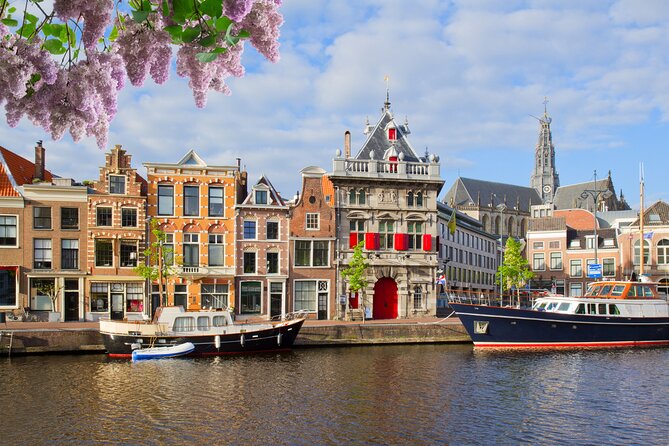
Then you hit Grote Markt, Haarlem’s central square. This is where a lot of the city’s iconic buildings gather, and the audio is built to explain what you are actually looking at. Expect mention of the old Vleeshal, the town hall, and statues that give the square its character.
The Grote Markt is the kind of place where you naturally wander and then realize you have been staring for a while. That’s a good moment to pause, take a breath, and let the audio give you names and context. When you know what a building was used for, the square becomes more than scenic background.
There’s also a “flow” advantage to arriving here in the middle of the walk. Your phone audio helps you understand the buildings while you are still in a legible, open environment. Later stops shift into more canal-side and side-street scenes, where landmarks can be less obvious at a glance.
Bakenessergracht and Spaarne: canals that turn a walk into a story
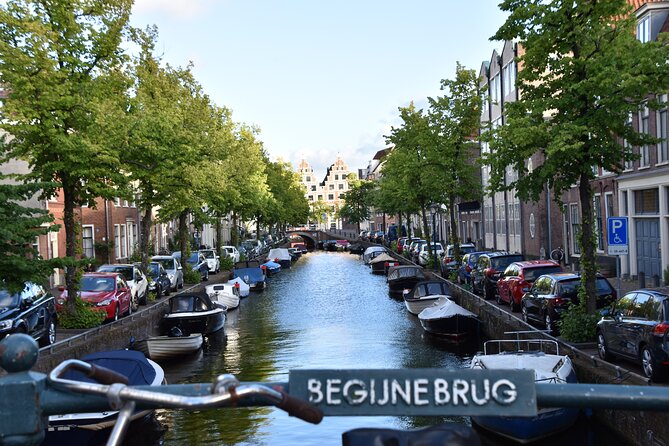
After the square, the walk moves into canal territory. Bakenessergracht is a canal where the audio focuses on neighborhood stories from the past. Even if you think you are just “passing a canal,” the audio nudges you to notice details, like how this kind of waterway shaped daily life.
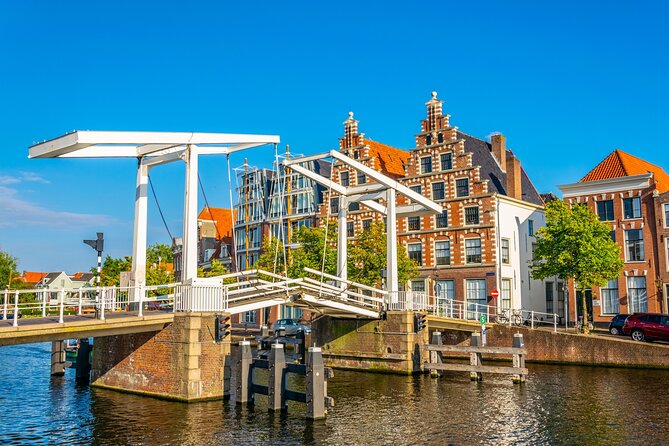
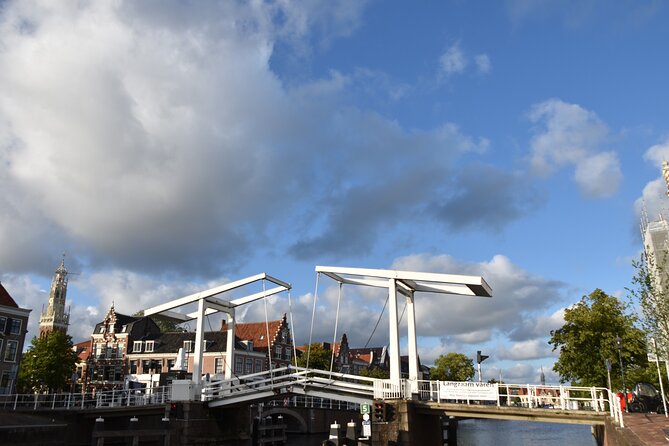
Then you reach Spaarne & Gravestenenbrug. This is a classic photo spot because it is an iconic bridge view, and the audio adds historic happenings from the early days. Bridges and canal corners are perfect for audio because you tend to slow down naturally, and you get small perspective changes as the city opens and closes behind you.
If you want the best experience, aim to be off your fastest pace here. A canal scene is one of those spots where a small amount of listening plus a little lingering can feel like twice the time.
Teylers Museum and the Waag: science, trade, and brickwork you can read

Two of the stops are close enough to make the area feel like a mini theme park of old Haarlem uses: learning, weighing goods, and showing off civic architecture.
At Teylers Museum, the audio positions it as a museum of wonders, founded in 1778. It’s framed not just as old art, but as a center for contemporary art and science, along with other topics. Admission is not included, but the audio context still helps you understand why the building matters.
Then there is The Waag, a former weigh house that now works as a café. The audio also credits the building design to Lieven de Key, which is the kind of name detail that makes a stop feel more grounded. If you want to recharge, this is also the kind of place where a coffee or bite can fit naturally into the walk.
A practical balance: if you plan to spend money, pick one “paid moment” during the walk. Either use a café stop as your break, or decide that your “paid time” is a museum entry. That keeps the experience from turning into a string of extra costs.
Vleeshal and Haarlem’s city government: meat market past and 14th-century power
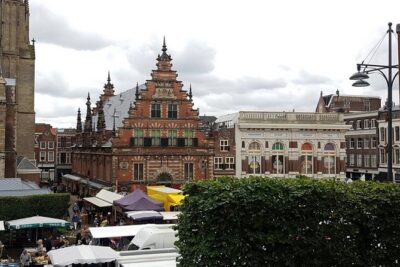
Back around the Grote Markt area, you also get a dedicated look at Vleeshal. The audio highlights that the building dates to 1603, and that Vlees means meat. That small linguistic fact is more than trivia. It makes the architecture feel tied to the daily economy of Haarlem, not just decorative stone and brick.
Then comes City Hall, the seat of the city government. It was built in the 14th century, and the audio explains it replaced the Count’s castle. This is one of those moments where a listener-only tour can actually help, because you might not know what you are looking at otherwise. Once you understand it was a replacement after an earlier power structure, the building stops feeling generic.
If you like city governance history or architecture that reflects rule and trade, these stops will likely be the most satisfying. If you mainly want street charm, you will still enjoy the context, but you might want to spend more time at the canals and squares.
Vijfhoek lanes and a beer-brewery pause: side streets and modern Haarlem
The walk continues into Vijfhoek, described as a neighborhood in the Oude Stad district. Here, the audio shifts into smaller historic streets and stories. This is a good segment for “eyes up” strolling because lanes can hide details if you are not paying attention, and the audio gives you permission to wander without feeling lost.
Then you reach Jopen, a beer brewery in Haarlem. The audio connects Jopen to the work of a foundation founded in 1992. It also positions Haarlem beer culture as something modern that still grows from local identity. Admission is not included, but this is a natural place to consider a snack or drink if you want a break that fits the city’s vibe.
A small practical warning: if you are doing this in a busy season or during a local holiday, you may want to keep your expectations flexible. Squares and café areas can get crowded, and with GPS audio, crowding can slow down the moments where your phone decides you have reached the next trigger point.
Frans Hals Museum: Golden Age art context right where you can see it
The final major cultural anchor is the Frans Hals Museum, also called the Museum of the Golden Age. The audio explains that the museum’s collection is based on what the city accumulated from the 16th century onward, and that Frans Hals is central to the museum’s identity.
Admission is not included, so this is another moment where you decide whether to treat it like a view-and-walk-by stop or an actual museum visit. If you love portraits, Dutch Golden Age art, or just want to understand why Haarlem mattered culturally, this is likely your biggest “value add” stop. The audio sets you up to appreciate the collection more than if you walked in cold.
Even if you do not go in, the story context can help you understand what you are looking at as you move through the area.
What I’d do differently if you want more from the audio
This tour is good at giving names, themes, and context. It is less about constant, rapid-fire instruction like a live guide. If you like detailed, step-by-step explanations without gaps, you might want to build in extra listening time at each place.
If you notice the audio seems to pause or take a moment to start, don’t panic. Step slightly closer to the landmark area. Some locations may contain more content, so the guide can take a bit to begin after you arrive.
Also, if your biggest frustration with audio tours is rewinding or replaying a segment, treat this as a one-pass experience. You can always return to the spot later if you remember something you want to hear again. In a historic city, revisiting a square or canal corner is not wasted time.
Finally, keep an eye on pace. A “slow plus listening” pace usually gives better results than a “power walk plus photos” pace.
Who this Haarlem GPS audio walk suits best, and who should skip it
This works best if you want:
- Self-guided structure with GPS audio that points you to big landmarks
- Flexible start and stop so you can linger at canals, squares, and museums
- A route that touches Hofjes, WWII story context, Grote Markt, canals, and Frans Hals
It might not be your best choice if you:
- Want a tightly choreographed, information-heavy experience with lots of narration at every step
- Dislike relying on GPS triggers in dense city centers
- Expect a person to help with real-time issues like finding toilets or handling crowds, because this is audio-only
If you like the idea of a “walk with context,” where you choose the pace and depth, it is a solid way to understand Haarlem without committing to a full-day schedule.
Should you book this Haarlem GPS audio walk?
Book it if you are planning a short Haarlem visit and you want direction with story, not just sightseeing. The price-to-time ratio is reasonable, and the route covers key themes that actually shape how you understand the city: hofjes, WWII courage, market square identity, canals, and Frans Hals.
Skip it or be cautious if you know you struggle with GPS-based triggers or you strongly prefer live, continuously responsive guiding. Also, bring your own headphones, and plan on slowing down slightly, especially near Grote Markt and the canal areas, so the audio lands when you need it.
If you do it with a relaxed pace, you will likely walk away with a sharper sense of what makes Haarlem more than a pretty day trip. You get stories tied to places, and you get to keep your attention on the city where it belongs.
FAQ
Do I need to download an app and use GPS?
Yes. You download the app in advance, enable GPS, and then use headphones. The guide starts once you are close to the start point.
How long is the walk?
It takes about 1 hour 45 minutes (approximately).
Where does the tour start and where does it end?
It starts at Kruisweg 70BR, 2011 LG Haarlem, Netherlands, and ends at Grote Houtstraat 1312, 2011 SJ Haarlem, Netherlands.
Are entrance tickets included for museums and attractions?
Admission tickets are not included for most stops. Hofje van Oorschot has free access, but you can only admire it from behind a closed gate. The Corrie ten Boom House is not included, and the same is true for places like Grote Markt buildings, Teylers Museum, The Waag, Vleeshal, City Hall, Jopen, and Frans Hals Museum.
Do I need to bring headphones?
Yes. Bring your own headset, since headphones are not included.
Is this a private tour?
Yes. It is private for your group, so only your group will participate.
Can I get a refund if I cancel?
No. This experience is non-refundable and cannot be changed for any reason.
Everything Else From Our Haarlem Notebook



Also Reviewed Around Haarlem


Haarlem and the Dune Coast
Fresh off the review pile in Haarlem
- Haarlem Walking Tour. Unknown and Surprising
★ 5.0 · 4 reviews - Walking Tour of Haarlem with a Local Guide
★ 4.5 · 4 reviews - BBQ on Board Haarlem Cruise
★ 5.0 · 4 reviews - Delightful Haarlem
★ 5.0 · 7 reviews - Haarlem Cheese and Wine Cruise
★ 4.5 · 7 reviews
Haarlem & the North Sea Coast, compared.
 ★ 4.3Haarlem: Sightseeing Canal Cruise through the City CenterFrom $19762 reviews
 ★ 4.5Haarlem: Sightseeing Boat Tour with Snacks and DrinksFrom $34398 reviews
 ★ 4.7Haarlem: Guided Highlights Canal Cruise on Open BoatFrom $20363 reviews
 ★ 4.5Haarlem: 50 minutes Boat CruiseFrom $22272 reviews
 ★ 5.0Haarlem Open-Boat Canal Cruise with Live Guide (Electric Boat)From $22233 reviews
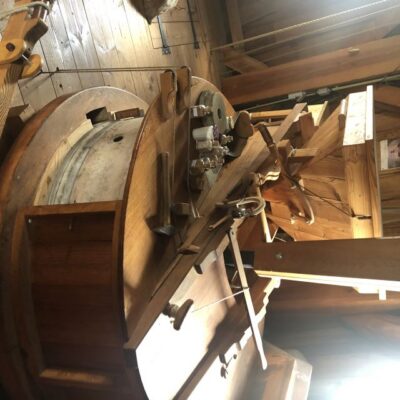 ★ 4.7Haarlem: Windmill ‘De Adriaan’ Guided TourFrom $9197 reviews
 ★ 5.0Private Electric Boat Rental in Haarlem (No License Required)From $145186 reviews
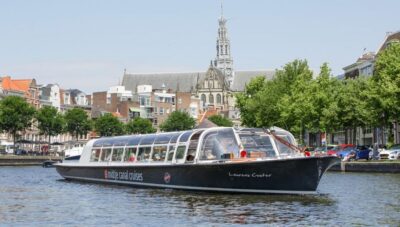 ★ 4.1Haarlem: Dutch Windmill & Spaarne River Sightseeing CruiseFrom $20152 reviews
Browse the lists this tour appears in