
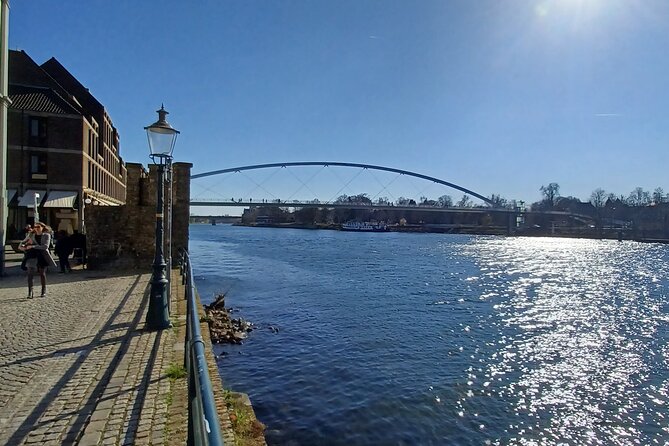
REVIEW · MAASTRICHT
Discover Maastricht with a Smile! Culture, History and People
Maastricht tells stories at walking speed. One tour, and you connect Roman-era roots to church bells and the people who gave this city its attitude. You cover big landmarks and the smaller details that make Maastricht feel lived-in, not like a museum.
I love the guide work here, especially Peter Corsius’s humor and sharp local stories. I also love how the route blends names like D’Artagnan and Louis XIV with real street-level stops, so history feels like it happened right here, not somewhere else.
One thing to plan for: the Sint Servaas basiliek church ticket is not included, so you may want to budget a little extra time and money at that stop.
In This Review
- Key things to know before you go
- Starting at Stokstraat: how the tour stays personal
- Sint Servaas basiliek: the patron saint connection
- Sint Servaasbrug: the oldest-bridge story from Romans to now
- Market Square and the old city hall vibe
- Helpoort: a town gate with room for gossip
- Father Vinck Tower: medieval clues you can spot
- Jekerkwartier’s Monument Fons Olterdissen: meet the local legend
- Stokstraatkwartier: Roman settlement roots on real streets
- De Mestreechter Geis and Vrijthof: symbols and the city’s heart
- Onze Lieve Vrouw Sterre der Zee: the church where Maastricht points
- The bigger theme: D’Artagnan, Louis XIV, Roman influence, and border-town identity
- Guide energy matters: Peter Corsius and the humor factor
- Price and value: $210.27 per group up to 15
- Logistics that make the walk easier
- Who should book this Maastricht with a Smile tour
- Should you book it?
- FAQ
- How long is the Maastricht walking tour?
- What does the tour cost?
- Is this a private tour?
- Is pickup available?
- Where does the tour start?
- What language is the tour offered in?
- Are admission tickets included?
- What if I need to cancel?
Key things to know before you go
- Private group, up to 15: one booking, only your party, so questions and pacing work well.
- Made to measure: the walk can be tailored, from about 1.5 hours up to a full day based on what you want to cover.
- Top stops are mostly free: many key viewpoint stops are admission-free, with the church ticket as the main exception.
- Oldest-bridge story arc: the route lines up the Sint Servaasbrug bridge legend from Roman times to today.
- Maastricht character markers: you’ll meet symbols like D’Artagnan and Louis XIV themes, plus local-city icons like De Mestreechter Geis.
- Pickup that’s coordinated: you agree on the pickup spot and get a call about 10 minutes before you meet.
South to Limburg, more to book
- e-Scavenger hunt Maastricht: Explore the city at your own pace★ 4.5 · 110 reviews
- Maastricht: Museum of Illusions Entry Ticket★ 4.2 · 82 reviews
- Maastricht Privat Sightseeing City Walk★ 5.0 · 76 reviews
- 2H Walking Tour Maastricht★ 4.8 · 57 reviews
Starting at Stokstraat: how the tour stays personal
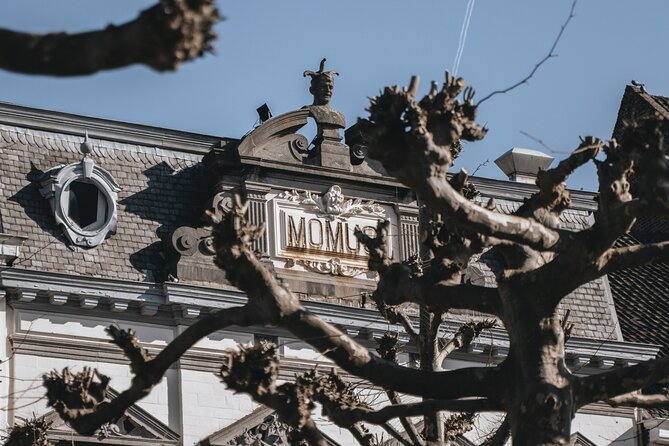
The tour begins at Stokstraat (6211 Maastricht). It is simple and central, which matters for a first visit when you want to avoid getting lost on top of walking.
If you want pickup, it’s offered. The host picks the exact meeting point with you, then calls about 10 minutes before. That is handy in a city where walking streets and small squares can feel easy until you are actually carrying a map and your phone battery is 40%.
This is also a true private tour. Only your group joins, so you are not dealing with the “everyone stand in a line” rhythm that can drain the fun out of a city walk.
And yes, the physical level is called out as moderate. You are walking a fair bit outdoors. Nothing sounds like a strenuous hike, but it is not a sit-on-a-bus kind of outing either, so wear shoes you trust.
Sint Servaas basiliek: the patron saint connection
Stop one is Sint Servaas basiliek Maastricht. You get a short history lesson about the church and its patron saint link to the city. Even at 10 minutes, this is a useful start because it frames how Maastricht thinks about identity: faith, local tradition, and why certain places matter to people over centuries.
A key practical point: the church admission ticket is not included. You will either need to buy it separately or you might just see the outside and nearby context depending on how the guide plans the visit that day. If you hate paying small extras on vacation, factor this in early so it does not feel like a surprise.
I like starting here because it gives you a reason to look up. After that, you start noticing the built details, not just scanning for the next “big photo spot.”
Sint Servaasbrug: the oldest-bridge story from Romans to now
Next up is Sint Servaasbrug, the bridge story. This is one of the most memorable “how did they build this” kinds of city features in the Netherlands, and the guide connects its past from Roman times to modern life.
The stop is short, about 10 minutes. That works because the bridge is visually strong on its own, and the added storytelling helps you understand why it survived and what role it played as the city changed.
This is a stop I recommend even if you are not a history nut. The bridge gives you a natural pause point. You get a photo moment, a breath, and then you move on with better context than a quick glance would provide.
Admission here is free, so it is an easy win.
Market Square and the old city hall vibe
Then you head to Market Square, where you see the old city hall, the statue of JP Minckelers, and the area connected to the old Sphinx factory. This is where Maastricht starts to feel like a working city, not only a postcard city.
The guide’s angle on squares is smart: they are where politics, daily life, and industry overlap. That’s especially true here, because the city has layers, not just one era stamped over everything.
It is a quick 10 minutes. The value is less about sitting still and more about learning how to read the space. After this, you’ll look at buildings differently as you walk.
More of the older layers of Maastricht


Helpoort: a town gate with room for gossip
Stop four is Helpoort, the oldest still-existing town gate in the Netherlands. You walk through it, and the guide brings in history plus “a little bit of gossip” style commentary. That lighter tone is not fluff. It helps the facts stick because you associate them with a human story, not a lecture.
The stop is about 10 minutes. Gates like this can feel like just another old wall until someone explains what made this one important, who used it, and how it shaped movement in and out of town.
Admission is free, so this is another good stop for value and momentum.
Father Vinck Tower: medieval clues you can spot
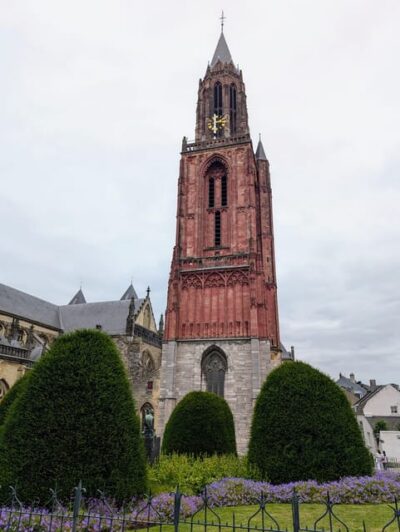
Next is Father Vinck Tower. You get the medieval story and learn who Friar Vinck was. The tower is small enough that it might not pull you in at first glance, but it gets real once you understand what the structure represented.
This is also a good moment for a practical “slow down” tip: stand still for a minute. Towers can look similar on a quick walk, so the guide helps you see what makes this one distinct, and that turns a short stop into a memorable one.
Time is about 10 minutes, and admission is free.
Jekerkwartier’s Monument Fons Olterdissen: meet the local legend
The route then reaches a quiet spot in Jekerkwartier, at Monument Fons Olterdissen. This stop is about Maastricht’s local identity through Fons Olterdissen and the legacy he left behind.
The tour notes describe him as Maastricht’s version of Rodger’s and Heart, which is a clue that this is a pop-culture comparison used to make a local figure understandable fast. Even without getting lost in the reference, the point is clear: the city has heroes, artists, and cultural voices, not just kings and church leaders.
This stop is about 10 minutes and free. It’s also one of the best breaks in the middle of the walk because it is calmer than the main squares.
Stokstraatkwartier: Roman settlement roots on real streets
Stop seven is Stokstraatkwartier, and this is where the “old city layers” theme becomes very concrete. The area is part of the oldest Roman settlement, and the guide ties that Roman influence to what you can still see and feel in the streetscape.
Time here is about 20 minutes, longer than the earlier stops. That tells you the walk expects you to slow down and take it in. You are not just counting monuments. You are learning the geography of how people built and lived over time.
Admission is free, and this stop alone can justify booking if you care about the “how the city formed” angle.
De Mestreechter Geis and Vrijthof: symbols and the city’s heart
At De Mestreechter Geis, you meet the statue that symbolizes the Maastricht spirit and local way of life. It’s a short stop, about 5 minutes, but it’s memorable because it’s not a generic landmark. It’s a local personality marker.
Then you reach Vrijthof, the main square. You get 10 minutes to see key sites there, and the guide keeps it flexible. Depending on what you ask for, you can follow the city’s thread in the direction you care about most.
If your group likes a specific theme, this is usually where it helps to speak up. The tour is described as made to measure on client demand, so you can steer the emphasis toward what you want to hear.
Admission is free for these square and statue stops.
Onze Lieve Vrouw Sterre der Zee: the church where Maastricht points
The last big stop is Onze Lieve Vrouw Sterre der Zee Basiliek on onze lieve Vrouweplein. This is a major church in Maastricht and is described as one of the city’s most significant buildings, tied to the beloved name Slevrouw.
Time is about 10 minutes and admission is free in the tour notes. Still, churches can have changing access rules based on services, and your experience might depend on what is happening that day. In any case, this is a strong closing stop because it sums up the city’s spiritual and artistic side.
The bigger theme: D’Artagnan, Louis XIV, Roman influence, and border-town identity
What makes this walk feel special is how the guide connects the dots. The route is not only a list of “look here.” It’s a storyline.
You’ll hear about Roman influences tied to where people first settled, then you’ll get a bordertown perspective on Maastricht as a place that absorbed cultures and political pressures. You’ll also get themes around industrial heritage and social history, which is where a city walk can either get boring or become real. Here, it sounds like the guide keeps it moving with human stories.
The tour highlights also mention D’Artagnan and Louis XIV. That is a fun combo because it suggests the guide will connect literature and power with real streets and buildings, not just name-dropping.
If you enjoy history but hate dry facts, this approach should fit. The route keeps feeding you new angles, so you do not end up “tour-weary” halfway through.
Guide energy matters: Peter Corsius and the humor factor
The reviews are consistently positive about the guide’s delivery. Peter Corsius comes up again and again for expert local knowledge and humor that keeps the walking tour from feeling like a lecture.
One review even notes the tour in German, which tells me Peter is able to switch style and language when needed. If you are in a mixed-language group, that kind of flexibility helps a lot.
There’s also a practical perk beyond the walk itself: Peter gave a tip about a Sonnenzug for people who wanted an alternative sightseeing option. Even if you do not take that exact suggestion, it signals a guide who pays attention to what your group wants next, not only what happens in the next 10 minutes.
Price and value: $210.27 per group up to 15
The price is $210.27 per group, up to 15 people. For a private walking tour, that is the kind of pricing that works when you have a few friends or a small family group.
If you are traveling solo, you might feel the cost more. But if you can split it among even 3 to 6 people, the per-person value gets much more attractive, especially since the guide tailors the city stories to your interest.
Two other value signals: the walk is short, about 2 hours, so it does not steal half a vacation day. And most of the key stops are free attractions, with the Sint Servaas basiliek ticket as the notable paid item. That keeps costs predictable.
Also, it is booked fairly far in advance on average. That’s a sign this is a popular way to get oriented and learn the city fast.
Logistics that make the walk easier
This tour is near public transportation, and the meeting point is a central street in Maastricht. That helps if you are staying outside the center but want a guide-led orientation without a long transfer.
You are also allowed service animals, which is always worth checking early.
One more small but important point: the tour length can be adjusted. If you only have 1.5 hours, you can still do a concentrated version. If you want more time, the experience can extend up to a full day based on demand.
That flexibility is useful in a city where weather can change quickly. If you get good conditions, you can spend longer outside. If not, you can keep it tighter.
Who should book this Maastricht with a Smile tour
I think this is a great fit if you want:
- A first-timer orientation to Maastricht with clear stops and a storyline
- History that feels tied to real streets, squares, churches, and gates
- A group pace that is flexible for questions and interests
- A guide who brings humor and keeps the group moving
It might be less ideal if you hate walking outdoors or you want a fully ticketed, all-inclusive package where every entry is included. The church ticket at Sint Servaas is not included, so you should be comfortable with that small extra step.
It’s also a solid choice for mixed age groups as long as everyone has a moderate comfort with walking, since the tour is short and concentrated.
Should you book it?
Book this tour if you want a smart way to understand Maastricht fast, and you like guides who tell stories with energy. The route covers the places that define the city, from bridges and gates to major squares and the big church of Slevrouw, and it threads Roman influence, border-town identity, and big-name history through the walk.
Don’t book it if you are looking for a long, destination-by-destination museum day, or if the idea of a separate church ticket makes you cranky. For a guided walking orientation with local flavor, this is exactly the right kind of half-day commitment.
If you do book, plan for comfortable shoes, bring a charged phone for photos, and do not be shy about steering the guide toward what you want to hear most.
FAQ
How long is the Maastricht walking tour?
It runs about 2 hours on average. The tour can be made to measure, from about 1.5 hours up to a whole day depending on what you want to cover.
What does the tour cost?
The price is $210.27 per group, up to 15 people.
Is this a private tour?
Yes. It is private, and only your group participates.
Is pickup available?
Pickup is offered. The meeting point is coordinated with you, and the guide calls about 10 minutes before meeting up.
Where does the tour start?
The tour starts and ends at Stokstraat, 6211 Maastricht, Netherlands.
What language is the tour offered in?
The tour is offered in English.
Are admission tickets included?
No. Coffee or other beverages and food are also not included. The Sint Servaas basiliek ticket is specifically noted as not included, while many other stops are free.
What if I need to cancel?
You can cancel for a full refund if you cancel at least 24 hours before the start time. If you cancel less than 24 hours before, the amount you paid is not refunded.
Digging Into Older Maastricht


Also Reviewed Around Maastricht




Down South in Limburg

Fresh off the review pile in Maastricht
- Maastricht: Day trip from Amsterdam with 3 country point
★ 5.0 · 4 reviews - Maastricht Heritage and Nature Tour
★ 5.0 · 6 reviews - Maastricht Private Walking Tour With A Professional Guide
★ 4.0 · 6 reviews - Maastricht Self Guided Sherlock Holmes Murder Mystery Game
★ 3.5 · 6 reviews - Maastricht Highlights, Architecture & Heritage Tour
★ 5.0 · 7 reviews
Maastricht & Limburg, compared.
 ★ 4.5e-Scavenger hunt Maastricht: Explore the city at your own paceFrom $37110 reviews
 ★ 4.2Maastricht: Museum of Illusions Entry TicketFrom $1982 reviews
 ★ 5.0Maastricht Privat Sightseeing City WalkFrom $13276 reviews
 ★ 4.5Maastricht 2-Hour Walking Tour | Discover The City With A LocalFrom $357 reviews
 ★ 4.82H Walking Tour MaastrichtFrom $357 reviews
 ★ 4.5Valkenburg: Municipal Cave Guided TourFrom $1147 reviews
 ★ 4.7Maastricht Hidden Gems Tour Uncover the UnexpectedFrom $23544 reviews
 ★ 4.4GaiaZOO Entry TicketFrom $3139 reviews
Browse the lists this tour appears in