
REVIEW · AMSTERDAM
Private Amsterdam Red Light District tour with food tastings
Red Light District history, with real food stops. On this private walk, you get expert guide context that goes past the guidebook blur, and you also get food tastings along the way so it is not only talk and photos.
You’ll learn about the area’s colorful background, including prostitution and coffeeshop culture, while passing landmarks like the Old Church and Chinatown streets.
One consideration: this neighborhood is adult-themed by nature. If you are easily uncomfortable with topics tied to sex work and sex-related shopfronts, you may want a different kind of Amsterdam tour, or at least go in with a respectful mindset.
In This Review
- Key Things to Know Before You Walk
- Entering Amsterdam’s Old Town, Not Just a Street Scene
- The 2-Hour Pace, and Why Private Time Helps
- Red Light District Orientation Plus Food Tastings
- The Dam Area and the City Built on Wooden Piles
- Pub The Ape (Int Aepjen) and Amsterdam’s Wooden Building Survivors
- The Waag: From Defensive Gate to Guild Hub
- Amsterdam’s Smallest House and the VOC Trading Link
- The World’s First Condom Shop Since 1987
- How Good Guides Change the Whole Walk
- Value for Your Money: What $121.52 Buys You
- Who Should Book This Tour
- Quick Practical Tips Before You Go
- Should You Book This Private Red Light District Tour?
- FAQ
- Is this tour in English?
- How long is the Amsterdam Red Light District tour with food tastings?
- What does the tour include?
- Are there admissions included?
- Where does the tour start and end?
- Is this a private tour?
- Can I customize the tour to my interests?
- What is the cancellation policy?
- Is it convenient to reach by public transportation?
Key Things to Know Before You Walk
- Private format means it is only your group, so questions and pacing stay in your control.
- Food tastings included so you get a stronger sense of local life, not just street-level explanations.
- Old Town wayfinding helps you orient fast in an area that can feel confusing at first glance.
- Real historic buildings show up on the route, like Pub The Ape (Int Aepjen), the Waag, and a tiny VOC-related house.
- Modern sex shop context is part of the story, including the long-running condom shop since 1987.
Hungry after that? More eating routes in Amsterdam
- 10 Tastes of Amsterdam: Food Tour by UNESCO Canals and Jordaan★ 5.0 · 3,020 reviews
- Amsterdam Food and Cultural Tour with Tastings★ 5.0 · 2,442 reviews
- Amsterdam: Premium Henri Willig Cheese Tasting Experience★ 4.7 · 1,106 reviews
- Amsterdam: Cheese & Wine Cruise Tasting Experience★ 4.5 · 1,090 reviews
Entering Amsterdam’s Old Town, Not Just a Street Scene
Amsterdam’s Red Light District can look like a single, loud zone from far away. This kind of private tour helps you see it as layered neighborhoods, with eras stacked on top of each other. That matters because the area’s reputation tends to flatten everything into one image. Here, you get a guided way to understand what you are actually looking at.
I like the balance of “what you see” plus “why it is there.” The expert guide approach is the difference between staring at windows and actually understanding how the city’s rules, buildings, and commerce shaped this district over time. And because food tastings are built into the walk, you keep moving through the story instead of stopping for a lecture.
You should also know this is not a shy, lighthearted tour. The guide talks openly about prostitution history and the coffeeshop culture. That can feel refreshing if you want the facts, but it is still a reminder that you are walking through a functioning adult area.
The 2-Hour Pace, and Why Private Time Helps
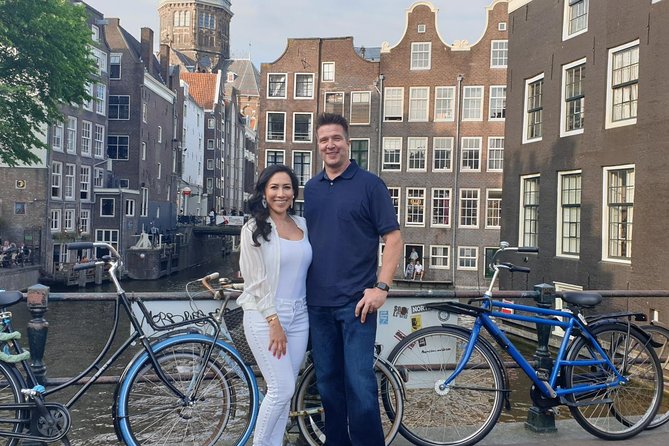
The tour runs about 2 hours, which is a good length for a neighborhood walk like this. It is long enough to move between multiple notable spots, but short enough that the vibe does not turn exhausting.
Private format is the real advantage. In a group tour, you get pulled along by the schedule. Here, you can slow down where you have questions and keep it moving where you want fewer details. The guides in past groups have also been praised for pacing. One guide, Tony, was noted for adjusting pace and answering questions, and another, Sander, was praised for the right mix of learning and culture. Aaron also stood out for clear descriptions and letting people see a lot in the area.
Practical tip: wear comfortable shoes. Some streets are tight, and you will be walking through older city sections.
Red Light District Orientation Plus Food Tastings
The tour starts with an exploration of the Red Light District itself, guided with facts about prostitution and the coffeeshop culture. This is where the guide helps you make sense of what you are seeing, without turning it into pure shock-value sightseeing.
You also stop at different places for food tastings. That is a big deal, because it changes the feel from “look, look, look” to “taste, taste, learn.” Food is how you connect the story of a neighborhood to daily life.
A good side effect: tastings give you natural breaks. Instead of only listening, you get to pause, compare flavors, and reset your senses before the next stretch of walking.
As you go, expect to pass landmarks tied to Amsterdam’s older urban fabric, including the Old Church and Chinatown. Even if you know Amsterdam already, this is a useful route because it links “famous sights” to the district you thought you already understood.
The Dam Area and the City Built on Wooden Piles
One stop focuses on the area around the Dam, often described as part of Amsterdam’s older core. The tour frames it as part of the Old Town area, meaning you are not just looking at a nightlife district, you are seeing a place with deep city history.
Here’s a fact I always find striking about Amsterdam: the city’s soil includes a thick layer of fen and clay. Buildings were historically set on wooden foundation piles driven deep down until they reach a more solid sand layer, about 11 meters below. Those poles were fixed into the sandy layer, with peat and water above it along the way.
Why this matters for you: it is easy to walk past a historic street and assume the city simply grew normally. Amsterdam actually grew through engineering. When the guide connects that to the Old Town setting, you start noticing that the city’s layout and building choices are part of the story, not just the buildings themselves.
Also, because this stop is tied to the oldest area framing, it sets the stage for everything else you will see later in the walk.
Other guided walks through this part of Amsterdam, for adults
Pub The Ape (Int Aepjen) and Amsterdam’s Wooden Building Survivors
Then the tour moves to Pub The Ape, also called Int Aepjen in Dutch. This building is described as dating back to around 1540 and as one of only two remaining wooden buildings in Amsterdam.
There is a reason that detail lands with impact. Amsterdam had a major fire in 1452, and after that event the government pushed for brick facades. So when you stand near a surviving wooden structure, you are looking at a very specific kind of historical remnant, not just another old pub.
If you have ever wondered why Amsterdam looks the way it does, this is one of the best kinds of stops to answer that. The guide uses the building to show how policy, disasters, and rebuilding shaped the architecture you see across town.
Practical angle: even if you are not going to sit inside, plan to look closely at the details as the guide explains the background.
The Waag: From Defensive Gate to Guild Hub
Next is the Waag, a structure that used to be one of Amsterdam’s city gates as part of the defensive wall. The Waag was built around the 1400s, and it is described as the second oldest building of Amsterdam.
Over time, it shifted roles. The tour explains that the Waag became a space for guilds and craftsmen’s organizations, with these groups located within the Waag and around the square.
Why I like this stop for first-timers: it turns the walking route into a timeline. You are not only moving between “spots,” you are moving between functions the city had. A defensive gate becomes a business and craft center. That kind of evolution helps you connect Amsterdam’s past to the kind of commerce you will also see in the Red Light District context.
If you enjoy architecture and street history, this is one of the stops that rewards slow looking, even with limited time.
Amsterdam’s Smallest House and the VOC Trading Link
The tour includes a stop at what’s described as Amsterdam’s smallest house, built around the 1700s. The story here starts with commerce: it was first used as storage for the VOC trading company. Later, people lived in the house for a long time.
This is one of those facts that changes how you see city space. In many European cities, the grand buildings get attention. But tiny spaces like this show you how people and businesses used what was available. It also reinforces that Amsterdam’s history is not only about rulers and palaces. It is about traders, logistics, and everyday use of tight urban real estate.
For you, the payoff is simple: when you can visualize a storage house turning into a long-term home, the city’s human scale hits harder. That makes the walk feel more real than a checklist of attractions.
The World’s First Condom Shop Since 1987
One of the final themed stops is a condom shop described as the world’s first specialized condom shop, in place since 1987. The guide explains that you can get size-customized condoms and special condom varieties.
This is not just a quirky fact for a photo. It is part of how the tour connects adult culture with everyday retail and public attitudes. When you see a business like this in the context of the neighborhood, it becomes easier to understand why this district has had a long-running role in Amsterdam’s adult commerce.
If you are curious about how the city handles taboo topics through business and visibility, this stop gives you that direct on-the-ground angle. If you prefer quiet, romantic neighborhoods, you might not be drawn to this part. But it is clearly included for a reason, and the guide treats it as part of the broader story rather than pure shock.
How Good Guides Change the Whole Walk
The strongest praise in past groups points to a consistent thing: the guide’s communication. People highlighted that the guide provided lots of information and had a sense of humor, which matters because the subject matter can feel heavy or awkward.
Tony was praised for answering questions and pacing the walk. Sander was praised for the mixture of city learning and culture. Aaron was praised for information and descriptions that helped people see a lot in the area.
For you, that means you are not just paying for a route. You are paying for sense-making. The best outcome is when you can leave with a mental map of the neighborhood’s history and a clearer idea of why certain buildings and institutions ended up where they did.
Value for Your Money: What $121.52 Buys You
At about $121.52 per person for roughly 2 hours, the price can feel high if you compare it to generic city walking tours. But with a private format, tastings included, and a guided route through a dense neighborhood, it is easier to justify.
Here’s where the value comes from:
- You get a private experience, so the guide can adjust to your pace and questions.
- You get food tastings, which adds real cost and makes the tour feel practical, not purely informational.
- The route covers multiple landmarks and historic sites, including details about the Waag, Pub The Ape (Int Aepjen), the smallest VOC-related house, and the condom shop since 1987.
If you are traveling with friends or family and want a more controlled experience, private pricing often makes sense faster. If you are alone, it can still be worth it when you care about context and want a guided way to navigate sensitive territory without guessing.
Who Should Book This Tour
This experience is a strong fit if you:
- want history and culture, not only photos
- like guided walking tours where you can ask questions
- are comfortable discussing prostitution history and coffeeshop culture in a factual way
- enjoy food tastings as part of sightseeing
It may not be ideal if you want a purely scenic, light day, or if adult topics would make you miserable rather than curious.
Also, this is offered in English, and it’s a private tour where only your group participates. If you need a tour that stays focused on your interests, the customization angle is a plus.
Quick Practical Tips Before You Go
Meet-up is at ParkBee Parking NH Collection Amsterdam Barbizon Palace, Prins Hendrikkade 59, 1012 AD Amsterdam. You will return to the same meeting point at the end.
A few simple ways to make the walk easier:
- go with comfortable shoes, since it is a city walk in a compact area
- come with a few questions ready about buildings, history, or neighborhood culture
- keep an open, respectful attitude, because this is an active adult district
The tour also uses a mobile ticket, and it is near public transportation.
Should You Book This Private Red Light District Tour?
I would book it if you want an honest, guided understanding of Amsterdam beyond the usual postcard version. The biggest reasons: the private guide approach, the way the walk links older city history to what you see in the neighborhood, and the inclusion of food tastings so you leave with more than just street impressions.
Skip it if adult-themed topics would ruin the day for you. There are plenty of Amsterdam experiences that stay strictly on canals, museums, and architecture without touching the Red Light District’s subject matter.
If your goal is to get oriented fast, understand the buildings and the stories behind them, and sample a few things along the way, this is a smart choice.
FAQ
Is this tour in English?
Yes. The tour is offered in English.
How long is the Amsterdam Red Light District tour with food tastings?
It lasts about 2 hours.
What does the tour include?
The tour includes exploring the Red Light District with a private guide, learning about its history and culture, and stopping for food tastings.
Are there admissions included?
The tour notes admission ticket is free.
Where does the tour start and end?
It starts at ParkBee Parking NH Collection Amsterdam Barbizon Palace, Prins Hendrikkade 59, 1012 AD Amsterdam, and it ends back at the meeting point.
Is this a private tour?
Yes. It is private, and only your group participates.
Can I customize the tour to my interests?
Yes, the private tour can be customized to suit your interests and needs.
What is the cancellation policy?
Free cancellation is available. You can cancel up to 24 hours in advance of the experience for a full refund.
Is it convenient to reach by public transportation?
Yes. The tour is near public transportation, and service animals are allowed.
Also Reviewed Around Amsterdam




The Adult Side of Amsterdam, Explained



Working Through Amsterdam One Plate at a Time




Fresh off the review pile in Amsterdam
- Full-Day Trip From Amsterdam to Keukenhof, Zaanse Schans + Cruise
★ 5.0 · 3 reviews - Boutique Dutch Food & History Tour with up to 8 guests only
★ 5.0 · 3 reviews - Private Tour to Windmills Zaanse Schans +Keukenhof – 7 Hours
★ 5.0 · 3 reviews - Full-Day Private Guided Countryside Tour from Amsterdam by Bike
★ 5.0 · 3 reviews - Amsterdam Red Light District and Old Town Walking Tour
★ 5.0 · 3 reviews
Red Light District & Coffeeshops, compared.
 ★ 4.2Amsterdam: Red Light Secrets Museum Entry TicketFrom $175,722 reviews
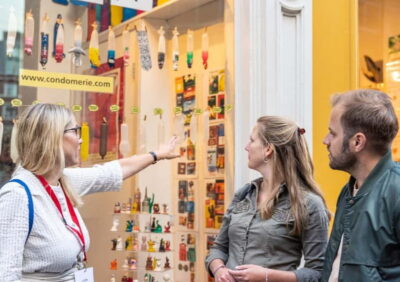 ★ 4.9Amsterdam: Red Light District Tour in German/English/ItalianFrom $285,623 reviews
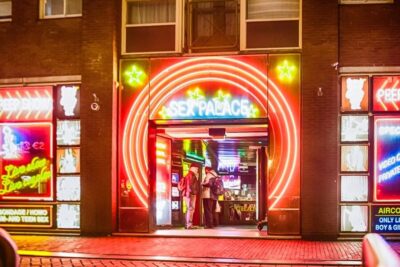 ★ 4.6Amsterdam Red Light District & Coffee Shop TourFrom $294,134 reviews
 ★ 4.1Amsterdam: Red Light District Pub Crawl with Unlimited ShotsFrom $242,130 reviews
 ★ 4.5Amsterdam Red Light District Pub CrawlFrom $241,497 reviews
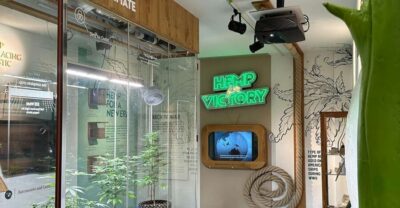 ★ 4.2Amsterdam: Cannabis Museum Entry TicketFrom $141,244 reviews
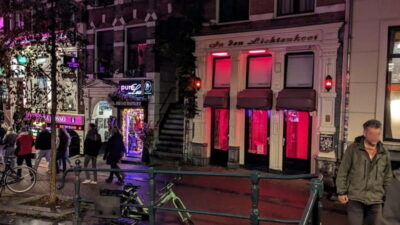 ★ 4.5Amsterdam: Red Light District TourFrom $331,135 reviews
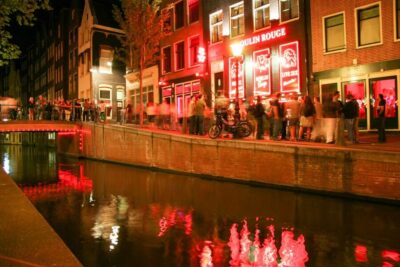 ★ 4.1Amsterdam: After Dark Red Light District TourFrom $571,030 reviews
Browse the lists this tour appears in