
REVIEW · RED LIGHT DISTRICT & COFFEESHOPS
Red Light District private tour with a local
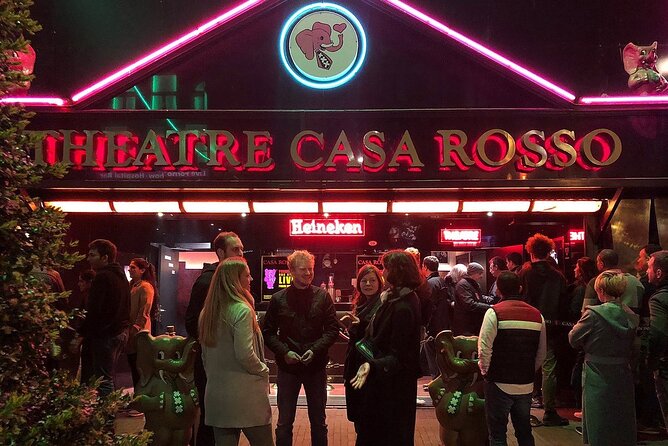
There is a lot more to De Wallen than you think. This private walk uses a local guide to explain how Amsterdam shaped (and regulated) its famously tolerant approach, without sending you inside restricted areas. You get a clear sense of what the neighborhood looks like day to day, plus the stories behind why it became the center of attention.
I especially like that the tour blends history with practical, street-level perspective. I also like that it is structured as a short loop of recognizable landmarks, then ends with a map so you can finish your own exploration at a comfortable pace.
One thing to consider: you are walking in an active neighborhood with outdoor sections, so it is not the best pick if you want a quiet, sit-down experience. Also, since guided tours inside the Red Light District are prohibited, this is intentionally an outskirts route.
In This Review
- Key takeaways before you go
- Why this Red Light District outskirts tour feels different
- Price and group value, up to 15 people
- Where the tour starts, and the walking rhythm
- De Wallen area: how Amsterdam’s rules formed the neighborhood
- Dam Square: coffee shop origins and the idea of tolerance
- Warmoesstraat and the Old Church glimpse
- Zeedijk and the Chinatown turnaround
- Nieuwmarkt: legalization and what sex work looks like today
- Kloveniersburgwal and coffeeshops, legal status explained
- Paulusbroederssluis: your map handoff and where to go next
- The real value: a local resident guide with personal anecdotes
- What this tour does not do (and why that’s okay)
- Practical tips so the 90 minutes are smooth
- Who this private Red Light District outskirts tour is best for
- Should you book this tour?
- FAQ
- How long is the private tour?
- Where does the tour start and end?
- What does the tour cost, and how many people can join?
- Do we get to go inside the Red Light District?
- What is included with the tour?
- Is free cancellation available?
Key takeaways before you go
- Private, up to 15 people: one group, one local guide, no sharing your time with strangers.
- Outskirts route since 2020: you still get context, just without entering restricted areas.
- Stop-by-stop stops at real landmarks: De Wallen area, Dam Square, Warmoesstraat, Zeedijk, Nieuwmarkt, coffeeshop streets, and the Paulusbroederssluis area.
- You get a map and a small gift: the tour helps you get your bearings, then hands you tools for the last stretch.
- Local stories from daily life: you will get anecdotes, not just dates and laws.
- Mobile ticket: easier day-of check-in.
Other guided walks through this part of Amsterdam, for adults
- Amsterdam: Red Light Secrets Museum Entry Ticket★ 4.2 · 5,722 reviews
- Amsterdam: Red Light District Tour in German/English/Italian★ 4.9 · 5,623 reviews
- Amsterdam Red Light District & Coffee Shop Tour★ 4.6 · 4,134 reviews
- Amsterdam: Red Light District Pub Crawl with Unlimited Shots★ 4.1 · 2,130 reviews
Why this Red Light District outskirts tour feels different
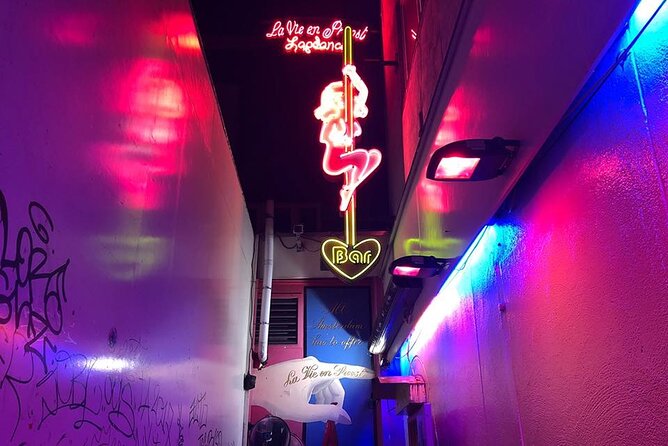
The Red Light District can look like a movie set from the outside. But Amsterdam’s De Wallen story is also about planning, policy, and the everyday reality of people working in the neighborhood. This tour keeps things grounded by focusing on how the area developed and how regulation works in practice.
What makes the experience work is the way your guide ties together streets and concepts. You see major squares and old streets, then you learn what those places have meant over time. You also get a human angle, since the guide lives in the area and can share real observations about how the neighborhood functions.
And because this is a private setup, you can ask the questions you actually care about. That matters here, since the topic can feel confusing until someone explains the rules and the local mindset in plain language.
Price and group value, up to 15 people
The tour price is $231.72 per group, for up to 15 people. That is a per-group cost, not per person, so the value swings based on your group size.
Here is the practical way to think about it:
- For 2 people, it is about $116 per person.
- For 6 people, it is about $39 per person.
- For 10 to 15 people, it becomes relatively affordable per person.
You are paying for three things: a local resident guide, 90 minutes of focused walking, and the included map plus small gift. If you are traveling as a small group, it can still be worth it because the guide’s context helps you understand what you are seeing, instead of just taking photos and moving on.
Also, since the tour is often booked about 98 days in advance, it is a sign that people want a set time slot rather than waiting and hoping.
Where the tour starts, and the walking rhythm
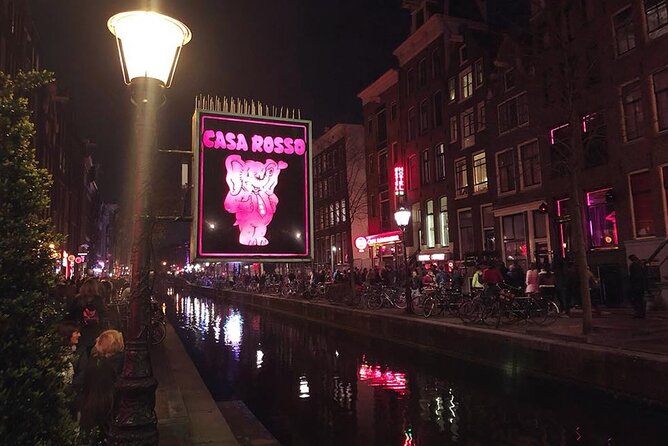
You meet at Beursplein, 1012 Amsterdam and the tour ends back at the meeting point. The experience is about 1 hour 30 minutes on foot, with short stops to learn and look around.
The rhythm is simple: walk between highlights, then pause while your guide explains the history and the current situation. Expect you will be outside most of the time, so bring layers if the weather is gray or damp. Amsterdam streets can turn slippery, and you will enjoy the stories more when your feet are happy.
Because it is a private tour, your pace can be adjusted to your group. If you want time for a closer look at a church facade or a street layout, this kind of route tends to accommodate that better than a big group bus tour.
De Wallen area: how Amsterdam’s rules formed the neighborhood
The tour’s first stop is the Red Light District area around De Wallen. Even though the guided entry is not part of this experience, you still get the essential context: how this became the place where sex workers settled, and how Amsterdam’s reputation for tolerance developed.
This is where the tour earns its keep. You learn the story behind the location, which changes how you interpret what you see from the street. Instead of treating the neighborhood like a single theme park, you start seeing how zoning and policy influenced where work and services concentrated.
Your guide also connects the modern scene to the longer story, which helps you understand why Amsterdam talks about regulation and control rather than ignoring the subject. It is an approach that can feel surprising until you hear the local logic, then suddenly it makes more sense.
Practical takeaway: treat this stop as your orientation point. If you get confused later, you can look back to what you learned here.
More Amsterdam trips with just your group

Dam Square: coffee shop origins and the idea of tolerance
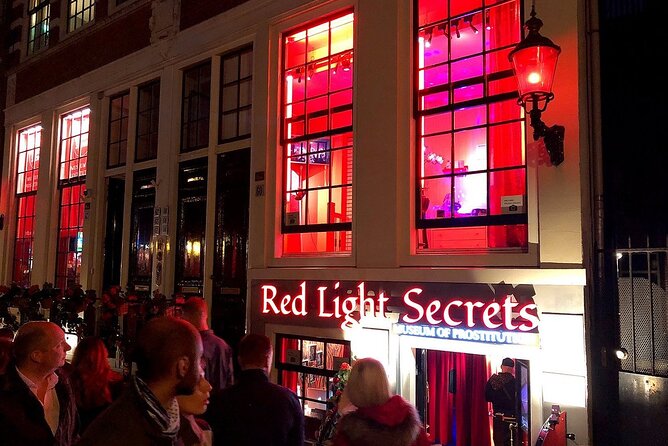
Next you head to Dam Square, a major landmark that also anchors part of the Netherlands’ reputation for relaxed rules around certain behaviors. Your guide explains how the concept of the coffee shop originated here and what Dam Square represented when Amsterdam was building its identity around freedom and tolerance.
This matters because people often reduce the Netherlands to a single slogan. A short explanation at the right place helps you see how the tolerance narrative is connected to real decisions, not just branding.
If you like understanding the origins of local customs, this stop will feel like a “click” moment. You get the sense that Amsterdam did not just react spontaneously, it developed a framework and then lived inside it.
If you are not into policy stories, you might find this stop more conceptual than visual. But it is still useful, since it gives you language to discuss what you are seeing elsewhere on the walk.
Warmoesstraat and the Old Church glimpse
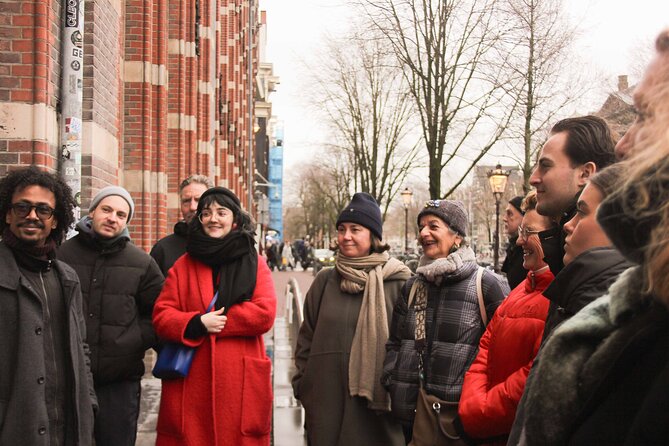
At Warmoesstraat, you learn about one of Amsterdam’s oldest streets and how its identity shifted over time. Today it serves as an entertainment center, and you also catch a glimpse of the Old Church.
This is a good stop for people who like city layers. One street can hold different eras: older architecture, then later uses, then the current street-life vibe. Your guide’s job is to connect those shifts to the broader story you started at De Wallen.
You also get a quick way to compare neighborhoods. De Wallen can look like the main act, but Warmoesstraat shows how the area’s energy spills into nearby streets.
Practical takeaway: keep your eyes up. The Old Church is easy to miss if you are staring straight ahead. Slow down for a moment when your guide points it out.
Zeedijk and the Chinatown turnaround
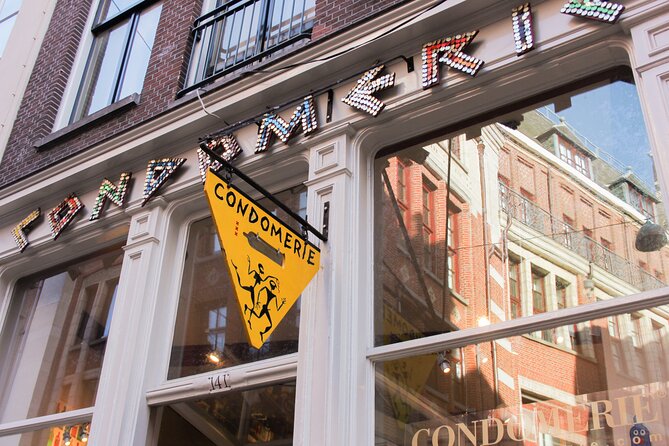
Then it is on to Zeedijk, where you get a look at Chinatown and hear why this street was once considered one of the more dangerous parts of Amsterdam during the 1970s. Your guide then explains the decline, and how the area transformed into a favorite spot for many Amsterdammers.
This stop gives you balance. It reminds you that neighborhoods are not fixed. Their reputations can change quickly when the city, businesses, and community life shift.
It also helps you interpret street culture beyond the Red Light District label. You are in the same wider district, but the story is not only about sex work and drug policy. It is also about migration, commerce, and how places become places.
If you only come for one angle, you might miss that this part of the tour broadens your understanding. I like that it prevents the walk from feeling one-note.
Nieuwmarkt: legalization and what sex work looks like today
At Nieuwmarkt, your guide focuses on legalization and the challenges faced by sex workers in the present day. This stop is the place where the story becomes more grounded, because it shifts from the past to how the system impacts real people now.
You will likely hear an honest, nuanced explanation. The point is not to force a single opinion on you. It is to show the human side of policies that are often discussed in abstract terms.
This stop can also feel like a reality check after the earlier historical framing. You walk past the same kind of streets you see in tourist photos, then you learn how legalization changes the environment, for better and worse.
Practical takeaway: if you have questions about how regulations show up on the street, this is one of the best moments to ask.
Kloveniersburgwal and coffeeshops, legal status explained
Next, the tour heads to Kloveniersburgwal, Amsterdam, where your guide talks about coffeeshops and their cultural significance. You also learn about their legal status, which is one of the most confusing topics for first-time visitors.
Even if you already read about the Netherlands online, hearing it tied to a specific street helps it land. You understand what people mean when they talk about the coffee shop concept and why it is linked to tolerance as a practical policy tool.
This stop also helps you separate myth from reality. The Netherlands has rules, exceptions, and local enforcement patterns, and your guide keeps it in plain terms instead of slogan language.
If you are visiting Amsterdam for food, museums, or canals and you are not used to street policy discussions, this part can still be surprisingly approachable, because it is anchored to visible local details.
Paulusbroederssluis: your map handoff and where to go next
The final named stop is Paulusbroederssluis. Here you receive a map with information about the Red Light District, and you are guided to discover the famous area yourself on the last stretch.
This handoff is one of the smartest parts of the tour design. You get a framework from your guide, then the map helps you keep context while you explore independently. That is especially valuable because you cannot do the same thing as older guided tours that went inside the Red Light District.
You end up feeling less like you are chasing scenes and more like you are navigating a real place with rules, history, and boundaries.
Practical takeaway: use the map right away. If you wait too long, street scenes blend together and you lose the storyline the guide just gave you.
The real value: a local resident guide with personal anecdotes
A big reason this tour works is the guide. In the past, groups have been led by Manouk, a longtime inhabitant of the Red Light District area. Her style, based on firsthand experiences shared by visitors, is part history teacher and part neighborhood storyteller.
You get more than a lecture. You hear personal anecdotes, you can ask questions, and the conversation tends to include both the emotional side and the practical side of living and working around De Wallen.
One group even reported that rain did not ruin the experience, which is a good sign if you are scheduling in Amsterdam’s changeable weather. With a local guide who knows the streets, you are not stuck with a scripted route that ignores the day you are having.
Also, one guide may add extra Amsterdam context beyond the immediate district. For example, some tours have included city context like ramparts that people did not expect to hear on a Red Light District walk. That kind of add-on is a reminder: you are walking through Amsterdam, not just through a single attraction.
What this tour does not do (and why that’s okay)
Guided tours inside the Red Light District have been prohibited since 2020, and this experience is built around the outskirts instead. That is not a downgrade, it is the point.
You still get the neighborhood’s story, the policy context, and the landmark route. You just do it from outside the restricted zone, then you use the included map for the part you can explore yourself.
This setup can feel more comfortable for many people. You get context first, then you choose how close you want to go, at your own speed. It also keeps the experience safer and less awkward for everyone involved.
If you were hoping for an all-access insider walk, this is not that. But if you want understanding, orientation, and a respectful approach, it is a strong fit.
Practical tips so the 90 minutes are smooth
This is a walking tour, so wear shoes you can trust. Amsterdam has uneven pavement and slick spots, especially after rain. You also spend your time looking at street layout and nearby landmarks, so bring a small bag for water and your phone charger, if you need one.
Because your tour uses a mobile ticket, make sure you can access it right before you meet. Check your phone battery and keep the ticket easy to find.
If you have specific curiosity, write it down before you go. Questions about regulation, the coffee shop system, or what the area looks like on ordinary days are the kind of topics a local guide can answer in a way that actually helps you.
Also, since this is private and the group can be as large as 15, confirm your pace and comfort level with your guide at the start. A good guide will help your group stay together while still making the experience feel personalized.
Who this private Red Light District outskirts tour is best for
This is a great choice if you want Amsterdam context without the typical tabloid tone. You will enjoy it if you like historical explanations, city policy, and street-level stories that put landmarks into human perspective.
It also suits groups who want control. Families, friend groups, and small tour parties often prefer a private format when the topic is sensitive or when you want to move at your own speed.
If you are expecting a nightlife crawl or a purely visual sightseeing loop, you might feel underwhelmed. The tour is more about understanding than entertainment.
Should you book this tour?
Book it if you want a local guide, a respectful outskirts route, and a map that helps you keep the story straight after the walk. The private format is especially good value when your group has several people, because it is priced per group rather than per person.
Skip it if your priority is inside-access, long museum-style stops, or a quiet, seated experience. This is a short walk through an active area, with explanation focused on history, legalization, and how Amsterdam’s tolerance works in real life.
If you like understanding where a place’s reputation comes from, and you are okay with an outdoor route and a topic that requires maturity, this is one of those tours that can genuinely change how you see the city.
FAQ
How long is the private tour?
The walking tour takes about 1.5 hours.
Where does the tour start and end?
The tour starts at Beursplein, 1012 Amsterdam, Netherlands and ends back at the meeting point.
What does the tour cost, and how many people can join?
It costs $231.72 per group, with up to 15 people in the group.
Do we get to go inside the Red Light District?
No. Tours in the Red Light District have been prohibited since 2020, so this tour goes around the outskirts instead.
What is included with the tour?
You get the 1.5 hour walking tour, a map with information for the last stretch, a small gift guaranteed to bring a smile, and the tour is private.
Is free cancellation available?
Yes. You can cancel up to 24 hours in advance for a full refund. If you cancel less than 24 hours before the start time, the amount paid will not be refunded.
Everything Else From Our Amsterdam Notebook



Also Reviewed Around Amsterdam




The Adult Side of Amsterdam, Explained

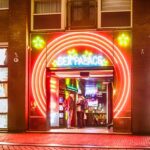


Fresh off the review pile in Amsterdam
- Full-Day Trip From Amsterdam to Keukenhof, Zaanse Schans + Cruise
★ 5.0 · 3 reviews - Boutique Dutch Food & History Tour with up to 8 guests only
★ 5.0 · 3 reviews - Private Tour to Windmills Zaanse Schans +Keukenhof – 7 Hours
★ 5.0 · 3 reviews - Full-Day Private Guided Countryside Tour from Amsterdam by Bike
★ 5.0 · 3 reviews - Amsterdam Red Light District and Old Town Walking Tour
★ 5.0 · 3 reviews
Red Light District & Coffeeshops, compared.
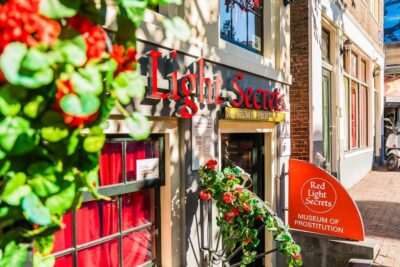 ★ 4.2Amsterdam: Red Light Secrets Museum Entry TicketFrom $175,722 reviews
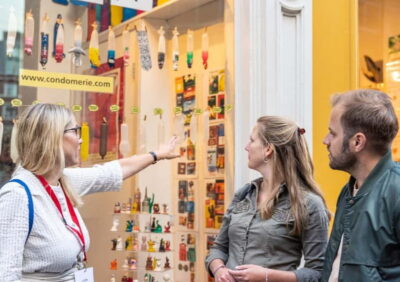 ★ 4.9Amsterdam: Red Light District Tour in German/English/ItalianFrom $285,623 reviews
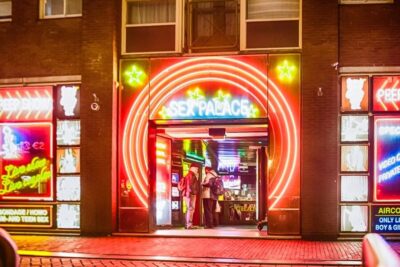 ★ 4.6Amsterdam Red Light District & Coffee Shop TourFrom $294,134 reviews
 ★ 4.1Amsterdam: Red Light District Pub Crawl with Unlimited ShotsFrom $242,130 reviews
 ★ 4.5Amsterdam Red Light District Pub CrawlFrom $241,497 reviews
 ★ 4.2Amsterdam: Cannabis Museum Entry TicketFrom $141,244 reviews
 ★ 4.5Amsterdam: Red Light District TourFrom $331,135 reviews
 ★ 4.1Amsterdam: After Dark Red Light District TourFrom $571,030 reviews
Browse the lists this tour appears in