
REVIEW · RED LIGHT DISTRICT & COFFEESHOPS
Red Light District Tour – It’s History & It’s Future
Amsterdam at night has a way of turning questions into answers. This Red Light District tour pairs history with a clear, respectful walk through the neighborhood, plus stops like St. Nicholas Basilica, the Old Church, and Beurs van Berlage.
I especially love how the guide, Sander, keeps the information human and practical, not just facts. And I like that you do more than stand around the Red Light District, you also cover streets and landmarks like Zeedijk and Nieuwmarkt that help you understand how the area changed.
One consideration: the tour starts with a bit of chatting and setup before you really hit the streets, so if you want action immediately, plan for that early pacing.
In This Review
- Key highlights worth planning for
- Entering the Red Light District with the right mindset
- 8:00 pm meeting at Café the Schreiertower, then a tight walking loop
- Stop 1: Weeping Tower, a symbol you do not forget
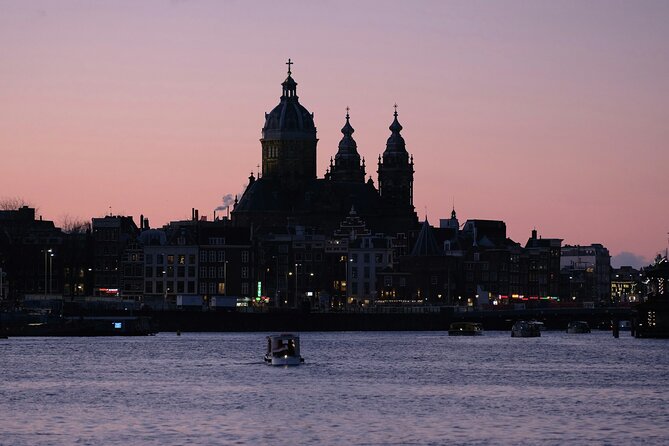
- Stop 2: St. Nicholas Basilica and Amsterdam’s seafaring roots
- Stop 3: Zeedijk, where the street’s past shows through
- Stop 4: He Hua Temple, a brief pocket of calm
- Stop 5: Nieuwmarkt, a square with everyday energy
- Stop 6: Amsterdam’s Red Light District, history and future in the same streets
- Stop 7: Oude Kerk, an 800-year landmark in the center of it all
- Stop 8: Condomerie, the playful shop with a serious point
- Stop 9: Beurs van Berlage, architecture you can spot from far away
- Price and what you actually get for $60.15
- Who should book this tour, and who might want to rethink
- Quick tips so you enjoy it more
- Should you book this Red Light District tour?
- FAQ
- How long is the Red Light District tour?
- What time does the tour start in Amsterdam?
- How much does the tour cost?
- Where do I meet the guide, and where does the tour end?
- What languages are offered?
- Is admission included for the stops?
- What is not included in the price?
Key highlights worth planning for
- Small-group cap of 10 keeps it easy to ask questions and hear the guide clearly
- 8:00 pm start means you see the neighborhood as it looks at its busiest, with night lighting doing the storytelling
- Sander’s respect-focused approach helps you understand what you are seeing without being disrespectful
- A route that goes beyond the Red Light District with stops like Weeping Tower, St. Nicholas Basilica, and Oude Kerk
- Condomerie as a stop that mixes humor with a clear public-health message
- Ending at Beurs van Berlage positions you to keep exploring central Amsterdam right after
Other guided walks through this part of Amsterdam, for adults
- Amsterdam: Red Light Secrets Museum Entry Ticket★ 4.2 · 5,722 reviews
- Amsterdam: Red Light District Tour in German/English/Italian★ 4.9 · 5,623 reviews
- Amsterdam Red Light District & Coffee Shop Tour★ 4.6 · 4,134 reviews
- Amsterdam: Red Light District Pub Crawl with Unlimited Shots★ 4.1 · 2,130 reviews
Entering the Red Light District with the right mindset
This tour is built around understanding, not gawking. You are walking through one of Amsterdam’s most talked-about neighborhoods, but the guide’s focus is on context, change over time, and how to behave in a place that is more than a backdrop for photos.
The night timing matters. Amsterdam’s streets feel different after dark, and the Red Light District is no exception. The lighting, the foot traffic, and the overall mood help you see why people experience this area as both cultural and controversial.
I also like that the tour explicitly frames the need for respect. In a neighborhood like this, that tone can make the difference between feeling like you are intruding and feeling like you are learning.
8:00 pm meeting at Café the Schreiertower, then a tight walking loop
The meeting point is Café the Schreiertower, Prins Hendrikkade 95, 1012 AE Amsterdam. You start at 8:00 pm, and the tour runs about 2 hours with a group size capped at 10 people, so it is not a cattle-car experience.
You get a mobile ticket, and you also get local recommendations during the tour. That matters because Amsterdam can feel like 1,000 choices. A good guide helps you decide what is worth your time before and after the walk.
The tour ends at Beurs van Berlage, Damrak 243, 1012 ZJ Amsterdam, and the locations are close enough that you can keep going on foot afterward. This is a nice setup if you want dinner or a last look at central Amsterdam once the tour finishes.
Stop 1: Weeping Tower, a symbol you do not forget
Weeping Tower is the opening stop, and it sets the tone fast. Even when you only spend about 10 minutes there, you get a sense that Amsterdam’s stories can be dramatic and complicated.
This is a good first stop for history-minded travelers because it gives you something emotional and human to hold while you move through the rest of the route. You start understanding that places are shaped by events, not just architecture.
Admission is not included here, so if you plan to go inside or linger longer than the guided time, you will need to budget separately. If you prefer to stay flexible, that is still fine, since the guide’s explanation is the real value in this time window.
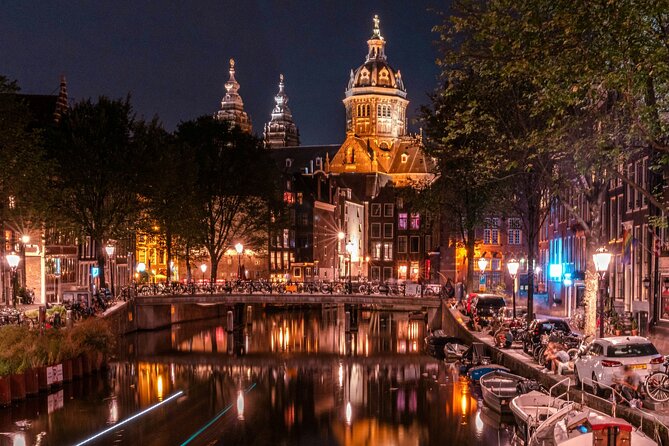
Stop 2: St. Nicholas Basilica and Amsterdam’s seafaring roots
Next up is St. Nicholas Basilica, dedicated to the patron saint of seafarers. You get about 15 minutes here, and since admission is free, this stop is easy to enjoy without extra costs.
What I like about this stop is how it widens your lens. The Red Light District can swallow your attention, but the city around it has major layers of identity. St. Nicholas Basilica is one of those layers, and the architecture helps you feel the city as more than a single neighborhood.
If you are the type who thinks churches are just churches, this one is worth treating as a landmark with a specific story tied to maritime life. It adds depth before you hit the streets that most visitors think of first.
More of the older layers of Amsterdam

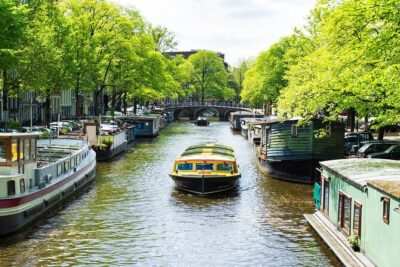
Stop 3: Zeedijk, where the street’s past shows through
Zeedijk is all about place-based change. You spend around 15 minutes here, and the stop is free, so it fits naturally into a walking itinerary without forcing you into another ticket queue.
The key idea is transformation. Zeedijk is described as having a turbulent past, including a mention of a 1970s epidemic, then turning into a street known for culture, shops, and cafés. That kind of shift is a theme you will keep seeing across Amsterdam’s neighborhoods.
This is also a practical stop. It gives you a feel for how to move through the area like a local, not like someone passing through for an afternoon checklist.
Stop 4: He Hua Temple, a brief pocket of calm
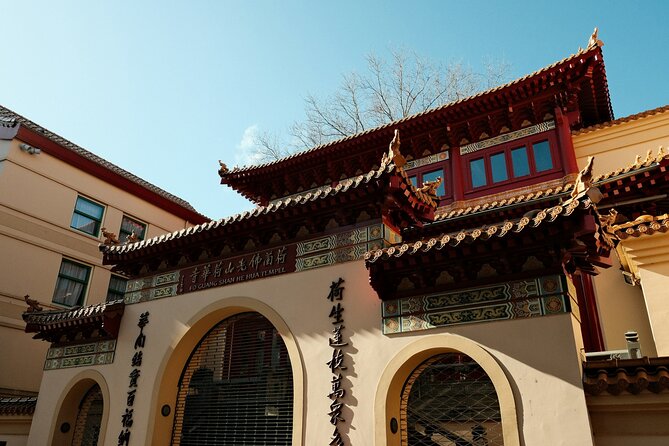
Then you get a tonal change at Fo Guang Shan He Hua Temple. The guided stop is about 5 minutes, and admission is not included, but the point here is contrast.
This temple stop matters because it reminds you Amsterdam is religiously varied and visually expressive beyond the canals and big church façades. You are also learning how different communities coexist within walking distance.
If you love quick detours that give you a different perspective, you will appreciate how short this is. You do not lose the flow of the walk, you just get a reset button.
Stop 5: Nieuwmarkt, a square with everyday energy
Nieuwmarkt gets about 15 minutes, and the stop is free. This is one of those places that helps you understand the city as lived-in, not staged.
The square connects markets, historic landmarks, and plenty of cafés. Even if you are focused on the adult side of Amsterdam, this stop keeps the tour grounded in day-to-day rhythms.
It is also a good moment to pause mentally. You have already heard about institutions, spiritual spaces, and street-level change, so Nieuwmarkt helps you see how the broader city continues moving right alongside its most famous controversies.
Stop 6: Amsterdam’s Red Light District, history and future in the same streets
Now you hit the core of it: the Red Light District. This part is about 30 minutes, and it is free to walk through with the group.
This is where the tour earns its title. You are not just walking through neon and nightlife. You are also learning how the neighborhood got to this point, and what it means now, socially and culturally.
One of the best things the guide brings here is the tone. The messaging is about respect, because the people who work there are not props for someone else’s vacation. You will feel that guidance in how the guide speaks and how the group is nudged to behave.
If you are sensitive to adult themes, it is still possible to enjoy the tour as education. Just go in with eyes open and keep your expectations realistic. This is Amsterdam, and the district is part of the city’s real life, even when it makes visitors uncomfortable.
Stop 7: Oude Kerk, an 800-year landmark in the center of it all
After the Red Light District, the tour shifts again with Oude Kerk. You get about 10 minutes, and admission is not included.
This church is described as roughly 800 years old, and that age shows. You feel the weight of time in how the space is presented and how the city’s layers crowd together in central Amsterdam.
What I like about putting Oude Kerk after the Red Light District is that it gives you a clean contrast. In one direction, you have a neighborhood people argue about in modern terms. In another, you have the kind of long continuity that turns Amsterdam into a place of survival and adaptation.
Stop 8: Condomerie, the playful shop with a serious point
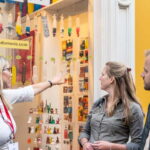
Then comes Condomerie, about 5 minutes and free. This is described as the world’s first condom specialty shop, which makes it unusual even by Amsterdam standards.
The stop is entertaining, but it is also instructional. The displays are set up to be playful while still promoting safe sex, and that public-health angle is the key reason this is a meaningful stop, not just a novelty.
If you like learning that does not take itself too seriously, this is your pause. It is short, it is memorable, and it gives you something you can carry forward as a takeaway about how societies handle sensitive topics.
Stop 9: Beurs van Berlage, architecture you can spot from far away
The tour ends at Beurs van Berlage, with about 15 minutes here and free entry for the outside and guided explanation time. This former stock exchange is presented as an architectural masterpiece and also a cultural hub hosting events, exhibitions, and concerts.
I love ending on a landmark like this because you finish with a sense of Amsterdam’s design and civic identity. The Red Light District and the surrounding neighborhoods can feel like a world of rules and exceptions. Beurs van Berlage feels like the opposite, a reminder of how the city also built itself through finance, public life, and culture.
If you have energy after the tour, this is a great endpoint to continue exploring the Damrak area and grab a meal nearby.
Price and what you actually get for $60.15
The price is $60.15 per person for about 2 hours. For this neighborhood type of tour, the value comes from what you learn and how efficiently the route covers key landmarks across the area.
What is included:
- a local guide
- local recommendations
- an English guide listed for the tour, with other languages available via guide options (English, Spanish, Italian, Dutch)
What is not included:
- several admissions can be extra, specifically mentioned at Weeping Tower, He Hua Temple, and Oude Kerk
- optional food and drinks such as alcohol (5 to 10 euros, 18+ only), snacks, coffee or tea, soda, bottled water
- meals like lunch or dinner are also extra if you choose to extend your day
Here is how I would think about it: you are paying for the guided walk and context across multiple stops. Since some entrances are not included, plan a small buffer in your budget if you want to do more than the guided time at the ticketed spots.
Who should book this tour, and who might want to rethink
This is a great fit if you:
- want a Red Light District experience with more context than typical walking tours
- like history plus modern social change in the same route
- enjoy seeing multiple Amsterdam landmarks in one focused evening
- prefer a small group with time for your questions
It might not be your best choice if:
- you strongly dislike adult-themed neighborhoods, even with a respectful guide and educational framing
- you get impatient with a slow start, since the tour begins with some early chatting before moving
The group limit of 10 also makes it feel more personal. You are not lost in a crowd, and you are more likely to hear the key points clearly.
Quick tips so you enjoy it more
Keep your expectations flexible. This is an adult neighborhood, and the tour balances facts, stories, and practical respect in a way that works best when you stay open-minded.
Wear comfortable shoes. You are walking between several central locations, including church stops and street segments. And because the tour starts in the evening, bring whatever you need for cool night air, if you tend to get chilly.
If you want the best experience, arrive on time and ready to listen. The first part sets the mindset for the rest of the route, and the guide uses that time to frame how the district should be approached respectfully.
Should you book this Red Light District tour?
If you want to understand Amsterdam’s Red Light District as part of the city’s ongoing story, this tour is a strong choice. The small-group size, the guide-led tone of respect, and the mix of stops outside the district make the experience feel more like learning than sightseeing.
I would book it if you enjoy history that connects streets, buildings, and social change. I would skip it if adult themes are a hard no for you, or if you hate even a short upfront briefing before the walk really starts.
FAQ
How long is the Red Light District tour?
It runs for about 2 hours.
What time does the tour start in Amsterdam?
The tour starts at 8:00 pm.
How much does the tour cost?
The price is $60.15 per person.
Where do I meet the guide, and where does the tour end?
You meet at Café the Schreiertower, Prins Hendrikkade 95, 1012 AE Amsterdam. The tour ends at Beurs van Berlage, Damrak 243, 1012 ZJ Amsterdam.
What languages are offered?
The tour is offered in English. A guide option is listed in English, Spanish, Italian, and Dutch.
Is admission included for the stops?
Admission is not included for Weeping Tower, Fo Guang Shan He Hua Temple, and Oude Kerk. St. Nicholas Basilica and the other listed stops in the route are noted as free.
What is not included in the price?
Alcoholic beverages are extra (5 to 10 euros, 18+ only). Dinner, lunch, snacks, coffee and or tea, soda, and bottled water are also extra if you choose to purchase them.
Everything Else From Our Amsterdam Notebook


Also Reviewed Around Amsterdam



The Adult Side of Amsterdam, Explained



Fresh off the review pile in Amsterdam
- Full-Day Trip From Amsterdam to Keukenhof, Zaanse Schans + Cruise
★ 5.0 · 3 reviews - Boutique Dutch Food & History Tour with up to 8 guests only
★ 5.0 · 3 reviews - Private Tour to Windmills Zaanse Schans +Keukenhof – 7 Hours
★ 5.0 · 3 reviews - Full-Day Private Guided Countryside Tour from Amsterdam by Bike
★ 5.0 · 3 reviews - Amsterdam Red Light District and Old Town Walking Tour
★ 5.0 · 3 reviews
Red Light District & Coffeeshops, compared.
 ★ 4.2Amsterdam: Red Light Secrets Museum Entry TicketFrom $175,722 reviews
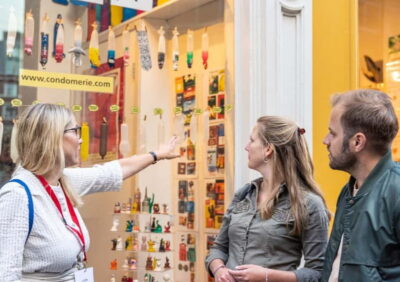 ★ 4.9Amsterdam: Red Light District Tour in German/English/ItalianFrom $285,623 reviews
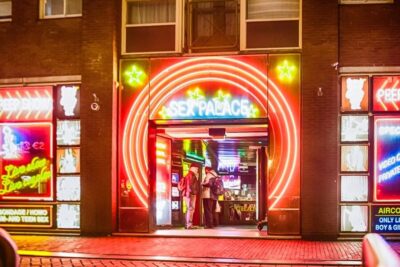 ★ 4.6Amsterdam Red Light District & Coffee Shop TourFrom $294,134 reviews
 ★ 4.1Amsterdam: Red Light District Pub Crawl with Unlimited ShotsFrom $242,130 reviews
 ★ 4.5Amsterdam Red Light District Pub CrawlFrom $241,497 reviews
 ★ 4.2Amsterdam: Cannabis Museum Entry TicketFrom $141,244 reviews
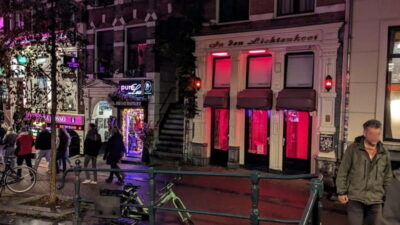 ★ 4.5Amsterdam: Red Light District TourFrom $331,135 reviews
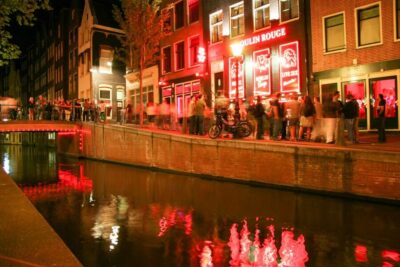 ★ 4.1Amsterdam: After Dark Red Light District TourFrom $571,030 reviews
Browse the lists this tour appears in