
REVIEW · AMSTERDAM
Rijksmuseum & Amsterdam City Center – Exclusive Guided Tour
Art and canals in one guided day. You start at the Rijksmuseum and spend real time with the big Dutch artists, then you keep moving on foot through Amsterdam’s medieval core, canals, and bridges. I love the Vermeer and Rembrandt spotlight, and I also like that the walking part lets you stop often for photos so the city feels real, not rushed.
After lunch, the pace shifts. Many city stops are short photo moments, so if you want to linger in each place, you might find the day moves a bit quickly, plus lunch is on your own.
In This Review
- Key highlights I think you will care about most
- Rijksmuseum first, canal city second: the logic behind this day
- Dutch Masters at the Rijksmuseum: what you get beyond the posters
- The walking tour after lunch: canal bearings, bridges, and a story you can see
- St. Nicholas Basilica, the Tower of Tears, and Zeedijk’s Chinatown energy
- Nieuwmarkt, De Waag, and the Trippenhuis pair: power, trade, and unusual house design
- East India Company courtyard, then Protestant landmarks you can actually spot
- Canal houses, hofjes, and Dam Square: what “everyday Amsterdam” looks like
- Anne Frank House area and the final canal corner at Papeneiland
- Price and value: is 287.18 per person worth it?
- Who this private tour fits best
- Quick prep tips so your day stays smooth
- Should you book this Rijksmuseum and Amsterdam city-center tour?
- FAQ
- Where does the tour start and what time does it begin?
- Where does the tour end?
- How long is the experience?
- Is this tour private?
- What language is the tour offered in?
- What is included in the price?
- Is lunch included?
- What should I know about mobility or physical effort?
- Are there any bag or dress rules?
- What if the Rijksmuseum is delayed or closed?
- Can I cancel, and how late can I do it?
Key highlights I think you will care about most
- Private-group museum time: You explore the Rijksmuseum with dedicated guide attention, then continue into the city without needing to plan routes.
- Dutch Masters tied to street scenes: Museum themes help you read Amsterdam as something made by the same eras and ambitions you saw indoors.
- Photo-friendly walking rhythm: Even when stops are brief, you are generally set up to look up, look around, and capture angles on the canals.
- A wide sweep of iconic landmarks: You hit both art and architecture, from the Amstel area to hofjes, churches, and the Golden Bend.
- Guide names matter, and reviews back it up: Recent feedback highlights guides such as Jacopo, Victoria, Josje, Giuseppina, and Paola for story-led explanations and handling crowd flow well.
Rembrandt, Vermeer and the rest. Further gallery visits
- Amsterdam: Rijksmuseum Entry Ticket★ 4.7 · 25,535 reviews
- Amsterdam: Fabrique des Lumières Dutch Masters Ticket★ 4.6 · 2,373 reviews
- Amsterdam: City Canal Cruise and Rijksmuseum★ 4.5 · 2,129 reviews
- Rijksmuseum Amsterdam Small-Group Tour with Private Upgrade★ 4.5 · 1,547 reviews
Rijksmuseum first, canal city second: the logic behind this day
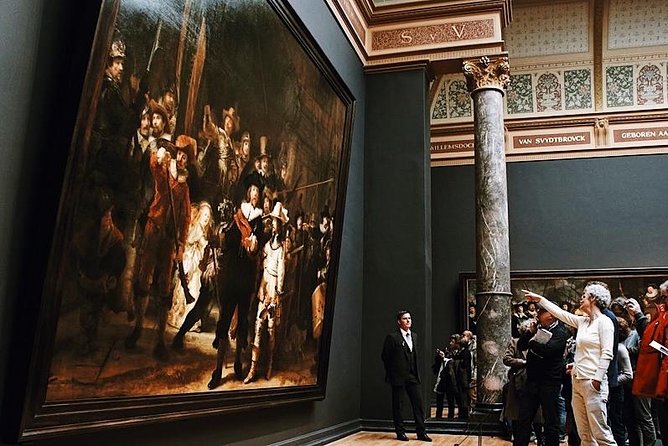
This tour works because it gives you a clean contrast. You begin with one of Europe’s best-loved art museums, then you walk through the city that produced those artists and those ideas of wealth, faith, trade, and domestic life.
At the Rijksmuseum, the goal is not to see everything. The goal is to see enough, in the right order, that you understand what you are looking at and why it mattered. The guide helps you make sense of the museum’s scale, including its vast collection of more than 8,000 objects, so you walk out with a mental map instead of a blur of rooms.
Then lunch takes the “museum filter” off. On the walking portion, the guide brings earlier museum themes to the street level. That is the trick: you do not just memorize facts about Dutch history, you start noticing how those centuries show up in canal houses, churches, guild buildings, and even the narrow architecture shaped by land taxes.
Dutch Masters at the Rijksmuseum: what you get beyond the posters
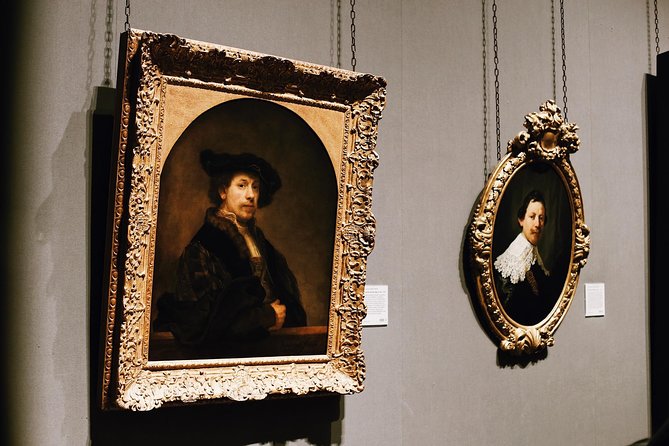
Your museum time runs about 2 hours 30 minutes with admission included, and it is designed as a highlights circuit. You focus on the Dutch masters and the objects that set the tone for the Netherlands’ visual culture.
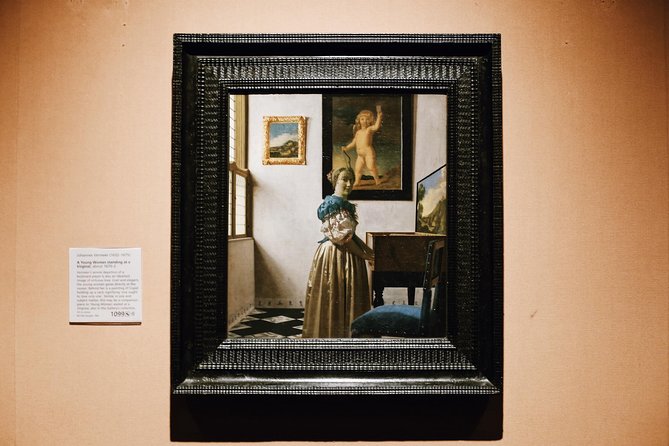
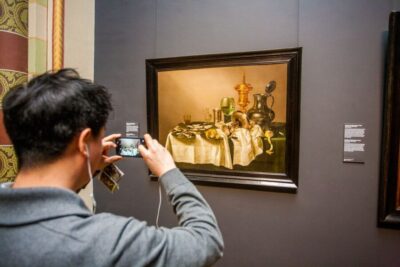
The tour specifically calls out major names like Rembrandt and Vermeer, with stops that include Rembrandt’s masterpieces and Vermeer’s domestic scene, The Milkmaid. That matters because it changes how you look at the famous works. A guide can explain what you see, then help you connect it to everyday life, trade, and status, instead of treating paintings like museum wallpaper.
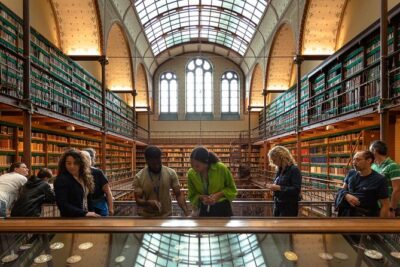
You also get a sense of how wide the Rijksmuseum’s collection goes. It is not only paintings. You spend time with artifacts and objects that help paint a fuller Dutch story across centuries. One memorable detail that the tour highlights is a fascinating 19th-century library space inside the museum. Even if you are not a “library person,” it is the kind of room that reminds you how much of culture is carried by books, records, and collections.
Two practical things you should plan around:
- You will need to pass museum security, and the rules say no large bags or suitcases are allowed, only handbags or small, thin bag packs.
- Some rooms can be quiet or have a restricted right to speak, so your guide will flag when to keep voices down.
If you love art, this kind of guided selection is worth it. If you hate being “told where to look,” you may want more unguided museum time after the tour.
The walking tour after lunch: canal bearings, bridges, and a story you can see
Once the museum part ends, the day becomes a city tour on foot with lots of look-ups and quick photo windows. You are shown the Amstel River area and introduced to the medieval gate context that helped shape Amsterdam.
This is also where the tour’s value shows. Amsterdam’s beauty can turn into a postcard loop if you do not have a framework. With a guide linking what you saw inside to what you see outside, the city stops feeling random. Leaning houses, canal mansions, bridges, and street layouts start making sense as results of geography, wealth patterns, and changing faith.
There is also a “practical sightseeing benefit” here. Walking through the center gives you bearings fast. Even if you return later on your own, you will understand where the bends and corners are, and why the street names or canal segments feel like parts of a bigger system.
St. Nicholas Basilica, the Tower of Tears, and Zeedijk’s Chinatown energy
The city tour begins at St. Nicholas Basilica. The guide covers the church’s backstory: built at the end of the 19th century at a time when Roman Catholics could once again profess their faith in public after three centuries of prohibition. It is described as a blend of different architectural styles and artistic movements, so you can read the building as a “history in brick and stone” moment.
From there, you head toward the Schreierstoren, often known as the Tower of Tears or Weeper’s Tower. The tour explains the local belief tied to the medieval city wall: women wept there for their husbands leaving for war or to fish from the port. Even if you treat that story as folklore rather than strict fact, it is exactly the kind of emotional detail that helps a tower stop being just a shape in a skyline.
Next up is Zeedijk, an area associated with Amsterdam’s Chinatown. The street is described as lined with Asian markets, restaurants, and shops, and it includes the Zeedijk Buddhist temple, described as the largest Chinese-style Buddhist temple in Europe. This is a nice pause in pace because it feels like a different Amsterdam within the same city center.
More trips where somebody else does the explaining


Nieuwmarkt, De Waag, and the Trippenhuis pair: power, trade, and unusual house design
At Nieuwmarkt, you see a lively market and square tied to commerce since the 17th century. The tour connects that long run to the square’s location just inside an old city gate, making it convenient for traders and shoppers.
During your time there, you also pass De Waag, a 15th-century non-religious building that is one of Amsterdam’s oldest remaining of its kind. The guide explains how it began as a city gate and part of the walls, and how it later served as a guildhall, museum, and even a firestation. That mix of functions is the point. Buildings like this are how cities handled the practical side of life, not just grand ceremonies.
Then the tour points out the Trippenhuis and Klein Trippenhuis. The contrast is the fun part:
- Trippenhuis is described as Amsterdam’s widest home, spanning about 22 meters.
- Klein Trippenhuis is described as one of the narrowest houses, right across the way.
The narrow design is linked to land taxes that encouraged tall, thin architecture. So when you look at those facades, you are not only seeing style. You are seeing the way government policy shaped street life.
East India Company courtyard, then Protestant landmarks you can actually spot
You also get a moment at the Oost-Indisch Huis, described as the Dutch East India Company headquarters courtyard, and the birthplace of the world’s first multinational corporation. Even if you have only a passing interest in trade history, this stop helps connect the museum world to the real money that fueled art, shipping, and expansion.
Nearby, you pass Zuiderkerk, Amsterdam’s first purpose-built Protestant church, designed by Hendrick de Keyser. The tour highlights its elegant tower as one of Amsterdam’s defining landmarks. This is useful even if you do not go inside, because the tower is a visual anchor. It tells you where you are in the city story of faith and politics.
You also see the Stopera complex, which houses both the city hall and the Dutch National Opera and Ballet. The tour notes the construction took at least 60 years, so you can think of it as a long, complicated civic project, not a quick build.
Canal houses, hofjes, and Dam Square: what “everyday Amsterdam” looks like
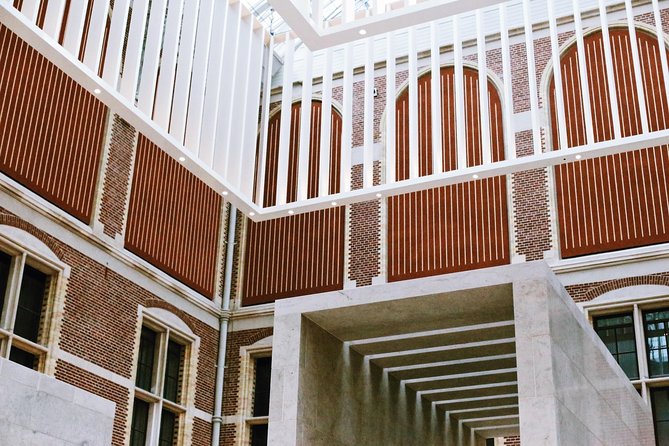
A standout part of the day is how you move from grand buildings to quieter, residential corners.
You look at Huis Aan De Drie Grachten, a rare 17th-century canal house at the junction of three canals with façades facing in three directions. That setup is perfect for photos because it gives you multiple angles in one spot.
Then comes Begijnhof, described as one of Amsterdam’s oldest hofjes, or almshouses, built around a secluded courtyard and garden. The guide explains it as homes for the Beguines, unmarried women who lived together under vows of chastity. Today it also includes two churches. You get to experience how a belief system and social structure created an architectural form that still feels peaceful.
Later, you reach Dam Square, one of the city’s most famous public spaces. The tour ties it to notable buildings and events, including the Royal Place, New Church, and National Monument. It is loud and central, but it is also where the city’s public identity gets staged.
On the walk, you also get Herengracht, known as the Golden Bend, lined with some of the richest and most ornate canal mansions from the Dutch Golden Age. If you want proof that Amsterdam’s wealth was not just for show, this stretch helps.
Anne Frank House area and the final canal corner at Papeneiland
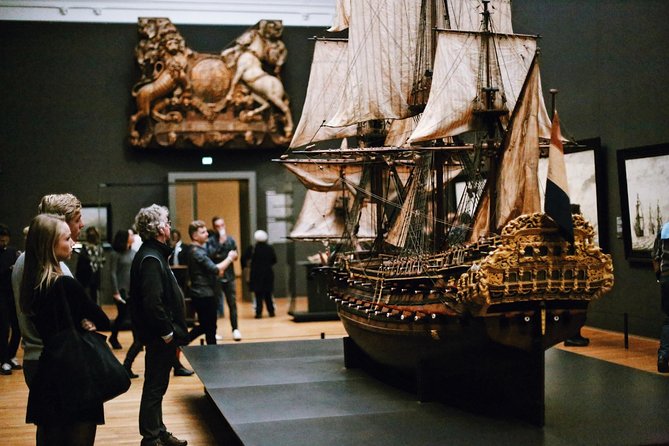
One of the most emotionally loaded moments is simply pausing outside the Anne Frank House, where she hid during WWII. The tour keeps it respectful and points out the close neighbor Westerkerk, noted for the tallest church tower in Amsterdam.
You then spot a stretch of ornate gable stone façades at De Drie Hendricken aan de Bloemgracht 87 to 91, with carvings described as allegories and trade emblems. This is one of those moments where looking up pays off.
Next, you visit Karthuizerhof, described as the largest hofje in Amsterdam, built around a tranquil courtyard for the city’s poor and elderly.
The tour continues to Noorderkerk, a 17th-century Protestant church for the Jordaan district with an unusual cross-shaped floor plan reflecting new ideas of Reformation worship.
Finally, you end at Papeneiland on Prinsengracht 2, described as one of Amsterdam’s prettiest canal corners. The tour even points out Het Papeneiland, a brown café from 1642, said to serve the best apple pie in town. You may or may not stop for pie, but you will probably want to, since you have just walked through a dense loop of art, faith, commerce, and streetscapes.
Price and value: is 287.18 per person worth it?
At $287.18 per person for a roughly 5.5-hour day, this is not a budget add-on. You are paying for a few things that matter in Amsterdam:
- A guided Rijksmuseum experience with admission included
- A guided walking loop through major landmarks in the city center
- All entrance fees covered as part of the tour cost
- Tour operation rain or shine
- Private transportation between locations if necessary
- A truly private format, meaning your group is the only group participating
Where this price starts to make sense is when you value time and interpretation. Amsterdam’s best sights can take you all day if you are trying to figure out the right order, the right context, and the right stories on your own. Here, the guide does that tying-in work for you. That is especially true if you care about Dutch art and want the museum to feed your street-level understanding.
It also helps if you are traveling with another person or a small party where a private guide becomes more efficient. If you are a solo “wander and read signs” type who likes going at your own tempo, you might prefer museum-only or city-only plans. But if you want both art and architecture connected by a single narrative, this is a straightforward way to do it.
Who this private tour fits best
This tour suits you if:
- You want a structured, story-focused Rijksmuseum visit without guessing what to prioritize
- You like walking and can handle a full morning plus afternoon on your feet at a moderate pace
- You want Amsterdam’s highlights in one loop, without hopping between different tickets and meeting points
- You like history told through places, not just dates
It may feel less perfect if:
- You need long museum time in one or two rooms, rather than guided highlights
- You dislike short stopovers and prefer slower sightseeing
- You plan to carry large bags, since the museum has restrictions
Quick prep tips so your day stays smooth
Here are the practical things to handle before you go:
- Bring the right bag: the Rijksmuseum security rules say no large bags or suitcases, only handbags or small thin bag packs.
- Dress appropriately for entry into some sites. The tour notes that dress requirements apply for certain locations.
- Use your phone for the logistics: you get a mobile ticket, and you are required to provide a mobile phone number including country code.
- Expect the guide to manage speaking rules and crowd flow. Some rooms are quiet or have restricted right to speak, and you may see crowd lines at certain attractions due to security.
- Remember that the Rijksmuseum can face occasional closures. If opening time is delayed by more than 1 hour from the tour start time, the tour provides an appropriate alternative, but refunds or discounts are not available in those cases.
Should you book this Rijksmuseum and Amsterdam city-center tour?
If you want one guided day that links Dutch Masters, Dutch history, and the look of Amsterdam’s canals and buildings, I think this is a smart booking. The museum highlights and the walking loop work together, and the tour is built for people who want to leave with a real understanding, not just photos.
Book it especially if your schedule is tight and you do not want to turn your trip into a research project. If you prefer a slow pace, plan for extra time after the tour to linger where you liked most, because the city stops are designed to keep you moving.
Bottom line: for art lovers who also want city landmarks interpreted in plain terms, this private tour has strong value for the time you spend.
FAQ
Where does the tour start and what time does it begin?
The tour starts at Cobra Café, Hobbemastraat 18, 1071 ZB Amsterdam, Netherlands. The start time is 10:00 am.
Where does the tour end?
The tour ends at The Papeneiland, Prinsengracht 2, 1015 DV Amsterdam, Netherlands.
How long is the experience?
It runs for about 5 hours 30 minutes, including a lunch break.
Is this tour private?
Yes. It is described as a private tour/activity, and only your group participates.
What language is the tour offered in?
The tour is offered in English.
What is included in the price?
The tour includes the guided museum tour and walking tour, admission tickets where applicable, and any entrance fees. It also includes private transportation between locations if necessary, and it runs rain or shine.
Is lunch included?
Lunch is not included. You will have a lunch break, and it is own expense.
What should I know about mobility or physical effort?
The tour notes a moderate physical fitness level is required.
Are there any bag or dress rules?
For the Rijksmuseum, no large bags or suitcases are allowed, and only handbags or small thin bag packs can go through security. The tour also notes that appropriate dress is required for entry into some sites.
What if the Rijksmuseum is delayed or closed?
The tour notes that the Rijksmuseum may have occasional closures without prior warning. If the museum opening is delayed by more than 1 hour from the tour starting time, the tour provides an appropriate alternative, but refunds or discounts are not available in those cases.
Can I cancel, and how late can I do it?
You can cancel for free up to 24 hours in advance for a full refund. Changes made less than 24 hours before the experience start time are not accepted.
Everything Else From Our Amsterdam Notebook




Also Reviewed Around Amsterdam




The Dutch Masters, Up Close


Fresh off the review pile in Amsterdam
- Full-Day Trip From Amsterdam to Keukenhof, Zaanse Schans + Cruise
★ 5.0 · 3 reviews - Boutique Dutch Food & History Tour with up to 8 guests only
★ 5.0 · 3 reviews - Private Tour to Windmills Zaanse Schans +Keukenhof – 7 Hours
★ 5.0 · 3 reviews - Full-Day Private Guided Countryside Tour from Amsterdam by Bike
★ 5.0 · 3 reviews - Amsterdam Red Light District and Old Town Walking Tour
★ 5.0 · 3 reviews
Rijksmuseum & the Dutch Masters, compared.
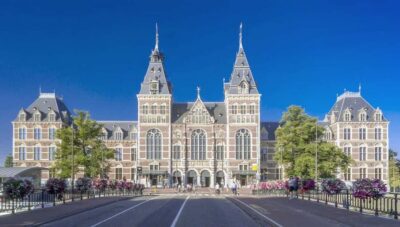 ★ 4.7Amsterdam: Rijksmuseum Entry TicketFrom $3125,535 reviews
 ★ 4.7Amsterdam: Rembrandt House Museum Entrance TicketFrom $233,385 reviews
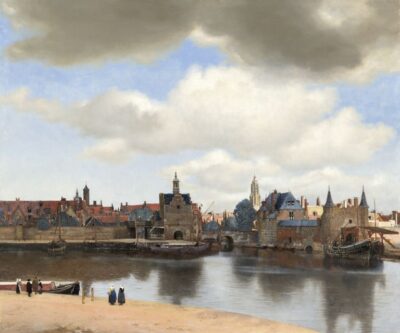 ★ 4.7The Hague: Mauritshuis Entrance TicketFrom $252,706 reviews
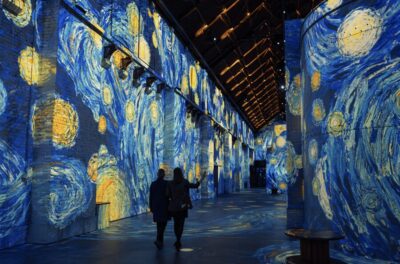 ★ 4.6Amsterdam: Fabrique des Lumières Dutch Masters TicketFrom $212,373 reviews
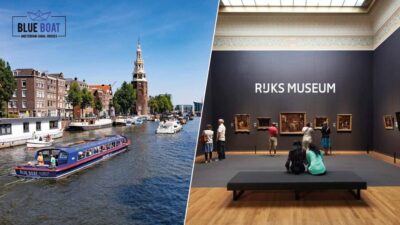 ★ 4.5Amsterdam: City Canal Cruise and RijksmuseumFrom $452,129 reviews
 ★ 4.5Rijksmuseum Amsterdam Small-Group Tour with Private UpgradeFrom $901,547 reviews
 ★ 4.3Amsterdam: Rijksmuseum Entry Ticket and Canal Cruise ComboFrom $451,276 reviews
 ★ 4.7Amsterdam: Rijksmuseum Guided Tour and TicketFrom $78649 reviews
Browse the lists this tour appears in