
REVIEW · ROTTERDAM
Rotterdam: Architecture Highlights Tour including the Depot
Rotterdam’s buildings talk back. This 2.5-hour architecture walk turns the city into a live lesson, with Depot Boijmans van Beuningen’s curved mirror facade and rooftop access giving you views and details you usually do not see.
Two standouts I love are the way the guide explains how striking shapes get built, and the chance to get up onto rooftops for skyline angles over bridges and modern icons.
One consideration: this is a walking tour, and it is marked as not suitable for people with mobility impairments, even though it is listed as wheelchair accessible.
In This Review
- Key highlights at a glance
- Rotterdam Architecture Hits Different When You Get the Story
- Setting Expectations for a 2.5 Hour Private Walking Route
- Rooftop Views from Het Witte Huis or Timmerhuis
- Markthal on Foot, Where Housing and Food Share One Big Idea
- Dudok, OMA, and Timmerhuis, How a Redevelopment Gets a New Skin
- Post-War and Historical Anchors, Including Central Station and Warehouses
- Museumpark Pause: Sonneveld House and Het Nieuwe Instituut
- Depot Boijmans van Beuningen, the Public Art Depot Built Like Engineering
- Extras That Matter: Cube Houses Discount and Postcards You Will Actually Use
- Price and Value: Is $494 per Group Fair?
- Who Should Book This Tour, and Who Might Prefer Another Plan
- Should You Book the Rotterdam Architecture Highlights Tour?
- FAQ
- How long is the Rotterdam architecture highlights tour?
- How many people are in the group?
- Where do we meet the guide?
- Do I get rooftop access, and is it different on weekends?
- Is Markthal included in the tour?
- Do we get any help for the Cube Houses?
- What languages are the guides available in?
Key highlights at a glance
- Depot Boijmans van Beuningen rooftop and facade logic: reflecting panels, a double-curved exterior, and huge entrance doors tied to aviation-style engineering
- Rooftop viewpoints that connect landmarks: weekend start at Het Witte Huis, weekdays rooftop access at Timmerhuis, with views toward Markthal and bridges
- Markthal on foot, not just from the street: you walk right through the hall where housing and food culture share the same footprint
- City park energy at Grotekerkplein: recently refurbished public space with a stage for music and dance
- A tight mix of eras: post-war and historical buildings, plus modern design in the Museumpark area
- Small extras that add up: 3 postcards by Rotterdam architectural photographer Ossip van Duivenbode and a 50 percent discount ticket for the Cube Houses
Still in Rotterdam? Keep going
- Rotterdam: Harbor Sightseeing Cruise★ 4.3 · 7,599 reviews
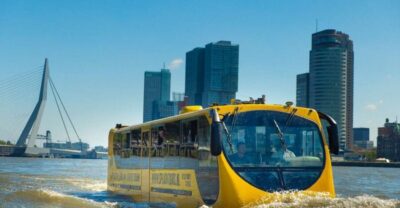
- Rotterdam: 1-Hour Sightseeing Splash Tour★ 4.5 · 3,299 reviews
- Rotterdam: Rotterdam Zoo Blijdorp Entry Ticket★ 4.6 · 2,754 reviews
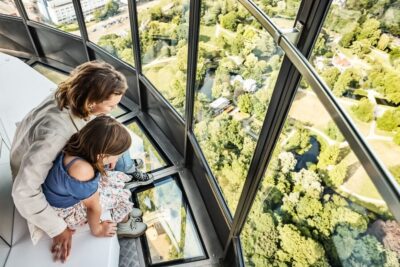
- Rotterdam: Euromast Lookout Tower Ticket★ 4.4 · 2,549 reviews
Rotterdam Architecture Hits Different When You Get the Story
Rotterdam is a city that rebuilt itself over and over, and you can feel that drive in its architecture. The best part of this tour is that you do not just look at buildings, you learn what problem each design is trying to solve, and how engineers made it happen.
I also like that you get both scale and detail. You will see big-city icons like Rotterdam Central Station, and then you will slow down for hands-on explanations of materials, form, and construction choices.
The guide support matters here. One thing that shows up in high ratings is praise for clear explanations and a friendly, upbeat style, including from a guide named Frank Schipper, who is described as giving lots of context and leaving no question unanswered.
Setting Expectations for a 2.5 Hour Private Walking Route
This is a private-group tour priced at $494 per group (up to 6 people). In practice, that small group size helps you pause when something catches your eye, ask follow-up questions, and get answers in the moment instead of watching from the back.
Timing is also part of the experience. You are outside for a good chunk of the tour, and the big difference is the rooftop start depending on the day you book.
- Weekend tours: you start on the rooftop of Het Witte Huis
- Weekday tours: you get rooftop access at Timmerhuis, with the tour built around the best city-center viewpoints
You meet your guide outside the entrance of Het Witte Huis, so it is easy to find a clear starting point before you begin the walking loop.
Rooftop Views from Het Witte Huis or Timmerhuis
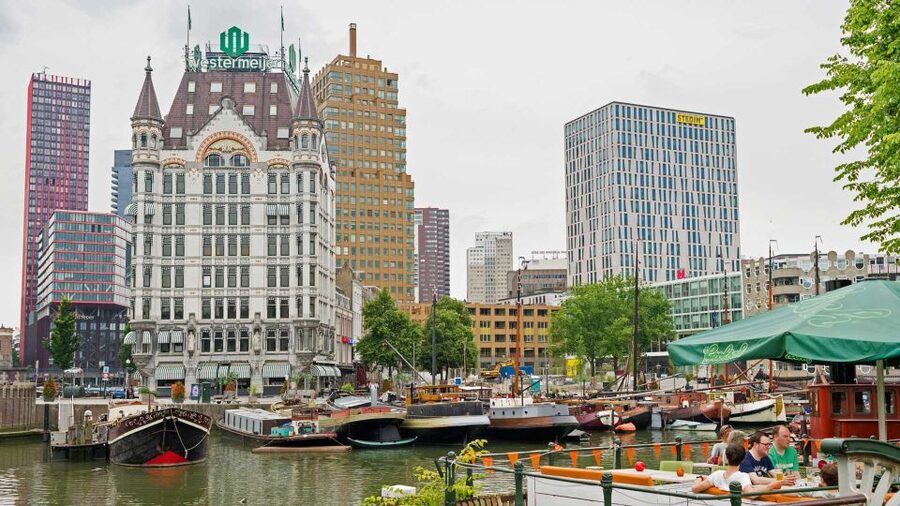
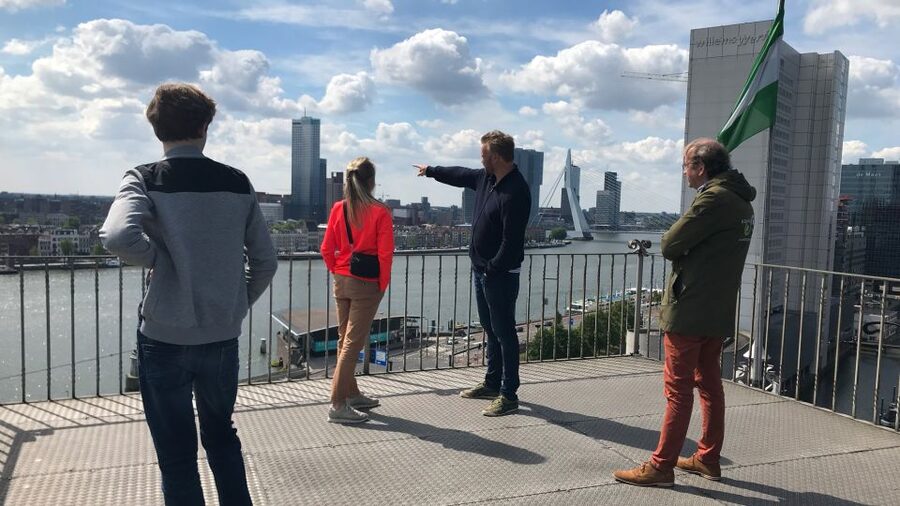
If you like skyline angles, start your planning with the rooftop. On weekends, the tour begins on the rooftop of Het Witte Huis, described as the oldest skyscraper of Europe, and you look out over a tight cluster of Rotterdam signatures.
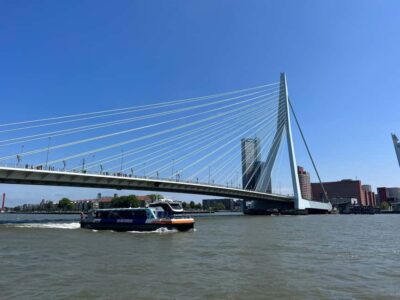
From up there, you get a visual map that ties the rest of the walk together: Markthal, the Cube Houses, the Erasmus Bridge, the Willems Bridge, and De Rotterdam are all in your field of view. That matters, because it turns later street-level stops into connected chapters rather than isolated landmarks.
On weekdays, you get rooftop entrance at Timmerhuis. You still get a “see the whole city center” feel, and it also fits nicely if you want the walk to keep moving without the earlier start on the weekend rooftop.
Tip: bring the same mindset you would for a museum, not a viewpoint. Look for straight lines, curves, and how bridges stitch different parts of the city. The guide will help you interpret what you are seeing.
Markthal on Foot, Where Housing and Food Share One Big Idea
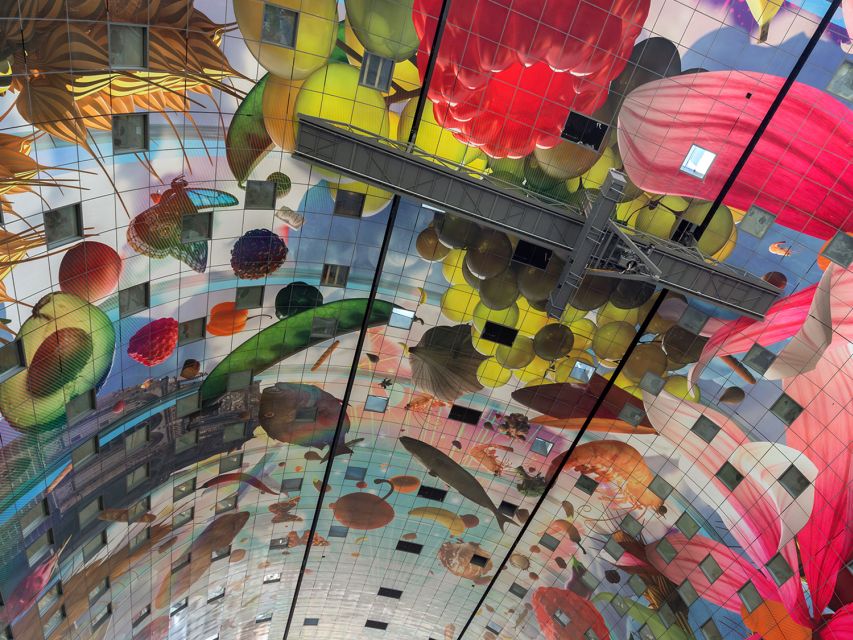
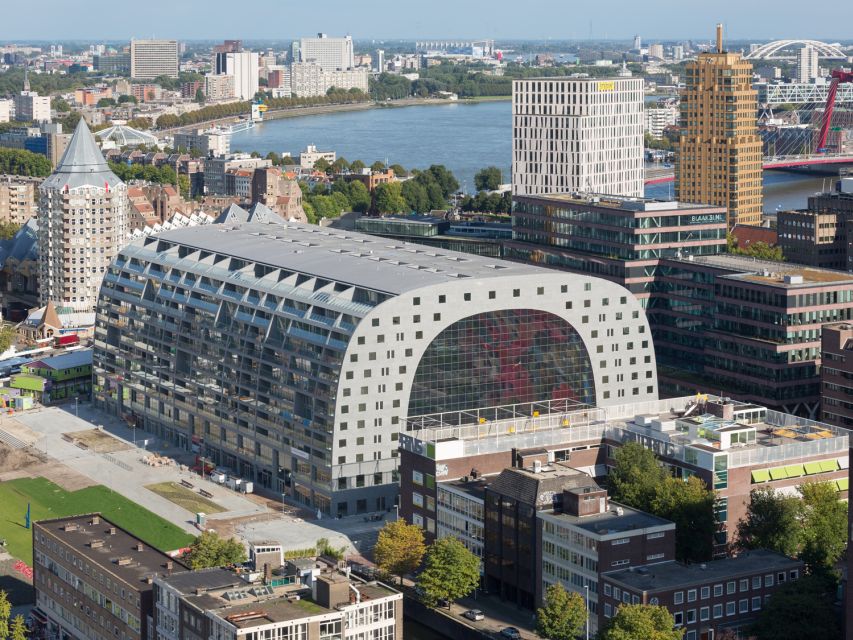
After your rooftop start, the tour shifts to everyday life in the best kind of way, by walking through Markthal. This is not just a pretty facade stop. The design concept is what makes it fascinating: housing and a lively food scene are combined under one roof, so daily routines happen inside an architectural landmark.
You will walk right through Markthal and see how the building creates a public interior space, while still functioning as residential infrastructure. That combination is one of the reasons Rotterdam’s architecture often feels practical, not just futuristic.
Then comes the nearby Grotekerkplein area, a reworked city park space. The tour highlights the recently refurbished Grotekerkplein and notes a public stage for music and dance, which is a great reminder that architecture is also about where people gather and perform.
A simple drawback to keep in mind: if you time it when the streets around Markthal are busy, you might want to slow down at each key point and let the guide steer you through. With a small group, it is usually manageable.


Dudok, OMA, and Timmerhuis, How a Redevelopment Gets a New Skin
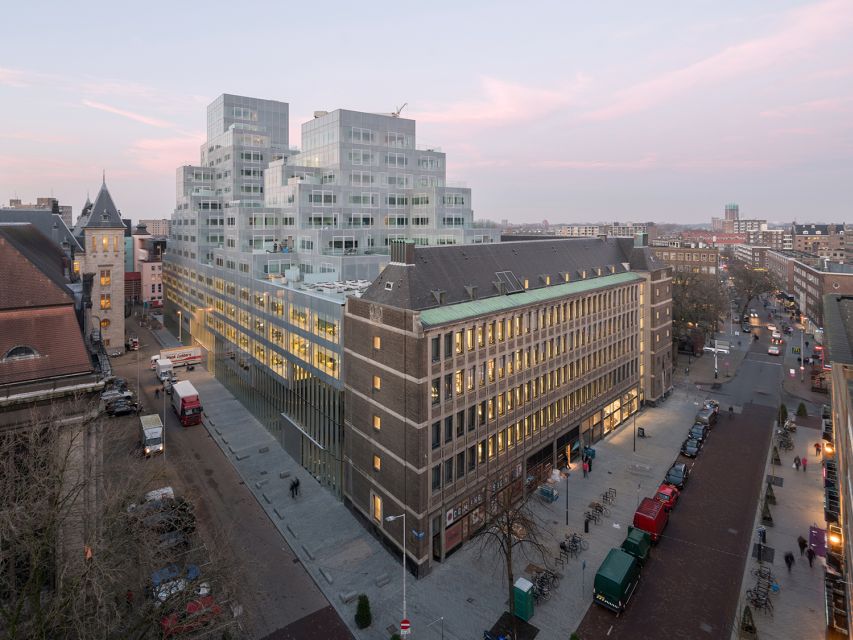
One of the more satisfying parts of Rotterdam architecture is how old structures and new ambitions interact. The tour passes Dudok’s Dudok, then moves toward Timmerhuis, framed as an inner-city redevelopment project where the Rotterdam-based architectural firm OMA merged a municipal office block from the 1950s with a pixellated steel-and-glass structure.
What you are looking at here is not just a style change. It is a physical story about reusing what already exists and giving it an updated identity. The guide’s explanations are the key, because they translate those choices into something you can understand while standing in front of the building.
If you are the type who likes “how it works” details, this is a good stop. The tour’s overall tone is practical, and the focus on construction and statics shows up again later at Depot, where the explanations get very technical in a way that still stays human.
Post-War and Historical Anchors, Including Central Station and Warehouses
Rotterdam’s identity is modern, but it is not only glass and steel. The route includes historical and post-war monuments you can use as anchors while the tour moves fast between eras.
You will pass a post office and de Bijenkorf-warehouse, which helps you see how Rotterdam’s commercial buildings evolved after major disruption. You also get stops and sightlines around Forum and on toward Schouwburgplein and Kruiskadeplein, with major buildings along the way.
Key names on this stretch include:
- Groothandelsgebouw
- Rotterdam Central Station
- de Delftse Poort
- Calypso
- Pauluskerk
- de Unie
Those are not random pins on a map. They represent different ways Rotterdam kept building up, even when it was forced to rethink how the city functions.
If there is any downside here, it is that this part of the walk can feel denser, because there are many stops clustered by footpaths. It helps to keep your eyes open for what the guide emphasizes, like structure, massing, and why each building belongs where it does.
Museumpark Pause: Sonneveld House and Het Nieuwe Instituut
In the Museumpark area, the tour turns reflective for a moment with Sonneveld House and Het Nieuwe Instituut. This is where Rotterdam’s architecture connects to design culture, not just urban planning.
Sonneveld House is especially interesting if you like the idea of architecture as domestic scale. You see how design choices change what daily life feels like inside a home, not only in public spaces.
Het Nieuwe Instituut adds a different layer, linking modern architecture and design to research and education. Even if you do not go inside, it helps you understand why Rotterdam invests in architecture as a field, not only as a backdrop.
Depot Boijmans van Beuningen, the Public Art Depot Built Like Engineering
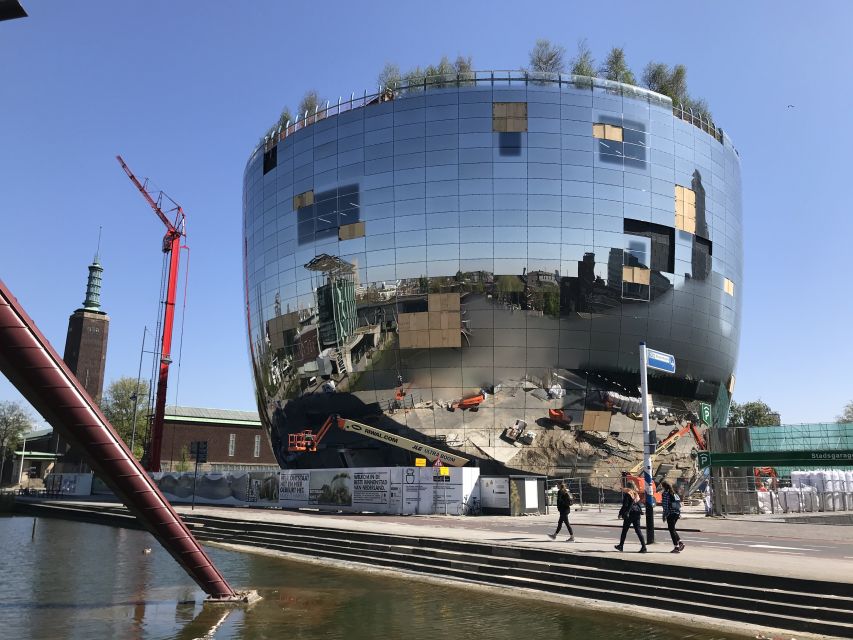
Now for the headline stop: Depot Boijmans van Beuningen. The tour describes it as the home of the world’s first public art depot, and you can feel the ambition in the building.
The facade is a standout. You will marvel at the curved mirror facade of the latest eye catcher Depot. Then the guide gets into the specifics of the reflecting panels that create the double-curved facade, which turns an aesthetic effect into a structural and technical achievement you can actually picture.
This is also where the engineering story gets hands-on. You will learn about aviation engineering techniques needed to operate the huge entrance doors. That detail might sound random until you remember what Rotterdam is good at: applying advanced engineering to city-scale problems, not saving the clever stuff for the airport.
If you are thinking about photos, do not just shoot the front. Look for angles where the curves distort reflections, because that is the design trick doing its job.
Extras That Matter: Cube Houses Discount and Postcards You Will Actually Use
Two included extras make this tour more than a guided walk.
First, you get a 50 percent discount entrance ticket to the Cube Houses. The tour also gives you key rooftop sightlines to the Cube Houses, so the discount is a smart nudge if you want to add a short follow-on visit on your own time.
Second, you receive 3 postcards by Rotterdam architectural photographer Ossip van Duivenbode. It is a small detail, but it is the kind of souvenir that feels tied to architecture photography, not generic tourist paper.
Price and Value: Is $494 per Group Fair?
At $494 per group up to 6 people, this is not a bargain-basement tour. But for Rotterdam architecture, the value starts to make sense once you match what is included to what is usually hard to access.
You are paying for:
- An expert local guide who explains history and construction, not just names
- Rooftop entrance access (Het Witte Huis on weekends, Timmerhuis on weekdays)
- The chance to walk through Markthal
- Depot time with technical explanations tied to facade engineering and giant doors
- Included souvenirs (postcards) and a Cube Houses discount
For a group, the cost works out as a practical “shared ticket price,” especially if you are traveling with family or friends who also care about design. For solo travelers, the private-group setup may still feel worth it if you want flexibility and a small-group pace.
Who Should Book This Tour, and Who Might Prefer Another Plan
This tour fits best if you:
- Like architecture with a build-it logic, including how shapes become real
- Want rooftop views that connect multiple landmarks in one line of sight
- Enjoy walking routes that balance eras, from post-war icons to modern design culture
- Want a private group experience where the guide can answer questions live
It may not be the best fit if you have limited mobility. The tour is marked wheelchair accessible, yet it is also labeled not suitable for people with mobility impairments, so you should treat that as a caution flag and check with the provider about your specific needs.
Also, if you are only into quick photo stops with minimal walking, you might find the pace a bit structured toward explanation.
Should You Book the Rotterdam Architecture Highlights Tour?
I think you should book it if Rotterdam architecture is your kind of travel. The combination of rooftops, Markthal, and Depot Boijmans van Beuningen creates a good arc: skyline context first, then the city’s design ideas in street-level reality.
The biggest reason to choose this tour is the guidance quality. High ratings consistently point to clear explanations of building history and construction, plus a friendly tone from guides such as Frank Schipper. You come away understanding not just what the buildings look like, but why they look that way.
If your trip already has a full day of museums and you only want the quick hits, you could skip this and just wander. But if you want an organized route with meaningful access, this one feels like a smart use of a half day in Rotterdam.
FAQ
How long is the Rotterdam architecture highlights tour?
The tour lasts 2.5 hours.
How many people are in the group?
It is a private group, priced per group up to 6 people.
Where do we meet the guide?
Meet your guide outside the entrance of Het Witte Huis.
Do I get rooftop access, and is it different on weekends?
Yes. Rooftop entrance is provided on weekends at Het Witte Huis, and on weekdays at Timmerhuis.
Is Markthal included in the tour?
Yes. You walk right through Markthal during the experience.
Do we get any help for the Cube Houses?
You receive a 50 percent discount entrance ticket for the Cube Houses.
What languages are the guides available in?
Live guides are available in Dutch, English, and German.
Everything Else From Our Rotterdam Notebook



Also Reviewed Around Rotterdam



Still in Rotterdam? Keep Going
Fresh off the review pile in Rotterdam
- Private tour: Markthal, Cube houses and Rooftop Het Witte Huis
★ 4.5 · 3 reviews - Private transfer Schiphol (AMS) to or from Rotterdam
★ 5.0 · 3 reviews - Private tour from Rotterdam to Windmills of Kinderdijk & Gouda Cheese Experience
★ 5.0 · 3 reviews - Private Transfer from Rotterdam Port to Amsterdam Airport (AMS)
★ 5.0 · 3 reviews - Discover Rotterdam’s most Photogenic Spots with a Local
★ 5.0 · 3 reviews
Rotterdam Tours, compared.
 ★ 4.3Rotterdam: Harbor Sightseeing CruiseFrom $227,599 reviews
 ★ 4.5Rotterdam: 1-Hour Sightseeing Splash TourFrom $353,299 reviews
 ★ 4.6Rotterdam: Rotterdam Zoo Blijdorp Entry TicketFrom $322,754 reviews
 ★ 4.4Rotterdam: Euromast Lookout Tower TicketFrom $212,549 reviews
 ★ 4.4Rotterdam: Pancake CruiseFrom $311,986 reviews
 ★ 4.2From Amsterdam: Rotterdam, Delft & The Hague Guided Day TourFrom $901,765 reviews
 ★ 4.6Rotterdam: Kinderdijk UNESCO World Heritage Entry TicketFrom $251,477 reviews
 ★ 4.0Rotterdam: Harbor Cruise with Live GuideFrom $141,270 reviews
Browse the lists this tour appears in