
REVIEW · ROTTERDAM
Rotterdam: Art and Architecture Highlights Walking Tour
Rotterdam hits you fast, especially the architecture. This guided walking tour gives you a clear way to read the city, starting at Rotterdam Central Station and moving through post-war design, open-air public art, and big visual landmarks like the Markthal. Two things I really like: you get an on-the-ground explanation of how Rotterdam rebuilt and shaped its look, and you walk through the city’s art scene in places you can actually see and relate to. The main drawback is simple, it runs rain or shine, so plan for wet pavement and bring proper shoes.
I also love that you are not stuck in one museum room. You cover street-level art, architecture icons, and the sort of public spaces that make Rotterdam feel modern and human at the same time. In my experience style, the guide is the difference here, and guides such as Diana bring the sights to life with history, planning logic, and specific details as you go.
At 2.5 hours, it is a practical length for first-timers or anyone who wants a strong “get your bearings fast” foundation without committing to a full day. You’ll meet at Central Station Rotterdam, next to the main entrance under the clock, and you finish at Markthal with architecture and art finishing the story in one spot.
In This Review
- Key highlights you will actually feel on your feet
- Rotterdam Central Station to Theater Square: getting the city’s building logic
- The open-air art route: Henry Moore to Picasso in real life
- Witte de With: the most artsy street part of Rotterdam
- Boijmans Depot and the Museum Quarter: modern museum thinking you can see outside
- Kunsthal, Depot, and the city’s “art in public” mentality
- Calypso building and Theater Square: where big architecture meets public life
- Cube Houses: a geometry experiment you can walk up to
- Markthal finale: the architecture and art mash-up
- Price and value at $65 for a focused architecture story
- How to prepare for a 2.5-hour city-walk in rain or shine
- Who should book this Rotterdam architecture highlight walk
- Should you book this tour?
- FAQ
- Where do I meet for the Rotterdam Art and Architecture Highlights Walking Tour?
- How long is the tour?
- Is the tour guided, and what language is it in?
- What is included in the price?
- What is not included?
- Is the tour wheelchair accessible?
- Is the tour suitable for everyone with disabilities?
Key highlights you will actually feel on your feet
- Central Station Rotterdam as the starting point, with context that helps you see more than just photos
- Witte de With, Rotterdam’s artsy street, where the city’s creative energy turns into real street-level viewing
- Boijmans Depot and the Museum Quarter vibe, including the Kunsthal and the New Institute
- Open-air public art, plus works tied to the drama of a bombarded city and a strong street-art presence
- Cube Houses, Rotterdam’s futuristic experiment you can walk up to and understand by looking closely
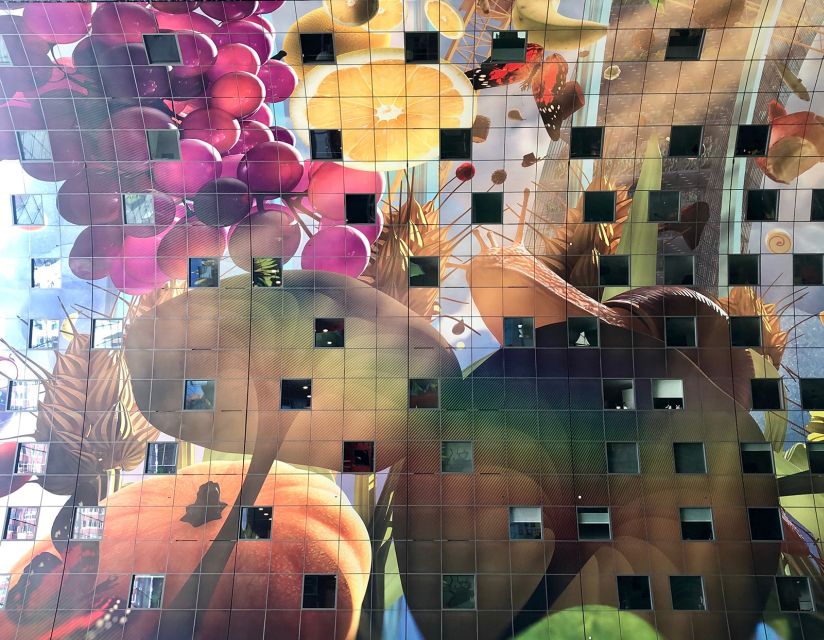
- Markthal, where the building itself becomes an art gallery and a food hall at the same time
Still in Rotterdam? Keep going
- Rotterdam: Harbor Sightseeing Cruise★ 4.3 · 7,599 reviews
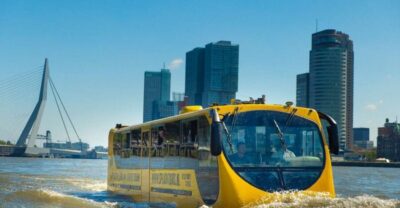
- Rotterdam: 1-Hour Sightseeing Splash Tour★ 4.5 · 3,299 reviews
- Rotterdam: Rotterdam Zoo Blijdorp Entry Ticket★ 4.6 · 2,754 reviews
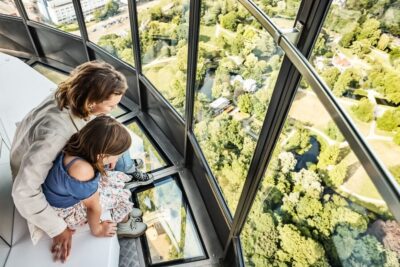
- Rotterdam: Euromast Lookout Tower Ticket★ 4.4 · 2,549 reviews
Rotterdam Central Station to Theater Square: getting the city’s building logic
You start at Central Station Rotterdam, the place where Rotterdam’s modern identity announces itself. Meeting next to the main entrance under the station clock is easy, and it sets the tone: you are walking into a city that thinks in big structures and bold shapes.
From there, the guide helps you connect dots between architecture and how the city was planned. You will hear how the city’s post-war development influenced what you see today, and that matters because Rotterdam can look like a mix of styles at first glance. Once you understand the rebuilding mindset and why certain forms were chosen, you stop seeing random design and start seeing decisions.
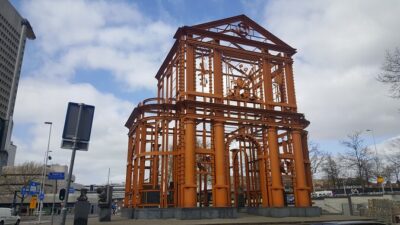
A key moment on the route is the connection to major civic spaces, including Theater square and nearby architecture like the Calypso building. These are not just backdrops. They help you understand how Rotterdam uses open space and dramatic building forms to make everyday movement feel intentional. Pay attention to how streets funnel people toward plazas, and how buildings frame sightlines as you walk.
One practical tip: when the guide pauses to point something out, step into the spot they indicate. With Rotterdam’s strong geometry, being a few meters off can make the explanation click or not click.
The open-air art route: Henry Moore to Picasso in real life
What surprised me in the best way is how much art you see without buying a ticket. Along the walk, you get a route through Rotterdam’s open-air art collection, including art that reflects the drama of a bombarded city. That theme can feel heavy on paper, but on the street it becomes more human. You encounter it as part of the city’s public fabric rather than as an isolated exhibit.
You will also spot a fresh mix of street art. Street art is often about quick impressions, but here it is tied to a broader story: Rotterdam uses art to keep a conversation going. Instead of treating art as decoration, the city treats it as a way to talk back to its own history and its present.
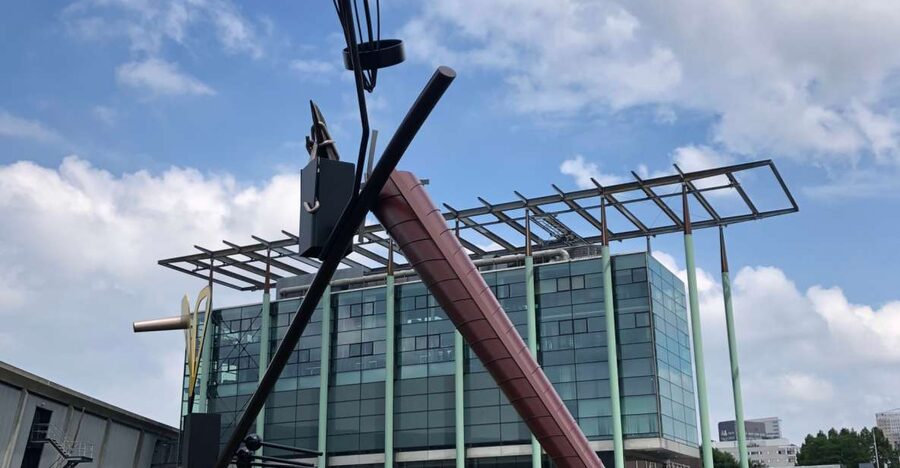
As the guide points out the artworks, you will hear names like Henry Moore, Roden, Picasso, and Van Lieshout. You do not need to be an art expert to get value from this part. The guide gives you a way to look, such as noticing scale, where the work is placed, and why certain pieces belong outdoors where weather and daily foot traffic are part of the environment.
Here is the main takeaway you can use on your own after the tour: on this walk, art and architecture are not separate categories. They shape each other. Pay attention to how a building’s lines can “push” your eye toward a sculpture, or how a wall becomes a canvas that changes how you read the street.
Witte de With: the most artsy street part of Rotterdam
Then comes one of the most fun segments: the walk along Witte de Wit. This is described as Rotterdam’s most vivid and artsy street, and you feel that quickly as the architecture switches from major landmarks to a neighborhood rhythm.
Witte de With works because it is not just about what you see. It is about how Rotterdam mixes creativity with daily life. This street gives you a sense of the city as it is right now, not just what it was planned to be.
From the tour’s perspective, Witte de With also acts like a reset button. After big structures and public art themes, you get a more direct view of creative culture in motion. You can think of it as a street-level interpretation of everything else you’ve been learning: the city’s artistic identity is not only in museums, it is in the street.
Practical move: slow down here and look around. Architecture tours often train your eyes to focus only on buildings, but Witte de With rewards you for scanning doorways, facade details, and how people are actually using the street.
Boijmans Depot and the Museum Quarter: modern museum thinking you can see outside
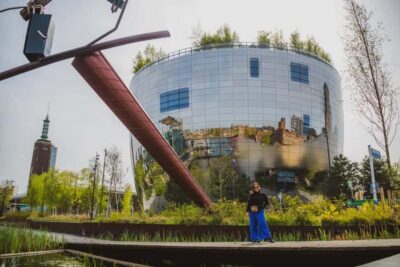
You will also cover the Museum Quarter area, including the Kunsthal and the New Institute. This is the part of the tour that makes you understand why Rotterdam is often described as a city that takes institutions seriously, but still wants them to feel accessible.
A headline stop here is Boijmans Depot, described as the first accessible museum depot in the world. That phrase matters. It signals a shift from the idea that art is hidden behind walls to the idea that people can see the working side of a museum too.
Even if you are mostly doing exterior viewing on foot, the overall impact is the architecture and the surrounding design choices. You get a strong sense of how museums fit into city life, not just as destinations you travel to once, but as parts of the urban system.
Because this tour is a walking experience, the value is in context. The guide connects the museum spaces to the rest of your route, so you understand the bigger picture. You are not just collecting stops, you are learning how each place answers a question about why Rotterdam looks the way it does.
A small caution: entry tickets are not included. If you want to go inside any venue, you’ll need to plan separately. For many people, that is fine, because the best part of this tour is the walk and the reading of the city’s forms.
Prefer to see it on foot? More Rotterdam walks
Kunsthal, Depot, and the city’s “art in public” mentality
The route’s logic is consistent. You will keep seeing how Rotterdam treats art as something you encounter daily. The tour’s coverage of the Kunsthal and Depot area ties into that idea: major cultural buildings sit next to street-level art and everyday architecture.
This is why the tour feels more valuable than a generic highlights walk. You are not just told where to take a photo. You are guided through a way to interpret the city’s choices, including a spread of art masterpieces and the layering of street art alongside formal works.
When you think about value, consider how many major areas you cover in 2.5 hours. The Central Station start, Theater square, the Witte de With segment, Cube Houses, and Markthal at the end would each be a mini-plan on its own. Here they come together into one connected story.
Calypso building and Theater Square: where big architecture meets public life
The Calypso building and Theater square add a different flavor to the walk. If Central Station is the “big statement” opener, and Witte de With is the creative street break, Theater square helps you understand the middle ground: Rotterdam’s architecture that supports gathering, viewing, and public movement.
The guide points out architectural elements and explains how the city’s planning and design language shows up in these spaces. That matters because plazas and squares are where people feel a city’s character. If you get this right, you stop thinking of architecture as distant and start seeing it as part of your walking experience.
Also, these areas help you see how Rotterdam manages space. Notice how the buildings shape where you stand, how you cross, and where you naturally pause. That is the everyday version of design.
Cube Houses: a geometry experiment you can walk up to
Then you get to the Cube Houses complex, one of Rotterdam’s most famous futuristic visuals. The “wow” factor is real, but the tour adds the useful layer: you learn how to look at the structure rather than just admire it from across the street.
Cube Houses are basically a reminder that Rotterdam is comfortable experimenting. The city’s architecture is not just rebuilding after trouble. It is also trying new ways to make living spaces feel different.
On this walking route, you get to see them in context with the surrounding urban fabric, which makes a huge difference. If you only ever look at a single landmark photo, you might miss how the complex fits into a neighborhood. By walking through the approach on foot, you understand the scale and the relationship to streets better.
And because the tour includes other art pieces before and after, Cube Houses also feel like part of a larger theme: Rotterdam’s identity is visual, but it also has meaning, whether it comes from history, art, or design curiosity.
Markthal finale: the architecture and art mash-up
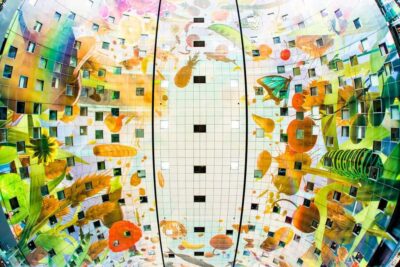
The tour ends in Markthal, where art and architecture combine in a spectacular way. If you like moments where a building feels like it has a personality, this is that moment.
Markthal is a big finish because it is both structural and decorative. You end here for a reason: it is the kind of place where your eyes finally understand the tour’s main lesson. Rotterdam’s public art does not sit in isolation. It lives in the spaces people use.
If you want to plan your photos wisely, give yourself a few minutes at the end to look slowly. A walking tour can train you to keep moving, but Markthal rewards patient viewing because the design and art elements are part of one whole.
Just remember: the tour includes the walk and your guide, but entry tickets are not included. If you want to go deeper into spaces inside, check your plans before you arrive.
Price and value at $65 for a focused architecture story
At $65 per person for 2.5 hours with a live English guide, this is not a bargain deal, but it also is not priced like a full-day museum marathon. The value comes from how concentrated the experience is.
You pay for a guide who ties together multiple architectural icons, plus open-air art, plus neighborhood energy like Witte de With. Without guidance, you could still visit these places, but you would likely miss the key connections: why certain designs were chosen, how the city uses art publicly, and how the route is meant to help you “see with the right eyes.”
Also, you do not need to budget extra for basic movement, since the tour is walking and does not include transportation or hotel pickup. The flip side is you are relying on your own transit timing to reach Central Station Rotterdam on time.
If your travel style is to learn fast and walk a lot, this price makes sense. If you prefer purely self-paced wandering with zero structure, you might prefer to plan your own route and skip the guide.
How to prepare for a 2.5-hour city-walk in rain or shine
Comfort matters on this one. Bring comfortable shoes because this is a true walking tour, with enough stops that you will spend time standing around to hear explanations.
The tour runs rain or shine. So dress for the weather, not for the daydream version of the forecast. Rotterdam can mean damp streets and wind, and you will be happier if you have a light rain layer you can actually move in.
A few more practical notes from the rules side:
- Oversize luggage is not allowed.
- Unaccompanied minors are not allowed.
- It is English only.
- It is wheelchair accessible, but it is not suitable for people who are visually impaired or hearing impaired.
Who should book this Rotterdam architecture highlight walk
This tour is a great match if you want a first-timer overview that still feels specific and not generic. It is also a solid choice if you already know Rotterdam has a “modern rebuild” reputation, but you want help understanding what that looks like on the ground.
You will probably love it if:
- You enjoy architecture and public art together, not as separate categories
- You like street-level explanations, including why art is placed where it is
- You want a planned route that hits Central Station, Witte de With, Cube Houses, and Markthal in one go
You might want to skip it if:
- You are not comfortable with outdoor walking and standing in weather
- You need a format designed for visual or hearing accessibility needs, since it is not suitable for visually impaired or hearing-impaired people
Should you book this tour?
I think you should book it if your goal is to understand Rotterdam quickly, with a guide who connects major architecture and open-air art into one story. At $65 for 2.5 hours, the price is fair for a route that covers multiple signature areas and keeps you from missing the meaning behind the sights.
Book it now if you like city-walk learning, because the payoff is how much easier Rotterdam feels to read afterward. If you hate standing outside in wind and rain, pick another kind of plan and save this for a calmer day, because the tour does not pause for weather.
FAQ
Where do I meet for the Rotterdam Art and Architecture Highlights Walking Tour?
You meet by Central Station Rotterdam, next to the main entrance under the station’s clock.
How long is the tour?
The tour lasts 2.5 hours.
Is the tour guided, and what language is it in?
Yes, it includes a live tour guide, and the tour is in English.
What is included in the price?
The price includes the live tour guide.
What is not included?
Hotel pickup and dropoff, food and drinks, transportation, and entry tickets are not included.
Is the tour wheelchair accessible?
Yes, the tour is wheelchair accessible.
Is the tour suitable for everyone with disabilities?
The tour is not suitable for visually impaired people or hearing-impaired people.
Everything Else From Our Rotterdam Notebook



Also Reviewed Around Rotterdam



Still in Rotterdam? Keep Going
Fresh off the review pile in Rotterdam
- Private tour: Markthal, Cube houses and Rooftop Het Witte Huis
★ 4.5 · 3 reviews - Private transfer Schiphol (AMS) to or from Rotterdam
★ 5.0 · 3 reviews - Private tour from Rotterdam to Windmills of Kinderdijk & Gouda Cheese Experience
★ 5.0 · 3 reviews - Private Transfer from Rotterdam Port to Amsterdam Airport (AMS)
★ 5.0 · 3 reviews - Discover Rotterdam’s most Photogenic Spots with a Local
★ 5.0 · 3 reviews
Rotterdam Tours, compared.
 ★ 4.3Rotterdam: Harbor Sightseeing CruiseFrom $227,599 reviews
 ★ 4.5Rotterdam: 1-Hour Sightseeing Splash TourFrom $353,299 reviews
 ★ 4.6Rotterdam: Rotterdam Zoo Blijdorp Entry TicketFrom $322,754 reviews
 ★ 4.4Rotterdam: Euromast Lookout Tower TicketFrom $212,549 reviews
 ★ 4.4Rotterdam: Pancake CruiseFrom $311,986 reviews
 ★ 4.2From Amsterdam: Rotterdam, Delft & The Hague Guided Day TourFrom $901,765 reviews
 ★ 4.6Rotterdam: Kinderdijk UNESCO World Heritage Entry TicketFrom $251,477 reviews
 ★ 4.0Rotterdam: Harbor Cruise with Live GuideFrom $141,270 reviews
Browse the lists this tour appears in