
REVIEW · ROTTERDAM
Rotterdam Travel to the Future Walking Tour
Future Rotterdam walks by fast. This 3-hour English-language walk strings together public-space experiments and major architectural landmarks, from modern gardens to the Markthal and Cube Houses, ending with big water-and-bridge views. You also get a human guide who explains the what and the why, not just the where.
I like two things most. First, the stops stay practical and close together, so you see a whole side of Rotterdam without sprinting. Second, I love how you get story-driven context, especially around street art, design choices, and how the city remakes itself.
One possible drawback: at roughly 3 hours, it is not a long sit-down museum day. If you want lots of indoor time or deep history lectures, you might want to pair this with a separate church or museum visit.
In This Review
- Key highlights you will actually feel
- Price and what you are really paying for
- Meeting point, pace, and how to dress for a future walk
- Stop 1: Rotterdam’s future public spaces, yellow roads and rooftop farms
- Stop 2: Street sculptures and graffiti you can actually read
- Stop 3: Grote or Sint-Laurenskerk area, where Rotterdam remembers itself
- Stop 4: Markthal by MVRDV, architecture you can eat inside
- Stop 5: Erasmus Bridge and OMA by Rem Koolhaas, the payoff view
- Cube Houses plus the Pencil and Apple: housing ideas in 3D
- What this tour feels like for different travelers
- Guide impact: the biggest reason people rate this tour 5 out of 6
- Quick checklist before you go
- So, should you book this Rotterdam Travel to the Future tour?
- FAQ
- How long is the Rotterdam Travel to the Future Walking Tour?
- What language is the tour offered in?
- Where does the tour start and end?
- Is a guide included?
- Are entrance tickets included?
- Is coffee or tea included?
- Is it a private tour?
- Can I cancel for a full refund?
Key highlights you will actually feel
- Yellow street energy and rooftop food: You see forward-thinking public space details like the yellow wooden road and a rooftop eco-farm idea.
- Piet Oudolf style in the mix: The garden designed by Piet Oudolf turns a walk into a real design lesson.
- Street sculptures and graffiti with meaning: You do not just look at walls, you learn what to notice.
- Markthal by MVRDV: Apartments and market life in one architectural machine, plus you can snack on your own.
- Erasmus Bridge views with OMA context: You end with skyline payoff across the water.
- Cube Houses plus the Pencil and Apple: A strong finish on modern housing and 20th-century architecture.
Still in Rotterdam? Keep going
- Rotterdam: Harbor Sightseeing Cruise★ 4.3 · 7,599 reviews
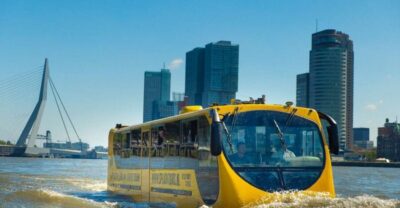
- Rotterdam: 1-Hour Sightseeing Splash Tour★ 4.5 · 3,299 reviews
- Rotterdam: Rotterdam Zoo Blijdorp Entry Ticket★ 4.6 · 2,754 reviews
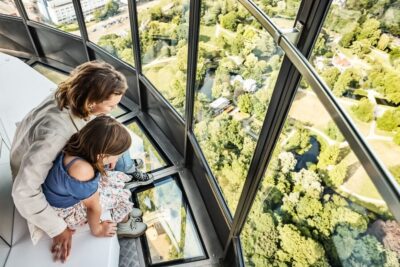
- Rotterdam: Euromast Lookout Tower Ticket★ 4.4 · 2,549 reviews
Price and what you are really paying for
At $274.03 per person for about 3 hours, this is not a cheap wander. But it is also not a pricey “transport + attractions” bundle. The money mostly buys you a certified guide and an efficient route that hits multiple high-impact Rotterdam landmarks that reward explanation.
A smart way to think about value: many of the stops are free to enter (the tour describes free admission for each main stop). So you are not paying again at every corner. Instead, you are paying for time, flow, and interpretation. That is especially worth it in Rotterdam, where a building can look like a sculpture and only makes sense after someone connects the dots.
Also note the format. This is a private tour/activity, meaning only your group participates. That can feel like the best kind of group size, because you can ask questions and the guide can adjust pacing for kids or slower walkers.
Meeting point, pace, and how to dress for a future walk
The tour starts at Ode aan Marten Toönder, Verlengde Nieuwstraat, 3011 GA Rotterdam and ends at Erasmusbrug, 3011 BN Rotterdam. Because the day runs as a walking route through central Rotterdam, I suggest you treat it like a city-walk, not a museum marathon.
The schedule is built from short “stop, look, listen” segments. Some stops are about 15 minutes, some about 30 minutes. That means you will get viewpoints and photo chances, but you should not plan on lingering for long. If you like to take your time, this is still doable, just be strategic about when you pause.
Dress like you will walk a lot, because you will. Rotterdam weather can shift, so layers help. Comfortable shoes matter, especially around public-space projects and architecture areas where surfaces vary.
Stop 1: Rotterdam’s future public spaces, yellow roads and rooftop farms
This first stretch sets the tone. It is all about how Rotterdam uses the city itself as a tool for social life, design, and technology.
You will likely notice a few standout themes:
- Innovative public spaces meant for daily use, not just photos.
- Outdoor details that mix function with personality.
- Examples of how the city supports greener thinking through design.
The tour points out the yellow wooden road, which is the kind of playful urban element that makes you slow down. It is not just colorful. It signals that the city is thinking about how people move, gather, and feel safe and oriented.
You also get the “food and nature on top” idea, described as an eco-farm on the rooftop. In one of the guide praises, Danya’s storytelling is credited with making these modern projects feel real, not abstract. So when rooftop farming pops into view, it is not a random detail. It is part of the Rotterdam “future” mindset.
Finally, the tour mentions a garden designed by Piet Oudolf. That matters because Oudolf is known for how strongly plants can shape atmosphere and structure. In practice, that means you are not only learning facts. You are learning how to read a space by its planting style, seasonal behavior, and sense of order.
Possible drawback here: if you are only interested in famous buildings, this stop might feel “smaller” than the skyscraper or church moments later. But I think that is exactly why it works. Rotterdam’s future is often in the stuff you use without thinking.
Stop 2: Street sculptures and graffiti you can actually read
After the design-first start, the tour shifts to street-level art: street sculptures and graffiti. This is where the guide quality really shows.
Rotterdam has a reputation for public art in everyday spaces, and the tour uses that as a way to teach you how to look. Instead of treating graffiti as just color, you learn how to notice layers: placement, style, and the messages behind the marks.
In the feedback you provided, people praised the guide for showing “hidden gems” and street art objects with stories. That lines up with what this stop is built to do. If you like street art, this becomes your favorite part because you stop seeing walls as background.
One practical tip: bring your phone camera, but also keep a mental note of what you see. Murals and tags can blur together on a walk. If you take one minute to connect the story to the location, the art will stick longer after your trip.
Prefer to see it on foot? More Rotterdam walks
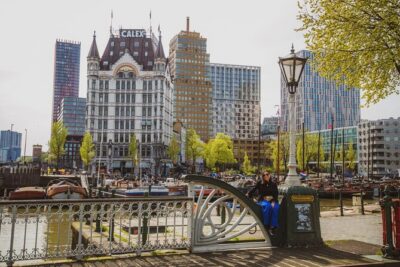
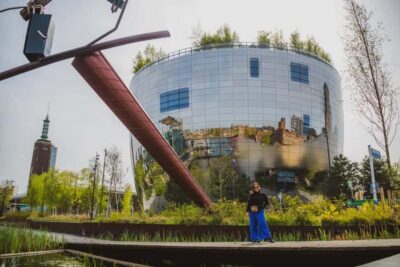
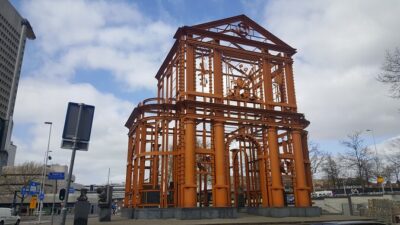
Stop 3: Grote or Sint-Laurenskerk area, where Rotterdam remembers itself
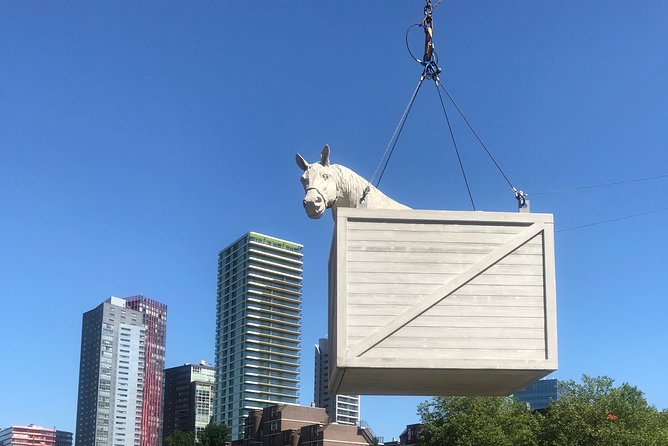
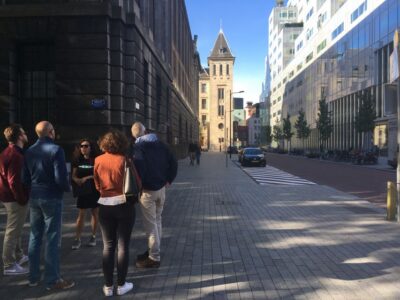
Even with all the modern swagger, Rotterdam has older anchors. This stop centers on the Grote of Sint-Laurenskerk, plus the area described as an old city hall building and Laurenskerk.
The pitch here is simple: you get older Rotterdam context in a city that otherwise feels like it is permanently redesigning. The guide is meant to point out main figures and the long arc of how the city became what it is.
One of the guide highlights in the feedback mentions that the tour covered history in a way that stayed informative but not heavy. That is what you want at this stop. Churches and old civic buildings can turn into date dumps if the guide is not careful. When it is done well, you start understanding why certain spaces and buildings mattered, and how Rotterdam’s identity survived modern rebuilding.
What to expect from a practical standpoint: this is a shorter stop (about 15 minutes). So if you want a deeper look inside a church or linger at gravestones or details, plan to do that separately after the walk.
Stop 4: Markthal by MVRDV, architecture you can eat inside
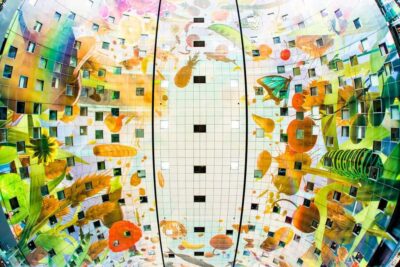
Then you hit one of the most famous modern projects in Rotterdam: Markthal. The tour frames it as a “fantastic project” by MVRDV that combines an accommodation block with a market hall. Translation: you are walking into an architecture idea where daily life is part of the design.
You get two things here:
- Architecture and public-space lessons. You learn how the building works as a market and a public destination.
- A chance to walk through the market and try food.
The tour specifically encourages you to sample items on your own, like herring, homemade truffle sausages, Dutch wine, farmer cheese, and ethical food options. Coffee and snacks are not included, but the market is perfect for handling your “we walked all morning” needs on your terms.
If you are traveling with kids, this stop can be a win. Food breaks the tension of standing and listening. If your group includes picky eaters, go in knowing you can choose just one thing and still feel like you participated.
Small drawback: markets can be crowded. The stop is about 30 minutes, so do not expect a slow food tour. Go for quick choices, then circle back for photos once you know what you will try.
Stop 5: Erasmus Bridge and OMA by Rem Koolhaas, the payoff view
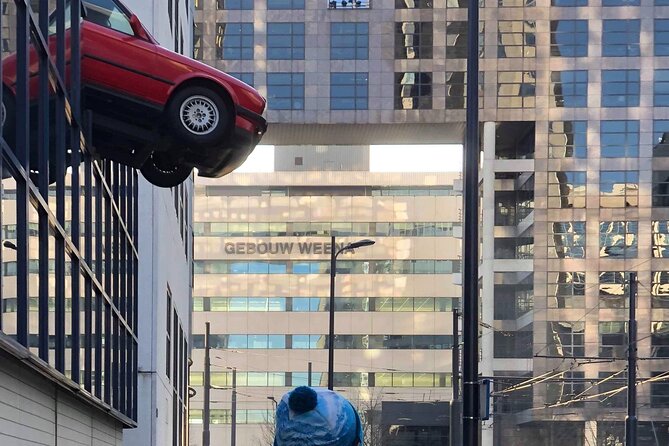
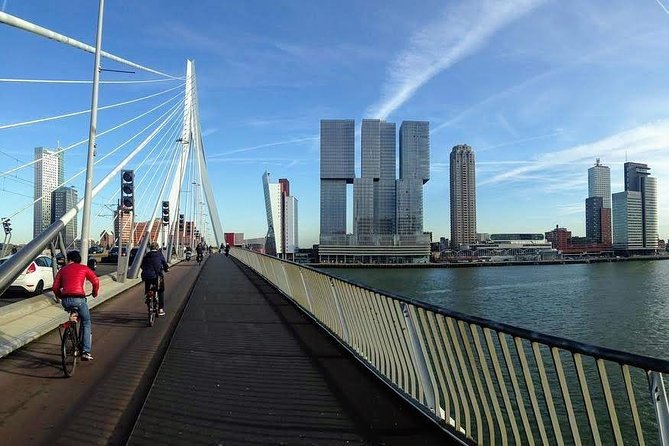
The walk ends with the most classic Rotterdam finale: Erasmus Bridge and a connection to OMA by Rem Koolhaas.
This is your view stop. The tour highlights it as the best place to take in city views and get acquainted with the opposite side of Rotterdam. In other words, you finish with a “now I get the city layout” moment.
What I like about finishing here is that it turns all the earlier design talk into real geography. Rotterdam’s modern identity is not just buildings sitting alone. It is planning, water edges, and movement across the city.
Photo advice: take a wide shot first, then one closer detail shot. Bridges look different from different angles, and your feet will tire before you notice it.
Cube Houses plus the Pencil and Apple: housing ideas in 3D
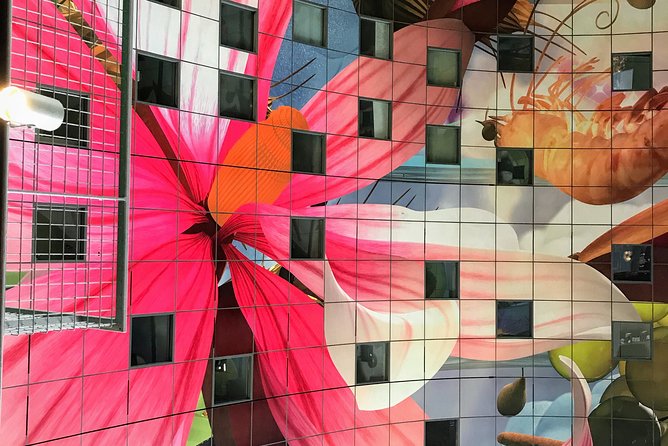
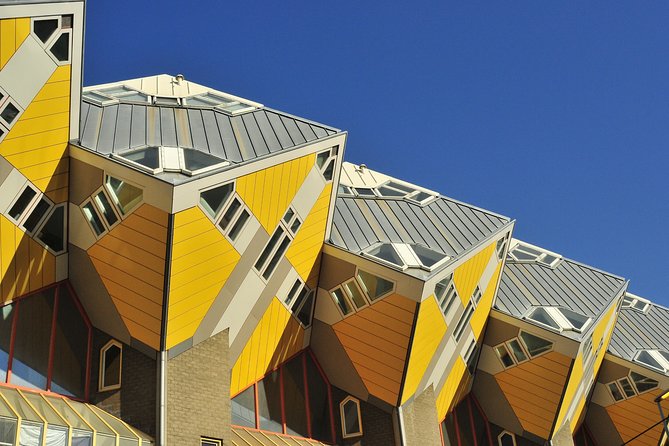
The final architectural hit in this walk is the Cube Houses, plus the tour mentions other nearby icons like the Pencil and Apple buildings.
This is where Rotterdam becomes a 20th-century design story you can stand next to. The tour explanation ties the Cube Houses to architectural movements and to social housing, which is important. These buildings are famous for their shape, but they are also part of a bigger conversation about who cities design for and why.
If you have seen photos before, you might still be surprised by how the angle and form change your sense of space. That is the value of a guided stop here. A guide can point out what the famous lines mean and why people built them this way.
Practical tip: this area is very photo-friendly. If you have time to do one thing, do it. Take pictures from two sides so you capture the cube geometry and the surrounding street layout.
What this tour feels like for different travelers
This tour works well if you want a “show me the city’s future” experience that stays human and story-led.
- If you love design and architecture, you get fast lessons across multiple styles, from rooftop eco-farming concepts to Markthal’s MVRDV approach.
- If you are into street art, the graffiti stop is built to be more than decoration. With the right guide, it becomes a way to read the city.
- If you are traveling with family, one of the guide praises mentions that even a 7-year-old stayed engaged. That suggests the storytelling tone lands as light enough for kids, without turning shallow.
Also, because it is in English and you can ask questions, it is a good choice for solo travelers who still want the “walk with locals” feeling. Rotterdam rewards curiosity.
Guide impact: the biggest reason people rate this tour 5 out of 6
Across the feedback you included, a pattern stands out: the guide storytelling is the main difference-maker.
Names that appeared in the feedback include Danya and Danil Hochlovic (spelled a few ways). People repeatedly praised how the guide made the time feel smooth, showed places they would not have picked on their own, and linked design to Rotterdam’s people and resilience. One review also credits the guide with covering Rotterdam history during World War II without overwhelming the group.
The takeaway for you: if the guide is strong, even the short stops feel complete. If the guide is less effective, this kind of architecture walk can turn into a photo sprint. The consistent message in your material is that the guides here do the first job well.
Quick checklist before you go
Here is how to make this tour feel easy and worth it:
- Wear comfortable shoes you can stand in.
- Bring a charged phone for views at Erasmus Bridge and photos at Cube Houses.
- Bring cash or a card for market snacks, since coffee and snacks are not included.
- If you care about specific foods, decide what you want to try at Markthal so time stays smooth.
- Keep an eye on the sky, and plan layers. Rotterdam weather can be moody.
So, should you book this Rotterdam Travel to the Future tour?
Yes, I think you should book it if your goal is to understand Rotterdam quickly through design, public art, and architecture. It is especially smart for first-timers who want a city overview that goes beyond postcards.
I would hesitate only if you want:
- lots of inside time in museums or churches,
- a longer, seated historical lecture,
- or a low-cost “just walk around” day.
If you want a guided route that connects yellow street design, a Piet Oudolf garden moment, graffiti storytelling, Markthal’s MVRDV market architecture, and the Erasmus Bridge finale, this tour fits the bill. The price is high enough that you should expect quality guidance, and the feedback you provided strongly points to exactly that.
FAQ
How long is the Rotterdam Travel to the Future Walking Tour?
It runs for about 3 hours.
What language is the tour offered in?
The tour is offered in English.
Where does the tour start and end?
It starts at Ode aan Marten Toönder, Verlengde Nieuwstraat, 3011 GA Rotterdam, Netherlands, and ends at Erasmusbrug, 3011 BN Rotterdam, Netherlands.
Is a guide included?
Yes. A certified guide is included.
Are entrance tickets included?
No. Entrance tickets are not included. However, the described stops list admission ticket free.
Is coffee or tea included?
No. Coffee and/or tea are not included.
Is it a private tour?
Yes. Only your group will participate.
Can I cancel for a full refund?
Yes, free cancellation is available. You can cancel up to 24 hours in advance of the experience for a full refund, based on local time.
Everything Else From Our Rotterdam Notebook



Also Reviewed Around Rotterdam



Still in Rotterdam? Keep Going
Fresh off the review pile in Rotterdam
- Private tour: Markthal, Cube houses and Rooftop Het Witte Huis
★ 4.5 · 3 reviews - Private transfer Schiphol (AMS) to or from Rotterdam
★ 5.0 · 3 reviews - Private tour from Rotterdam to Windmills of Kinderdijk & Gouda Cheese Experience
★ 5.0 · 3 reviews - Private Transfer from Rotterdam Port to Amsterdam Airport (AMS)
★ 5.0 · 3 reviews - Discover Rotterdam’s most Photogenic Spots with a Local
★ 5.0 · 3 reviews
Rotterdam Tours, compared.
 ★ 4.3Rotterdam: Harbor Sightseeing CruiseFrom $227,599 reviews
 ★ 4.5Rotterdam: 1-Hour Sightseeing Splash TourFrom $353,299 reviews
 ★ 4.6Rotterdam: Rotterdam Zoo Blijdorp Entry TicketFrom $322,754 reviews
 ★ 4.4Rotterdam: Euromast Lookout Tower TicketFrom $212,549 reviews
 ★ 4.4Rotterdam: Pancake CruiseFrom $311,986 reviews
 ★ 4.2From Amsterdam: Rotterdam, Delft & The Hague Guided Day TourFrom $901,765 reviews
 ★ 4.6Rotterdam: Kinderdijk UNESCO World Heritage Entry TicketFrom $251,477 reviews
 ★ 4.0Rotterdam: Harbor Cruise with Live GuideFrom $141,270 reviews
Browse the lists this tour appears in