
REVIEW · DELFT
Royal Delft: Delftblue Factory and Museum
Hand-painted Delft Blue still in motion. At Royal Delft, I love seeing master painters and craftspeople at their work, and I also like how the museum and factory share one story, from clay to finished blue-and-white pieces. One thing to plan for is that this experience is mainly self-guided by audio, so you will not get the same level of live, back-and-forth storytelling you might expect from a fully guided tour.
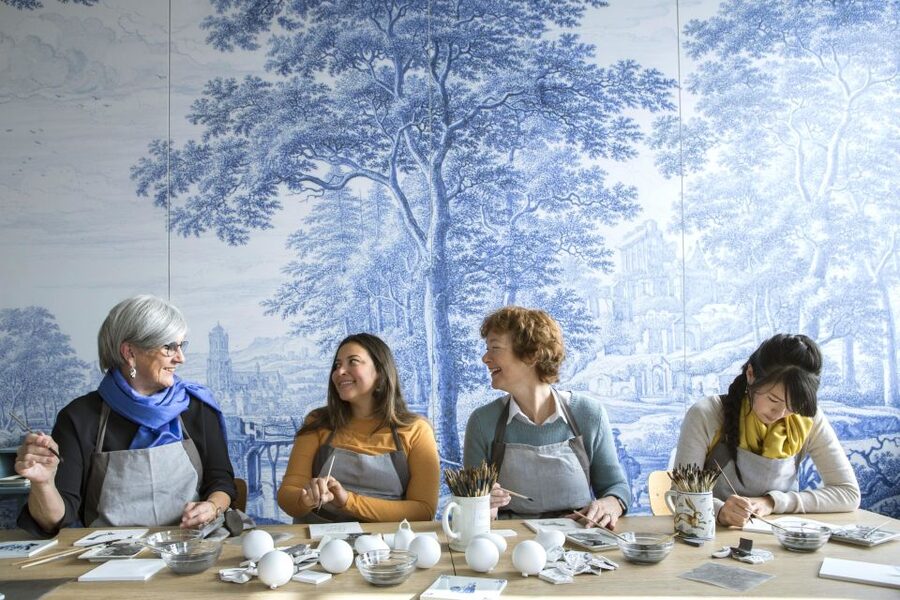
In the factory, you get up close to the real production process, including paintbrush work on white earthenware and other stages where clay is shaped in handmade moulds. In the museum spaces, I appreciate the mix of antique and modern Delftware, plus the chance to spot showpieces that show how far this craft has traveled over time.
The drawback is simple: if you want a guide to lead you step by step and answer questions constantly, this ticket leans more toward audio narration than a roaming docent.
In This Review
- Key highlights to watch for
- Royal Delft at a glance: what you truly get in 1.5 hours
- Entering the factory: where Delft Blue starts on white earthenware
- The museum galleries: antique icons, modern classics, and one big flex
- Special programs and the 365th anniversary story
- The showroom and gift shop: buy with confidence, but expect serious prices
- Brasserie 1653 courtyard break: tea time with Delft Blue nearby
- How the audio tour works, and why self-guided can still feel personal
- What to watch for if you care about seeing painters at work
- Getting there from Amsterdam, The Hague, or Rotterdam is easy
- Where to meet and what to plan for on arrival
- When Royal Delft closes: avoid the holiday traps
- Who this experience is best for
- Should you book Royal Delft?
- FAQ
- How long does Royal Delft take?
- What is included in the ticket price?
- Is there a live guided tour included?
- What languages are available on the audio tour?
- Where is the meeting point?
- Is Royal Delft wheelchair accessible?
Key highlights to watch for
- Factory floor access where Delft Blue is still made by hand, not just displayed
- Hand-painting in action, with craftsmen showing careful linework and precision
- A beautiful courtyard garden where Brasserie 1653 serves coffee, high tea, or lunch
- Antique and modern Delftware in the showroom, plus classic souvenirs
- Audio tour pacing that fits a casual 1.5 hour visit without rushing you
Royal Delft at a glance: what you truly get in 1.5 hours
Royal Delft is one of those places where “you can see it” turns into “I can’t believe they still do it this way.” This is the last remaining original Delft Blue factory from the 17th century in Delft that still hand-makes Delft Blue using a long-running tradition. The result is a hands-on feel, even when you are self-guided, because you are walking through real working spaces.
The visit is built to be efficient: entry plus a 1-hour audio tour, then extra time to look around. For me, that time balance matters. You get enough factory viewing to understand the workflow, but you still have room to slow down in galleries and shop for a piece that actually speaks to you.
Also worth noting, the site includes free Wi-Fi, so if you want to compare details, translate labels, or just check your next train time, it is easy to do.
Entering the factory: where Delft Blue starts on white earthenware
Once you are inside, the magic is that the process is visible. You do not just see finished vases and tiles behind glass. You see the stages that lead there.
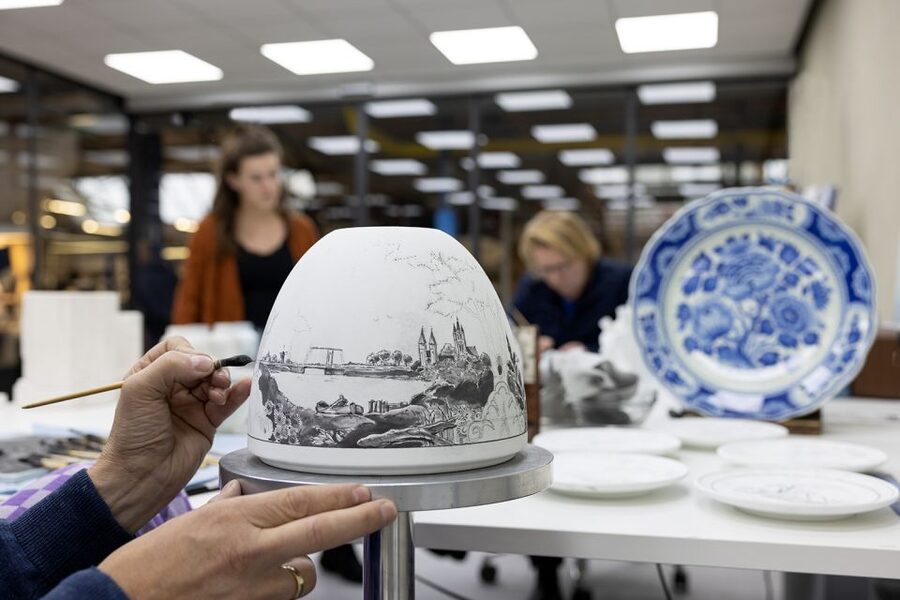
Watch for the moments when paintbrushes touch white earthenware. That is the Delft Blue “signature” skill, the controlled brushwork that turns plain surfaces into crisp, recognizable designs. I like that you can stand back and really see how precise the linework has to be. It is not casual decoration, it is practiced technique.
You will also notice other steps of the workflow, including clay poured into handmade moulds. It helps you connect the dots between form and decoration. Delft Blue is often thought of as a look, but here you can sense it as a craft system: shape first, then paint, then kiln.
One extra detail I find fascinating is how the color shift happens in the firing. At Royal Delft, you learn that the art is painted in black ink, and then it turns blue in the kiln. It is a small fact, but it explains why the final blue has that distinctive Delft character.
The museum galleries: antique icons, modern classics, and one big flex
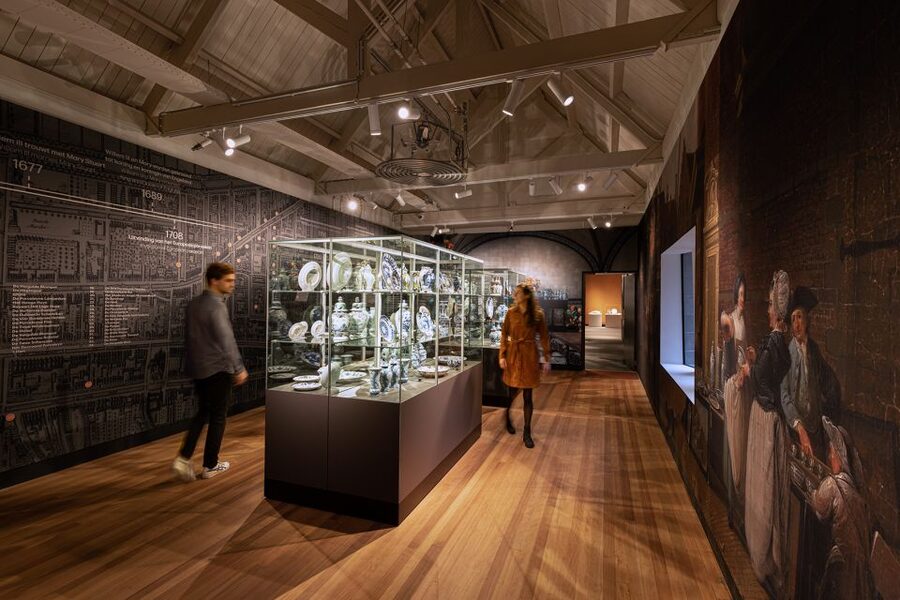
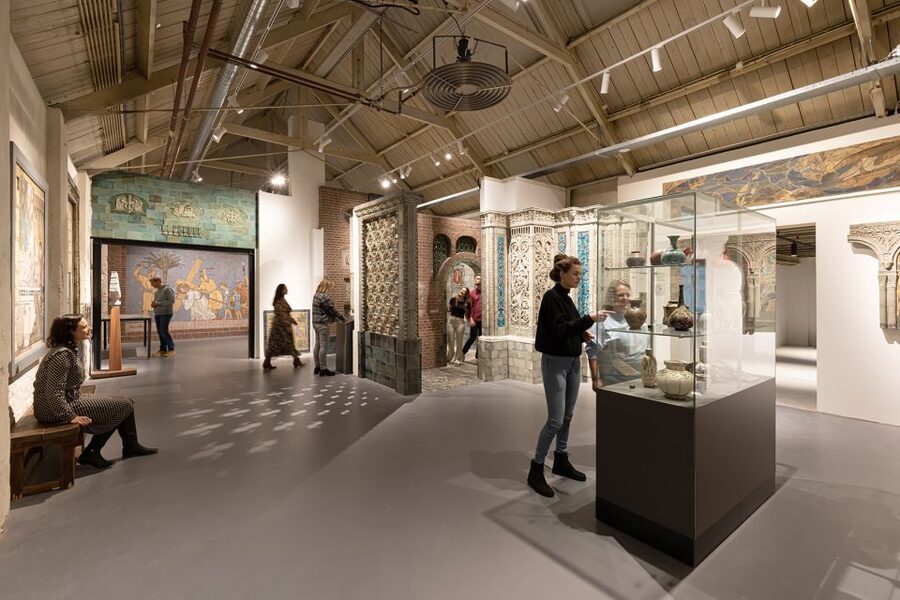
The museum side is not just “old stuff.” It is a structured walk through how Royal Delft’s production culture evolved while still keeping the handcraft core. You see antique and modern pieces, and the showroom-style displays make it easier to compare eras without feeling like you are stuck reading in one spot.
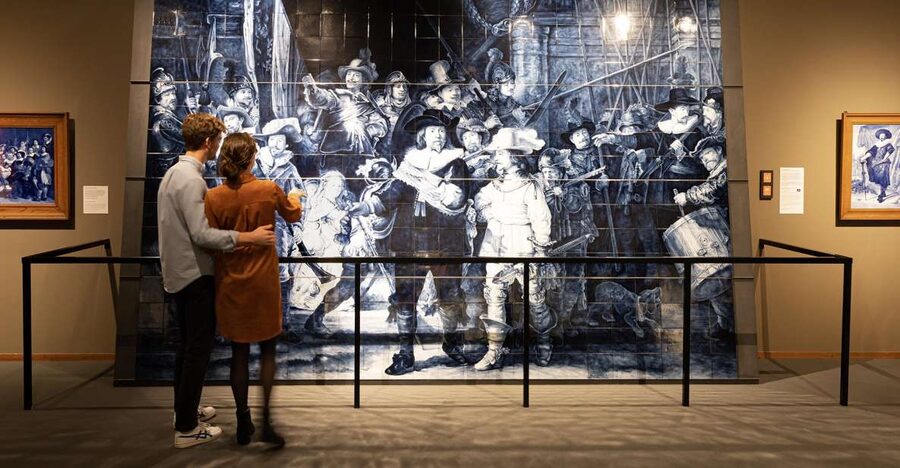
Look closely for major showpieces. One standout you may spot is a life sized tiled version of the Night Watch. Even if you are not a Dutch art expert, seeing how a huge, detailed image can be translated into tile work helps you understand the scale of what this factory can do.
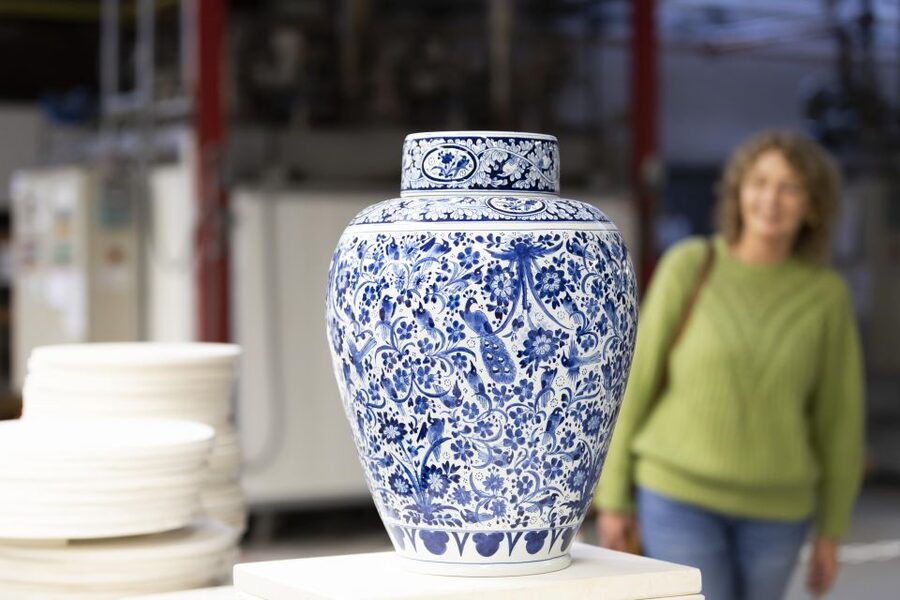
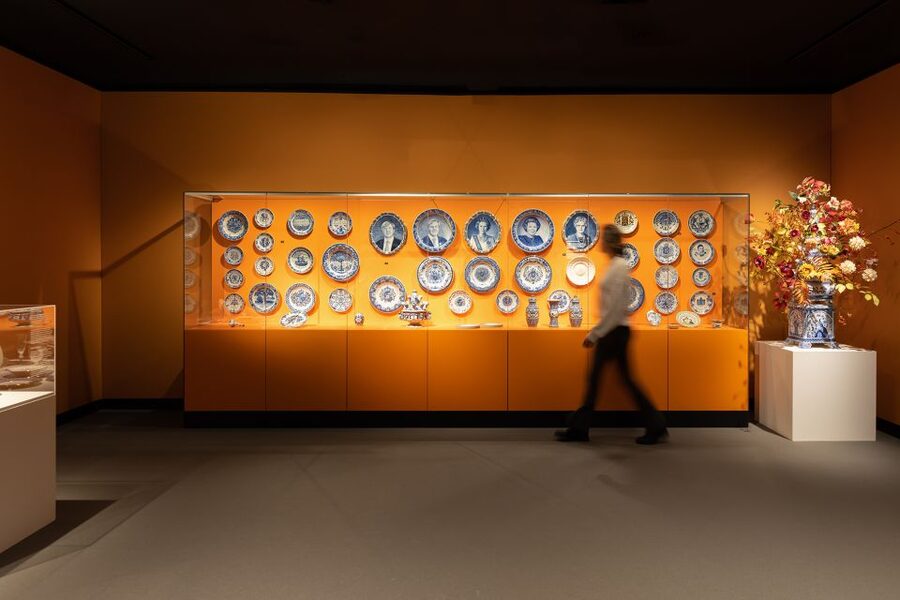
You will also notice the breadth of styles on display. Some pieces feel classic and ceremonial. Others show how Delftware adapted over time for modern tastes. That mix is a big part of why this visit works: you come in for the history, but you leave thinking about today’s design too.
Special programs and the 365th anniversary story

Royal Delft marked its 365th anniversary in 2018, and the site has kept that kind of “living factory” energy in its storytelling. You can learn about programs from that anniversary period, including an exhibition titled Nouveau Blue: vision to realisation (running until 30 September), and the collaborative Delft Blue tile painting created by 365 people across the year.
Why does that matter for your visit? It frames Royal Delft as more than a museum object. The brand may be old, but the company still runs contemporary projects and experiments, which helps explain why the craft has remained relevant rather than stuck in time.
The showroom and gift shop: buy with confidence, but expect serious prices
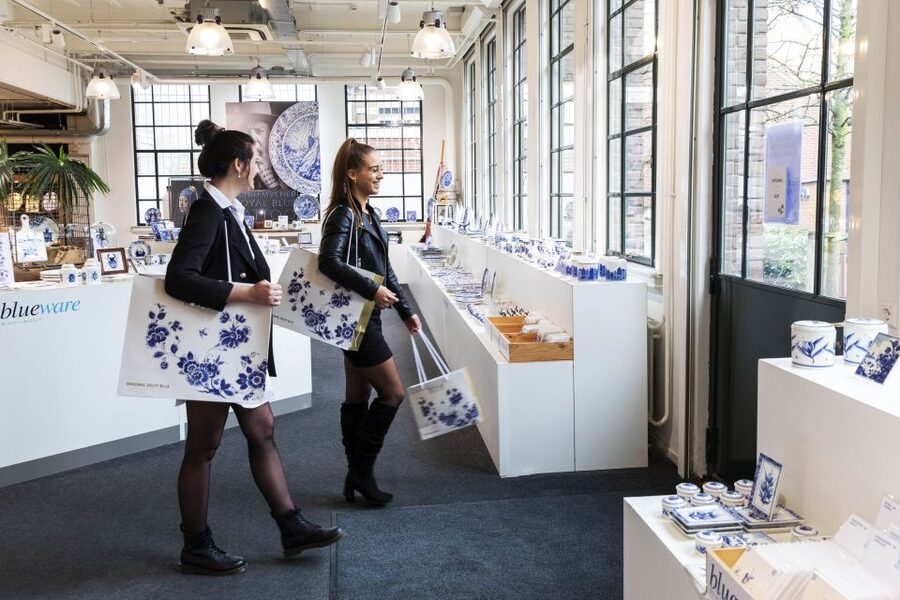
After the factory and museum sections, you will land in a showroom space where the complete collection of hand-painted classic and modern Delftware and souvenirs are displayed. This is where the visit turns into a practical decision: do you buy a tile, a plate, or a decorative piece, or do you walk out empty-handed and just keep the photos?
My advice: if shopping is on your list, set a budget before you start browsing. Several visitors note that ceramic pieces can be expensive, and the showroom makes that reality feel immediate. The good news is that you are not guessing about authenticity. You are inside the place where the handcraft happens, so what you buy feels directly tied to what you watched.
One helpful option you may see mentioned is that items can be wrapped, packed, and shipped back home. If you want something fragile, this can turn a stressful airport problem into a calmer plan.
Brasserie 1653 courtyard break: tea time with Delft Blue nearby
The Royal Delft experience has a built-in pause, which I really like. You can visit Brasserie 1653, which overlooks a courtyard garden, and grab coffee, high tea, or lunch. This is not a random add-on. It is a good reset after you have been staring at tiny brush strokes and detailed porcelain patterns.
If you are traveling with kids, this courtyard break also helps. The factory portion is visual and quiet-focused, while the garden area gives everyone a more relaxed moment to recharge.
The setting is also a nice way to end the visit. When you go back to the showroom with your tea in hand, it is easier to think like a buyer, not just a visitor. You start imagining the piece on your own wall or table at home.
How the audio tour works, and why self-guided can still feel personal
This ticket includes a 1-hour audio tour in 8 languages. The audio options include Spanish, Chinese, Dutch, English, French, German, Italian, and Japanese. There is also staff presence for a greeter or introduction, with English and Dutch noted.
In practice, this style often feels smooth. You can walk at your own pace, linger over the details that catch your eye, and skip what you already understand. Many people like that it gives the right level of detail without forcing a group pace.
Still, the tradeoff is real: it is not a fully guided walk with a person talking over your shoulder the whole time. If you enjoy asking questions mid-visit, you might find yourself wishing for more direct interaction. On the other hand, if you like reading labels and listening when you choose, the audio format fits well.
A useful tip: if you are sensitive to competing sound, consider using your audio at a moderate volume and timing your stops so you are not standing right next to where a louder demo or group intro is happening.
What to watch for if you care about seeing painters at work
Royal Delft is famous for handcraft, but the visible activity in the factory can vary. Some visits show multiple craftsmen in clear view, and other times you may notice fewer artists actively painting in the moment.
If seeing brushwork firsthand is your top goal, try to plan your visit for times when you expect more studio activity. Without a guaranteed schedule provided here, the safest move is to give yourself some flexibility, and do not treat the factory as a live stage show. In many cases, the working vibe is still there, even when only a couple of artists are at visible stations.
Getting there from Amsterdam, The Hague, or Rotterdam is easy
This is one of Delft’s best shortcuts if you are already in the Netherlands. You can reach Royal Delft from Amsterdam by train in about 1.5 hours. From The Hague or Rotterdam, it is only about 30 minutes by train.
Once you arrive, it is also walkable. Delft train station is about a 15-minute walk away, and Market Square is about 20 minutes on foot. If you prefer not to walk, there are public bus stops nearby, and free parking is available around the building.
Where your starting point matters most is simply convenience. If you want an easy day trip, take the train, then build in time to wander Delft before and after your visit.
Where to meet and what to plan for on arrival
The meeting point is Rotterdamseweg 196, 2628AR, Delft, Netherlands.
The experience typically fits into a 1.5 hour window, and the audio tour itself is listed as 1 hour. That means you should treat this like a focused, not rushed, cultural stop. Plan your day so you do not have to rush back to the station the second you finish the galleries.
If you are bringing home a purchase, factor in time for wrapping and any shipping steps.
When Royal Delft closes: avoid the holiday traps
Royal Delft has some key closure dates that can catch people off guard. It closes at 16:00 on 24 December and 31 December. It is closed all day on 25 December and 26 December, and also on 1 January.
If you are traveling in late December or New Year week, double-check the date before you plan your train. Delft can be lovely then, but this specific factory experience may not be available.
Who this experience is best for
Royal Delft fits best if you want something real and tactile, not just a pretty museum stop. You will likely enjoy it if you care about how objects are made, enjoy craft details, or want a hands-on cultural souvenir that is tied to a working factory.
It is also a good choice for art and design fans who like seeing craftsmanship explained in a straightforward way. The museum galleries and showroom help you connect style to process.
If you are traveling with limited time, this is efficient. A 1.5 hour visit works well as part of a Delft day, especially if you are coming from Amsterdam, The Hague, or Rotterdam.
If you dislike audio tours or really want a live guide constantly, you may find the self-guided format less satisfying. In that case, you can still enjoy the factory and museum, but go in expecting audio narration to do the heavy lifting.
Should you book Royal Delft?
I think this is a book-worthy stop for most people visiting Delft, especially if you want to see Delft Blue made by hand in the last original 17th-century-style factory that still paints this way. For the price, the value comes from access to the production process plus the museum context, and you get that in a tight 1.5 hour window.
Book it if you want a craft-focused experience, you like watching skilled work up close, and you might pick up a real Delft piece to take home.
Skip or rethink if you only want a live, talk-with-a-person tour and would be frustrated by audio-based guidance. In that case, you might still enjoy the building, garden, and displays, but you may feel the experience is less interactive than you hoped.
FAQ
How long does Royal Delft take?
The experience lasts about 1.5 hours. The included audio tour is listed as 1 hour.
What is included in the ticket price?
Your ticket includes entry, a 1-hour audio tour in 8 languages, and free Wi-Fi.
Is there a live guided tour included?
No. A guided tour is listed as not included. You can expect an audio tour experience.
What languages are available on the audio tour?
The audio tour includes Spanish, Chinese, Dutch, English, French, German, Italian, and Japanese.
Where is the meeting point?
The meeting point is Rotterdamseweg 196, 2628AR, Delft, Netherlands.
Is Royal Delft wheelchair accessible?
Yes. The experience is listed as wheelchair accessible.
Delft & Delft Blue, compared.
 ★ 4.2From Amsterdam: Rotterdam, Delft & The Hague Guided Day TourFrom $901,765 reviews
 ★ 4.4Delft: Canal Cruise with Guided CommentaryFrom $15990 reviews
 ★ 4.0Rotterdam, Delft, the Hague, Madurodam from AmsterdamFrom $90793 reviews
 ★ 4.5Rotterdam, Delft and The Hague Small Group Tour from AmsterdamFrom $151599 reviews
 ★ 4.2From Amsterdam: Guided Trip to Rotterdam, Delft & The HagueFrom $81529 reviews
 ★ 4.5The Hague, Delft and Rotterdam Small-Group Tour (Max. 8 People)From $156234 reviews
 ★ 4.4Delft: Entrance Ticket for the Old and New ChurchesFrom $11229 reviews
 ★ 5.0Rotterdam, Delft, The Hague Day Tour Incl. Madurodam/Royal DelftFrom $156215 reviews
Browse the lists this tour appears in