
REVIEW · THE HAGUE
The Hague, Delft and Rotterdam Small-Group Tour (Max. 8 People)
Three cities, one long day, no stress. You’re trading Amsterdam comfort for a smart, small-group sweep of Rotterdam’s markets and modern icons, Delft’s blue-pottery charm, and The Hague’s royal and legal landmarks. It’s especially appealing if you like seeing how a country works at street level, not just from a museum ticket.
I really like the hotel pickup setup. You start early, the group stays small (max eight), and the guide keeps things moving while still building in short pauses to look around, snack a bit, and reset before the next stop. One thing to consider: this is a walking required day with lots of exterior sights and limited time at each point, so if you move slowly, it can feel like a sprint.
In This Review
- Key things I’d bet on before you book
- The point of this day trip: three Dutch cities, one coherent story
- Price and value: what $156.07 actually buys
- How the morning pickup works in Amsterdam (and where it doesn’t)
- Rotterdam first: Markthal, St. Lawrence Church, and the Old Harbour
- Markthal: indoor art and real Dutch food energy
- Grote of Sint-Laurenskerk: a medieval survival after the war
- Oude Haven: 1350 port vibes with modern bars
- Cube Houses, Erasmus Bridge, and Rotterdam’s modern identity
- Kijk-Kubus: living as an urban roof
- Erasmus Bridge: a landmark you’ll recognize on the logo
- Euromast: the height check for Rotterdam
- Delft: blue pottery connections, City Hall, and the New Church
- Stadhuis Delft and the Markt square rhythm
- New Church: a tower that clocks the city skyline
- Royal Delft factory or Madurodam: choose your kind of wonder
- Royal Delft: live painting and the real factory feel
- Madurodam: a miniature country in 1.8 square kilometers
- Which should you pick?
- The Hague’s Peace Palace, Binnenhof, and political Dutch architecture
- Peace Palace: international law in plain sight
- Noordeinde Palace and royal workplace context
- House of Representatives and how laws get made
- Binnenhof and Ridderzaal: oldest still-in-use parliament vibe
- Timing and pace: a day that moves, but not wildly
- Who this tour fits best, and who should think twice
- My honest bottom line: should you book it?
Key things I’d bet on before you book
- Max 8 people means you actually hear your guide and the van does not turn into a cattle car
- Hotel pickup from the A10 ring area plus transport and guide all included
- Rotterdam’s Markthal wall art and food hall energy are a great first stop
- Most stops are free entry, so you spend your budget on the one paid choice
- You choose either Royal Delft or Madurodam, not both
- The Hague stops explain Dutch governance in a way that makes the buildings make sense
Still in Rotterdam? Keep going
- From Amsterdam: Rotterdam, Delft & The Hague Guided Day Tour★ 4.2 · 1,765 reviews
- Rotterdam, Delft, the Hague, Madurodam from Amsterdam★ 4.0 · 793 reviews
- Rotterdam, Delft and The Hague Small Group Tour from Amsterdam★ 4.5 · 599 reviews
- From Amsterdam: Guided Trip to Rotterdam, Delft & The Hague★ 4.2 · 529 reviews
The point of this day trip: three Dutch cities, one coherent story
This tour is built for a classic Netherlands problem: you have limited time in the Amsterdam area, but you want more than canals. Instead of doing one city well, you get a fast, guided “map reading” day across Rotterdam, Delft, and The Hague.
What makes it work is the mix of scenes. Rotterdam gives you the post-war rebuild mindset and modern architecture. Delft brings craftsmanship and royal connections down to an intimate city scale. The Hague finishes the day with institutions, royal workplaces, and the legal world. If you like travel that teaches you how places got shaped, you’ll enjoy the flow.
The guide approach helps too. In past groups, I’ve seen guides like Leidse, Pete, Reinier, Erik, and Simon lean into humor and clear explanations, so the day does not feel like someone reciting a brochure.
Price and value: what $156.07 actually buys
At about $156 per person, the price makes the most sense as a “time saver with built-in tickets.” You’re paying for hotel pickup, transportation, a guide, and entry to one major attraction (either Madurodam or the Royal Delft factory). You also get 1 bottled water per person.
If you did this on your own, you’d likely spend extra time coordinating trains, finding local transit connections, and then buying tickets for at least one of those attractions. Here, you also get an efficient route that strings together the big sights in a single day.
Two practical notes on value:
- Many stops have free admission, so your money is not swallowed by constant ticket buying.
- Lunch is on you, and the timetable is tight, so it’s more “see and understand” than “linger like a local.”
How the morning pickup works in Amsterdam (and where it doesn’t)
The day starts at 8:00 am, with pickup offered for hotels located in the Highway Ring A10, excluding the north part of the IJ river (Het IJ). If you’re staying north of the IJ, there’s a note that you can take a free ferry to Amsterdam Central Station to connect with the plan.
If your booking does not include hotel information, you meet at Amsterdam Central Station. You’ll also confirm pickup details the day before via WhatsApp or iMessage, and you’re asked to have a reachable number. Plan to wait in front of your hotel for about 5 minutes when the driver arrives, since pickup windows are described as arriving between 7:45 and 8:30.
Also, the airport area is not part of the pickup zone. If you’re arriving late or starting from Schiphol, you’ll want to arrange your own way into the pickup area or to Central.
Rotterdam first: Markthal, St. Lawrence Church, and the Old Harbour
Rotterdam is a strong opener because it hits different moods back-to-back.
More of The Hague, sea air included

Markthal: indoor art and real Dutch food energy
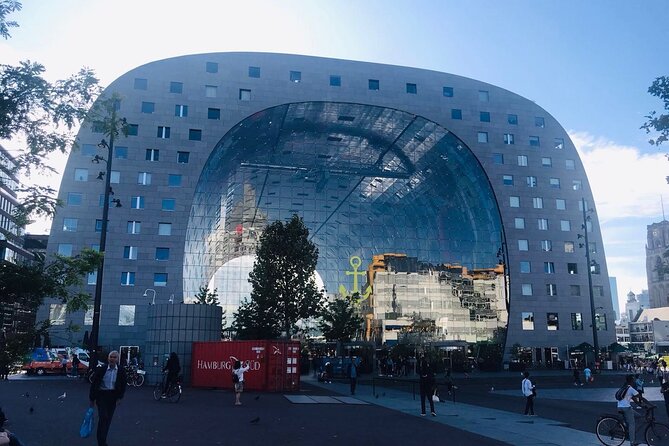
You begin at Markthal, Rotterdam’s famous market hall. The standout detail here is the massive wall art, nearly 11,000 m2 of indoor paintings, described as the largest indoor paintings in the world. You’ll also see the market in action, with traditional Dutch food options like cheese, haring fish, and stroopwafel.
Even if you do not buy much, this stop gives you a quick feel for how Rotterdam treats everyday life as an attraction. It’s also a good moment to grab a snack without losing your place on the day.
Grote of Sint-Laurenskerk: a medieval survival after the war
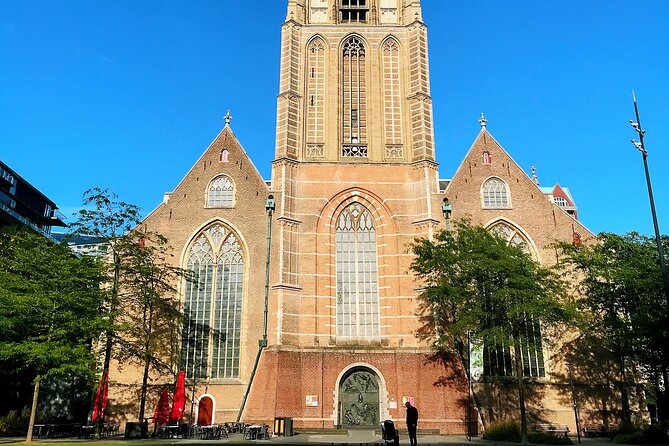
Next comes Grote of Sint-Laurenskerk, St. Lawrence Church. This is described as the only remnant of the medieval city of Rotterdam and the first all-stone building in Rotterdam. The church was destroyed in the Second World War, then repaired back into its current form.
Today it’s also used for exhibitions and concerts, so the building is not just a historical prop. It’s a living venue, which makes the story feel less frozen in time.
Oude Haven: 1350 port vibes with modern bars
Then you get Oude Haven, the Old Harbour built in 1350. The surroundings still include historical buildings, while the harbour area now fills with bars and restaurants. You may spot old barges and modern yachts moored nearby.
This is a “slow your head and look around” stop. Even with limited time, it’s one of the best places on the route to casually watch Rotterdam’s mix of old and new.
Cube Houses, Erasmus Bridge, and Rotterdam’s modern identity
After the harbour, Rotterdam shifts gears into architecture and landmarks. If you like design details, this part delivers.
Kijk-Kubus: living as an urban roof
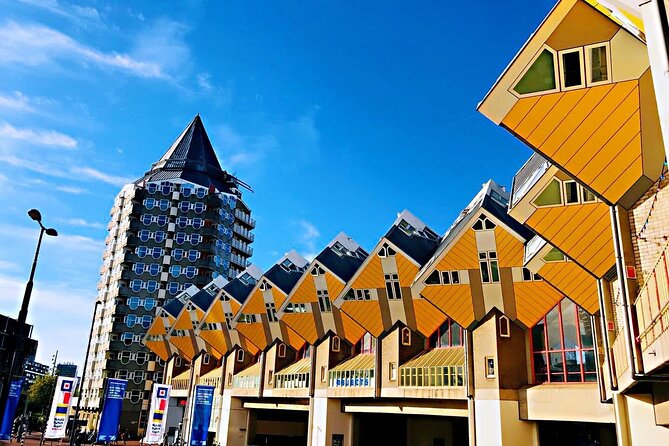
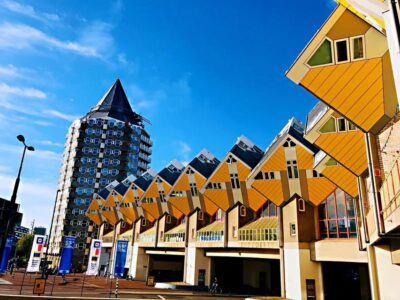
The Kijk-Kubus cube houses are built on the concept of high-density housing with space on the ground level, described as living as an urban roof. The conventional house cube is turned 45 degrees and placed on a hexagon-shaped pylon.
Even if you only spot them from outside, you’ll likely appreciate how the shape solves a space problem and turns density into something visually memorable.
Erasmus Bridge: a landmark you’ll recognize on the logo
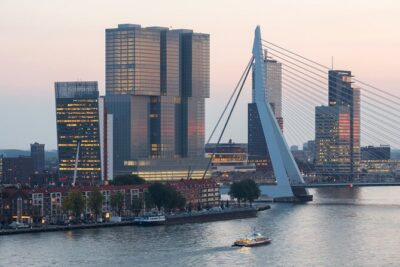
Then you cross into the skyline moment: Erasmus Bridge. It’s described as a combined cable-stayed and bascule bridge crossing the Nieuwe Maas in central Rotterdam. It’s Rotterdam’s most important landmark and is even part of the city’s official logo.
This is one of those “you’re in the right city” confirmations. Seeing it in person helps, because photos usually flatten how bold and graphic it feels.
Euromast: the height check for Rotterdam
Finally, there’s time around Euromast, the observation tower built for the 1960 Floriade Flower Expo and listed as a monument since 2010. It’s described as the highest building in the Netherlands and part of a global federation of great towers.
Even without going up, the stop gives you a viewpoint perspective. It helps you understand why Rotterdam keeps building up in a world that is already managing water and space.
Delft: blue pottery connections, City Hall, and the New Church
Delft feels like the emotional counterweight to Rotterdam. Less steel, more charm and craftsmanship.
You’ll enjoy time in the city center, with an emphasis on Delft’s connections to the House of Orange-Nassau and its fame for blue pottery. Delft is also a place where short breaks feel like real breaks, because the streets and squares are made for wandering.
Stadhuis Delft and the Markt square rhythm
You’ll see Stadhuis Delft, the Renaissance city hall. It sits on the Markt across from the Nieuwe Kerk. The city hall also functions as a popular venue for civic wedding ceremonies.
Then you get time at the Markt square itself, which is where the shopping and restaurant life clusters. It’s a good area to stop for lunch on your own, since it’s explicitly built into the day as a “grab a bite and reset” block.
New Church: a tower that clocks the city skyline
Next is the New Church on Delft Market Square, across from the city hall. It’s described as a Protestant church, with the tower completed in 1872, noted as the second highest tower in the Netherlands after Utrecht’s Domtoren.
This stop helps anchor Delft visually. When you look up and clock the tower, you instantly understand why Delft looks the way it does from street level.
Royal Delft factory or Madurodam: choose your kind of wonder
This tour gives you one paid attraction choice, and it’s a smart split. You’ll visit either the Royal Delft Blue Pottery Factory or Madurodam, but not both.
Royal Delft: live painting and the real factory feel
If you choose Royal Delft (Koninklijke Porceleyne Fles), you’re visiting the Dutch manufacturer of Delft Blue earthenware. The tour notes it as the only remaining factory out of 32 established in Delft during the 17th century, with activity for over 360 years.
A key detail is live painting. That’s the difference-maker if you want to see craft in motion rather than just viewing finished work.
Madurodam: a miniature country in 1.8 square kilometers
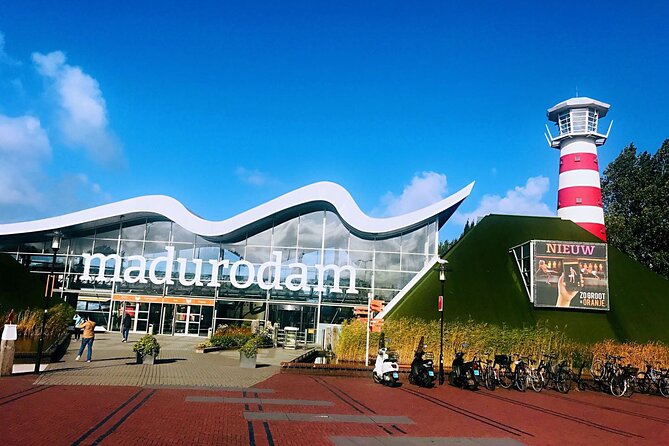
If you choose Madurodam, you’re stepping into a 1.8 square kilometer miniature city in The Hague, built around 1:25 scale replicas of Dutch landmarks and major developments. The numbers in the description are big: more than 120 famous buildings and historical sites.
If you enjoy models and quick “wow” moments, Madurodam is likely your pick. It’s also a nice pacing change when your feet are starting to feel the day.
Which should you pick?
- Choose Royal Delft if you like hands-on making and want a real-world connection to Delft Blue.
- Choose Madurodam if you want a fast overview of Dutch landmarks in a single setting.
The Hague’s Peace Palace, Binnenhof, and political Dutch architecture
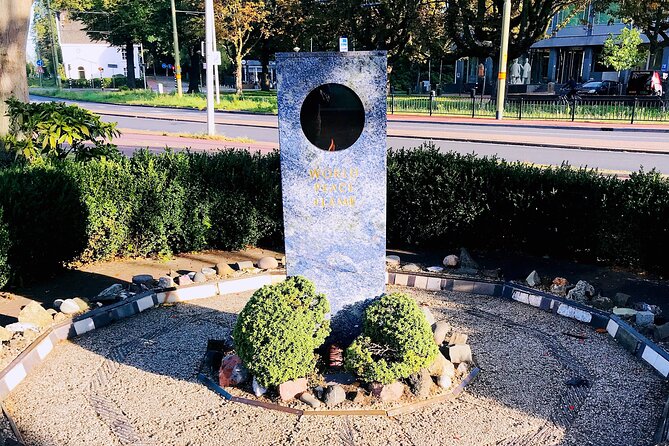
The Hague is where the tour turns from landmarks into meaning. You’ll see major institutional buildings, and the guide’s job is to translate what you’re looking at into something understandable.
Peace Palace: international law in plain sight
The day includes the Peace Palace, described as an international law administrative building that houses the International Court of Justice, the Permanent Court of Arbitration, the Hague Academy of International Law, and the Peace Palace Library.
Even if you do not go inside, the explanation matters. These names make the building feel connected to the world, not just local scenery.
Noordeinde Palace and royal workplace context
You’ll also pass Noordeinde Palace, one of the royal palaces, used as the official workplace of King Willem-Alexander since 2013. It’s a useful stop because it grounds the royal theme in a specific, current-use detail.
House of Representatives and how laws get made
Then you see the House of Representatives, part of parliament, described as playing an important role in drafting laws, monitoring the government, and deciding whether a cabinet has confidence.
This is the kind of stop that can feel dry if you’re not into politics. But with a good guide, it becomes a quick lesson on how a modern democracy runs.
Binnenhof and Ridderzaal: oldest still-in-use parliament vibe
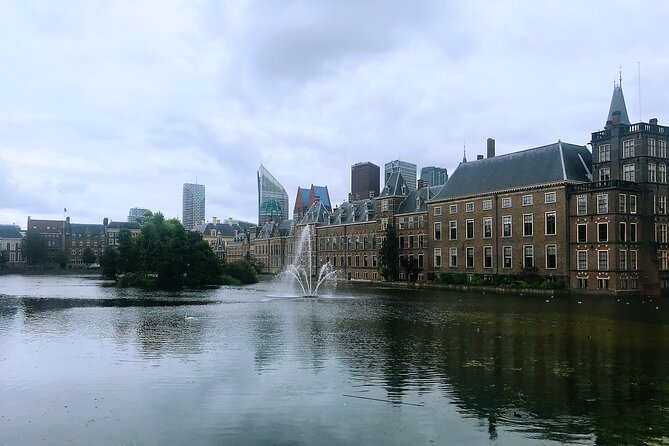
Finally, the Binnenhof & Ridderzaal area. Binnenhof is described as built primarily in the 13th century, originally a Gothic castle for counts of Holland, then becoming the political center of the Dutch Republic in 1584. It’s also described as the oldest Parliament building in the world still in use.
This is a strong closing image. You finish the day in a place that has kept serving its purpose through centuries of change.
Timing and pace: a day that moves, but not wildly
The itinerary is built from short blocks at each place, which means you get photos and context, but not deep museum time. That matches the intent of the tour: a one-day “greatest hits plus meaning” route.
From the schedule lengths you’ll be given, you should expect:
- Short visits and exterior viewing at many points
- Built-in walking, though not described as a hike
- Lunch being self-directed in Delft and The Hague, not included
One more practical tip if you really want to hear every detail: in past groups, there’s been feedback that audio can be harder to catch from the back of the van. If your seat is an option, I’d choose a spot closer to the front.
Who this tour fits best, and who should think twice
This tour fits best if you:
- Have one day to spend outside Amsterdam
- Want a guided blend of old and modern without planning transit
- Enjoy architecture, markets, and “what does this building do?” lessons
- Prefer small-group travel, not crowded buses
You might think twice if:
- You’re a slow walker or you need long pauses
- You prefer deep indoor experiences and long ticketed time
- You want a relaxed day with lots of free time, since this is structured around many stops
My honest bottom line: should you book it?
If you want a high-value day that turns three cities into a single story, I’d book this. The small-group size, included transport plus guide, and the mix of Rotterdam’s rebuilt identity, Delft’s blue craftsmanship, and The Hague’s institutions hit a sweet spot for first-time South Holland visitors.
Just go in with the right expectations. It’s not a slow, café-first wandering day. It’s a smart sampler with enough free moments for lunch and photos, plus a paid attraction choice that you can tailor to your interests.
If that sounds like your style, you’ll likely leave feeling you covered a lot of ground with clarity, not chaos.
Delft, Three More Ways


The Hague and the Sea

Still in Rotterdam? Keep Going
Fresh off the review pile in Amsterdam
- Full-Day Trip From Amsterdam to Keukenhof, Zaanse Schans + Cruise
★ 5.0 · 3 reviews - Boutique Dutch Food & History Tour with up to 8 guests only
★ 5.0 · 3 reviews - Private Tour to Windmills Zaanse Schans +Keukenhof – 7 Hours
★ 5.0 · 3 reviews - Full-Day Private Guided Countryside Tour from Amsterdam by Bike
★ 5.0 · 3 reviews - Amsterdam Red Light District and Old Town Walking Tour
★ 5.0 · 3 reviews
Rotterdam Tours, compared.
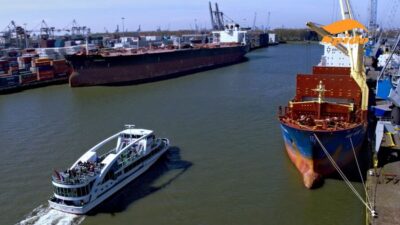 ★ 4.3Rotterdam: Harbor Sightseeing CruiseFrom $227,599 reviews
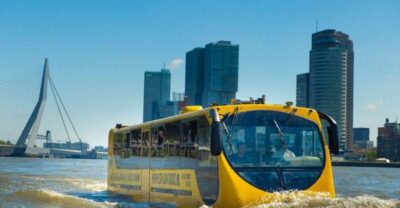 ★ 4.5Rotterdam: 1-Hour Sightseeing Splash TourFrom $353,299 reviews
 ★ 4.6Rotterdam: Rotterdam Zoo Blijdorp Entry TicketFrom $322,754 reviews
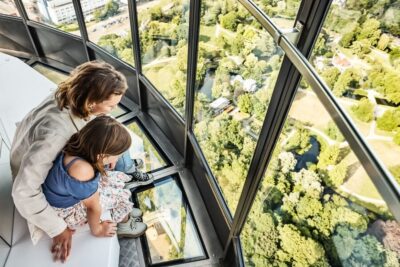 ★ 4.4Rotterdam: Euromast Lookout Tower TicketFrom $212,549 reviews
 ★ 4.4Rotterdam: Pancake CruiseFrom $311,986 reviews
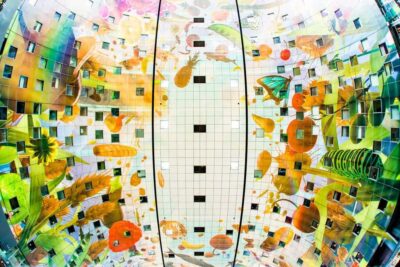 ★ 4.2From Amsterdam: Rotterdam, Delft & The Hague Guided Day TourFrom $901,765 reviews
 ★ 4.6Rotterdam: Kinderdijk UNESCO World Heritage Entry TicketFrom $251,477 reviews
 ★ 4.0Rotterdam: Harbor Cruise with Live GuideFrom $141,270 reviews
Browse the lists this tour appears in