
REVIEW · THE HAGUE
The Hague: Panorama Mesdag Museum Entry Ticket
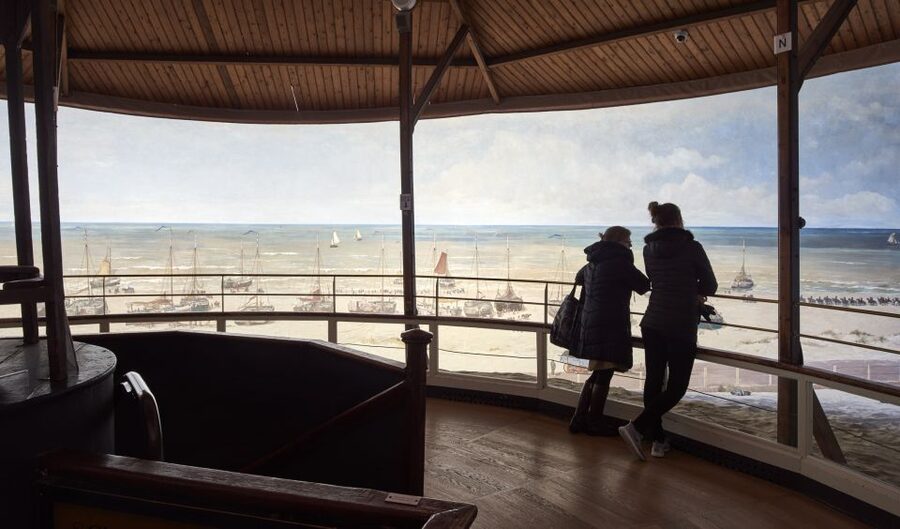
Walking inside a painting feels unreal, yet Panorama Mesdag in The Hague is built for exactly that 360º view of Scheveningen in 1881. I love how you stand in the center of the circular canvas and take it in from the observation deck, and I love the included audio guide that explains what you are looking at. One possible drawback: it is designed for about an hour, so you may feel a bit rushed if you like to linger.
The magic is not just the subject, it is the trick. The museum highlights how panorama painting creates an optical illusion, and the light and timing can make the sea, dunes, and fishermen village feel slightly different from moment to moment.
Before you go, plan one small thing well: bring headphones for the audioguide. Also note pets are not allowed, and the experience is not suitable for people with mobility impairments.
In This Review
- Key things to know before you go
- Panorama Mesdag in The Hague, what makes this museum work
- Stepping onto the observation deck, then standing in the middle
- Scheveningen in 1881, sea air, dunes, and a changing coastline
- The optical illusion lesson that makes the art click
- Using the audioguide in English, German, French, and more
- Beyond the panorama: permanent collection and temporary exhibition
- Price and value for an hour inside the circular canvas
- Who should book this ticket, and who might skip it
- Practical tips so you do not waste time
- Should you book the Panorama Mesdag entry ticket?
- FAQ
- How much is the Panorama Mesdag museum entry ticket?
- How long does the Panorama Mesdag experience take?
- What is included with the ticket?
- What languages are available for the audio guide?
- Do I need headphones?
- Are pets allowed in the museum?
- Is this museum suitable for people with mobility impairments?
- Can I cancel for a full refund?
- Do I have to pay immediately?
Key things to know before you go
- 360º Scheveningen view from 1881 on Europe’s largest circular canvas
- Audio guide highlights plus an explanation of the panorama optical illusion
- Observation deck viewpoint that makes the scene feel continuous
- Permanent collection and a temporary exhibition to round out your visit
- Light changes matter, so the view can shift as you watch
Panorama Mesdag in The Hague, what makes this museum work
This is the kind of ticket you buy for something different, but you stay for something more human. Panorama Mesdag is famous for being the biggest painting in the Netherlands and Europe’s largest circular canvas, and the format is the whole point. You are not just watching a painting on a wall, you are positioned inside the scene.
You get a 360º view of Scheveningen as it was in 1881, with the sea, dunes, and the fishermen village vibe, plus the sense of the city of The Hague edging closer. I like that the museum does not treat the panorama as a one-note novelty. It gives you the tools to read what you see, instead of just letting you stare at it.
Stepping onto the observation deck, then standing in the middle
Your visit is centered on one strong idea: viewpoint control. The museum’s layout takes you to an observation deck, then draws you toward standing in the middle of the circular canvas area. From there, you look 360º around and the painting wraps around your field of view in a way that feels almost physical.
This is where most people first feel the illusion. In panorama art, scale and perspective are engineered to trick your eye, so the boundaries between painted elements feel less obvious. The result is that you can sweep your gaze from sea to sky, and from dunes to village details, like you are scanning a real coastline.
It helps that the museum is clear about what it wants you to do: look around, slow down for a few turns, and pay attention to how the scene is arranged. If you rush, you might miss the best moments, like when your brain stops searching for the seams.
Scheveningen in 1881, sea air, dunes, and a changing coastline
The main panorama scene is set in 1881, and it covers more than just water. You see the old fishermen’s village in Scheveningen, the dunes, and the beach life that was starting to become more public and cosmopolitan. At the same time, the painting hints at the encroaching city of The Hague, so the coast does not feel frozen in time.
What I appreciate here is the emotional angle. The panorama is not only a record of place, it feels like a personal vision. The museum experience has a way of making you sense how much H.W. Mesdag and his wife cared about Scheveningen. That feeling can hit harder than you expect, especially if you came in with the mindset of just doing a quirky “thing to try.”
You will also notice how the view can shift as you spend time inside. The museum notes that the incidence of light changes the effect, so the same coastline can feel different depending on the moment. That is a big part of why it does not play like a static photo.
The optical illusion lesson that makes the art click
Panorama painting only works if you understand its trick. The museum includes an explanation of the optical illusion, and once you know what to look for, the whole circular scene starts to feel more intentional.
Here is the basic idea you can keep in mind while you watch: panorama art uses careful perspective, plus a curved display format, to fool the eye into believing the scene continues beyond the painted edges. Your position in the rotunda matters, because the painting is designed to match what your sightline expects.
The audio guide makes this easier, because it points out highlights while you are still standing in the viewing position. You do not have to become an art expert first. You just need a little direction, then time to look.
Using the audioguide in English, German, French, and more
You get an audio guide with your entry ticket, which is a smart move for a museum with one big “wow” moment. The audio guide is available in Dutch, English, German, French, and Spanish, so you can pick the language you are most comfortable with.
One practical tip: bring your own headphones. The museum lists headphones as what you need, so do not assume you can borrow or buy a set on site. If you forget, you might still enjoy the panorama, but you will miss part of what makes the experience feel guided rather than chaotic.
I like the pacing the audio encourages. Instead of giving you a long lecture, it helps you connect the dots between what you see, what the museum wants you to notice, and why the illusion works. That is especially useful if you are visiting with family, because you can all react to the same details.
Beyond the panorama: permanent collection and temporary exhibition
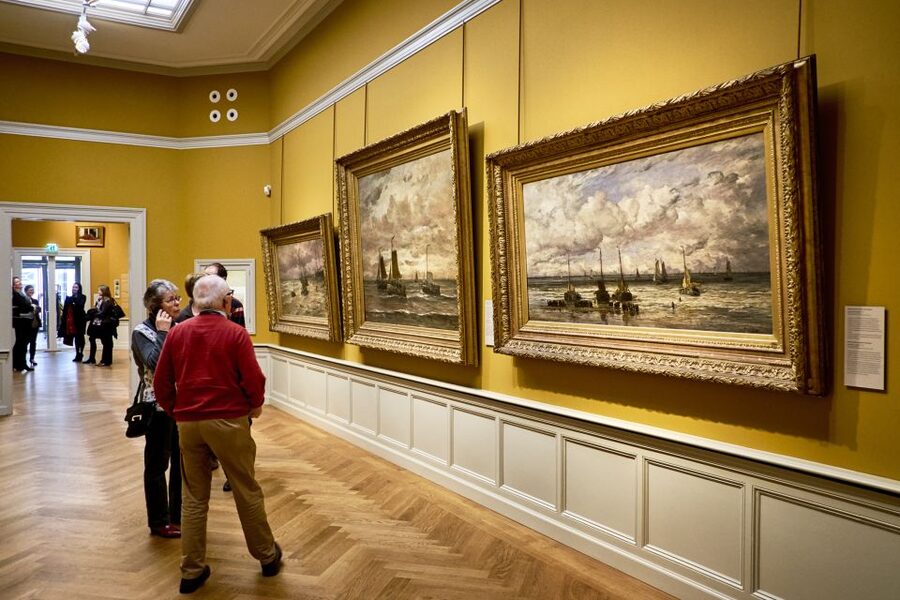
Panorama Mesdag does not stop at the circular canvas. After your main viewing time, you also have access to the permanent collection and a temporary exhibition. That matters because it gives your visit a second layer. The panorama is the headline, but the extra rooms help place it in a broader museum context.
The permanent collection tends to satisfy the “I want more” mood. The temporary exhibition is a nice change of pace, and it gives you something to talk about after you come out of the rotunda feeling slightly mind-bent by the 360º effect.
If you tend to rush through museums, plan to slow down on the second part. The panorama can be so striking that it makes everything else feel optional. It is better to see it as two acts: first the illusion, then the framing.
Price and value for an hour inside the circular canvas
The ticket price is $18 per person, and you get entry to the museum plus the audio guide. For a one-hour experience, the value is in what you are actually buying: access to a very specific kind of art setup that you cannot replicate elsewhere. This is not a generic gallery visit. It is a purpose-built space for a panorama painting.
Also, the audio guide is included, which saves you from another cost and helps you make the most of the visit. If you like art, you will likely enjoy how the explanation turns the illusion into something you can actively track while you look.
If you are the type who needs lots of time in museums or you hate structured time windows, the one-hour design could feel short. But for most people, that duration is a plus, because it keeps the focus on the panorama experience rather than turning it into a long “walk and hope” museum day.
Who should book this ticket, and who might skip it
This ticket fits best if you want a memorable art moment with clear direction. It is especially good for people who enjoy visual tricks, historical-looking scenes, and the feeling of standing somewhere “almost” real.
It is also a solid family-friendly pick in practice, because the panoramic view is easy to understand even before the audio starts talking. You can look around and find your own points of interest quickly, then use the guide to deepen the experience.
The main mismatch is mobility. The experience is not suitable for people with mobility impairments. If that applies to you, you might want to choose a different activity where access is easier.
Practical tips so you do not waste time
Here are the small things that make your visit smoother.
- Bring headphones for the audioguide, since that is what the museum asks for.
- Pets are not allowed, though assistance dogs are allowed.
- Plan for about one hour of museum time. That is long enough to take in the panorama well, plus see the permanent and temporary areas, but not so long that it becomes a full-day detour.
- If you care about lighting and how the view changes, give yourself a few minutes to re-check the panorama after your first look, instead of immediately rushing on.
Should you book the Panorama Mesdag entry ticket?
I think you should book if you want a genuinely different way to experience a painting in The Hague, with the audio guide doing the heavy lifting of explaining the illusion. The panorama itself is the star, and the Scheveningen-in-1881 scene has enough detail to reward repeat viewing during your one-hour visit.
I would skip if mobility access is a concern, or if you only like museums with lots of time to wander without structure. For everyone else, this is one of those tickets that turns a “cool idea” into a moment that feels unexpectedly moving, especially once you connect the view to the artist’s deep attachment to Scheveningen.
FAQ
How much is the Panorama Mesdag museum entry ticket?
The ticket costs $18 per person.
How long does the Panorama Mesdag experience take?
The duration is about 1 hour. Starting times can vary, so you should check availability.
What is included with the ticket?
Entry to the museum is included, along with an audio guide.
What languages are available for the audio guide?
The audio guide is available in Dutch, English, German, French, and Spanish.
Do I need headphones?
Yes. The experience requires you to bring headphones.
Are pets allowed in the museum?
Pets are not allowed, but assistance dogs are allowed.
Is this museum suitable for people with mobility impairments?
No, it is not suitable for people with mobility impairments.
Can I cancel for a full refund?
Yes, you can cancel up to 24 hours in advance for a full refund.
Do I have to pay immediately?
You can reserve and pay later, so you can book without paying today.
The Hague & Scheveningen, compared.
 ★ 4.7The Hague: Mauritshuis Entrance TicketFrom $252,706 reviews
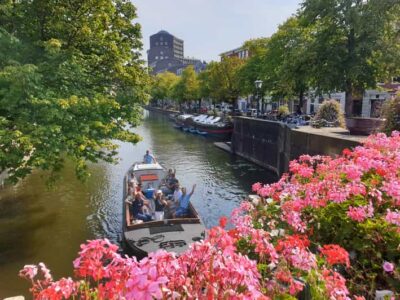 ★ 4.6The Hague: City Canal CruiseFrom $172,024 reviews
 ★ 4.2From Amsterdam: Rotterdam, Delft & The Hague Guided Day TourFrom $901,765 reviews
 ★ 4.6The Hague: Madurodam Miniature Park Entry TicketFrom $241,559 reviews
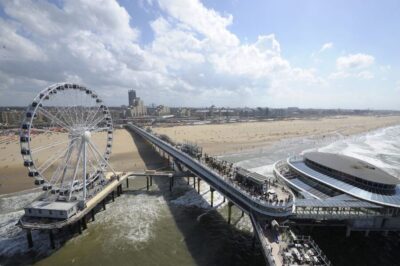 ★ 4.4The Hague: The Pier SkyView Ticket with Drink and SnackFrom $191,398 reviews
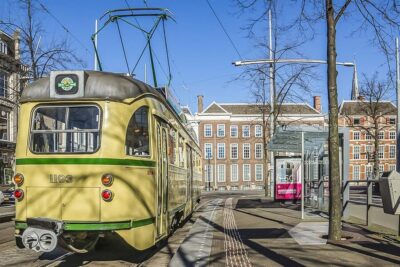 ★ 4.4The Hague: Hop-on Hop-off Old-Fashioned Heritage Tram TourFrom $181,083 reviews
 ★ 4.6The Hague: Escher in The Palace Museum TicketFrom $15896 reviews
 ★ 4.0Rotterdam, Delft, the Hague, Madurodam from AmsterdamFrom $90793 reviews
Browse the lists this tour appears in