
REVIEW · THE HAGUE
The Hague: Escher in The Palace Museum Ticket
Escher makes your eyes argue with reality. With this ticket, you enter Escher in Het Paleis, the former Winter Palace of Queen Mother Emma of the Netherlands, where the building itself helps sell the magic of impossible art.
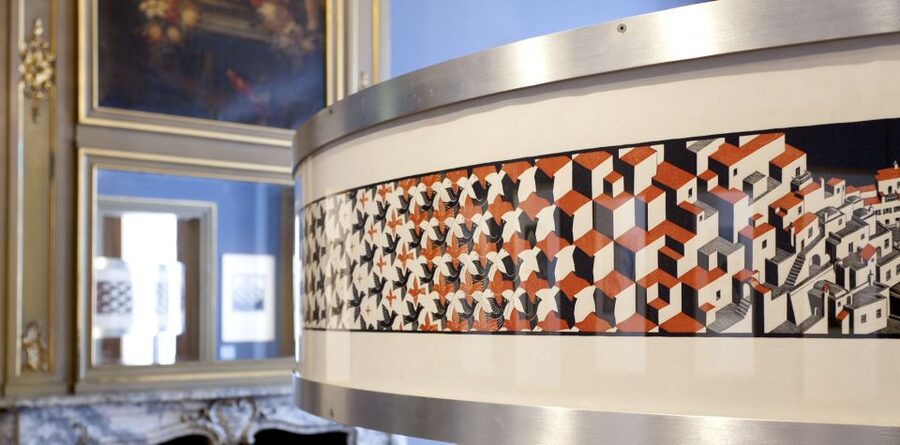
I love the scale of Metamorphosis III, a 7-meter long woodcut that makes time and space feel like one solid idea. I also like the top-floor interactive zone, Looking as Escher Does, where you solve visual puzzles using your eyes and your hands.
One heads-up: some rooms feel tight, and the short video area has limited seating, so you might wait your turn. The lighting can also be on the dim side, so plan to read at a relaxed pace.
In This Review
- Key things you’ll notice right away
- Het Palais in The Hague: art lives inside royal rooms
- Ticket value and how much time you should plan
- Getting there from The Hague Central Station without stress
- Your visit route: from big Escher moments to smarter surprises
- 1) Start with an orientation moment
- 2) Hit the headline print early, then let the rest click
- 3) Continue with the famous optical illusions
- 4) Look beyond the icons
- The top floor: Looking as Escher Does and the hands-on payoff
- Audio guide, labels, and the lighting reality check
- Bag rules, lockers, and making the visit easy
- Families, kids, and who this museum is for
- When guided help might be worth it
- Should you book Escher in Het Paleis?
- FAQ
- Where is the meeting point for Escher in Het Paleis?
- How do I get there from The Hague Central Station?
- How much does the ticket cost?
- How long should I plan to visit?
- Is an audio guide included, and what languages are available?
- Are luggage or large bags allowed inside?
- Is the museum open on holidays?
- Do children get free entry?
- Can I cancel and reschedule if my plans change?
Key things you’ll notice right away
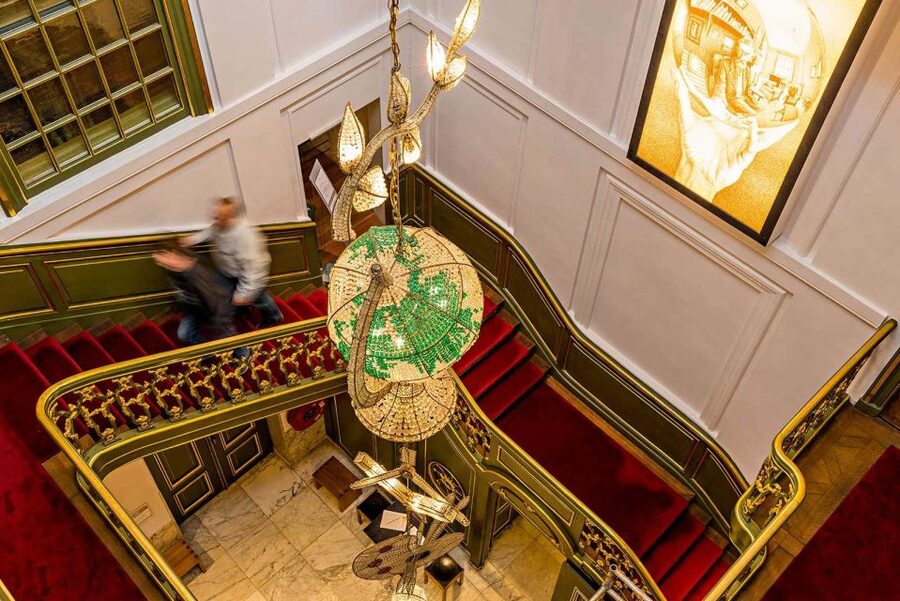
- A royal palace setting that stays authentic: Het Paleis keeps that original royal ambience, not just a generic museum vibe.
- Metamorphosis III in full size: the 7-meter woodcut is the wow moment for most people.
- The classics are here: Day and Night, Climbing and Descending, and other famous “impossible” prints.
- Hands-on optical puzzles: Looking as Escher Does turns perception into a game.
- Audio guide in many languages: English and a long list of others, so you can tailor your visit.
- Bonus family activity: a free treasure hunt for children adds structure.
More of The Hague, sea air included
- The Hague: City Canal Cruise★ 4.6 · 2,024 reviews
- The Hague: Madurodam Miniature Park Entry Ticket★ 4.6 · 1,559 reviews
- The Hague: Hop-on Hop-off Old-Fashioned Heritage Tram Tour★ 4.4 · 1,083 reviews
- The Hague: Escher in The Palace Museum Ticket★ 4.6 · 896 reviews
Het Palais in The Hague: art lives inside royal rooms
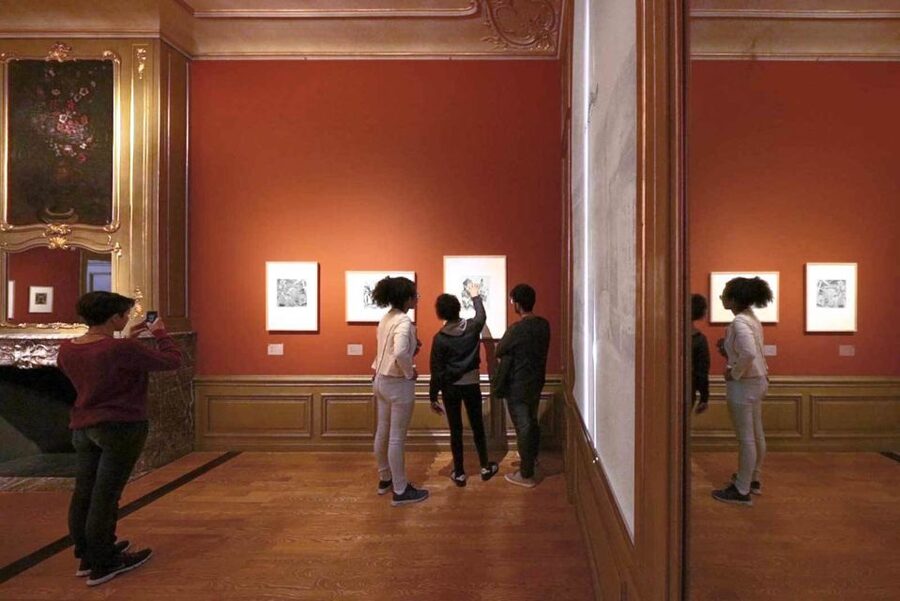
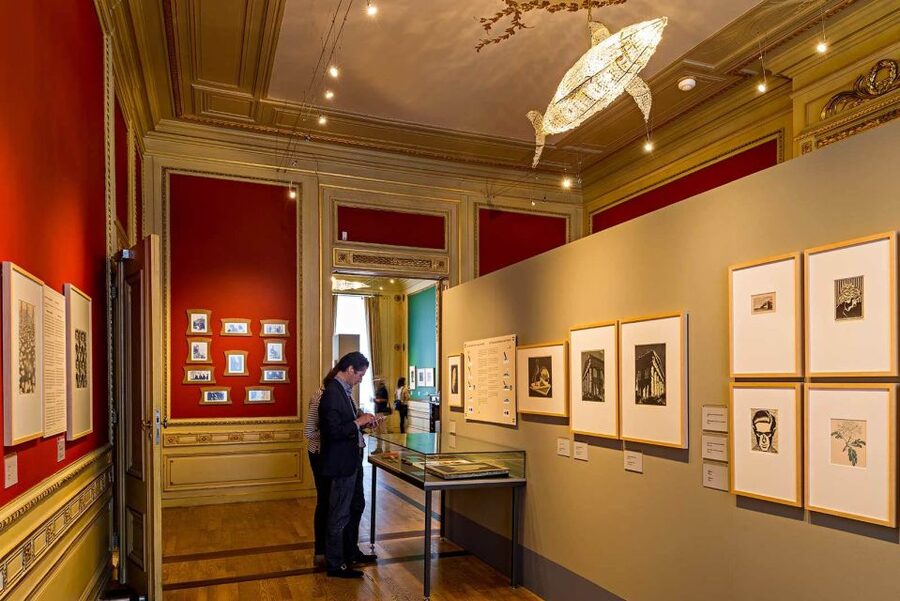
This is not a white-box art museum. The exhibition is housed in Het Paleis in The Hague, the Winter Palace of Queen Mother Emma. That matters because the place already has drama in its architecture. You’ll feel it as you move from room to room, with prints displayed in spaces that look like they were meant for viewing, not storage.
The building keeps that original royal ambience, which helps explain why this museum often feels different from other Escher stops. It also means you’re seeing Escher in a setting that reinforces his themes: order, symmetry, illusion, and careful arrangement. When you walk past a print, you’re not just looking at a picture. You’re looking at a designed object in a designed room.
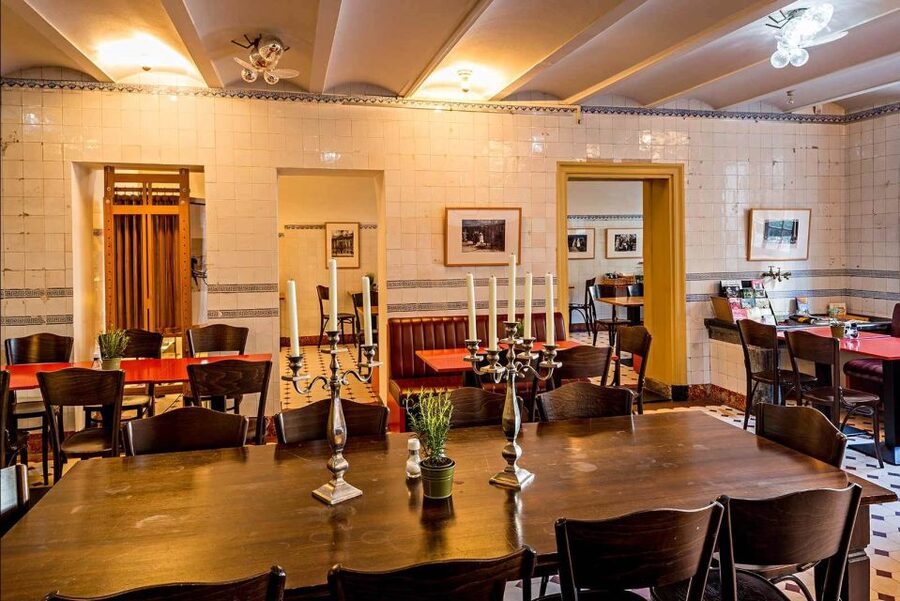
There’s also a museum café in the former kitchen area. It’s an easy way to take a breather without leaving the palace and losing your rhythm.
Ticket value and how much time you should plan
The ticket price is about $15 per person for entry to the permanent exhibition. On value, this one is hard to argue with. You get a full, long-running Escher collection, including more than 130 prints, plus an interactive floor, plus an audio guide with multiple languages.
Time wise, this museum is compact enough that you won’t feel trapped all day, but it’s not a ten-minute stop either. Based on typical visitor pacing, I’d plan around 90 minutes to 2 hours. If you read labels closely and do the hands-on puzzles thoroughly, go closer to two hours. If you just want the highlights and keep moving, 60 to 90 minutes can still work.
I also like that you can approach it your way. Some people fly through famous prints. Others slow down to study the evolution of Escher’s ideas and the repeating themes.
Getting there from The Hague Central Station without stress
Meeting point is Het Palais, Lange Voorhout 74, Den Haag. If you’re coming from The Hague Central Station, you have two straightforward tram options:
- Tram 9, get off at Korte Voorhout
- Tram 17, get off at Kneuterdijk
Both stops are close enough that you can walk the final bit comfortably. This matters because Het Palais sits in a pleasant area where you can step out afterward for a slow walk and reset, rather than immediately jumping into another indoor attraction.
Your visit route: from big Escher moments to smarter surprises
Here’s the rhythm I recommend so you get the best payoff without feeling like you’re sprinting through art.
Other The Hague entries you can hold on your phone

1) Start with an orientation moment
Right after you settle in, there’s an introduction video that sets the tone for the visit. It helps you understand how Escher thought, not just what he drew. One practical point: that video space is small, and seating can be limited. If it looks busy, don’t panic. You can move on, then come back when a slot opens.
2) Hit the headline print early, then let the rest click
Almost everyone’s first “where did my brain go?” moment is Metamorphosis III, the 7-meter long woodcut. It’s displayed in a non-traditional way, designed so you experience the idea of Escher combining time and space as one organic unity.
If you’re like me, you’ll spend extra time here because the scale forces you to notice how images transform across the length of the work. It’s not just a clever pattern. It’s a physical experience of transformation.
3) Continue with the famous optical illusions
Then I’d go after the prints that anchor Escher’s reputation. Two big ones you can expect to see:
- Day and Night, where a Dutch scene morphs into a flock of birds
- Climbing and Descending, rows of people perpetually ascending and descending a staircase
These works are famous for a reason. Even if you’ve seen reproductions online, the originals have that extra precision and weight. The lines feel sharper, and the optical trick lands harder when you’re standing close in person.
4) Look beyond the icons
One of the most interesting parts of the collection is that it’s not only “the usual Escher.” You’ll see works that cover different ideas, including pieces that connect Escher with mathematics and the way he translated complex thinking into visual form.
Some rooms also feature works by other influential artists, which can help you see Escher not as a lone magician, but as part of a larger conversation about geometry, perception, and graphic design.
The top floor: Looking as Escher Does and the hands-on payoff
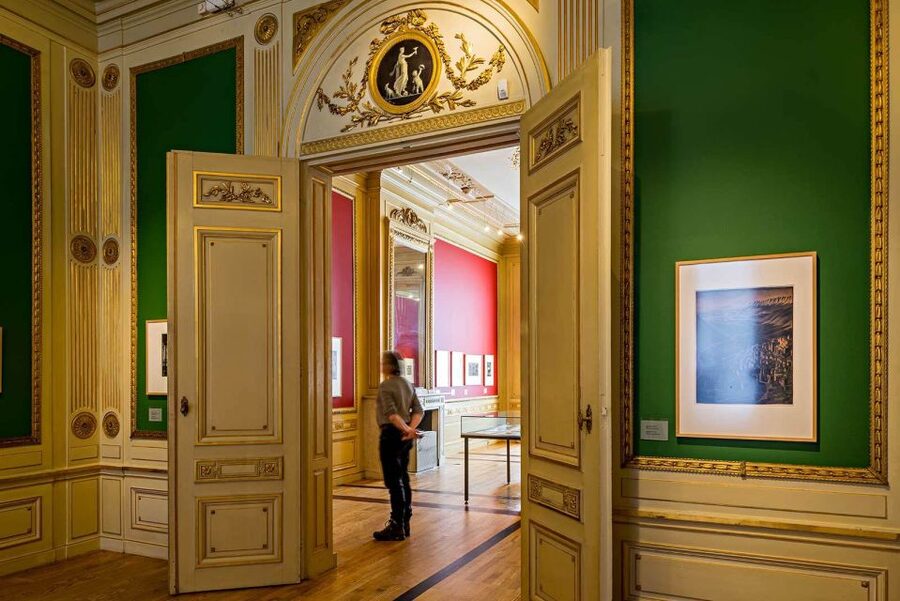
If you only have time for one area, make it the interactive exhibition on the second floor, Looking as Escher Does. This is where Escher turns from gallery art into a puzzle you can play.
The concept is simple: you do “puzzles with your eyes and hands.” That sounds gimmicky until you’re there. Once you start interacting, you realize the museum is teaching you how Escher’s tricks work. Your brain expects one kind of geometry. The exhibit nudges it into a different interpretation.
I also love that this part often has a different energy from the gallery floors. You’re not just reading or staring. You’re testing what you see, then watching how quickly the illusion reshapes your interpretation.
If you’re visiting with kids, this is the area that usually keeps attention locked in. If you’re visiting as a solo adult, it still hits, because it turns optical illusion into a small challenge. You get that satisfying moment of “Oh, I understand how that fooled me.”
Audio guide, labels, and the lighting reality check
An audio guide is included. It supports English and several additional languages: Dutch, German, French, Chinese, Japanese, Ukrainian, and Korean.
I like using audio guides in museums like this because Escher’s ideas benefit from context. You can appreciate the artwork more when you know what you’re looking for, like recurring themes or how he developed certain visual concepts over time.
That said, keep expectations realistic about label reading. One concern I picked up from experience in this kind of indoor setting: captions and text can be harder to read if lighting is dim. If you wear glasses or prefer high-contrast text, bring what helps you see comfortably.
Also, remember that video viewing can become a queue. That’s not a problem, but it changes the flow. If you want to avoid bottlenecks, treat the video as optional. Do it when it’s convenient, not when you planned it.
Bag rules, lockers, and making the visit easy
One rule to plan around: luggage or large bags are not allowed inside. So expect to use storage such as lockers before you enter the exhibition area.
This matters because it affects your comfort level. If you show up with a big daypack, you may lose time at the entrance sorting things. I’d rather you arrive with a compact load so you can move quickly through the palace rooms and keep the visit focused on art.
Good news: the museum also offers a café in the former kitchen area, so if you need a break, you can refuel without leaving the building. And if you’re traveling with children, there’s a free treasure hunt, which can turn wandering into a fun mission.
Families, kids, and who this museum is for
This museum is great for families because it has both “look” and “do.”
- Children up to 6 years old enter for free when accompanied by a paying adult.
- The free treasure hunt gives kids a reason to pay attention.
- The interactive Looking as Escher Does floor is designed for hands-on play, not just quiet viewing.
I’d also say it works well for teenagers and adults who like visual logic, graphic design, puzzles, or math-flavored thinking. Escher is one of those artists where curiosity feels rewarded.
If you’re short on time or you only want one famous print, you can still do it. But if you want the full experience, the permanent exhibition format is the point. You’ll get a sense of the way his ideas repeat, shift, and evolve.
When guided help might be worth it
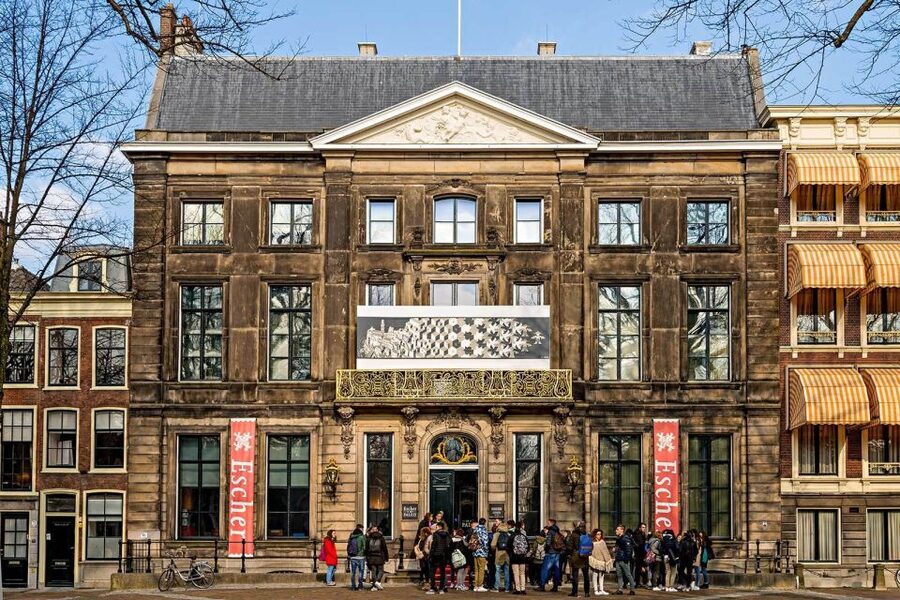
Your ticket gets you admission to the exhibition. There’s also an option for a guided tour, but it’s separate, with a maximum group size of 20 people. The guide fee is listed as EUR 60 per guide, by reservation.
If you love art history, math concepts, or you simply want the fast route to understanding Escher’s themes, a guide can be a good upgrade. If you prefer to roam independently and stop when your brain wants to, the self-guided setup with the included audio guide can still feel satisfying.
Should you book Escher in Het Paleis?
Book this if you want a high-value Escher fix in one visit. The combination of Metamorphosis III, major classics like Day and Night and Climbing and Descending, plus the hands-on Looking as Escher Does interactive floor, makes this more than a walk-through. You’re paying for originals, context, and a puzzle-style experience that works for adults and kids alike.
Skip or reconsider if you know you dislike dim museum lighting, tight spaces, or queued video areas. Also, if you hate interactive exhibits and prefer only traditional galleries, you might feel the hands-on floor is the main event.
For most people, though, this is an easy yes: one ticket, a real palace setting, and Escher’s impossible ideas made tangible.
FAQ
Where is the meeting point for Escher in Het Paleis?
The meeting point is Het Palais, Lange Voorhout 74, Den Haag.
How do I get there from The Hague Central Station?
Take tram 9 to Korte Voorhout or tram 17 to Kneuterdijk, then walk to Het Palais.
How much does the ticket cost?
The price is listed as about $15 per person for this discounted entry.
How long should I plan to visit?
Plan for about 90 minutes to 2 hours, depending on whether you read labels closely and do the interactive exhibits.
Is an audio guide included, and what languages are available?
Yes. The audio guide is included and is available in English, Dutch, German, French, Chinese, Japanese, Ukrainian, and Korean.
Are luggage or large bags allowed inside?
No. Luggage or large bags are not allowed in the museum, so you’ll need to store them.
Is the museum open on holidays?
The palace is closed on Christmas Day and January 1. It is open on Easter, King’s Day, Ascension Thursday, Whitsun, and Whit Monday.
Do children get free entry?
Children up to 6 years old can enter for free when accompanied by a paying adult.
Can I cancel and reschedule if my plans change?
Free cancellation is available up to 24 hours in advance for a full refund.
Entries for Your Phone




Also Reviewed Around The Hague


The Hague and the Sea
Fresh off the review pile in The Hague
- Private Tour of Vermeer’s Delft + Tickets to Vermeer Museum
★ 5.0 · 3 reviews - Private Tour of Rotterdam and The Hague including Transfer
★ 5.0 · 3 reviews - Surfing at The Shore in The Hague
★ 4.5 · 3 reviews - 3 Course Walking Dinner in Delft with Guided Tours in Between
★ 5.0 · 3 reviews - Surprise Walk of The Hague with a Local
★ 4.5 · 3 reviews
The Hague & Scheveningen, compared.
 ★ 4.7The Hague: Mauritshuis Entrance TicketFrom $252,706 reviews
 ★ 4.6The Hague: City Canal CruiseFrom $172,024 reviews
 ★ 4.2From Amsterdam: Rotterdam, Delft & The Hague Guided Day TourFrom $901,765 reviews
 ★ 4.6The Hague: Madurodam Miniature Park Entry TicketFrom $241,559 reviews
 ★ 4.4The Hague: The Pier SkyView Ticket with Drink and SnackFrom $191,398 reviews
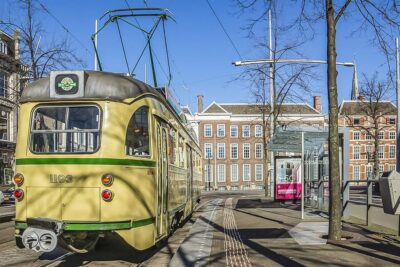 ★ 4.4The Hague: Hop-on Hop-off Old-Fashioned Heritage Tram TourFrom $181,083 reviews
 ★ 4.0Rotterdam, Delft, the Hague, Madurodam from AmsterdamFrom $90793 reviews
 ★ 4.6Oranjehotel World War II Prison Entrance TicketFrom $15708 reviews
Browse the lists this tour appears in