
REVIEW · THE HAGUE
Surprise Walk of The Hague with a Local
The Hague reads best on foot. This small-group walk (max eight people) gives you personalized recommendations for the rest of your time, all while covering the city’s biggest power-and-architecture sights. One note: the Surprise part is more about learning unexpected angles than dramatic plot twists, so if you want big surprises, you may find it a bit factual.
The walk runs about 1 hour 30 minutes, and the route can flex to match your pace and interests. It starts outside the Mauritshuis and finishes at Madurodam, which is a fun way to close the day with a playful, photo-friendly “mini Holland” moment.
It is priced at $126.29 per person, and the big value is not just the sights, it is the context a local guide can stitch together while you walk. Entry tickets are not included, so you will still decide and pay for any museum time you want at the stops.
In This Review
- Quick highlights
- Starting at Mauritshuis, the Dutch Golden Age warm-up
- Binnenhof and the Hague’s political heartbeat
- City Hall, weddings, and royal paperwork
- Noordeinde Palace, where the king works
- Peace Palace photos and a lesson in architecture
- Madurodam to cap it off, mini Holland in one stop
- What makes this walking tour feel local, not just a checklist
- Price and logistics: what $126.29 really covers
- Who should book the Surprise Walk of The Hague?
- My take: should you book this tour?
- FAQ
- How long is the Surprise Walk of The Hague?
- What is the maximum group size?
- Where does the tour start and end?
- What is included in the price?
- Are entry tickets to museums or monuments included?
- Is this tour recommended for people with impaired mobility?
Quick highlights
- Small group of up to 8 people, which keeps questions actually useful and not lost in a crowd
- Mauritshuis-area start, timed to Dutch Golden Age art fans and architecture lovers
- Binnenhof and Parliament in one stop, so you see where politics literally happens
- Noordeinde Palace and the Peace Palace photo moment, a neat contrast of royal work and big-picture law
- Madurodam finish, a fast, memorable capstone with canal houses, windmills, and the Peace Palace in miniature
More of The Hague, sea air included
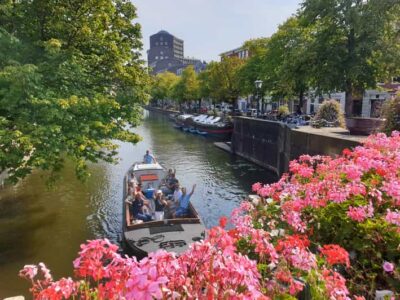
- The Hague: City Canal Cruise★ 4.6 · 2,024 reviews
- The Hague: Madurodam Miniature Park Entry Ticket★ 4.6 · 1,559 reviews
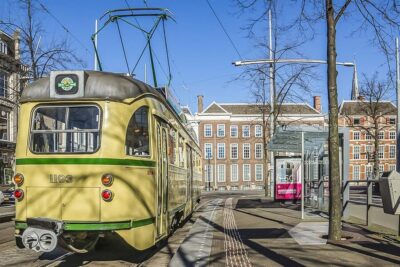
- The Hague: Hop-on Hop-off Old-Fashioned Heritage Tram Tour★ 4.4 · 1,083 reviews
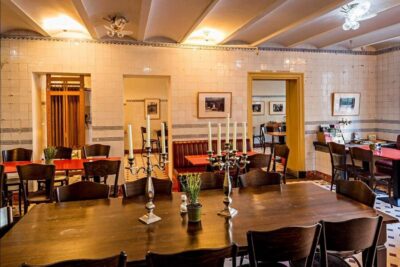
- The Hague: Escher in The Palace Museum Ticket★ 4.6 · 896 reviews
Starting at Mauritshuis, the Dutch Golden Age warm-up
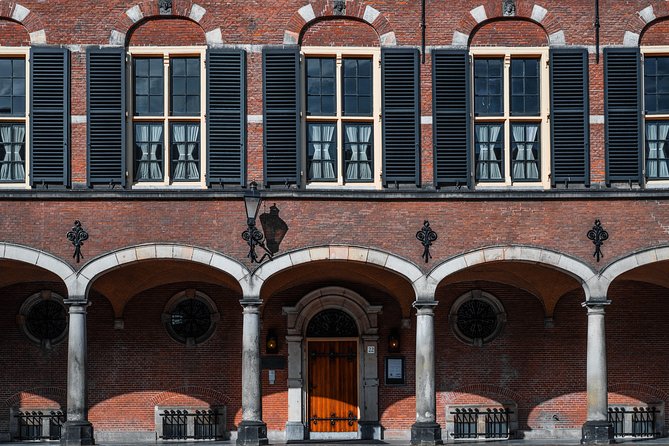
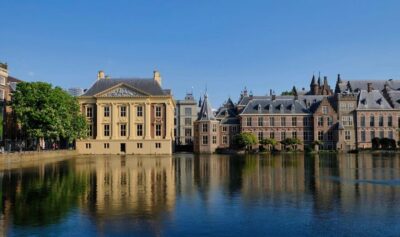
Your tour kicks off in front of the Mauritshuis Museum at MauritshuisPlein 29, 2511 CS Den Haag. Even if you do not go inside, this is a strong starting point because it sets a tone for the day: The Hague is not only about courts and government, it is also about art and national identity.
Mauritshuis is famous for Dutch 17th-century painting, and that matters here because The Hague often gets described in political terms. Starting at the museum doorstep gently flips that script. You get an early reminder that this city has always attracted power, money, and taste, and those stories connect to what you will see next.
Practical tip: wear shoes you can walk in for an hour and a half without fuss. The route is a walking tour, so any heel, thin sole, or stiff shoe will start to feel like extra luggage.
Binnenhof and the Hague’s political heartbeat
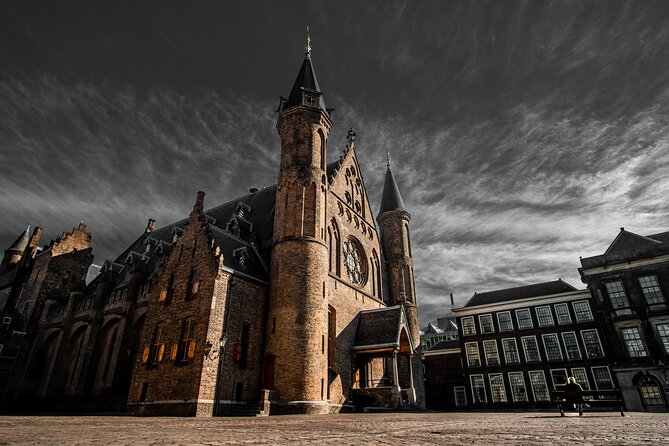
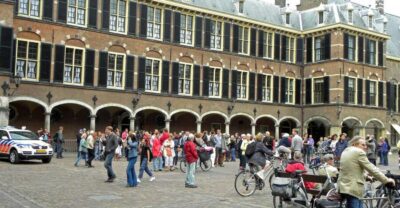
Next comes the Binnenhof, known for being the oldest part of The Hague. It also houses both chambers of Parliament, which is the key detail that turns this stop from “pretty buildings” into “you are standing next to the machinery of government.”
What I like about this stop is how the architecture does the storytelling. When you learn which parts of the complex relate to how decisions are made, the buildings stop being static and start feeling functional. You start noticing the layout in your head, and suddenly you understand why locals treat this area with a kind of everyday seriousness.
There is also a practical advantage: if your time in The Hague is short, this is one of the most efficient ways to get oriented. After Binnenhof, you can look at other government buildings and immediately place them in a bigger picture.
Photo note: look for angles that show the complex rather than only a single facade. The Binnenhof is easier to understand once you can see its mass and relationship to the surrounding streets.
City Hall, weddings, and royal paperwork
From there you move to the city hall, and this is where the tour gets more human. Civic wedding ceremonies take place here, and it is also the place where the Royal family registers family births.
That mix is the “aha” moment. You are not only learning what the buildings are for, you are learning what the city uses them for. The Hague’s official side is often seen as distant, but weddings and births are everyday milestones. Standing nearby, you get why people still consider city hall part of life, not just paperwork.
This is also a good stop for quick questions. If you are curious about how local ceremonies work, or how royal registrations interact with city systems, this is the moment to ask. The tour is designed to adapt to your interests, so you can steer the guide toward what you really want to understand.
Noordeinde Palace, where the king works
The walk continues toward the Noordeinde Palace, described as the king’s place of work. This is not just a sightseeing stop. It is a lesson in how monarchy operates in modern daily life, and how The Hague’s identity is tied to both governance and tradition.
What I like here is the contrast. You have just been in the orbit of Parliament, then you shift to the working space of the king. Even without stepping inside, the story changes your perspective on what you are seeing.
Etiquette-wise, treat palace areas with normal respect. Keep your voice down, mind where you stand, and do not block walkways for a better shot. These are active places nearby official spaces, so good manners also make for better photos.
If you are someone who likes facts more than vibes, this stop will land well. It is clear, direct, and tied to a specific role rather than vague “this is important” talk.
Prefer to see it on foot? More The Hague walks
Peace Palace photos and a lesson in architecture
Then comes the Peace Palace, highlighted for its imposing brick style and its blend of Gothic and Neoclassical architecture. It is a great photo stop because the building gives you something concrete to look at: materials, shape, and the way styles overlap.
This is also a useful storytelling pivot. Earlier stops focus on national institutions and everyday civic milestones. Peace Palace shifts the emphasis toward the world-facing idea of law and international order. Even if you know little about the building, the guide can help you read it like a message in brick.
One practical heads-up based on how people experience this kind of walk: if the guide has a strong accent, communication can take a beat to dial in. The fix is simple. Ask for a repeat, slow the conversation down, or ask a follow-up question that pins down what you missed.
You will still get value from the stop if you do not catch every word, because the architecture cues do a lot of the teaching too.
Madurodam to cap it off, mini Holland in one stop
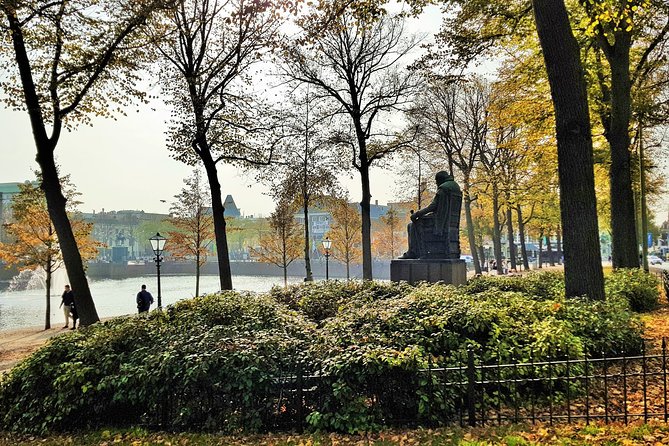
Your tour ends at Madurodam, George Maduroplein 1, 2584 RZ Den Haag. This is a smart finish because it changes pace from formal institutions to playful scale models.
Madurodam replicates what makes Holland unique, including canal houses and windmills, plus the Peace Palace. So your final stop echoes the themes from earlier without feeling like another solemn checkpoint.
This is also where you can control your time. You may just grab photos and move on, or you may want to spend more time inside the park if you like miniatures and quick sightseeing. Just remember: entry tickets are not included, so factor that into your day planning.
If you are traveling with people who like variety, Madurodam helps. It offers a visual break after government-heavy stops, and it is an easy “we actually saw a lot” payoff.
What makes this walking tour feel local, not just a checklist
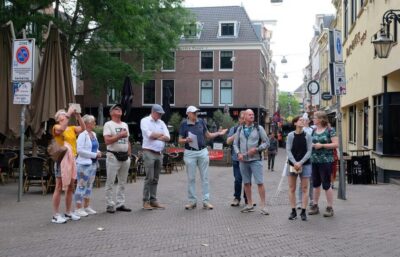
The tour is hosted by an independent local, and the key difference is the way the walk can adapt. The plan adjusts to your walking pace and your interests, so you are not locked into a rigid script where you only hear what a generic group wants.
Small group size matters a lot here. With a maximum of eight people, you are more likely to get real conversation instead of one-way storytelling. And when you can ask specific questions, you tend to remember the answers later. That is where value shows up.
Based on how this experience tends to play out, you should come with a simple mindset: you are paying for guidance that connects the dots. If you expect the guide to act out dramatic surprises, you might feel disappointed. If you come in ready to learn how political and architectural details connect, you will probably feel like your time was well spent.
One more practical communication note: if you are sensitive to accents or fast speech, it helps to be proactive. If you did not catch a detail, just ask again. You will get more out of the walk with a quick clarification than by silently guessing.
Price and logistics: what $126.29 really covers
At $126.29 per person for about 1 hour 30 minutes, you are not buying a long day trip. You are buying a tight, guided route through major landmarks, plus personal recommendations for what to do next.
That can be good value, especially in a city like The Hague where the “where should I go next?” question is hard when you only have a day or two. The guide’s ability to suggest follow-up stops based on what you enjoyed can save you time. Time is money, and it is also energy.
But keep your expectations clean. Entry tickets for transportation, museums, and monuments are excluded. So if you want to go into places like Mauritshuis or spend a long stretch inside Madurodam, you should plan for extra costs.
The tour uses a mobile ticket, and it is near public transportation. That helps if you are mixing it with other plans like dinner or a museum visit. Also, service animals are allowed, which is always a nice practical detail to see listed.
Timing-wise, it is often booked about 6 days in advance. If your dates are busy, book earlier so you can pick a start time that matches your itinerary.
Who should book the Surprise Walk of The Hague?
This is a great match if you like architecture plus the “why” behind institutions. If you enjoy seeing how Parliament, royal workplaces, and international law spaces fit into the city’s story, you will likely find the stops make sense as a sequence.
It also works well if you want a guided structure without signing up for a long day. A 90-minute walking tour is enough time to orient yourself and still keep room for independent exploring afterward.
One limit to note: it is not recommended for guests with impaired mobility. If mobility is a concern, you should look for a version that has fewer walking demands or check with the operator about what route adjustments are possible.
My take: should you book this tour?
I would book this Surprise Walk of The Hague with a Local if you want a compact way to see the city’s major institutions and architectural landmarks, with guidance that helps you plan the rest of your day. The small group size is the big selling point, because it makes the walk feel like a real conversation.
I would think twice if your main goal is a show-stopping, unexpected route. The “surprise” here is more about the angle you get on familiar places, not about dramatic surprises.
If you do book, do two things to get maximum value:
- Come with one or two interests you want covered, like Parliament, royal life, or the architecture of the Peace Palace.
- Budget for entry tickets separately, especially if you plan to go into Madurodam rather than treating it as a photo stop.
FAQ
How long is the Surprise Walk of The Hague?
It lasts about 1 hour 30 minutes.
What is the maximum group size?
The tour is a small group with a maximum of 8 travelers.
Where does the tour start and end?
It starts in front of MauritshuisPlein 29, 2511 CS Den Haag and ends at Madurodam, George Maduroplein 1, 2584 RZ Den Haag.
What is included in the price?
You get a local guide, a small group experience, and personalized recommendations.
Are entry tickets to museums or monuments included?
No. Entry tickets for transportation, museums, and monuments are excluded.
Is this tour recommended for people with impaired mobility?
No. It is not recommended for guests with impaired mobility.
The Hague at Walking Speed


Also Reviewed Around The Hague


The Hague and the Sea
Fresh off the review pile in The Hague
- Private Tour of Vermeer’s Delft + Tickets to Vermeer Museum
★ 5.0 · 3 reviews - Private Tour of Rotterdam and The Hague including Transfer
★ 5.0 · 3 reviews - Surfing at The Shore in The Hague
★ 4.5 · 3 reviews - 3 Course Walking Dinner in Delft with Guided Tours in Between
★ 5.0 · 3 reviews - Surprise Walk of The Hague with a Local
★ 4.5 · 3 reviews
The Hague & Scheveningen, compared.
 ★ 4.7The Hague: Mauritshuis Entrance TicketFrom $252,706 reviews
 ★ 4.6The Hague: City Canal CruiseFrom $172,024 reviews
 ★ 4.2From Amsterdam: Rotterdam, Delft & The Hague Guided Day TourFrom $901,765 reviews
 ★ 4.6The Hague: Madurodam Miniature Park Entry TicketFrom $241,559 reviews
 ★ 4.4The Hague: The Pier SkyView Ticket with Drink and SnackFrom $191,398 reviews
 ★ 4.4The Hague: Hop-on Hop-off Old-Fashioned Heritage Tram TourFrom $181,083 reviews
 ★ 4.6The Hague: Escher in The Palace Museum TicketFrom $15896 reviews
 ★ 4.0Rotterdam, Delft, the Hague, Madurodam from AmsterdamFrom $90793 reviews
Browse the lists this tour appears in