
REVIEW · THE HAGUE
The Hague: Old City Private Walking Tour
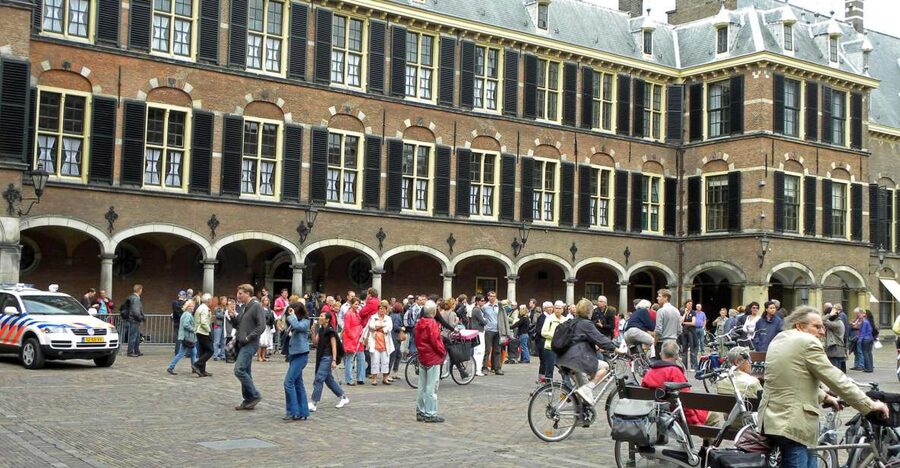
Regal stories on a two hour stroll. This private walk through The Hague is built around the city’s royal and political center, with guided stops that make the place feel less like postcards and more like a living power hub. I love the way the tour frames the Binnenhof complex as more than architecture, and I like how you get a close look at the everyday royal presence tied to the palace area.
You’ll also get the fun kind of history, the human kind. You hear about the lime trees planted in the Voorhout on Emperor Charles V’s order, and you follow the threads that connect counts, parliaments, and major trials. The one drawback: at $265 per group up to 10, it can feel pricey if it is just you or a couple, since the value is best when you split the cost.
In This Review
- Key highlights you will actually care about
- Why The Hague feels different, royal and government in the same walk
- Meeting at Central Station and how the private pace works
- Voorhout lime trees and Charles V, a detail that changes how you see the street
- Houses of Parliament and the Binnenhof in 13th-century context
- Royal palaces on the route, including the working Noordeinde Palace
- Dark Dutch turning points, Van Oldenbarnevelt and the De Witt brothers
- City Hall and De Resident, how administration looks in real stone and glass
- Price and value for $265 per group up to 10
- What kind of traveler should book this
- Should you book The Hague Old City Private Walking Tour?
- FAQ
- How long is the The Hague Old City Private Walking Tour?
- How much does it cost?
- Where do we meet for the tour?
- Is food included?
- What does the tour include?
- Is the tour private?
- What languages is the guide available in?
Key highlights you will actually care about
- Binnenhof complex focus: 13th-century buildings with story first, not just photos
- Royal workings, not just facades: the route includes present-day royal areas like Noordeinde Palace
- Big moments explained clearly: the dramatic fates of Van Oldenbarnevelt and the De Witt brothers
- Charles V lime tree detail: a very specific city detail that makes the walk feel real
- Short, private, and adaptable: 2 hours that can match your pace and questions
More of The Hague, sea air included
- The Hague: City Canal Cruise★ 4.6 · 2,024 reviews
- The Hague: Madurodam Miniature Park Entry Ticket★ 4.6 · 1,559 reviews
- The Hague: Hop-on Hop-off Old-Fashioned Heritage Tram Tour★ 4.4 · 1,083 reviews
- The Hague: Escher in The Palace Museum Ticket★ 4.6 · 896 reviews
Why The Hague feels different, royal and government in the same walk
The Hague has a funny vibe compared with other Dutch cities. It is not just canals and coats of arms. It is the seat of government and parliament, and it also carries a royal weight that shows up in buildings, streets, and even the way the story is told.
That is what I like about this tour structure. You do not get dumped in one museum room and told to move on. Instead, you walk through shady avenues and palaces, so you can see how power worked here over centuries. You also get the sense that The Hague was a place people built up, not just a place that happened to grow.
The tour also leans into the city’s transformation. It goes back to the old hunting residence of the Counts of Holland, built by Count Floris IV in 1230, then tracks how the city grew into a wealthier and more important center. And if you like context, you will appreciate the mention that a 16th-century Italian travel writer, Lodovico Guicciardini, called it the most beautiful and richest in Europe. That one line helps you understand why the later grandeur makes sense.
Meeting at Central Station and how the private pace works
You meet in a very practical spot: the hall of Central Station, in front of the Albert Heijn to go. It is easy to find, and it is the kind of meeting point that helps when you have tight timing between trains.
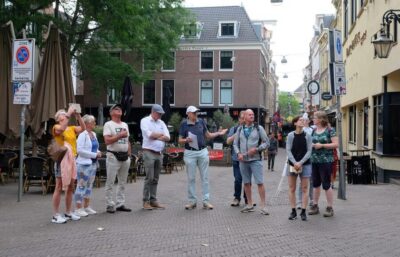
Because this is a private group tour (up to 10), you are not stuck with a loud herd. You can ask questions as you walk, and the route can be adapted to your wishes. That matters in a city like The Hague, where details can get lost if you are moving too fast.
The tour also notes skip-the-line access through a separate entrance. For a 2-hour experience, that can be the difference between getting the good stuff and watching time vanish in queue land.
Plan for a 2-hour window of steady walking. If you like to stop and read small plaques, this is still a good length, but you might want to pace yourself and save deeper reading for later.
Voorhout lime trees and Charles V, a detail that changes how you see the street
One of the clever things about this tour is that it does not only point at monuments. It gives you a reason to look at ordinary spaces.
In the Voorhout area, you learn about the lime trees Emperor Charles V ordered planted in four rows. It is specific, and that specificity is what makes it useful. Once you know that detail, you will notice the street rhythm more, because you are no longer just seeing trees. You are seeing planning, royal influence, and landscape as politics.
This kind of stop works especially well if you are the type who likes to understand why a city looks the way it does. It also helps if you are short on time in The Hague. Even a quick city walk can feel meaningful if you learn one or two concrete stories tied to what you are actually standing near.
Houses of Parliament and the Binnenhof in 13th-century context
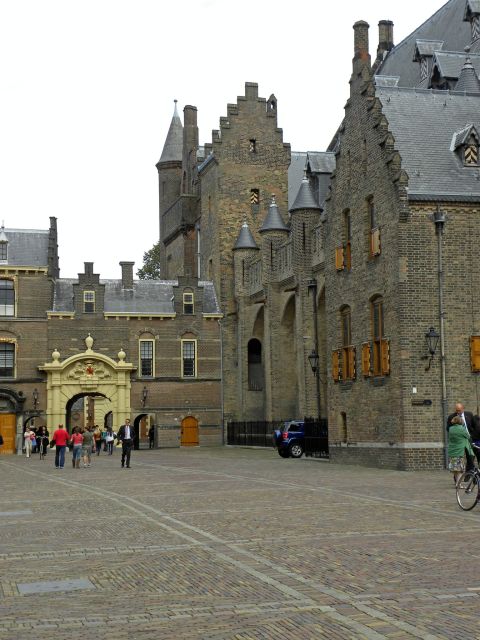
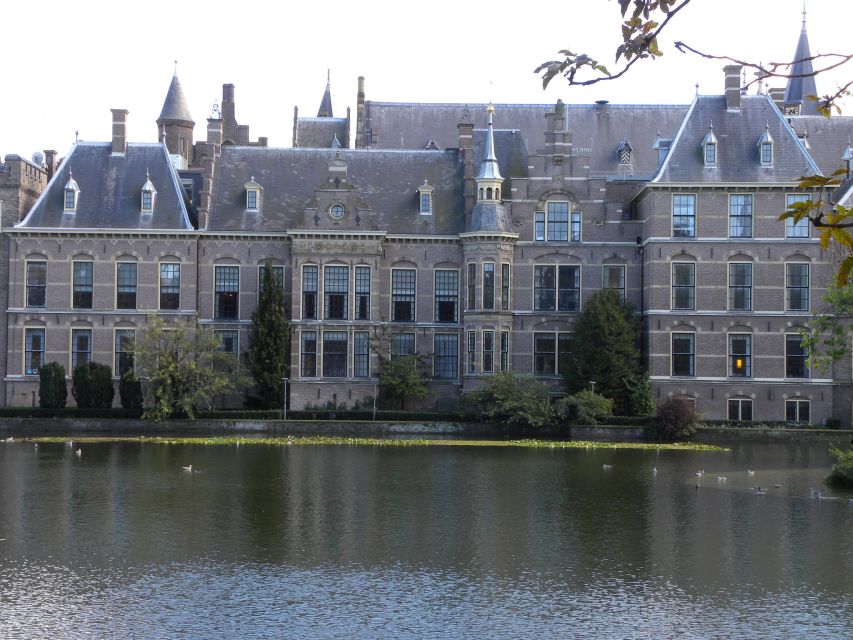
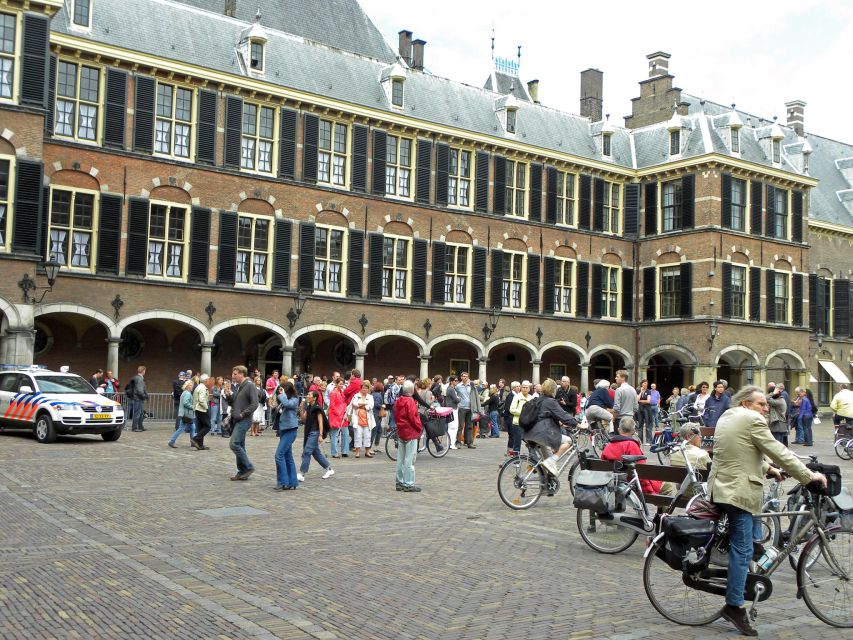
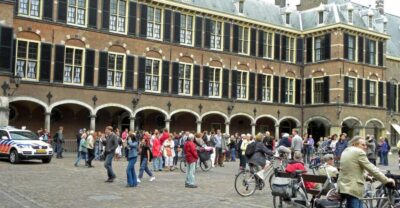
The heart of the walk is the Binnenhof area and the historic buildings that surround it. The Binnenhof complex dates to the 13th century, and the tour treats that age as part of the story, not just a date to remember.
You will see the historic Houses of Parliament in The Hague, and you will get a guided explanation of what the complex has been for over time. This is one of those stops where architecture alone can look calm and official, but the guidance brings out the drama.
What I appreciate about this approach is that it makes the place feel like a timeline. You connect the earlier Counts of Holland hunting residence era to the later government seat. You also learn how The Hague grew into a wealthy, respected power center. That shift helps you understand why so many major events centered here mattered, not just to the leaders, but to the direction of the country.
A practical note: buildings in this area can be visually busy from street level. If you find yourself distracted by the crowds or the facades, ask your guide to point out what mattered most historically. This is exactly the kind of question a private tour can handle.
Prefer to see it on foot? More The Hague walks


Royal palaces on the route, including the working Noordeinde Palace
The tour passes a series of former and current royal palaces, and it does something that I think is smart. It does not treat royalty as distant pageantry. It treats it like a visible part of how the city operates.
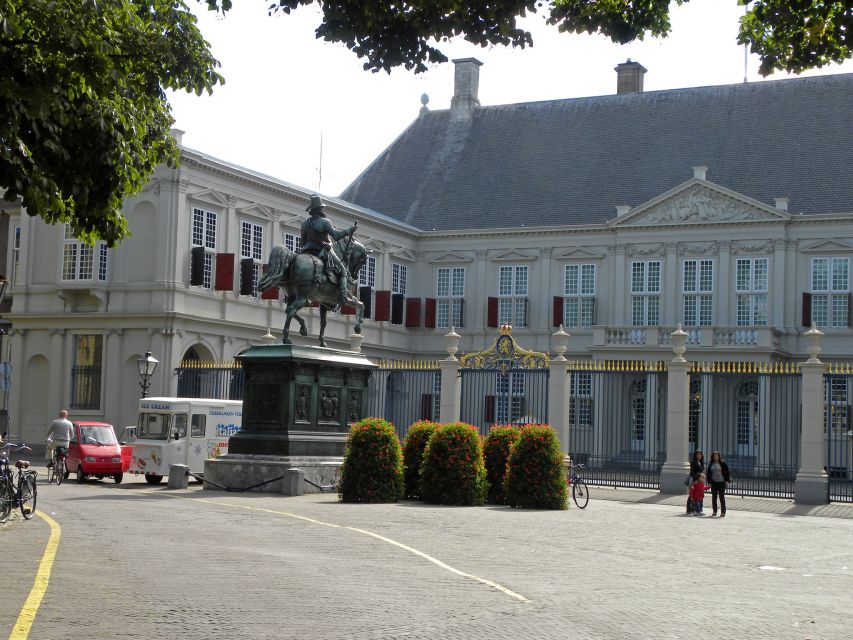
The standout named stop here is Noordeinde Palace, described as a working palace for the present King Willem-Alexander. That phrase changes the tone. You are not just looking at a “pretty building.” You are seeing a royal presence that is part of day-to-day national life.
The Noordeinde Palace area also pairs well with the rest of the route because you are bouncing between government power and royal presence. You start to see the pattern: The Hague is where the state shows itself in multiple forms, and those forms share space and history.
If you are a first-timer in The Hague, this kind of palace stop is a big win. It helps you understand why people come here for more than one postcard shot. It also helps you connect the royal story to the political story you just heard around the Binnenhof.
Dark Dutch turning points, Van Oldenbarnevelt and the De Witt brothers
This tour is not afraid of hard stories. Along the way, you learn about dramatic events tied to the political life of the country. That includes the decapitation of Van Oldenbarnevelt and the assassination of the De Witt brothers.
Why is that valuable? Because it explains how institutions and buildings are not neutral backdrops. Power fights happen in specific places, and those places leave marks, even if the present-day view feels calm.
In a walking tour, this kind of context prevents the history from turning into a list of names. It also helps you connect what you see to what happened here, which is exactly what makes a short guided experience feel worth it.
I also like that the tour keeps the story grounded in the city itself. You are hearing about political life while you are standing near the buildings it involved. That makes it easier to remember and easier to explain to friends later.
City Hall and De Resident, how administration looks in real stone and glass
After the Binnenhof area and royal palace zones, you move toward other major administrative landmarks on the walk. Two named highlights are City Hall and De Resident.
This part of the route matters because it adds a second layer to what you learned earlier. You start with the ancient and the royal, then you see modern or newer expressions of administration. Even if you are not a “government buildings” person, it is useful to recognize how the city balances old authority with newer planning.
De Resident in particular is the kind of stop that can surprise you. If you only expect classic medieval-looking scenes, a major administrative complex helps you understand that The Hague is still an active center. It is not only a museum of the past.
If you want to make the most of this segment, look at how the building angles and the surroundings frame official life. Then connect it back to the earlier stories about how The Hague became the seat of government and parliament. The architecture may change, but the role of the city stays.
Price and value for $265 per group up to 10
Let’s talk money plainly. The tour costs $265 per group up to 10, lasts 2 hours, and includes a live guide and VAT. Food and drinks are not included.
Is it good value? It is when you can spread the group price. If you have four, five, or more people, you are paying for a private guide in a compact time window, with skip-the-line access and a focused route through the main historic power sites. That can be better than buying individual museum tickets and hoping you figure out the political story on your own.
It can feel steep if you are traveling solo or as a couple. In that case, you are paying mostly for exclusivity. If you are someone who loves explanations, asks questions, and wants a curated route that ties major events and palaces together, it can still be worth it. If you just want photos and a quick stroll, you might prefer a cheaper group option.
One practical strategy: if you are visiting The Hague on a day with other paid attractions, think about whether you need a guide for context. This tour gives context as the main product, not just access to buildings.
What kind of traveler should book this
This tour fits best if you like political history, architecture with a story, and walking routes that connect multiple places into one narrative. It also works well if you are visiting with mixed interests, because you get royal points, government buildings, and the dramatic events that shaped the country.
It is also a good fit for people who want a short time plan. Two hours is just long enough to hit the core sites without turning into a marathon. And since the tour is private and can be adapted to your wishes, you can keep it relaxed.
If you dislike crowds, private is a plus. If you like asking questions, private is even better.
Should you book The Hague Old City Private Walking Tour?
I would book it if you want a high-signal, guided walk focused on The Hague’s political and royal center. The route gives you key named places like the Binnenhof complex, historic Houses of Parliament, Noordeinde Palace, City Hall, and De Resident, and it adds specific story threads like Charles V’s lime tree order and the big political tragedies tied to Van Oldenbarnevelt and the De Witt brothers.
Skip it if you are only after general sightseeing and you do not care about the story behind power. Also consider the cost if you are traveling alone or with just one other person.
For most people who come to The Hague for more than a quick photo run, this tour is a strong way to make the city click.
FAQ
How long is the The Hague Old City Private Walking Tour?
The tour lasts 2 hours.
How much does it cost?
It costs $265 per group, up to 10 people.
Where do we meet for the tour?
Meet at the hall of Central Station, in front of Albert Heijn to go (a small supermarket).
Is food included?
No. Food and drinks are not included.
What does the tour include?
The tour includes a 2-hour walk, a guide, and VAT.
Is the tour private?
Yes, it is a private group tour.
What languages is the guide available in?
The tour guide is available in English, German, and Dutch.
Everything Else From Our The Hague Notebook





Also Reviewed Around The Hague


The Hague and the Sea
Fresh off the review pile in The Hague
- Private Tour of Vermeer’s Delft + Tickets to Vermeer Museum
★ 5.0 · 3 reviews - Private Tour of Rotterdam and The Hague including Transfer
★ 5.0 · 3 reviews - Surfing at The Shore in The Hague
★ 4.5 · 3 reviews - 3 Course Walking Dinner in Delft with Guided Tours in Between
★ 5.0 · 3 reviews - Surprise Walk of The Hague with a Local
★ 4.5 · 3 reviews
The Hague & Scheveningen, compared.
 ★ 4.7The Hague: Mauritshuis Entrance TicketFrom $252,706 reviews
 ★ 4.6The Hague: City Canal CruiseFrom $172,024 reviews
 ★ 4.2From Amsterdam: Rotterdam, Delft & The Hague Guided Day TourFrom $901,765 reviews
 ★ 4.6The Hague: Madurodam Miniature Park Entry TicketFrom $241,559 reviews
 ★ 4.4The Hague: The Pier SkyView Ticket with Drink and SnackFrom $191,398 reviews
 ★ 4.4The Hague: Hop-on Hop-off Old-Fashioned Heritage Tram TourFrom $181,083 reviews
 ★ 4.6The Hague: Escher in The Palace Museum TicketFrom $15896 reviews
 ★ 4.0Rotterdam, Delft, the Hague, Madurodam from AmsterdamFrom $90793 reviews
Browse the lists this tour appears in