
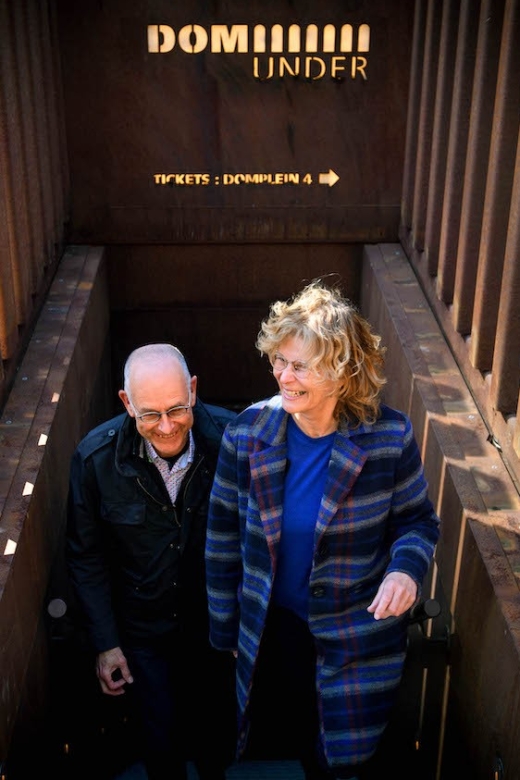
REVIEW · UTRECHT
Utrecht: DOMunder Entry Ticket with Guide
DOMunder is history you can actually walk through. You start at Domplein, then go beneath it to see Utrecht change over roughly 2,000 years, from Roman traces to the Middle Ages. The best part is how the experience uses torch-style, spot-based audio so the ruins feel like a story you are moving through.
I especially like the guided framing. Your guide turns scattered stones into a timeline, including the big turning point of the 1674 storm and how it shaped what you see today under the Domplein. The tour is built for both adults and kids who enjoy hands-on exploring, not just staring at glass cases.
One consideration: this isn’t a wheelchair-friendly visit. If mobility is a concern, plan around the underground surfaces and stair access before you commit.
In This Review
- Quick hits: what makes DOMunder special
- Utrecht’s DOMunder, under the Domplein you thought you knew
- Ticket check-in at Domplein 9, and what runs for 75 minutes
- From the start talk to the underground route, this is built like a guided timeline
- Roman Utrecht: the oldest remains you can see under the square
- Middle Ages in plain view: the Dom Church story and changing construction
- The 1674 storm that reshaped everything below Domplein
- How the torch and audio system works, and how to get more from it
- Price and value: is DOMunder worth about $17 for 75 minutes?
- Who should book this DOMunder guided ticket
- Should you book DOMunder with a guide?
- FAQ
- How long is the DOMunder guided entry ticket?
- Where do I meet for the DOMunder tour?
- Is there a live guide included?
- What languages are available?
- Is an audio guide included?
- What periods of history does the tour cover?
- Is the tour suitable for wheelchair users?
- Can I cancel for a refund?
Quick hits: what makes DOMunder special
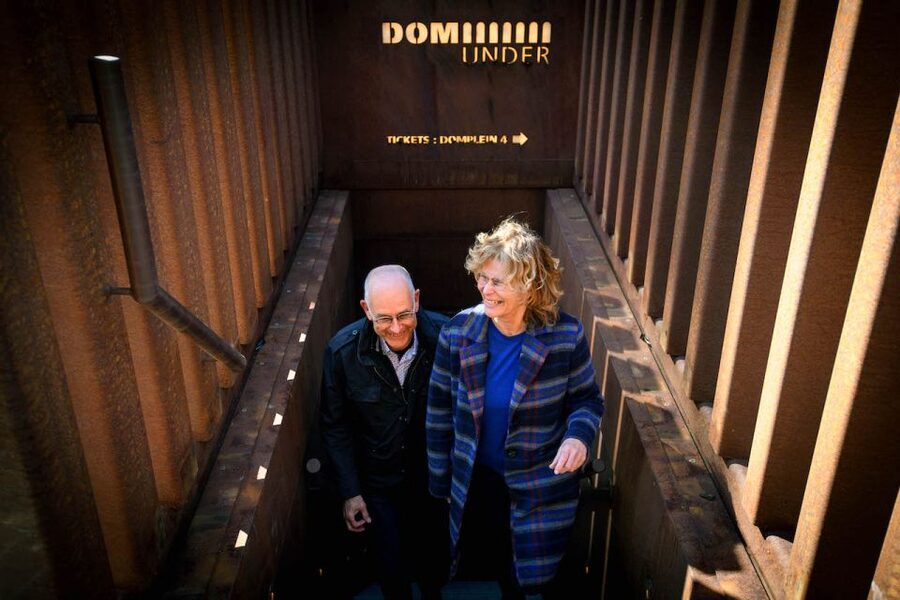
- Walk underneath Domplein to reach archaeological remains right below the iconic square
- Torch-triggered audio helps you connect what you see with the story in the moment
- A time-sequence tour that explains how building styles and construction methods changed
- Roman Utrecht to medieval Dom Church in one guided route
- The 1674 collapse and aftermath are explained in a clear, memorable way
- Laser or smart torches and headsets make the experience feel interactive, not passive
Under the Dom: further Utrecht picks
- Utrecht: City Canal Cruise★ 4.3 · 2,895 reviews
- Utrecht: DOMunder Entry Ticket with Guide★ 4.4 · 706 reviews
- Utrecht: Dom Tower Entry Ticket and Guided Tour★ 4.6 · 513 reviews
- Utrecht: De Haar Castle, Park Entry Ticket★ 4.6 · 153 reviews
Utrecht’s DOMunder, under the Domplein you thought you knew
Utrecht’s DOMunder is one of those rare city experiences where the main attraction is literally below your feet. You begin at Domplein, the famous square tied to Utrecht’s Dom Church area, and then you go down into preserved archaeological layers. The location matters, because you are not traveling to a remote site. You are learning why this spot became important, and how the city kept rebuilding itself there.
The ruins cover a big sweep of time. You are looking at what remains of early settlement and later eras, with the Roman past and Middle Ages presented in a way that feels logical, not like a textbook. And the tour ties those eras to events that are part of Utrecht’s local identity, especially the story around the 1674 storm that contributed to the Dom Church’s collapse.
Ticket check-in at Domplein 9, and what runs for 75 minutes
This is a guided entry ticket for 75 minutes. The format is straightforward: you show up, scan your ticket at the Tourist Information Centre desk at Domplein 9, and then join the tour start.
Language options are English and Dutch, and your group gets a live guide plus an audio guide system in those languages. That audio piece is not just background music. It is designed to match what you are pointing at underground, which is a huge help if you like to orient yourself as you go.
Timing matters because the tour is short enough that you will cover a lot, but not so short that it feels rushed. If you are the type who likes time to linger, you may want to treat the first guided segment as your foundation, then use the later self-paced moments to pause where something catches your attention.
Price-wise, it is about $17 per person for guide-led access. For a timed guided archaeology visit with audio tools included, I think that is solid value. You are paying for more than entry, you are paying for interpretation, and interpretation is what makes ruins worth your time.
From the start talk to the underground route, this is built like a guided timeline
The tour experience usually begins with an orientation talk at the top. Expect your guide to set the context first, so when you go down, you understand what you are looking at and why it matters. One theme that comes up again and again is storytelling that follows a timeline. You hear how different eras left different traces, and how later construction built on earlier layers.
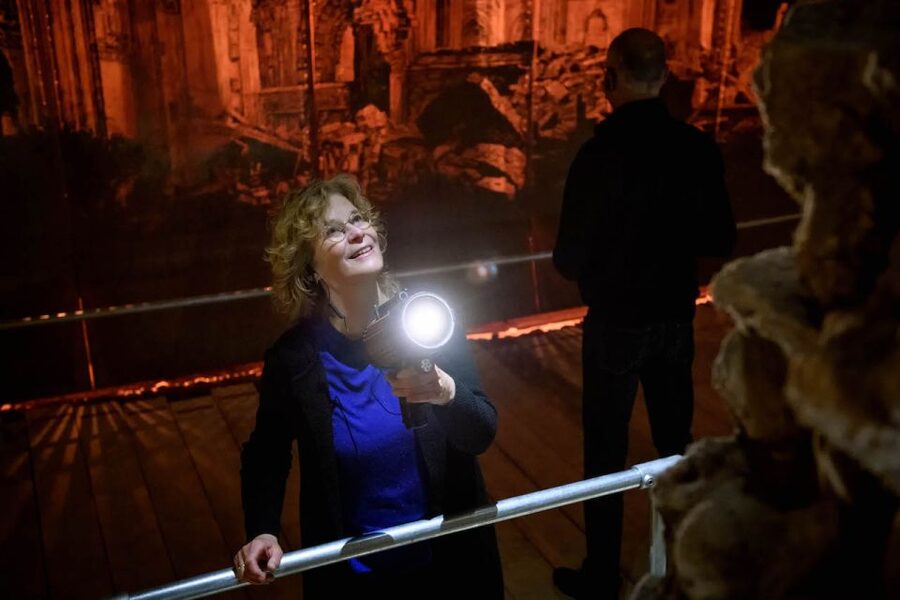
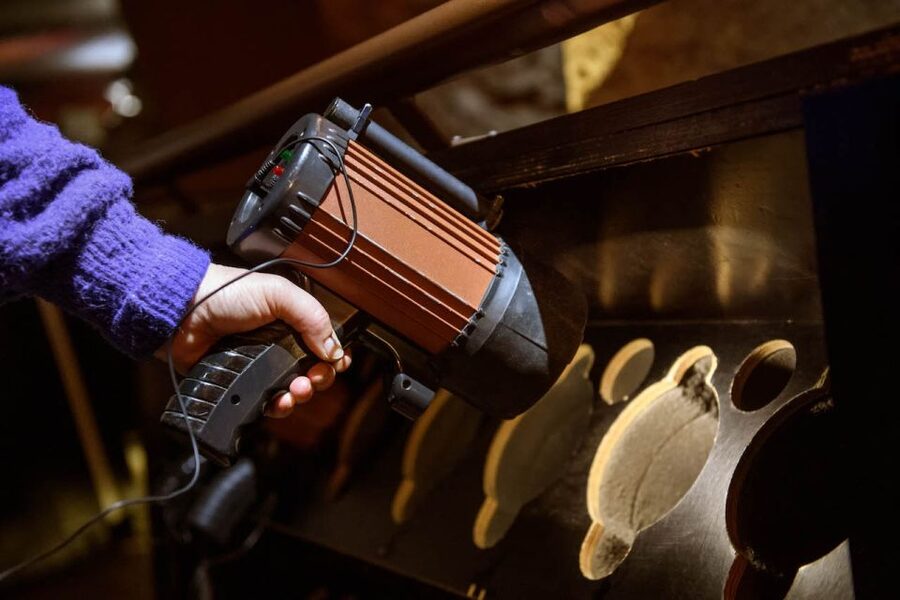
Then you climb down and get the tools for the interactive part. You will be given flashlight-style devices and a way to trigger information as you explore. People describe it as using torches with earpieces or audio headsets, where pointing your light at certain areas prompts short stories or explanations. It is an easy system to follow, but you do want to keep an eye on how the torch interaction works at each stop, especially if the guide gives you a quick set of instructions.
The tour does not feel like you are locked into a single file line the entire time. You are guided through key locations, but once inside, you can often move at your own pace. That balance is great if your travel style is part listening, part looking, part re-looking.
Roman Utrecht: the oldest remains you can see under the square
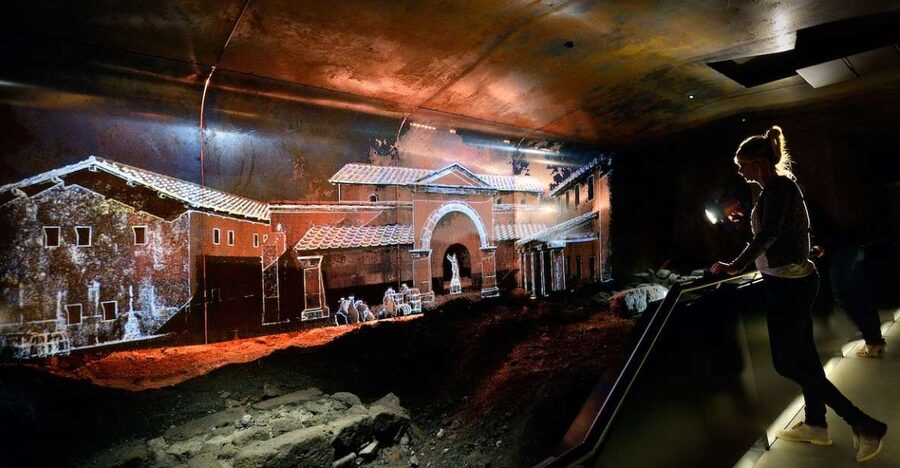
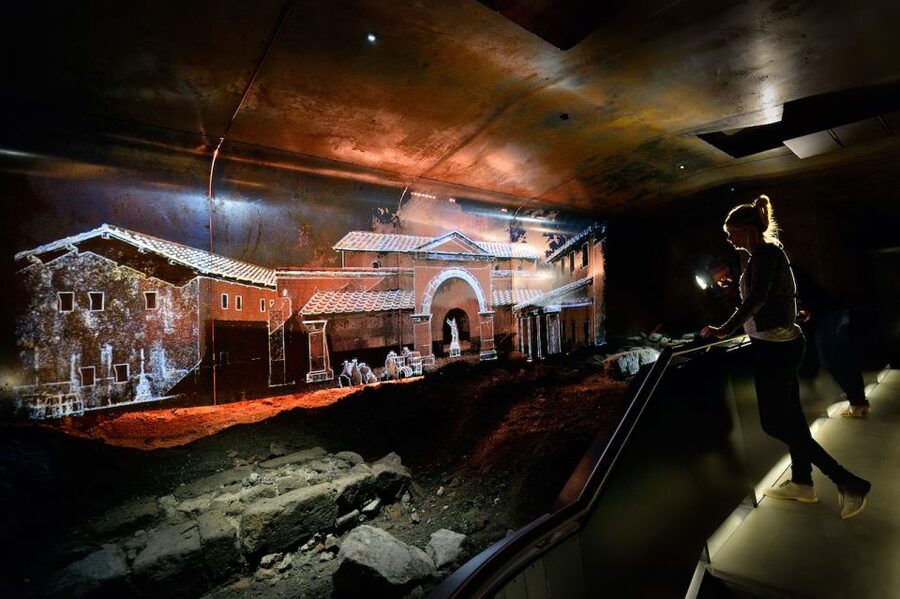
One of the tour’s big promises is reaching the oldest remains of Utrecht. Underground, you get a direct sense of Roman-era presence tied to this part of the city. The Roman segment is not delivered as abstract history. Instead, it is linked to the physical evidence you are standing near.
This is where the interaction helps most. When you hear an explanation of construction methods or building styles and then see the trace associated with it, the story sticks. I like experiences like this because they reduce guesswork. You are not trying to imagine what something might have been. You are shown what is left, then helped to understand what it likely meant.
Some parts of the recovered stonework can carry small details that make the Roman layer feel human. In particular, there is mention of ancient paw prints found in recovered stonework. Even if you are not a stone-and-bones person, those small survivals tend to make the underground feel real.
Other Utrecht entries you can hold on your phone

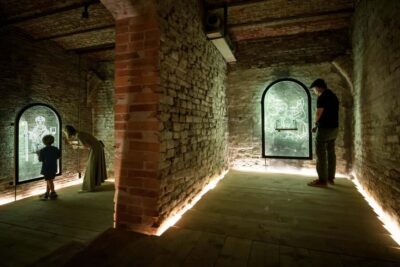
Middle Ages in plain view: the Dom Church story and changing construction
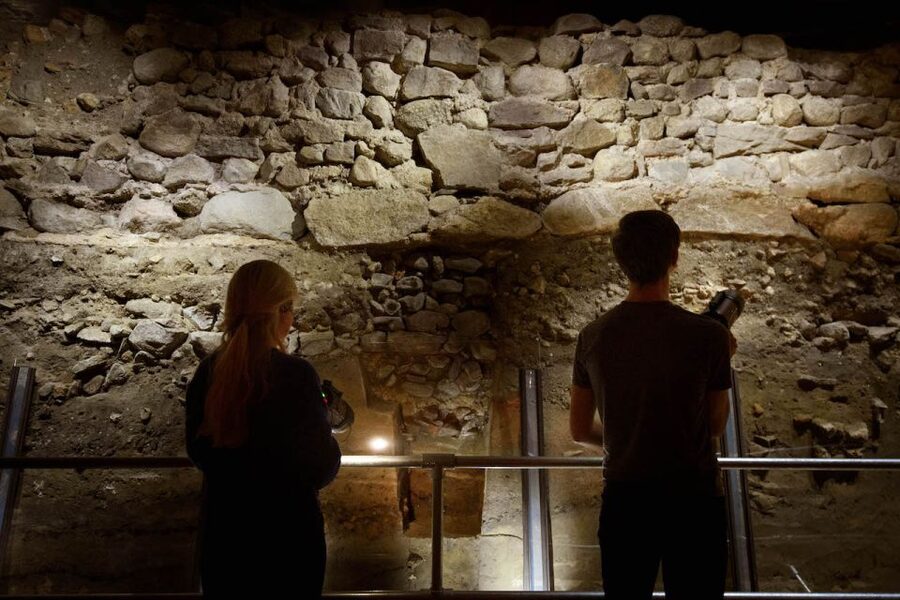
After the Roman foundations, the tour shifts into the Middle Ages, centered on the Dom Church area. You will hear how the site developed and how the structures changed over time. This is not only about dates. The tour also focuses on the look of buildings and how they were put together, including shifts in materials and construction methods.
For me, this is one of the strongest parts of the experience because you can see the logic of rebuilding. Cities do not grow in straight lines. Utrecht’s layers show how each generation made use of what came before, while still leaving evidence of what they built next.
If you have already walked around Domplein on the surface, this underground section adds depth. Seeing traces below the modern square helps you understand that what feels like one fixed landmark was shaped by centuries of work, damage, and reconstruction.
The 1674 storm that reshaped everything below Domplein
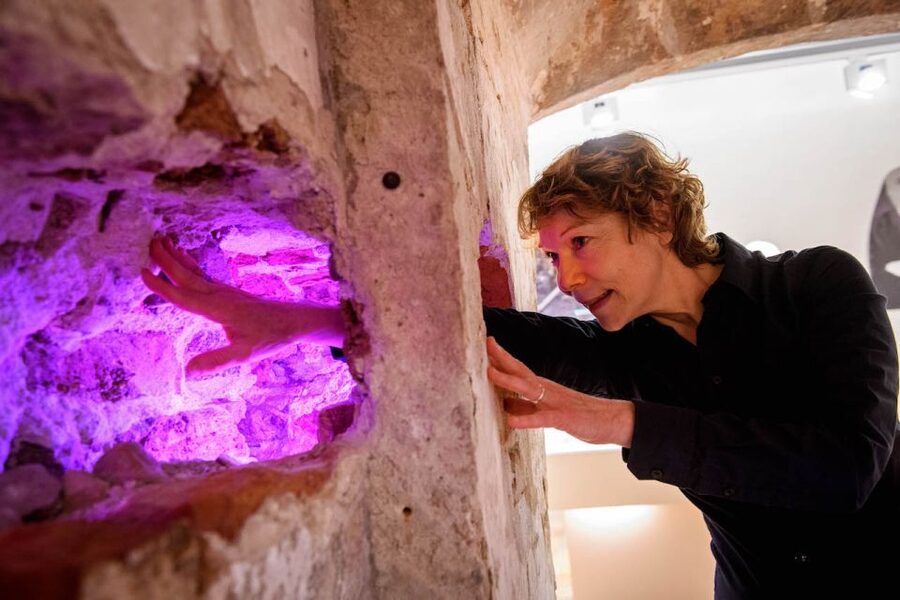
The 1674 storm is a major storyline. Your guide explains how extreme weather led to the collapse of the nave of the Dom Church and how that event connected to the creation of the Dom Square you see above. It is memorable because it is specific. You are not hearing a vague disaster story, you are hearing the cause-and-effect that shaped this exact area.
Some people found the audio style around that segment surprising, especially when it felt like a warning or alarm at first. If you are sensitive to sudden sounds, just know that the tour uses an audio system that can feel abrupt. Staying calm and following your guide’s cues will help you connect the audio effects to the story.
The storm segment is also supported by visual material. One described highlight is a screen-based reconstruction of the day of the event, which makes the timeline easier to grasp. I like this approach because underground ruins can be visually confusing on their own. A visual reconstruction gives your brain a reference point.
How the torch and audio system works, and how to get more from it
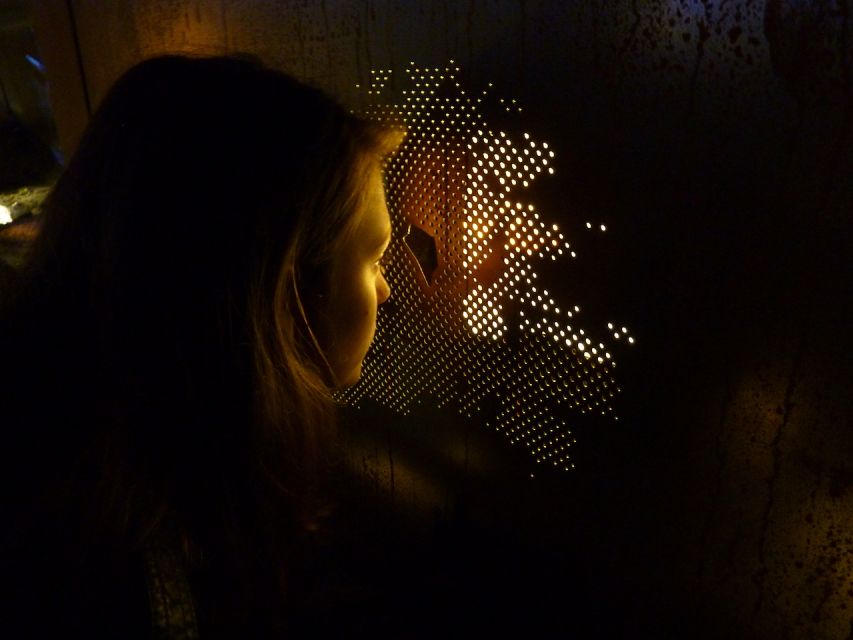
The underground exploration is designed around torch-guided audio. In practice, that means you are not only listening to the guide at the main points, you are also getting short explanations tied to where you point your light.
A few practical tips will make it smoother:
- Pay attention when the guide first explains how to trigger the audio.
- Move slowly at each key area, because the tour is structured around specific spots.
- If your torch interaction seems inconsistent, adjust your pointing or angle, then try again. Some people noted that certain spots can be tricky to activate.
- Use the self-paced moments to revisit a spot that you found confusing once you hear the nearby explanation.
The interactive style also helps if you are traveling with someone who learns by doing, not just listening. You are literally participating in the information system by exploring deliberately, and that makes the time feel shorter in a good way.
Price and value: is DOMunder worth about $17 for 75 minutes?
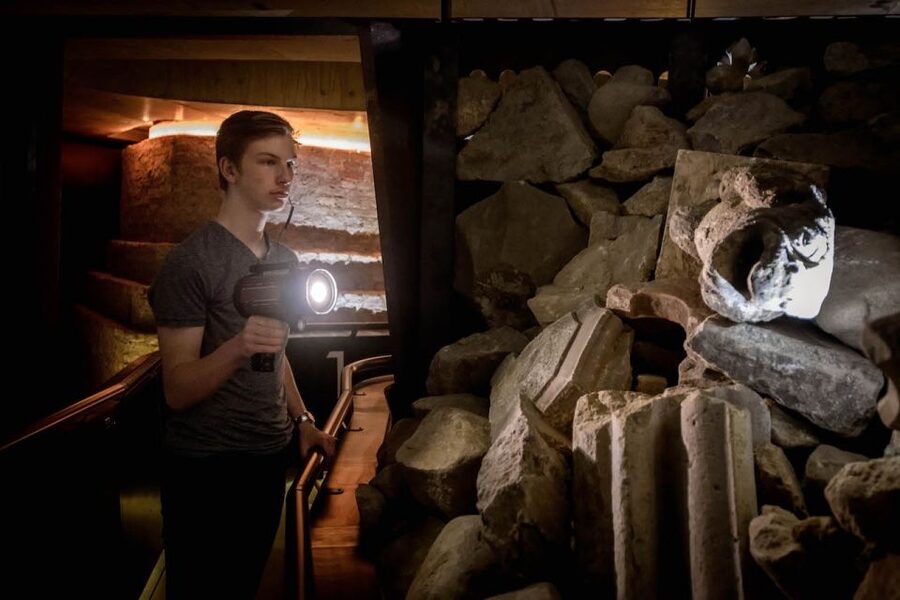
For $17 per person you get guided entry, an audio guide system, and access to an interpretation route under Domplein. That is the key to value here: the ticket is not just for access. You are paying for an experience that turns archaeological remains into a coherent story.
In terms of what you receive, it compares well with a standard museum stop where you might see objects but struggle to connect the dots. Here, the tour gives you the timeline, the meaning, and the moment-to-moment explanations. It also helps that the structure is built around interaction, so the guide’s words and the physical setting reinforce each other.
If you are on a tight schedule in Utrecht, the 75 minutes also works. It is long enough to feel substantial, short enough to fit into a busy day spent exploring the city’s highlights above ground.
Who should book this DOMunder guided ticket
I think this tour is a great fit if you like:
- history that explains how cities change over time
- interactive experiences using simple tools like torches and audio
- archaeology that you can walk through, not just read about
It is also a nice match for families with curious kids who can handle a guided activity underground. Based on how people describe the experience, very small children might find the structure a bit much, so older kids and teens usually feel more comfortable with the time format and the listening portions.
One clear limitation: it is not suitable for wheelchair users, so if you need step-free or full accessibility, you may want to look for another Utrecht activity.
If you are already the type who loves Utrecht’s surface sights, DOMunder adds a different layer. It makes the city feel older and more complex, and it gives you a reason to look at Domplein with new context once you come back up.
Should you book DOMunder with a guide?
Yes, if you want Utrecht’s history in a form that feels like an experience, not a lecture. The combination of a live guide, torch-triggered audio, and a clear timeline makes the underground ruins easier to understand and more enjoyable to remember.
Book it especially if you care about the story behind the Dom Church area, including why the 1674 storm matters to what you see above. At around 75 minutes and about $17, it also hits a sweet spot for value if you want something memorable without taking over your whole day.
If you are struggling with mobility or need wheelchair access, then it is best to skip this one and choose an above-ground Utrecht experience instead.
FAQ
How long is the DOMunder guided entry ticket?
The tour lasts 75 minutes.
Where do I meet for the DOMunder tour?
You scan your ticket at the desk of the Tourist Information Centre at Domplein 9.
Is there a live guide included?
Yes. The experience includes a live tour guide.
What languages are available?
The tour is offered in English and Dutch.
Is an audio guide included?
Yes. An audio guide is included in English and Dutch.
What periods of history does the tour cover?
You’ll learn about Utrecht’s Roman past and the Middle Ages, plus the 1674 storm connected to the Dom Church.
Is the tour suitable for wheelchair users?
No. It is listed as not suitable for wheelchair users.
Can I cancel for a refund?
Yes. It offers free cancellation up to 24 hours in advance for a full refund.
Entries for Your Phone




Also Reviewed Around Utrecht


Utrecht Under the Dom
Fresh off the review pile in Utrecht
- Our Utrecht’s Private & Personalized tour
★ 5.0 · 3 reviews - Utrecht: Hoge Woerd Museum Entry Ticket with Audio Tour
★ 3.3 · 3 reviews - Historical Utrecht: Private Walking Tour with a Local Guide
★ 4.6 · 3 reviews - Uniquely Utrecht: An Audio Tour of its Charming City Centre
★ 5.0 · 4 reviews - Utrecht Walking Tour with a local comedian as guide
★ 4.8 · 5 reviews
Utrecht Tours, compared.
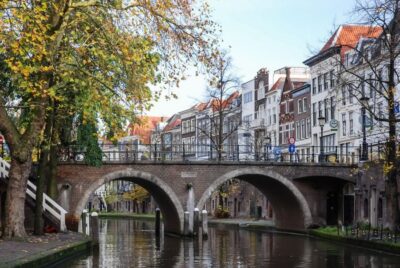 ★ 4.3Utrecht: City Canal CruiseFrom $222,895 reviews
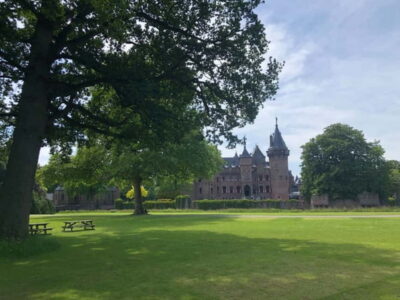 ★ 4.7Utrecht: De Haar Castle & Park Entry TicketFrom $231,350 reviews
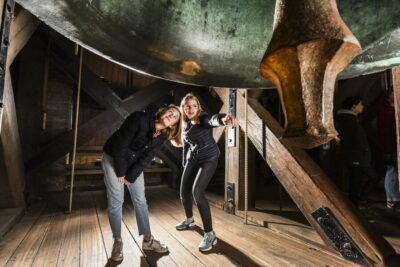 ★ 4.6Utrecht: Dom Tower Entry Ticket and Guided TourFrom $17513 reviews
★ 4.6Utrecht: De Haar Castle, Park Entry TicketFrom $9153 reviews
★ 4.6Utrecht: Dom Tower Entry Ticket and Guided TourFrom $17513 reviews
★ 4.6Utrecht: De Haar Castle, Park Entry TicketFrom $9153 reviews
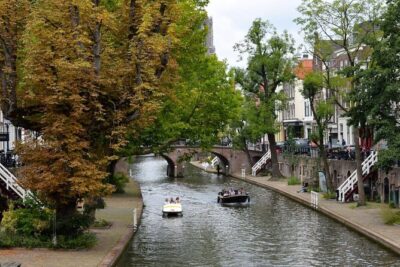 ★ 5.0Utrecht 2-Hour Walking Tour | Discover The City With A LocalFrom $3138 reviews
 ★ 4.8Utrecht: Rietveld Schröderhuis UNESCO Entry TicketFrom $22119 reviews
 ★ 5.0Utrecht Food Tour with local guideFrom $84112 reviews
 ★ 5.0Castle De Haar Small-Group Tour from AmsterdamFrom $151101 reviews
Browse the lists this tour appears in