
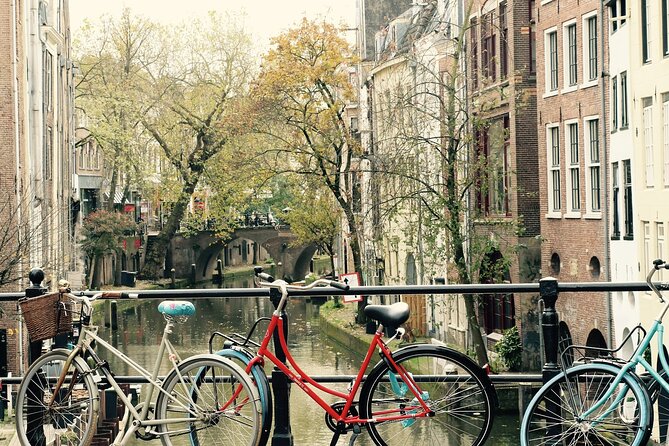
REVIEW · UTRECHT
Utrecht Historic City: a Self-Guided Augmented Reality Tour
Utrecht gets a digital glow-up in 2 hours. This self-guided augmented reality tour uses audio and video to place Utrecht stories directly where they happened, so you do not just read about the city, you see it layer over the streets. I especially love the way it turns familiar spots like Domplein into time-travel moments, and the built-in navigation help that keeps the route easy.
The route is also practical. You get a clear set of stops, each one planned for about 10 minutes, and you can pause for coffee or linger when something catches your eye.
One thing to plan for: you need your own mobile device and headphones, plus an internet connection to access the app and tour content. If your phone battery is low, this becomes stressful fast.
In This Review
- Key highlights before you go
- How the Utrecht Historic City AR tour works from Domplein
- Domplein and Domsquare: the story behind the cathedral area
- De Werfkelder: the medieval wonder under your feet
- De Zeven Steegjes and Zadelstraat: narrow lanes with a “how did that work?” feeling
- Geertebolwerk: Karel V and the idea of refuge
- Pandhof Sinte Marie: monastic life, and AR that makes it feel real
- Janskerkhof and Janskerk: two centuries of flower market
- Neude: from marsh to modern city square
- Sint Willibrordkerk: a tucked-away church stop
- Paushuize: Pope Adrian and the chronicle of a building
- Timing, walking rhythm, and the phone-battery reality
- Price and value: what $12 buys you
- Who this Utrecht AR tour suits best
- Should you book this tour?
- FAQ
- Where does the tour start and end?
- How long does the self-guided AR tour take?
- What is the price per person?
- What do I need to bring?
- Is the tour available in English?
- Can I do it by walking or cycling?
- Is free cancellation available?
Key highlights before you go

- AR scenes on location: see historical footage and visuals at the exact places you are standing.
- Short, flexible pacing: each stop is designed for about 10 minutes, with room to slow down.
- Simple navigation support: Google Maps guidance helps you follow the route without a guide.
- A route built for walking or cycling: you can choose the pace and the method that fits your day.
- Worth it for locals and first-timers: even if you know Utrecht, you still get surprising angles.
Under the Dom: further Utrecht picks
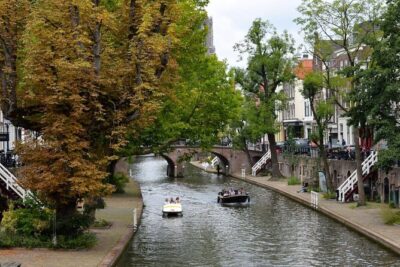
- Utrecht: City Canal Cruise★ 4.3 · 2,895 reviews
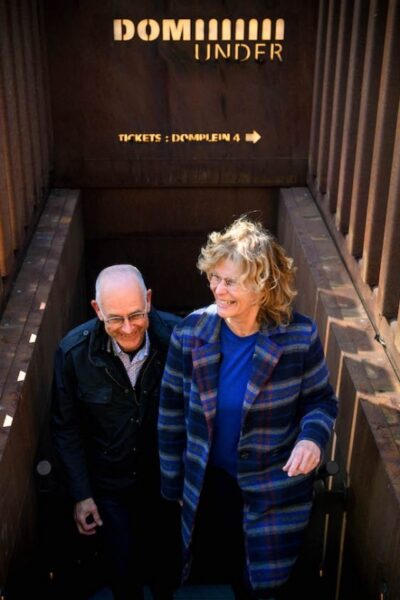
- Utrecht: DOMunder Entry Ticket with Guide★ 4.4 · 706 reviews
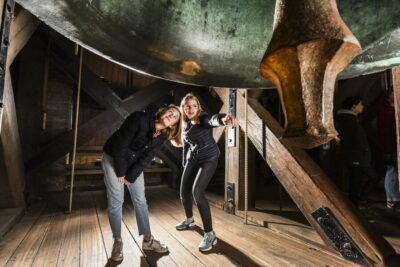
- Utrecht: Dom Tower Entry Ticket and Guided Tour★ 4.6 · 513 reviews
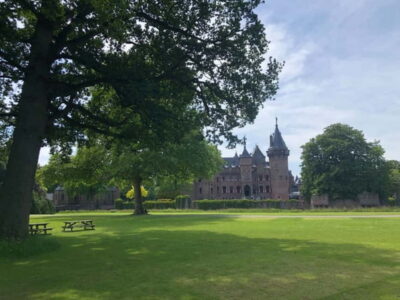
- Utrecht: De Haar Castle, Park Entry Ticket★ 4.6 · 153 reviews
How the Utrecht Historic City AR tour works from Domplein
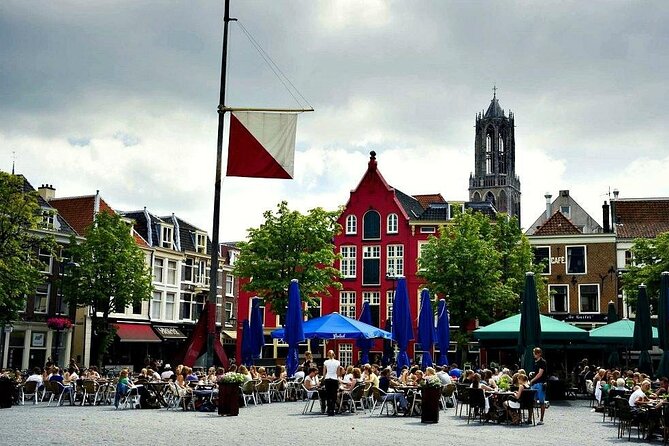
This tour starts and ends at Domplein (3512 JE Utrecht). It is set up as a private, self-guided experience, meaning you are not sharing a guide with strangers. Instead, your group gets access to the app link for the tour content and you explore at your own pace.
The core idea is simple: as you move through the city, the app triggers audio and video storytelling, plus augmented and virtual reality experiences tied to specific spots. That is the main difference versus a standard audio guide. Rather than only listening, you also look at what is happening around you, then watch digital scenes appear in the same space.
You also get Google maps navigation support, which matters more than it sounds. In a compact historic center like Utrecht, getting turned around can break the spell. Here, you are guided stop to stop, so you spend less time figuring out where to go next and more time actually looking at what is in front of you.
A nice bonus from real-world use is that this type of tour works for different group styles. It can be a calm solo activity, or a social afternoon with colleagues, friends, or family. The app does not require you to coordinate responses with anyone else. You just meet the next location and press play when you are ready.
Domplein and Domsquare: the story behind the cathedral area
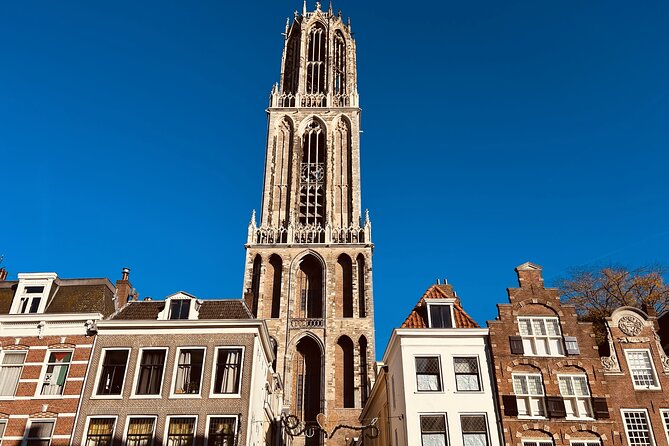
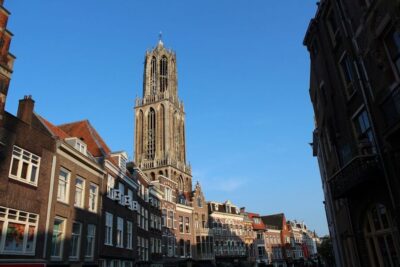
You begin at Domplein, right in the area where the big visual anchor of Utrecht sits. The tour uses this spot as more than a starting point. It is set up to show you the past of the Dom and the Domsquare, then later brings you back to Domplein again to talk about current changes.
That round-trip design is smart. First, you get context, then you get an update. When you return for the second Domplein stop, the app focuses on ongoing renovation (the tour notes five years of work). This is one of the subtle strengths of the experience: you are not only watching the past, you are also seeing how the city is actively shaping itself now.
What to do here:
- Take 2 or 3 minutes before starting the audio, just to look around. If you can locate the main landmarks in your view, the AR effects will feel more connected.
- If you are cycling, consider parking your bike somewhere safe before you start. Domplein can be busy and you will want both hands free while you use your phone.
De Werfkelder: the medieval wonder under your feet
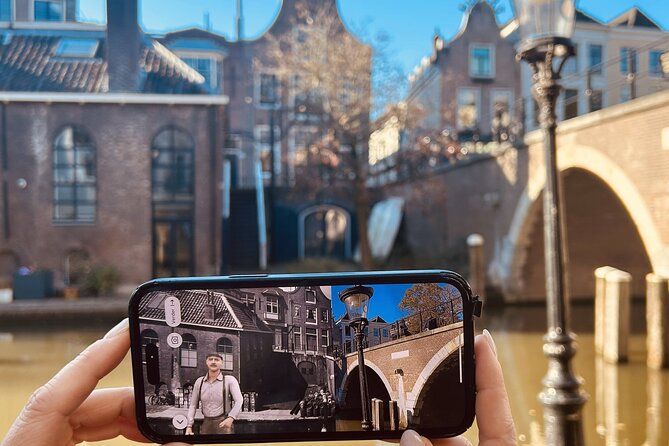
One of the most memorable stops is De Werfkelder, described as a medieval wonder beneath Utrecht’s streets. This is where the AR concept really helps. Subterranean places are hard to appreciate from outside. With an app that can layer visuals and explanations onto the real location, you are better able to grasp what is happening below street level.
Even if you only spend the planned short time here, do not rush your viewing. Wait for the audio cues, then look around the physical space and try to match what the visuals are suggesting. The point is not to find hidden details you already know. The point is to make the invisible setting feel understandable.
If you are with kids or with friends who want something hands-on, this stop usually lands well because the story is tied to place. You are not just learning trivia about medieval Utrecht, you are standing where the setting belongs.
De Zeven Steegjes and Zadelstraat: narrow lanes with a “how did that work?” feeling
After Domplein and De Werfkelder, the route turns into streets and lanes. The tour highlights De Zeven Steegjes van Utrecht, a folksy-feeling neighborhood, then later brings you to Zadelstraat, framed as a mystery.
These stops are about texture. Utrecht’s charm often comes from its small-scale spaces, and the app supports that by shifting you from grand buildings to everyday streets. In a self-guided format, this prevents the tour from becoming one long monument parade. Instead, you get a mix of big sights and the kind of details you would normally walk past while shopping or heading somewhere else.
What I recommend at these stops:
- Slow down enough to actually stand at the start of the lane, then look down it. When the app visuals are triggered, your viewpoint matters.
- Keep one ear for the audio and one eye for the street. Do not treat it like a podcast you can ignore. The AR only works if you stay present at the spot.
More trips where somebody else does the explaining

Geertebolwerk: Karel V and the idea of refuge
At Geertebolwerk, the tour connects the location to Karel V, specifically as a place of refuge, pairing past and present. This stop is useful because it gives you a narrative frame, not just a description of what exists.
In practical terms, a narrative frame changes how you look. You start asking, Why here? Why refuge? How would the situation have felt at the time? Even if you only spend about 10 minutes, you will leave with a more organized understanding of the area.
You also get a reminder that historic cities are not frozen. The tour’s “past and present” framing is meant to help you notice what has changed and what remains readable.
Pandhof Sinte Marie: monastic life, and AR that makes it feel real
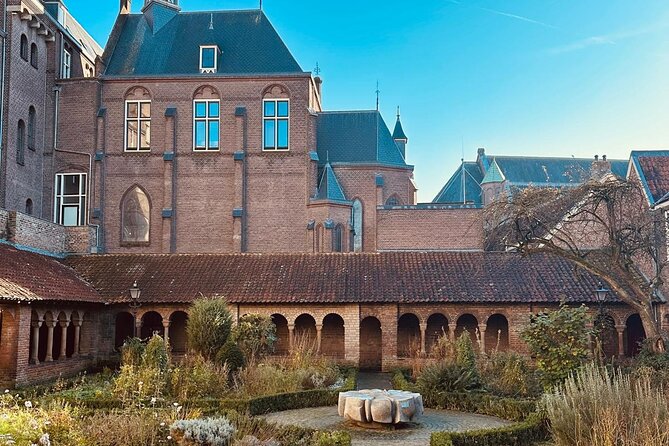
Pandhof Sinte Marie is centered on Sinte Marie and monastic life. This stop is where AR can do its best job, because monastic spaces are often hard to picture unless you already know what daily routine might have looked like.
One of the most praised moments described with this tour involves AR visuals in a garden-like setting, with life-sized nuns walking around. You do not need to have a background in convent history to enjoy it. It works because the app places the story in the exact spot, so you are not imagining from scratch.
Practical tip: if you have trouble hearing the audio at this stage, check your volume and headphone placement. This stop feels more powerful when the audio cues line up with what you see.
Janskerkhof and Janskerk: two centuries of flower market
At Janskerk and Janskerkhof, the tour points to a flower market with a long timeline, described as two centuries. Market stories are great for self-guided tours because they help you interpret everyday scenes.
Here is how to get value from it even if you are not a flower-shop person: treat the flower market as an example of how city life evolves. You can think about what trade, gathering, and public space mean in a place like Utrecht. The app helps you connect the dots so the physical square becomes more than just a place to pass through.
If you feel tempted to keep moving quickly, resist it. Take a minute to stand where you can see the square from a couple of angles. It helps you anchor the audio to the view.
Neude: from marsh to modern city square
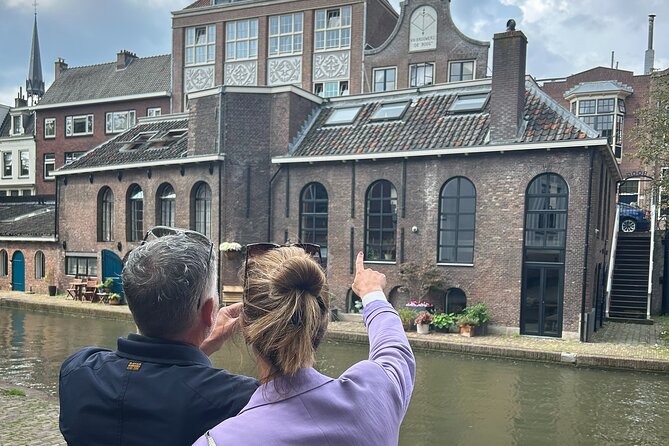
Next comes Neude, introduced as moving from marsh to modern city square. This is the kind of transformation story that makes your walking route feel meaningful. Instead of treating the city as a fixed set of attractions, you understand it as a place that literally changed shape over time.
When the app covers a “then and now” idea, you should do a quick check: which parts feel open and which parts feel tight? A square often reads as a result of planning, while the lane streets often read as leftovers. Even if you do not know Utrecht’s planning details, this mental comparison is exactly the point.
Sint Willibrordkerk: a tucked-away church stop
Sint Willibrordkerk is presented as a hidden, tucked-away church. This is a perfect match for an AR format because churches can be visually dominant but information-light unless you have context.
The tour uses this stop to slow you down. You are not just collecting a landmark, you are listening for how a specific place fits into Utrecht’s larger story. If you like quiet moments between busier streets, this stop is a strong one.
Paushuize: Pope Adrian and the chronicle of a building
The final major stop is Paushuize, framed through the chronicle of Pope Adrian. This is where the tour leans toward narrative history tied to a particular address, rather than just architectural description.
If you are the type who likes to understand who lived where and why it mattered, this stop will give you a satisfying payoff. Even within the planned 10-minute window, you should end up with a clearer sense of why Paushuize gets talked about at all.
Then you return to Domplein for the closing stop connected to the renovation update. Ending where you started keeps you oriented, and it also makes the whole loop feel complete.
Timing, walking rhythm, and the phone-battery reality
The tour is designed for about 2 hours total, with each stop around 10 minutes. That schedule is a guide, not a rule. If you want more time for photos, pause for coffee, or just want to enjoy the lanes between stops, you can.
A tip that matters: wireless earphones help. One practical suggestion from real use is to bring something like AirPods and keep your phone charged. Because this is AR and video, battery drain can be real, especially if your screen stays active while visuals load.
Also plan for internet access. The tour does not include downloading on your timeline without data. It specifically notes that you need an internet connection to download the app and the tour. If you arrive in Utrecht with no signal or low battery, you will lose time.
Finally, you can do this route by walking or cycling. If you choose to cycle, keep it realistic. You are stopping often for AR triggers and audio playback, so frequent dismounting is part of the game.
Price and value: what $12 buys you
At $12.00 per person for roughly 2 hours, this is priced like a budget-friendly activity with high novelty. You are paying for two things: a structured route, and digital storytelling that goes beyond plain audio.
The big value driver is that the content is not only educational, it is interactive. You get augmented and virtual reality experiences plus audio and video. That typically costs more in time and money when delivered through a full live guide or a museum ticket.
It also helps that the tour includes private access via the app, so your group is not forced into the same pace as other strangers. If you travel with friends who like different speeds, a self-guided format like this is a good way to keep everyone happy without splitting up.
Your main cost, beyond the ticket price, is what you provide: a mobile device, headphones, and internet access. Entrance fees are not included if they apply at certain locations, so plan for that possibility.
Who this Utrecht AR tour suits best
This experience fits best if you like:
- Learning in small chunks rather than sitting through a long lecture
- Using your own pace, including stops for a snack or a break
- Seeing history as something you can visually connect to the street
It also works well for groups with mixed preferences. The tour does not demand a shared conversation. Everyone can listen, look, and then regroup naturally.
If you are new to Utrecht, the route gives you a strong first sweep across different kinds of places: monumental areas, underground spaces, narrow lanes, squares, churches, and a historic building tied to Pope Adrian. If you are a local, you still get value because the AR visuals and time-linked stories can reveal details you would not usually notice just by walking through.
Should you book this tour?
I think this is a good booking for most visitors who want more than a standard audio walk. The strengths are clear: AR on location, easy start-and-follow structure, and the freedom to pause when you want.
Skip it or at least rethink it if:
- You hate using apps on your phone while sightseeing
- Your battery is usually fragile, and you cannot reliably keep it charged
- You do not want to rely on internet access
If you do like a self-guided flow, and you want Utrecht to feel closer to real people and real moments, this one is worth your time.
FAQ
Where does the tour start and end?
The tour starts at Domplein, 3512 JE Utrecht, Netherlands and it ends back at the same meeting point.
How long does the self-guided AR tour take?
The duration is listed as about 2 hours.
What is the price per person?
The price is $12.00 per person.
What do I need to bring?
You need your own mobile device and headphones. The tour also requires an internet connection to download the app and the tour.
Is the tour available in English?
Yes, it is offered in English.
Can I do it by walking or cycling?
Yes, it is available for walking or cycling routes.
Is free cancellation available?
Yes. You can cancel for a full refund up to 24 hours in advance of the experience start time.
Everything Else From Our Utrecht Notebook



Also Reviewed Around Utrecht


Utrecht Under the Dom
Fresh off the review pile in Utrecht
- Our Utrecht’s Private & Personalized tour
★ 5.0 · 3 reviews - Utrecht: Hoge Woerd Museum Entry Ticket with Audio Tour
★ 3.3 · 3 reviews - Historical Utrecht: Private Walking Tour with a Local Guide
★ 4.6 · 3 reviews - Uniquely Utrecht: An Audio Tour of its Charming City Centre
★ 5.0 · 4 reviews - Utrecht Walking Tour with a local comedian as guide
★ 4.8 · 5 reviews
Utrecht Tours, compared.
 ★ 4.3Utrecht: City Canal CruiseFrom $222,895 reviews
 ★ 4.7Utrecht: De Haar Castle & Park Entry TicketFrom $231,350 reviews
 ★ 4.4Utrecht: DOMunder Entry Ticket with GuideFrom $17706 reviews
 ★ 4.6Utrecht: Dom Tower Entry Ticket and Guided TourFrom $17513 reviews
★ 4.6Utrecht: De Haar Castle, Park Entry TicketFrom $9153 reviews
★ 4.6Utrecht: Dom Tower Entry Ticket and Guided TourFrom $17513 reviews
★ 4.6Utrecht: De Haar Castle, Park Entry TicketFrom $9153 reviews
 ★ 5.0Utrecht 2-Hour Walking Tour | Discover The City With A LocalFrom $3138 reviews
 ★ 4.8Utrecht: Rietveld Schröderhuis UNESCO Entry TicketFrom $22119 reviews
 ★ 5.0Utrecht Food Tour with local guideFrom $84112 reviews
Browse the lists this tour appears in