
REVIEW · UTRECHT
Utrecht Private Walking Tour With A Professional Guide
Utrecht history makes more sense on foot. This private 2-hour Utrecht walking tour ties together Roman-era Traiectum, canal views on Oudegracht, and major church and civic landmarks, with an English-speaking guide leading the walk.
I love the personalized feel of having a local guide just for your group, not a crowd. You also get a storyline that runs from the Carolingian Empire to World War II reconstruction, so you leave with a real timeline, not just photo stops.
One possible drawback: the price is per group, so if you are just two people, you may feel the cost more than a larger group would.
Key points to know before you go
- Dom Tower and Domkerk show you why Utrecht mattered for faith and influence in the north
- A focused walk on Oudegracht turns the canal into part of the story, not scenery you rush past
- Church stops line up with major eras, from Traiectum through the Dutch Republic and industrial change
- WWII and modern reconstruction get explained clearly while you are still seeing the city center
- Guides can tailor questions on the spot, so you can follow your interests in real time
- English-only, private group format means better conversation and fewer awkward pauses
In This Review
- How a private 2-hour route changes Utrecht from random sights to a timeline
- Price and group value: what $313 per group really means
- Starting at Neude: setting expectations for the whole walk
- Dom Tower, Domkerk, and Stadhuis van Utrecht: faith and civic power in one loop
- Sint-Catharinakathedraal, Sint-Willibrordkerk, and Janskerk: three church stops, one evolving city
- Oude Hortus, Oudaen, and Voorstraat: where the details help you picture change
- Oudegracht canal walking and Neude Square: the view you remember later
- From Roman Traiectum to WWII blitz and modern reconstruction: what you’ll actually learn
- Practical tips to get the most from your Utrecht private guide
- Should you book this Utrecht Private Walking Tour with a professional guide?
How a private 2-hour route changes Utrecht from random sights to a timeline
Utrecht can feel like a normal Dutch city at first glance. Then you start walking, and suddenly the centuries start clicking into place. This tour is built for that moment when places stop being names on a map and start becoming clues.
The payoff is that your guide keeps the big story moving while you pass recognizable landmarks. You will see major sites like Dom Tower, Domkerk, and the Stadhuis van Utrecht, and you will also hear how the city evolved across major turning points, including the Roman period and later World War II.
I also like that the tour is private. You are not stuck watching a guide herd people toward the same doorway. Instead, you can ask questions, steer the conversation, and get answers that match what you care about, whether that is Christianity in the north or trade and independence.
Under the Dom: further Utrecht picks
- Utrecht: City Canal Cruise★ 4.3 · 2,895 reviews
- Utrecht: DOMunder Entry Ticket with Guide★ 4.4 · 706 reviews
- Utrecht: Dom Tower Entry Ticket and Guided Tour★ 4.6 · 513 reviews
- Utrecht: De Haar Castle, Park Entry Ticket★ 4.6 · 153 reviews
Price and group value: what $313 per group really means
You pay $313 per group for up to 15 people. That pricing is actually smart if you are traveling with family, friends, or a small group and want one guide who stays with you the whole time.
Here is the value logic. If you have the group size near the cap, the per-person cost drops fast. If it is only you and one other person, the price will feel steeper. In that case, you are basically buying convenience plus a guided storyline that you would otherwise have to assemble on your own.
The tour also includes a professional local guide and stays around central Utrecht. So you are paying less for logistics, more for interpretation. That matters because Utrecht’s story is not just one era. It is a chain of eras, and a good guide keeps the chain from tangling.
Starting at Neude: setting expectations for the whole walk
The tour starts in Neude, at 3512 Utrecht, and it ends back at the meeting point. That round-trip setup is practical, especially if you have train connections or dinner plans later.
Neude is a good place to begin because it puts you in the city center quickly. You will spend the tour walking through the older core, with stops that include major churches and classic downtown streets like Voorstraat. Even if you are short on time in Utrecht, this format helps you get oriented and then deepen your understanding as the walk goes on.
One small tip based on how guides work on this tour: in at least one case, the guide Willemijn met the group at the train station before walking them onward. Your official start is Neude, but it is worth knowing that your guide may help you get on track smoothly if you are arriving from the station.
Dom Tower, Domkerk, and Stadhuis van Utrecht: faith and civic power in one loop
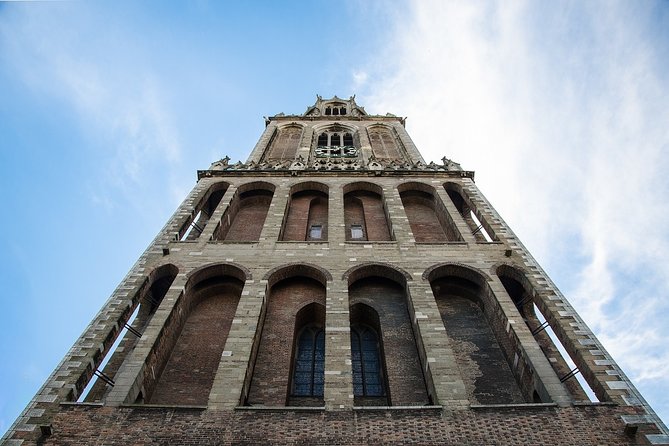
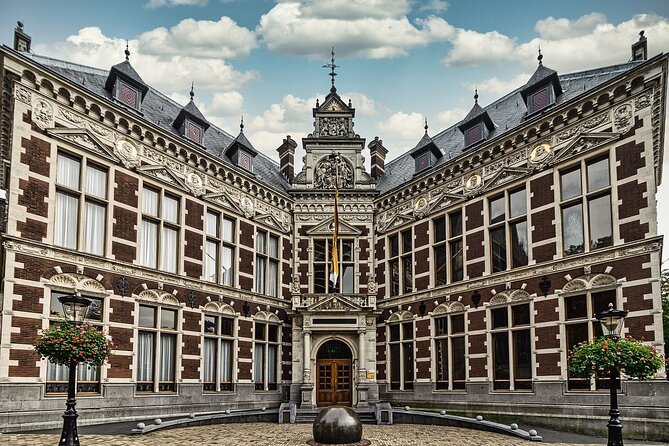
The walk includes Dom Tower and Domkerk, plus Stadhuis van Utrecht. These are the kinds of landmarks that make Utrecht feel important, even if you have never studied its history before.
What I like about this part of the route is the way the guide uses it as a backbone for the timeline. You will learn about early foundations, including the Roman period and Traiectum, then move through later eras such as the Carolingian Empire and Utrecht’s growing role as a center of Christianity and a trade hub.
The practical upside is clarity. Instead of treating each stop as a standalone photo, the guide ties them to what was changing in the city at the time. If you like history that explains cause and effect, this is where you start seeing the pattern.
Potential drawback to plan around: entrance costs may apply. The tour does not include entrance fees, and at least one group enjoyed going into a cathedral. That means you should expect that if you want interior time, you might need to pay separately.
Sint-Catharinakathedraal, Sint-Willibrordkerk, and Janskerk: three church stops, one evolving city
This tour includes several major church landmarks, including Sint-Catharinakathedraal, Sint-Willibrordkerk, and Janskerk. Multiple churches can sound repetitive if you are collecting buildings. Here, though, it works because the guide is pairing architecture with the city’s changing role.
You will hear how Utrecht shifted over time, including major political moments such as the 16th-century end of independence and the later Republic of the Netherlands. You will also get the long arc that leads through the industrial age and then lands in 20th-century upheaval.
A very real benefit of having a private guide is that you can slow down where you have questions. If churches are your main interest, you can ask more. If you want the story of trade and government more than worship, you can focus the conversation that way.
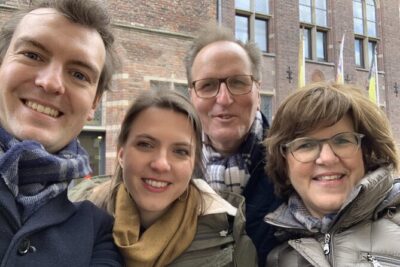
And based on guide feedback, the human element matters. Guides like Giovanna were described as very friendly and easy to talk with, and one group noted she used a video to support the story. That kind of extra tool can be useful if you learn best with visual context, not just verbal description.
Prefer to see it on foot? More Utrecht walks
Oude Hortus, Oudaen, and Voorstraat: where the details help you picture change
The route also passes Oude Hortus, Oudaen, and Voorstraat. These stops matter because they give you breathing room between the big headline landmarks.
This is where a guide earns their fee. Even without throwing every detail at you, they can point out how the city’s layout and character reflect the eras you just heard about. You learn the story of Germanic invasions, how the Carolingians shaped influence, and why Utrecht became so significant. Then you walk and connect those ideas to the streets you are standing on.
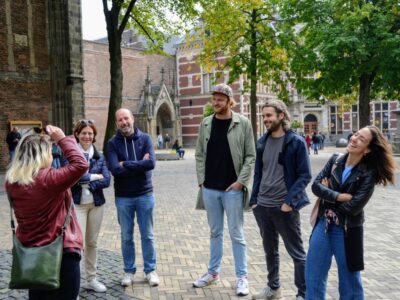
I also like that these segments help you move at a comfortable pace. This is not a sprinting tour. People describe it as leisurely, which makes a difference when you are trying to absorb a long timeline in just about two hours.
If you hate wandering without a clear purpose, this part can either be perfect or feel a bit slow. The key is to be ready to ask, especially when the guide points out why a particular street or spot fits the next chapter.
Oudegracht canal walking and Neude Square: the view you remember later
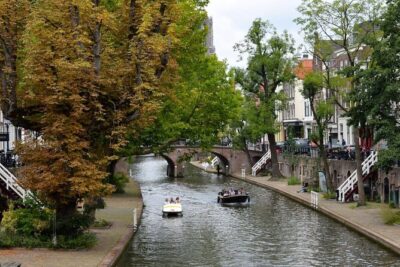
A highlight of the tour is the walk along Oudegracht, plus time around Neude Square. The canal portion is not just a scenic break. It acts like a transition between eras and themes, moving you from the heavy history of power, faith, and conflict into the daily look and feel of central Utrecht.
Oudegracht is described as picturesque, and you will likely feel why within a few minutes of walking beside it. The canal also gives your brain a change of focus. You can take in the setting, then return to the guide’s story with a fresher mindset.
After the canal, you shift back toward Neude Square and nearby streets. That rhythm, history to scenery to history again, is one of the reasons this kind of private walking tour tends to stick with people. When you go back later to Utrecht on your own, you often remember the canal walk first, then you remember what you learned because it happened while the place was still in your head.
From Roman Traiectum to WWII blitz and modern reconstruction: what you’ll actually learn
Here is the real engine of the tour. Your guide walks you through a long timeline, hitting everything from early foundations to modern life, with place-based context as you go.
You will learn about:
- Roman period roots in the region
- Traiectum and the origin of the city’s name
- Germanic invasions
- The Carolingian Empire
- Utrecht as a center of Christianity in the north and a trade hub
- The 16th century end of independence
- The Republic of the Netherlands
- The industrial age
- World War II, including the blitz, Nazi domain, and liberation
- Modern reconstruction
What makes this valuable is pacing. You are getting centuries of change, but you are not being lectured for hours in a museum room. You are hearing the storyline at walking speed, then seeing the kind of landmarks that represent each shift.
World War II and reconstruction are especially important to understand in Utrecht. It is easy to think of old European cities as frozen in time. This tour makes it clear that Utrecht had a modern break too, and that rebuilding shaped what you see today.
This is also where the private format helps most. If you care about 20th-century history, you can ask follow-ups. If you prefer earlier centuries, you can steer the conversation there. People who rated the tour highly often mentioned that guides were patient and personable, and that they explained the history in a way that made it stick.
Practical tips to get the most from your Utrecht private guide
A private walking tour works best when you show up ready to engage. Here are the practical moves that tend to pay off on this specific route.
First, bring comfy shoes and plan for walking through central Utrecht for about 2 hours. That is long enough to feel the city, short enough that you should not overbook afterward.
Second, think about entrance fees. Entrance fees are not included. If you want to go inside something, ask your guide what is realistic within the time window and what may require tickets.
Third, use the customization option. The tour can be customized on the spot. If you have a family member who loves medieval periods or you are focused on WWII and rebuilding, say so early. One guide approach people liked, including Famke, was showing parts of Utrecht you might otherwise miss on your own. That kind of added attention is often what customization unlocks.
Finally, be ready to ask questions. The guides you might encounter, including Willemijn and Giovanna, were described as friendly and easy to talk with. If you want the story explained in plain language, speak up. You will get a better outcome when you guide the conversation as much as the guide guides you.
Should you book this Utrecht Private Walking Tour with a professional guide?
I would book it if you want Utrecht’s history explained in a way that matches the streets you are walking. The big reasons are the private guide, the clear timeline from Traiectum to WWII and reconstruction, and the way the Oudegracht canal and major landmarks are woven into the story.
Skip it or reconsider if your goal is only quick sightseeing with minimal walking. Because this is a guided historical walk, you get more value when you actually want to understand what you are seeing.
If you are traveling with more than two people, the group pricing becomes much easier to justify. If it is just you or a couple, you can still have a great time, but do it because you really want interpretation, not because you want the cheapest way to see town.
Everything Else From Our Utrecht Notebook



Also Reviewed Around Utrecht


Utrecht Under the Dom
Fresh off the review pile in Utrecht
- Our Utrecht’s Private & Personalized tour
★ 5.0 · 3 reviews - Utrecht: Hoge Woerd Museum Entry Ticket with Audio Tour
★ 3.3 · 3 reviews - Historical Utrecht: Private Walking Tour with a Local Guide
★ 4.6 · 3 reviews - Uniquely Utrecht: An Audio Tour of its Charming City Centre
★ 5.0 · 4 reviews - Utrecht Walking Tour with a local comedian as guide
★ 4.8 · 5 reviews
Utrecht Tours, compared.
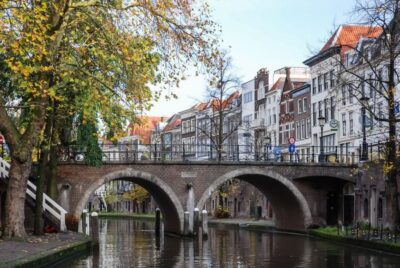 ★ 4.3Utrecht: City Canal CruiseFrom $222,895 reviews
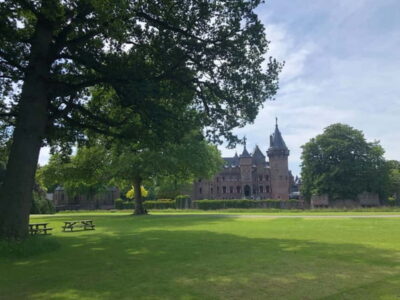 ★ 4.7Utrecht: De Haar Castle & Park Entry TicketFrom $231,350 reviews
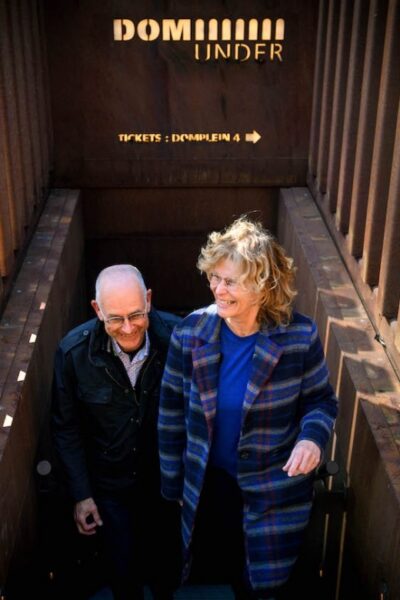 ★ 4.4Utrecht: DOMunder Entry Ticket with GuideFrom $17706 reviews
 ★ 4.6Utrecht: Dom Tower Entry Ticket and Guided TourFrom $17513 reviews
★ 4.6Utrecht: De Haar Castle, Park Entry TicketFrom $9153 reviews
 ★ 5.0Utrecht 2-Hour Walking Tour | Discover The City With A LocalFrom $3138 reviews
 ★ 4.8Utrecht: Rietveld Schröderhuis UNESCO Entry TicketFrom $22119 reviews
 ★ 5.0Utrecht Food Tour with local guideFrom $84112 reviews
Browse the lists this tour appears in