
REVIEW · VAN GOGH MUSEUM TOURS
Van Gogh Museum Private Tour
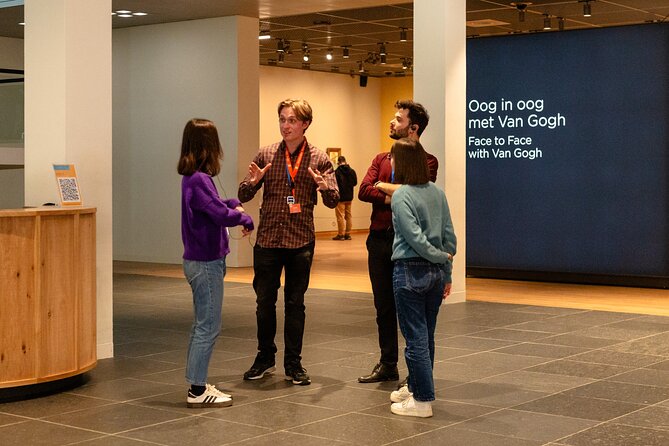
Vincent never feels far away here. With a private guide inside the Van Gogh Museum, the paintings connect into a clear story, especially when the guide brings the energy of Sylvia. You move at an easy pace and you get the kind of context that helps the art click fast.
I love two things most: the guided storytelling that makes famous works feel personal, and the whisper system that keeps instructions and explanations crystal clear. That combination means you spend your attention on the paintings, not on trying to hear over crowds.
One possible drawback is the time. At about 2 hours, you see standout highlights rather than every corner of the museum, so you might want a longer plan if you aim to study everything.
In This Review
- Key highlights you should notice right away
- Why a Van Gogh Museum private tour in Amsterdam feels different
- Where you meet and how the tour flows into the museum
- Stop 1 and beyond: how the tour builds a Van Gogh timeline fast
- Self portraits and early influences you can see immediately
- Paris between 1886 and 1888: the café, still lifes, and a new pace
- Arles and the south of France: sunflowers to The Yellow House
- Level 3 Saint-Rémy-de-Provence: wheatfields, iris, and tough beauty
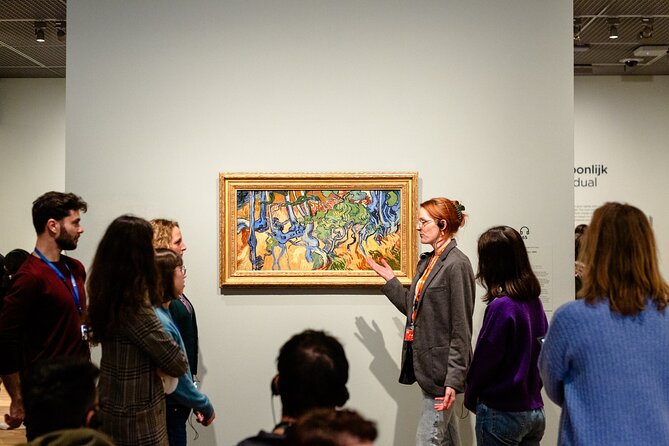
- Level 3 Auvers room: the final mood in Tree Roots and wheatfields
- Price and value: what you get for $263.20 per person
- Pace, questions, and why the guides matter
- Museum rules after the tour: how to plan for staying late
- Who should book this private Van Gogh Museum tour
- Should you book this Van Gogh Museum private tour?
Key highlights you should notice right away
- Whisper system audio so you do not miss the details while you walk
- Private, adult-only group means your questions actually get answered
- Tight selection of masterworks across Van Gogh’s career phases
- Perfect break in a sightseeing day when you want art without an all-day commitment
- End-of-tour museum rules that affect whether you can stay after
More Vincent, inside the galleries and out
- Amsterdam: Van Gogh Museum Ticket and City Canal Cruise★ 4.6 · 3,899 reviews
- Amsterdam: Van Gogh Museum Ticket & Canal Cruise★ 4.5 · 3,304 reviews
- Van Gogh Museum Amsterdam Exclusive Tour w/ Reserved Entry★ 5.0 · 1,760 reviews
- Van Gogh Museum Tour Reserved Entry Semi Private★ 5.0 · 1,437 reviews
Why a Van Gogh Museum private tour in Amsterdam feels different
The Van Gogh Museum can be a lot. Even if you know the titles, it is still easy to wander room to room and leave with the feeling you saw great art, but not much changed inside your head.
On a private tour, you get something simple and powerful: a guide who connects the dots. Instead of treating each canvas like an isolated stop, you start hearing the themes Van Gogh was chasing, and how his choices shift as his life changes. That is when the museum stops feeling like a collection and starts feeling like a timeline you can follow.
I also like that the tour is built around movement. You are not stuck at one wall for 45 minutes. You are walking through the museum while a story stays with you, which helps if you are visiting with limited time or you want a break from churches and canals.
Where you meet and how the tour flows into the museum
You start at Cobra Café on Hobbemastraat 18, then finish at Museumplein 6. The meeting point is convenient because it is in the Museumplein area, where you can usually stitch this into your day without extra hassle.
The tour is designed for a smooth rhythm inside. You get a set of focus stops that cover major stages, and you get time at each one to look properly. It is also a private setup, meaning only your group participates, so you can ask practical questions without waiting for a large crowd to settle.
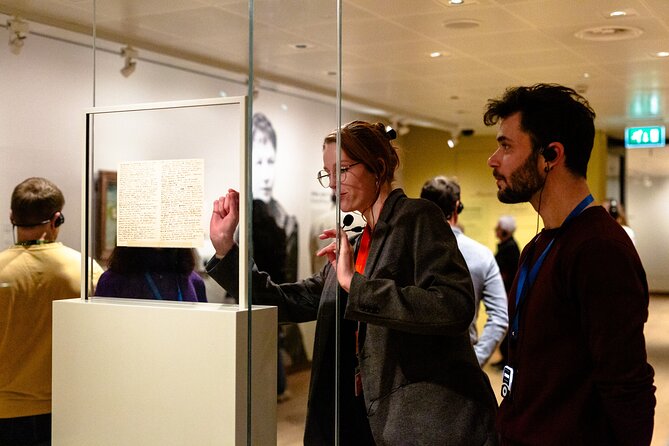
One more small thing that matters: the whisper system. Even when you are standing still, it helps you catch the key details. That means you do not have to guess what the guide is pointing at when you are looking at something that is slightly off the main line of sight.
Stop 1 and beyond: how the tour builds a Van Gogh timeline fast
This tour is essentially a curated career walk. You see key works that map the artist’s evolution across self, influences, places, and late career.
It is a smart approach for first-timers. You get orientation on where to look, what to notice, and how the style changes, without spending your limited time trying to decode everything on your own.
Here’s how the stops work in a way that actually helps your brain while you visit.
Self portraits and early influences you can see immediately
You begin with Van Gogh’s self-portraits, a great choice because it puts the viewer inside his changing self-image. If you ever wondered why his faces feel so direct and emotional, this is where that feeling starts making sense.
The next portion brings in the world around him through works connected to other artists and subjects. You will spend time at pieces including Woman Lifting Potatoes and The Potato Eaters, both of which help explain his early interest in ordinary people, labor, and the weight of daily life.
The tour also points you toward a wall of portraits, including Head of a Peasant Woman. That helps you notice a key Van Gogh pattern quickly: he does not just paint a person, he paints a mood, a texture, a stance, and a sense of dignity.
Why this matters for your visit:
- It helps you recognize what to look for when you move upstairs later.
- It anchors the later, more famous landscapes in a human beginning.
More Amsterdam trips with just your group

Paris between 1886 and 1888: the café, still lifes, and a new pace
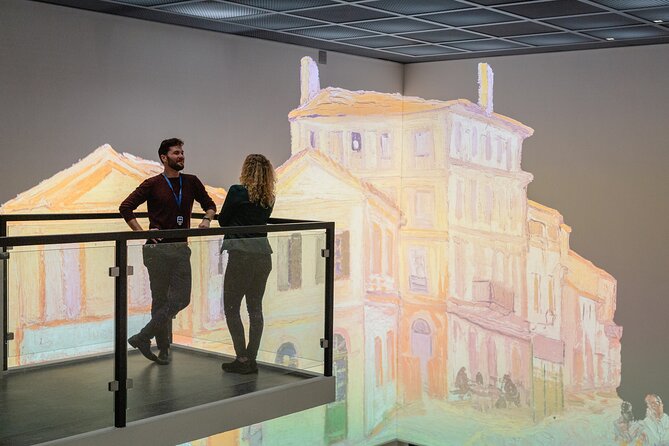
Then the story shifts to Paris between 1886 and 1888, a stage where the art energy changes. You will see works such as Self Portrait with Felt Hat and Still Life with Absinthe. These help you connect the dots between his self presentation and the modern settings around him.
One of the best parts of this section is the move from still life to lived-in scenes. You will also look at In the Café: Agostina Segatori in Le Tambourin, which gives you that sense of everyday life, music, and social space. If you ever feel like you only understand Van Gogh through landscapes, this is where you remember he also painted the modern world with real intensity.
You also get a quieter contrast at Garden with Courting Couples, which gives you a different kind of emotional temperature. It is not the same energy as the café. It is more intimate and observational, which makes the next location change feel earned.
One practical benefit: after Paris, your eye starts to pick up how he uses color and composition to guide your attention, not just decorate the wall.
Arles and the south of France: sunflowers to The Yellow House
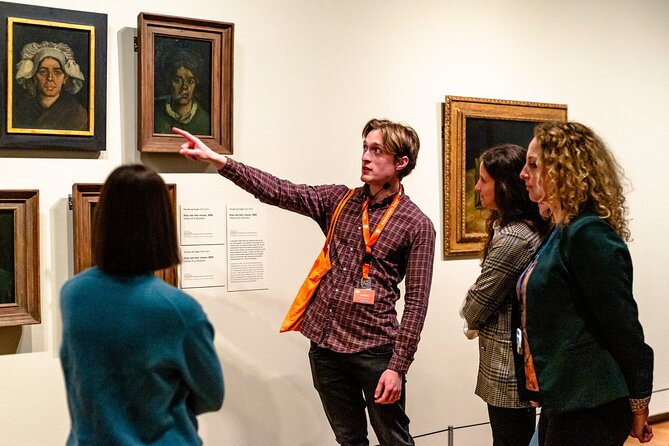
Next comes Arles, starting in 1888. This section is where Van Gogh starts looking like the Van Gogh most people already imagine, but with more explanation than a typical self-guided visit.
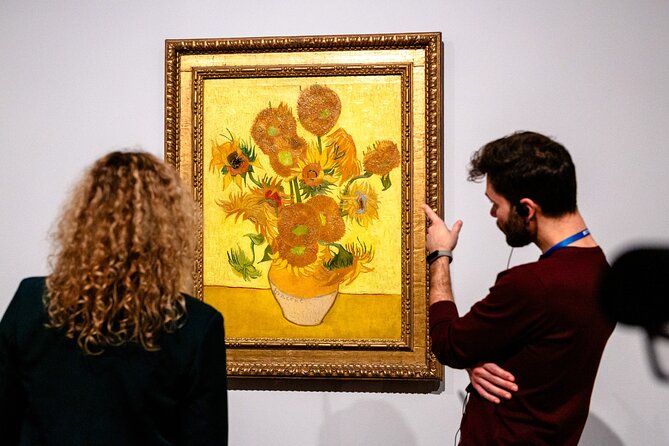
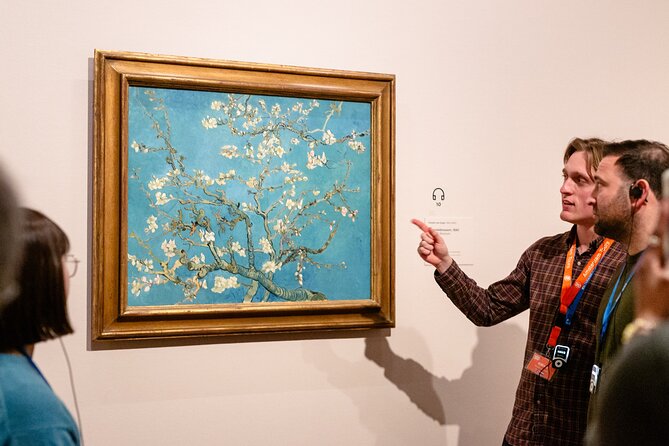
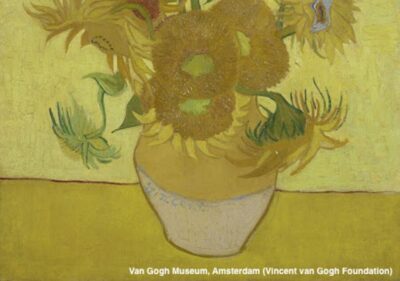
You will spend time on Sunflowers and Almond Blossoms. Seeing them in sequence helps you notice how the same visual idea can carry different emotional weight depending on what’s happening in his life and surroundings.
The tour also includes interior and place based works like The Bedroom, which is crucial because it shows how he paints space as experience, not just furniture. Then you step outward again with The Yellow House, which helps you understand his relationship to location. This is not scenery for its own sake. It is where his daily life happens, and you can feel that in how the space is represented.
A nice detail here is Japanese paintings, described as copies from prints. Even though they are not original works in the same way as the other paintings listed, they are an important bridge. They show what he was learning from other sources and why certain styles, patterns, and compositional choices started appearing.
If you are trying to figure out what changed when he moved, this is the part that makes the shift obvious.
Level 3 Saint-Rémy-de-Provence: wheatfields, iris, and tough beauty
After Arles, the tour moves to Level 3: Saint-Rémy-de-Provence. This is the phase where the art feels both intensely focused and strangely distant, like the landscape is speaking in a different voice.
You will see Almond Blossoms again, plus Wheatfield with a Reaper and Iris. The repeat of almond blossoms is meaningful. It helps you compare how the same motif can appear with a different emotional tone across time.
You also look at Pieta (After Delacroix). That detail is helpful if you want to see Van Gogh not just as a standalone genius painting fields, but also as an artist paying attention to art traditions and to other master compositions.
The guide’s framing here is what makes it land. You are not only looking at beautiful works. You are learning how he keeps working through hard times, and how subject and style can shift while the focus remains.
A practical tip for this section: slow down when you reach the wheat and sky works. The power here is in how the composition directs your eyes. If you rush, you miss the structure.
Level 3 Auvers room: the final mood in Tree Roots and wheatfields
The last major area is Level 3: The Auvers Room, including works like Tree Roots and Wheatfield with Crows. This section often hits differently because it feels like a closing statement.
Tree Roots gives you a close-up intensity. It is not a gentle scene. It is an image of structure, tension, and how life clings to the ground.
Then you move to Wheatfield with Crows, which is a strong finale because it is both ordinary and ominous. You can see how Van Gogh uses the landscape as an emotional setting, not just a background.
This ending is a good match for a 2-hour format. It lets you leave with the sense that you followed a full arc, not just a highlight reel.
Price and value: what you get for $263.20 per person
At $263.20 per person for a roughly 2-hour private tour, you are paying for three things: access to a guide, museum time with a focused plan, and the whisper system that improves how much you actually take in.
So is it worth it? For me, private tours like this make sense when you want more than basic captions. If you love art, you probably do not want to spend your time trying to connect context from your phone while you are standing in front of a wall of works.
Two value checks to run before you book:
- If you are visiting for a short window in Amsterdam, this tour helps you use that window efficiently without turning the museum into a marathon.
- If your group includes people who want different levels of detail, a private guide can flex. You can get quick explanations, then linger when something grabs you.
There is also group discount potential, which can improve value if you are traveling with family or friends and can fill a small group. The tour is private, so you are not competing with strangers for attention.
Pace, questions, and why the guides matter
One of the strongest themes from the guides’ approach is engagement. Guides such as Sylvia, Giulia, and Kiran are described as bringing energy, keeping the pace moving, and making space for questions.
That matters because the museum is full of visual information, and it helps to have someone point out what changes over time. When you get a guide who can keep things interactive, the art becomes a conversation.
I also appreciate that the tour design stays practical. You are not stuck standing in one place until the group melts down. You keep moving, but you still get time at each stop to look closely.
Museum rules after the tour: how to plan for staying late
One thing to plan around: after the tour, you may not be allowed to stay in the museum unless you are carrying light items. The rule is that you cannot stay if you are carrying thick winter jackets, suitcases, or large bags and liquids.
If you visit lightly, with just a small jacket and a small handbag, you can stay in the museum until closing time. That is a useful advantage if you want to return for a slower second look after the guided storyline sets your bearings.
Practical advice:
- If you want the option to stay, travel light for this visit.
- If you arrive with bigger bags, plan on leaving promptly when the guided portion ends.
Who should book this private Van Gogh Museum tour
This one fits especially well if you:
- Want a first visit that teaches you how to look, fast
- Have a busy day and want a short, focused museum experience
- Enjoy asking questions and getting direct answers
- Are traveling as adults 18 plus, since the tour is adult-only
It might be less ideal if you are the type who wants to spend half a day going room by room with no structure. In that case, a longer independent visit can work better. The private tour is a spotlight, not a full sweep.
Should you book this Van Gogh Museum private tour?
If your goal is to understand what you are looking at, and you want a guide to connect the themes across Van Gogh’s life, I think this is a strong booking. The whisper system helps you stay present, the tour is paced to break up a sightseeing day, and the selection of works covers the key phases clearly.
Book it if you like focused art time and you would rather get clarity from a human than from captions. Skip or consider a longer independent plan if you want to see everything slowly with no limits, because this format chooses highlights over full coverage.
Everything Else From Our Amsterdam Notebook




Also Reviewed Around Amsterdam





Following Vincent





Fresh off the review pile in Amsterdam
- Full-Day Trip From Amsterdam to Keukenhof, Zaanse Schans + Cruise
★ 5.0 · 3 reviews - Boutique Dutch Food & History Tour with up to 8 guests only
★ 5.0 · 3 reviews - Private Tour to Windmills Zaanse Schans +Keukenhof – 7 Hours
★ 5.0 · 3 reviews - Full-Day Private Guided Countryside Tour from Amsterdam by Bike
★ 5.0 · 3 reviews - Amsterdam Red Light District and Old Town Walking Tour
★ 5.0 · 3 reviews
Van Gogh Museum Tours, compared.
 ★ 4.7Amsterdam: Van Gogh Museum TicketFrom $3252,054 reviews
 ★ 4.6Amsterdam: Van Gogh Museum Ticket and City Canal CruiseFrom $473,899 reviews
 ★ 4.5Amsterdam: Van Gogh Museum Ticket & Canal CruiseFrom $473,304 reviews
 ★ 5.0Van Gogh Museum Amsterdam Exclusive Tour w/ Reserved EntryFrom $1731,760 reviews
 ★ 5.0Van Gogh Museum Tour Reserved Entry Semi PrivateFrom $1731,437 reviews
 ★ 4.9Amsterdam: Van Gogh Museum Entry Ticket and Guided TourFrom $175681 reviews
 ★ 4.0Combo Ticket: Van Gogh Museum Ticket and 1-Hour Canal CruiseFrom $45676 reviews
 ★ 4.7Amsterdam: Van Gogh Museum Guided Tour with EntryFrom $69535 reviews
Browse the lists this tour appears in