
REVIEW · AMSTERDAM
Amsterdam Central Walking Tour
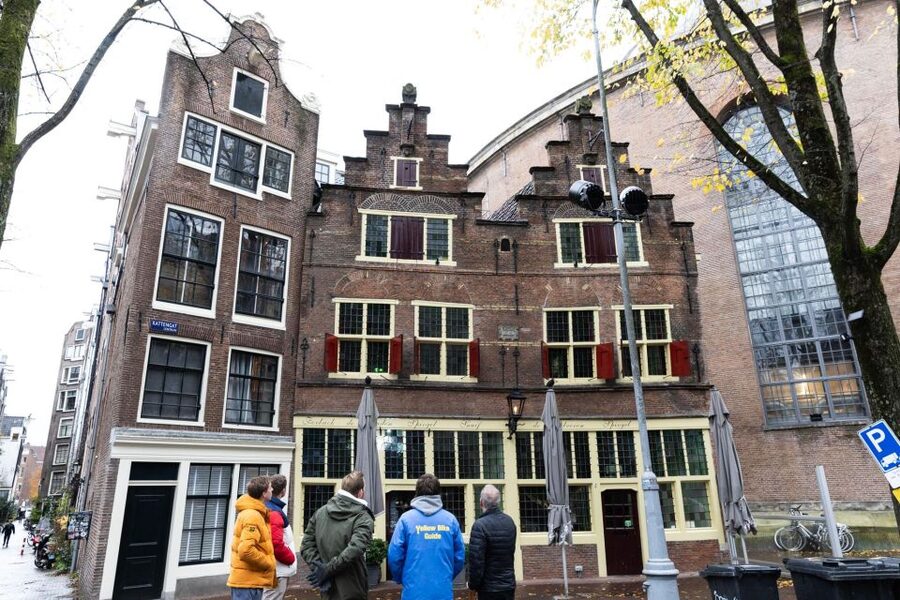
Amsterdam tells stories when you walk its streets. This Yellow Bike Amsterdam Central Walking Tour is a tight, 2-hour route through classic canal scenery, cobblestone lanes, and places where Amsterdam’s big ideas show up in real street corners. I like that it’s run by locals and built around small group energy, so you get time to ask questions without a crowd swallowing the details (small groups, max 12).
Two things I really like: first, the guide connections. Names like Sid, Willem, and Willen come up for a reason, with strong English and a knack for linking old streets to current themes like politics and religion. Second, the stops are specific, not vague, from tilted houses to Westertoren, then on to the Negen Straatjes and Dam Square. One consideration: it’s rain or shine and it’s a walking-focused winter tour, so plan for cold weather, wet cobbles, and wearing grippy shoes.
You’ll also get practical extras that make the whole day easier, like free luggage storage. The café break is real, too, but drinks are not included, so you’ll want to bring a little cash or card for a hot drink during the walk.
In This Review
- Key highlights you should care about
- Why this 2-hour Amsterdam Central walk works so well
- Meeting at Nieuwezijds Kolk and the rhythm of the route
- Negen Straatjes and Crooked Houses: the city’s DIY geography
- Westertoren and Koepelkerk: towers, repairs, and stubborn city life
- From Westertoren views to the canal economics behind Amsterdam’s nickname
- The Red Light District etiquette and why it’s part of the experience
- Spui and Spuistraat: student protest energy and squatting stories
- Herring trade, old warehouses, and other street-level facts that stick
- Anne Frank House and the route’s quieter reflection points
- Dam Square to Kalverstraat: finish strong with a sense of where to go next
- Price and value at $26 per person
- Who should book this Amsterdam Central Walking Tour, and who should think twice
- Should you book this tour?
- FAQ
- How long is the Amsterdam Central Walking Tour?
- Where do I meet for the tour?
- What is included, and are café drinks included?
- What should I bring for winter?
- Does the tour run in rain?
- Can I cancel for a full refund, and can I pay later?
- Is the tour wheelchair accessible?
Key highlights you should care about
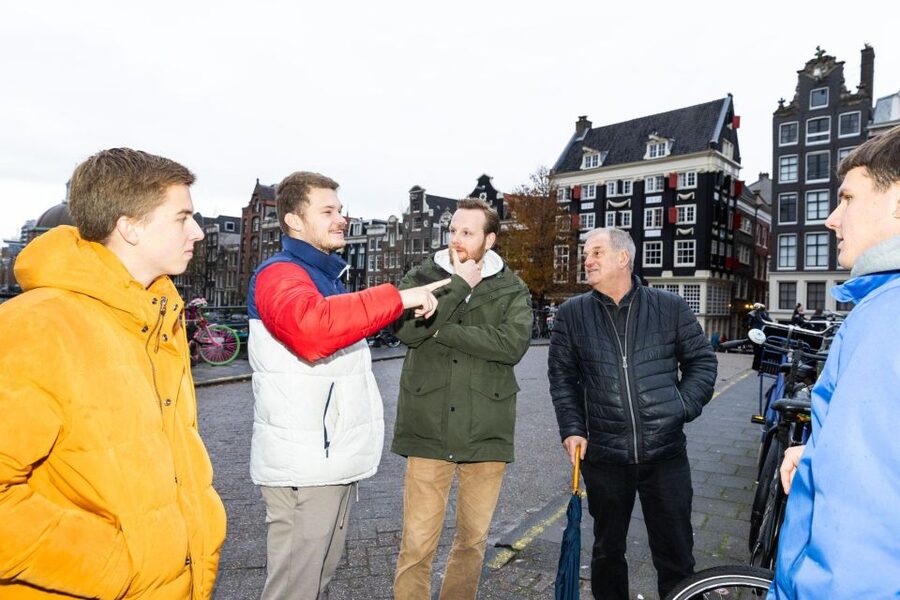
- Yellow Bike’s local roots: one of the original Amsterdam tour companies, run by locals
- Tight route, big pay-off: classic sights plus lesser-known stories in only 2 hours
- Small-group pacing: capped at 12 people, often even fewer for a more personal feel
- Winter-friendly planning: rain or shine, and the route includes a traditional Dutch café stop
- Standout street stop list: Westertoren, Koepelkerk, Negen Straatjes, Spui, and more
- Clear Red Light District etiquette: no photos there, and no lingering
Prefer to see it on foot? More Amsterdam walks
- Anne Frank’s Story – Guided Walking Tour through Amsterdam★ 5.0 · 11,619 reviews
- Amsterdam: Life of Anne Frank and World War II Walking Tour★ 4.8 · 10,467 reviews
- Absolutely Amsterdam – the Essential Introductory Walking Tour★ 5.0 · 3,629 reviews
- Amsterdam: Anne Frank Guided Small Group Walking Tour★ 4.8 · 2,722 reviews
Why this 2-hour Amsterdam Central walk works so well
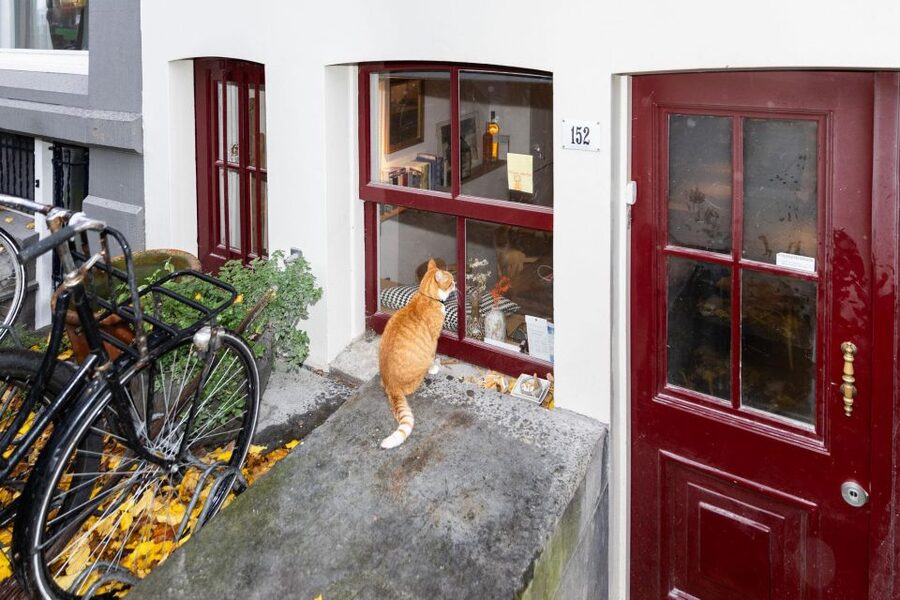
A lot of walking tours in Amsterdam try to do too much. This one stays focused: you’re moving through the center with a clear storyline, and you get back to the meeting area near Nieuwezijds Kolk after the walk from Dam Square. At 2 hours, it’s long enough to get bearings fast, but short enough to keep your energy for the rest of your trip.
The real value is how the guide connects place to meaning. You’re not just ticking off sights like a checklist. You’re learning why Amsterdam looks the way it does, why certain areas became known for particular trades or activism, and how the city rebuilt itself after major events. That’s why people keep praising the guides for blending history with what’s happening now, not history as a museum lecture.
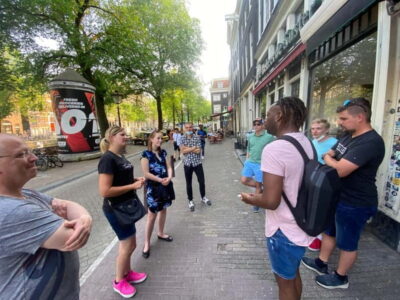
Also, the group size matters more than you might think. When a tour stays at 12 or under, the guide can adjust the pace and answer real questions. On small departures, it can even feel like a private tour, which makes the whole experience feel less rushed.
Meeting at Nieuwezijds Kolk and the rhythm of the route
Your day starts at Nieuwezijds Kolk 29, at Yellow Bike. Look for their location, check in at the counter, then you’re on your way. The route is designed to keep you close to the city’s main pedestrian corridors and canal-adjacent streets, which helps in winter when weather can turn quickly.
Plan on walking straight through the center. The tour includes both signature landmarks and street-level stops, which is the best way to understand Amsterdam, especially if it’s your first time. The guide will bring you to a mix of busy shopping streets and quieter corners, so you don’t get stuck staring at only postcard views.
You also get free luggage storage, which is a big help if you arrive early or if your hotel check-in isn’t ready. It means you can travel lighter and focus on the walk, then switch gears after.
Negen Straatjes and Crooked Houses: the city’s DIY geography
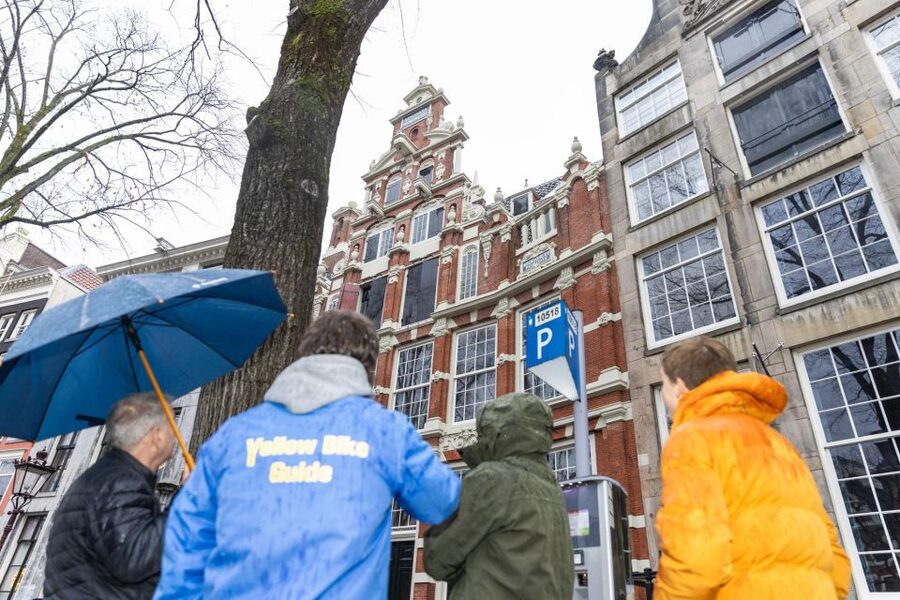
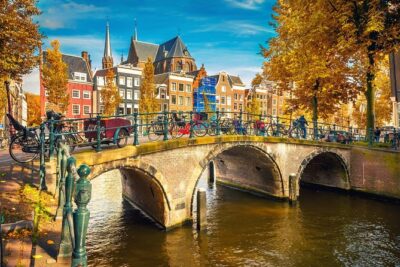
The Negen Straatjes (Nine Little Streets) is where Amsterdam gets charming in a very practical way. You’ll move through a web of small canalside streets and lanes, and the guide uses the neighborhood to explain how Amsterdam developed its identity at street level. This area’s shift from artisan-focused streets to today’s boutique and café culture is part of the story you’ll hear as you wander.
Then come the crooked, tilted houses, the kind that make you stop mid-step. The tour frames them around a key Dutch idea: Amsterdam is built on wooden poles, which affects how buildings settle over time. That explanation makes the architecture feel less random and more like a clear outcome of how the city has dealt with its watery setting.
If you want one takeaway here, it’s this: in Amsterdam, the built environment is a message. Even the angles in the streets and the lean in a façade connect to land, water, and engineering decisions made long ago.
Westertoren and Koepelkerk: towers, repairs, and stubborn city life
You’ll spend time around major religious landmarks, including Westertoren, Amsterdam’s tallest church tower. The guide ties its height and prominence to how the city wanted people to see power, faith, and civic pride. Even if you’re not a church person, the tower stop works because it’s used to teach how Amsterdam thinks in long timelines.
Koepelkerk follows a different thread. You’ll learn the story behind the copper-clad Lutheran church and how Amsterdam responded after a massive fire. That part matters because it shows rebuilding as a national personality, not just an event. The city’s survival depends on constant repair, from buildings to canals, and this stop gives that idea a clear location on the map.
In winter, these tower and church stories also give you a break from pure strolling. The moment you look up, the city stops feeling like a maze and starts feeling structured.

From Westertoren views to the canal economics behind Amsterdam’s nickname
The route pays attention to trade and supply, not just romance. One of the strongest lessons is how canals supported food and industry, including the grain supply to breweries you’ll hear about along the Brouwersgracht. The tour connects that to why Amsterdam earned the nickname Booze Capital, which is the kind of phrase you remember because it links everyday drinking culture to real logistics.
Even if you’ve read a lot of Amsterdam facts before, this approach makes it stick. You start seeing the canals as infrastructure, not just scenery. And when you hear how goods moved through the city, it changes how you picture the neighborhoods around those waters.
There’s also a stop around Nieuwe Haarlemmersluis, where you’ll learn how the city combats seawater intrusion from its historic canals. That’s the practical backbone underneath the beauty. Amsterdam can look effortless, but the city’s survival has always required engineering, maintenance, and constant attention.
The Red Light District etiquette and why it’s part of the experience
The walking tour includes the area known for the Westerlijke Wallen, Amsterdam’s Red Light District. The guide sets clear expectations: no photos in that section and no lingering. That ruleset isn’t just about behavior, it’s about respect and understanding of what the space is.
Here’s why that matters for you: if you arrive in Amsterdam expecting everyone to pose for your camera, you’ll miss the point of the neighborhood. This tour uses the area to teach cultural boundaries, not shock value. You move through it with context, which makes it easier to understand why the city asks for certain conduct there.
It’s also a good moment to remember that Amsterdam is not one single mood. You’re seeing a city that can feel relaxed and artistic on one corner, then strict about human dignity on the next.
Spui and Spuistraat: student protest energy and squatting stories
Spui is one of those city squares that seems to hold many eras at once. The tour connects it to the Provo statue and the story of civil resistance, including events connected to student protests and broader cultural movements. You’ll hear about how those ideas shaped the city’s identity and how activism can live in public space.
The tour also points you toward Spuistraat for squatting history, tying it to the wider narrative of who gets to use space and how communities push back. Even if you’re not into politics, you’ll find this section useful because it shows Amsterdam’s rebellious streak as something organized and historical, not just street legend.
In a winter walk, this kind of storytelling adds warmth. You get meaning, not just motion.
Herring trade, old warehouses, and other street-level facts that stick
The tour brings in the city’s working past, including the herring trade. That stop is more than trivia. It’s a shortcut to understanding how Amsterdam’s position in trade networks made certain foods, jobs, and markets central to everyday life.
Along the way, you’ll also get stories around places with a heavier tone. For example, Jan Roodenpoortstoren is tied to secrets under the bridge, including historic prison cells. These moments are brief but memorable because they add contrast to the canals and the shopping streets. Amsterdam has layers, and the tour helps you notice them.
Anne Frank House and the route’s quieter reflection points
The tour includes the Anne Frank House area and the World War II context surrounding her story and diary. The stop’s value is not just what happened, but how the city chooses to remember. Even without lingering at a museum-type pace, you’ll get the important historical framing from the guide so the location makes sense.
After that, the walk keeps balancing tone. You’ll still move forward, still see the city’s everyday life, but now you understand why some corners feel heavier. That contrast helps first-timers grasp why Amsterdam’s history is not separate from its current street life.
Dam Square to Kalverstraat: finish strong with a sense of where to go next
The tour ends at Dam Square, then you walk back to Yellow Bike at Nieuwezijds Kolk. Dam Square is one of those places that gives you orientation instantly. When you reach it, you get a strong sense of the city’s centerline and what feels close versus far.
On the way, the tour includes Kalverstraat, the Netherlands’ well-known shopping street. Even if you don’t plan to shop, walking Kalverstraat helps you understand how Amsterdam mixes commerce with civic space. You feel the pulse of the city, and that makes it easier to plan your next moves without getting lost.
Price and value at $26 per person
At $26 for 2 hours, this isn’t a budget tour, but it is reasonable for what you get. You pay for three things that matter in Amsterdam: a local guide who can connect streets to stories, a small group capped at 12, and a route that hits both famous landmarks and meaningful context without turning the walk into a long day.
You also get free luggage storage, which can save stress and time. The café break at a traditional Dutch pub is included in the form of a stop, but drinks are not included. That’s typical for walking tours, and it’s actually good for you: it keeps the tour cost stable while letting you choose what you want to spend on something warm.
If you’re debating spending more money on a museum ticket versus doing a guided orientation walk first, this tour often makes sense as the start. It helps you understand what’s worth your attention later.
Who should book this Amsterdam Central Walking Tour, and who should think twice
This tour is a great match if you:
- Want a first-time friendly route with strong city context
- Like learning how Amsterdam works, from water management to trade to activism
- Prefer small groups and clear guide pacing
- Can handle winter walking, rain included
I’d think twice if you:
- Have mobility limitations that make cobblestones and uneven streets difficult
- Dislike cold weather without flexible shelter stops
- Need a fully seated or low-walking experience
One note to be careful with: the tour info says wheelchair accessible, but it also says it is not suitable for people with mobility impairments. If this is relevant for you, it’s smart to contact the provider directly before booking, so you don’t assume it will match your specific needs.
Should you book this tour?
If you want an Amsterdam introduction that actually explains what you’re seeing, book it. The combination of small group size, a guide who can connect old sites to modern themes, and a route packed with memorable stops like Negen Straatjes, Westertoren, Spui, and the Anne Frank House area makes it good value at $26.
Skip it only if you truly can’t manage a winter, rain-or-shine walking route or if the Red Light District etiquette might feel too tight for your comfort level. Otherwise, this is the kind of Amsterdam tour that helps you feel oriented fast, then enjoy the rest of the city with better context.
FAQ
How long is the Amsterdam Central Walking Tour?
The tour lasts 2 hours.
Where do I meet for the tour?
You meet at Nieuwezijds Kolk 29 and check in at the Yellow Bike counter.
What is included, and are café drinks included?
The tour includes a friendly local guide and free luggage storage. Drinks during the café stop are not included.
What should I bring for winter?
Bring comfortable shoes, warm clothing, and a hat, gloves, and a scarf.
Does the tour run in rain?
Yes, it runs rain or shine.
Can I cancel for a full refund, and can I pay later?
You can cancel up to 24 hours in advance for a full refund. You can also reserve now and pay later.
Is the tour wheelchair accessible?
Wheelchair accessibility is listed, but the activity is also marked as not suitable for people with mobility impairments, so it’s worth confirming suitability for your needs before you go.
Amsterdam at Walking Speed




Everything Else From Our Amsterdam Notebook


Also Reviewed Around Amsterdam




Fresh off the review pile in Amsterdam
- Full-Day Trip From Amsterdam to Keukenhof, Zaanse Schans + Cruise
★ 5.0 · 3 reviews - Boutique Dutch Food & History Tour with up to 8 guests only
★ 5.0 · 3 reviews - Private Tour to Windmills Zaanse Schans +Keukenhof – 7 Hours
★ 5.0 · 3 reviews - Full-Day Private Guided Countryside Tour from Amsterdam by Bike
★ 5.0 · 3 reviews - Amsterdam Red Light District and Old Town Walking Tour
★ 5.0 · 3 reviews
Walking Tours, compared.
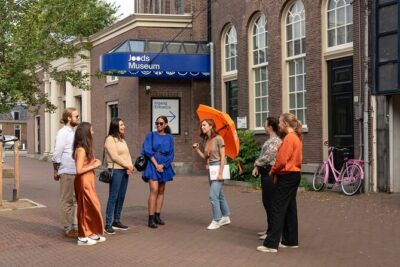 ★ 5.0Anne Frank’s Story – Guided Walking Tour through AmsterdamFrom $3911,619 reviews
 ★ 4.8Amsterdam: Life of Anne Frank and World War II Walking TourFrom $3710,467 reviews
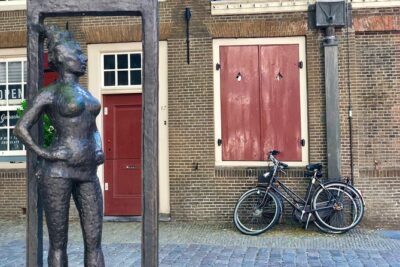 ★ 5.0Absolutely Amsterdam – the Essential Introductory Walking TourFrom $53,629 reviews
 ★ 4.8Amsterdam: Anne Frank Guided Small Group Walking TourFrom $282,722 reviews
 ★ 4.9Amsterdam: Anne Frank Walking Tour – Guided in EN/DE/IT/ESFrom $282,676 reviews
 ★ 4.9Amsterdam: Guided Cultural Walking TourFrom $292,384 reviews
 ★ 4.2Amsterdam: Guided Ganja Walking Tour of Coffee ShopsFrom $272,092 reviews
 ★ 5.0Anne Frank Walking Tour Amsterdam Including Jewish Cultural QuarterFrom $751,879 reviews
Browse the lists this tour appears in