
REVIEW · AMSTERDAM
Amsterdam City Center & History – Exclusive Guided Walking Tour
Amsterdam clicks into place fast on this walk. I love how the 2.5-hour route gives you a clear first-day map of the center, and I also love the guide help for spotting what matters beyond the photos. The one thing to plan for is that some sights are seen from the outside, and a few stops do require separate entry if you want to go in.
I like that this tour is built for real weather, rain or wind included, so you do not lose the day. Guides such as Anita and Diana get praise for clear answers, and Pedro gets credit for keeping the group moving when conditions are rough, which makes a difference on a walking tour. You also end in a very Amsterdam spot, Papeneiland, so your last steps feel like a reward, not a finish line.
In This Review
- Key Highlights I’d Prioritize
- Why This Walk Works for First-Time Amsterdam Planning
- St. Nicholas Basilica and the Schreierstoren, Amsterdam’s Religious and Maritime Stories
- Zeedijk, Nieuwmarkt, and The Waag, Trading Streets and City Gate Reminders
- Trippenhuis and the East India Company Courtyard, Power and Money in Architecture
- Zuiderkerk, Rembrandthuis, and the Stopera, The City’s Public Life Under One Roof
- Begijnhof, Dam Square, and Herengracht, Peaceful Courtyards to Golden-Age Streets
- Anne Frank House Area and the Westerkerk Next Door, WWII Memory Without the Hard Sell
- Papeneiland Finale, Canal Corners and a 1642 Apple Pie Moment
- Value and Price, What $62.48 Buys You in Real Terms
- Who This Tour Fits Best (and Who Might Skip It)
- Should You Book This Amsterdam City Center Walking Tour?
- FAQ
- Is the tour duration about 2.5 hours?
- Is hotel pickup or drop-off included?
- Are tickets and admission included for every stop?
- Where do I meet and where does the tour end?
- Does the tour run in bad weather?
- Do I need a mobile phone number for the experience?
Key Highlights I’d Prioritize
- A tight 2.5-hour route through the historic center that helps you understand how the city grew street by street
- Clear stories at landmark stops like St. Nicholas Basilica, the Schreierstoren, and Dam Square
- Canal-side context you can actually use later at places like Zeedijk, Herengracht, and the Papeneiland corner
- Guide-driven pacing in bad weather so you keep seeing the highlights instead of lagging behind
- Smart scope for ticket expectations since some interiors are not included and may be limited for security reasons
Prefer to see it on foot? More Amsterdam walks
- Anne Frank’s Story – Guided Walking Tour through Amsterdam★ 5.0 · 11,619 reviews
- Amsterdam: Life of Anne Frank and World War II Walking Tour★ 4.8 · 10,467 reviews
- Absolutely Amsterdam – the Essential Introductory Walking Tour★ 5.0 · 3,629 reviews
- Amsterdam: Anne Frank Guided Small Group Walking Tour★ 4.8 · 2,722 reviews
Why This Walk Works for First-Time Amsterdam Planning
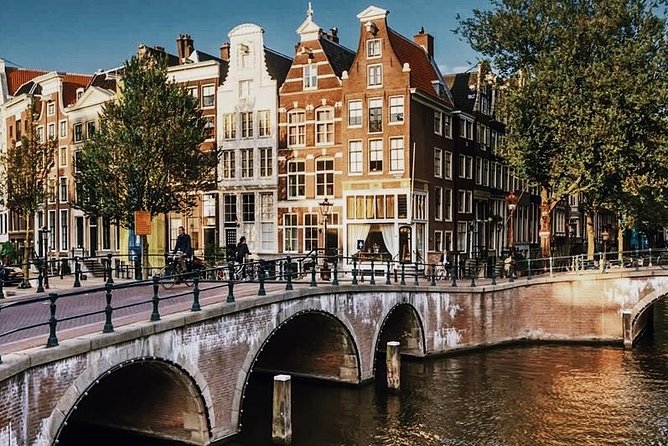
If you’re only here for a few days, this is the kind of tour that helps your brain stop treating Amsterdam like one long postcard. The route moves through big symbols of the city, Roman Catholic and Protestant side by side, old trade streets, and canal-era architecture. In just about 2.5 hours, you get enough context to choose what to see next without guessing.
You’re also not stuck in “stand and read a plaque” mode. The format is a guided walk, with plenty of stops designed for quick, meaningful look-and-learn moments. That is great for jet lag, it is also great if you want to keep the rest of your day flexible.
One practical note: you should be ready for uneven sidewalks and steady walking. The tour is listed as moderate physical fitness, so bring comfortable shoes and keep your pace with the group.
St. Nicholas Basilica and the Schreierstoren, Amsterdam’s Religious and Maritime Stories
The tour starts with St. Nicholas Basilica, Amsterdam’s primary Roman Catholic church. The wow factor here is not only the architecture, but the time period behind it. It was built in the late 19th century after centuries of prohibition, so the building feels like a marker of when religious life in the city could change.
Next comes the Schreierstoren, often called the Tower of Tears. This is the kind of place where history is personal. The tower is connected to sailors leaving by ship, and it’s associated with women bidding farewell, which makes the structure feel less like a medieval object and more like a witness to daily emotion and routine.
These early stops are a good warm-up because they set up a theme you keep seeing throughout Amsterdam: faith, trade, and departure. Even if you only catch part of the story in the moment, you’ll understand the patterns later when you walk around on your own.
Zeedijk, Nieuwmarkt, and The Waag, Trading Streets and City Gate Reminders
Then you move into Zeedijk, one of Amsterdam’s oldest streets. The big idea to remember is that it used to function as a sea dike, holding back the waters of the IJ. When you look at the street from that angle, Amsterdam’s water geography stops feeling random.
At the Kolksluis, you get to admire one of the city’s picturesque lock bridges. This is a great pause point, because it shows how people controlled water for shipping and movement. If you later ride a canal boat or walk along the canals, this helps you understand what you are actually seeing.
Nieuwmarkt comes next, and it’s still a lively square. It has been a commerce and social hub since the 17th century, and the clue is location. It sat just inside the old city gate, which made it practical for traders and shoppers bringing fresh produce.
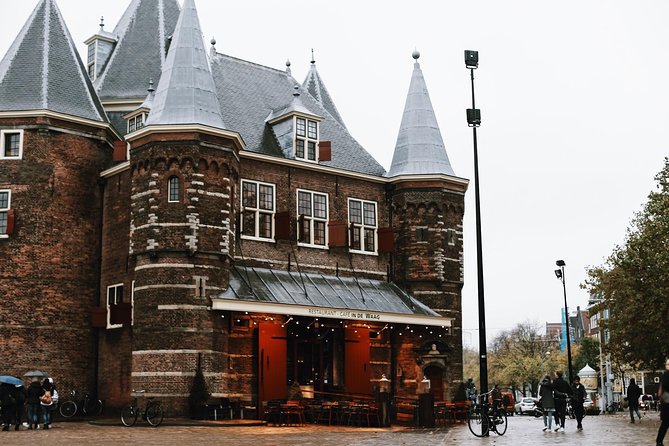
From there, you see De Waag, known as “The Waag.” It’s a 15th-century non-religious building that started as a city gate and part of the city walls. Later it served multiple roles, including guildhall, museum, and even a fire station. That mix of uses is a very Amsterdam clue, the city often reused strong structures rather than abandoning them.
Trippenhuis and the East India Company Courtyard, Power and Money in Architecture
The tour then shifts to 17th-century wealth, starting with the Trippenhuis. The building is described as Amsterdam’s grandest 17th-century mansion, once owned by the wealthy Trip family. Even if you only get outside views, the scale tells you what the city rewarded at the top of the economic ladder.
Opposite is a detail that makes this stop extra interesting, the city’s smallest house. It’s a reminder that Amsterdam’s built environment reflects inequality and taxes as much as it reflects taste.
Next is the Oost-Indisch Huis, Dutch East India Company headquarters, and you step into the courtyard. This is where the story broadens from local wealth to global impact, often framed as the birthplace of the world’s first multinational corporation. Whether or not you know the corporate history already, the setting makes you think about how Amsterdam’s prosperity was tied to faraway trade.
Right after that is Kleine Trippenhuis, noted for being one of the narrowest houses in Amsterdam. The reason is linked to land taxes pushing builders to build tall and narrow. If you’ve ever wondered why Amsterdam has so many slim facades, this is the kind of practical explanation you carry with you when you start noticing the skyline.
More trips where somebody else does the explaining
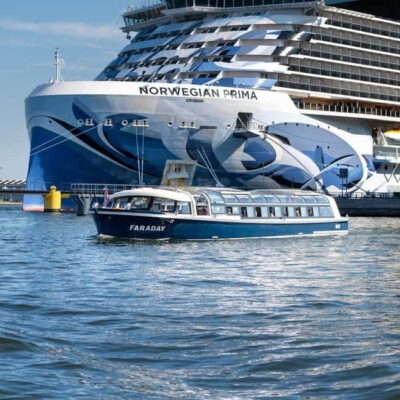


Zuiderkerk, Rembrandthuis, and the Stopera, The City’s Public Life Under One Roof
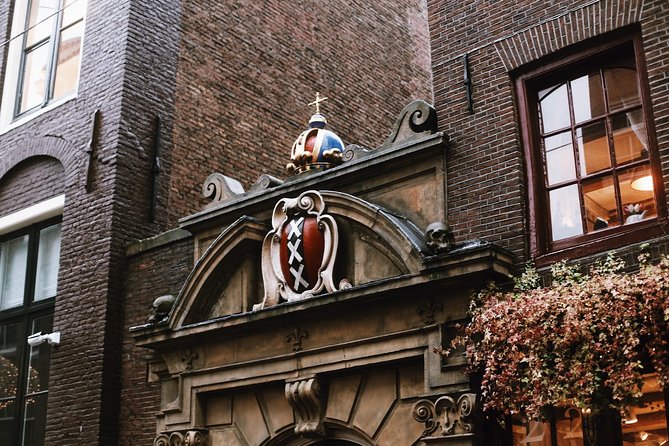
You’ll see Zuiderkerk, Amsterdam’s first purpose-built Protestant church, designed by Hendrick de Keyser. The tower is listed as one of the city’s defining landmarks. Even from the outside, this stop helps you compare how different faith communities marked their presence across the city.
Then there’s a Rembrandt moment at Museum Het Rembrandthuis, the former home and studio where he lived and worked for nearly 20 years. You do not need to be a hardcore art fan to get something out of this stop. It’s more about scale and time, Amsterdam gave him room to work, and the city is still built around that legacy.
After that, the tour heads to the Stopera, the building complex that houses the city hall and the Dutch National Opera and Ballet. The key detail is how long the construction took, at least 60 years. This is a good place to think about how Amsterdam balances civic life with culture, and how public buildings become long-term symbols.
If you want one takeaway from these stops, it’s that Amsterdam’s identity is not just canals and churches. It’s also governance, performance, and the way the city keeps reinventing public space.
Begijnhof, Dam Square, and Herengracht, Peaceful Courtyards to Golden-Age Streets

One of my favorite shifts on this kind of walk is when the noise level drops. Begijnhof is described as a peaceful medieval courtyard once home to devout women known as Beguines. The setting includes one of the city’s oldest wooden houses, which adds an extra layer because it feels like you are watching preservation do its job.
Then you reach Dam Square, the historic heart of Amsterdam. It’s framed by the Royal Palace, the 15th-century New Church, and the National Monument to WWII victims. This is where Amsterdam becomes more than a design tour. You see how power, religion, and memory overlap in a single central space.
Herengracht is next, and you’re right in the Golden Bend area. The idea here is richness and display, lined with the city’s richest and most ornate canal mansions from the Dutch Golden Age. Even if you do not count features like you would on a museum plan, you’ll notice the difference in scale and decoration.
If you’re planning the rest of your trip, this is a helpful checkpoint. Once you see Herengracht up close, you get a feel for which canals are more likely to match your idea of Amsterdam’s classic wealth scenes.
Anne Frank House Area and the Westerkerk Next Door, WWII Memory Without the Hard Sell
You pause outside the Anne Frank House area, tied to the young diarist who hid during WWII. The tour also notes that the Westerkerk rises next door, with the tallest church tower in Amsterdam. This combo matters because it gives you both human-scale history and city-scale landmarks in the same breath.
A good way to approach this part is to keep it quiet in your head. Look, take in the surroundings, and let the meaning land. The tour does not push you into anything, you simply get the context and the location so you can decide later if you want to add more time.
From a practical standpoint, the site is also in an area where security and crowding can affect what you can do. The tour notes that some places cannot be visited from the inside, partly due to increased security measures, so treat these stops as orientation moments.
Papeneiland Finale, Canal Corners and a 1642 Apple Pie Moment
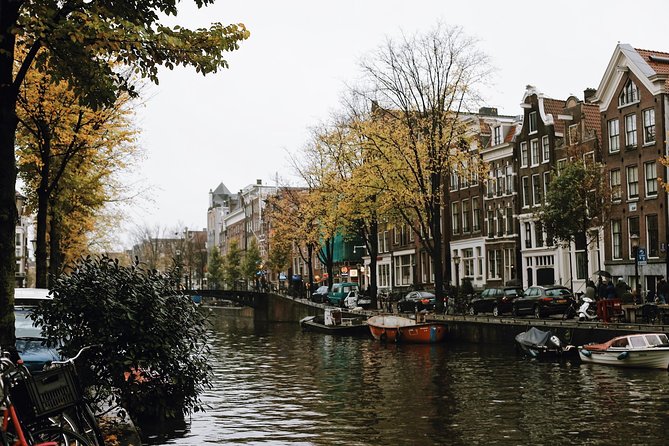
The walk ends at Papeneiland on Prinsengracht. The spot is described as one of the city’s prettiest canal corners, and Het Papeneiland is a brown café from 1642. It’s said to serve the best apple pie in town, and honestly, that’s a very on-brand ending for Amsterdam.
This is a smart finish point because it’s not just a random end to the route. You finish near water, with a classic canal view angle, and with time to linger without rushing back to another attraction. If your feet are tired, you can sit down and let the city slow you down.
It also helps that the tour runs in all weather conditions and includes stops long enough to keep you engaged. So even if the skies are gray, you still leave with something you can taste and remember.
Value and Price, What $62.48 Buys You in Real Terms
At $62.48 per person for about 2.5 hours, you are paying for two things: a guided route through the center and someone to turn landmarks into context. This is not just a walking service. The stops are short, focused, and designed to give you an intelligent base layer, so your self-guided time later is smarter.
You also get a few added value signals in the tour details. It’s offered in English, it runs rain or shine, and there’s an option to upgrade to a private tour for undivided attention. That matters if you’re the type who asks lots of questions or wants pacing that fits your group.
Admission costs are mixed. Some stops note free entry while others are not included, and some interiors may not be accessible because of security measures. My advice is simple: if you care about going inside specific attractions, check your priorities ahead of time so you do not get surprised at the point of decision.
Who This Tour Fits Best (and Who Might Skip It)
This is a great fit if you want a fast, guided understanding of Amsterdam’s structure. It works particularly well for first-time visits, for couples who want to feel oriented, and for anyone who plans to return to certain neighborhoods later. The route touches enough variety that you can build a trip plan from what you see.
It’s also ideal if you like architecture and city planning, because you’ll get reasons behind what you see, from tax-shaped narrow houses to the way water management influenced streets like Zeedijk.
If you already know the city well, or if you want lots of museum time and frequent inside visits, you might find the outside-and-orientation style less satisfying. The tour seems designed for breadth and context rather than deep, ticketed entry at every stop.
Should You Book This Amsterdam City Center Walking Tour?
Yes, if you want to get your bearings fast and leave with a clearer sense of where history, wealth, and religion show up in the streets. The combination of a structured route, short meaningful stops, and strong guide energy, including names like Anita, Diana, and Pedro being praised for pacing and answers, makes it a solid way to start your Amsterdam days.
I’d skip it only if you already have a tight schedule that allows little walking, or if you expect every major sight to be entered in full. If you’re flexible and you like learning while you move, this is a good-value way to see Amsterdam’s center like a local.
FAQ
Is the tour duration about 2.5 hours?
Yes. The tour is listed as lasting 2 hours 30 minutes (approx.), with the experience described as 2.5 hours.
Is hotel pickup or drop-off included?
No. The price does not include hotel pickup or drop-off. The tour notes that you should use Uber or a taxi instead.
Are tickets and admission included for every stop?
Not all admission is included. Some stops indicate admission ticket free, while others are not included, and some places may not be visitable from the inside due to security measures.
Where do I meet and where does the tour end?
The start meeting point is Prins Hendrikkade 73, 1012 AD Amsterdam. The tour ends at The Papeneiland, Prinsengracht 2, 1015 DV Amsterdam.
Does the tour run in bad weather?
Yes. The tour will run, rain or shine. You are advised to dress appropriately and bring items like an umbrella in case of rain and a hat during summer.
Do I need a mobile phone number for the experience?
Yes. It is imperative that you provide a mobile phone number, including the country code.
Amsterdam at Walking Speed




Everything Else From Our Amsterdam Notebook



Also Reviewed Around Amsterdam





Fresh off the review pile in Amsterdam
- Full-Day Trip From Amsterdam to Keukenhof, Zaanse Schans + Cruise
★ 5.0 · 3 reviews - Boutique Dutch Food & History Tour with up to 8 guests only
★ 5.0 · 3 reviews - Private Tour to Windmills Zaanse Schans +Keukenhof – 7 Hours
★ 5.0 · 3 reviews - Full-Day Private Guided Countryside Tour from Amsterdam by Bike
★ 5.0 · 3 reviews - Amsterdam Red Light District and Old Town Walking Tour
★ 5.0 · 3 reviews
Walking Tours, compared.
 ★ 5.0Anne Frank’s Story – Guided Walking Tour through AmsterdamFrom $3911,619 reviews
 ★ 4.8Amsterdam: Life of Anne Frank and World War II Walking TourFrom $3710,467 reviews
 ★ 5.0Absolutely Amsterdam – the Essential Introductory Walking TourFrom $53,629 reviews
 ★ 4.8Amsterdam: Anne Frank Guided Small Group Walking TourFrom $282,722 reviews
 ★ 4.9Amsterdam: Anne Frank Walking Tour – Guided in EN/DE/IT/ESFrom $282,676 reviews
 ★ 4.9Amsterdam: Guided Cultural Walking TourFrom $292,384 reviews
 ★ 4.2Amsterdam: Guided Ganja Walking Tour of Coffee ShopsFrom $272,092 reviews
 ★ 5.0Anne Frank Walking Tour Amsterdam Including Jewish Cultural QuarterFrom $751,879 reviews
Browse the lists this tour appears in