
REVIEW · AMSTERDAM
Amsterdam Old City Private Walking Tour
Amsterdam tells its story best on foot, and this private 2-hour walk is designed around what you want to see. You start at Amsterdam Central Station and move through the medieval center and canal neighborhoods at a human pace, with a live guide who can tailor the route in English, Dutch, or German.
I like that the tour connects Amsterdam’s big turning points to specific landmarks, from reclaimed swamp roots to the 17th-century world-power era. I also appreciate the mix of famous stops and lesser-known corners, including churches and passageways, plus context that can reach into more recent decades like the 1970s.
The main drawback is simple: 2 hours is not long, so you have to accept quick walking and frequent “next stop” moments. Also, this is a no-extras kind of tour, so no luggage or large bags is a real consideration if you’re traveling light.
In This Review
- Key things that make this tour click
- Why a private 2-hour walk works so well in Amsterdam’s Old City
- Meeting point, what to do with luggage, and how to arrive ready
- The medieval center and the “swamp to world power” story
- Churches, the Old Church, and Oude Manshuispoort
- Canal walking on Herengracht, with merchant house details that matter
- The Oostindisch Huis and East India Company power
- Jordaan stroll, pawn shops, and the texture of everyday history
- Begijnhof women’s homes: a quiet courtyard moment in the middle of the city
- Chinatown, Nieuwmarkt, and how Amsterdam layers new stories on old streets
- The old Jewish District: learning the human side of the map
- Red Light District stroll: context first, respect always
- Price and value: $265 per group up to 10 for 2 hours
- Who should book this walking tour, and who might not love it
- Should you book this Amsterdam Old City Private Walking Tour?
- FAQ
- How long is the Amsterdam Old City Private Walking Tour?
- How much does the tour cost?
- Is this a private tour or a shared group?
- Where do we meet?
- What languages are the guides available in?
- Is the tour wheelchair accessible?
- What is included in the price?
- Are food and drinks included?
- Is luggage allowed?
- Is there free cancellation?
Key things that make this tour click
- Private, tailored pacing for small groups, not a rush-through script
- Old city plus canals, including the medieval center and major canal like the Herengracht
- Signature stops with real context, such as the Old Church, Begijnhof, and Oude Manshuispoort
- Layered neighborhoods, with Chinatown around Nieuwmarkt and the former Jewish District
- East India Company power tied to 17th-century merchant wealth, including the Oostindisch Huis
- Helpful guide storytelling, including firsthand-feeling history that reaches beyond postcards
Prefer to see it on foot? More Amsterdam walks
- Anne Frank’s Story – Guided Walking Tour through Amsterdam★ 5.0 · 11,619 reviews
- Amsterdam: Life of Anne Frank and World War II Walking Tour★ 4.8 · 10,467 reviews
- Absolutely Amsterdam – the Essential Introductory Walking Tour★ 5.0 · 3,629 reviews
- Amsterdam: Anne Frank Guided Small Group Walking Tour★ 4.8 · 2,722 reviews
Why a private 2-hour walk works so well in Amsterdam’s Old City
Amsterdam’s center can feel like a maze, especially if you only have one afternoon and you’re trying to line up canals, courtyards, churches, and neighborhoods. A private walking format solves that. You can slow down when a façade catches your eye, speed up when you just want the essentials, and ask questions without waiting for the whole group.
This tour is built for exactly the right scale. Two hours is long enough to get meaning out of the city’s layout, but short enough that you do not spend the whole day walking in a single knot of streets. And because it’s private, the guide can steer you toward the side of Amsterdam you care about most, whether that’s architecture, the canal story, or cultural history across districts.
You’ll also get a very Amsterdam flavor of “layers.” Medieval streets exist right beside 17th-century merchant wealth, and today’s neighborhoods sit on top of older ground. That contrast is the point, and the walking route helps it land in a way you cannot do from a bus or a quick self-guided stroll.
Meeting point, what to do with luggage, and how to arrive ready
You meet at Amsterdam Central Station, in front of the main entrance. Arrive a few minutes early so you can find your guide and settle in before you start moving.
One practical rule matters if you’re used to taking bags on city walks: luggage or large bags are not allowed. So plan to travel light. If you have a backpack, that’s typically fine for most walking tours, but the key is avoiding anything that becomes a hassle in tight streets.
Timing-wise, it’s a 2-hour walk, so you’ll want to treat it like an appointment. Wear shoes that handle uneven cobblestones and narrow sidewalks. This is the kind of route where comfort helps you enjoy the details, not fight the pavement.
The medieval center and the “swamp to world power” story
Amsterdam did not start as an easy city to build. It grew from reclaimed land, with the harbor once nearly inaccessible. As you walk, the guide frames why the city’s geography mattered, and how engineers and merchants made the water and mud work for them instead of against them.
That history is not abstract here. When you move through the medieval center, you understand how the city’s older layout still shapes where people go. You’ll also see parts tied to the old city wall, which helps explain the sense of boundaries and districts. In Amsterdam, those boundaries matter, because neighborhoods developed with distinct identities as trade and power expanded.
A strong moment in this kind of tour is the population and power shift. By the 1650s, Amsterdam’s population reached around 220,000, making it one of Europe’s biggest cities. The guide can connect that growth to what you’re seeing now: canals that made transport efficient, merchant houses that declared wealth, and public and religious spaces that show the city’s social priorities.
If you like city stories that have a cause-and-effect chain, this section will feel satisfying. You’re not just looking at old buildings, you’re learning why they exist where they do.
Churches, the Old Church, and Oude Manshuispoort
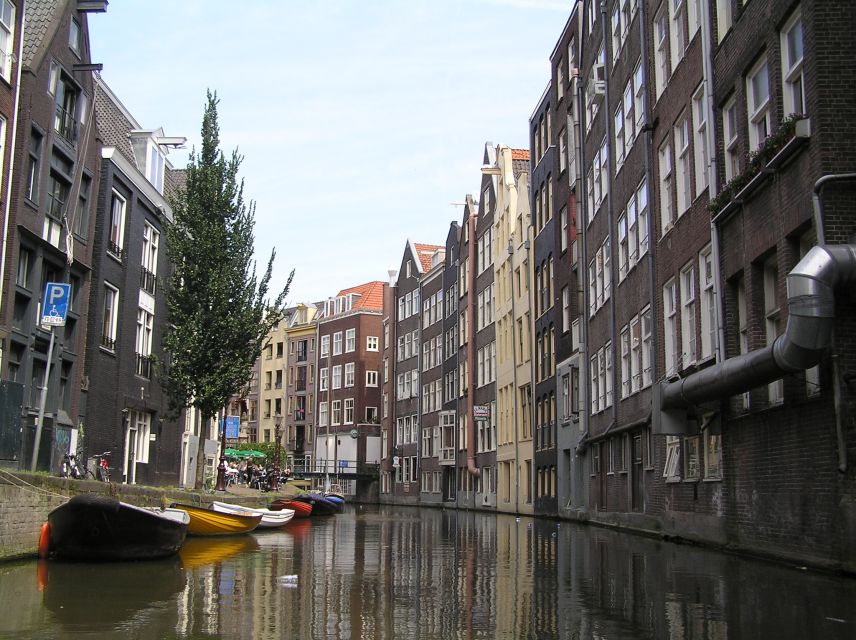
Amsterdam is full of church architecture, but a good walk makes you notice what makes each one different. Here, you get stops that go beyond the obvious.
You’ll visit the Old Church and also see hidden churches, plus the Oude Manshuispoort. That last one stands out because it’s not the kind of name you can just guess your way into on your own. Oude Manshuispoort is tied to the city’s older institutions, and passing through (or viewing) it gives you a clear sense of how built spaces were organized for daily life.
A tour like this works especially well if you enjoy reading a city through small clues. Look for how the buildings sit on their plots, how entrances align to street patterns, and how courtyards and passageways create pockets of quiet. Even when you’re in a busy area, these architectural shortcuts make the city feel designed, not accidental.
One caution: churches and passageways can mean you’ll get brief exterior views at times. If you expect long, inside-only exploration, keep your expectations aligned with a walking tour format. You’re here for context and orientation, not for a full museum-style entry experience.
Other ways to get the shape of Amsterdam in a morning



Canal walking on Herengracht, with merchant house details that matter
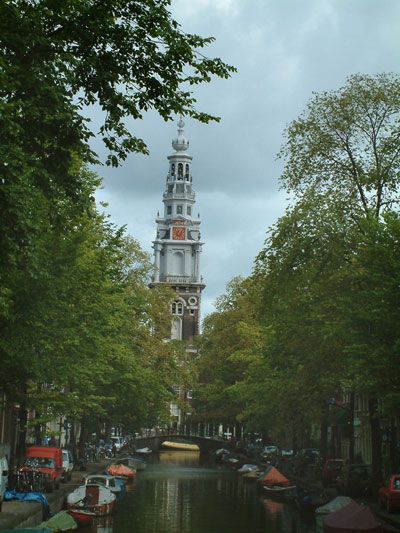
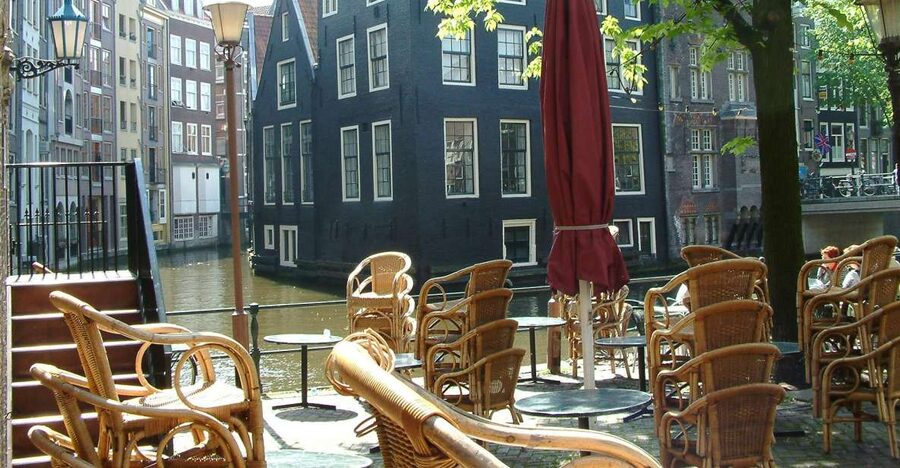
Next comes the canal story, and this is where Amsterdam really shows its brain. You’ll walk along famous canal lines, including Herengracht, one of the city’s first major canals.
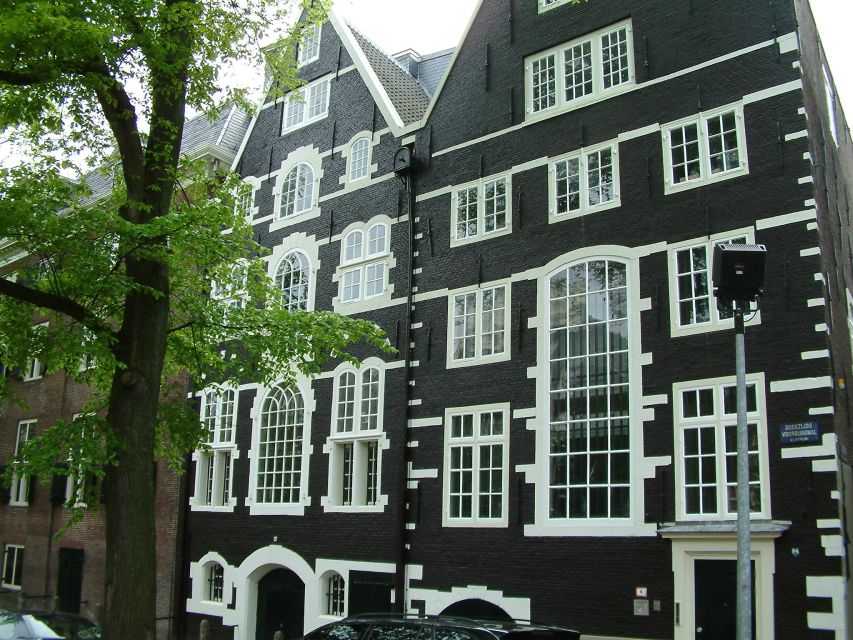
The guide doesn’t treat canals as scenery. They explain canals as infrastructure, trade routes, and social geography. When you stand along canal banks and see the posture of merchant houses, it makes sense why wealth wanted the most visible and functional addresses.
You’ll also notice how this ties back to Amsterdam’s rise. The city became a commercial engine partly because it could move goods and people efficiently. That means canal-side buildings are not only pretty, they’re functional proof of prosperity.
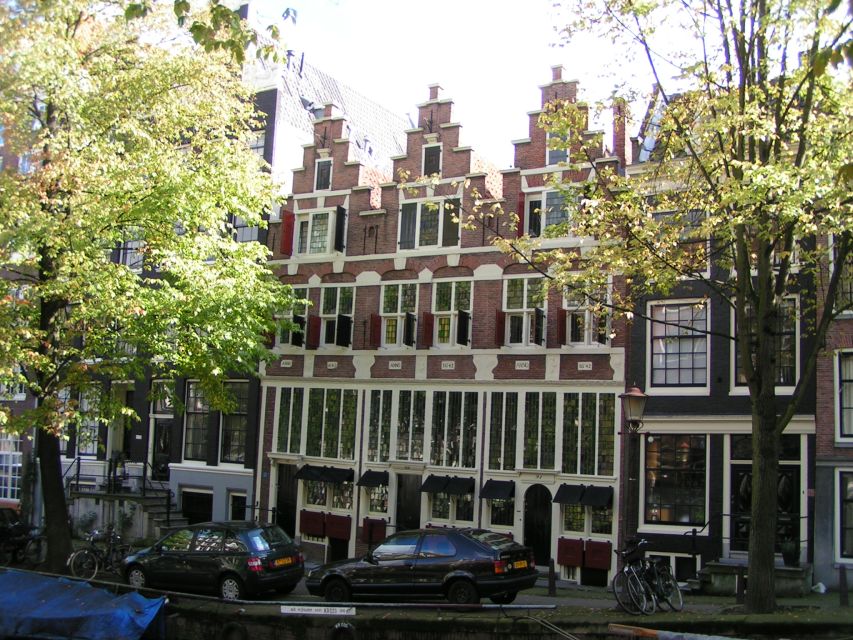
If you care about architecture, keep an eye on scale and symmetry. Merchant houses are built to impress, but they also show how trade families expressed status through design. It’s easy to walk past those details on your own. With a guide, you learn what to look for before you move on.
The Oostindisch Huis and East India Company power
One standout named stop is the Oostindisch Huis, the Amsterdam headquarters of the East India Company. This is a big deal historically, and the reason it works on foot is proximity.
You don’t just hear that Amsterdam became a global trade hub. You stand near a landmark tied to that world. And because the walking format strings together medieval roots, canal infrastructure, and merchant wealth, the East India Company story lands as a continuation rather than a random museum fact.
This segment is for people who like history that connects to real places. The guide can link the wealth of the 17th century to the city’s physical growth. When you also see handsome canal-side houses later, the East India Company context makes them feel less like architecture and more like evidence.
If you love learning how economies shape cities, you’ll probably take the most away here.
Jordaan stroll, pawn shops, and the texture of everyday history
A major canal and a great company headquarters are not the whole story. Amsterdam also lived in quieter working districts and neighborhood trades.
As the walk shifts toward the Jordaan, you get a different feeling: older streets, a more human scale, and practical examples of commerce. The tour description points to areas with pawn shops and handsome merchant houses in the Jordaan, which helps you see how wealth and trade lived side by side.
This is also where guided storytelling makes a difference. A strong guide can explain why certain street patterns and building styles cluster. Even small shifts, like where storefronts appear or how side streets connect back to the main canal corridors, help you understand how Amsterdam moved people around without big formal structures.
One of the best values of the private format is that you can spend an extra minute noticing a façade or a narrow passageway instead of cutting through it just to hit the next highlight.
Begijnhof women’s homes: a quiet courtyard moment in the middle of the city
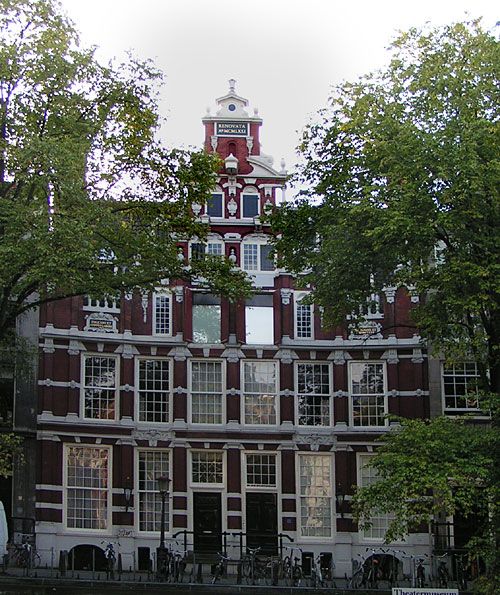
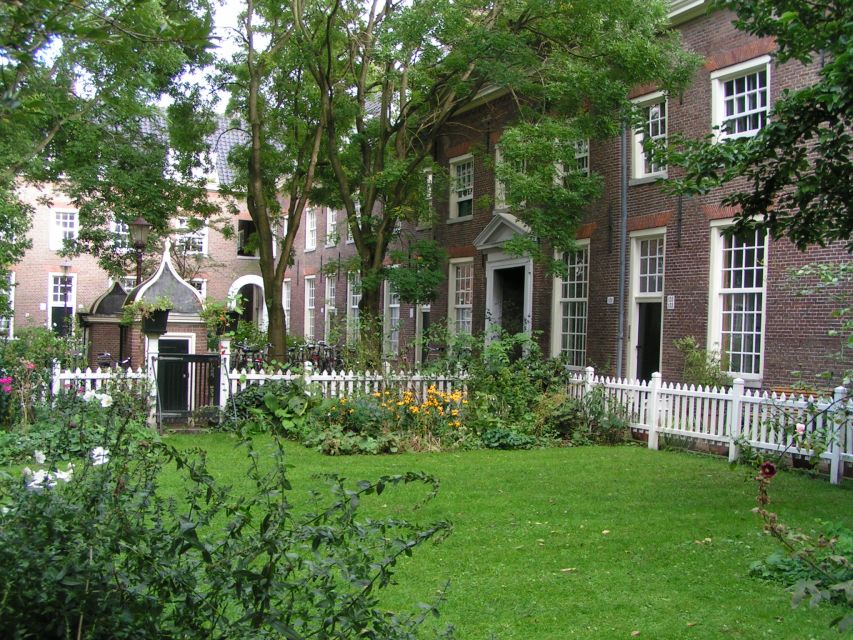
The Begijnhof is one of those Amsterdam stops that can reset your attention. On a walking tour that includes busy nightlife areas later, having a quieter courtyard moment matters.
Begijnhof is known for the women’s homes, and it offers a different side of the city’s history than the trade-and-power storyline. You get a chance to see how Amsterdam organized community life, and how architecture can create an atmosphere, not just a view.
Even if you are not a church-and-courtyard person, you’ll likely appreciate the pause. Amsterdam’s Old City is compact, and the Begijnhof gives you a breathing space without needing transit or a long break.
Chinatown, Nieuwmarkt, and how Amsterdam layers new stories on old streets
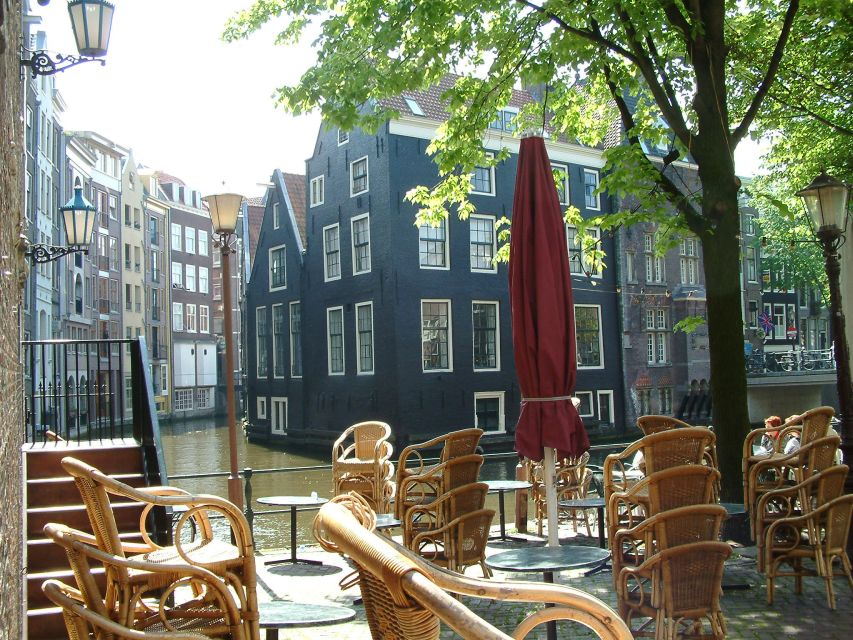
One of the fun parts of this route is that it does not stop at the 17th century. It moves into areas that show how Amsterdam keeps evolving.
The walking route includes Chinatown and the Nieuwmarkt area, so you see a more contemporary cultural layer. Chinatown in Amsterdam is not just an entertainment district, it’s part of the city’s story of migration and community growth.
This is one reason a guide is valuable. Without context, you might see a cluster of streets and restaurants and move on. With context, it becomes part of the larger theme: Amsterdam is a port city, and port cities collect people and cultures.
If you like photos, this is often where you’ll enjoy them most, because the street life and signage create a strong visual identity. If you prefer quiet observation, it’s still a good stretch because Nieuwmarkt has a layout that’s easier to understand once you’ve been walking for a bit.
The old Jewish District: learning the human side of the map
The tour includes a walk through Amsterdam’s old Jewish District. This section is one of those moments where the guide’s framing matters.
You might not see history in the way you expect, because streets change and buildings get repurposed over time. A good guide helps you read what’s still there and explains why the area mattered, so the neighborhood becomes more than a geographic label.
This part pairs well with earlier stops. Once you’ve understood trade growth, canal infrastructure, and how the city formed, you’re better able to connect cultural communities to the same urban forces.
I think this is one of the best reasons to choose a guided walk here. Amsterdam can be very visually arresting, but without interpretation you miss the story thread.
Red Light District stroll: context first, respect always
You’ll also stroll through the Red Light District. That is not the same experience as passing it by on a canal cruise or catching a quick view from a distance.
A tour that handles this well does not sensationalize. It adds context about why the district exists where it does and how the city’s history shaped what you see today. The “infamous” label is accurate, so your best approach is to keep it respectful and focused on your own comfort level.
Because you’re walking as a group with a guide, you also avoid the awkward feeling of deciding where to stand or how to move through narrow streets on your own. It’s easier to concentrate on learning once you feel guided.
Practical tip: pace yourself with your attention. This is a sensory area. If you want photos, be mindful of space and privacy, and prioritize getting the story before trying to capture everything.
Price and value: $265 per group up to 10 for 2 hours
At $265 per group (up to 10 people), this tour can be a strong value, especially if you’re traveling with friends or family. Here’s the simple math: if you book for 2 people, it’s about $132.50 each. For 4 people, it’s about $66.25 each. For a full group of 10, it drops to about $26.50 each.
That’s why the private part matters. You’re not paying a per-person premium that only makes sense for singles. You’re paying for a guide and pacing, and the group size can make it feel very reasonable.
Also, VAT is included, which helps avoid surprise add-ons at checkout. Food and drinks are not included, so plan to grab a snack either before or after your walk, based on what you want that day.
The price feels most justified if you want a guided route with real historical interpretation, not just a map line. If you love “what am I looking at and why does it matter,” this format pays off.
You’ll also see a high satisfaction score, 4.6 out of 5 from 33 reviews, which usually signals consistent guide quality and a good match between expectations and what’s delivered.
Who should book this walking tour, and who might not love it
This tour fits best if you:
- Care about architecture and history, because that’s enough to enjoy it
- Want a route that covers the medieval center plus modern neighborhood layers like Nieuwmarkt and Chinatown
- Prefer a private guide who can shape the pacing toward your interests
- Enjoy learning why Amsterdam became a world-class power, not just where things are
You might not love it if:
- You want long sit-down breaks or lots of inside time in multiple buildings
- You travel with heavy luggage
- You only want a quick photo loop and you are not interested in context
The best part is that the tour is not overly technical. It’s explanatory. It helps you understand what you see as you walk.
Should you book this Amsterdam Old City Private Walking Tour?
I’d book it if you want a smart mix of classic highlights and city layers, with a guide who can connect the 17th-century story to what you see now. The route covers the big landmarks people aim for, but it also includes the kind of specific places that help you feel oriented, like the Old Church, Oude Manshuispoort, the Begijnhof, and the canal focus around Herengracht.
If you’re in Amsterdam for a short trip and you want your time to count, this one is a solid choice. It’s short enough to be flexible, and guided enough to prevent Amsterdam from feeling like random streets.
FAQ
How long is the Amsterdam Old City Private Walking Tour?
It lasts 2 hours.
How much does the tour cost?
The price is $265 per group, up to 10 people.
Is this a private tour or a shared group?
It is a private group tour with your own personal guide.
Where do we meet?
You meet at Amsterdam Central Station, in front of the main entrance.
What languages are the guides available in?
The live tour guide offers English, Dutch, and German.
Is the tour wheelchair accessible?
Yes, it is wheelchair accessible.
What is included in the price?
The tour includes the 2-hour walking tour, a guide, and VAT.
Are food and drinks included?
No, food and drinks are not included.
Is luggage allowed?
Luggage or large bags are not allowed.
Is there free cancellation?
Yes, you can cancel up to 24 hours in advance for a full refund.
Amsterdam at Walking Speed




Everything Else From Our Amsterdam Notebook



Also Reviewed Around Amsterdam





Fresh off the review pile in Amsterdam
- Full-Day Trip From Amsterdam to Keukenhof, Zaanse Schans + Cruise
★ 5.0 · 3 reviews - Boutique Dutch Food & History Tour with up to 8 guests only
★ 5.0 · 3 reviews - Private Tour to Windmills Zaanse Schans +Keukenhof – 7 Hours
★ 5.0 · 3 reviews - Full-Day Private Guided Countryside Tour from Amsterdam by Bike
★ 5.0 · 3 reviews - Amsterdam Red Light District and Old Town Walking Tour
★ 5.0 · 3 reviews
Walking Tours, compared.
 ★ 5.0Anne Frank’s Story – Guided Walking Tour through AmsterdamFrom $3911,619 reviews
 ★ 4.8Amsterdam: Life of Anne Frank and World War II Walking TourFrom $3710,467 reviews
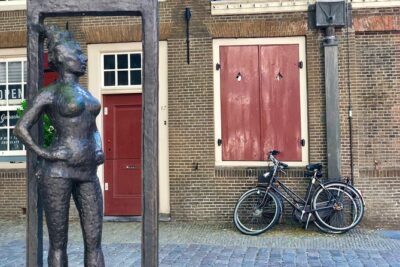 ★ 5.0Absolutely Amsterdam – the Essential Introductory Walking TourFrom $53,629 reviews
 ★ 4.8Amsterdam: Anne Frank Guided Small Group Walking TourFrom $282,722 reviews
 ★ 4.9Amsterdam: Anne Frank Walking Tour – Guided in EN/DE/IT/ESFrom $282,676 reviews
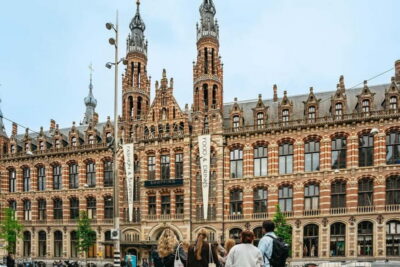 ★ 4.9Amsterdam: Guided Cultural Walking TourFrom $292,384 reviews
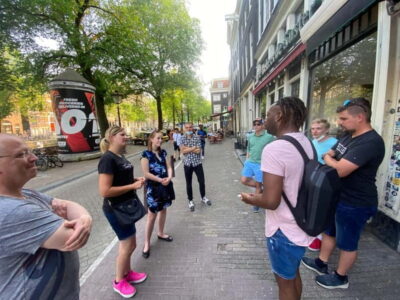 ★ 4.2Amsterdam: Guided Ganja Walking Tour of Coffee ShopsFrom $272,092 reviews
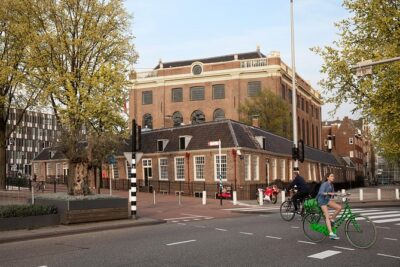 ★ 5.0Anne Frank Walking Tour Amsterdam Including Jewish Cultural QuarterFrom $751,879 reviews
Browse the lists this tour appears in