
REVIEW · THE HAGUE
Historical The Hague: Private Tour with Local Guide
History in The Hague feels close. In just 2 hours, you trace the story from the Dutch revolt to today’s Dutch government. I like the way a private local guide ties events to what you see on the street, and I also like the practical vibe, like asking anything about daily Dutch life. The main catch is simple: it’s a lot of stops with short explanations, so if you want long, inside visits, you may feel slightly rushed.
This tour is built for flexible pacing. You set the tempo, and the guide keeps the focus on how The Hague works, not just how it looked in the past. What I liked most was the mix of politics and place, from the Binnenhof complex to the royal signals at Noordeinde Palace. One consideration: you will be walking in the city streets, so watch for bicycles in the pedestrian areas.
If you’re the type who loves understanding systems, not just monuments, you’ll enjoy this. It’s also a nice way to orient yourself if you’re planning what to do next in Den Haag, with room for your guide’s local recommendations.
In This Review
- Key highlights you should care about
- How a private local guide makes The Hague political history click
- Het Plein and Willem van Oranje: the Dutch revolt starts here
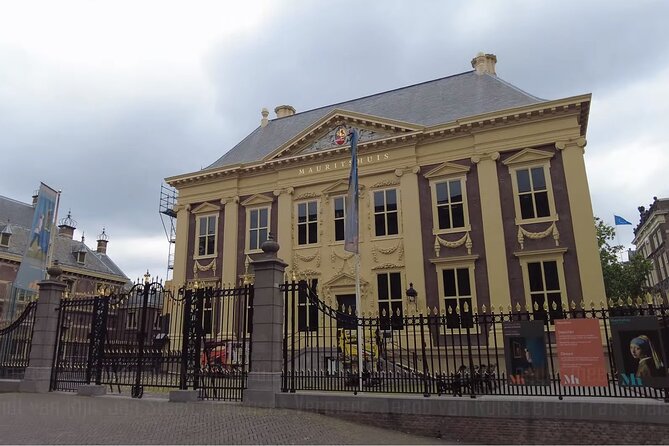
- Mauritshuis area: why Vermeer matters in the middle of politics
- Binnenhof and Ridderzaal: stepping into the parliament square
- Hofvijver pond: reading politics from the prime minister’s view
- Thorbecke Monument: the constitution explained where it stands
- Lange Voorhout and Noordeinde Palace: diplomacy, class, and royal clues
- Grote Kerk and Johan de Witt statue: stork on a roof and a hard lesson
- Price and time value: when $287.95 per group works
- Practical tips to make the most of your 2-hour walk
- Should you book this Historical The Hague private tour?
- FAQ
- How long is the tour?
- How much does the Historical The Hague private tour cost?
- Is pickup available?
- Do I need tickets for the stops?
- Where does the tour start and end?
- What is the group size and format?
- Is the tour cancellable, and do I need to tip?
Key highlights you should care about
- A private guide who explains how the Netherlands actually works (and keeps it understandable)
- Binnenhof and Ridderzaal quick look at the heart of Dutch parliament life
- Royal context at Noordeinde Palace, including what the flag can tell you
- Constitution talk via the Thorbecke Monument, framed where it stands
- Historic memory at the Johan de Witt statue, including a dark turning point in Dutch politics
- Street-level charm on Lange Voorhout, the Hague’s classy, embassy-lined promenade
More of The Hague, sea air included
- The Hague: City Canal Cruise★ 4.6 · 2,024 reviews
- The Hague: Madurodam Miniature Park Entry Ticket★ 4.6 · 1,559 reviews
- The Hague: Hop-on Hop-off Old-Fashioned Heritage Tram Tour★ 4.4 · 1,083 reviews
- The Hague: Escher in The Palace Museum Ticket★ 4.6 · 896 reviews
How a private local guide makes The Hague political history click
The Hague, or Den Haag, can look like a calm, polished city of museums, embassies, and smart architecture. But there’s a reason people call it the political center of the Netherlands. This tour turns that idea into a walking story, with your guide moving you from one symbolic place to the next, then explaining what it means.
I like tours that help you interpret a place. Here, you learn the background behind the Dutch system, then you see the physical “map” of power: parliament buildings, government offices, and the presence of the king in the city. You also get to ask questions on anything that matters to your trip, from how politics shows up in everyday life to what residents think about the city.
And yes, you might see real-life officials. No promises, but the tour is set up around places where ministers and other big names can cross your path. Even if nobody important appears, the guide’s context is the point.
Group size matters too. This is priced per group, up to 15 people, which is a different feel than per-person pricing. If you have a small group, you can get a lot of attention for the money. If you’re a larger group, you still benefit from the private setup over joining a big bus tour.
Het Plein and Willem van Oranje: the Dutch revolt starts here
You begin at Plein, and the first stop is Het Plein, a key opening scene. Your guide starts with Willem van Oranje, often called the Father of the Fatherland, and his role in the 80 Years War, the Dutch revolt against Spanish rule.
Why this matters: it’s easy to look at The Hague as “government now.” This start forces the timeline to begin. You understand that the Netherlands you see today did not just happen. The political identity you’re about to walk through has roots in that long conflict, and the guide keeps connecting the past to later institutions.
This segment is brief, around 10 minutes. That’s good for most people, especially if you want quick orientation rather than a heavy lecture. The downside is that you only get the starter version. If you love deep military history, you may want to pair this with another activity later in your trip.
Mauritshuis area: why Vermeer matters in the middle of politics
Next you head toward the Mauritshuis museum. Even if you are not going in for a long museum visit on this walk, you get two things: context about the building itself and why it belongs in this part of the city story.
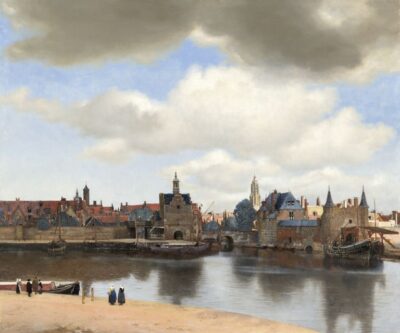
Mauritshuis is tied to Johannes Vermeer, with some of his most famous paintings housed there. The guide’s job is to show you how art fits into civic life. In a place like The Hague, culture is not separate from power. The city has the kind of public institutions that collect, preserve, and present national pride.
This stop also feels practical. In a quick 10 minutes, you get a mental marker: if later you decide to do a proper museum visit, you’ll know what you’re chasing and why it’s worth time.
If you are the type who wants art first, you may wish the tour lingered longer at the museum. Still, the trade-off is you save time to keep moving through the political core without losing the narrative thread.
Binnenhof and Ridderzaal: stepping into the parliament square
Then you move into the Binnenhof & Ridderzaal area. You walk onto the square within the parliament complex and see the Knight’s Hall, and the guide gives you the significance and history of the place.
This is one of the strongest stops for understanding the Netherlands. It’s not just a pretty building. It’s a working symbol of the country’s governance, and that changes how you look at everything around it. You start noticing design choices, the feel of formality, and why the setting reinforces authority.
Time here is short, about 10 minutes. The upside is that you get the big picture quickly. The caution is that it’s not an extended architecture lesson and not a full interior visit. If you want details like you would in a specialized architecture tour, plan for extra time after this to explore more on your own.
But for a first walk through the Hague’s center, this stop is perfect. You leave knowing where power lives, not just where it’s located on a map.
More trips where somebody else does the explaining

Hofvijver pond: reading politics from the prime minister’s view
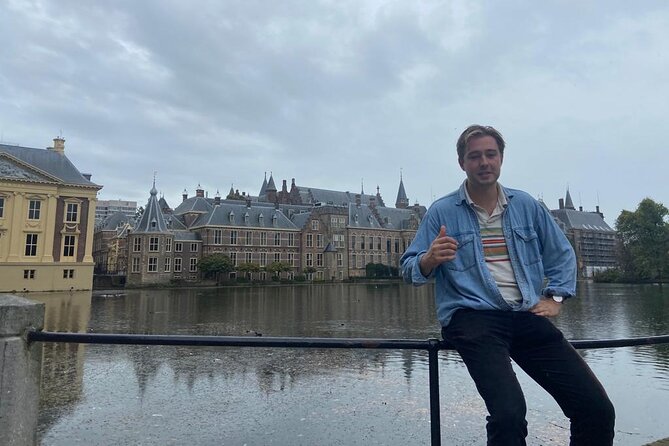
Right in front of the parliament building sits the Hofvijver pond. Your guide points out the significance of the Hofvijver and the nearby prime minister’s office, including the little tower that helps identify it.
This stop is clever because it uses geography to teach. Water creates a visual pause in the city. It also gives you a “from here, you can see the offices” framing that makes government feel less abstract. The tour turns a pond into a reference point for how the center of the country’s decision-making is arranged.
You also get some funny history here. Even if you don’t catch every detail, you’ll remember the structure of the space: parliament, pond, prime minister’s office. That mental picture makes later exploration easier, because you won’t feel like you’re wandering without a plan.
Again, it’s brief, about 10 minutes. If you enjoy sitting and watching people, you may want to circle back after the tour. The good news: you’re ending right back at your starting area later, so you can choose to linger.
Thorbecke Monument: the constitution explained where it stands
Next up is the Thorbecke Monument next to the Hofvijver. The guide connects this statue to the constitution, giving you more context into why the monument matters.
It’s a smart topic because constitutions can sound like dry paperwork. Here it becomes physical. You learn that governance is not only buildings and flags. It’s also legal foundations and the evolution of national rules.
This is another 10-minute stop, which keeps it accessible. It’s enough to make the constitution feel real, especially when you’ve just been looking at parliament space and prime minister nearby. The guide helps you see how “constitution” shows up as something people built and argue about over time.
If you’re a legal-history lover, you might want more depth later. If you’re simply curious how Dutch political identity developed, this stop hits the right level.
Lange Voorhout and Noordeinde Palace: diplomacy, class, and royal clues
Now the tour shifts into a different mood, more elegant and street-forward. You reach Lange Voorhout, often described as the Champs-Élysées of The Hague. It’s classy for a reason: embassies, prominent buildings, and a sense of formality.
Your guide walks you past several notable features. You see an art museum, a famous hotel, the temporary senate building, and even a statue gallery featuring Dutch heads of state. This part is about atmosphere, not just facts. It helps you understand why the Hague feels like the place where international matters land.
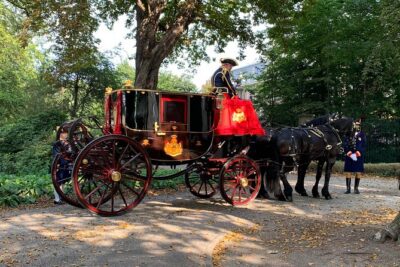
Then comes Noordeinde Palace. This is the working palace of the Dutch king, and the guide uses a simple clue: the flag can indicate whether he is currently in the country. It’s a small detail, but it teaches you how to read the city like a local.
Time here is around 10 minutes at each major point, with about 20 minutes for Lange Voorhout. That’s enough to appreciate the streetscape without turning this into a long walk. The main drawback is that if you’re hoping to stop for photos at every building, your schedule might feel tight. My advice: take a few key photos, then keep walking so you stay with the guide’s story.
Grote Kerk and Johan de Witt statue: stork on a roof and a hard lesson
The final stretch brings you to the Grote Kerk, also called the Big Church of The Hague. Your guide points out the stork on top of it, and this is exactly the kind of detail that makes a city stick in your memory. It turns a landmark into something you can visualize later, even when you’re far from the building.
After that, you see the Statue of Johan de Witt. This stop comes with a dramatic story. Johan de Witt was the only head of government of the Netherlands that ended up eaten by an angry Dutch mob. The guide explains what happened, and why this event is remembered in the political narrative.
That might sound dark, and it is. But it’s also the kind of moment that explains why politics can feel intense and personal in any era. You’ll understand the human stakes behind power struggles, not just the official version of history.
These two stops together take about 30 minutes total, giving you enough time to absorb the contrast: religious landmark curiosity on one hand, political brutality and public fury on the other.
Price and time value: when $287.95 per group works
The price is $287.95 per group, up to 15 people, for about 2 hours. That sounds like a lot at first glance if you think in per-person terms, but the private guide model changes the math.
Here’s the value logic I use when I’m deciding:
- If you’re traveling with a small group, paying for one shared guide time often feels fair compared to separate guided experiences.
- Because the tour is private, your pace is flexible. You’re not stuck with a rigid script.
- The focus is on interpretation, not just walking by sights. In two hours, you learn how to connect the dots between government, public spaces, and national storylines.
The tour also includes all fees and taxes, and it uses a mobile ticket system. Pickup is offered too, which can save time and hassle if you’re staying a bit away from the starting area.
Your biggest “cost” is your time and attention. The tour is designed as a sampler. If you want long museum time or deep interior exploration, you’ll need to do those separately after you finish the walking history.
Practical tips to make the most of your 2-hour walk
This is a short tour, so plan it like a warm-up, not your whole day.
A few things help:
- Wear shoes that handle city walking. You’ll be moving between key central spots.
- Expect brief stops, around 10 to 20 minutes each, with a lot of information packed in.
- Watch for cyclists. One small heads-up you should take seriously is bike traffic in walking areas. Stay aware while crossing streets and keep your group tight.
- Use the question time. The tour is explicitly built so you can ask about Dutch life and modern perspectives. Ask what you actually want to know, like how daily routines connect to politics.
If you have a restaurant in mind, the guide may offer a recommendation. And since the tour ends back at the meeting point, you can pivot easily to your next plan without a complicated transfer.
Should you book this Historical The Hague private tour?
Book it if you want a fast, high-impact way to understand The Hague as a political city, not just as a pretty place with museums and palaces. The private guide format and the pacing you control make it especially good for couples, friends, and small groups who prefer a guided story over a crowded big-bus routine.
Skip it or treat it as a warm-up if you need lots of inside time at museums or churches. This walk is more about seeing key places and learning what they mean. For deep dives into buildings, you’ll want additional time afterward.
If your goal is to leave Den Haag with a clear mental map, plus a better understanding of how the Netherlands runs and why this city matters, this is an easy yes.
FAQ
How long is the tour?
The tour lasts about 2 hours.
How much does the Historical The Hague private tour cost?
It costs $287.95 per group, up to 15 people.
Is pickup available?
Yes, pickup is offered.
Do I need tickets for the stops?
The stops listed are marked as admission ticket free.
Where does the tour start and end?
It starts at Plein, 2511 Den Haag, Netherlands, and ends back at the meeting point.
What is the group size and format?
It is a private tour/activity, and only your group will participate.
Is the tour cancellable, and do I need to tip?
Gratuities are optional. You can cancel for a full refund if you cancel at least 24 hours in advance, and the cancellation is free.
Everything Else From Our The Hague Notebook





Also Reviewed Around The Hague


The Hague and the Sea
Fresh off the review pile in The Hague
- Private Tour of Vermeer’s Delft + Tickets to Vermeer Museum
★ 5.0 · 3 reviews - Private Tour of Rotterdam and The Hague including Transfer
★ 5.0 · 3 reviews - Surfing at The Shore in The Hague
★ 4.5 · 3 reviews - 3 Course Walking Dinner in Delft with Guided Tours in Between
★ 5.0 · 3 reviews - Surprise Walk of The Hague with a Local
★ 4.5 · 3 reviews
The Hague & Scheveningen, compared.
 ★ 4.7The Hague: Mauritshuis Entrance TicketFrom $252,706 reviews
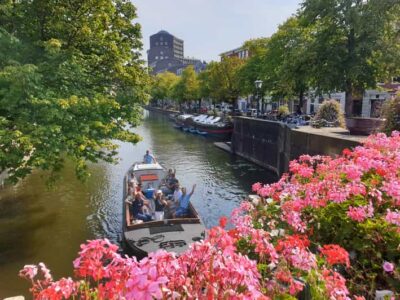 ★ 4.6The Hague: City Canal CruiseFrom $172,024 reviews
 ★ 4.2From Amsterdam: Rotterdam, Delft & The Hague Guided Day TourFrom $901,765 reviews
 ★ 4.6The Hague: Madurodam Miniature Park Entry TicketFrom $241,559 reviews
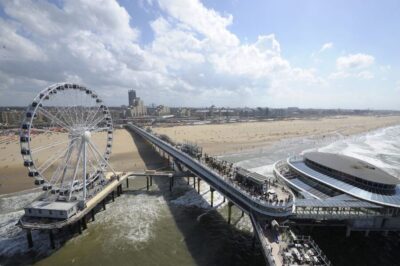 ★ 4.4The Hague: The Pier SkyView Ticket with Drink and SnackFrom $191,398 reviews
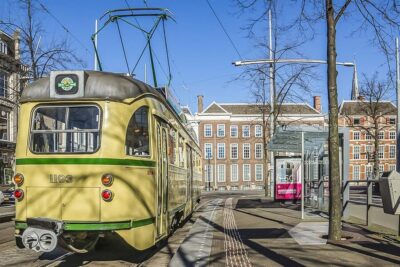 ★ 4.4The Hague: Hop-on Hop-off Old-Fashioned Heritage Tram TourFrom $181,083 reviews
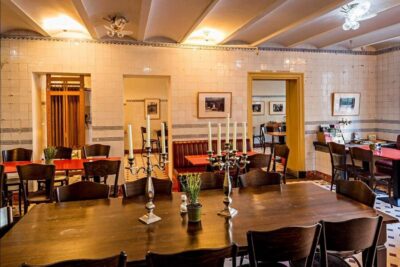 ★ 4.6The Hague: Escher in The Palace Museum TicketFrom $15896 reviews
 ★ 4.0Rotterdam, Delft, the Hague, Madurodam from AmsterdamFrom $90793 reviews
Browse the lists this tour appears in