
REVIEW · WALKING TOURS
Historical Walking Tour, private with local Dutch guide
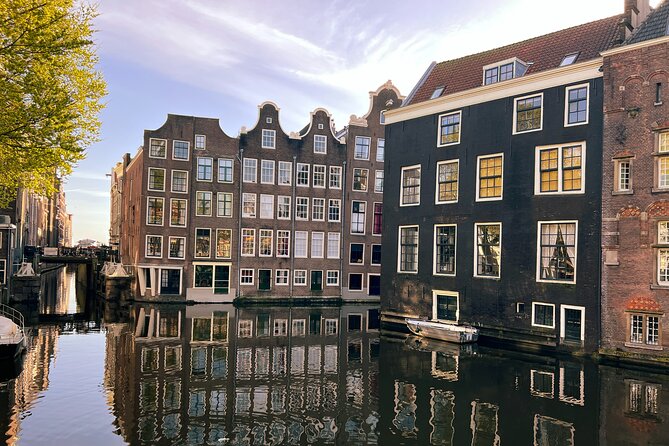
Medieval Amsterdam still feels close. This private walking tour gives you a smart first look at the city’s layers, starting with medieval leftovers and ending in the church-and-canal area locals love. I like how Anna keeps things grounded in place and time, with a story chain you can actually follow.
Two things I especially like: the 25 years in Amsterdam perspective and the way the route mixes big landmarks with smaller, easy-to-miss details. You also get a smooth flow of stops where admission is free, so your money goes to the guide’s explanations, not ticket math.
One drawback to plan around: it’s about 2 hours of walking and standing, and mobility aids are not available. If you use a walker or struggle with that amount of time on your feet, this route probably won’t feel good.
In This Review
- Quick highlights before you go
- First-time bearings: what this 2-hour Amsterdam walk is best at
- From the Schreiertoren meetup to the Weeping Tower start
- Zeedijk and the Waag: seeing defenses and trade in the same walk
- Oostindisch Huis: spice trade stories and the early money world
- Het Kleinste Huis and Dam Square: micro-details and the city heart
- Canal Ring (Grachtengordel) and Jordaan: where wealthy planning meets everyday life
- Westerkerk ending: a local-loved landmark near your next stop
- Price, pacing, and what you should actually expect for $96.02
- Booking timing and practical readiness tips
- Should you book this Amsterdam historical walking tour?
- FAQ
- How long is the historical walking tour in Amsterdam?
- Is this tour private, and is it offered in English?
- What is included in the price, and is bottled water provided?
- Where does the tour start and end?
- Are service animals allowed?
- Is the tour suitable for people who use a walker or need mobility aids?
Quick highlights before you go
- A local guide with 25 years in Amsterdam, English speaking, and ready to answer questions
- Free-feeling stops at major sights, with all fees and taxes included
- Canal Ring focus (Grachtengordel) plus Jordaan, so you see both old defenses and Golden Age wealth
- End near Westerkerk and the Anne Frank House area, which helps you continue your day
- Service animals welcome and the tour is private, so the pace can stay friendly
Prefer to see it on foot? More Amsterdam walks
- Anne Frank’s Story – Guided Walking Tour through Amsterdam★ 5.0 · 11,619 reviews
- Amsterdam: Life of Anne Frank and World War II Walking Tour★ 4.8 · 10,467 reviews
- Absolutely Amsterdam – the Essential Introductory Walking Tour★ 5.0 · 3,629 reviews
- Amsterdam: Anne Frank Guided Small Group Walking Tour★ 4.8 · 2,722 reviews
First-time bearings: what this 2-hour Amsterdam walk is best at
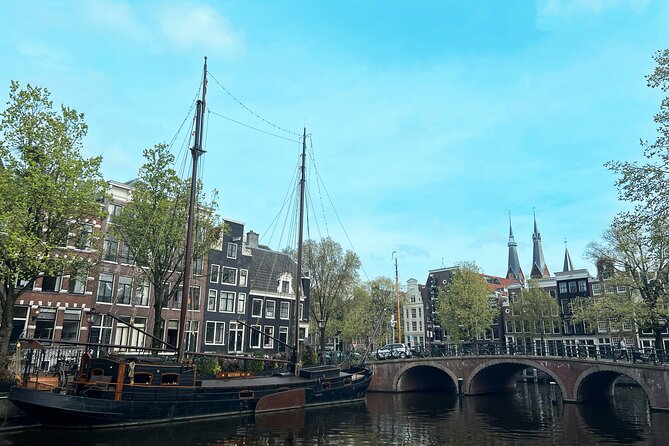
If Amsterdam is your first stop on a trip, you want orientation fast, not a long day of trying to guess what you’re looking at. This 2-hour historical walking tour is built for that exact moment. You’ll connect neighborhoods to stories instead of just collecting photos.
The private format matters more than it sounds. With only your group, the guide can adjust to your comfort level and your curiosity, instead of racing a large crowd. If you enjoy asking questions or want the why behind the where, that one-on-one attention pays off.
I also like that the tour isn’t stuck in only “top 10” mode. You start at the medieval edge of the old city, then move through gates, trading history, the market heart, and out to the canal ring and Jordaan. That route helps you build a mental map of Amsterdam you’ll use later.
From the Schreiertoren meetup to the Weeping Tower start
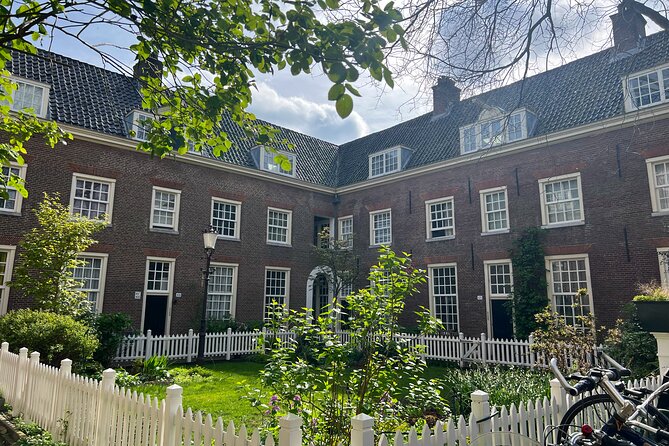
The tour begins at Café the Schreiertower, Prins Hendrikkade 95. It’s a straightforward meeting spot, and it’s close to public transportation, which is helpful if you’re already tired or jet-lagged. You’ll want to arrive a few minutes early so the group can line up and get ready.
Your first named stop is the Weeping Tower, a medieval watchtower and one of Amsterdam’s very few remnants from the Middle Ages. This is a smart opener because it sets a timeline early, before the route starts moving into later centuries. The guide explains where Amsterdam came from and why you should care about that origin as you walk.
Practical note: the first stop is short, about five minutes. So if you have questions, don’t hold them until later in the walk. Ask early, and keep the momentum going while the guide has the full attention of the group.
Zeedijk and the Waag: seeing defenses and trade in the same walk
After the Weeping Tower, you move to Zeedijk, one of Amsterdam’s oldest streets that once also functioned as a dike with locks. That detail is more than trivia. It shows how the city survived by managing water, and it explains why Amsterdam’s layout makes sense in a wet-land world.
Next is the Waag, described here as a medieval city gate tied to the city’s defensive wall and mote system. Even if you’ve seen “gates” in other European cities, Amsterdam’s water-meets-defense angle is distinctive. The guide uses these structures to connect movement, protection, and how the city controlled entry points.
This stretch is also a good test of pacing. Since each stop is relatively brief, you’re not trapped in long lectures. If you like quick, clear historical “snapshots,” this part of the tour is a strong match.
Oostindisch Huis: spice trade stories and the early money world
One of the most memorable stops on the route is Oostindisch Huis, tied to the Dutch East India Company, founded in 1602. You learn about the spice trade and how corporate thinking shaped early modern business, including ideas connected to the modern corporation and the stock market.
I like this stop because it changes the usual Amsterdam story. A lot of canal-ring tours stay only on architecture. Here you get a reason for why merchant wealth mattered, and you get a clearer sense of how global trade influenced what Amsterdam could build at home.
If your travel style includes economics in small doses, this is where the tour delivers. You’ll also likely find it easier to remember the city afterward because you now have a “why money went where” story anchored to a specific building.
More trips where somebody else does the explaining


Het Kleinste Huis and Dam Square: micro-details and the city heart
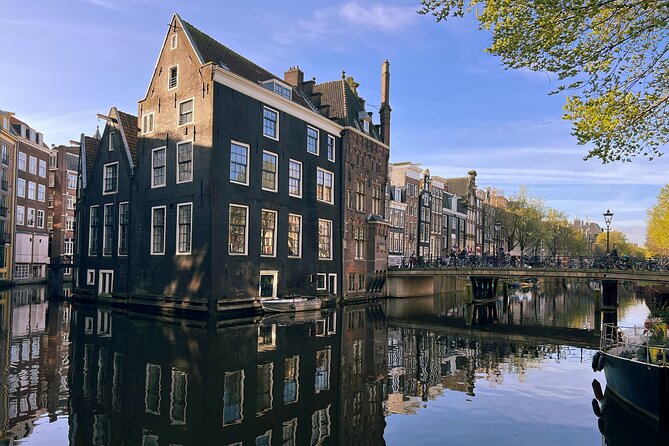
Then you go to Het Kleinste Huis van Amsterdam, the smallest house in Amsterdam, standing next to a gate decorated with the city’s crest and other symbolic ornaments. This kind of stop is underrated for first-time visitors. Small details train your eye, so later you notice the same kind of symbolism on canals and facades.
Right after that, the route hits Dam Square, the old market square and the heart of the city. Today it’s tied to the Royal Palace and the national Second World War monument. That’s a big contrast with the earlier “defense and trade” feel, and it helps you understand how Amsterdam’s center shifted over time while staying the social gravity point.
Dam Square is also your moment to calibrate your energy. It’s longer here, about ten minutes, so you can breathe, take photos, and let the guide’s context land. If you’re prone to information overload, this is a good place to pause and ask one or two focused questions.
Canal Ring (Grachtengordel) and Jordaan: where wealthy planning meets everyday life
The heart of the visual payoff is the Canal Ring (Grachtengordel), built for wealthy merchants during the Golden Age. You’ll see fine canal houses in the northern baroque style and a range of houseboats, which helps you understand that canals were not only pretty, they were part of how wealth lived and moved.
One thing I like about this segment is that it bridges time. You can look at what’s right in front of you and still connect it to merchant families, trade decisions, and the city’s need to organize water and space. That’s the kind of context that makes a canal photo feel like more than a snapshot.
From there, you move into Jordaan, known for picturesque streets, traditional brown cafés, and unique boutiques. This is where Amsterdam turns from “planned grandeur” to “human-scale charm.” You won’t leave with a shopping list, but you’ll get a feel for why the area has such a strong pull.
If you want value for your walking time, this pairing works well. The canal ring teaches form, and Jordaan teaches atmosphere. Together, they help you choose where to spend your next day.
Westerkerk ending: a local-loved landmark near your next stop
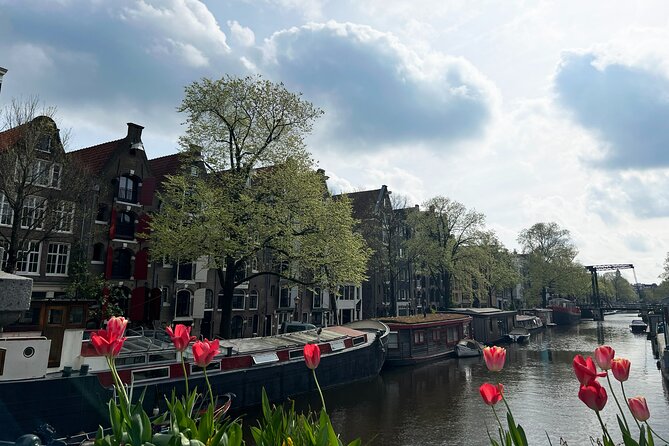
The tour finishes at Westerkerk, a Dutch Protestant church with a stylish design and an iconic spire. The spire is described as a landmark loved by locals, and that matters because it frames the walk with something still part of daily city life, not only a museum-like relic.
Your end point is listed as Prinsengracht 279, in the vicinity of the Anne Frank House and Westerkerk church area. That’s convenient if you’re continuing your itinerary right away, since you’re not deposited far from your next big sight.
Expect the last stop to be short, about five minutes. It’s enough time to orient, take one good final look, and wrap the stories with a sense of where you are on the map.
Price, pacing, and what you should actually expect for $96.02
At $96.02 per person for about two hours, the value mostly comes from the private guide, not from admissions. All fees and taxes are included, and the stops are described as admission free on this route. That means you can focus your budget on interpretation, pacing, and questions, which is the part that usually takes time to get right on your own.
The tour also includes a mobile ticket, which is a small but real convenience. You are near public transportation, so you’re less likely to waste time in transit. And yes, group discounts exist, which can make a private tour feel much more reasonable if you’re booking with travel partners.
Pacing is the other value point. The stops are mostly around five minutes, with a couple longer moments like Dam Square and Jordaan. That rhythm keeps the walk from dragging, and it gives you time to look up, look around, and follow the guide’s story thread.
One logistics note that’s easy to forget: bottled water is not included. Build in a plan to buy water or refill somewhere nearby, especially if you’re walking on warm days. It’s also wise to wear shoes you trust, because this is not a sit-down tour.
Booking timing and practical readiness tips
This tour is commonly booked about 70 days in advance, which tells you it’s a popular way to start an Amsterdam trip. If you have fixed travel dates, I’d treat it like a “do it early” item, not a last-minute add-on.
Because it’s a private tour, the best experience usually happens when you show up ready to walk and talk. If you want lots of photo stops, it’s okay, but be honest with yourself about how long you can stand comfortably. The tour is not recommended for people who have trouble walking and standing for two hours, and mobility aids are not available.
Good to know: the guide experience is service-animal friendly, and it’s offered in English. If you’re traveling with a companion who needs an animal support option, this is a relief.
Should you book this Amsterdam historical walking tour?
Book it if you want a clear first map of the city in a short time, and you like history tied to buildings and streets you can actually see. The route covers medieval leftovers, trade-era context at Oostindisch Huis, a strong “city heart” moment at Dam Square, and then the canal ring plus Jordaan for the living Amsterdam feel.
Skip it if your main goal is maximum depth at a single museum, or if you need mobility support. This is a walking tour, and it assumes you can handle about two hours of moving and standing.
If you’re flexible and you enjoy asking questions, this is the kind of tour that pays off because it changes how you see Amsterdam later, not just while you’re standing there.
FAQ
How long is the historical walking tour in Amsterdam?
The tour is about 2 hours (approx.).
Is this tour private, and is it offered in English?
Yes, it’s a private tour/activity with only your group, and it’s offered in English.
What is included in the price, and is bottled water provided?
The price includes all fees and taxes. Bottled water is not included.
Where does the tour start and end?
It starts at Café the Schreiertower, Prins Hendrikkade 95, 1012 AE Amsterdam and ends near Westerkerk, Prinsengracht 279, 1016 DL Amsterdam.
Are service animals allowed?
Yes, service animals are welcome.
Is the tour suitable for people who use a walker or need mobility aids?
The tour is not recommended for participants who use a walker, and mobility aids are not available. It also isn’t recommended for people who have trouble walking and standing for two hours.
Amsterdam at Walking Speed




Everything Else From Our Amsterdam Notebook



Also Reviewed Around Amsterdam





Fresh off the review pile in Amsterdam
- Full-Day Trip From Amsterdam to Keukenhof, Zaanse Schans + Cruise
★ 5.0 · 3 reviews - Boutique Dutch Food & History Tour with up to 8 guests only
★ 5.0 · 3 reviews - Private Tour to Windmills Zaanse Schans +Keukenhof – 7 Hours
★ 5.0 · 3 reviews - Full-Day Private Guided Countryside Tour from Amsterdam by Bike
★ 5.0 · 3 reviews - Amsterdam Red Light District and Old Town Walking Tour
★ 5.0 · 3 reviews
Walking Tours, compared.
 ★ 5.0Anne Frank’s Story – Guided Walking Tour through AmsterdamFrom $3911,619 reviews
 ★ 4.8Amsterdam: Life of Anne Frank and World War II Walking TourFrom $3710,467 reviews
 ★ 5.0Absolutely Amsterdam – the Essential Introductory Walking TourFrom $53,629 reviews
 ★ 4.8Amsterdam: Anne Frank Guided Small Group Walking TourFrom $282,722 reviews
 ★ 4.9Amsterdam: Anne Frank Walking Tour – Guided in EN/DE/IT/ESFrom $282,676 reviews
 ★ 4.9Amsterdam: Guided Cultural Walking TourFrom $292,384 reviews
 ★ 4.2Amsterdam: Guided Ganja Walking Tour of Coffee ShopsFrom $272,092 reviews
 ★ 5.0Anne Frank Walking Tour Amsterdam Including Jewish Cultural QuarterFrom $751,879 reviews
Browse the lists this tour appears in