
REVIEW · ROTTERDAM
Rotterdam Architecture: Centre and South Bank with watertaxi
Rotterdam looks different from the water. In just 3 hours, you get a focused architecture walk, then a watertaxi speedboat cross-river for big skyline views. I especially like how the route is organized around recognizable buildings, from the Markthal to the Cube Houses, and how your guide explains the city’s culture and traditions through architecture. One consideration, the tour includes a 4-kilometer walk, and it is not suitable for visually impaired people.
What makes this experience feel worth the money is the mix of styles. You’ll go from post-war modernist streets like the Lijnbaan to signature landmarks such as the Timmerhuis (designed by OMA), St. Laurens Church, and the covered Markthal, then finish with a river perspective that you simply cannot get from the sidewalks. If you dislike walking, or you’re traveling with luggage or large bags, you’ll want to plan carefully.
This is a small time window, price at $82 per person, but it’s packed in a smart way: architect storytelling plus a fast, scenic boat ride under the Erasmus bridge. With an English live guide, you’ll also leave with practical sightseeing tips for the rest of your Rotterdam day, including what to prioritize after you step off the boat.
In This Review
- Key things you will notice on this Rotterdam architecture and watertaxi tour
- Starting at Rotterdam Centraal, then walking the modern heart
- The Lijnbaan, a post-war shopping street built for change
- Timmerhuis and OMA: when architecture meets ambition
- St. Laurens Church and Markthal: old form, new function
- Cube Houses: Rotterdam’s playful architecture experiment
- Board the watertaxi: the Erasmus bridge in your line of sight
- South Bank on the move: from former harbor to semi-island energy
- Price and value for a $82, 3-hour architecture hit
- Practical tips that will make this tour smoother
- Who should book this Rotterdam architecture and watertaxi experience
- Should you book this tour?
- FAQ
- How long is the Rotterdam architecture tour with watertaxi?
- What is included in the price?
- What is not included?
- Where do I meet the guide?
- Is the tour walk long?
- What should I bring?
- Is there a limit on bags?
- Is the tour wheelchair accessible?
- Is the tour suitable for visually impaired people?
- Can children join, and what do they pay?
Key things you will notice on this Rotterdam architecture and watertaxi tour
- Architect guide focus: you’re not just looking, you’re learning how buildings connect to Rotterdam’s culture and traditions
- Central Station start: meet under the station clock outside, right where Rotterdam’s transport life funnels in
- Iconic stops in one loop: Lijnbaan, Timmerhuis (OMA), St. Laurens Church, Markthal, and the Cube Houses
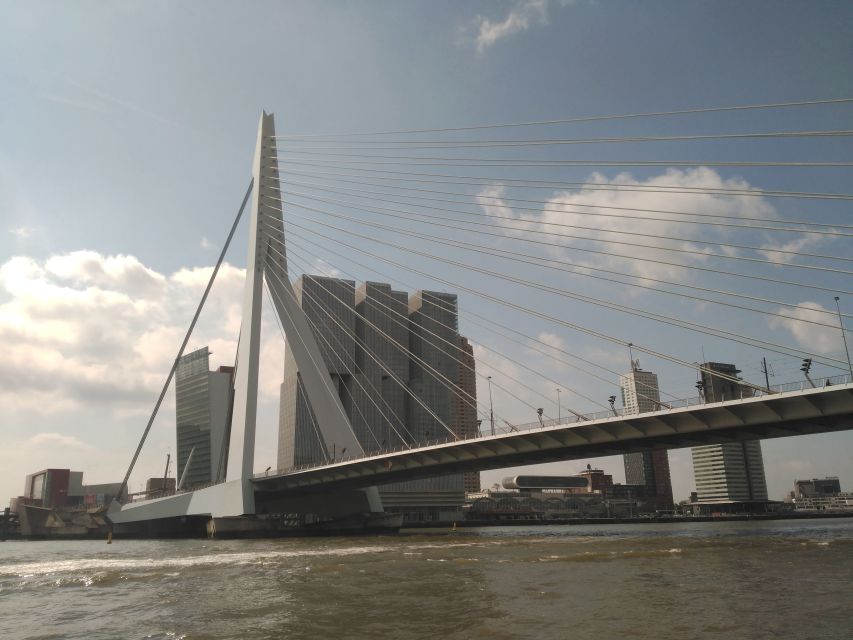
- Speedboat crossing: the watertaxi ride gives you a thriller-style view of Rotterdam’s riverfront from Erasmus bridge
- South Bank highlights: former harbor area now a semi-island with standout modern architecture and food spots
- Clear expectations: 4 kilometers on foot, no luggage or large bags, comfortable shoes recommended
Rather hold the tiller yourself? More boats for hire in Rotterdam
- Rotterdam: Waterbus Ticket to Dordrecht and/or Kinderdijk★ 4.6 · 542 reviews
- Rotterdam: De Rotterdam, Cube Houses, Watertaxi and Markthal★ 4.7 · 112 reviews
- Rotterdam: Breweries and Water Taxi Tour★ 4.7 · 23 reviews
- Rotterdam Architecture: Centre and South Bank with watertaxi★ 5.0 · 4 reviews
Starting at Rotterdam Centraal, then walking the modern heart

Your day starts at Rotterdam Central Station, meeting your guide under the station clock next to the main entrance, outside. It’s a handy anchor point because Centraal is one of the easiest places to orient yourself in the city, and it sets the tone for a tour about how Rotterdam thinks in systems, movement, and design.
From there, you’ll walk an architecturally iconic route through Rotterdam’s center and toward the waterfront. The big benefit here is flow. Instead of bouncing randomly between landmarks, the walk moves in a way that helps you “read” the city, seeing how modern planning, rebuilding, and bold design ideas sit side by side with older forms.
Expect a steady pace with a 4-kilometer walk total. That’s manageable for many people, but it does matter. Wear comfortable shoes, because this is one of those tours where your time is spent on streets and viewpoints, not waiting around.
The Lijnbaan, a post-war shopping street built for change
One of the first standout stops on the walk is the Lijnbaan, known for its post-war modernist shopping style. For me, this is where Rotterdam’s identity comes into focus fast: it’s a city that has repeatedly redesigned itself and then turned those changes into everyday experience.
What you’ll get from an architect guide here is context. Instead of treating Lijnbaan as just a busy street, you learn what modernist urban planning aimed to do, how pedestrian movement and street design connect to social life, and why this kind of “designed space” matters.
The practical upside is that Lijnbaan also keeps the walking tour lively. You’re moving through an active area where architecture isn’t isolated behind barriers. It’s part of how people actually shop, meet, and pass time.
Timmerhuis and OMA: when architecture meets ambition
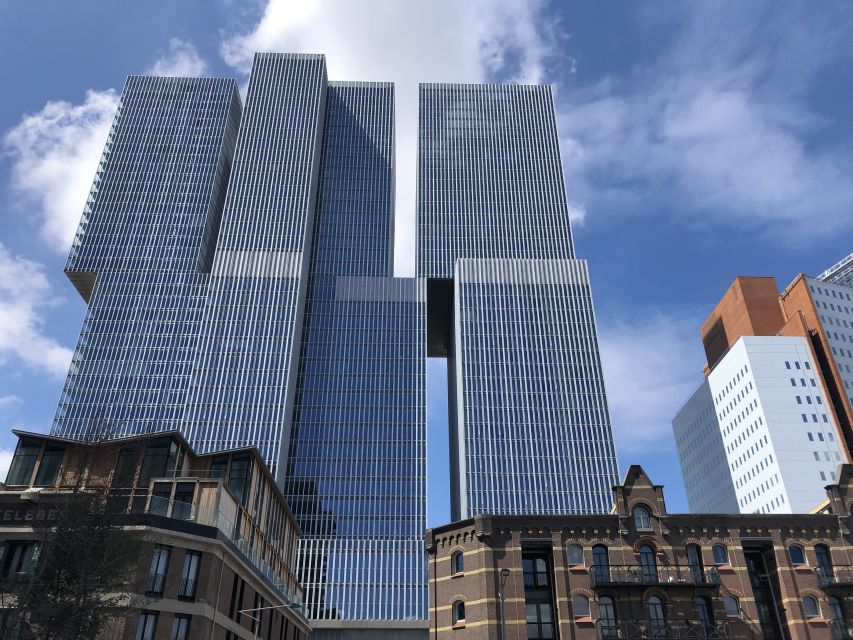
Next comes Timmerhuis, designed by OMA (the tour highlights it as world-famous). This is one of the stops where an architect guide earns their keep. You’ll look at the building, but you’ll also learn what makes it significant in Rotterdam’s story, including how the city uses design to signal confidence and future direction.
If you enjoy architecture that feels like it’s doing something on purpose, Timmerhuis is a good match. It’s not “look at me” ornament. It’s a building tied to a larger idea: how cities grow after major change, and how a new skyline can represent more than just buildings.
A small consideration: you may want to slow your pace slightly during photo moments. This is a walking tour, so it can be easy to rush if you’re trying to catch every angle. I’d treat each stop like a quick architecture briefing, then take a couple of photos rather than trying to photograph everything at once.
St. Laurens Church and Markthal: old form, new function
You’ll then move through the contrast between different eras and uses, starting with St. Laurens Church and followed by the Markthal, described as the most unique indoor market in Europe. Even if you’re not a hardcore architecture fan, this pairing works, because it shows how Rotterdam places value on both heritage and contemporary city life.
St. Laurens Church represents continuity. It’s a recognizable landmark that helps you feel Rotterdam’s deeper timeline instead of only the modern skyline. The Markthal, on the other hand, flips the script in a way you can physically experience, since it’s an indoor market environment built around today’s rhythms.
From a value perspective, this is smart pacing. The walk gives you quick “architecture to watch,” then the Markthal gives you “life to notice” under a roof. That’s the kind of stop where you can decide how long you want to spend, even though the full tour remains time-bound.
Still in Rotterdam? Keep going
Cube Houses: Rotterdam’s playful architecture experiment
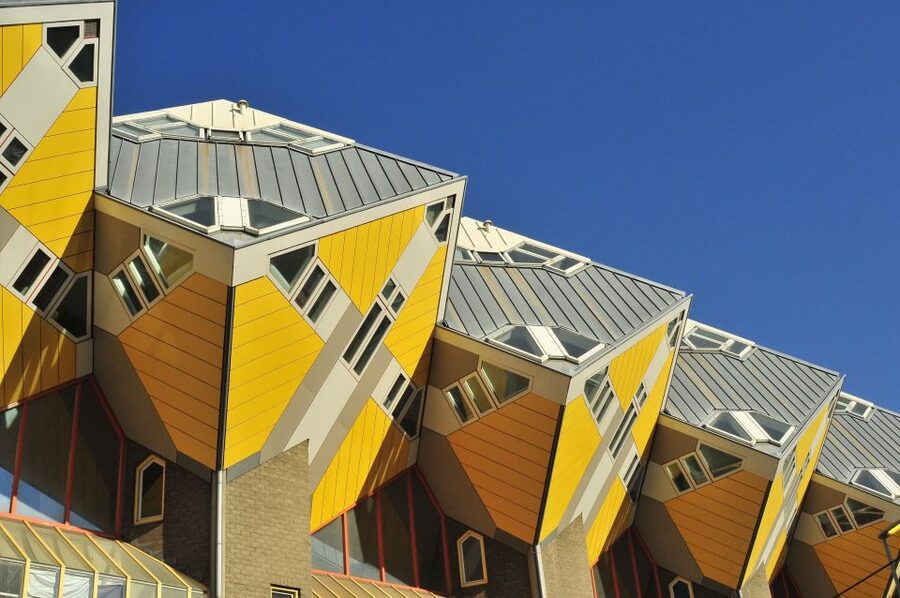
The Cube Houses are next, and they’re hard to forget once you’ve seen them. These aren’t just unusual shapes. They’re a visible reminder that Rotterdam is willing to experiment, then let the city incorporate the result into normal life.
An architect guide adds a lot here because you’ll look past the novelty and into the design logic. You can see how the form affects space and identity, and you can connect it back to the broader tour theme: Rotterdam’s bold approach to rebuilding and city design.
If you’re traveling with someone who is less enthusiastic about “lecture style” architecture, the Cube Houses still keep things fun. They’re visual, quirky, and instantly memorable, so even brief stops feel satisfying.
Board the watertaxi: the Erasmus bridge in your line of sight
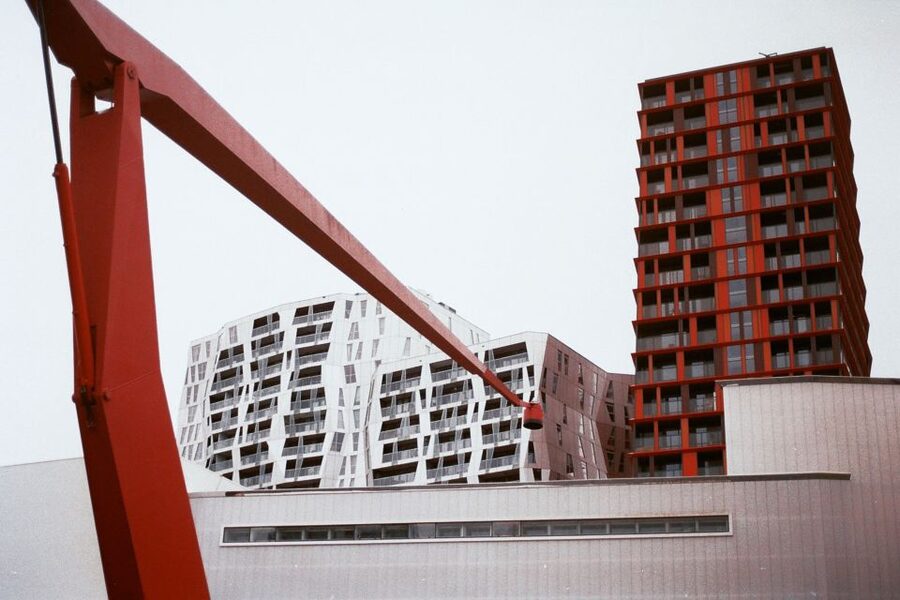
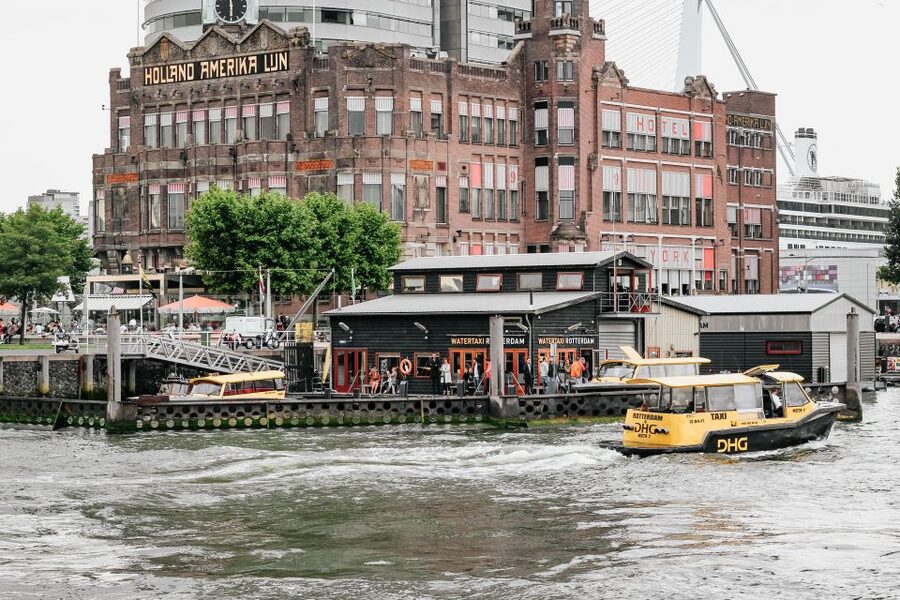
The tour pivots from walking to water at the riverside, where you board a watertaxi speedboat. The goal is simple and effective: get you across quickly and close enough to the riverfront to see Rotterdam as a city of edges and crossings.
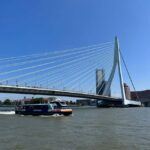
The big highlight here is the ride under the Erasmus bridge. From the boat, the bridge becomes more than a landmark, it becomes a framing device for how the city stacks buildings, infrastructure, and movement in one view. It’s one of those moments where your eyes stop working like a camera and start working like a map.
This is also the most “thrill” part of the tour. The description calls it a speedboat ride, and that speed changes how you experience the waterfront. You get quick glimpses you wouldn’t notice from the ground, including how certain buildings line up as you move along the river.
South Bank on the move: from former harbor to semi-island energy
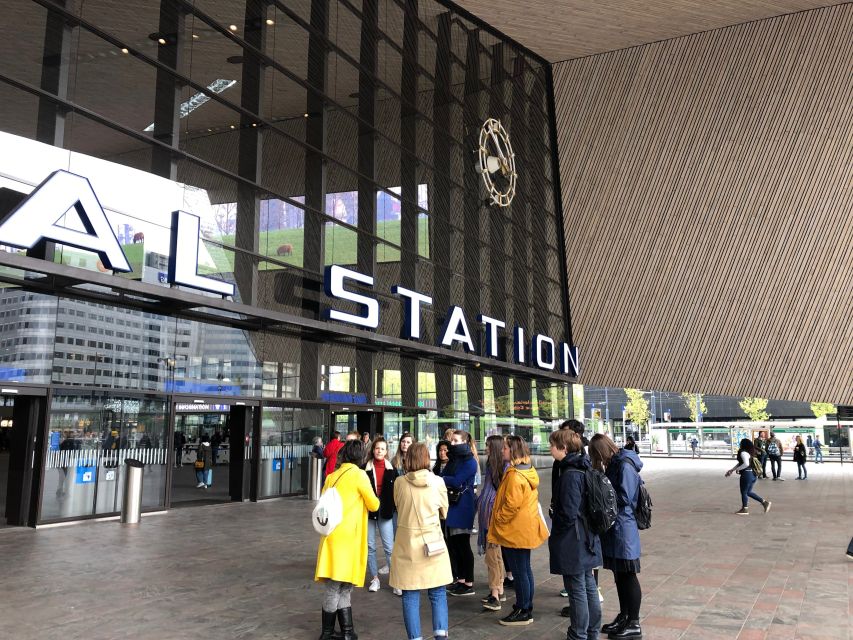
After the crossing, you’re in the South Bank area, described as a former harbor that’s now a flourishing semi-island with high-end architecture and great cafes and restaurants. The tour’s architectural lens matters because you’re not just touring food and views. You’re learning the story of redevelopment through the buildings you can still see.
You’ll also see several specific highlights, including the Rotterdam OMA building, the historic Hotel New York, Fenixloods, and the Fenix Food Factory. That list is a strong reason to book this particular format. Many city tours mention a few skyline shots. This one names the places you can later research or revisit.
Here’s what this section means for you as a visitor. Rotterdam’s modern identity is partly cultural, and partly practical. The redevelopment theme helps you understand why design choices show up in places you actually want to linger, like cafes and food spaces. It turns architecture into a reason to slow down.
Price and value for a $82, 3-hour architecture hit
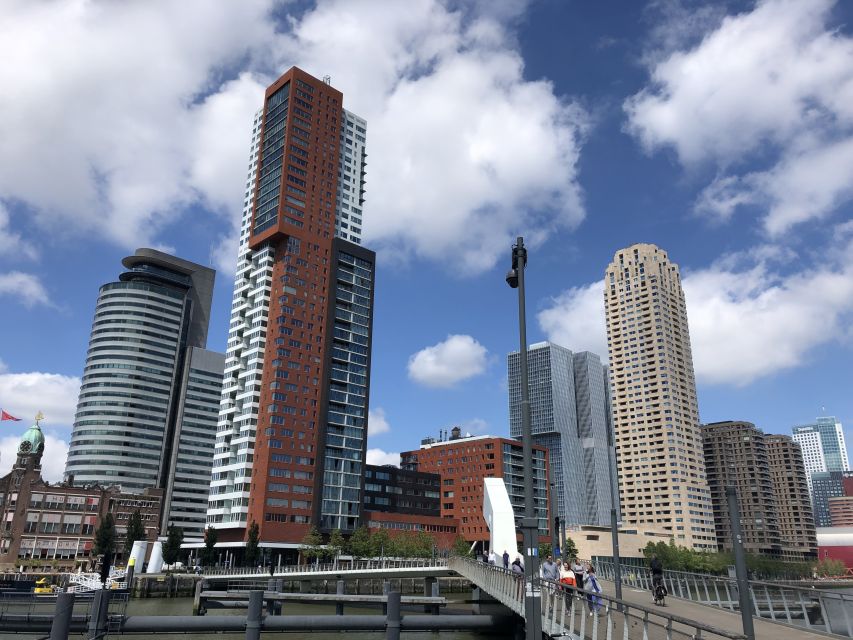
At $82 per person for a 3-hour experience, you’re paying for two things that normally cost separately: an architect-guided walking route and the water taxi ride. Since the water taxi fee and your tour guide are included, you’re not doing mental math about add-ons once you arrive.
Is it expensive? It can feel like a higher-end half-day activity, but it’s also time-efficient. You’re covering multiple major stops in one go, including the boat ride, which is a big part of the value because river views are harder to replicate without your own planning.
The ride also adds a different kind of “learning.” Architecture from land is flat by comparison. From the water, proportions, spacing, and riverfront intent show up instantly, and your guide can connect that perspective back to the themes you covered on foot.
Practical tips that will make this tour smoother
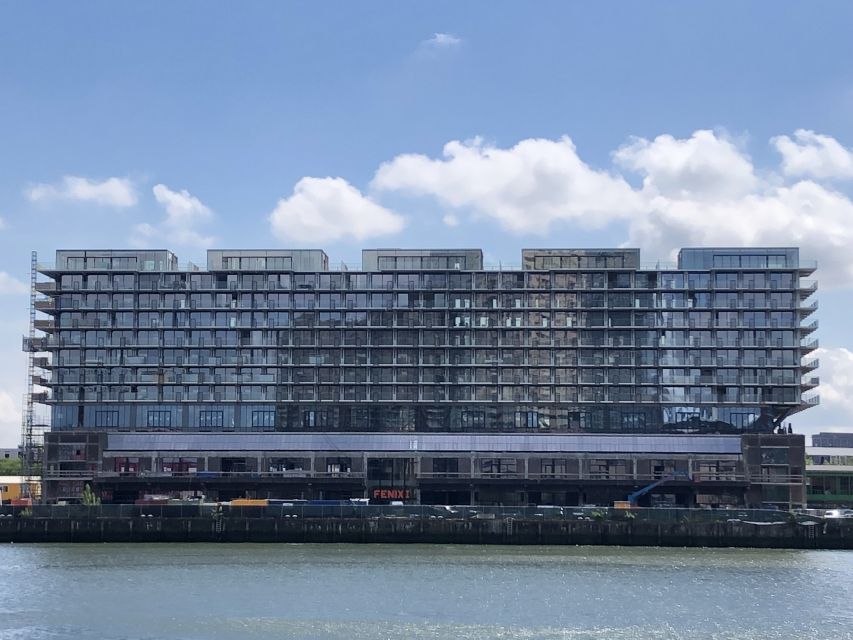
Comfort and logistics matter more than you’d think for an architecture tour. The basics are clear: bring comfortable shoes, and remember this is a 4-kilometer walk. Also, no luggage or large bags is allowed, so travel light.
A note for mobility and vision needs is important here. The tour is listed as wheelchair accessible, but it is also marked not suitable for people with mobility impairments, and it’s not suitable for visually impaired people. If either applies to you, I’d treat the wheelchair mention as a starting point and confirm suitability before committing.
Language is English, and you’ll have a live tour guide. That helps a lot with architecture, because you can ask questions on the spot and get instant clarification on what you’re seeing and why it matters.
Drinks aren’t included, and there is no hotel pickup or drop-off. So you’ll want to plan your day around the meeting point, then decide separately where you want to eat or have a drink after the tour ends.
Who should book this Rotterdam architecture and watertaxi experience
This is a strong choice if you like architecture that feels connected to real life. You’ll see the major icons plus a fast shift to river views, which works well for people who don’t want a slow museum-style day.
It also fits well if you want an efficient introduction to Rotterdam’s modern identity. You’ll cover post-war modernist design (like the Lijnbaan), bold contemporary architecture (like Timmerhuis and OMA-related stops), and distinctive city experiments (Cube Houses), then finish with a water-based angle.
If you’re traveling with kids, the tour has a nice detail: children under 12 can participate for free, and the listed price is only to cover the speedboat fee. That makes the cost feel more reasonable for families who can handle the walking portion.
Should you book this tour?
I think you should book it if you want a well-paced mix of architectural storytelling and a watertaxi ride that puts Rotterdam’s skyline and bridges into your direct line of sight. The price feels justified when you consider that the speedboat component is included and the tour hits multiple signature landmarks in a short window.
Skip it if walking is tough for you, or if you need a format that is suitable for visually impaired visitors. And if you rely on carrying lots of gear, the no luggage or large bags rule can be a dealbreaker.
If your goal is to understand Rotterdam’s design personality fast, while also getting a fun, high-momentum river view, this is a smart way to spend your time.
FAQ
How long is the Rotterdam architecture tour with watertaxi?
The duration is 3 hours.
What is included in the price?
The tour includes the water taxi fee and a tour guide.
What is not included?
Drinks, and hotel pickup and drop-off are not included.
Where do I meet the guide?
Meet your guide under the station clock, located next to the main entrance on the outside.
Is the tour walk long?
The walk is about 4 kilometers.
What should I bring?
Wear comfortable shoes.
Is there a limit on bags?
Yes. Luggage or large bags are not allowed.
Is the tour wheelchair accessible?
The tour is listed as wheelchair accessible, but it is also marked not suitable for people with mobility impairments.
Is the tour suitable for visually impaired people?
No, it is marked not suitable for visually impaired people.
Can children join, and what do they pay?
Children under 12 can participate for free. The listed price is only to cover the speedboat fee.
Also Reviewed Around Rotterdam





Still in Rotterdam? Keep Going
Your Own Boat, Your Own Pace


Fresh off the review pile in Rotterdam
- Private tour: Markthal, Cube houses and Rooftop Het Witte Huis
★ 4.5 · 3 reviews - Private transfer Schiphol (AMS) to or from Rotterdam
★ 5.0 · 3 reviews - Private tour from Rotterdam to Windmills of Kinderdijk & Gouda Cheese Experience
★ 5.0 · 3 reviews - Private Transfer from Rotterdam Port to Amsterdam Airport (AMS)
★ 5.0 · 3 reviews - Discover Rotterdam’s most Photogenic Spots with a Local
★ 5.0 · 3 reviews
Rotterdam Tours, compared.
 ★ 4.3Rotterdam: Harbor Sightseeing CruiseFrom $227,599 reviews
 ★ 4.5Rotterdam: 1-Hour Sightseeing Splash TourFrom $353,299 reviews
 ★ 4.6Rotterdam: Rotterdam Zoo Blijdorp Entry TicketFrom $322,754 reviews
 ★ 4.4Rotterdam: Euromast Lookout Tower TicketFrom $212,549 reviews
 ★ 4.4Rotterdam: Pancake CruiseFrom $311,986 reviews
 ★ 4.2From Amsterdam: Rotterdam, Delft & The Hague Guided Day TourFrom $901,765 reviews
 ★ 4.6Rotterdam: Kinderdijk UNESCO World Heritage Entry TicketFrom $251,477 reviews
 ★ 4.0Rotterdam: Harbor Cruise with Live GuideFrom $141,270 reviews
Browse the lists this tour appears in