
REVIEW · RIJKSMUSEUM & THE DUTCH MASTERS
Walking Tour about Golden Age Architecture, private local guide
Amsterdam’s canal houses have secrets.
This private Golden Age architecture walk is a fast, focused way to see major landmarks while learning how 17th-century design, trade, and engineering shaped the city you walk through today. I especially like that you are guided street by street, not museum by museum, and that the route hits both showpiece buildings and the smaller façade details that usually get missed.
Two things I’d book for again: a dedicated private local guide (Anna’s explanations are clear, patient, and very easy to ask questions to), and the way the tour connects architecture to real life, like how merchants built on difficult ground and how canal warehouses were made to load cargo right off the water. The only real drawback to flag is pacing and walking: it is not recommended if you have trouble walking and standing for about 1.5 hours, and mobility aids are not available.
In This Review
- Key Highlights You Will Actually Care About
- Golden Age Amsterdam in 90 Minutes, Private Guide Included
- Where You Start: Royal Palace Amsterdam and the Town Hall Origin Story
- Canal-Belt Baroque and the Look of Wealth: Huis Bartolotti to Torensluis
- De Dolphijn and the Night Watch Connection
- Ronde Lutherse Kerk: Domes and the Shift in Architectural Ambition
- Prinsengracht Warehouses: How Cargo Shapes Design
- Jordaan and the Gevelstenen Facade Stones
- Westerkerk: Spire Views, Calvinist Simplicity, and Rembrandt’s Final Resting Place
- Price, Time, and What You Get for $73.59
- Practical Tips Before You Go (So You Enjoy It More)
- Is This the Right Tour for You?
- Should You Book This Golden Age Architecture Walk?
- FAQ
- Is this a private tour?
- How long is the tour?
- What language is the tour offered in?
- Where does the tour start and end?
- Are there admission tickets required for the stops?
- Is bottled water included?
- Is the tour accessible for people who use mobility aids?
- What is the cancellation policy?
Key Highlights You Will Actually Care About
- Private guide with one-on-one-style attention, so you can ask why buildings look the way they do
- Golden Age architecture in the canal belt zone, including warehouses, façades, and the famous crooked-house area
- Engineering context, especially the challenges of building on clay and marshy ground
- Facade stones (gevelstenen) focus in the Jordaan, small details that tell you who lived and worked there
- End at Westerkerk near the Anne Frank House area, so you can keep exploring on foot
Rembrandt, Vermeer and the rest. Further gallery visits
- Amsterdam: Rijksmuseum Entry Ticket★ 4.7 · 25,535 reviews
- Amsterdam: Fabrique des Lumières Dutch Masters Ticket★ 4.6 · 2,373 reviews
- Amsterdam: City Canal Cruise and Rijksmuseum★ 4.5 · 2,129 reviews
- Rijksmuseum Amsterdam Small-Group Tour with Private Upgrade★ 4.5 · 1,547 reviews
Golden Age Amsterdam in 90 Minutes, Private Guide Included
For a short time in Amsterdam, this tour hits a smart sweet spot. You get a tight route with major stops across the historic core, and you spend the time where it counts: looking at façades, understanding materials and design choices, and getting the backstory behind why the Dutch Golden Age looks the way it does.
The private format matters. When you are not sharing the walk with a large crowd, you can slow down for photos, ask follow-ups, and actually connect the dots between different styles. The guide, Anna, is also the kind of person who answers lots of questions without rushing you. That turns a basic sights walk into something that feels like local context.
As for value, the price is $73.59 per person for about 1 hour 30 minutes. On paper that can look like a lot for a walking tour. In practice, you are paying for expert interpretation plus a route that is more intentional than a self-guided stroll. If you are into architecture, canal-belt building history, or simply want to stop feeling lost in the maze of streets, you’ll feel the benefit fast.
One practical note: the tour uses a mobile ticket, and it is listed as English. Confirmation happens after you book, and it is designed so most people can participate, with the walking time being the main limitation.
Where You Start: Royal Palace Amsterdam and the Town Hall Origin Story
The meeting point is at Royal Palace Amsterdam, Nieuwezijds Voorburgwal 147. From there, the tour begins with a big-picture frame that helps the rest of the route make sense.
You start at Dam Square, where you get an overview of Amsterdam’s rise during the 17th-century Dutch Golden Age as a global trade hub. It’s a helpful warm-up. Dam Square is not just a landmark, it is a good place to understand how wealth and commerce translated into what people built next.
Then you move to the Royal Palace Amsterdam. The tour’s angle here is excellent: it explains that the building began as Amsterdam’s town hall during the Golden Age, when the city wanted an architectural statement of power and prosperity. Later, it became a royal residence. That change in purpose shows you how the same structure can carry different meanings over time.
What I like most about this stop is the technical layer. You do not just get style talk. You also hear about the construction challenge of building on clay and marshy ground. That detail helps you look at the city differently as you walk the canal belt. Amsterdam was not built on easy soil, and the skyline you see is the result of smart, practical engineering, not luck.
Canal-Belt Baroque and the Look of Wealth: Huis Bartolotti to Torensluis
Next you get into the visual specifics, the stuff that makes you stop and stare for an extra minute even if you are not an architecture nerd.
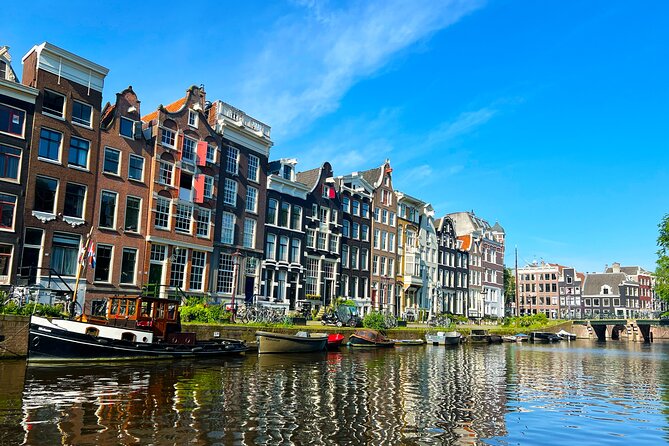
At Huis Bartolotti, the guide points you toward the building’s 17th-century Dutch Baroque character. You’ll notice the striking red brick, the large windows, and the more decorative, sculptural touches made from sandstone. The story behind it also matters. The design is tied to status and trading connections, including ties associated with Italy. In other words, this stop connects design choices to a merchant network, not just a random pretty façade.
Then you reach Torensluis, a bridge where you can compare façade approaches from the mercantile class. You’ll also see examples of Amsterdam’s famous crooked houses, where buildings lean in unusual ways due to the city’s soft, marshy ground. This is one of those “wait, why is that straight-looking building not straight?” moments. The guide’s explanation gives you a reason, not just an oddity.
A drawback here is timing. If you come in expecting a long photo session, several stops are short. The good news is the guide uses the time well, but you will want to be quick with camera angles and focus on key details like façades and rooflines.
De Dolphijn and the Night Watch Connection
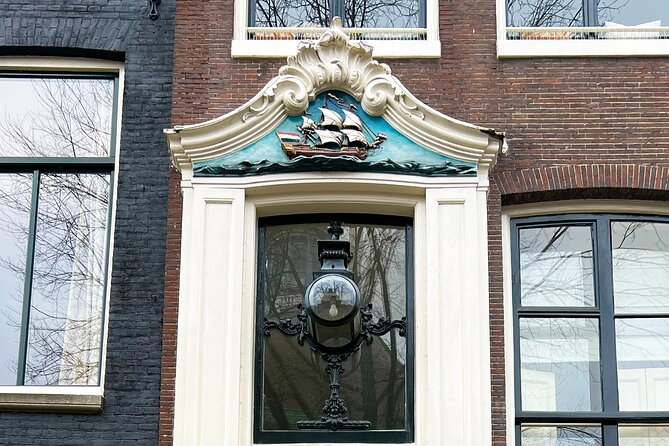
At De Dolphijn, you get one of the tour’s most fun links between architecture and art. The building name refers to a dolphin symbol of wealth, which ties back to Amsterdam’s maritime trade during the Dutch Golden Age.
The stop also connects the site to Frans Banning Cocq, the captain portrayed in Rembrandt’s famous painting The Night Watch. That link gives you a pathway to recognize how Golden Age wealth, civic identity, and cultural fame all swirl around the same city blocks.
Architecturally, what you’re looking for is status made visible. Even if you do not know Baroque design terms, you can still spot the confidence in the façade and the idea that this house belonged to someone with serious money and influence.
If you like when a tour connects the dots between canals, commerce, and famous artworks, this is one of the best stops on the route.
Prefer to see it on foot? More Amsterdam walks


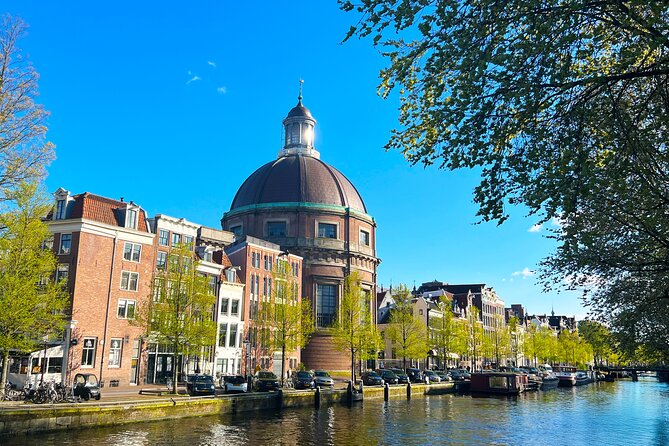
Ronde Lutherse Kerk: Domes and the Shift in Architectural Ambition
The tour includes a stop at Ronde Lutherse Kerk. The focus here is shorter, but it’s a useful reminder that architecture in Amsterdam was not frozen in one era.
You’ll hear a point about Renaissance achievement in domes, and you can use that to broaden how you see the city. Even when most of the route is anchored in Golden Age design language, Amsterdam’s building story includes shifts in style and ambition across centuries.
This is a good pause stop if you want a mental reset before heading into the canal warehouses and Jordaan details.
Prinsengracht Warehouses: How Cargo Shapes Design
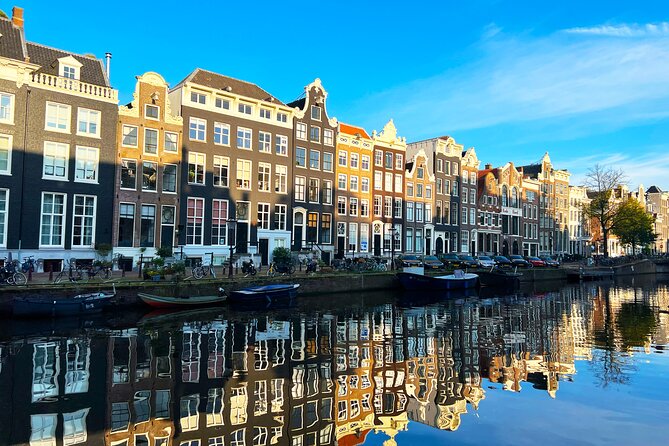
Then comes one of the most practical, “wait, that makes sense” parts of the tour: Prinsengracht.
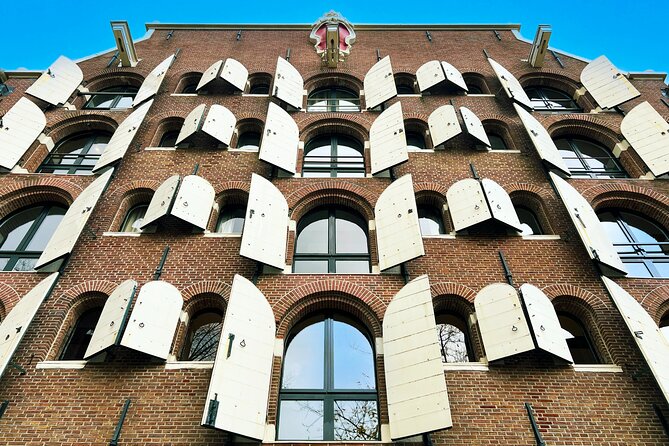
Here the emphasis is on the warehouses along the canal. These buildings are iconic for a reason. They were designed for real work, not just decoration. You’ll notice tall, steeply pitched gables, large windows, and wooden hoisting beams on the roof used to lift heavy cargo from ships docked along the canal.
This is where the architecture stops being abstract. When you understand loading and storage needs, the buildings’ shapes start to feel logical, like a machine you can walk past. You also learn that many exteriors are comparatively simple and utilitarian, with clean lines and minimal ornamentation. The grand scale communicates merchant power, but the structure still serves commerce first.
If you are the type who likes to look up from a phone and actually study rooflines, this part will be satisfying.
Jordaan and the Gevelstenen Facade Stones
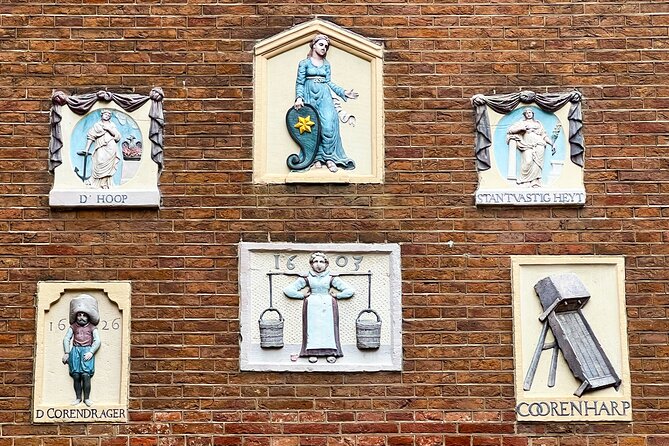
The tour spends around 20 minutes in the Jordaan, which is a smart choice because this neighborhood is where the city starts to feel intimate, even while you are still in the historic core.
In Golden Age terms, the Jordaan was built as a district for craftsmen and laborers, then grew into a busy mix of residential and commercial life. Narrow canals and tight rows of houses created a street scene made for everyday work.
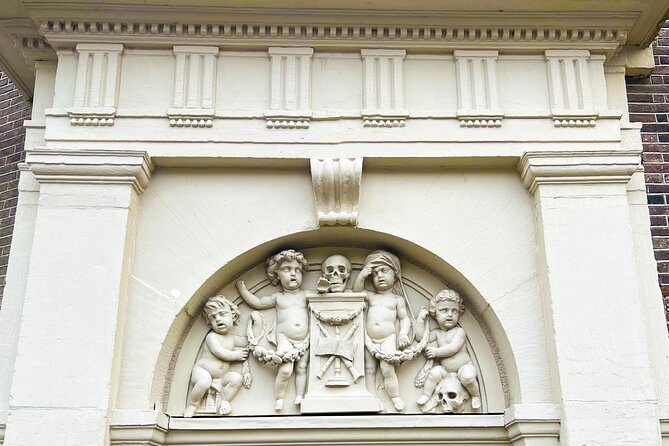
The key architectural lesson here is the focus on gevelstenen, which are facade stones embedded in building fronts. These small plaques often communicate how the building was used and what profession or role the owner had. You’ll also see that some of them feature intricate carvings, turning an everyday streetscape into a kind of public record.
This stop is a standout for me because it teaches you how to see. After Jordaan, you’ll likely notice small details on façades that you would normally walk right past. That is the real payoff of architecture tours: you stop visiting cities, and start reading them.
Westerkerk: Spire Views, Calvinist Simplicity, and Rembrandt’s Final Resting Place
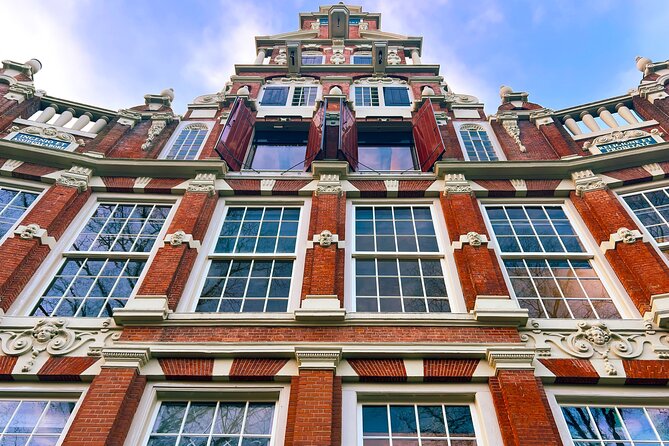
The tour ends at Westerkerk on Prinsengracht 279, near the Anne Frank House area.
This is a fitting finish because the church pulls several layers together at once: religion, civic status, and major cultural connections.
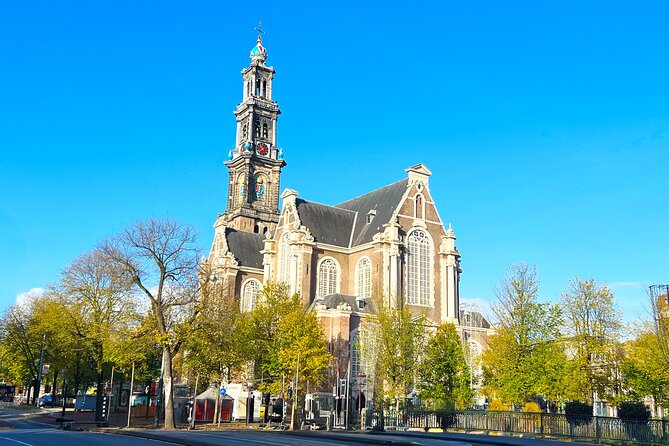
You’ll hear that Westerkerk was constructed as a Calvinist church for a growing population and that the interior style reflects Calvinist simplicity. The exterior story includes the towering spire, completed in 1638, rising about 85 meters above the Jordaan district. The spire is crowned with an imperial crown symbol tied to Amsterdam’s status.
There’s also a clock layer. The church’s clock chimes are described as something Anne Frank referenced in her diary, which gives this stop a cultural resonance beyond architecture.
Finally, you get the Rembrandt connection: Westerkerk is historically important as the final resting place of Rembrandt van Rijn. When a building has that kind of artistic anchor, it gives your walk a stronger emotional finish.
If you have time after the tour, this is a good area to keep wandering on foot since the route ends in a spot that is naturally suited for continued sightseeing.
Price, Time, and What You Get for $73.59
Let’s talk value without hand-waving.
You are paying for:
- A private local guide (not just a generic scripted audio tour)
- A tight, high-signal route across Golden Age architectural sites
- Short stop storytelling that gives you why behind what you see, including engineering on clay and marshy ground
- English-language guidance plus a format that seems built around questions and photo moments
At 1 hour 30 minutes, you’re not stuck for half a day. That matters in Amsterdam, where you often spend time transferring between areas. This tour also gets you multiple key buildings in one excursion, so you’re not spending your limited time hunting for the right streets.
The booking timeline is also a clue. This experience is typically booked about 6 weeks in advance, which suggests it’s popular. If your dates are fixed, I’d treat it as a plan-ahead kind of tour, not a last-minute stroll.
Practical Tips Before You Go (So You Enjoy It More)
Because the tour is a walking route with stops that last only a few minutes each, come ready to move. The total walk is about 90 minutes, and the experience is not recommended if you use a walker or have trouble walking and standing for that time. Mobility aids are also not available, so you’ll want to plan accordingly.
Also, bottled water is not included. If you run warm easily or you are doing this on a muggy day, bring your own small bottle.
You should also plan for outdoor time around canal areas. Even if the weather is decent, you will want comfortable shoes because the route includes bridges and street crossings, plus lots of standing to look at details.
Finally, since admission is listed as free for each stop, you are mainly paying for interpretation and guided access to the right talking points, not for separate entry fees. That makes it easier to fit into a day plan.
Is This the Right Tour for You?
Book this if:
- You want Golden Age architecture explained in a way that makes streetscape details feel meaningful
- You like comparing styles and seeing how wealth and trade shaped building design
- You want a guide who will answer questions and point out features you would likely miss on your own
- You are short on time but want a route that still covers the essentials from Dam Square through the canal belt to Westerkerk
Skip it or consider another option if:
- Walking 1.5 hours is hard for you, especially with frequent stop-and-look pauses
- You only want a long, unstructured stroll without guided interpretation
If you do fall into the first group, you’ll leave with more than photos. You’ll have a mental map of why Amsterdam looks the way it does, down to the tiny façade stones in the Jordaan.
Should You Book This Golden Age Architecture Walk?
Yes, if your goal is a focused, design-focused Amsterdam introduction, with a private guide who talks about both appearance and engineering. The route is tight, the stories are practical, and the emphasis on details like canal warehouse hoisting beams and gevelstenen makes the walk feel like more than sightseeing.
If you want to understand the city beyond the postcard angles, this is a strong choice. Just make sure the walking time works for you, bring water, and come ready to look up from street level.
FAQ
Is this a private tour?
Yes. It is described as a private tour/activity, meaning only your group will participate.
How long is the tour?
The duration is about 1 hour 30 minutes.
What language is the tour offered in?
The tour is offered in English.
Where does the tour start and end?
It starts at Royal Palace Amsterdam, Nieuwezijds Voorburgwal 147, 1012 RJ Amsterdam. It ends near Westerkerk at Prinsengracht 279, 1016 DL Amsterdam, close to the Anne Frank House area.
Are there admission tickets required for the stops?
The stops listed are marked as admission ticket free.
Is bottled water included?
No. Bottled water is not included.
Is the tour accessible for people who use mobility aids?
Mobility aids are not available, and the tour is not recommended for participants who use a walker or who have trouble walking and standing for 1.5 hours.
What is the cancellation policy?
You can cancel for a full refund up to 24 hours in advance. If you cancel less than 24 hours before the start time, the amount paid is not refunded.
Everything Else From Our Amsterdam Notebook




Also Reviewed Around Amsterdam
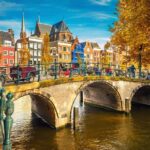




The Dutch Masters, Up Close


Fresh off the review pile in Amsterdam
- Full-Day Trip From Amsterdam to Keukenhof, Zaanse Schans + Cruise
★ 5.0 · 3 reviews - Boutique Dutch Food & History Tour with up to 8 guests only
★ 5.0 · 3 reviews - Private Tour to Windmills Zaanse Schans +Keukenhof – 7 Hours
★ 5.0 · 3 reviews - Full-Day Private Guided Countryside Tour from Amsterdam by Bike
★ 5.0 · 3 reviews - Amsterdam Red Light District and Old Town Walking Tour
★ 5.0 · 3 reviews
Rijksmuseum & the Dutch Masters, compared.
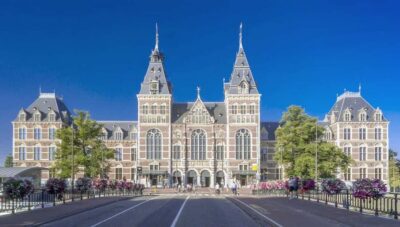 ★ 4.7Amsterdam: Rijksmuseum Entry TicketFrom $3125,535 reviews
 ★ 4.7Amsterdam: Rembrandt House Museum Entrance TicketFrom $233,385 reviews
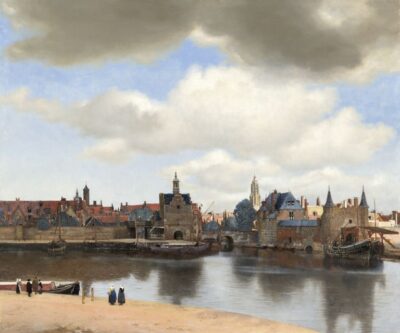 ★ 4.7The Hague: Mauritshuis Entrance TicketFrom $252,706 reviews
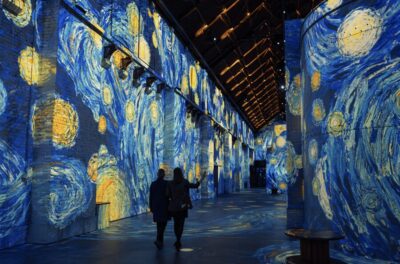 ★ 4.6Amsterdam: Fabrique des Lumières Dutch Masters TicketFrom $212,373 reviews
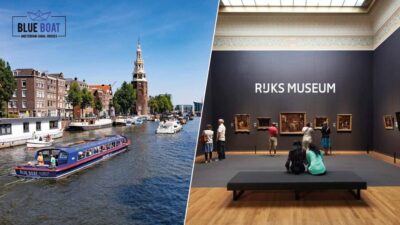 ★ 4.5Amsterdam: City Canal Cruise and RijksmuseumFrom $452,129 reviews
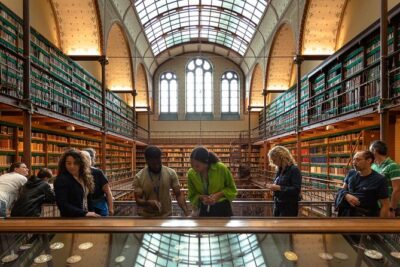 ★ 4.5Rijksmuseum Amsterdam Small-Group Tour with Private UpgradeFrom $901,547 reviews
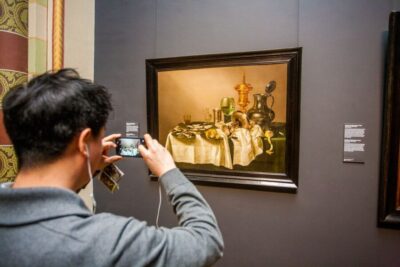 ★ 4.3Amsterdam: Rijksmuseum Entry Ticket and Canal Cruise ComboFrom $451,276 reviews
 ★ 4.7Amsterdam: Rijksmuseum Guided Tour and TicketFrom $78649 reviews
Browse the lists this tour appears in