
REVIEW · AMSTERDAM
Amsterdam 2 Hour History Walking Tour
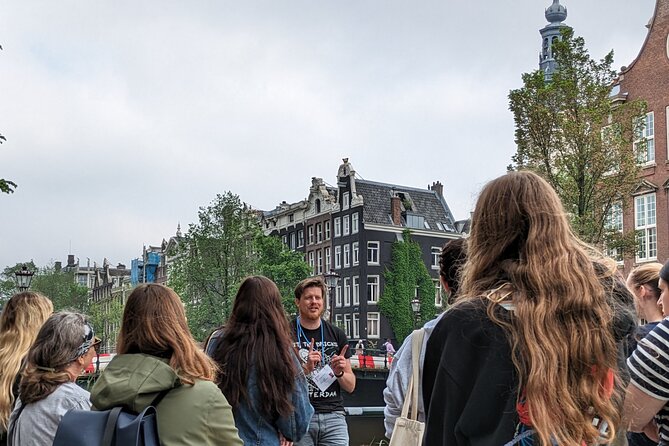
Canals, churches, and jokes in two hours. This Amsterdam history walking tour brings big topics down to street level, moving through the canal belt, De Wallen, and Dam Square with a laid-back pace. I love how relaxed it feels, and I also love the quick photo moment at the famous Monet bridge. One possible drawback: the route is wide, so you will not get deep museum time at each stop.
What makes it easy is the setup. You get a mobile ticket, an expert local guide, and a plan that hits major sights without turning your afternoon into a ticket-buying chore.
The subject matter can be heavy at times. You’ll hear about the Jewish Quarter and the hardships around the Hunger Winter, so it helps to show up ready for honest history, not just postcards. The tour also depends on good weather, so plan for an alternate date if conditions are poor.
In This Review
- Key highlights you will feel on the walk
- Why this Amsterdam 2-hour history walk is so good for newcomers
- The route flow from Prinsenstraat to Dam Square (and how to prep)
- Canal Ring (Grachtengordel): the water problem that shaped Dutch life
- De Wallen and Dam Square: why Amsterdam is complicated
- South Church and the change from Catholic to Protestant
- Begijnhof: the secret courtyard effect that resets your brain
- Jodenbreestraat and the Jewish Quarter: learning the hard parts with context
- Bushuis and the Dutch East India Company: how a tiny country chased empire
- Stopera Pier: modern city pride and the nickname locals use
- Royal Palace area: orange, royal origins, and why flags look the way they do
- Monet bridge photo moment: getting your shot without killing the vibe
- Price and value: why $30.04 feels fair for two hours
- What you should watch for before booking
- Should you book this Amsterdam history walking tour?
- FAQ
- How long is the Amsterdam 2 hour history walking tour?
- How much does the tour cost?
- Where does the tour start and where does it end?
- What time does the tour start?
- What languages is the tour offered in?
- Is this tour in a small group?
- Are admission tickets included?
- Is bottled water included?
- What if the weather is bad?
- What is the cancellation policy?
Key highlights you will feel on the walk
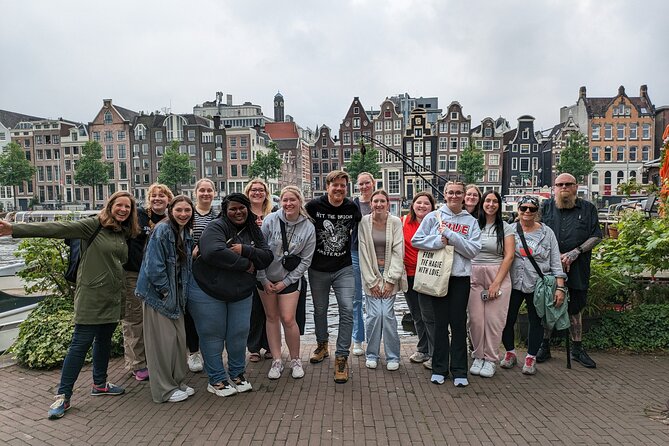
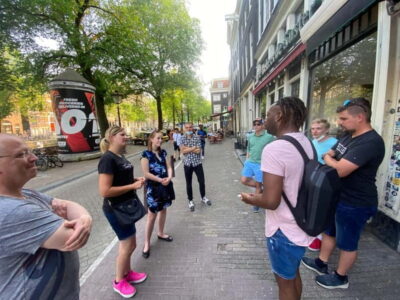
- Small group, max 10 keeps the pace calm and makes it easier to ask questions
- History with humor helps you digest tough chapters without losing the thread
- Canal Belt start gives you a quick mental map for Amsterdam’s whole layout
- Multiple fast photo stops including Monet bridge so you can get shots without rushing
- Free admission at most stops means better value for a short, two-hour window
- Begijnhof secret courtyard vibe breaks up the busy streets with quiet greenery
Prefer to see it on foot? More Amsterdam walks
- Anne Frank’s Story – Guided Walking Tour through Amsterdam★ 5.0 · 11,619 reviews
- Amsterdam: Life of Anne Frank and World War II Walking Tour★ 4.8 · 10,467 reviews
- Absolutely Amsterdam – the Essential Introductory Walking Tour★ 5.0 · 3,629 reviews
- Amsterdam: Anne Frank Guided Small Group Walking Tour★ 4.8 · 2,722 reviews
Why this Amsterdam 2-hour history walk is so good for newcomers
Amsterdam can feel like an overflow of everything at once. Canals, bicycles, tall houses, a packed center, and neighborhoods that all feel different. This tour works well early in your trip because it gives you a story that connects the sights, not just a checklist.
You cover the big themes fast: how Dutch life evolved with water, why religion shifted over time, and how Amsterdam became a trading powerhouse. The guide keeps it moving at a human pace, which matters on day one when your feet are still figuring out the cobblestones.
The best part is how the tone stays balanced. Even when the route passes through places that can feel tense or uncomfortable, you get context instead of shock value. The humor shows up in the way explanations are framed, so you learn and you stay engaged rather than glazing over.
If you like your tours practical, you’ll appreciate the built-in “how to read the city” angle. You leave knowing what to look for next: why certain buildings look the way they do, why specific neighborhoods developed, and what’s behind the street-level details you would otherwise miss.
This also suits solo travelers or couples who want conversation but not a crowded, chaotic group. The max group size of 10 is part of why the experience feels relaxed.
The route flow from Prinsenstraat to Dam Square (and how to prep)
The tour starts at Hit the Bricks Walking Tours on Prinsenstraat 13. You finish at Dam Square, close to transport options. That start-to-finish layout is nice because you do not end up backtracking to get home.
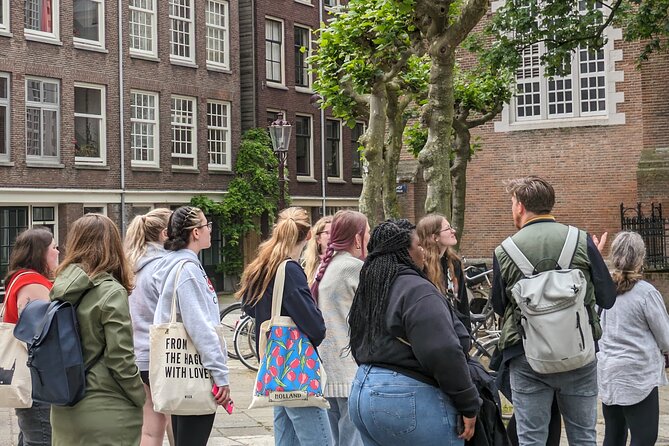
With a duration of about 2 hours, you should expect a steady walking rhythm plus short stops. This is not a sit-down lecture. It’s more like walking and seeing, with the guide tying each place to the larger story.
Go in with the right mindset and you’ll have an easier time absorbing it all. Wear comfortable shoes because Amsterdam streets can be uneven. Bring a refillable water bottle since the tour description notes there are places to fill it along the way, and bottled water is not included.
If you’re the type who likes to arrive early for context, there’s a small perk. One review mentioned a cat named Koko at the office. Showing up a bit ahead can make your wait feel less like standing around and more like a warm-up.
Canal Ring (Grachtengordel): the water problem that shaped Dutch life
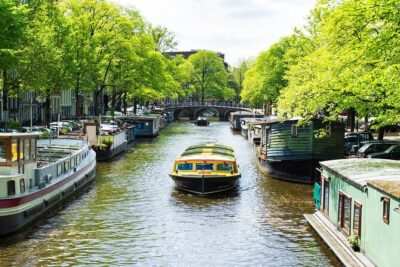
You begin in the heart of the canal belt, the Grachtengordel. This is more than a pretty introduction. It explains a core Dutch idea: people here had to learn how to live with water, not against it.
You’ll connect the dots between the canals and how Amsterdam thinks about engineering, planning, and long-term survival. The guide’s approach is practical. Instead of treating canals like scenery, you learn why they matter to how the city functions.
What I like about starting here is that it gives you a mental anchor. Once you understand the water relationship, everything else in central Amsterdam starts to make more sense: the street layouts, the house patterns, and even why certain squares feel positioned the way they do.
A small consideration: the canal belt is visually busy, so if you’re a photographer, you may feel tempted to stop too long at the wrong angles. Follow the guide’s cues for the best moments, then take your own shots at the end of each stop.
De Wallen and Dam Square: why Amsterdam is complicated
Next up is De Wallen, the Red Light District. This area has a lot of reputation, but you’ll get the history behind it and how the Dutch view it. The guide frames it as a social system with rules and evolution over time, rather than treating it as pure spectacle.
Dam Square then brings you to the civic center, where you’ll hear about the Dutch fight against the water and how that shaped culture and thinking. It’s a clever contrast. One stop is about a neighborhood known for sensation. The other is about national priorities and survival. Together they show how Amsterdam can hold contradictions without collapsing.
You should also be ready for the fact that this is one of the most famous neighborhoods in the world. That means the street level can feel crowded and fast. The tour’s short stop format helps, and the small group size keeps it from feeling like a herd moving through.
If you are sensitive about the subject, it’s still worth knowing the framing ahead of time. You’re not just passing through. You’re learning the why.
More of the older layers of Amsterdam

South Church and the change from Catholic to Protestant
South Church is where the tour shifts to religion and history in a calmer setting. You learn how the Dutch went from Catholic to Protestant, and you also get a specific look at the inner courtyard next to the church.
That inner courtyard piece matters. It’s easy to miss a “quiet space” when you are walking past major landmark buildings. Here, you’re given time to slow down and notice the layout and why these places feel serene even while the story around them is not.
One practical note: this stop is short, so look with intention. If you want photos, decide quickly where you want to frame the courtyard or the church details. Then spend the rest of the time listening.
Begijnhof: the secret courtyard effect that resets your brain
Begijnhof is one of those stops that makes the whole tour feel more balanced. You go from streets and landmark fronts into a secret garden feeling in the middle of the city.
You’ll hear about the beguine sisters and how this community shaped that space. The tour gives you the reason the place is tucked away and what made it function socially.
This stop is also a psychological reset. After more intense topics, a quiet courtyard helps your brain file the information you just heard. You’ll get a small sense of Amsterdam’s ability to protect calm spaces even in crowded areas.
Jodenbreestraat and the Jewish Quarter: learning the hard parts with context
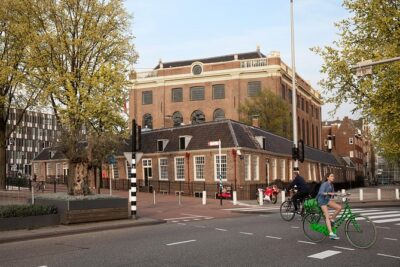
At Jodenbreestraat, you start at the edge of the Jewish Quarter of Amsterdam. This is where the tour deals with tragic history, including the fate of tens of thousands of Jewish people who lived in Amsterdam before and during the war, plus the disastrous Hunger Winter.
This is not a casual stop. It’s short, but it carries weight. The value here is that you get context to connect events you might otherwise only recognize from distant headlines.
Because you only spend a few minutes here, don’t expect every detail to land at once. Instead, think of it as building a foundation. Later, you can decide if you want to go deeper on your own.
A drawback to know ahead of time: if you prefer purely upbeat sightseeing, this section might feel heavy. If you’re open to learning honestly, it becomes one of the most meaningful parts of the walk.
Bushuis and the Dutch East India Company: how a tiny country chased empire
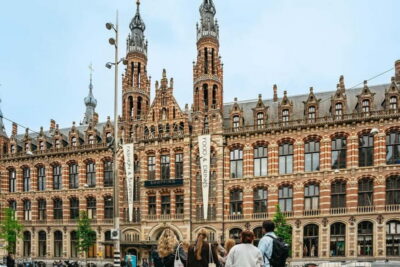
Bushuis, also called the Oost-Indisch Huis, is the former headquarters of the Dutch East India company. This stop explains how the Netherlands grew into a vast empire and cornered world trade, especially with spices.
It’s a big story for a short stop, but the guide keeps it grounded in the idea that this small country was fighting for its existence and independence while expanding. That combination is important. It’s not just “they got rich.” It’s “they built power while trying not to lose it.”
You’ll leave understanding why Amsterdam’s trading identity is not just a branding myth. The city’s wealth and global connections make sense when you know who was driving the trade and where decisions were made.
Stopera Pier: modern city pride and the nickname locals use
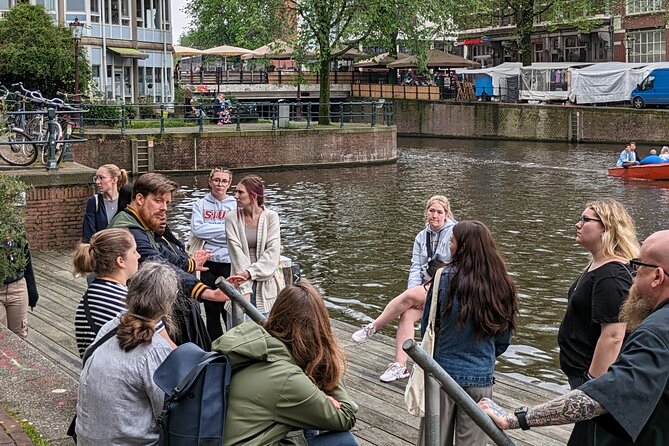
Stopera Pier looks toward Amsterdam’s modern city hall. You’ll hear why locals call it Stopera and why, even if the building is often judged as ugly, it still earns pride from Amsterdammers.
This is one of the nice surprises in the tour. Instead of treating architecture as a strict beauty contest, you learn how people assign meaning to places based on use, identity, and community.
Also, the location on the Amstel river gives you a different angle on the city. You get a break from the densest streets and see the relationship between water, buildings, and movement.
Royal Palace area: orange, royal origins, and why flags look the way they do
The Royal Palace Amsterdam stop is brief. You’ll learn how the Dutch royal family came to be, what the French have to do with that story, and why the national color is orange even though the flag is red, white, and blue.
The key practical detail is that the tour ticket does not include admission here. So if you want to go inside, you’ll need to plan for that separately.
This works for people who just want the overview and a reason to care. If you want a full palace visit, combine this walk with extra time elsewhere in the day so you are not trying to compress two trips into one.
Monet bridge photo moment: getting your shot without killing the vibe
The walk ends with Groenburgwal and a stop to see the Monet bridge. The tour gives you a short moment to take a photo so everyone at home gets proof you did Amsterdam right.
This is a perfect finishing move because it’s light. After history stops that can hit hard, you get a familiar, iconic visual. You also get a sense of Amsterdam’s style in one frame: canal reflections, narrow streets, and that “how is this real” feeling.
Try not to treat it like a race. The guide’s timing gives you a quick window, but you can still take a few shots from different angles if you move efficiently. Once you’ve got your image, listen one last time for the guide’s final connective points.
Price and value: why $30.04 feels fair for two hours
At $30.04 per person for roughly 2 hours, the value comes from three places.
First, you get an expert local guide plus tips and tricks designed to help you get more out of the rest of your trip. Second, the tour includes a route where admission is free at many stops. Only the Royal Palace requires a ticket you provide on your own.
Third, the small group matters. With a maximum of 10 travelers, the guide can actually keep the pace relaxed and respond to questions. That alone can make a short tour feel worth it rather than rushed.
If you’re comparing to longer multi-stop tours, think of this as a high-impact orientation. You are paying to get oriented, understand context, and leave with a set of places you can build on.
What you should watch for before booking
There are a few things to consider so the experience matches your expectations.
De Wallen and the Jewish Quarter are both included, and they carry different emotional tones. It helps if you’re comfortable moving through varied neighborhoods and absorbing honest history.
The tour is weather dependent. Since the experience requires good weather, you may want a flexible day in your schedule. If rain or poor conditions hit, you may need to switch dates.
Also, because it’s only about two hours, it can feel like a “great overview” more than a “deep study.” If you love reading, sketching, or lingering, you’ll likely want additional time after the tour to follow up on what stuck with you.
Finally, a short note on ticket mishaps. In one reported situation, an operator issue led to a substitution with a 90-minute canal tour, and that became a win instead of a loss. That tells me the operator has a plan when things go sideways, but you should still arrive on time and show your mobile voucher when asked.
Should you book this Amsterdam history walking tour?
Yes, if you want a smart first pass through Amsterdam that blends history, humor, and photo moments without dragging on. It’s especially good for newcomers because the route gives you a quick mental map and helps you understand why the city is the way it is.
Book it if:
- You want an easy two-hour plan that starts in the canal belt and ends at Dam Square
- You like small groups where you can feel socially comfortable
- You want practical tips to use right away, not just facts to forget
Skip it or pair it with extra time if:
- You want museum-level detail at every stop
- You plan to spend a lot of time inside the Royal Palace, because that admission is not included
- You are not comfortable with heavier topics like the Jewish Quarter history and Hunger Winter
If you’ve got only a day or two in Amsterdam, this is the kind of tour that helps you see more after it ends. And in a city where it’s easy to get lost in the prettiness, that matters.
FAQ
How long is the Amsterdam 2 hour history walking tour?
The tour lasts about 2 hours.
How much does the tour cost?
The price is $30.04 per person.
Where does the tour start and where does it end?
It starts at Hit the Bricks Walking Tours, Prinsenstraat 13, 1015 DA Amsterdam. It ends at Dam Square, Dam, 1012 Amsterdam.
What time does the tour start?
The start time listed is 11:00 am.
What languages is the tour offered in?
The tour is offered in English.
Is this tour in a small group?
Yes. The maximum group size is 10 travelers.
Are admission tickets included?
Admission is free at most stops. The Royal Palace Amsterdam admission is not included.
Is bottled water included?
No. Bottled water is not included, and the tour notes that you can fill a water bottle at several stops.
What if the weather is bad?
The experience requires good weather. If it is canceled due to poor weather, you will be offered a different date or a full refund.
What is the cancellation policy?
You can cancel for a full refund up to 24 hours before the experience’s start time.
Amsterdam at Walking Speed




Everything Else From Our Amsterdam Notebook


Also Reviewed Around Amsterdam




Fresh off the review pile in Amsterdam
- Full-Day Trip From Amsterdam to Keukenhof, Zaanse Schans + Cruise
★ 5.0 · 3 reviews - Boutique Dutch Food & History Tour with up to 8 guests only
★ 5.0 · 3 reviews - Private Tour to Windmills Zaanse Schans +Keukenhof – 7 Hours
★ 5.0 · 3 reviews - Full-Day Private Guided Countryside Tour from Amsterdam by Bike
★ 5.0 · 3 reviews - Amsterdam Red Light District and Old Town Walking Tour
★ 5.0 · 3 reviews
Walking Tours, compared.
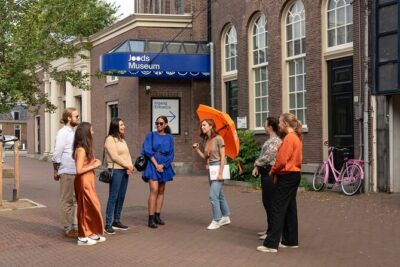 ★ 5.0Anne Frank’s Story – Guided Walking Tour through AmsterdamFrom $3911,619 reviews
 ★ 4.8Amsterdam: Life of Anne Frank and World War II Walking TourFrom $3710,467 reviews
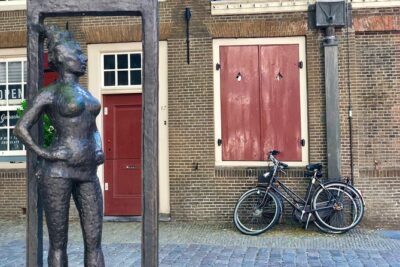 ★ 5.0Absolutely Amsterdam – the Essential Introductory Walking TourFrom $53,629 reviews
 ★ 4.8Amsterdam: Anne Frank Guided Small Group Walking TourFrom $282,722 reviews
 ★ 4.9Amsterdam: Anne Frank Walking Tour – Guided in EN/DE/IT/ESFrom $282,676 reviews
 ★ 4.9Amsterdam: Guided Cultural Walking TourFrom $292,384 reviews
 ★ 4.2Amsterdam: Guided Ganja Walking Tour of Coffee ShopsFrom $272,092 reviews
 ★ 5.0Anne Frank Walking Tour Amsterdam Including Jewish Cultural QuarterFrom $751,879 reviews
Browse the lists this tour appears in