
REVIEW · AMSTERDAM
Amsterdam: Allard Pierson Heritage Collections Entry Ticket
You can lose hours in this museum. The Allard Pierson entry ticket is one of Amsterdam’s rare collections that links ancient learning with the kind of curiosity that shaped modern book and map making.
What I like most is the way the museum connects big themes across time, from writing to early industrial book production, without turning it into a dry lecture. I also love the object range, where you move from handwritten manuscripts and 17th-century atlases to classic plaster casts you can study up close.
One thing to consider: if you mostly want fast, entertainment-heavy museum vibes, this can feel calmer and more “read the labels, look closely” than action-packed. That said, if you enjoy maps, books, classical art, or Egypt, it is a very satisfying day out.
In This Review
- Key highlights at Allard Pierson
- Allard Pierson in one day: what you actually see
- The permanent galleries connect ancient learning with Amsterdam’s book world
- Maps and atlases: the collections that make you slow down
- The attic plaster casts and the included audioguide
- Ancient Egypt and Sudan collections on one route
- The temporary exhibition: Face to Face mummy portraits, Oct to Feb
- Plan your route and timing with a 1-day entry ticket
- Price and value around $18, including permanent, temporary, shop, cafe, and audio
- Who should book this, and who might want a different museum
- Should you book the Allard Pierson Heritage Collections ticket?
- FAQ
- What is included with the Allard Pierson heritage collections entry ticket?
- How long is the ticket valid?
- What languages are available for the experience?
- Is there an audioguide included?
- Is the museum wheelchair accessible?
- Can I cancel and get a refund?
- Is there a reserve and pay later option?
Key highlights at Allard Pierson

- Bookhistory of Amsterdam: follow the city’s love of publishing, printing, and collecting through the ages
- World-class maps and atlases: see one of the largest map and atlas collections in the world
- Attic plaster casts: study Greek and Roman era plaster casts with an included audioguide
- Ancient Egypt and Sudan: Egyptian hieroglyphs and related collections share the spotlight
- Temporary mummy portraits show: Face to Face: The People Behind Mummy Portraits runs from 6 Oct to 25 Feb
Other Amsterdam entries you can hold on your phone
- Amsterdam: Heineken Experience Ticket★ 4.6 · 30,055 reviews
- Amsterdam: Rijksmuseum Entry Ticket★ 4.7 · 25,535 reviews
- Amsterdam: Icebar Entry Ticket with 3 Drinks★ 4.2 · 14,562 reviews
- Amsterdam: Keukenhof Ticket and Roundtrip Shuttle Transfer★ 4.7 · 11,799 reviews
Allard Pierson in one day: what you actually see
This is a true heritage-collection visit, not a single theme museum. With the entry ticket, you can go through the permanent presentation plus the temporary exhibition during your visit window. The ticket is valid for one day, and you can choose a starting time based on availability.
What makes this place interesting is the museum’s structure. Instead of treating ancient and modern history as separate worlds, the galleries emphasize how people’s curiosity kept evolving. You see how stories moved through writing, how images moved through maps, and how ancient objects still shape what we collect and study today.
Also, this is a good option if you want a museum day that does not require planning around a very specific “tour moment.” You can move at your own pace and spend more time where your interests hit hardest, whether that is printed books, cartography, or classical sculpture casts.
The permanent galleries connect ancient learning with Amsterdam’s book world
The permanent presentation is built around interaction, basically the long chain between the ancient world and the modern world. You get an arc that starts with the origins of writing and early ways of producing texts, then shifts into the networks behind discovery and performance.
You will encounter examples spanning several categories, including Egyptian hieroglyphs, Greek pottery, and Roman glass, plus medieval manuscripts and 17th-century atlases and books. The museum also includes cookbooks and a strong focus on how books were made and used, including early industrial book production.
One practical advantage for you: this gallery style makes it easy to choose your entry point. If you start by spotting an object you recognize, like a manuscript style or a pottery fragment, you naturally end up following the story forward. If you start with maps, the book links soon make sense, because maps and atlases were a major part of publishing and collecting.
And yes, you will spend time reading. The museum is not just about seeing objects, it is about understanding how humans tried to document the world, and how that documentation traveled across cultures. If you like that, you are in the right place.
Maps and atlases: the collections that make you slow down
The highlights here include “one of the largest maps and atlases collections in the world.” That is not a throwaway line. When a museum devotes real space to cartography and atlas collections, it usually means you get a spectrum, from regional views to larger survey-style works and the publishing world that supported them.
You will also see how cartography connects to Amsterdam. One of the promised highlights is the bookhistory of the city of Amsterdam, and maps and atlases are a central part of that story. Amsterdam’s identity as a trading and publishing city fits naturally with what you are looking at, especially when you connect maps to the broader history of books and printed materials.
What I liked is that the museum does not treat maps as mere decoration. You are guided toward seeing them as tools people used for navigation, knowledge, and storytelling. Even if you are not a map person, the visual variety and sheer craft of atlas production can grab you.
Tip that helps: plan to slow down for the map moments. If you rush, you miss what makes this collection special: the way many maps are tied to the larger publishing process, not just the final printed image.
The attic plaster casts and the included audioguide
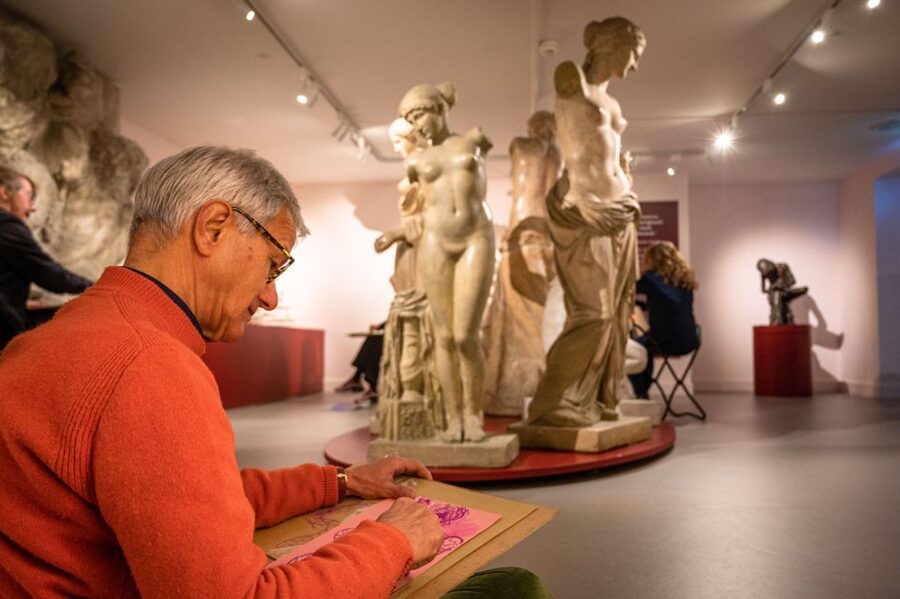
The museum has a plastercast collection that lives up in an attic space, featuring Greek and Roman era casts. This is one of those “different from what you expect” parts of the visit. A plaster cast gallery can be surprisingly good for understanding classical sculpture, because you can study form, style, and pose without needing to travel to marble originals.
The ticket includes access to an audioguide specifically for the plaster collections. That matters. When you are looking at casts, having audio guidance helps you connect the visual details to what you are actually seeing and why it was collected or displayed.
If you like art history, classical references, or just the craft of sculpture reproduction, this section is a strong payoff. It is also a nice break from reading-heavy museum zones, because your eyes get to do the work, and the audioguide helps keep you oriented.
If you are not sure whether you will care: give it 20 minutes. If the casts hold your attention, you will end up spending longer. If not, you can move on without losing the rest of the day.
More of the older layers of Amsterdam

Ancient Egypt and Sudan collections on one route
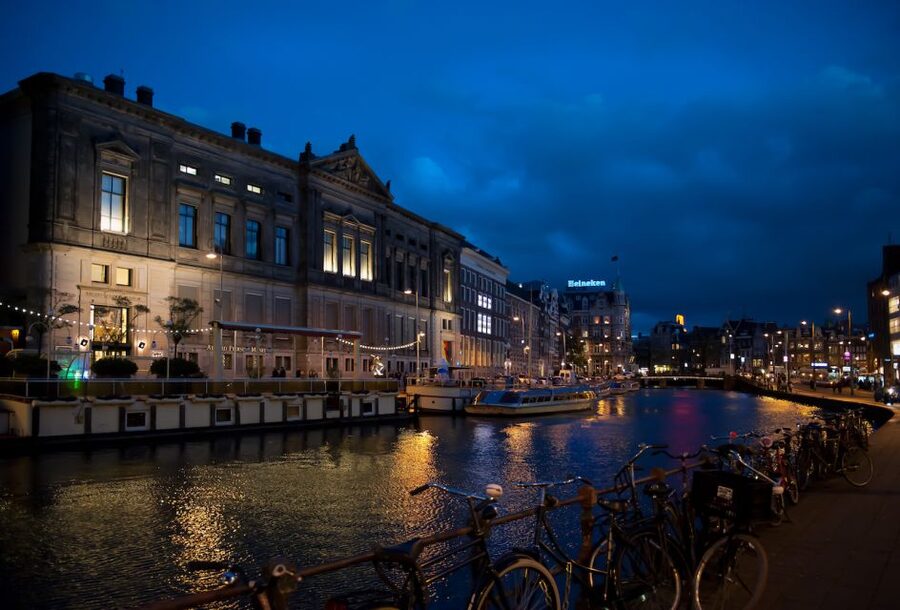
One of the standout permanent-collection promises is the Ancient Egyptian and Sudanese collections. You can expect Egyptian hieroglyphs and objects that fit into the broader “ancient to modern” story the museum is telling.
This part of the visit is not isolated. The museum frames how knowledge travels and how collecting and studying works across eras. That context can make Egypt feel less like a separate topic and more like a chapter in a longer story about writing, imagery, and study.
Even if you know little to nothing about Egyptian history, the museum’s approach helps you find a starting point. Hieroglyphs are an obvious hook. Then you can connect what you see to the bigger themes, like the human urge to record, preserve, and explain.
Practical tip: wear comfortable shoes and take small breaks. There is a lot of reading and close looking. If you pace yourself, you get the benefits of a quiet, focused museum day, not the fatigue of sprinting through galleries.
The temporary exhibition: Face to Face mummy portraits, Oct to Feb
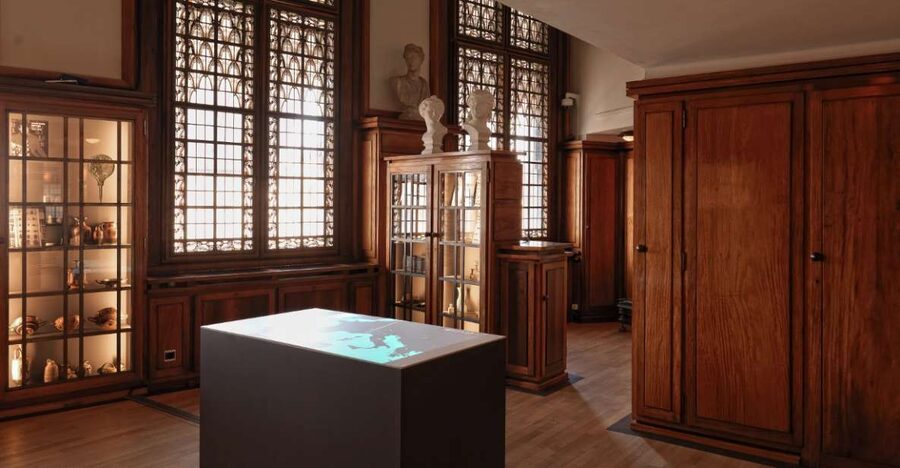
If your visit lines up with the dates, the temporary exhibition is a big reason to choose this ticket. Face to Face: The People Behind Mummy Portraits runs from 6 October to 25 February.
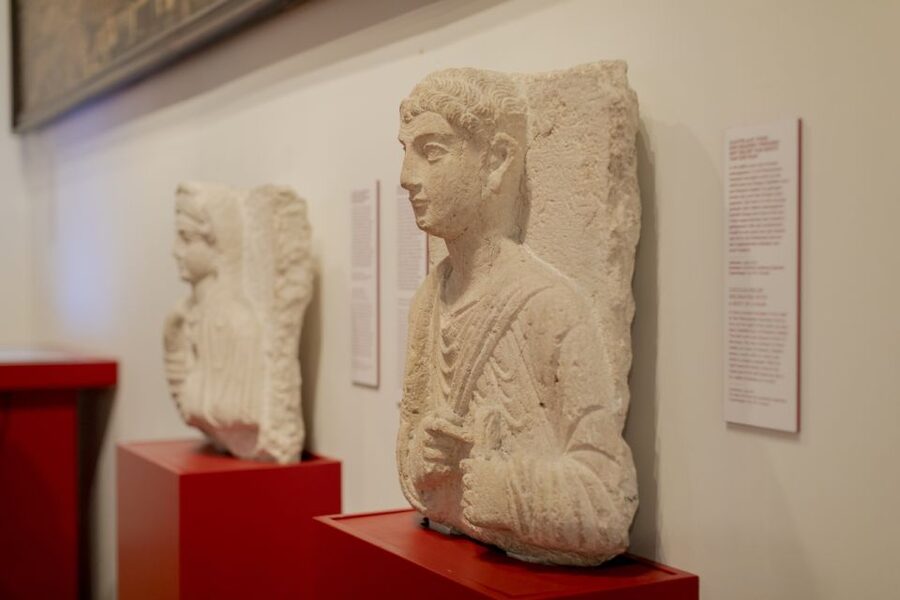
This exhibition focuses on ancient Egyptian mummy portraits, often painted on wooden panels, made during the Roman period in Egypt, roughly from the 1st to the 4th century AD. These portraits are also known as Fayum portraits, named after the region where many were excavated.
What I like about this temporary show is that it shifts the question from only What is the object? to Who is behind it? The exhibition is described as the first exhibition about ancient Egyptian mummy portraits in the Netherlands, and it does more than display portraits. It connects the painted faces to the people and processes around them, including creators, descendants, collectors, archaeologists, and researchers.
It also includes masterworks from major international collections, including the Louvre and the J. Paul Getty Museum, plus other institutions. That gives you a chance to see the portraits in a context that feels bigger than a local museum alone.
Count on a “slow looking” vibe here too. These portraits hit best when you let your eyes settle. You are essentially meeting individuals almost 2000 years later, and the show makes that human connection part of the experience, not an afterthought.
Plan your route and timing with a 1-day entry ticket
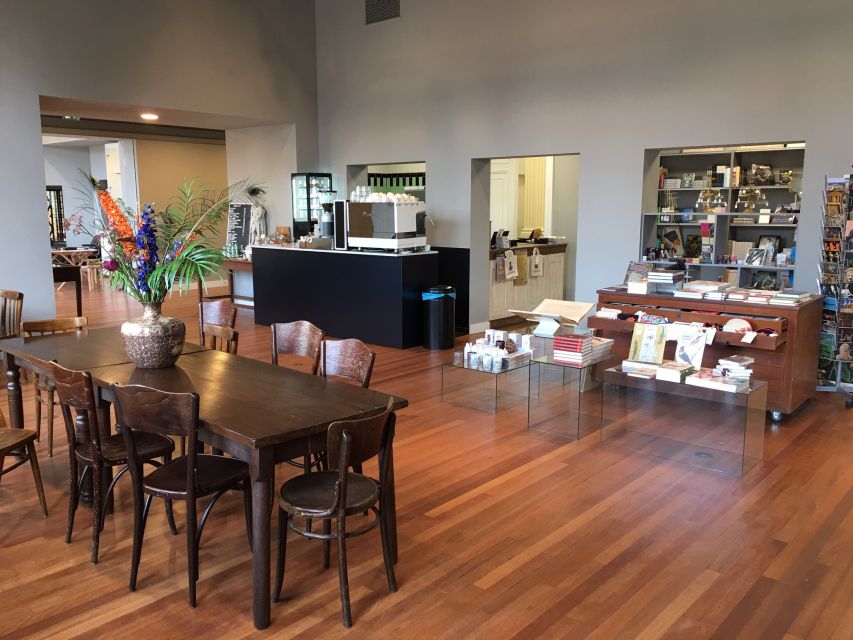
This is not a guided group tour with a fixed itinerary in the information provided. Instead, you have a one-day entry ticket, and you choose a starting time based on availability.
So your best move is simple: pick a route theme, then stick with it. Here are two easy ways to structure your visit:
- Start with maps and bookhistory, then move into ancient objects that connect to writing and publishing. You’ll likely feel more grounded because the museum’s story is about documentation and knowledge.
- Start with Egypt and the mummy portraits, then widen outward to see how ancient and modern worlds connect through collections and scholarship.
Either way, give yourself time for the plaster cast attic with the audioguide. If you leave that too late, you might rush it, and it is the type of section where a slower pace pays off.
Also, build in a short reset. The museum includes a shop and a cafe area, which is useful for a break when you have been reading for a while.
Price and value around $18, including permanent, temporary, shop, cafe, and audio

The price is listed as about $18 per person. For that you get entry to the permanent and temporary exhibitions, access to the museum shop and cafe, and an audioguide for the plaster collections.
Is it good value? I think it can be, because the ticket covers multiple collection strengths in one place:
- book history and the production of texts
- maps and atlases, including an internationally noted scale collection
- classical plaster casts
- ancient Egyptian and Sudanese collections
- a time-limited mummy portraits exhibition during your visit window
That mix makes it a smart choice when you want variety without hopping between museums. It also helps if your group has mixed interests, because you can spend more time where you personally care most, then meet back up for the big shared stops like the maps, the plaster casts, and the temporary portraits.
Where value becomes less obvious is when you are only interested in one narrow topic. If you are coming for only Egypt, or only maps, you might find yourself thinking about whether you would have preferred a museum that focuses more tightly on that one passion. Still, even then, the museum’s central story makes the cross-links hard to ignore.
Quick reality check: the experience has a rating around 4.1 out of 5 based on 13 reviews. That suggests most people are finding enough to keep them interested for a full visit.
Who should book this, and who might want a different museum
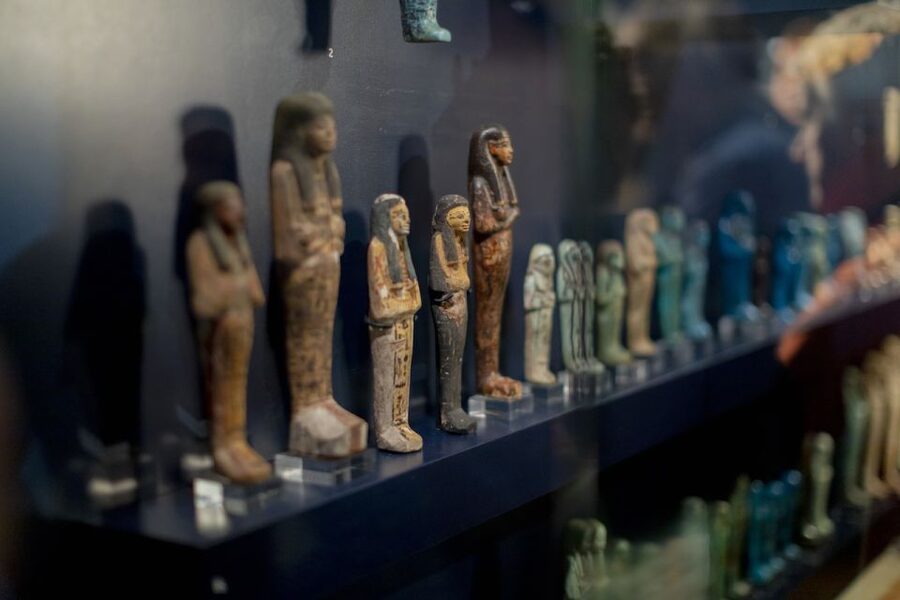
This ticket fits you best if you enjoy museums that reward close looking and patient reading. You will likely have a great time if you like:
- books, manuscripts, and how printing and publishing changed the world
- cartography, atlases, and map-making
- classical art references, especially through plaster casts
- ancient Egypt, Fayum portraits, or mummy-related scholarship
- exhibitions that explain the people behind objects, not just the objects themselves
It might feel like the wrong fit if you want mostly spectacle, hands-on activities, or a fast, entertainment-style museum day. The museum’s tone is more reflective, and you will probably spend a meaningful chunk of time in front of labels and displays rather than doing interactive tasks.
If you are traveling with someone who loves history in general but fears museums about specific topics, this is a middle ground. You can start with the broad theme of how humans recorded knowledge, then let interests branch out naturally.
Should you book the Allard Pierson Heritage Collections ticket?
Yes, you should book it if you want a high-value museum day that combines Amsterdam book and map history with serious ancient collections, plus a strong temporary exhibition option in the winter season. The audioguide for the plaster casts and the Face to Face mummy portraits show give you two extra reasons to plan a full visit rather than a quick walk-through.
Skip it, or at least reconsider, if you know you dislike museums focused on objects, texts, and cross-era connections. For some people, that style feels like effort. For others, it is the whole point.
If you fall in the middle, here is your deciding question: Do you like the idea of seeing how writing, maps, and collecting connect ancient curiosity to modern scholarship? If the answer is yes, this ticket is a very solid choice.
FAQ
What is included with the Allard Pierson heritage collections entry ticket?
The ticket includes entry to the permanent and temporary exhibitions, access to the museum shop and cafe, and an audioguide for the plaster collections.
How long is the ticket valid?
The ticket is valid for 1 day. Starting times depend on availability.
What languages are available for the experience?
The information provided lists English as the language option.
Is there an audioguide included?
Yes. There is an audioguide for the plaster collections included with the ticket.
Is the museum wheelchair accessible?
Yes, the activity is listed as wheelchair accessible.
Can I cancel and get a refund?
You can cancel up to 24 hours in advance for a full refund.
Is there a reserve and pay later option?
Yes. The offer includes reserve now and pay later, where you book and pay nothing today.
Digging Into Older Amsterdam



Entries for Your Phone





Also Reviewed Around Amsterdam



Fresh off the review pile in Amsterdam
- Full-Day Trip From Amsterdam to Keukenhof, Zaanse Schans + Cruise
★ 5.0 · 3 reviews - Boutique Dutch Food & History Tour with up to 8 guests only
★ 5.0 · 3 reviews - Private Tour to Windmills Zaanse Schans +Keukenhof – 7 Hours
★ 5.0 · 3 reviews - Full-Day Private Guided Countryside Tour from Amsterdam by Bike
★ 5.0 · 3 reviews - Amsterdam Red Light District and Old Town Walking Tour
★ 5.0 · 3 reviews
Historical Tours, compared.
 ★ 4.6Rotterdam: Kinderdijk UNESCO World Heritage Entry TicketFrom $251,477 reviews
 ★ 4.4The Hague: Hop-on Hop-off Old-Fashioned Heritage Tram TourFrom $181,083 reviews
 ★ 4.2Rotterdam: Harbor Cruise on a Historic ShipFrom $20812 reviews
 ★ 4.5Amsterdam: Haunted History and Ghost Walking TourFrom $30488 reviews
 ★ 5.0Amsterdam High-End Dutch Food & History Tour – Up to 8 guestsFrom $157482 reviews
 ★ 4.6Leiden: Cruise through the Historic City Center with GuideFrom $15445 reviews
 ★ 4.5Amsterdam: Historic City Sightseeing Canal CruiseFrom $18444 reviews
 ★ 4.6Amsterdam: Historical Highlights Walking Tour with TastingFrom $34381 reviews
Browse the lists this tour appears in